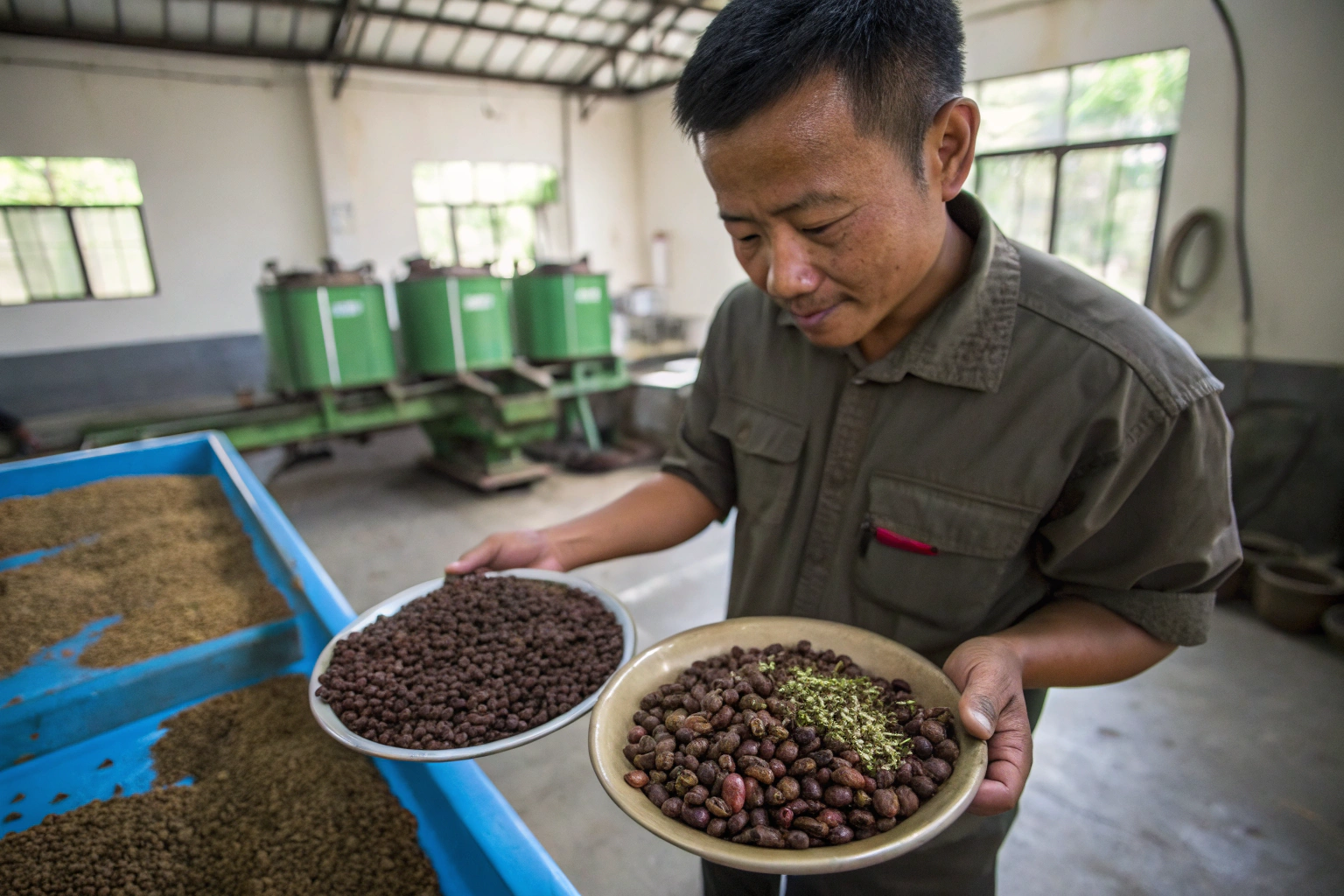
I will be honest with you. For years, I ignored Robusta. Like many specialty coffee people, I thought Robusta was only for cheap espresso blends and instant coffee. Then five years ago, a Vietnamese buyer visited our farm. He tasted our Robusta and said, "Steve, this is cleaner than what I get at home. Why don't you sell it?" That question made me look again. Really look. We cupped our Robusta against our Arabica. Against Vietnamese Robusta. Against Indian. And I realized something. Good Robusta, processed well, has its own place. Now we treat it seriously. And the biggest factor? Processing. Natural versus washed changes everything.
The difference between natural and washed Robusta is dramatic. Natural Robusta is dried inside the whole cherry. It absorbs fruit sugars. The result? Heavy body, low acidity, flavors of dark chocolate, peanut, dried fruit, sometimes even rum. Washed Robusta has the cherry removed immediately. It ferments briefly, then washes clean. The result? Cleaner, lighter body, more neutral flavor, higher acidity, often described as grainy or nutty with less fruit. Both start as Robusta. Both end completely different.
But here is the thing. Robusta has a bad reputation because most of it is processed poorly. Fast drying. No sorting. Old cherries mixed with new. When you treat Robusta with the same care as Arabica, it surprises you. Another way to look at this is like cooking. The same potato can become french fries or mashed potatoes. Different processes, different results. Let me walk you through how we handle Robusta on our farm and what you should expect from each method.
What defines natural processed Robusta?
Natural processing for Robusta is the old way. The traditional way. Before washing stations existed, farmers dried everything whole. In Vietnam, Indonesia, India, this is still common. But careful natural processing is different from neglect.
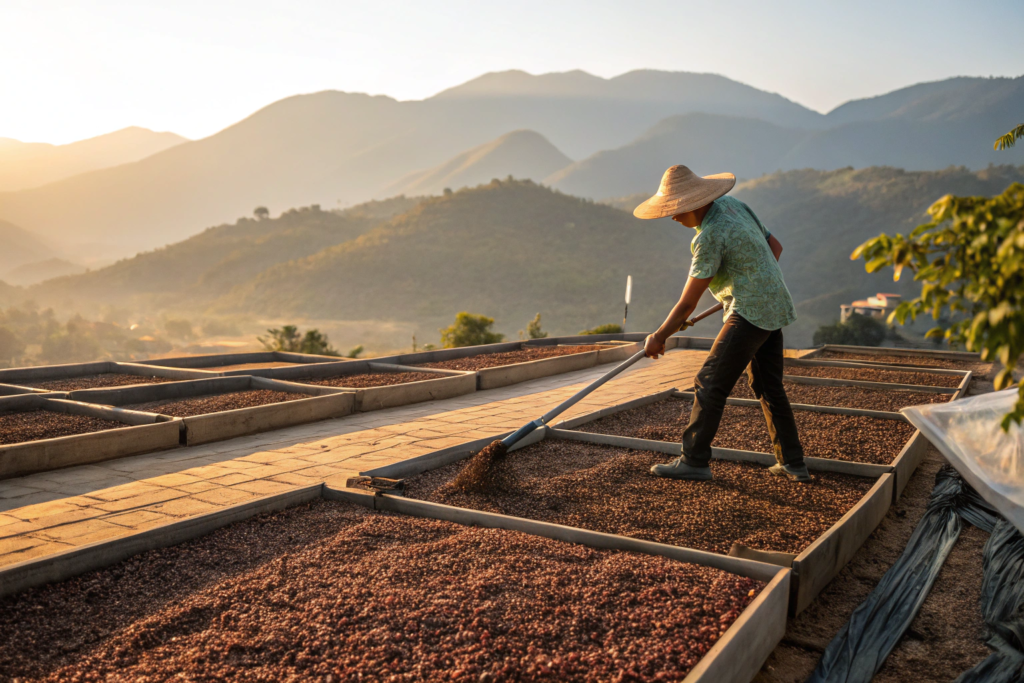
Natural Robusta means the whole cherry is harvested, sorted, then dried on raised beds or patios for two to four weeks. The cherry ferments slightly during drying. Sugars and acids from the fruit migrate into the bean. After drying, the dried cherry is removed by machine. The bean inside has absorbed those fruit flavors. It is darker in color, sometimes with a reddish tint. Moisture targets are the same, ten to twelve percent.
How does natural processing change Robusta flavor?
The flavor shift is huge. Raw Robusta, before processing, tastes like peanut shells. Harsh. Grainy. Natural processing adds fruit. Not like Arabica fruit. More like dried fruit. Raisin. Tamarind. Sometimes dark cherry. The body becomes syrupy. Acidity drops almost to zero. Bitterness remains but softens. It becomes smoother. We cupped a natural Robusta last year that tasted like dark chocolate with dried fig. Shocked everyone. The trick is slow drying. If you dry too fast, the fruit sugars do not penetrate. If you dry too slow, mold grows. We aim for twenty-five to thirty days on raised beds. Turning constantly. For more on natural Robusta profiles, read Royal Coffee's Robusta notes. They have cupping scores. Also, Perfect Daily Grind's Robusta processing guide explains flavor development.
What are the risks of natural Robusta?
Risks are real. Robusta cherries grow in clusters. Ripening is uneven. A single branch has green, yellow, red, and overripe cherries together. If you pick everything at once, you get underripes and overripes mixed. Underripes taste grassy. Overripes taste rotten. We solve this by selective picking. Multiple passes through the same trees. Expensive but worth it. Another risk? Moisture. Robusta is denser than Arabica. It holds moisture longer. If you stop drying too early, beans mold in the bag. We use moisture meters constantly. Shanghai Fumao checks our export lots twice. They verify before shipping. For food safety standards, see USDA's coffee import guidelines. They cover mold and toxin limits.
What defines washed processed Robusta?
Washed Robusta is less common traditionally. But it is growing. Specialty Robusta buyers want clean, neutral beans for blending. Washed gives them that.
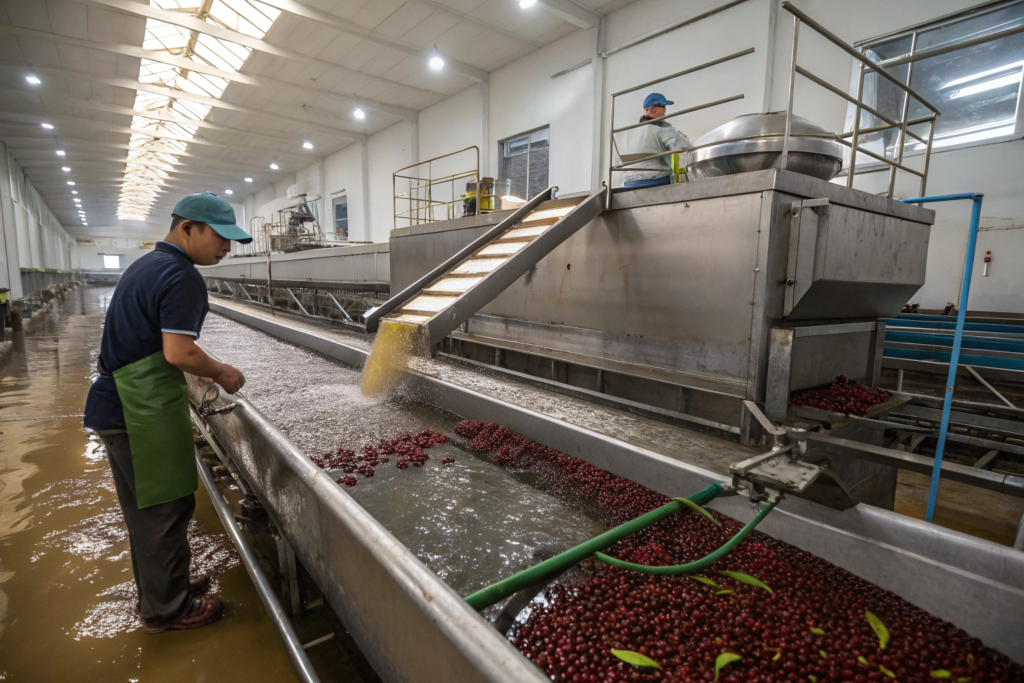
Washed Robusta starts the same. Cherries are picked and sorted. Then they go through a depulper. This removes skin and fruit mechanically. The beans, still coated in mucilage, go into fermentation tanks for twelve to twenty-four hours. Microbes eat the sticky layer. Then high-pressure water washes them clean. Finally, they dry on patios or in mechanical dryers. The result is a clean, green bean with minimal fruit influence.
Why wash Robusta if it removes flavor?
Because not everyone wants fruit. Many commercial roasters use Robusta for crema. For body. For caffeine kick. They do not want fruity flavors competing with their Arabica blend. Washed Robusta is neutral. It adds body without adding taste. Think of it like flour in baking. You want structure, not flavor. Washed Robusta gives that. Also, washed beans are more consistent. Less variation between batches. For large buyers, consistency matters more than excitement. If you want to understand blending, read Roast Magazine's Robusta blending articles. They explain ratios. Also, Shanghai Fumao's washed Robusta specs show typical analysis.
How does washed processing affect Robusta's chemical profile?
Washing removes fruit sugars. So the bean relies on its own compounds. Robusta naturally has more caffeine than Arabica. About twice as much. It also has more chlorogenic acids. These create bitterness and astringency. Washing reduces some of these compounds? Actually no. Washing does not remove caffeine or chlorogenic acids. Those are inside the bean. But fermentation changes perception. The clean cup makes bitterness feel sharper. Less sugar to balance it. So washed Robusta can taste more bitter if roasted dark. We recommend medium roasts for washed Robusta. For chemical data, see Coffee Chemistry's Robusta analysis. They publish detailed breakdowns.
How do natural and washed Robusta compare in the cup?
Now we get to what matters. Taste. Numbers and processes are interesting. But you buy coffee to sell it. Your customers drink it. So let me describe exactly what you will taste.
Natural Robusta cup: Heavy body, syrupy mouthfeel, low acidity, flavors of dark chocolate, dried fruit, peanut, sometimes leather or tobacco. Finish is long and bittersweet. Washed Robusta cup: Medium body, cleaner mouthfeel, slightly higher acidity, flavors of grain, nuts, cocoa powder, sometimes burnt toast if overroasted. Finish is shorter, cleaner.
Which Robusta has more body and mouthfeel?
Natural wins. No contest. The fruit mucilage dries onto the bean. It adds weight. When you brew natural Robusta, the liquid feels thicker. Almost like espresso texture even as drip coffee. Washed Robusta is lighter. More like tea compared to milk. If you want body in your espresso blend, natural Robusta delivers. We use it in our own test blends. For body comparisons, check Coffee Review's Robusta scores. They note mouthfeel in every review.
How does acidity differ between the two?
Washed Robusta has more acidity. Still low compared to Arabica. But perceptible. A slight sharpness on the tongue. Natural Robusta? Acidity is almost absent. The fruit sugars neutralize it. This makes natural Robusta smoother. Less irritating to sensitive stomachs. Some drinkers prefer that. If you sell to an older demographic, natural Robusta might work better. For acidity data, read Perfect Daily Grind's acidity guides. They explain pH differences.
Which Robusta should buyers choose for different uses?
This depends entirely on what you make. Espresso blend? Cold brew? Instant? Each use favors one style.
Choose natural Robusta for espresso blends needing body and crema with complexity. Choose washed Robusta for high-volume blends needing consistency and neutral flavor. Natural works for single-origin Robusta offerings. Washed works for filler in commercial blends. Both have markets.
Is natural Robusta good for espresso blends?
Yes. Excellent. Many Italian espresso blends use a small percentage of natural Robusta. It adds crema. That golden foam. Arabica alone makes thin crema. Robusta makes it thick. Natural Robusta adds flavor too. Fruit notes complement chocolatey Arabicas. We sell natural Robusta to a roaster in Naples. He blends it with Brazilian Arabica. Tastes amazing. For blend recipes, read Barista Hustle's espresso blend guides. They have formulas. Also, Shanghai Fumao's sample program lets you test both.
When should I use washed Robusta?
Use washed when you want invisibility. If you are a large commercial roaster selling to supermarkets, you want consistency. No surprises. Washed Robusta delivers. It blends in. Adds caffeine and body without changing flavor profile. Also good for cold brew. Cold brew mutes acidity. Washed Robusta's slight graininess works with chocolate and nut notes. We supply washed to a Korean cold brew company. They love it. For cold brew extraction data, see Coffee Chemistry's cold brew studies. They compare Robusta and Arabica.
How does pricing compare between natural and washed Robusta?
Price matters. Always. Robusta is cheaper than Arabica. But within Robusta, prices vary.
Natural Robusta typically costs more than washed. Why? More labor. Selective picking. Longer drying. Higher defect risk. Also, natural has more perceived value for specialty buyers. Washed Robusta is cheaper to produce. Faster fermentation. Less sorting. But both are far below Arabica prices.

Why is natural Robusta more expensive?
Natural requires careful cherry selection. You cannot just strip the tree. You pick only ripe cherries. That means more passes through the farm. More labor cost. Then drying takes weeks. Space on beds. Turning labor. Risk of rain. All add cost. Natural also has lower yield. The dried cherry adds weight, but you remove it later. So ten kilos of cherry becomes maybe two kilos of bean. Washed yield is similar but processing is faster. For pricing benchmarks, check ICE Robusta futures. Then add premiums for quality.
How do I know if the price matches the quality?
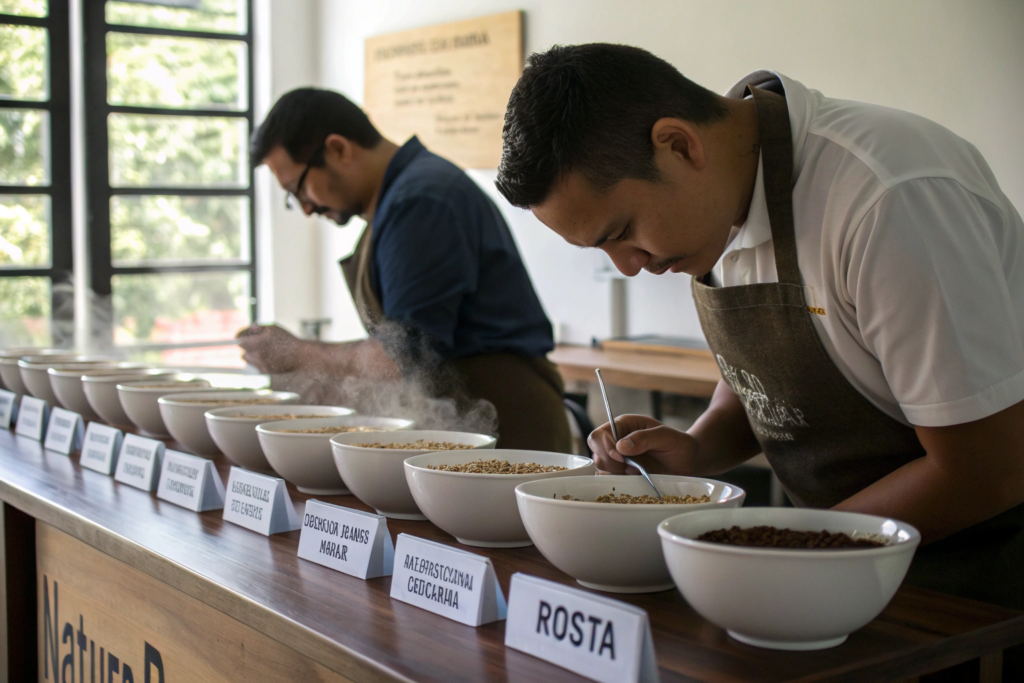
Sample. Always sample. We send samples of both natural and washed. Cup them side by side. Check defects. Moisture. Density. If natural Robusta tastes like overfermented vinegar, do not buy. If washed tastes like burnt rubber, reject. Good Robusta, even washed, should be clean. For grading standards, see SCA's Robusta protocol. They have defect counts.
Conclusion
Natural and washed Robusta are two different products. Natural is for flavor, body, complexity. Washed is for consistency, neutrality, blending. Both have places in the market. At BeanofCoffee, we produce both. Our ten thousand acres in Baoshan include Robusta blocks. We process them separately. Track them carefully. And we sell to buyers who understand the difference.
If you are curious about Robusta, try both. See which fits your brand. Contact Cathy Cai. She manages samples and exports. Her email is cathy@beanofcoffee.com. Tell her you want to compare natural and washed Robusta. She will send you samples with cupping notes. Taste for yourself. Then decide.