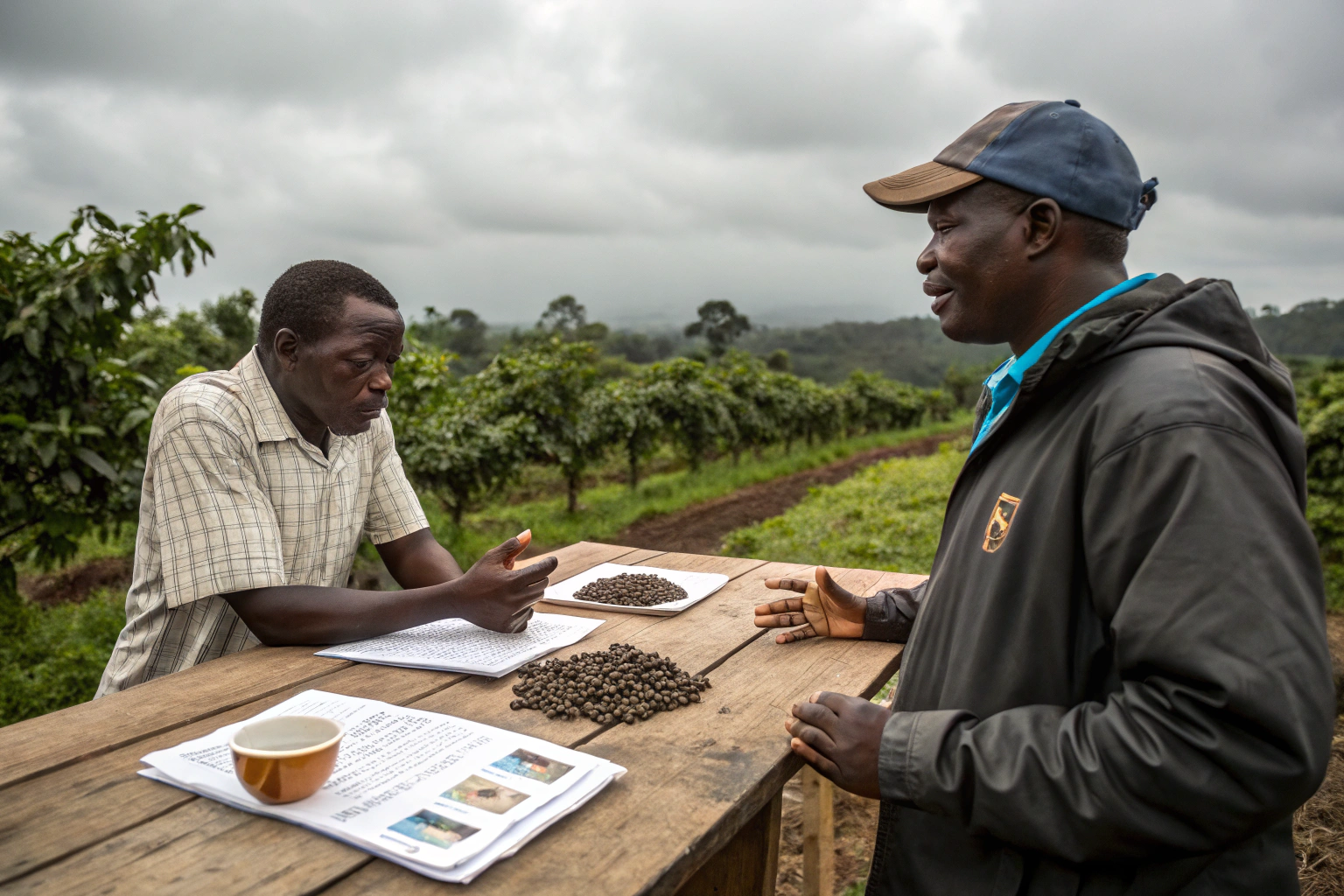
I had to make one of the hardest phone calls of my career in February last year. A frost hit our highest-altitude farm in Baoshan. Not a light frost. A deep, killing frost that burned the tips of the coffee trees and destroyed almost 70% of the developing cherries on one specific plot. That plot produced a washed Arabica lot that a roaster in Amsterdam had been buying exclusively for three years. It was their flagship single origin. It was on their packaging. Their customers asked for it by name. And I had to tell them that there would be no coffee from that plot this year. No partial shipment. No substitute lot from the same trees. Zero.
Managing a crop failure with your coffee customers is not about delivering bad news gently. It is about delivering it early, completely, and with a credible solution already in hand. The conversation must start the moment you know the crop is compromised, not when the customer emails you asking where their samples are. It must include an honest technical explanation of what happened. It must be accompanied by a concrete alternative: a comparable lot from a neighboring plot, a commitment to hold their pricing for the next harvest, or a priority allocation from another farm. The goal is not to save the sale. The goal is to save the relationship, and that requires radical transparency before anything else.
I learned this lesson the hard way over fifteen years of farming. The first time I had a crop failure, I hid. I waited. I hoped something would magically improve. It did not. I lost a client. I have never made that mistake again. Here is the process I now follow, the one I used with that Amsterdam roaster, and the one that I recommend to every producer and supplier who faces the brutal, unpredictable reality of agriculture.
Why Does Early and Proactive Communication Prevent Permanent Client Damage?
There is a natural human instinct to delay bad news. You want to wait until you have all the details. You want to wait until you have a solution. You want to wait until the problem somehow fixes itself. This instinct is a relationship killer. The customer does not care about your internal timeline. They care about their own business. And every day you delay telling them about a crop failure is a day they are not planning their own contingency.
Early communication—ideally within 48 hours of you confirming the crop damage—gives the buyer something priceless: time. Time to find alternative supply for their blend. Time to communicate with their own wholesale accounts. Time to adjust their menu, their packaging, and their marketing calendar without a panicked, last-minute scramble. When you give a buyer time, you demonstrate that you understand and respect their business. When you hoard information out of fear, you demonstrate the opposite.
My rule is simple: I call the affected clients before I post anything publicly. The phone call is direct and brief. "I have bad news about the BS-14-A lot. We had a frost. I am looking at the damaged trees right now. I estimate we have lost about 70% of the cherries. I do not have a full picture yet, but I wanted you to hear it from me first. I will have a detailed assessment and a proposed solution for you within three business days." This call is uncomfortable to make. But it is infinitely better than the client discovering the problem from an Instagram post or, worse, from their own customers asking why the coffee is suddenly unavailable.
What is the ideal communication sequence for a crop failure announcement?
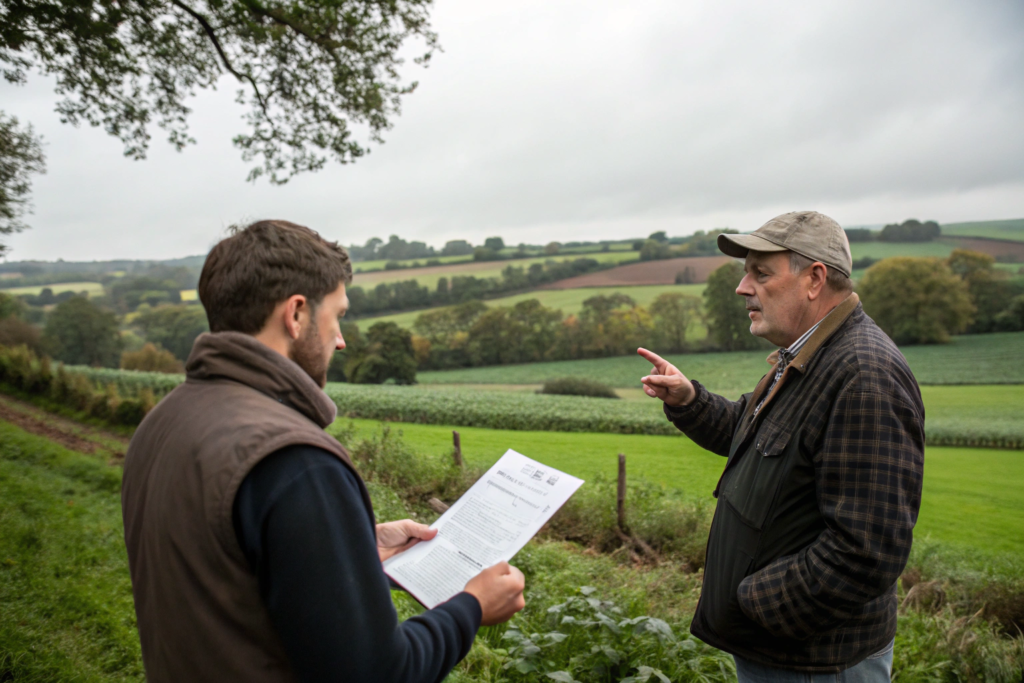
First, call your top-tier clients directly. The ones who have exclusive agreements, who buy full container loads, or who have built their brand around your coffee. They get a personal phone call, not an email. Second, send a detailed email to all affected wholesale clients within 24 hours of the phone calls. This email should include the facts, the impact, and the timeline for next steps. Third, after all affected clients have been contacted, consider a transparent public update for your broader customer base—a blog post, a newsletter, or a social media statement. This sequence protects your most important relationships first and prevents anyone from hearing the news secondhand. The Specialty Coffee Association's crisis communication resources provide useful frameworks for structuring these difficult announcements in the coffee industry.
How much technical detail is appropriate when explaining a crop loss to a buyer?
Give them enough to understand the severity and the specific cause. "We had a frost" is too vague. "On the night of February 12th, the temperature at our Block 14-A, at 1,600 meters, dropped to minus 3 degrees Celsius for approximately four hours. This caused cellular damage to the developing cherry tissue. We estimate that 70% of the cherries on that block are unsalvageable. The remaining 30% may survive but will likely show uneven ripening and reduced cup quality." This level of detail does three things. It shows you know your farm scientifically. It eliminates any suspicion that you are using "weather" as an excuse for a different problem. And it gives the buyer the language they need to explain the situation to their own customers. The World Coffee Research climate resilience resources are excellent for understanding how specific weather events impact coffee physiology.
How Do You Create a Credible Alternative Offer When the Original Lot Is Gone?
This is the make-or-break moment. You have delivered the bad news. The client is disappointed, possibly stressed. Now you must offer them a path forward that is not just "wait until next year." A weak alternative offer sounds like a generic sales pitch. A strong alternative offer demonstrates that you have thought deeply about their specific needs and have crafted a solution that protects their business.
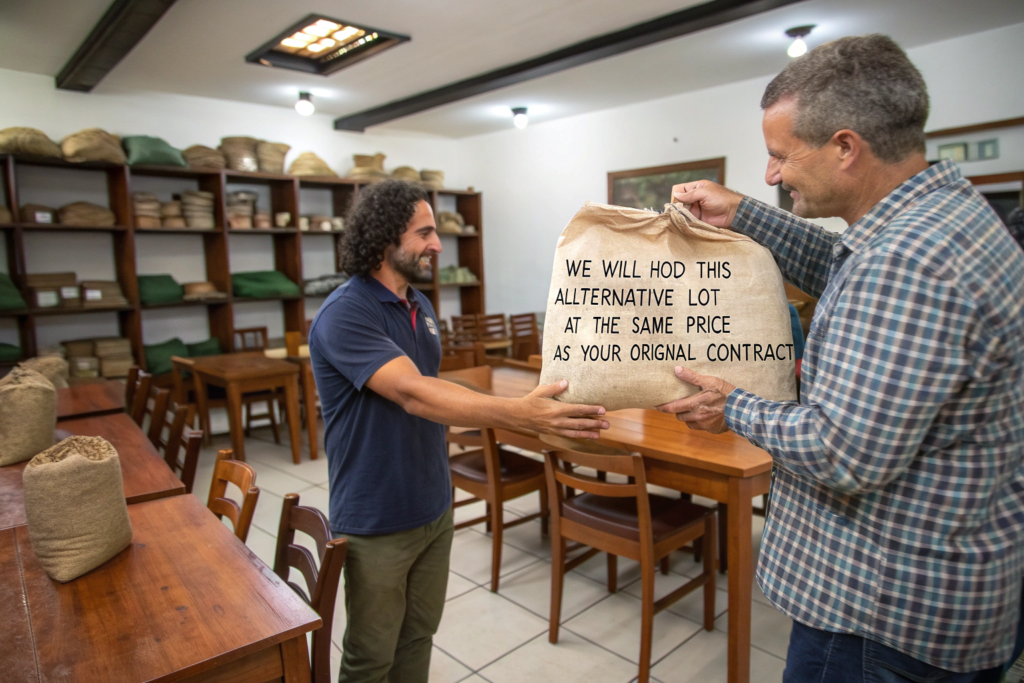
A credible alternative offer must match the sensory profile of the lost lot as closely as possible, and it must come with a specific commitment that acknowledges the inconvenience. The best alternatives come from the same farm, perhaps from a neighboring block at a similar altitude with the same varietal and processing method. If that is not available, an adjacent farm with similar terroir is the next best option. The commitment might be: "We will hold this alternative lot at the same price as your original contract," or "We will ship the alternative lot and reserve your original plot for you exclusively for the next two harvests at a locked-in price." The offer must feel like a partnership solution, not a fire sale.
For the Amsterdam roaster who lost his exclusive plot, I offered him a lot from a block 200 meters lower on the same mountain. The varietal was the same. The processing was the same. The cup profile was slightly different—a touch less acidity, a touch more body—but it was close. Very close. I sent him a sample by express courier within 48 hours of our initial call. I included a cupping form comparing the two lots side by side, with the differences noted honestly. I offered it at the same price as his original contract. And I gave him a written guarantee that his original plot would be his exclusively for the next two harvests, with a right of first refusal on any other lot from that block. He accepted. His customers noticed a slight shift in the cup, but he had the story ready: "Our farmer's highest plot was hit by a rare frost, so this year we are featuring the sister lot from just below it. Same family. Same craft. Slightly different character." The story turned a potential disaster into a unique vintage narrative.
How do you conduct an honest sensory comparison between the lost lot and the alternative?
Cup them side by side. Use the SCA cupping form. Be brutally honest about the differences. Do not try to convince the buyer that the alternative is "just as good." It is not just as good. It is different. Say: "The original lot had a malic acidity of 8.0 and a floral, jasmine-like note. The alternative lot has a citric acidity of 7.5 and a more pronounced chocolate note. It is slightly heavier in body. It is an excellent coffee in its own right, and it will perform beautifully as an espresso or a full-immersion brew." This honesty builds trust. The buyer knows what they are getting. They can taste the sample and verify your assessment. If they accept it, they do so with full knowledge. If they reject it, they do so for a legitimate reason, and you part ways respectfully, with the door open for the next harvest.
What makes a compensation commitment feel genuine rather than transactional?
Money alone feels transactional. A combination of pricing and relationship-based gestures feels genuine. Offer to hold the price. Offer exclusive access to a limited micro-lot next year as a first-refusal thank-you for their loyalty. Offer to fly them to the farm to cup the next harvest with you. These gestures cost you something, either in margin or time, but they send a clear message: "I value this relationship beyond this single transaction." The Amsterdam roaster took me up on the farm visit offer. He came to Baoshan the following harvest season. We cupped his restored lot together. The relationship is now stronger than it was before the frost. That trip was one of the best investments I have ever made.
What Contract Clauses Should Anticipate Crop Failure to Protect Both Supplier and Buyer?
The best time to negotiate how you handle a crop failure is when the sun is shining, the trees are healthy, and the relationship is warm. Waiting until a crisis to figure out who bears the loss is a guarantee of conflict. A well-drafted supply contract anticipates agricultural risk explicitly and allocates it fairly.
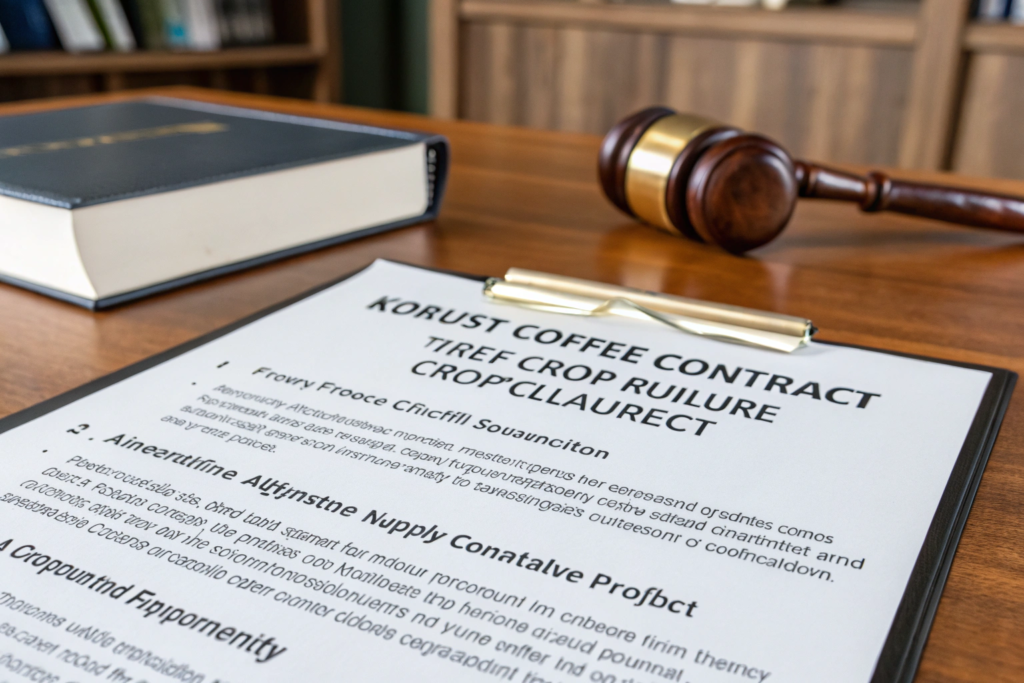
A robust coffee supply contract should contain three key crop failure clauses: a force majeure provision specific to agricultural events, an alternative supply provision that defines the supplier's obligation to offer a comparable replacement, and a mutual cancellation provision that allows either party to terminate without penalty if the quality of the alternative lot does not meet a pre-agreed cupping threshold. These clauses remove ambiguity from an emotionally charged situation and provide a calm, pre-agreed framework for decision-making.
The force majeure clause for coffee should explicitly list frost, drought, flood, pestilence, and crop disease as covered events. It should state that in the event of a covered crop failure, the supplier is not liable for non-delivery of the affected lot. The alternative supply provision should state that the supplier will make commercially reasonable efforts to offer a comparable lot from the same or a neighboring farm, with a cupping score within a specified range of the original lot. The mutual cancellation provision should state that if the alternative lot does not score within that range, either party may cancel the agreement without penalty, and any deposits paid will be refunded or credited toward a future harvest. This framework is fair, clear, and protects both sides from the worst-case scenario.
Why does a force majeure clause need to be specific, not generic?
A generic force majeure clause that simply says "acts of God" is too vague. It invites dispute. What is an act of God? Is a drought an act of God? Is a pest infestation? A specific clause eliminates these arguments before they start. It lists the specific events, defines how the crop loss is measured, and specifies the documentation required to invoke the clause. This clarity is in everyone's interest. The buyer does not want to argue about whether a frost qualifies. The supplier does not want to argue about whether they are liable. A specific clause means the conversation, when a crisis hits, is about the solution, not the blame.
How do you define a "comparable" alternative lot in contractual language?
Define it by measurable parameters, not subjective language. "A comparable lot is defined as a coffee grown within the same geographic region, of the same or similar varietal, processed by the same method, and achieving a cupping score within 2 points of the original lot as measured by an SCA-certified Q-grader." This definition is objective. It can be verified by a third party. It leaves no room for one side to claim a lot is comparable and the other side to claim it is not. The Green Coffee Association's standard contract terms provide useful templates for this kind of language, and the SCA cupping standards define the measurement protocol.
How Do You Maintain a Premium Brand Reputation Through an Agricultural Crisis?
A crop failure is a vulnerability. But it can also be an opportunity. When handled correctly, a crisis reveals the strength of your relationships, the resilience of your farming practices, and the authenticity of your brand. Customers do not expect perfection from agriculture. They know that farming is hard and unpredictable. What they expect is honesty, accountability, and a clear demonstration of values under pressure.
Maintaining a premium brand through a crop failure requires you to lead with your values, not your excuses. The narrative should be: "We are farmers. We work with nature. Sometimes nature deals a hard hand. This year, we lost a beautiful lot to an unprecedented frost. Here is what we are doing about it. Here is what we are learning from it. Here is how we are investing to protect against it in the future. And here is the coffee we are still incredibly proud to offer." This narrative is not defensive. It is resilient. It turns a negative event into a proof point of your commitment to farming and quality.
The Amsterdam roaster used this exact narrative with his customers. He did not hide the crop failure. He featured it. He put a note in every bag explaining the frost, the lost lot, the sister lot, and the farmer's resilience. His customers responded with empathy and loyalty. Sales did not drop. They increased. The story made the coffee feel alive, real, and precious in a way that a generic, always-available commodity never could. That is the power of leading with values.
How do you tell the story of a crop failure on social media without damaging your brand?
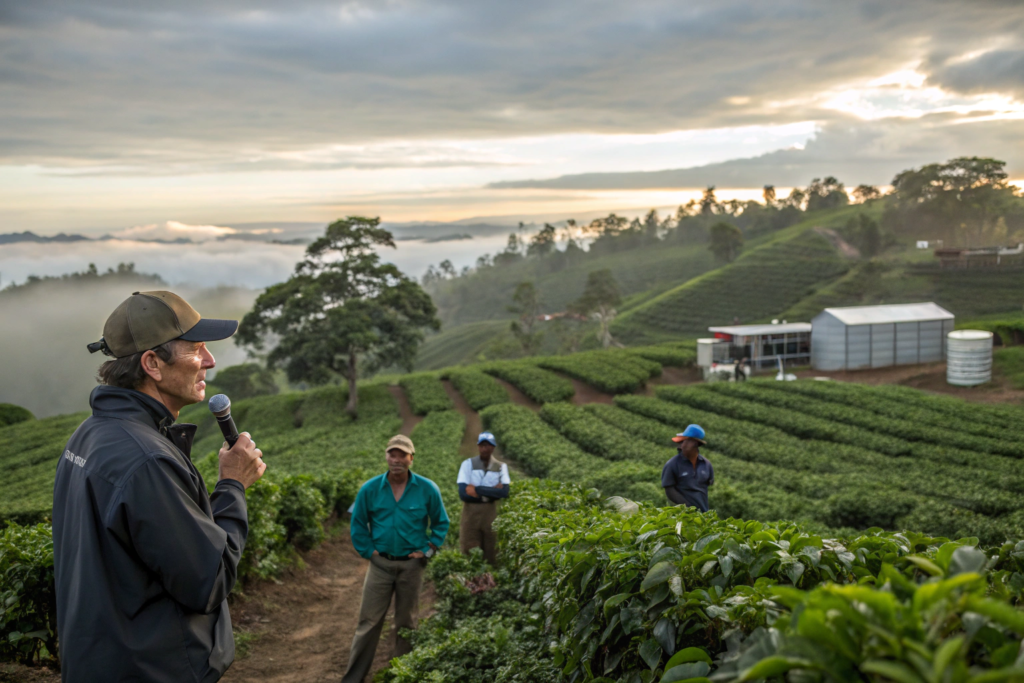
Use photos of the actual damage. Show the frost-burned trees. Show your agronomist inspecting the cherries. Show the team adapting. The caption should be factual, slightly emotional, and forward-looking. "This is what a frost at 1,600 meters looks like. 70% of our highest lot is gone. Our team is heartbroken. But farming is a long game. The trees will recover. Next year's harvest will be celebrated like never before." This kind of post humanizes your brand. It reminds your customers that coffee does not come from a factory. It comes from a living, breathing, vulnerable ecosystem. And it invites them into the journey of recovery, which deepens their connection to your product.
Why is a follow-up report on recovery efforts valuable for long-term buyer confidence?
Six months after the frost, I sent the Amsterdam roaster a one-page PDF. It had photos of the recovered trees, new leaf growth, and flowering for the next season. It had a brief note: "The trees are healthy. Next year is looking good. Your plot is waiting for you." He forwarded it to his wholesale accounts. They loved it. It closed the story loop. It proved that the crisis was temporary and that the partnership was enduring. This kind of follow-up is not required by any contract. But it is the kind of gesture that builds loyalty that no competitor can undercut. For more on how to build these long-term relationships, BeanofCoffee's approach to direct trade is grounded in this kind of continuous communication.
Conclusion
A crop failure is not a test of your farming skill. It is a test of your character as a business partner. It reveals whether you prioritize short-term self-protection or long-term relationship integrity. The suppliers who call early, tell the whole truth, offer a real alternative, and contract fairly for the future are the ones who keep their clients for decades. The ones who hide, delay, and make excuses are the ones who lose accounts they spent years building.
If you are buying from an origin and you do not yet have a conversation about how crop failures will be handled, start that conversation now. Before the frost comes. Before the drought hits. If you are buying from us, you already have a partner who has built these scenarios into our contracts, our communication protocols, and our farming contingency plans. For any questions about how we handle crop risk, or to discuss a specific lot and its vulnerability profile, contact Cathy Cai at cathy@beanofcoffee.com. She can walk you through our approach, share historical yield data for specific lots, and ensure that your supply agreement protects your business as much as it protects ours. Good farming is about managing risk. Good partnerships are built on the same principle.