
You have a problem. Your coffee shop customers are not just drinking lattes anymore. They are asking for oat milk cappuccinos. Almond flat whites. Soy macchiatos. Your baristas are struggling. The milk curdles. The flavor separates. The shot tastes sour, bitter, or just… weird. You invested in great coffee. You bought premium single-origins. But when you combine that bright, acidic Kenyan with a thin, watery almond milk, it tastes like grapefruit juice and cardboard. You are losing money on returned drinks. Your reputation is taking a hit. And honestly, you are not sure which coffee to buy next to stop the bleeding.
The core of the issue is simple. Plant-based milks are not just "milks." They are chemically different liquids. They have different protein structures, different fat levels, and different natural sweetness. A coffee that sings with whole dairy milk might fight with oat milk. Acidic coffees split soy milk. Dark roasts overpower the delicate nuttiness of almond milk. The solution is not to pick a milk and pray. It is to intentionally pair the origin, the roast level, and the processing method of the bean with the specific chemistry of the milk alternative. It is a deliberate matchmaking process.
Here is the foundation. You need low-acid, heavy-bodied, chocolate-forward coffees for most plant-based milks. Light, floral, citrusy coffees generally only work well with oat milk's natural creaminess. Nut milks need medium roasts with caramel sweetness to mimic the taste of baked goods. When we grow and process Catimor at Shanghai Fumao, we know exactly where our beans are heading. If a roaster tells me, "I'm launching an oat milk exclusive line," I steer them toward our washed Yunnan Arabica with its deep milk chocolate and roasted almond notes. It binds with the oat fibers. It tastes like a cookie. That is not luck. That is chemistry. Let's break down exactly how to make these pairings work so you can build a menu that never misses.
Why Does Coffee Acidity Clash with Almond and Soy Milks?
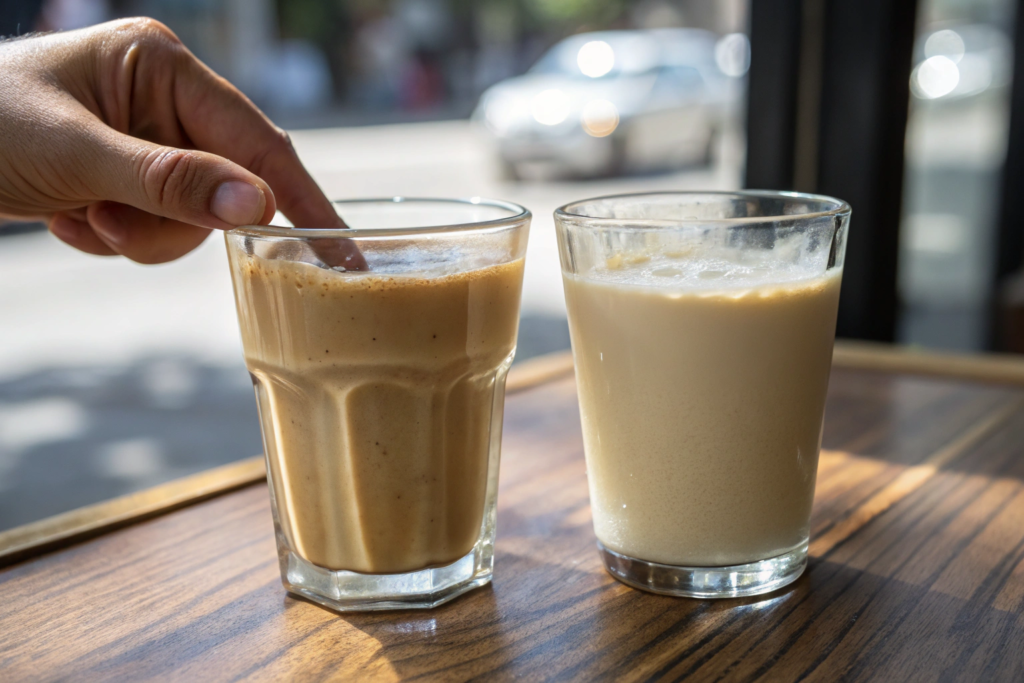
You have seen it. The barista pours a beautiful shot of a washed Ethiopian into soy milk, and within seconds, the milk separates. It looks like tofu scramble floating in brown water. The customer sends it back. What happened? Acidity and temperature are the culprits here. Soy milk is an emulsion of soy protein and water. Almond milk is an emulsion of ground almonds and water, often with very little protein. Both are sensitive to sudden drops in pH.
A bright, high-acid coffee—like a washed Kenyan with a pH of 4.9—acts like a coagulant. The heat plus the acid unfolds the soy proteins. They denature and clump together. You are basically making soft tofu in the cup. It is not a flaw in the milk. It is a chemical reaction. Almond milk does not have enough protein to clump solidly. Instead, it just separates into a watery, gritty mess. The texture turns chalky. The flavor of the almond is overwhelmed by the citric acid. You taste sour almonds. Not pleasant.
To avoid this, you need to drop the acidity. Look for coffees with a malic acid profile rather than citric. Malic acid tastes smooth. Think apples and pears, not lemons and limes. These coffees have a slightly higher pH, closer to 5.2 or 5.3. They are much gentler on delicate plant proteins. The body of the coffee also acts as a buffer. A heavy-bodied coffee carries more dissolved solids. These solids coat the proteins and protect them from the acid shock. This is why a dense, low-acid Sumatran or a heavy Yunnan Arabica works so well with soy. The thick body shields the soy proteins, and the low acidity doesn't attack them. The result is a smooth, unified drink. For more on the science of protein denaturation in beverages, the Institute of Food Technologists has excellent resources.
How Does the Roast Level Change the Behavior of the Milk?
The darker you roast, the less acidity you have. The bean's cell structure breaks down more. The oils migrate to the surface. The pH rises. A dark roast coffee can have a pH of 5.5 or even higher. That is very close to the natural pH of cow's milk. It is much gentler on plant milks. But there is a trade-off. A dark roast brings bitterness and carbon notes. These can completely mask the subtle flavor of a nut milk or a grain milk.
Think of it like this. A dark roast screams "coffee." An almond milk whispers "nutty." The scream drowns out the whisper. You end up with a drink that tastes like generic bitter coffee with a weird texture. You paid extra for the almond milk, but you cannot taste it. A medium roast, however, is the sweet spot. It has enough roast development to mellow the acidity, but it retains the caramelized sugar notes. These caramel notes blend seamlessly with the toasted almond or soy bean flavors. It tastes like a harmonious blend, not a battle of strong versus weak. When I recommend our beans for a roaster doing an almond milk line, I suggest a medium City+ roast. Just into second crack, then stop. It gives you the body and the low acid without the smoky char.
Why Does Oat Milk Handle Bright Coffees So Well?
Oat milk is the exception to the rule. It is the forgiving, creamy friend in the plant milk world. The secret is beta-glucans. These are soluble fibers naturally found in oats. When you steam oat milk, the beta-glucans create a thick, creamy, almost lubricated texture. This texture physically cushions the proteins in the coffee. It coats your tongue. The acidity is still there, but you perceive it as "juicy" rather than "sour" because the fat and fiber are carrying it smoothly.
This means you can pair a brighter, fruitier coffee with oat milk and actually taste those blueberry or stone fruit notes. The oat milk's natural sweetness—it has a malty, cereal-like flavor—complements the fruit notes. It tastes like a warm fruit crumble with a scoop of vanilla ice cream. It works. But it only works if the oat milk has a high enough fat content. You need the full-fat "barista edition" oat milks. The light, low-fat diet versions lack the beta-glucan concentration to buffer the acid. They will still split. So the pairing is specific: bright coffee + high-fat barista oat milk = a winning, complex flavor. The Oatly Barista development page often explains how their formula is designed for acidity, which is a useful reference for understanding the chemistry.
Which Coffee Origins Naturally Complement Coconut Milk Best?
Coconut milk is a wild card. It is not watery. It has its own intense, tropical character. It has high saturated fat. It does not split easily because there is so little protein. The challenge with coconut milk is not clashing. It is creating a coherent flavor story. If you pair a dark, smoky Sumatran with coconut milk, it tastes like a campfire on a beach. Confusing. Not great. You need to lean in to the tropical notes. You want a coffee that has a natural sweetness and maybe a hint of fruit, so it feels like a deliberate tropical drink, not an accident.
The origins that work best are those with a natural or honey process. A natural Brazil often has notes of peanut, chocolate, and dried fruit. That pairs perfectly with coconut. It tastes like a candy bar. A honey-processed Costa Rica with its syrupy body and stone fruit notes blends into a coconut milk latte seamlessly. It creates a unified sensation of richness and sweetness. For our Yunnan Arabica, specifically the honey process lots we do on a small scale, the combination is incredible. The coffee has a heavy, buttery body and a taste of ripe plum and caramel. Mixed with coconut milk, it tastes like a liquid caramel flan with a hint of tropical fruit. It is a dessert in a cup. No sugar needed. The high fat in the coconut milk extracts and carries the coffee's oils beautifully. It is a very underrated pairing. The key is to use a full-fat coconut milk intended for coffee, not the light cooking milk. The texture must be dense and silky.

What Roast Profile Tames the Bitterness in Soy Milk Lattes?
Soy milk has a natural beany flavor. When it heats, that beany-ness can intensify. If you pair it with a coffee that has a bitter, astringent edge—like a dark-roasted Robusta or an over-extracted espresso—the bitterness stacks on top of the beany flavor. It becomes very medicinal. Unpleasant. To fix this, you need a coffee that is sweet, maybe slightly nutty, and definitely roasted to a medium level. The sweetness counteracts the beaniness. The lack of bitter char lets the soy's natural creamy texture shine.
A medium-roasted washed Catimor from our farm is a great fit. It has a core flavor of milk chocolate and toasted bread. It has virtually no bitterness when brewed correctly. When the soy milk hits this coffee, the beany note transforms. It does not disappear, but it integrates. It tastes like fresh soy milk and warm brownies. It becomes a comforting, breakfast-like pairing. The key is the roast. You must avoid the second crack. Stop just before the oils hit the surface. A dry, velvety surface on the roasted bean tells you it's ready. If it's shiny and oily, the bitterness will ruin the soy. Baristas often blame the soy milk for curdling when the real problem is a bitter, over-roasted espresso shot. A clean, sweet base lets the soy milk do its job.
Can Nut Milks Be Paired with Fermented Coffee Flavors?
Fermented coffees—anaerobics, naturals with heavy fruit—are polarizing. They taste like wine, tropical fruit punch, or sometimes even cheese. Pairing them with nut milks sounds risky. And it usually is. But there is one successful strategy: use the nut milk to tame the wildness. A very clean, unflavored almond milk can dilute the intensity of a funky anaerobic coffee. It stretches out the flavor. It adds a creamy texture without adding a competing flavor. This makes the fermented coffee more approachable.
Hazelnut milk is another surprising ally. Hazelnut has an earthy, almost savory richness. It pairs shockingly well with the boozy, overripe fruit notes in a long-ferment natural. It creates a flavor that is reminiscent of a rich fruitcake. However, this is a delicate dance. Use too much milk, and the fermented notes just taste like mold. Use too little, and the milk is pointless. A cortado or a piccolo ratio works best. Something around 1:1 coffee to milk. This is for the adventurous customer, not the main menu. But if you have a micro-lot of funky coffee that you cannot sell as a straight espresso, try it as a hazelnut cortado. It might save the lot. Just never, ever pair a fermented coffee with a sweetened, vanilla-flavored nut milk. The artificial flavors clash with the organic fermentation esters. It tastes chemical. It tastes wrong.
How to Build a Plant-Based Menu That Matches Your Wholesale Beans
You are a roaster or a cafe chain. Your plant-based menu cannot be an afterthought. It must be integrated into your green bean buying strategy. You cannot buy a container of bright, citrusy Ethiopian and then realize 60% of your cafe sales are soy lattes. That is a recipe for waste and bad online reviews. The buying decision and the menu design must happen together. It is a supply chain question as much as a flavor question. What does your customer base actually drink? Look at your point-of-sale data. Rank the milk types by volume. Then buy your coffee to match the winner.
If oat milk is 70% of your alternative milk sales, you can buy that bright, fruity single-origin you love. If soy and almond dominate, you pivot. You buy a heavy-bodied, chocolatey, low-acid coffee. From an export perspective, this conversation happens all the time. A buyer tells me, "My concept is a modern vegan cafe, mostly soy and oat." I know immediately to offer them our washed Catimor with its dense body and sweet, nutty profile. I know it will perform in the cup day after day. I also know it is affordable enough to make a decent margin on a $6 soy latte. You do not need a $9 per pound microlot to make great milk drinks. You need a reliable, clean coffee that was grown and processed with consistency. The Specialty Coffee Association's market research often shows that the bulk of specialty beverage sales comes from milk-based drinks. Your bean sourcing should reflect that reality, not your personal fantasy of a pure black coffee world.

Should You Offer Multiple Origins for Different Milk Types?
In a perfect world, yes. A high-end multi-roaster cafe can do this. One hopper for the oat milk shots. A different hopper for the soy shots. This is the ultimate pairing strategy. It shows deep care and craft. It allows you to talk to the customer. "I see you ordered oat. I recommend our single-origin Kenyan. It sings with oat milk." That level of service builds a cult following. But it is a logistical challenge. You need two grinders. Your baristas need extra training. Your throughput might slow down during the morning rush.
For most operations, one base espresso blend that is a chameleon is the smarter business decision. A blend you design to have a moderate acidity, a heavy body, and a sweet, chocolaty center. This blend must not curdle soy, must not overpower almond, and must still taste present in oat milk. It is a high bar. This is where a quality Yunnan Arabica can be the anchor of that blend. It adds the heavy body and the chocolate notes at a good price point. You can add 20% of a fruity natural to lift the aroma, but the base is solid and safe. The menu can then feature one milk-forward special each season, using a single-origin on a separate grinder, to keep the coffee nerds engaged. Balance your menu like a portfolio. The safe base blend pays the bills. The funky special creates the buzz.
What Staff Training Tips Ensure a Great Cafe Experience with Alt Milks?
Your baristas are the final link. If they do not understand the chemistry we just talked about, they will serve bad drinks. They need to know that almond milk must be steamed to a lower temperature than oat milk. Almond milk scalds at 60 degrees Celsius. It turns bitter and separates. Oat milk can handle a bit more heat, maybe up to 65 degrees, which helps it stretch for latte art. Soy milk needs a gentle introduction of air and a slow whirlpool to avoid clumping.
Train them to smell the coffee before they pour the milk. If the espresso smells sharp and vinegary, it is going to curdle. They should know to stop, dump the shot, and re-dial. The milk is not the problem. The shot is. They should also be able to describe the pairings to customers. Script it. "Our house blend has a dark chocolate note that really brings out the natural sweetness of oat milk." Or, "The almond latte has a hint of caramel, kind of like a healthy candy bar." When the barista can explain the pairing, the customer perceives the drink as more valuable. They taste the caramel. They taste the candy bar. It is an act of guided perception. This training turns a potential complaint into a brand moment. It is worth the investment. A well-trained barista is the best marketing tool you have.
Conclusion
Pairing coffee with alternative milks is not a guessing game. It is applied food science. The volatile aromatics, the acid profile, the body, and the roast level of the bean all interact in predictable ways with the proteins, fats, and fibers of the plant milk. Soy and almond milks need safety: low acid, medium roast, heavy body. Oat milk is the explorer: it can handle bright, fruity coffees, especially with high fat content. Coconut milk wants to party: it loves sweet, dessert-like, nutty coffees. And the unusual ferments? They need a very careful hand and a specific nut to balance them.
For a wholesale buyer or a cafe owner, this knowledge changes how you source green coffee. You stop buying based on a cupping score alone. You start buying based on the final drink in the customer's hand. You buy the chocolatey, heavy-bodied lot for your base espresso because you know 80% of your drinks are milk-based. You buy the bright, floral microlot as a tiny batch for the black coffee and oat milk purists. You build a menu that is intentional, not accidental. This reduces waste, improves customer satisfaction, and lets you sleep easier at night.
At Shanghai Fumao, we think about your end customer as much as we think about our soil. When you email us, we don't just send a price list. We ask about your menu. We ask about your milk. We want to match you with the lot that will make your baristas proud and your customers loyal. If you want to explore how our washed and honey-processed Yunnan Arabica can anchor your plant-based program, please reach out. Contact our export director, Cathy Cai, at cathy@beanofcoffee.com. She can set up a sample shipment so you can run the pairing tests in your own cafe. Let's make sure your next oat milk latte is the best one your customer has ever tasted.