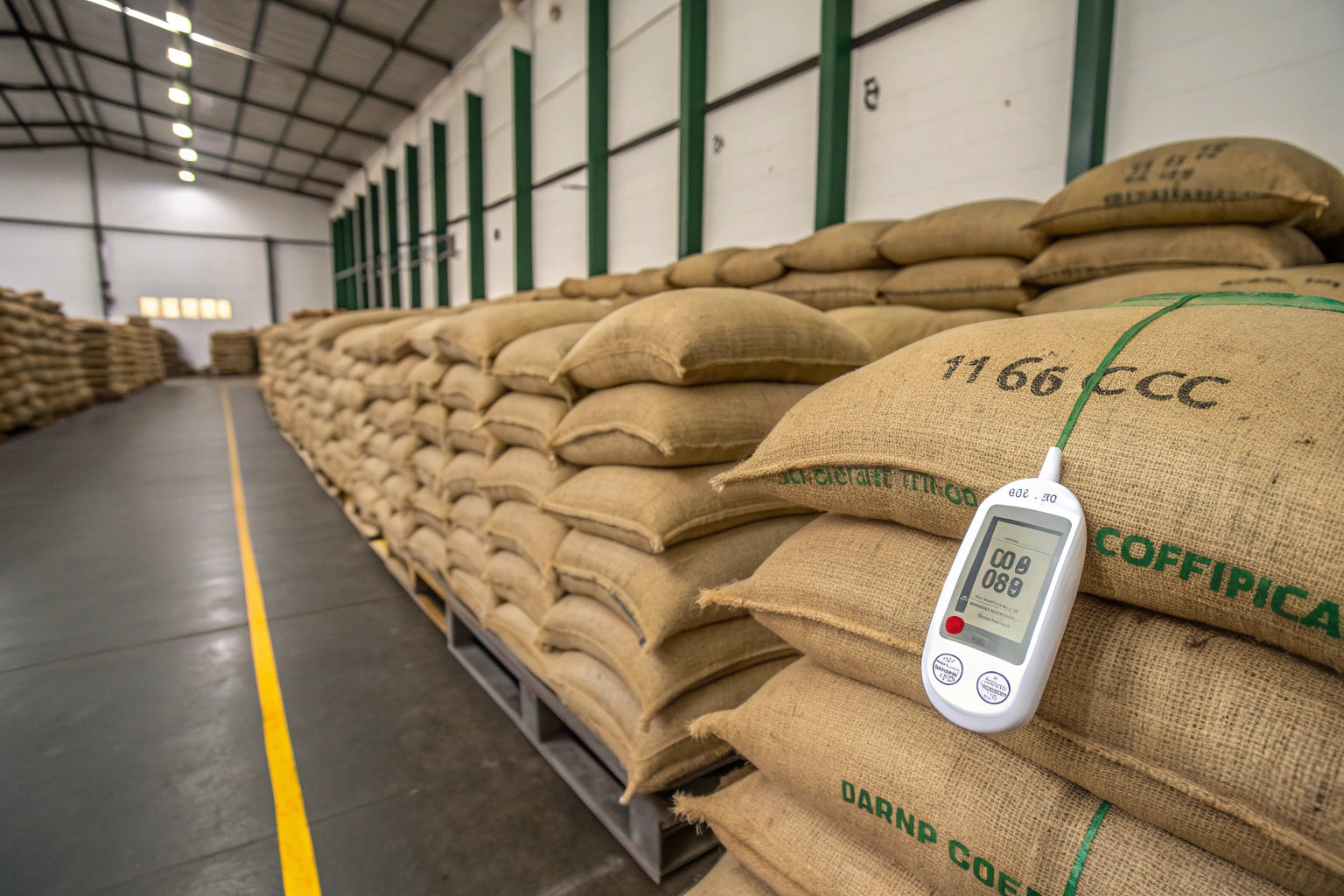
You’ve made a strategic purchase—a full container of this year’s harvest to lock in price and supply for the next 12-18 months. Now, those 300 bags of green coffee are sitting in your warehouse. The clock is ticking. How do you ensure that six months from now, when you finally roast that last bag, it tastes as vibrant and sweet as the day it arrived? Long-term warehousing isn't passive storage; it's active preservation. At our origin facilities in Yunnan, we master this to ensure export quality, and the same principles apply at your roastery.
Preserving green coffee beans during long-term warehousing requires strict control over three environmental factors: humidity, temperature, and atmospheric composition. The goal is to drastically slow the beans' natural aging process (staling) and prevent microbial growth. Best practices include maintaining 50-60% Relative Humidity (RH) and 15-20°C (59-68°F) in a dark, clean, and pest-free warehouse, utilizing breathable yet protective packaging (like jute inside GrainPro), and implementing a rigorous First-In-First-Out (FIFO) inventory system with regular quality audits.
That’s the framework. But the difference between success and failure lies in the relentless consistency of these conditions and the understanding of the science behind them. Let's build your preservation protocol from the ground up.
What Are the Foundational Environmental Controls?
The warehouse itself is your primary preservation tool. You cannot outsmart a bad environment.
1. Humidity Control: The Non-Negotiable Priority
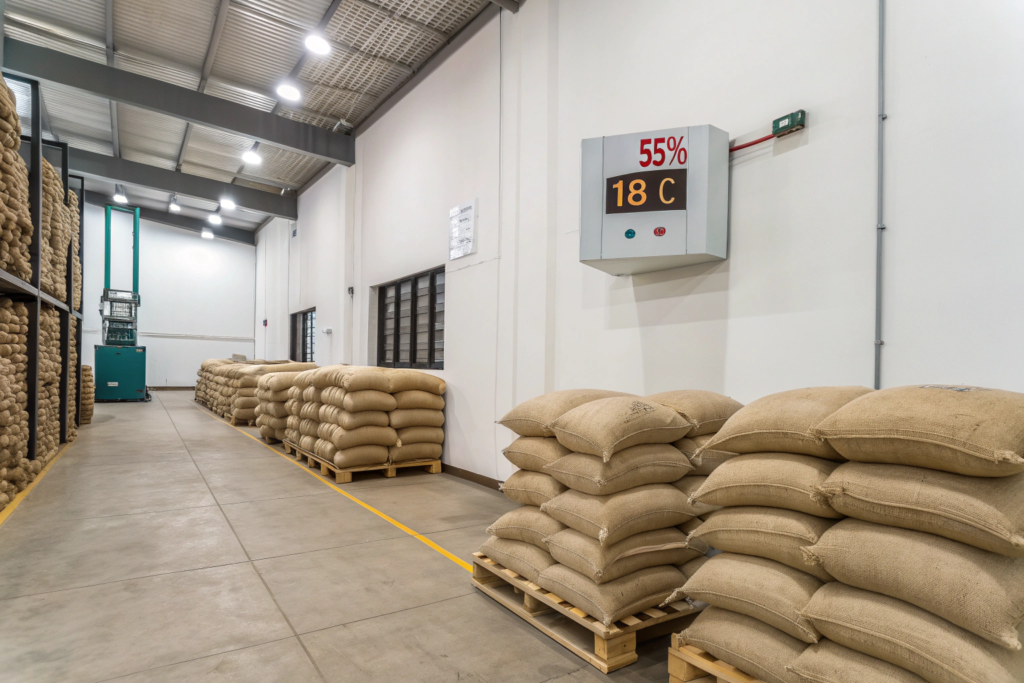
- Target: 50-60% Relative Humidity (RH). This is the single most important parameter.
- Why: Below 45% RH, beans lose moisture too quickly, becoming brittle and accelerating oxidative staling. Above 65% RH, you risk mold growth and “baggy” off-flavors. Stable, moderate humidity keeps the bean in equilibrium.
- Tool: Industrial dehumidifiers are mandatory in most climates. Pair them with a network of accurate digital hygrometers that log data. Never rely on a single wall unit; place sensors at bean level in different zones.
2. Temperature Control: The Stabilizing Force
- Target: A consistent 15-20°C (59-68°F). Avoid fluctuations.
- Why: Heat accelerates all chemical reactions, including staling. The Q10 rule in chemistry states that for every 10°C increase, reaction rates roughly double. Cooling from 25°C to 15°C can more than double the shelf life. More critically, temperature swings cause condensation (sweating) inside bags or on cold walls.
- Tool: Insulated warehouse space and air conditioning or climate control systems. The space should be an interior room, away from exterior walls and loading docks.
3. Darkness and Clean Air
- Light: UV light degrades oils. Store in complete darkness.
- Air Quality: The space must be clean, free from dust, pests, and strong odors. Coffee is hygroscopic and will absorb surrounding smells. Never store near chemicals, fuels, or pungent foods.
Why is Water Activity (Aw) More Important Than Moisture Content for Long-Term Storage?
Moisture Content (MC) tells you the amount of water. Water Activity (Aw) tells you the energy state of that water—how available it is for microbial growth and chemical reactions. For safe long-term storage, the green coffee's Aw must be below 0.60. At this level, mold cannot grow. When you receive coffee, request the Aw analysis from your supplier. Storing coffee that arrives at 0.55 Aw is a world apart from storing coffee at 0.65 Aw, even if both have 11% MC.
How Do You Map and Manage Warehouse "Microclimates"?
The environment is not uniform. Use data loggers to identify hot, cold, or humid spots:
- Near exterior walls or doors.
- In corners with poor air circulation.
- At the top vs. bottom of stacks.
Once mapped, adjust airflow with slow-moving fans (not pointed directly at bags) and reposition dehumidifiers to eliminate these variances. Consistent air circulation prevents stagnant, humid pockets.
What Are the Best Packaging and Stacking Methods?
Your packaging is the coffee's immediate microenvironment. How you stack determines airflow and pressure.
1. Packaging: The Dual-Layer Defense
- Standard for <12 months: Jute or sisal bags stored in the ideal RH/Temp conditions described above. These natural fibers are breathable, allowing minimal moisture exchange with the controlled room air.
- Gold Standard for Long-Term (>12 months) or High-Value Lots: GrainPro-type liners (high-barrier, hermetic bags) placed inside the jute bag. The jute provides physical protection, while the GrainPro liner is sealed, creating a mini-atmosphere that is virtually impervious to external RH fluctuations and pest infestation. This is how we ship our premium lots, and it’s ideal for long-term storage at origin or destination.
2. Stacking and Palletization
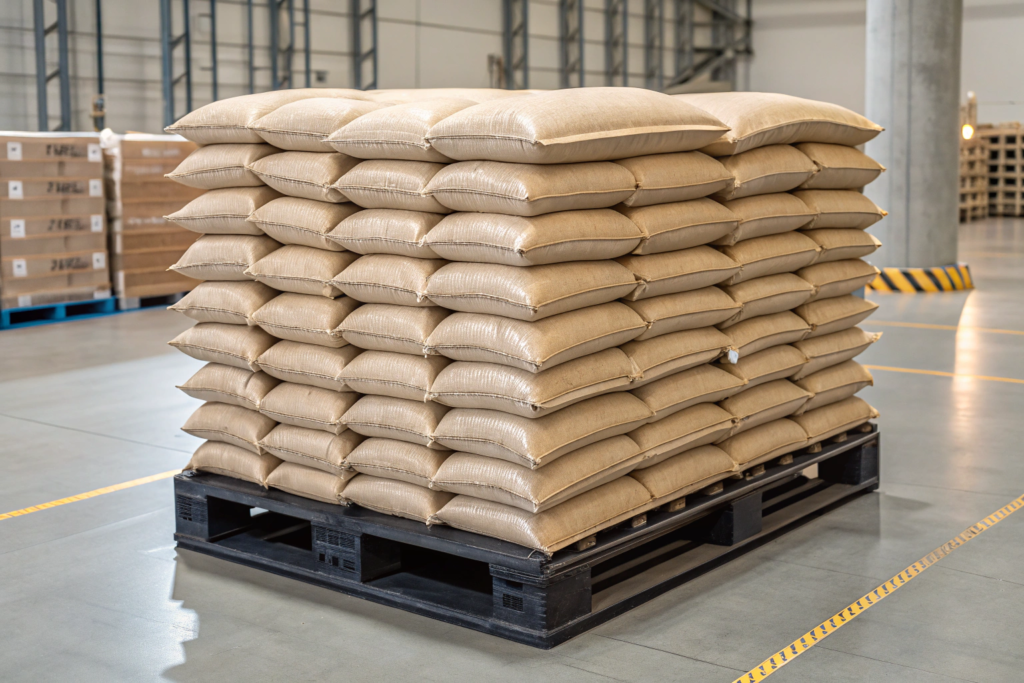
- Always Use Pallets: Bags must never sit directly on a concrete floor. Concrete "sweats," transferring moisture to the bottom bags. Use plastic or wooden pallets.
- The "Stack" Strategy: Create stable, interlocked stacks, but allow for air channels. Do not stack bags flush against walls or each other. Leave a 15-30 cm gap from walls and between rows. This facilitates air circulation for your dehumidifier to work evenly and allows for inspection.
- Height Limit: Avoid stacking too high. Excessive weight compresses the beans at the bottom of the bags, potentially damaging cell structure and making the beans more prone to roasting issues. A practical limit is 8-10 bags high for standard 60kg jute.
Should You Use Vacuum Sealing or CO2 Flushing for Green Coffee?
For green beans, no. Vacuum sealing can crush beans and is impractical for large volumes. Controlled atmosphere (CO2/N2 flushing) is used in some ultra-premium contexts but is extremely costly and complex. The GrainPro liner + controlled room method offers 95% of the benefit at 10% of the cost and complexity, making it the industry best practice.
What is the "First-In-First-Out" (FIFO) System and Why is it Critical?
FIFO is a non-negotiable operational rule. It means the oldest coffee (by harvest or arrival date) is always used first. This prevents any lot from being accidentally stored beyond its optimal window. Implement it with clear lot numbering, warehouse mapping, and strict inventory software or physical tagging. A bag lost in the back for two years is a total loss.
How to Implement a Routine Monitoring and Quality Audit Schedule?
Preservation is not "set and forget." It requires vigilant, scheduled checks.
The Monitoring Schedule:
- Daily: Check and record temperature and RH readings from all sensors.
- Weekly: Visually inspect a sample of bags from different locations for signs of pest activity, moisture stains, or damage.
- Monthly (or Per Lot Before Roasting): Perform a quality audit.
The Monthly Quality Audit Protocol:
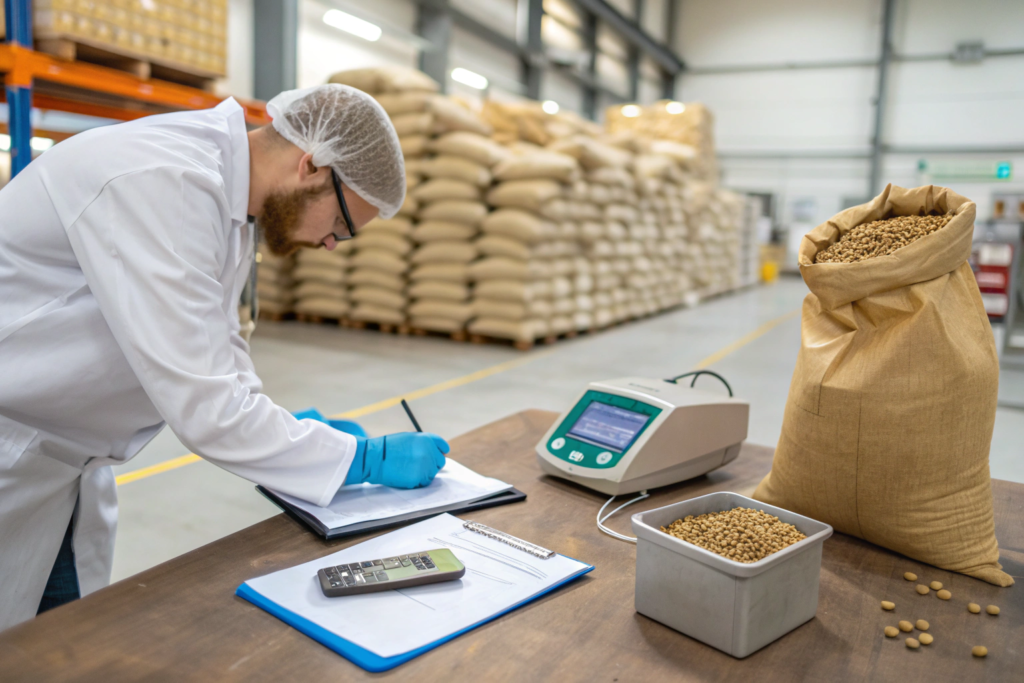
- Sample: Use a trier to pull beans from the center of a bag (not just the top).
- Visual & Olfactory Check: Look for discoloration, mold, or insect damage. Smell deeply—it should be clean, grassy, sweet. Any musty, earthy, or off odor is a red flag.
- Physical Test: Check bean density and brittleness. Beans should be hard, not chalky or easy to crack.
- Moisture Spot Check: Use a calibrated moisture meter.
- The Roast Test: Periodically (e.g., every 3 months), roast and cup a sample from your oldest stock. This is the ultimate test of preservation effectiveness.
How Do You Document All of This for Traceability and Claims?
Maintain a Warehouse Log for each lot. Include:
- Arrival date and initial condition report (including supplier's Aw/MC data).
- Assigned warehouse location.
- Daily/Weekly environmental data.
- Records of all audit findings and roast tests.
This log is invaluable for diagnosing problems, proving due diligence to customers, and providing evidence if you need to make a claim against a supplier for coffee that arrived unstable.
What Are the Signs of Failure During an Audit?
- Musty/Earthy Smell: Indicates mold or microbial growth. Likely cause: RH too high or coffee stored with high Aw.
- Excessive Brittleness, Pale Beans: Indicates over-drying and oxidation. Likely cause: RH too low.
- Insect Webbing or Larvae: Failure in pest control protocols.
- "Baggy" or Flat Flavor in the Cup: The coffee has staled due to oxygen exposure over time, often exacerbated by temperature fluctuations.
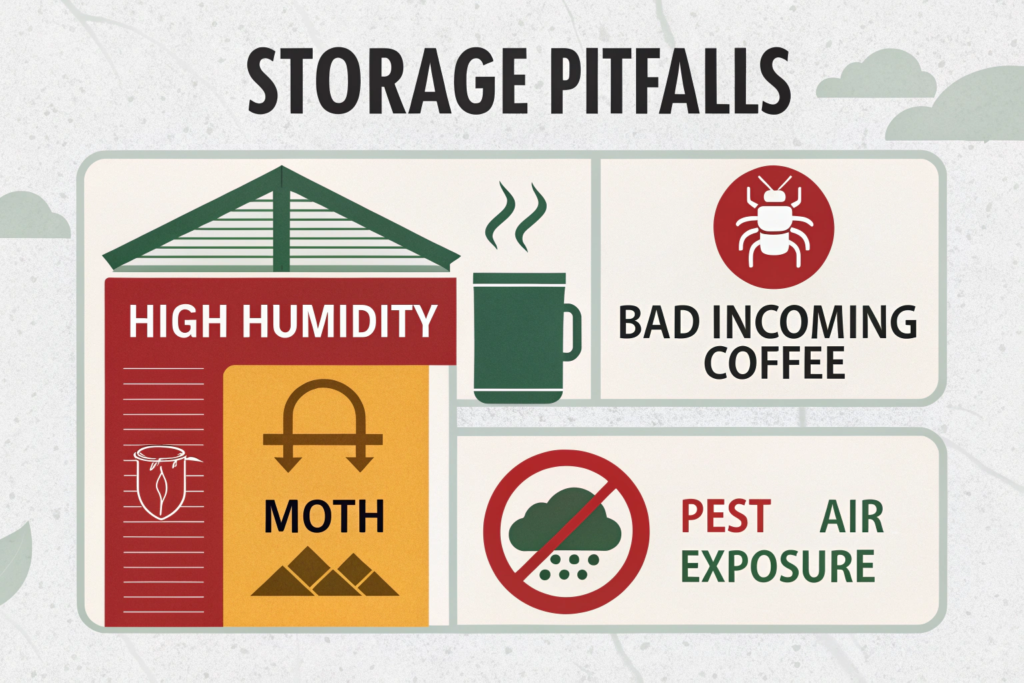
What Are Common Pitfalls and How to Avoid Them?
Even with good intentions, small mistakes can ruin a lot.
Pitfall 1: The "It's Just a Warehouse" Mindset.
- Solution: Treat it as a preservation facility. Invest in the proper infrastructure from day one. The cost of a dehumidifier and insulation is far less than the cost of one lost container of coffee.
Pitfall 2: Ignoring the Coffee's Initial State.
- Solution: You cannot preserve what is already degraded. Only accept coffee that meets your storage standards. Your receiving inspection must verify moisture content (~10-12%) and, ideally, water activity (Aw <0.60). Reject or immediately re-dry coffee that arrives outside spec.
Pitfall 3: Inadequate Pest Control.
- Solution: Implement an Integrated Pest Management (IPM) program. This includes:
- Exclusion: Seal cracks, install door sweeps, use insect screens on vents.
- Sanitation: Keep the warehouse spotlessly clean of spilled beans and dust.
- Monitoring: Use pheromone traps to detect pests early.
- Non-Chemical Control: Use temperature control (cold) or CO2 treatments if needed. Avoid chemical fumigants near coffee.
Pitfall 4: Opening and Re-Closing Bags Frequently.
- Solution: Designate "working" bags for daily production that are used quickly. Keep your long-term storage bags sealed. If you must open a GrainPro bag, have a professional heat sealer to re-close it effectively.
How Long Can You Realistically Store Green Coffee?
Under ideal conditions (55% RH, 18°C, GrainPro bag):
- High-Density Arabica (e.g., Yunnan AA): 18-24 months with minimal quality loss.
- Lower-Density Arabica or Robusta: 12-18 months.
These are maximums for maintaining specialty quality. The coffee will still be safe to drink longer but will taste increasingly flat and woody.
Does Insurance Cover Storage Losses?
Standard property insurance may not cover spoilage due to gradual deterioration, mold, or improper storage conditions. You may need a specific stock deterioration policy or ensure your warehousing practices are explicitly approved by your insurer. Your detailed Warehouse Log is your best evidence of proper care.
Conclusion
Preserving green coffee beans during long-term warehousing is a science of stabilization. It requires an upfront investment in climate-controlled infrastructure, a commitment to rigorous process, and a deep understanding that preservation begins with receiving sound coffee. By mastering control over humidity, temperature, and atmosphere—and combining it with smart packaging, disciplined stacking, and proactive monitoring—you transform your warehouse from a passive holding area into an active quality preservation center.
This capability is a powerful competitive advantage, allowing you to buy strategically, smooth out supply chain volatility, and guarantee your customers consistent quality year-round. It’s the hallmark of a professional, forward-thinking roastery or importer.
If you are setting up or auditing your green coffee storage and want to benchmark against industry best practices, or if you need coffee sourced with optimal stability for long-term warehousing, we can share our expertise and specifications.
For guidelines on our coffee's storage specifications or to discuss sourcing lots specifically processed for long shelf life, please contact our Head of Sales, Cathy Cai, at cathy@beanofcoffee.com. Let's ensure your inventory is an asset, not a liability.