The sample arrives. You open the box. Inside is the coffee, and clipped to the bag is a piece of paper—the grading report. It's filled with numbers, abbreviations, and jargon. "Screen 18, 90% retention." "Moisture: 11.2%, Aw: 0.52." "Defects: 0 Primary, 3 Secondary." "SCA Score: 84.5." You're a business owner, not a Q-Grader. You can taste the coffee and know if it's good. But you're looking at this report and asking: What do these numbers actually mean for my roastery, my consistency, and my bottom line? How do I use this data to make a smarter buying decision and not just rely on a subjective taste test?
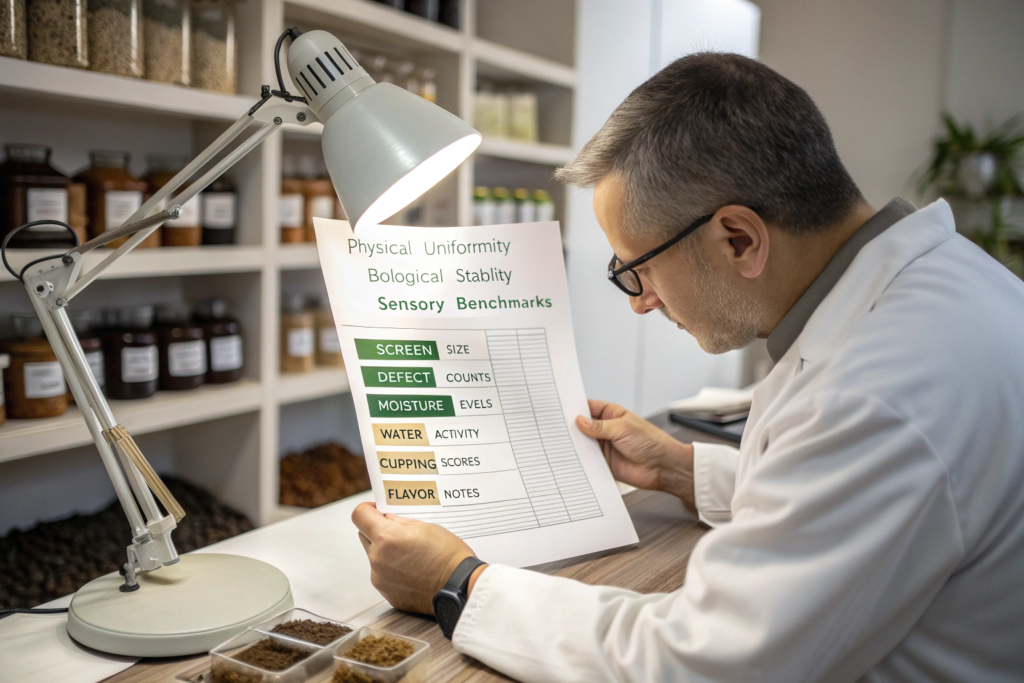
Reading a green coffee grading report like a professional buyer means understanding it as a predictive tool, not just a quality scorecard. The report tells you three critical things beyond the cupping score: (1) Physical Uniformity (Screen Size & Defects): This predicts how evenly the coffee will roast. A tight screen size distribution and low defect count mean fewer roast defects and less waste. (2) Biological Stability (Moisture & Water Activity): This predicts how long the coffee will stay fresh in your warehouse and whether it's at risk for mold. (3) Sensory Benchmark (Cupping Score & Notes): This validates the flavor profile and provides an objective baseline for contract enforcement. A pro buyer uses this data to confirm that the coffee in the bag matches the coffee on the spec sheet.
I generate these reports for every lot we export from Shanghai Fumao. Let me walk you through a real report, line by line, and show you exactly what a professional buyer is looking for.
What Does the Screen Size Analysis Tell Me About Roast Consistency?
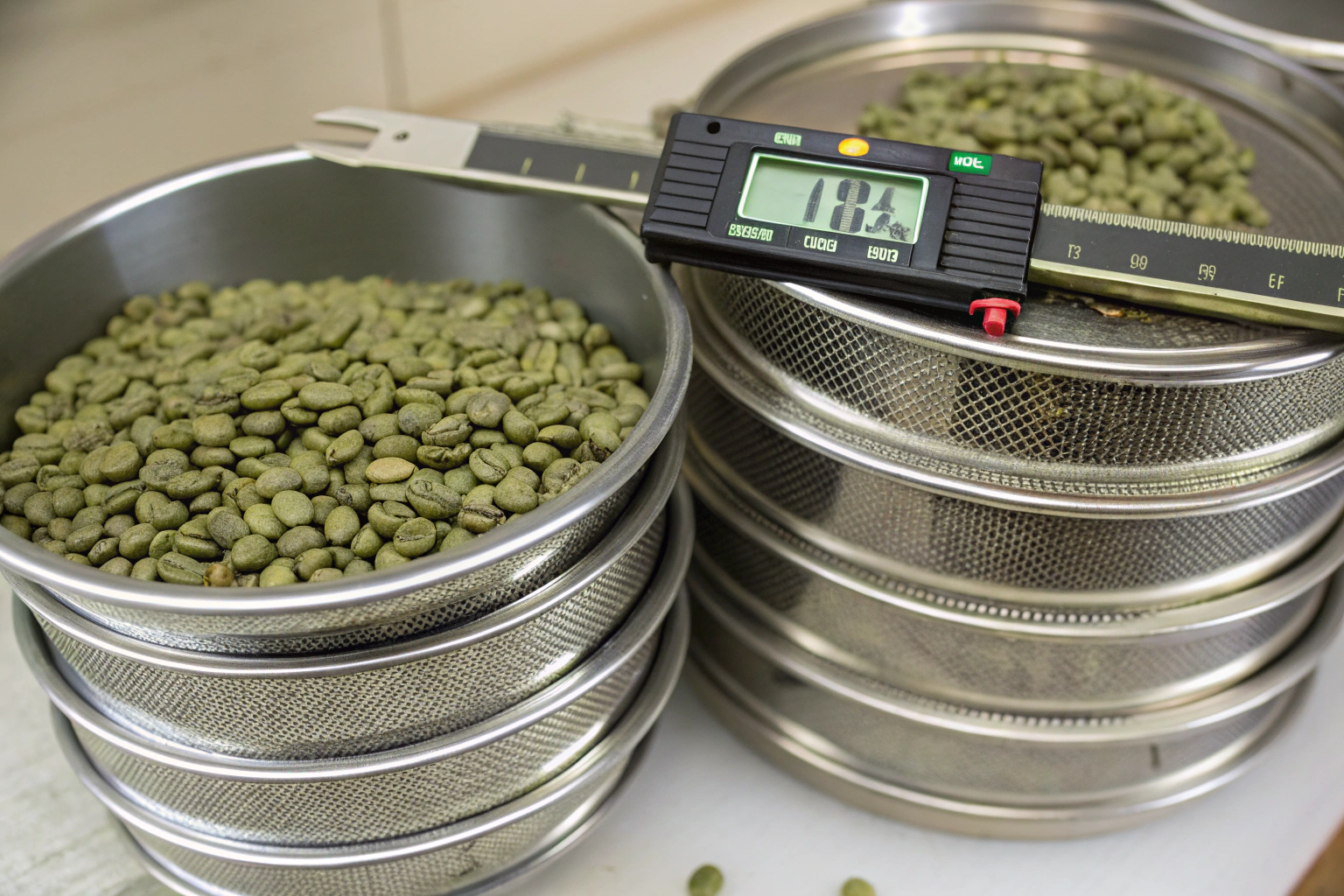
This section of the report is often the most overlooked by new buyers, but it's one of the most critical for your roaster. Screen size is a direct predictor of heat transfer and roast uniformity.
The screen size analysis tells you the physical dimensions of the beans in the lot. It is expressed as a percentage of beans retained on a specific screen size (e.g., "90% Screen 18"). This means 90% of the beans are larger than 18/64 of an inch. A tight distribution (high percentage on one screen) means the beans are physically uniform. This uniformity is essential for even heat absorption during roasting. A lot with a wide range of bean sizes—a mix of large, small, and broken beans—will roast unevenly, with smaller beans scorching while larger beans remain underdeveloped.
Why Is a "90% Retention on Screen 18" Specification Important?
This is the industry standard for a high-quality, "bold" bean size. It's a guarantee of physical uniformity.
When you see "90% Screen 18," you know that the vast majority of the beans in that bag are very close to the same size. This matters for two critical reasons:
- Predictable Roasting: Beans of the same size and mass absorb heat at the same rate. You can lock in a roast profile and run it batch after batch with confidence that the results will be consistent.
- Visual Appeal: Larger, uniform beans are visually more appealing to customers, especially for whole bean sales. They signal quality.
Conversely, a spec that reads "Screen 16/18" or "50% Screen 16, 40% Screen 18" indicates a much wider size variation. This coffee will be more challenging to roast evenly and may produce a less consistent cup. At Shanghai Fumao, our Specialty Grade lots are typically prepared to a strict 90% Screen 18 standard.
How Do Broken Beans and Peaberries Affect the Grading Report?
The screen analysis also accounts for the "outliers"—the beans that don't fit the main profile.
- Broken Beans / Shells: These are fragments. They have a much higher surface area-to-mass ratio and roast much faster than whole beans. A high percentage of broken beans is a guarantee of an uneven roast and a cup with ashy, bitter notes. A good grading report will note the percentage of broken beans.
- Peaberries (PB): This is a natural mutation where the cherry produces a single, round bean. They are not a defect, but they roast differently. A professional grading report will note if the lot contains a significant percentage of peaberries mixed with flat beans. Ideally, a high-quality lot will have the peaberries separated and sold as a distinct "Peaberry" lot. If they are mixed in, the percentage should be low and consistent.
A pro buyer looks at these numbers and can immediately assess the potential roasting challenges a lot presents.
How Do Moisture Content and Water Activity Predict Shelf Life and Safety?
These two measurements are your window into the biological stability of the coffee. They tell you how the coffee was dried and how well it will store. They are the most important food safety metrics on the report.
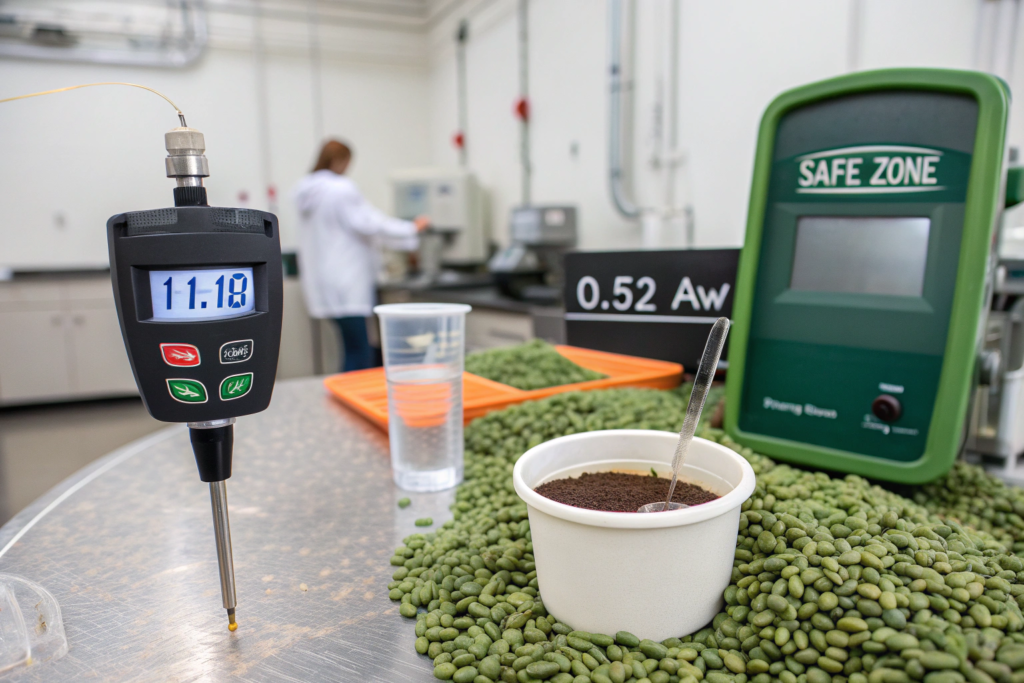
- Moisture Content: The total amount of water in the bean, expressed as a percentage. The target range for stable, long-term storage is 10.5% to 11.5% .
- Water Activity (Aw): The amount of "free" water available for mold and bacteria to use. The critical safety threshold is below 0.55 Aw. Below this level, virtually no microbial growth can occur.
A coffee can have an acceptable moisture content but a dangerously high water activity if it was dried improperly. This is a ticking time bomb for mold. A professional buyer looks at both numbers to ensure the coffee is biologically stable.
What Is the Danger Zone for Water Activity in Green Coffee?
The danger zone is Aw > 0.60. At this level, mold spores can germinate, and the risk of Ochratoxin A (OTA) production increases significantly.
Even if the moisture content reads 11.5% (within spec), a water activity of 0.65 means the water is "free" and mobile. Over weeks or months in a warm warehouse, that water will migrate and fuel mold growth. This is why Aw is a superior predictor of long-term stability. A pro buyer will reject or heavily discount a lot with an Aw reading above 0.55, regardless of the cupping score. It's a non-negotiable food safety and quality parameter. At Shanghai Fumao, we test the Aw of every export lot and provide the data on our grading report. You can learn more about the science of water activity in foods from resources like the FDA Food Safety Modernization Act guidelines.
How Does Proper Drying and Resting Reflect in These Numbers?
A coffee with an ideal moisture content (11%) and a stable Aw (0.52) is a sign of a well-managed drying and resting process.
It tells you that the coffee was likely:
- Dried slowly and evenly, allowing the water to chemically bind to the bean's cellular structure.
- Given adequate time to rest in parchment ("reposo"), allowing the internal moisture to equilibrate.
A coffee with a low moisture content (9%) and low Aw (0.45) was likely over-dried or stored in a very dry environment for too long. It will be brittle and may taste flat and papery. A coffee with a good moisture reading but a high Aw was likely dried too quickly at high temperatures, trapping free water inside. The numbers tell the story of the coffee's journey through the mill.
What Do the "Defect Count" and "SCA Score" Actually Guarantee?
This is the section of the report that gets the most attention, and for good reason. It's the sensory and visual quality guarantee. But a pro buyer understands the specific, technical meaning behind these numbers.
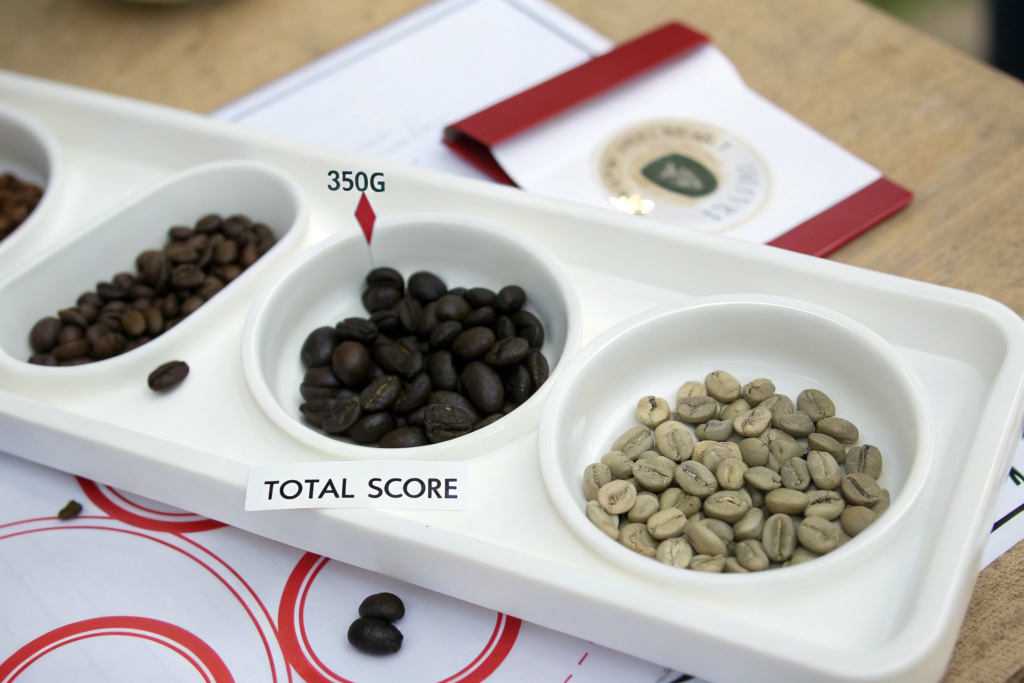
- Defect Count: This is a physical count of specific, visible flaws in a 350-gram sample. The SCA Green Coffee Standard defines Primary Defects (e.g., Full Black, Full Sour) and Secondary Defects (e.g., Partial Black, Broken). A "Specialty Grade" designation requires zero Primary Defects and five or fewer Secondary Defect equivalents.
- SCA Cupping Score: This is a sensory evaluation of the roasted coffee, scored on a 100-point scale by a trained Q-Grader. A score of 80 points or above is required for "Specialty Grade." An 85+ is "Excellent."
These numbers are your contractual quality benchmark. They are objective, measurable, and enforceable.
Why Is "Zero Primary Defects" a Non-Negotiable Line in the Sand?
A single Primary Defect—like a Full Black or Full Sour bean—is a flavor bomb. It's not a subtle imperfection.
One Full Black bean, roasted and ground, can impart a distinct ashy, sooty, or phenolic taint to an entire batch. It's a catastrophic flavor defect. The SCA standard's zero tolerance for Primary Defects in a 350g sample is a recognition of their outsized negative impact. A pro buyer sees "Primary Defects: 0" on the report and knows that the coffee has passed the most critical visual quality gate. If the report shows even one Primary Defect, the lot is technically not Specialty Grade, regardless of the cupping score. You can find the official SCA Defect Handbook and grading protocols on the Specialty Coffee Association website.
What Is the Tangible Difference Between an 83 and an 86 Point Coffee?
While both are "Specialty Grade," the difference is significant and impacts how you should use and price the coffee.
- 83-84 Points ("Very Good"): This is the workhorse specialty coffee. It's clean, sweet, and balanced, but it lacks a distinctive "wow" factor. It's an excellent base for blends, a reliable single-origin for wholesale, and performs consistently. The majority of our core Shanghai Fumao Catimor offerings fall into this range.
- 85-87 Points ("Excellent"): This coffee has distinctive character. The acidity is more complex and defined (e.g., "juicy malic acidity"). The flavor notes are more specific (e.g., "milk chocolate, dried cherry, and honey"). The cup is remarkably clean and the aftertaste is long and sweet. This coffee is a premium offering, suitable for a flagship single-origin or a high-end blend component. It commands a higher price.
- 88+ Points ("Outstanding"): These are the competition-level coffees, the rare micro-lots. They offer exceptional complexity, balance, and intensity. They are priced accordingly.
A pro buyer uses the score to slot the coffee into their portfolio and to validate the price they are paying.
How Can I Use This Report to Hold My Supplier Accountable?
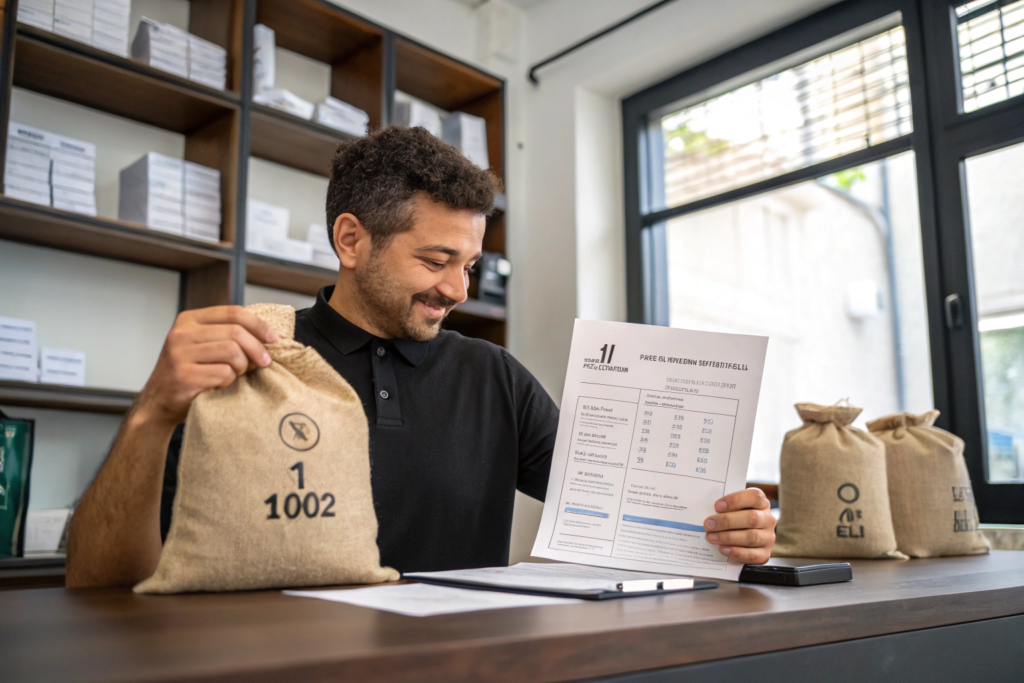
The grading report is not just a piece of paper. It is a legal and commercial document. It is the basis for your quality contract with the supplier. A pro buyer knows how to use it as a tool for accountability.
Using the grading report for accountability involves two key steps: (1) Require the Lot Number on the report to match the Lot Number on your contract and the physical bags. (2) Upon arrival, pull a representative sample and have it independently graded and cupped. Compare the arrival report to the pre-shipment report. Significant deviations in defect count, moisture, or cupping score are grounds for a quality claim and potential financial remedy.
What Is a "Pre-Shipment Sample" vs. an "Arrival Sample" and Why Keep Both?
This is the "trust but verify" system in action.
- Pre-Shipment Sample (PSS): This is the sample you approved before the coffee shipped. It is the benchmark. It should be drawn from the homogenized lot, vacuum-sealed, and labeled with the lot number. Save this sample. Store it in a cool, dark place.
- Arrival Sample: This is the sample you pull from the container after it arrives at your roastery. You should use a trier to pull beans from multiple bags in the stack to create a composite sample.
When the coffee arrives, you roast and cup the Arrival Sample side-by-side with the Pre-Shipment Sample. They should be virtually identical. If the Arrival Sample cups significantly lower, shows more defects, or has a higher moisture content, you have a documented quality discrepancy. This is the basis for a conversation with your supplier. At Shanghai Fumao, we archive a portion of every PSS for exactly this reason. It protects both us and the buyer.
How Do I Use a Third-Party Lab to Verify the Grading Report?
For high-value contracts or when working with a new supplier, independent verification adds an invaluable layer of security.
You can stipulate in your contract that the PSS will be sent directly to an independent, SCA-certified coffee lab or an ISO-accredited food testing lab (like SGS or Eurofins). The lab will generate its own grading report—including defect count, moisture, Aw, and a cupping score. This independent report removes any potential bias and provides an objective, third-party assessment of the coffee's quality. The cost (a few hundred dollars) is a small price to pay for the peace of mind and contractual clarity it provides on a large container purchase. It signals to the supplier that you are a professional, detail-oriented buyer.
Conclusion
Reading a green coffee grading report like a pro is about shifting your mindset from passive acceptance to active analysis. It's about understanding that each number—from screen size to water activity to defect count—is a data point that predicts real-world performance in your roastery and in the cup.
A pro buyer uses this report to answer three critical questions: Will this coffee roast evenly? Will it store safely? Will it taste like the sample I approved? By mastering the language of the grading report, you take control of your quality, you protect your investment, and you build a more transparent, accountable supply chain.
At Shanghai Fumao, we provide detailed, transparent grading reports with every lot we export. We believe an informed buyer is the best long-term partner.
If you'd like to see a sample of our full grading report and walk through it together, I'm happy to schedule a time. My email is cathy@beanofcoffee.com.