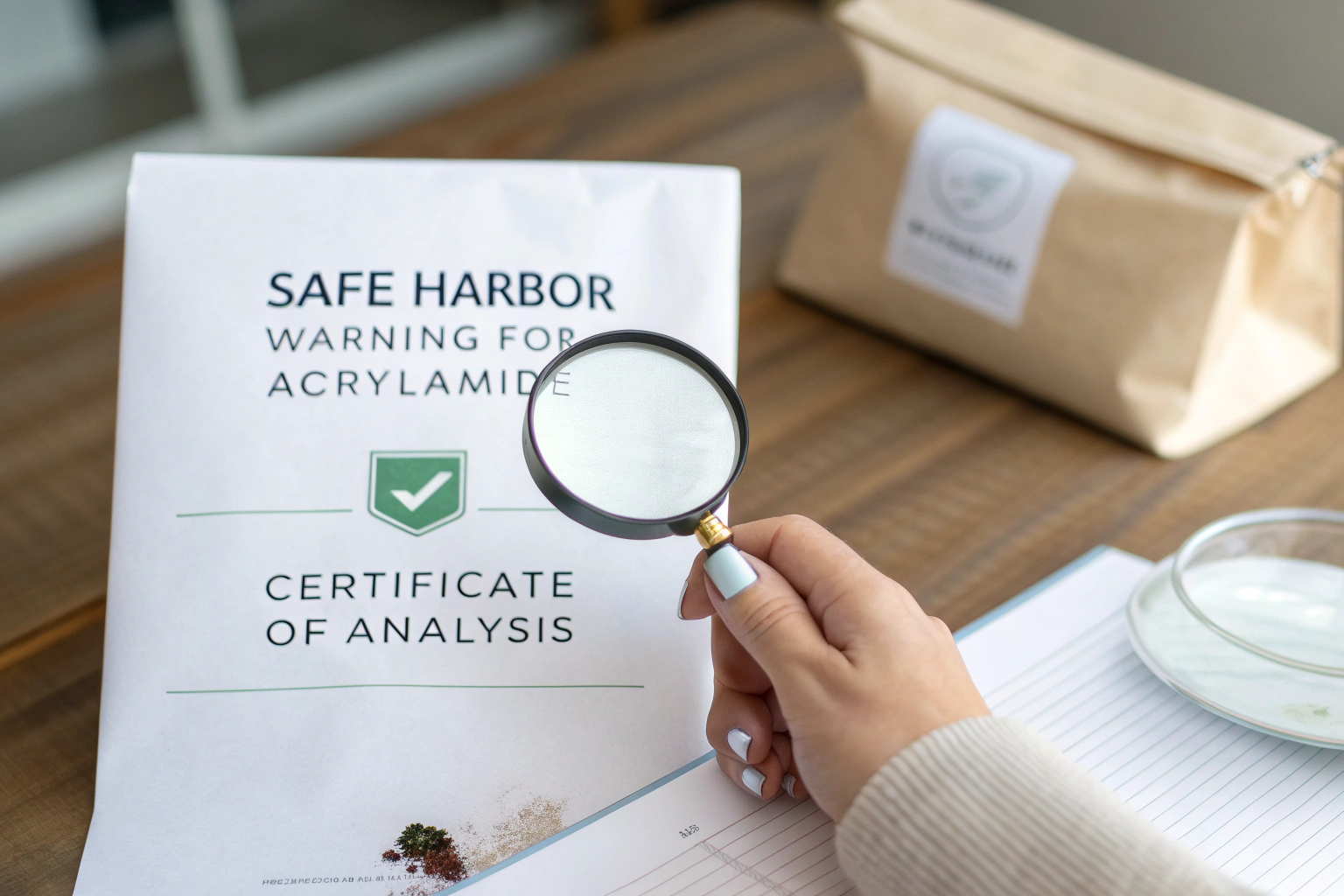
I remember the panic in a small Californian roaster's voice when he called me. He had just received a legal notice. A private enforcer had tested his bag of coffee, found trace levels of acrylamide above the safe harbor level, and was threatening a lawsuit under Proposition 65. He was terrified. He had no idea what acrylamide was or how it got into his coffee. He thought he had done everything right. He bought specialty-grade, organic beans. The problem was not his coffee; it was that his supplier had never provided him with the specific testing data he needed to legally defend himself. The pain of a Prop 65 lawsuit is real and expensive, especially for small businesses.
To source coffee beans that comply with California's Proposition 65, you must look beyond standard quality and organic certifications and specifically request a valid, third-party Certificate of Analysis (CoA) from the green coffee supplier that explicitly states the measured level of acrylamide in the final beverage, enabling you to either prove the level is below the "safe harbor" threshold or to provide the legally required warning to your customers.
This is not about the inherent safety of coffee, which is widely considered negligible. It is about a specific California legal requirement that demands a paper trail. Let me explain the science, the law, and the practical steps you can take to protect your business. At Shanghai Fumao, we understand this challenge and provide the necessary documentation to support our clients. This is a key part of our Quality Control commitment.
What Is the "Acrylamide Issue" in Coffee and California's Prop 65?
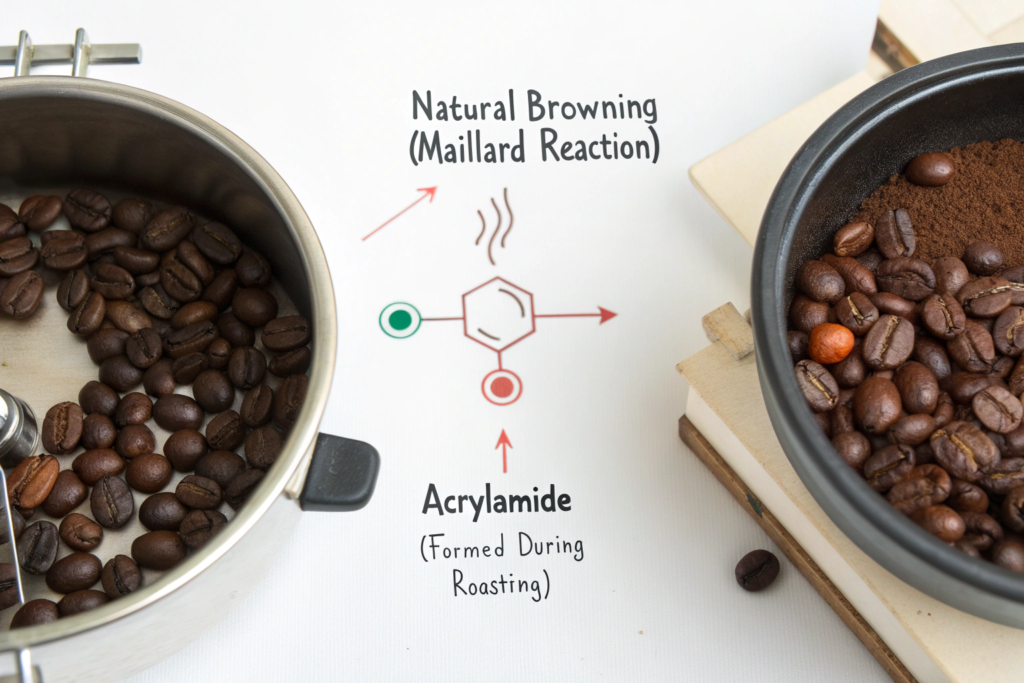
The first step is to remove the fear and mystery. Acrylamide is not an industrial contaminant or a pesticide residue. It is a natural byproduct of cooking. It is formed in many of the foods we love when sugars and an amino acid (asparagine) are heated together in the Maillard Reaction—the same reaction that creates the beautiful brown crust on bread, the crispy edge of a French fry, and the rich, roasty flavor of your coffee.
Acrylamide in coffee is a naturally occurring chemical formed during the roasting process, and California's Proposition 65 requires businesses to provide a "clear and reasonable warning" for products containing chemicals listed by the state as causing cancer or reproductive harm, with acrylamide being one such listed chemical, unless the business can prove the exposure level is below a specific "safe harbor" threshold.
The legal trigger is not the presence of the chemical. It is the presence without a warning when the level exceeds the state's "No Significant Risk Level" (NSRL). Ingesting acrylamide in coffee has not been proven to cause cancer in humans, and coffee itself is actually associated with a reduced risk of certain cancers. But the letter of the Prop 65 law is what creates the legal risk for businesses.
Why Is Roasted Coffee Specifically Scrutinized Under This Law?
Coffee is a unique case under Prop 65, which is precisely why it has been the target of so much litigation. It sits at the intersection of science, law, and daily habit.
- The Chemistry of Roasting: Green coffee beans contain very little acrylamide. It forms rapidly in the early stages of roasting and then peaks. As the roast continues and gets darker, the acrylamide levels begin to decline. This means a light or medium roast will generally have higher levels of acrylamide than a very dark French roast. This is an industry-wide reality.
- The "Beverage" vs. "Product" Legal Debate: For years, the coffee industry successfully argued in court that Prop 65 warnings were not required for coffee because the exposure from drinking it was negligible and, more importantly, that the health benefits of coffee outweighed any theoretical risk. In 2019, the state of California officially clarified that coffee itself does not pose a significant cancer risk.
- The Lingering Threat of Lawsuits: Despite this clarification, the legal landscape for a specific brand of packaged coffee remains complex. A serial litigant can still bring a lawsuit against a small roaster, arguing that an individual product on a shelf, without a Certificate of Analysis, cannot legally claim to be exempt. Defending against even a frivolous lawsuit can cost tens of thousands of dollars in legal fees. This is why the burden of proof falls on the seller (you, the roaster) to have the proper documentation. You can read the official OEHHA statement on coffee here.
What Is a "Safe Harbor" Level and Why Is a CoA Your Best Defense?
The primary way a business can legally sell a product containing a Prop 65 chemical without a warning label is by proving that the level of exposure falls below the state's established "safe harbor" level. For acrylamide, this is the "No Significant Risk Level" (NSRL).
- The Legal Concept: The NSRL is a specific, quantitative level of exposure calculated by the state. For acrylamide, it is 0.2 micrograms per day. If a product exposes a consumer to less than this amount, no warning is required.
- The Need for Proof: You cannot just declare your coffee is below the limit. You must have proof. A legally defensible defense against a Prop 65 lawsuit requires a Certificate of Analysis (CoA) from an accredited laboratory that performed a validated test on a representative sample of your specific coffee, measuring the acrylamide level in the final brewed beverage according to a standard protocol. A CoA from a reputable, ISO 17025 accredited lab is your absolute best defense, as we discuss in our guide on How Do I Know If a Coffee Factory Certificate of Analysis Is Real?. It shifts the conversation from a legal argument to a scientific fact.
How Can Roasters Source Coffee with Verified Acrylamide Data?
Sourcing coffee for the California market is no longer just about flavor and quality. It requires sourcing a partner who understands the specific legal documentation you need. You must proactively ask for acrylamide data, and a professional, transparent supplier should be able to provide it without hesitation.
Roasters can source coffee with verified acrylamide data by making a specific, informed request to their green coffee supplier, asking for a third-party Certificate of Analysis (CoA) that explicitly tests for acrylamide in the brewed coffee, ensuring the test method is appropriate for the beverage and the results are clear and quantitative.
Do not accept a simple "our coffee is safe" email. Demand the verified lab report. This is the standard of due diligence the California legal environment now requires. At Shanghai Fumao, we have conducted this testing on our core lots and can provide the data to our clients. We see it as an essential part of our service to partners selling into the U.S. market.
What Specific Test Should You Ask Your Green Bean Supplier For?
A vague request for "acrylamide data" will not provide the legally defensible proof you need. You must ask for a very specific test, conducted in a very specific way.
- The Method: The analysis must be performed using a validated method, typically Liquid Chromatography with Tandem Mass Spectrometry (LC-MS/MS) . This is the same highly sensitive and specific technology used for pesticide residue analysis.
- The Matrix: The test must not be performed on the dry, roasted bean. It must be performed on the brewed coffee beverage, prepared according to a standardized brewing protocol (e.g., the SCAA "Golden Cup" standard, using a specific coffee-to-water ratio, grind size, and water temperature). This is because you are selling a beverage, and the exposure is from the beverage.
- The Units: The results should be reported in a clear unit, such as "micrograms of acrylamide per liter (µg/L)" of brewed coffee, which easily allows you to calculate the exposure level for a standard serving size. A result reported simply as "Not Detected" is useless without knowing the detection limit of the test.
A supplier who understands Prop 65 will be familiar with this request and will have a current CoA ready. If they are confused or push back, they are not prepared to support you in the California market.
How Does a Reliable Supplier's CoA Establish a "Brew Method"?
The single biggest variable in acrylamide levels is how the coffee is brewed. The extraction of the chemical from the ground bean into your cup varies dramatically with the brew method. A reliable CoA will specify the exact protocol used, making the data applicable to your specific product.
- The Importance of Standardization: You are a roaster, and you likely sell both whole bean and pre-ground coffee. Your customers will use an unknown variety of brew methods, from a weak automatic drip to a strong French press or a single-serve pod. A credible CoA will test a standard protocol, traditionally the cupping preparation or a standardized drip brew. This provides a robust, defensible baseline that is representative of common consumption.
- A Practical Defense: The CoA that I would provide to you, which states the acrylamide level measured in a standard drip-brew preparation of our coffee, provides you with the data you need to calculate the exposure from a typical serving. If someone were to challenge the results based on a different brew method, the burden of proof would shift to them to demonstrate that a realistic, standard method of preparation would produce a level that exceeds the safe harbor. For more on scientific brewing standards, the Specialty Coffee Association has published detailed brewing protocols.
How Can Supply Chain Transparency Help Mitigate Legal Risks?
When a legal threat arises, the quality of your paper trail determines your fate. A transparent, direct, and fully documented supply chain is your ultimate legal shield. Every piece of paper is a piece of evidence. The shorter and more controlled the chain, the stronger your defense.
Supply chain transparency helps mitigate legal risks by creating an unbroken and fully documented chain of custody from the specific farm and roast batch to the final retail bag, allowing you to precisely pinpoint the source and characteristics of any tested coffee and, if necessary, shift liability back to the responsible party.
Opacity creates risk. When the coffee's history is a black box, you are left holding all the liability. At Shanghai Fumao, our vertically integrated model is a legal asset for our clients.
Why Is a Short, Direct Supply Chain Like Ours a Legal Asset?
In a complex, multi-intermediary supply chain, legal liability is a game of hot potato. A lawsuit targets you, the brand. You then must attempt to sue your importer, who sues their exporter, who sues a local trader. Each link weakens your ability to get to the truth and to hold the responsible party accountable.
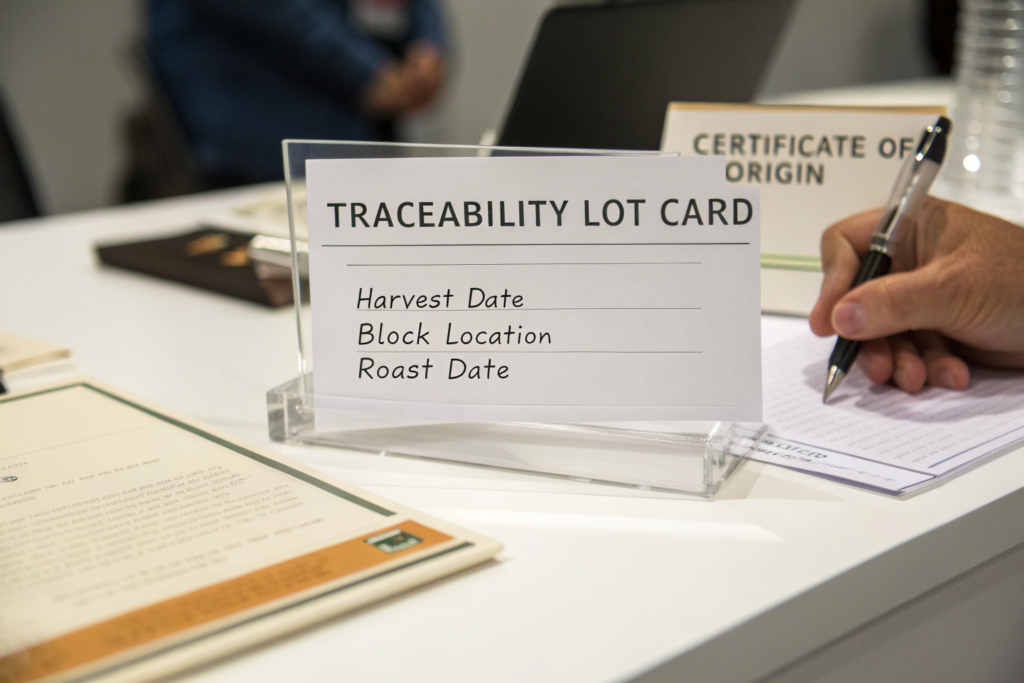
A short, direct supply chain, such as the one from our single estate to your roastery, is a fundamentally different legal proposition. There is one source. There is one set of traceable data. If a batch of coffee from Block 14B on our farm is ever questioned, we can instantly pull the specific agronomic, processing, and analytical records for that exact lot. We do not need to play a game of telephone. The accountability is clear, immediate, and rests with us as the producer. This makes your legal defense both simpler and stronger. It is one of the core advantages we discuss in our article on What Are the Advantages of Sourcing Coffee from a Single Estate in China?.
How Does a Traceability Report Protect Your Roastery from Frivolous Lawsuits?
A frivolous lawsuit is one that lacks legal merit but is still costly to defend. The plaintiffs (often private attorneys) are banking on you not having the receipts. They assume you will pay a nuisance settlement rather than pay for a legal defense. A robust traceability report completely undermines this tactic.
A comprehensive traceability report is your shield against frivolous litigation. By presenting a complete, auditable chain of evidence, you demonstrate immediately to the plaintiff's attorney that you are not an easy target. You can show that the specific coffee in question was sourced from a verified, professional supplier who provided an analytical report confirming it is compliant. You can demonstrate that your operation knew the exact risk profile of the product before it was ever sold. This level of documented due diligence makes you a "hard target," and serial litigants will almost always move on to a softer one. It is the best legal insurance a small roaster can buy, and it comes at no extra cost when you partner with a transparent supplier.
How Can Roasters Ethically Market "Prop 65 Compliant" Coffee?
Once you have done the hard work of sourcing a compliant, tested coffee, you must market it with integrity. The worst thing you can do is use the issue to spread fear about other perfectly safe coffees. The smartest marketing strategy is to lead with transparency and honesty, making a calm, scientific, and legally defensible claim.
Roasters can ethically market "Prop 65 compliant" coffee by strictly avoiding fear-based, unsubstantiated health claims about other products, and instead building a positive brand story around transparency, verified third-party testing, and a commitment to high sourcing standards, making it easy for customers to find and verify the data for themselves.
This approach builds trust with an informed consumer, not fear in an uninformed one. It positions your brand as a leader in transparency, not a merchant of anxiety.
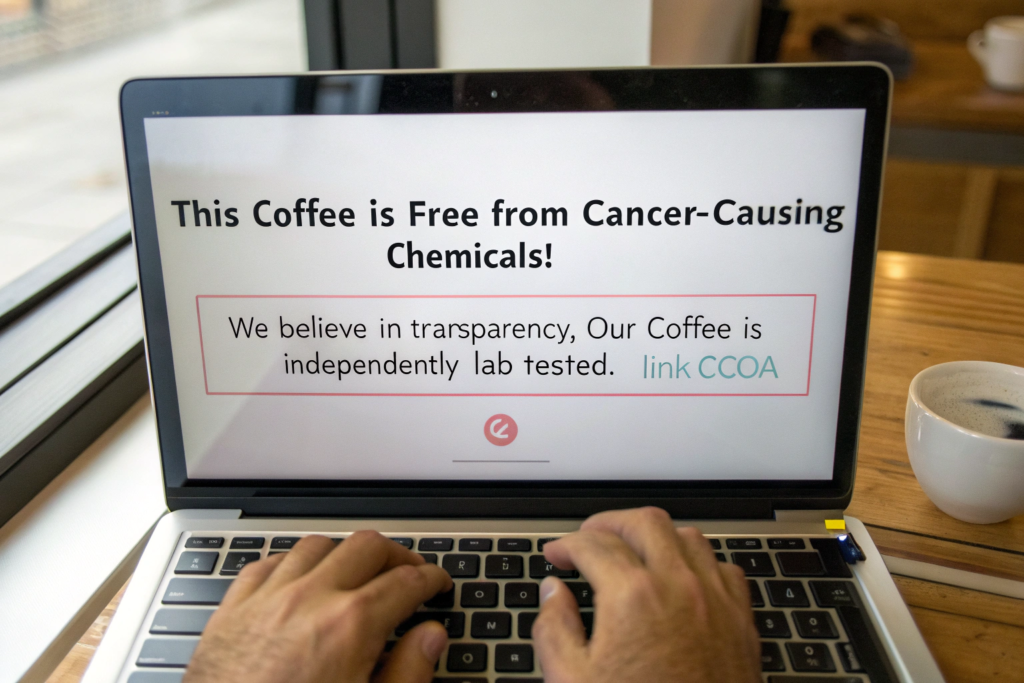
How Can You Make a Positive Claim Without Spreading Fear?
The most ethical and effective way to communicate your commitment is to make it about your specific product's verified purity, without making any negative or comparative statements about the broader coffee market. Your message is one of your quality standards, not a judgment on others.
- Example of Positive, Defensible Phrasing: "We are committed to sourcing and roasting coffee with radical transparency. That is why we partner directly with farms like Shanghai Fumao and independently lab-test every lot of our coffee. We publish our Certificates of Analysis right here on our website so you can see exactly what is—and is not—in your cup. This is our promise of purity."
- Why This Works: This language makes no comparative health claims. It does not say "our coffee is healthier." It simply states the objective, verifiable facts of your sourcing and testing program. It implies quality and care without denigrating other businesses or creating unnecessary fear. It invites the customer into a relationship built on trust and evidence. This is the gold standard of responsible marketing.
Should You Publish the CoA for Full Customer Transparency?
Yes. Publish the Certificate of Analysis directly on your website. This is the ultimate act of brand trust. It transforms a boring legal document into your most powerful marketing asset.
- Why a CoA Is a Marketing Asset: For the health-conscious, skeptical consumer, seeing a real, third-party lab report with your coffee's lot number, testing date, and results is far more compelling than any slogan. It is radical honesty. It proves you are not just making claims; you are backing them up with science.
- How to Do It Well: Make it easy for them. Do not just link to a dense, hard-to-read PDF. Add a clear "Our Testing" or "Purity" page on your site. For your core product, post a legible image of your most recent CoA. Next to it, add a simple, human-friendly summary: "What this means: Our most recent lot, harvested [Date] and roasted [Date], was tested by [Lab Name]. The analysis confirms that acrylamide is present but well within the levels established by California's OEHHA." This also helps demystify the issue for a confused customer. It turns transparency into a competitive advantage and a clear expression of your brand's values.
Conclusion
Sourcing coffee beans that comply with California's Proposition 65 is a straightforward exercise in due diligence and smart partnership. It is not a challenge to your craft; it is a requirement of the modern legal landscape. The path is clear: move beyond a reliance on organic or quality claims and proactively demand the specific, verifiable data you need to legally protect your business.
You do this by asking your green coffee supplier for a recent, third-party CoA that explicitly quantifies the acrylamide level in a standard brewed preparation of your specific coffee. You protect yourself further by building a sourcing model on a foundation of radical transparency, with a short, direct, and fully traceable supply chain. And you turn this rigorous work into a powerful brand asset by sharing your data openly and honestly with your customers.
At BeanofCoffee, we have done this work for our core products. We have the testing data and the traceability documentation to support your business in the California market.
If you are selling coffee in California and need to secure a compliant, documented supply chain, let's talk. We can provide you with the current analytical panel. Email Cathy Cai. Ask for the "Prop 65 Compliance Documentation Pack" for our current lots. Contact Cathy at: cathy@beanofcoffee.com