A roaster from a well-known Nordic-style café in Copenhagen emailed me last month. He was frustrated. "Every sample I get from new suppliers tastes fine at a medium roast," he wrote. "Chocolate, nuts, balanced. But I roast light—Agtron 70, sometimes lighter. At that level, half the coffees taste like grass and lemon juice. The other half taste hollow. I need a coffee that sings at a light roast, not one that falls apart. What should I be looking for?"
I understood his frustration immediately. Light roasting is the most demanding test of green coffee quality. A medium or dark roast can hide a multitude of defects. The roast character—caramelization, Maillard products, roast bitterness—masks underdevelopment and processing flaws. But a light roast exposes everything. The green coffee's intrinsic quality, its processing integrity, and its drying precision are all laid bare. There is nowhere to hide. The coffee either has the density, the acidity, and the sweetness to shine at a light roast, or it does not.
Sourcing green coffee for light roasting requires selecting high-density, high-altitude lots with clean processing, bright but balanced acidity, and intense intrinsic sweetness—characteristics that allow the bean to develop fully at lower roast temperatures without the vegetal underdevelopment or thin hollowness that plague lower-quality lots at light roast levels.
Here is exactly what to look for in the green coffee, what processing methods work best, which origins deliver, and how to verify that a lot will perform at a light roast before you commit.
What Green Coffee Characteristics Predict Light Roast Success?
The physical characteristics of the green bean are the first predictors of light roast performance. These characteristics can be measured and evaluated before a single bean is roasted. They tell you whether the coffee has the structural and chemical foundation to develop fully at lower roast temperatures.
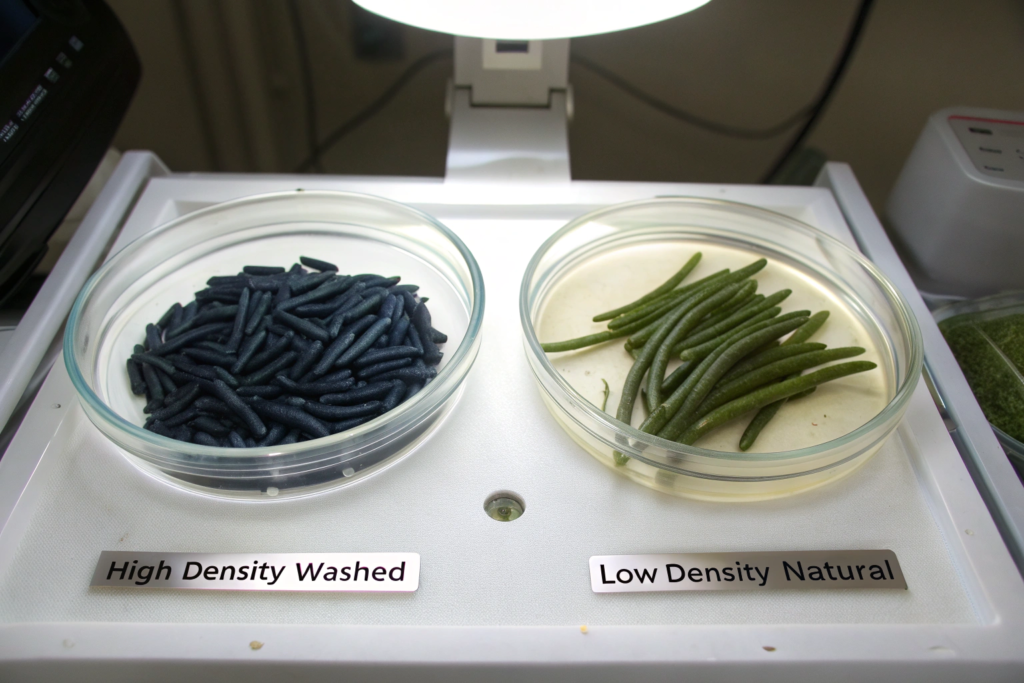
Density is the most critical physical parameter. Light roasting requires a bean that can absorb enough thermal energy to develop its sugars and aromatics without scorching. A high-density bean—typically 720 grams per liter or above—has a compact cell structure that transfers heat slowly and evenly. The bean core reaches development temperature at a pace that allows the chemical reactions to proceed in balance. A low-density bean—below 680 grams per liter—absorbs heat too quickly. The surface can scorch before the core develops. The result is a cup that tastes simultaneously roasty and grassy.
Altitude is the primary driver of density. Beans grown at 1,500 meters or above, where cooler temperatures slow cherry maturation, develop denser cell structures and higher concentrations of sugars and organic acids. These high-altitude beans are built for light roasting. Beans grown below 1,200 meters tend to be softer, less dense, and less chemically complex. They can produce pleasant cups at medium roasts but often taste hollow or vegetal at light roasts.
The ideal green coffee for light roasting has a bulk density above 720 grams per liter, moisture content between 10.5 and 12 percent, water activity below 0.55, and a uniform blue-green color with tight, pale center cuts—all indicators of high-altitude, slow-dried, properly stored beans with intact cellular structure.
Moisture content and water activity are also important. A coffee with moisture too high—above 12 percent—will not transfer heat efficiently. The excess water absorbs energy that should be going into chemical development. A coffee with moisture too low—below 10 percent—may have degraded cell structure and will roast unevenly. The ideal range is 10.5 to 12 percent, with water activity below 0.55, indicating the water is properly bound within the bean matrix and the bean has been dried slowly and stored well.
Why Is High Altitude Washed Arabica Best for Light Roasts?
High altitude and washed processing are the classic combination for light roast success. This is not a coincidence. The two factors reinforce each other to produce a coffee with the structure, the acidity, and the cleanliness that light roasting demands.
Altitude, as discussed, produces dense, sugar-rich beans with complex acidity. The cooler temperatures slow cherry maturation, allowing more time for sugar accumulation and acid development. The diurnal temperature swing—warm days, cool nights—preserves organic acids that would otherwise be respired away. The result is a bean with high intrinsic sweetness and bright, complex acidity.
Washed processing removes the fruit mucilage cleanly before drying. The fermentation is short and controlled. The bean is dried in its parchment shell, protected from direct sun and environmental contamination. The result is a coffee with exceptional clarity, transparency, and absence of ferment. There are no wild fruit notes, no earthy undertones, no processing distractions. The cup expresses the varietal and the terroir with precision.
At a light roast, this combination shines. The high density ensures even heat transfer and full development. The bright acidity provides structure and liveliness. The clean processing ensures no off-flavors are amplified by the light roast. The cup tastes clean, vibrant, and complex—exactly what the Nordic-style roaster is seeking.
Washed Yunnan Catimor from 1,500 meters or above fits this profile perfectly. The beans are dense—720 to 750 grams per liter. The processing is meticulous—controlled fermentation, slow drying on raised beds. The acidity is bright but balanced. The flavor is clean chocolate, almond, and citrus. At a medium roast, it is a crowd-pleaser. At a light roast, it reveals a brightness and clarity that surprises roasters who only know Catimor from lower-altitude, commodity-focused origins.
Can Natural or Honey Processed Coffees Work at Light Roasts?
Natural and honey processed coffees can work at light roasts, but they are riskier and less predictable than washed coffees. The same processing characteristics that create intense fruit and body at medium roasts can create harshness, ferment, and uneven development at light roasts.
Natural processed coffees have higher sugar content and lower density than washed coffees from the same altitude. The sugars can caramelize unevenly at a light roast, producing a mix of underdeveloped vegetal notes and burnt sugar notes. The ferment character, which can taste pleasantly fruity at a medium roast, can taste sour, harsh, and unclean at a light roast. The body can feel thin and disjointed.
However, a very clean, carefully dried natural can produce a stunning light roast. The key is extreme cleanliness. The natural must have zero ferment defects. The drying must have been slow and even. The cherries must have been picked at peak ripeness. A natural that meets these standards can cup with intense, clean fruit notes—blueberry, strawberry, mango—that are dazzling at a light roast.
Honey processed coffees sit between washed and natural. They retain some mucilage during drying, which adds body and sweetness. At a light roast, a well-processed honey can have more complexity than a washed coffee while retaining more cleanliness than a natural. The honey process is a good middle ground for roasters who want more fruit and body than a washed lot but are wary of the ferment risk of naturals.
I recommend that roasters test natural and honey lots specifically for light roast performance. Cup the lot at the target Agtron level—65 to 70 whole bean. Look for clean fruit notes without sourness or harshness. If the lot passes, it can be a unique offering. If it fails, stick with washed lots for light roast applications. For more on processing and roast interaction, the Specialty Coffee Association has published sensory science resources.
Which Origins Produce Beans That Shine at Light Roasts?
The origin of the coffee sets the baseline for its light roast potential. Some origins, due to their altitude, climate, and processing traditions, consistently produce coffees that excel at light roasts. Others are better suited to medium or dark roasts.
East Africa—Ethiopia, Kenya, Rwanda—is the classic light roast origin. The high altitudes, the heirloom varieties, and the washed processing traditions produce coffees with intense floral and citrus notes, bright acidity, and light body. These coffees are built for light roasting. The flavors are explosive at Agtron 65 to 70. A washed Ethiopian Yirgacheffe at a light roast can taste like jasmine tea and lemon zest. A washed Kenyan SL28 can taste like blackcurrant and tomato. These are the benchmark light roast coffees.
Central America—Guatemala, Costa Rica, Panama—also produces excellent light roast coffees. The high altitudes of Huehuetenango, Tarrazú, and Boquete produce dense beans with bright acidity and complex fruit and caramel notes. Washed Costa Rican and Guatemalan coffees at a light roast are balanced, clean, and vibrant. They are less explosively floral than Ethiopians but more structured and consistent.
Yunnan, China is an emerging origin for light roast specialty coffee, with high-altitude washed Catimor delivering bright but balanced acidity, a clean chocolate and almond base, and surprising citrus complexity when roasted to Agtron 65 to 70, offering a distinctive and cost-effective alternative to traditional light roast origins.
South America—Colombia, Peru, Bolivia—is a mixed picture. High-altitude washed Colombians from Huila or Nariño can be excellent at light roasts, with bright acidity and caramel sweetness. Lower-altitude Colombians and most Brazilians are softer and better suited to medium roasts. Brazilian naturals, in particular, tend to taste flat and peanut-like at very light roasts.
Asia—outside of Yunnan—is generally less suited to light roasting. Wet-hulled Sumatrans are earthy, heavy, and low-acid, characteristics that taste muddy and vegetal at a light roast. Washed Javas and Sulawesis can work but lack the brightness and complexity of East African or Central American origins.
Why Is Yunnan Washed Catimor a Surprising Light Roast Candidate?
Yunnan washed Catimor is not the first coffee most roasters think of for light roast applications. The variety's reputation is built on medium and medium-dark roasts for espresso and cold brew. But at high altitude, with careful processing, Yunnan Catimor can produce a light roast that is balanced, clean, and surprisingly complex.
The key is the altitude. Our Catimor grown at 1,500 to 1,600 meters has the density and the sugar content to develop fully at a light roast. The beans are hard and compact—720 to 750 grams per liter. They absorb heat efficiently and roast evenly. The acidity is bright but not sharp—citrus, specifically lemon and tangerine, with a hint of stone fruit. The flavor base is chocolate and almond, but at a light roast, the chocolate recedes and the citrus and nut notes come forward.
The washed processing ensures the cup is clean. There is no ferment, no earth, no must. The light roast amplifies the clarity. The body is medium—lighter than at a medium roast but not thin or watery. The finish is clean and sweet, with the citrus note lingering pleasantly.
For a roaster looking for a light roast single origin that is not another Ethiopian or Guatemalan, Yunnan washed Catimor offers a point of difference. The flavor profile is distinct—chocolate, almond, and citrus—and the origin story is compelling. The pricing is competitive with Central American washed lots. The volumes are available.
At Shanghai Fumao, we select specific lots for light roast performance. These are our highest-altitude, densest, most carefully processed Catimor lots. The cupping scores at Agtron 65 to 70 are 84 to 86 points. The flavor notes are clean, bright, and balanced.
How Do Ethiopian and Kenyan Beans Compare to Chinese Beans at Light Roasts?
The light roast flavor profiles of Ethiopian, Kenyan, and Chinese washed coffees are distinct. A cupper can identify the origin in a blind tasting by the acidity, the body, and the primary flavor notes.
Ethiopian washed coffees are the most floral and citrus-forward. The acidity is bright and sparkling—lemon, bergamot, sometimes almost effervescent. The body is light and tea-like. The flavor notes are jasmine, lemon zest, black tea, and sometimes a hint of stone fruit. The coffee tastes like a delicate, aromatic tea as much as a traditional coffee. This profile is beloved by Nordic roasters and filter enthusiasts.
Kenyan washed coffees are the most intensely acidic and savory. The acidity is sharp and complex—blackcurrant, tomato, sometimes with a phosphoric tang. The body is heavier than Ethiopian. The flavor notes are blackcurrant, tomato leaf, and brown sugar. The coffee tastes bold, savory, and intense. It is a love-it-or-hate-it profile that commands fierce loyalty from its fans.
Chinese washed Catimor occupies a middle ground. The acidity is brighter than a Central American but less intense than an Ethiopian or Kenyan. The body is heavier than both. The flavor notes are chocolate, almond, and citrus—cleaner and more chocolate-driven than East African coffees. The coffee tastes balanced, approachable, and satisfying. It does not have the explosive florals of an Ethiopian or the savory intensity of a Kenyan. It has its own character—clean, nutty, and bright.
For a roaster, the choice between these origins depends on the target customer. The Ethiopian and Kenyan lots are for the adventurous light roast enthusiast who seeks intensity and distinctiveness. The Chinese lot is for the customer who wants a balanced, clean, bright cup that is accessible and satisfying. Both are valid. Both are excellent.
How Should You Cup Samples for Light Roast Performance?
Cupping for light roast performance requires a different approach than cupping for general quality. The roast level of the sample must match the intended production roast level. The evaluation must focus on the attributes that light roasting amplifies—acidity, sweetness, cleanliness—and the defects that light roasting exposes—underdevelopment, grassiness, harsh acidity.
The sample roast is the foundation of the evaluation. The sample should be roasted to the target light roast level—Agtron 65 to 70 whole bean, or lighter if the roaster's production profile is lighter. The roast should be executed carefully, with a controlled profile that avoids scorching or underdevelopment. A poorly roasted sample invalidates the evaluation.
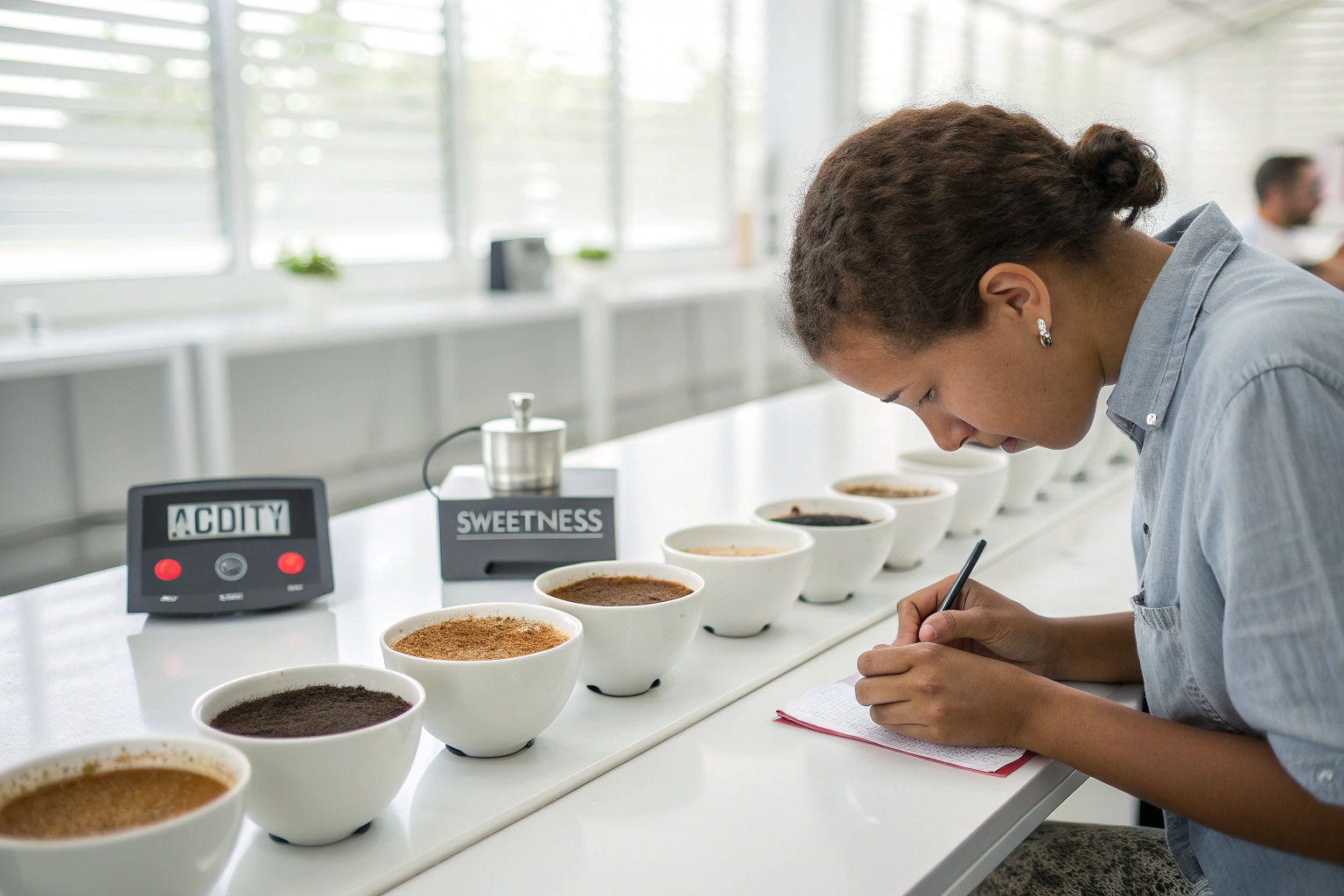
The cupping should follow the standard SCA protocol, but with additional attention to the attributes that matter most for light roasts. The evaluation should cover the hot cup, the warm cup, and the cool cup. Light roast defects often become more apparent as the coffee cools. A coffee that tastes balanced and sweet hot may taste sour and thin at room temperature.
Effective light roast cupping requires roasting the sample to the target production Agtron level of 65 to 70, evaluating the coffee at multiple temperatures with special attention to acidity quality and sweetness intensity, and rejecting any lot that shows vegetal underdevelopment, harsh sourness, or thin hollowness at cool temperatures.
The acidity must be evaluated for quality, not just intensity. Bright, complex acidity—citric, malic, stone fruit—is desirable. Sharp, sour, astringent acidity is a defect. The acidity should be balanced by sweetness. A coffee with high acidity and low sweetness tastes sour. A coffee with high acidity and high sweetness tastes vibrant. The sweetness is the key.
The body should be evaluated at the light roast level. A coffee that has heavy body at a medium roast may have light, silky body at a light roast. This is not a defect if the body is pleasant. A coffee that becomes thin, watery, and hollow at a light roast has insufficient density or intrinsic body. It will not satisfy the customer.
What Roast Defects Appear in Underdeveloped Light Roasts?
Underdevelopment is the most common defect in light roasts. It occurs when the bean has not absorbed enough thermal energy to fully develop its sugars and aromatics. The outside is roasted, but the inside is still partially raw.
Underdeveloped light roasts taste vegetal and grassy. The flavor is reminiscent of fresh-cut grass, green beans, or raw grain. There is no sweetness. The acidity is sharp and astringent, not bright and balanced. The body is thin. The finish is dry and short.
Underdevelopment has two causes. The first is insufficient heat application during the roast. The charge temperature was too low. The drying phase was too slow. The development time was too short. The roaster can fix these by adjusting the profile.
The second cause is green coffee that is not suitable for light roasting. The bean density is too low. The moisture content is too high. The sugars are insufficient. No roast profile can fully develop a bean that lacks the intrinsic characteristics for light roast success. This is why green coffee selection is critical.
To screen for underdevelopment risk, cup the sample at the target light roast level. If the coffee tastes grassy, vegetal, or astringent, the lot is not suitable. Roast it darker or reject it. Do not assume that a better roast profile will fix it. The green coffee may simply not have the structure for light roasting.
How Long Should You Rest a Light Roast Before Cupping?
The rest period after roasting is critical for light roast evaluation. Light roasts develop more slowly than dark roasts because the chemical reactions are less advanced. A light roast cupped too soon will taste gassy, sharp, and undeveloped.
I recommend resting light roast samples for 24 to 48 hours before cupping. This allows the carbon dioxide to degas, the volatile aromatics to stabilize, and the flavors to integrate. A cupping at 8 hours post-roast will taste different—and usually worse—than a cupping at 36 hours.
For production evaluation, the coffee should also be cupped at 7 days and 14 days post-roast. Light roasts tend to age more gracefully than dark roasts because the lipids are less oxidized and the cell structure is more intact. But some light roasts fade quickly. The extended cupping reveals the shelf stability of the lot.
I provide roast date and cupping recommendations with every sample I send. The buyer should follow the recommended rest period before evaluating the lot. A rushed evaluation leads to poor decisions and missed opportunities. For more on sample roast protocols, the Specialty Coffee Association publishes standard cupping guidelines that include rest period recommendations.
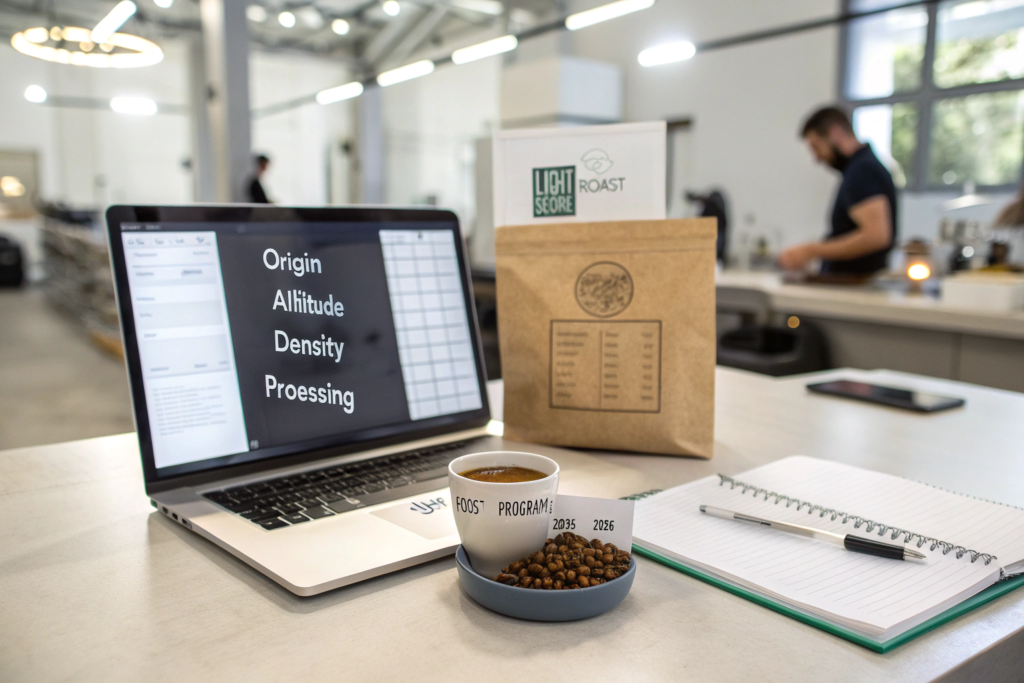
How to Build a Light Roast Sourcing Program?
Building a light roast sourcing program requires planning, relationship building, and consistent evaluation. It is not a one-time purchase. It is an ongoing program that delivers consistent quality across harvests.
The first step is to define the light roast product. Is it a single origin filter coffee? A competition coffee? A blend component for a light roast espresso? The product definition determines the volume, the price point, and the flavor target.
The second step is to identify origins and producers that consistently deliver light roast quality. Build relationships with these producers. Visit them if possible. Cup their lots at the target roast level. Understand their harvest calendars, their processing methods, and their quality tiers.
A successful light roast sourcing program identifies specific high-altitude lots that cup well at Agtron 65 to 70, establishes direct relationships with the producers who grow them, and secures forward contracts to lock in access to the best lots from each harvest season.
The third step is to secure forward contracts. The best light roast lots are often micro-lots or small premium lots that sell quickly. A forward contract guarantees access to the lot before it reaches the open market. The contract specifies the variety, the processing method, the altitude, the target cupping score, and the volume.
At Shanghai Fumao, we work with roasters to develop custom light roast sourcing programs. We identify the highest-altitude, densest lots from our farm. We process them specifically for light roast performance. We provide density data, moisture readings, and light roast cupping scores. We offer forward contracts for annual supply.
What Questions Should You Ask a Supplier About Light Roast Lots?
When sourcing for light roast, the buyer should ask specific questions that reveal whether the supplier understands light roast requirements and whether the lot is suitable.
First: "What is the altitude of the plot?" The answer should be 1,500 meters or above for the best light roast potential. Below 1,200 meters, the beans are likely too soft and low in acidity.
Second: "What is the bulk density of this lot?" The answer should be above 720 grams per liter. If the supplier does not measure density, they are not managing for light roast quality.
Third: "What is the moisture content and water activity?" The answers should be 10.5 to 12 percent moisture and below 0.55 water activity. These values indicate proper drying and storage.
Fourth: "Do you have cupping scores for this lot at a light roast level?" The supplier should be able to provide cupping scores from a roast at Agtron 65 to 70. Scores from a medium roast are not predictive of light roast performance.
Fifth: "How was this lot dried?" The answer should describe slow, even drying on raised beds. Fast drying or mechanical drying at high temperatures damages the bean structure and reduces light roast potential.
I answer these questions for every lot I sell. The data is part of the lot card. The buyer can make an informed decision based on objective measurements and sensory evaluation.
How Should You Price a Light Roast Exclusive Lot?
Light roast exclusive lots command a premium because they are selected from the best production, processed with extra care, and available in limited volumes. The pricing should reflect the quality and the scarcity.
The premium for a light roast exclusive lot is typically 30 to 50 percent above the standard lot price for the same origin and variety. The premium covers the extra sorting, the smaller batch processing, the detailed documentation, and the opportunity cost of reserving the lot for a single buyer.
The retail price for a light roast exclusive lot should be in the premium single-origin range—$22 to $32 per 12-ounce bag, depending on the origin, the score, and the roaster's brand positioning. The customer who buys a light roast exclusive lot is paying for transparency, distinctiveness, and quality. The price should reflect those values.
The volume for a light roast exclusive lot is typically small—50 to 300 kilos. The lot size is limited by the production of the specific plot. The exclusivity is genuine. The buyer receives the entire production of that lot. No other roaster has the same coffee. The scarcity is part of the value.
I work with buyers to structure pricing that works for both sides. The pricing is transparent. The buyer knows exactly what they are paying for—the coffee, the selection, the processing, and the exclusivity.
Conclusion
Sourcing green coffee for light roasting is the most demanding test of coffee quality. The beans must be dense, grown at high altitude, and processed with meticulous cleanliness. Washed processing provides the transparency and clarity that light roasting amplifies. Natural and honey processed lots can work but require extreme cleanliness and careful testing.
Yunnan washed Catimor from high altitude is a surprising and compelling light roast candidate. The beans are dense, the processing is clean, and the cup is balanced and bright—chocolate, almond, and citrus at a light roast level. It offers a distinctive alternative to the classic East African and Central American light roast origins.
The cupping evaluation must be done at the target light roast level, with attention to acidity quality, sweetness intensity, and the absence of underdevelopment. The sourcing program should be built on relationships with producers who understand light roast requirements and who can provide the data—altitude, density, moisture, cupping scores—that supports the buying decision.
If you are building or refining a light roast program and want to test how our high-altitude washed Yunnan lots perform, contact Cathy Cai at BeanofCoffee. She can send you samples selected specifically for light roast potential, along with density data, moisture readings, and cupping scores at Agtron 65 to 70. She can also discuss forward booking and exclusive lot arrangements. Her email is cathy@beanofcoffee.com. She responds quickly and can help you find the right lots for your light roast lineup.