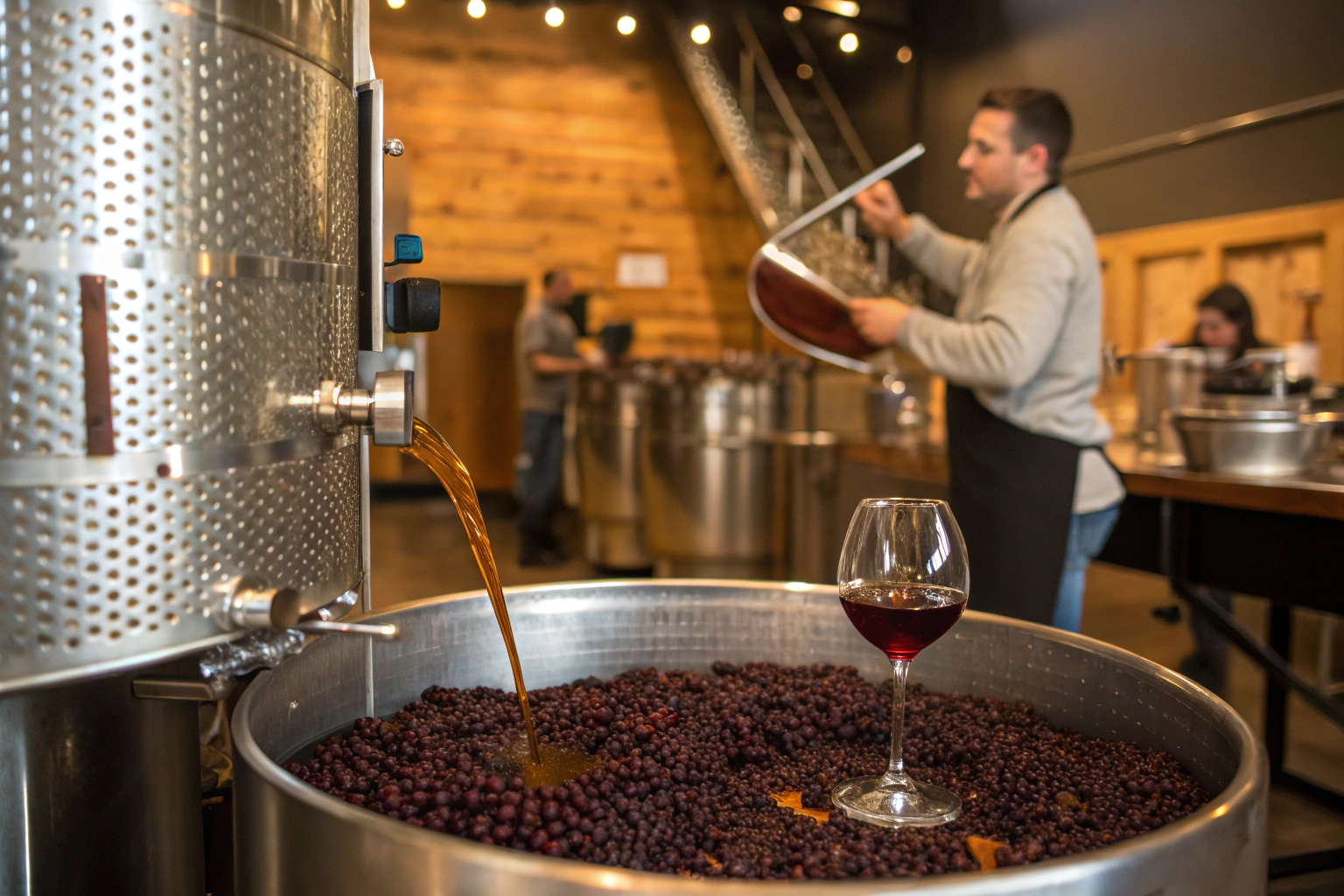
A high-end roaster from Dubai contacted me six months ago. He supplies five-star hotels and Michelin-starred restaurants. His clients expect the extraordinary. "I need a coffee that tastes like a $100 bottle of Burgundy," he said. "Not literally. But I need that level of complexity, that depth, that sense of luxury. I have heard about wine yeast fermentations. Are they real? Are they worth the price? And can you supply one that will stop a sommelier in their tracks?"
I smiled. Wine yeast fermentation was exactly what he was looking for. It is not a gimmick. It is not a flavored coffee. It is a genuine processing innovation that borrows centuries of winemaking knowledge and applies it to coffee fermentation. The results are extraordinary—and expensive. I sent him a sample of our wine yeast fermented Catimor, inoculated with a Burgundy strain of Saccharomyces cerevisiae. He cupped it. He called me the next day. "I will take the entire lot," he said. "Every kilo. Name your price."
Wine yeast fermented coffees command premium prices because the specific yeast strains used—often proprietary isolates from prestigious wine regions—produce unique, intense, and highly desirable flavor compounds that are unattainable through standard fermentation, creating a genuine luxury product with a compelling cross-category story.
This is not an accident. It is science, craftsmanship, and marketing converging on a product that sits at the very top of the specialty coffee market. Here is how wine yeast fermentation works, why the resulting coffee tastes so different, and how to source and sell these exceptional lots.
What Happens When You Use Wine Yeast on Coffee?
Standard coffee fermentation relies on the wild yeasts and bacteria that are naturally present on the cherry skin and in the processing environment. These microorganisms do their job—they break down the mucilage and produce alcohol, acids, and aromatic compounds. But they are unpredictable. The microbial community varies from batch to batch, from farm to farm, from season to season. The flavor outcome is somewhat random. Sometimes it is beautiful. Sometimes it is not.
Wine yeast fermentation changes this by introducing a known, selected, and cultured yeast strain into the fermentation tank. The inoculated yeast dominates the microbial environment. It outcompetes the wild yeasts and bacteria. The fermentation is no longer random. It is directed. The flavor outcome is predictable, repeatable, and specific to the yeast strain used.
The yeast consumes the sugars in the coffee mucilage, just as it would consume the sugars in grape juice. It produces alcohol, carbon dioxide, and a wide range of secondary metabolites—esters, higher alcohols, terpenes, and other volatile compounds. These metabolites are the flavor and aroma compounds that make wine taste like wine. When produced in coffee fermentation, they make coffee taste like something entirely new.
Wine yeast fermentation is a controlled biological process in which a specific, cultured yeast strain—often sourced from a renowned wine region—is inoculated into the coffee fermentation tank, where it dominates wild microorganisms and produces a predictable, intense suite of aromatic compounds that are chemically identical to those found in fine wine.
The choice of yeast strain is the critical variable. Different strains produce different metabolite profiles. A strain isolated from Burgundy produces compounds that evoke Pinot Noir—red berries, earth, and spice. A strain from Sauternes produces compounds that evoke sweet white wine—honey, apricot, and vanilla. The yeast strain is not just a processing tool. It is an ingredient.
How Do Specific Yeast Strains Create Different Flavor Profiles?
The flavor compounds produced by yeast during fermentation are well-understood in the wine industry. Winemakers select yeast strains based on the flavor profile they want to achieve. The same principle applies to coffee fermentation, but the interaction with the coffee matrix adds an additional layer of complexity.
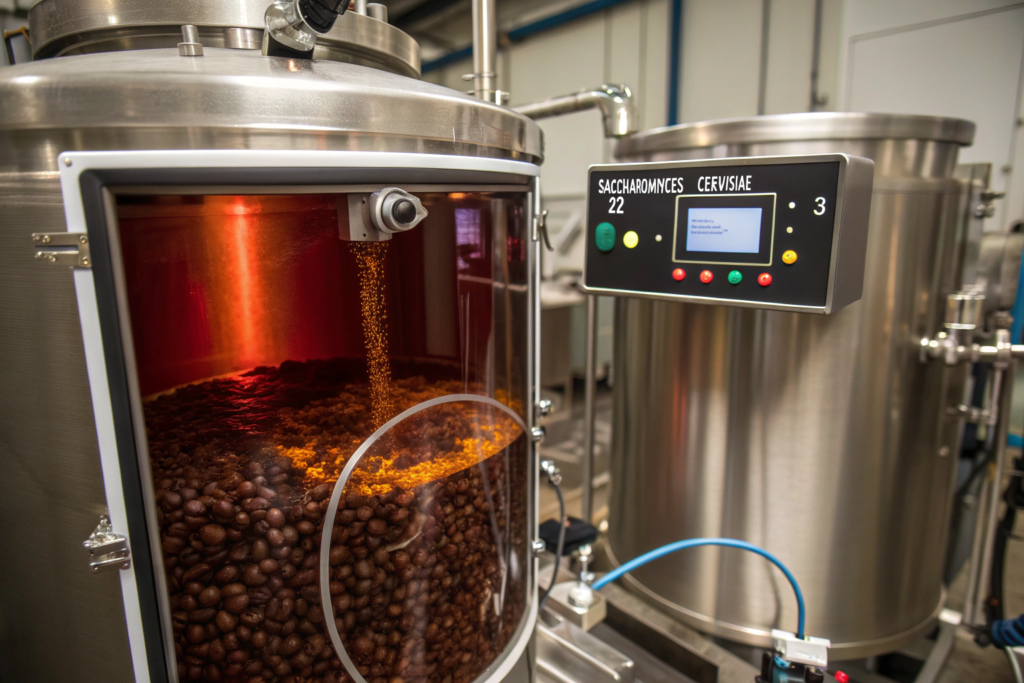
Saccharomyces cerevisiae, the primary wine yeast, is the most commonly used species in coffee fermentation. But within this species, there are hundreds of strains, each with a slightly different metabolic fingerprint. Strain 71B, commonly used in Beaujolais, produces high levels of esters that smell like red berries, banana, and pear. Strain EC-1118, a Champagne isolate, produces a clean, neutral profile with enhanced body and mouthfeel. Strain D47, from the Rhône Valley, produces intense floral notes—jasmine, honeysuckle—alongside stone fruit and honey.
When these strains are inoculated into coffee fermentation, they encounter a different sugar matrix than grape juice. The mucilage contains glucose, fructose, and complex polysaccharides. The yeast adapts. The metabolite profile shifts slightly compared to wine fermentation. The resulting coffee has flavor notes that are recognizably related to the wine made from that yeast strain, but expressed through the lens of the coffee variety and terroir.
A coffee fermented with a Burgundy isolate of Saccharomyces cerevisiae will express red berry, earthy, and spicy notes reminiscent of Pinot Noir, while a coffee fermented with a Sauternes isolate will express honey, apricot, and vanilla notes reminiscent of a noble rot dessert wine.
I have experimented with over a dozen yeast strains on our Catimor, SL28, and Geisha lots. The results are fascinating. The same Catimor lot fermented with three different strains produces three completely different cups. One is a red fruit bomb—strawberry, raspberry, cherry. One is a tropical fruit explosion—mango, passionfruit, pineapple. One is a floral, honeyed, elegant cup—jasmine, honey, apricot. The yeast strain is the primary driver of the difference.
Why Is Fermentation Control More Critical with Wine Yeast?
Wine yeast fermentation is less forgiving than wild fermentation. The yeast strain is a pure culture, selected for specific traits. It is not adapted to the coffee fermentation environment. It requires precise control to perform as expected.
Temperature is the most critical parameter. Wine yeasts are typically active between 15 and 28 degrees Celsius, but the optimal range for flavor production is narrower—20 to 24 degrees Celsius. Below this range, the yeast becomes sluggish. Fermentation drags on. The risk of spoilage organisms taking hold increases. Above this range, the yeast produces harsh, solvent-like compounds. The delicate wine notes are lost.
pH is also critical. Wine yeasts prefer a slightly acidic environment—pH 4.0 to 5.0 at the start of fermentation, dropping to pH 3.5 to 3.8 by the end. If the pH drops too fast, the yeast stresses and produces off-flavors. If the pH does not drop enough, spoilage bacteria can survive. The pH must be monitored throughout the fermentation and the process stopped when the target is reached.
Sanitation is essential. A pure yeast culture is vulnerable to contamination by wild microorganisms. The fermentation tank must be thoroughly cleaned and sterilized before the lot is loaded. The water used must be clean. The air must be excluded if the fermentation is anaerobic. Any contamination can introduce wild yeasts or bacteria that compete with the wine yeast and alter the flavor outcome.
At Shanghai Fumao, we treat wine yeast fermentation as a biotechnological process, not a traditional craft. The fermentation tanks are sterilized. The yeast is rehydrated and pitched at a precise rate. The temperature is controlled with thermal jackets. The pH is logged every four hours. The fermentation is stopped when the target pH is reached. The coffee is washed and dried immediately. The process is documented end to end. The result is a lot that is predictable, consistent, and exceptional.
Why Are These Coffees Scoring Higher on Cupping Tables?
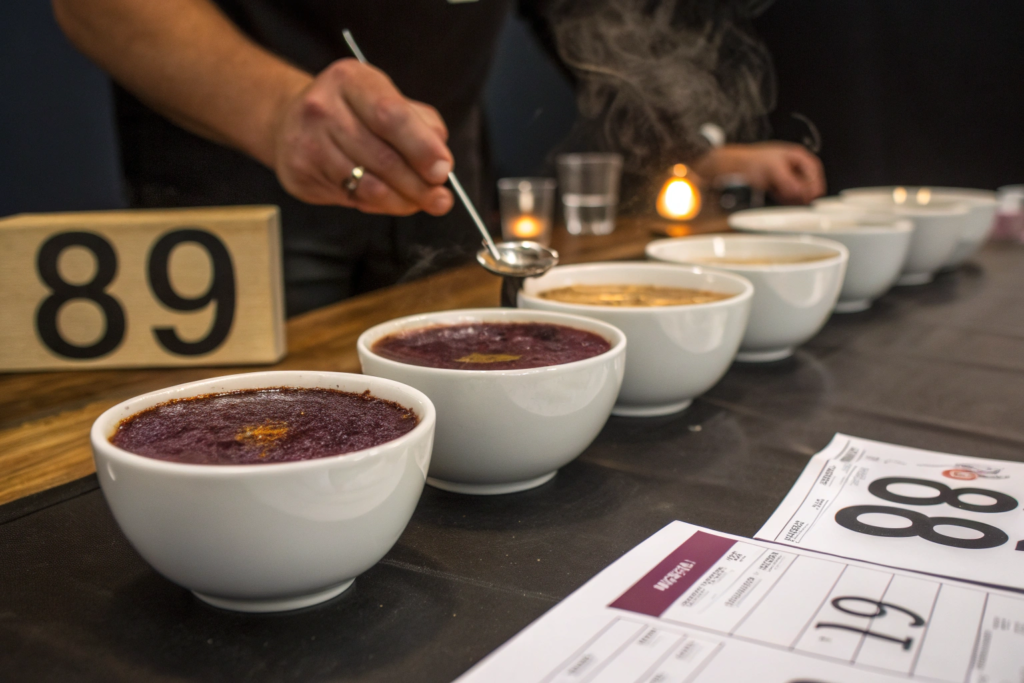
Wine yeast fermented coffees consistently score higher on the cupping table than the same coffee processed with standard methods. The score difference is not marginal. It is often three to five points. A washed Catimor that scores 83 points might score 87 points when fermented with a selected wine yeast strain. An SL28 that scores 86 points might score 90 points. The score improvement is driven by increased complexity, intensity, and distinctiveness.
The flavor category on the SCA cupping form rewards intensity and distinctiveness. A coffee with unique, immediately identifiable flavor notes—"red wine, dark cherry, and baking spice"—will outscore a coffee with pleasant but generic notes—"chocolate, nut, and citrus." Wine yeast fermentation adds the unique notes that drive higher flavor scores.
The acidity category also improves. Wine yeast fermentation produces organic acids—tartaric, malic, and lactic—in addition to the citric and chlorogenic acids native to coffee. The acid profile is more complex. The acidity is brighter and more wine-like. It is perceived as refined and elegant rather than sharp or sour. The acidity score benefits.
Wine yeast fermented coffees score higher because they deliver greater complexity, more distinct and intense flavor notes, and a refined, wine-like acidity that judges perceive as sophisticated and memorable, all without introducing the ferment defects that can plague wild fermented lots.
The body and mouthfeel can also improve. Some yeast strains produce glycerol during fermentation, which contributes to a heavier, silkier body. The mouthfeel becomes creamier and more luxurious. The overall impression score—the judge's holistic assessment of the coffee—is elevated by the combination of unique flavor, refined acidity, and enhanced body.
Perhaps most importantly, wine yeast fermented coffees are memorable. A cupper tastes dozens of coffees in a session. Most blur together. A wine yeast fermented coffee stands out. It is the coffee the cupper remembers the next day. In a competition setting, where judges are evaluating multiple coffees, that memorability is a decisive advantage.
How Does Wine Yeast Compare to Standard Anaerobic Profiles?
Standard anaerobic fermentation—sealing the coffee in an oxygen-free tank and letting wild microorganisms do their work—can produce excellent results. The cup can be fruity, complex, and intense. But the outcome is unpredictable. The wild microbial community varies. The flavor varies. Some batches are spectacular. Some are disappointing.
Wine yeast fermentation adds predictability to the anaerobic process. The inoculated yeast dominates the fermentation. The wild microorganisms are suppressed. The flavor outcome is determined by the yeast strain, not by random chance. The producer can select a yeast strain for specific flavor targets and expect consistent results batch to batch.
The flavor intensity of wine yeast fermentation often exceeds that of standard anaerobic fermentation. The selected yeast strains are chosen for their ability to produce high levels of specific aromatic compounds. A standard wild anaerobic fermentation may produce intense fruit notes, but the notes are often broad and generic—"tropical fruit." A wine yeast fermentation can produce specific, identifiable notes—"Burgundy red berry," "Sauternes honey and apricot."
The cleanliness of wine yeast fermentation is also often superior. Wild anaerobic fermentations can develop funky, earthy, or sour notes from uncontrolled bacterial activity. Wine yeast fermentation, with its pure culture and controlled environment, produces a cleaner cup. The fruit notes are clear and focused, not muddied by microbial noise.
I have cupped standard anaerobic and wine yeast fermented lots from the same Catimor harvest side by side. The standard anaerobic lot scored 85 points with notes of "tropical fruit, winey, heavy body." The wine yeast lot scored 88 points with notes of "raspberry, dark cherry, clove, red wine, elegant acidity." The difference was clear. The wine yeast lot was more distinctive, more refined, and more memorable.
How Can Roasters Market Wine Yeast Fermented Lots?
Marketing a wine yeast fermented coffee is different from marketing a standard single origin. The story is more complex, the price is higher, and the target customer is more sophisticated. The marketing must bridge the worlds of coffee and wine, educate without intimidating, and justify a premium price with a compelling narrative.
The target customer for a wine yeast fermented coffee is the sensory adventurer. They are a specialty coffee enthusiast, a wine lover, or someone who appreciates luxury food and beverage experiences. They are willing to pay more for something unique and exceptional. They want to understand what makes the coffee special. They are not intimidated by complexity. They are intrigued by it.
The marketing should lead with the sensory experience, not the microbiology. "Tastes Like: Pinot Noir, Dark Cherry, and Baking Spice" is the headline. The wine yeast story supports the flavor promise. The customer is buying the taste, not the yeast. The yeast is the explanation for the taste.
Effective marketing of wine yeast fermented coffees positions the product as a luxury crossover between specialty coffee and fine wine, leads with specific, indulgent flavor descriptors that evoke prestigious wine regions, and tells the story of the yeast strain as a craft ingredient that makes the coffee unique.
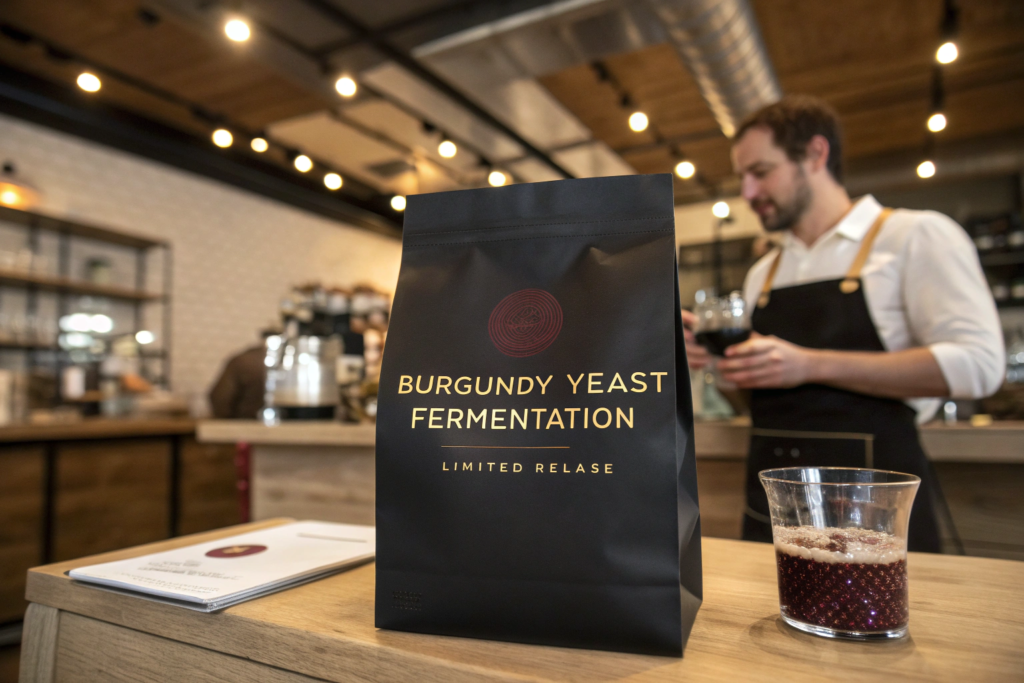
The bag should include a concise, elegant explanation of the wine yeast process. "This coffee was fermented with a yeast strain isolated from the Burgundy region of France, the same strain used to produce some of the world's most celebrated Pinot Noir. The yeast transforms the coffee's natural sugars into aromatic compounds that echo the flavors of fine red wine." The explanation is brief, sophisticated, and benefit-focused.
The pricing should be premium. A wine yeast fermented micro-lot should retail for $28 to $40 per 12-ounce bag, depending on the cupping score and the lot exclusivity. The price signals luxury. It is not for everyday drinking. It is a special occasion coffee, a gift, a collector's item. The price must be supported by the packaging, the story, and, most importantly, the taste.
What Story Should You Tell About Wine Yeast on the Bag?
The story of the wine yeast is the differentiating factor. It is what separates this coffee from every other natural or anaerobic lot on the shelf. The story should be specific, authentic, and sensory.
The story has three parts. Part one is the yeast strain. "We fermented this coffee with a yeast strain isolated from the Côte de Nuits in Burgundy." The specificity matters. It is not generic "wine yeast." It is yeast from a specific place with a specific reputation for excellence. The customer who knows wine recognizes the reference. The customer who does not know wine is intrigued by the detail.
Part two is the process. "The coffee cherries were pulped, placed in a sealed tank, and inoculated with the yeast. Over 72 hours at a controlled temperature, the yeast transformed the fruit sugars, creating the red berry and spice notes you will taste in the cup." The process description is brief and visual. It helps the customer imagine what happened.
Part three is the flavor. "The result is a coffee that tastes like a fine Pinot Noir—raspberry, dark cherry, clove, and a long, elegant finish." The flavor promise is specific and appealing. It connects the process to the pleasure. The customer understands why the yeast matters: because it makes the coffee taste extraordinary.
The story should be told in 100 words or fewer on the bag. A longer version can be on the website, linked by a QR code. The customer who wants to go deeper can. The customer who just wants the flavor promise gets it immediately.
How Do You Pair Wine Yeast Coffees with Food for Promotions?
Food pairing is a powerful marketing tool for wine yeast fermented coffees. The wine-like flavor compounds make these coffees a natural partner for foods that would traditionally be paired with wine. A pairing event or a suggested pairing on the bag creates an experiential connection that drives sales.
The pairing should echo the flavor profile of the specific yeast strain. A Burgundy yeast coffee with red berry and spice notes pairs beautifully with dark chocolate, berry tarts, aged cheeses, and roasted meats. A Sauternes yeast coffee with honey and apricot notes pairs with pastries, fresh fruit, soft cheeses, and foie gras.
A café can host a "Coffee and Cheese" pairing event featuring the wine yeast coffee alongside a selection of cheeses that complement its flavor. The event is educational, social, and memorable. Customers who attend are likely to buy the coffee. They will tell their friends about the experience.
The bag can include a simple food pairing suggestion. "Pairs beautifully with dark chocolate and aged Gouda." The suggestion plants an idea. The customer buys the coffee and the chocolate. They have an experience at home. They associate the coffee with pleasure and sophistication.
I provide pairing recommendations with every wine yeast fermented lot. The recommendations are based on the specific yeast strain and the cupping notes. The roaster can use them on the bag, in the café, and on social media. The goal is to make the coffee more than a beverage. It is an experience. For more on coffee and food pairing, the Specialty Coffee Association has published sensory guides that include pairing principles.
How to Source and Verify Wine Yeast Fermented Lots?
Sourcing genuine wine yeast fermented coffee requires more diligence than sourcing standard lots. The premium price attracts sellers who may claim wine yeast fermentation without actually doing the work. The buyer must verify that the yeast was used, that the fermentation was controlled, and that the flavor is consistent with the claims.
The first verification step is the documentation. A genuine wine yeast fermented lot has a paper trail. The yeast strain should be named specifically—species, strain designation, and source. "Saccharomyces cerevisiae, strain 71B, sourced from Lallemand" is a real answer. "Wine yeast" is not. The inoculation rate, the fermentation temperature, the fermentation duration, and the pH curve should all be documented.
To verify wine yeast fermentation claims, request the specific yeast strain name and source, the fermentation log with temperature and pH data, and the pre-shipment cupping notes that show the specific flavor profile the yeast strain is known to produce—then cup the sample yourself to confirm.
The second verification step is the cupping. The sample should taste like the yeast strain is supposed to produce. A Burgundy yeast should produce red berry and spice notes. A Sauternes yeast should produce honey and apricot notes. If the coffee tastes generically fruity or fermented without the specific wine notes, either the yeast was not used as claimed, or the fermentation was poorly controlled.
The third verification step is the relationship. The best wine yeast lots come from producers who are genuinely passionate about the process, who experiment with different strains, who document their work, and who are transparent about their successes and failures. A producer who is evasive about the details is not a producer you should trust with a premium purchase.
At Shanghai Fumao, we provide full documentation with every wine yeast lot. The yeast strain, the source, the fermentation log, the pH curve, the cupping scores—all of it is shared with the buyer. The buyer can cup the pre-shipment sample and verify the quality. The transparency is part of the premium price.
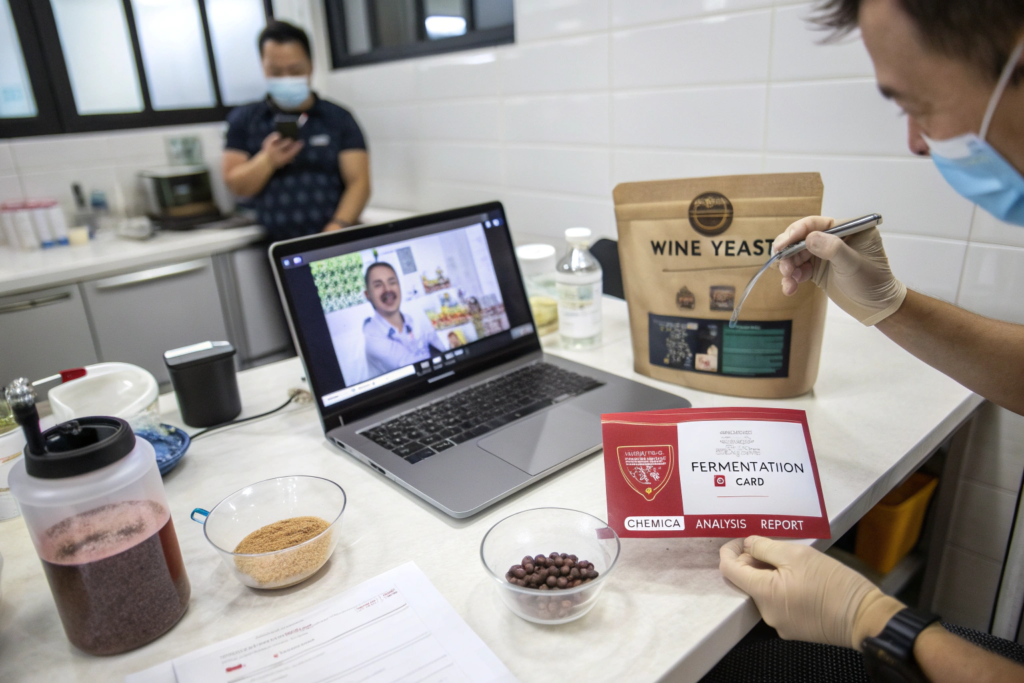
What Questions Should You Ask About the Yeast Culture Used?
The questions about the yeast culture are the most important. The answers reveal whether the supplier is doing genuine wine yeast fermentation or just using the term as a marketing label.
First: "What is the exact species and strain of yeast used?" The answer should name the species and the strain designation. "Saccharomyces cerevisiae strain EC-1118" is a real answer. "Special wine yeast" is not.
Second: "Where was the yeast culture sourced from?" The answer should name the supplier. "Lallemand," "Fermentis," "White Labs" are real yeast suppliers. A supplier who cannot name the source may be using a generic or unknown culture.
Third: "What was the inoculation rate—grams of yeast per kilogram of cherry?" The rate affects the speed and intensity of fermentation. A documented rate indicates a controlled process.
Fourth: "Was the yeast rehydrated before pitching, and if so, how?" Proper yeast handling is critical for viability and performance. The supplier should be able to describe the rehydration protocol.
Fifth: "Was the fermentation purely the inoculated yeast, or were other microorganisms present?" A pure culture fermentation produces the most predictable, yeast-driven flavor. A mixed fermentation may produce different results.
A supplier who can answer all of these questions clearly and who provides documentation to support the answers is doing genuine wine yeast fermentation. The buyer can proceed with confidence.
How Can You Verify the Aroma Chemically or Through Cupping?
Chemical analysis is the most objective verification method, but it is expensive and not always practical. Cupping is the most practical method and, when done carefully, is highly reliable.
GC-MS analysis can identify and quantify the specific volatile compounds in the coffee. A wine yeast fermented coffee should show elevated levels of esters, higher alcohols, and terpenes that are characteristic of the specific yeast strain. The compound profile can be compared against a reference database to verify the yeast strain's contribution. However, GC-MS costs several hundred dollars per sample and requires specialized interpretation.
Cupping is the practical alternative. The cupper should be familiar with the flavor profile that the specific yeast strain is known to produce. The cupping should be done blind, with a reference sample of the same coffee processed without wine yeast. The wine yeast lot should be clearly distinct—more aromatic, more complex, with specific notes that align with the yeast strain's expected profile.
I provide cupping notes with every wine yeast lot that describe the specific flavor notes the yeast is expected to contribute. The buyer can cup the sample and compare their experience against the notes. If the notes align, the yeast fermentation is verified. If the notes do not align, something is wrong.
For buyers who want GC-MS verification, I can arrange it through a third-party lab at the buyer's cost. The analysis provides definitive proof of the yeast's chemical contribution. For most buyers, the combination of documentation and cupping is sufficient.
Conclusion
Wine yeast fermented coffees represent the cutting edge of specialty coffee processing. They are not flavored coffees. They are not gimmicks. They are genuine products of biotechnology and craftsmanship, where a specific yeast strain transforms the coffee's natural sugars into aromatic compounds that echo the flavors of fine wine.
The premium prices these coffees command are justified by the additional cost of the yeast cultures, the specialized equipment, the intensive monitoring, the smaller batch sizes, and the exceptional cup quality. The cupping scores are higher. The flavor notes are more distinct. The customer experience is more memorable. The value proposition is clear.
For roasters, wine yeast lots are an opportunity to offer a truly differentiated, luxury product. The marketing bridges the worlds of coffee and wine, appealing to sensory adventurers who are willing to pay for the extraordinary. The sourcing requires diligence—verifying the yeast strain, the fermentation control, and the cup quality—but the reward is a coffee that stops a sommelier in their tracks.
If you are interested in exploring our current wine yeast fermented lots—fermented with Burgundy, Sauternes, and Champagne isolates—contact Cathy Cai at BeanofCoffee. She can send you samples with the full fermentation documentation, the yeast strain details, and the cupping scores. She can also discuss custom yeast fermentation for your exclusive lot. Her email is cathy@beanofcoffee.com. She responds quickly. The lots are micro-sized. Reach out early.