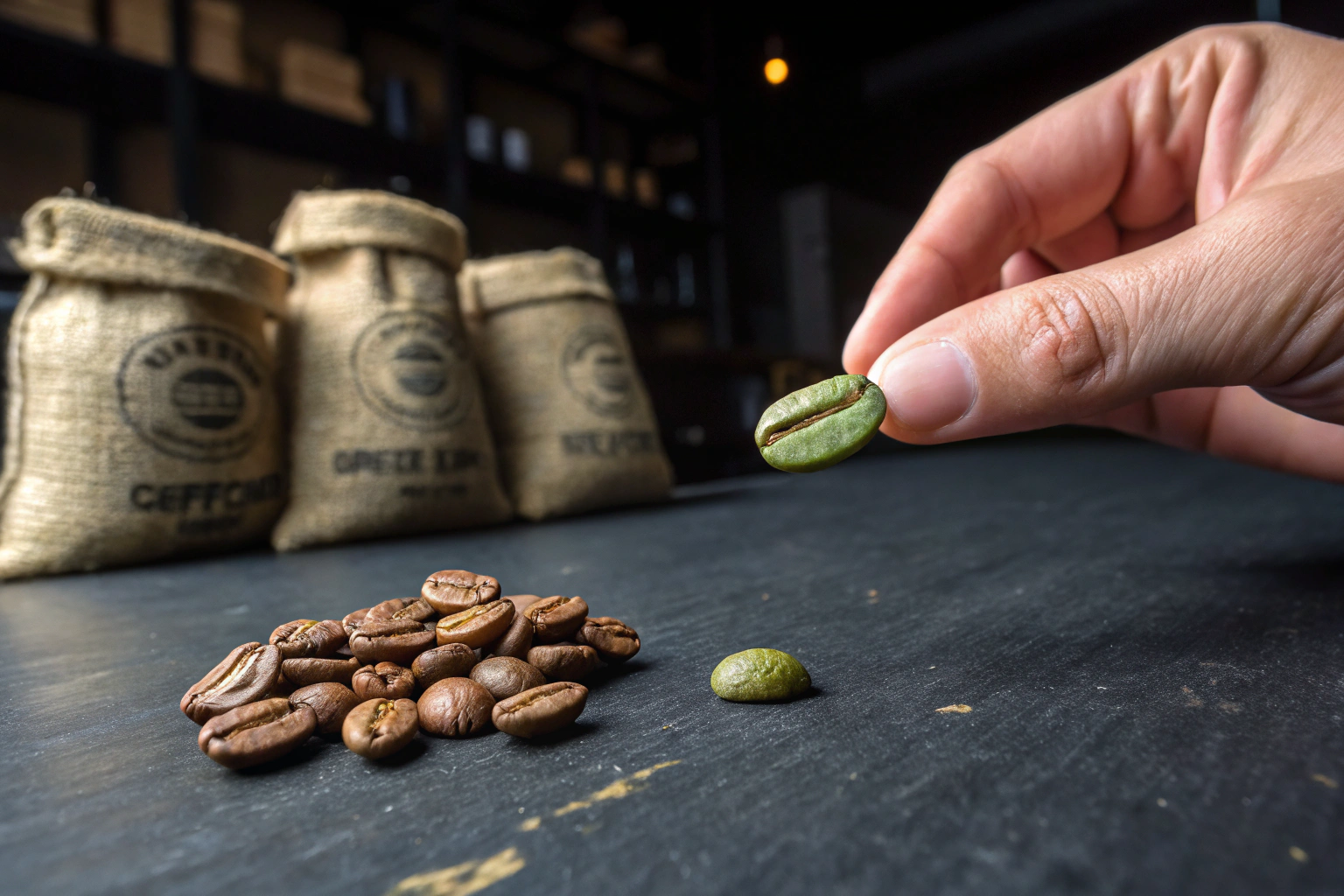
A micro-roaster from Vancouver called me three months ago. He runs a tiny operation. 500 bags a month. Every coffee on his menu is a rare variety or an experimental process. His customers do not want blends. They do not want "house espresso." They want coffees they have never tasted before. "I need something that nobody else in this city has," he said. "What do you have that is genuinely rare?" I told him about the Pacamara plot we planted five years ago. The first commercial harvest had just come in. The beans were enormous. The cupping score was 88. He bought the entire lot—all 80 kilograms of it.
Pacamara is one of the most distinctive and challenging coffee varieties in the world. It produces enormous beans. It produces enormous flavors. It is also rare, difficult to grow, and demanding to roast. For a micro-roaster looking to build a reputation on exclusivity and sensory impact, Pacamara is a strategic choice. Here is what you need to know about finding it, verifying it, and making it the centerpiece of your limited-release program.
What Makes Pacamara Coffee Beans So Distinctive?
Pacamara is a hybrid. It was created in El Salvador in 1958 by crossing Pacas, a natural mutation of Bourbon discovered in El Salvador, with Maragogipe, a natural mutation of Typica known for producing enormous beans. The goal was to combine the compact size and high yield of Pacas with the large bean size and cup quality of Maragogipe. The result was Pacamara—a variety that inherited the giant bean size but not the compact tree structure, and a cup profile that is unlike either parent.
The beans are the most visually distinctive feature. A standard Arabica bean measures roughly 10 to 12 millimeters in length. A Pacamara bean can measure 15 to 18 millimeters. They are elongated, oval, and imposing. When you open a bag of Pacamara green coffee, the beans look like they belong to a different species. Roasters who buy Pacamara often display the green beans in a jar on their counter. The visual impact is part of the product.
Pacamara is a Salvadoran hybrid of Pacas and Maragogipe that produces exceptionally large beans and a complex, intense cup profile characterized by bright malic acidity, heavy creamy body, and explosive notes of tropical fruit, stone fruit, florals, and sometimes a unique savory-umami depth.
The cup profile is as distinctive as the bean size. Pacamara is not subtle. It is a sensory assault in the best possible way. The acidity is intense and complex—often malic, like green apple, combined with citric brightness. The body is heavy and creamy, coating the mouth. The flavor notes are explosive: ripe mango, passionfruit, peach, jasmine, dark chocolate, and sometimes a peculiar savory note that cuppers describe as tomato, bell pepper, or even beef broth. This savory umami character is unique to Pacamara and is highly prized by competition baristas and adventurous roasters.
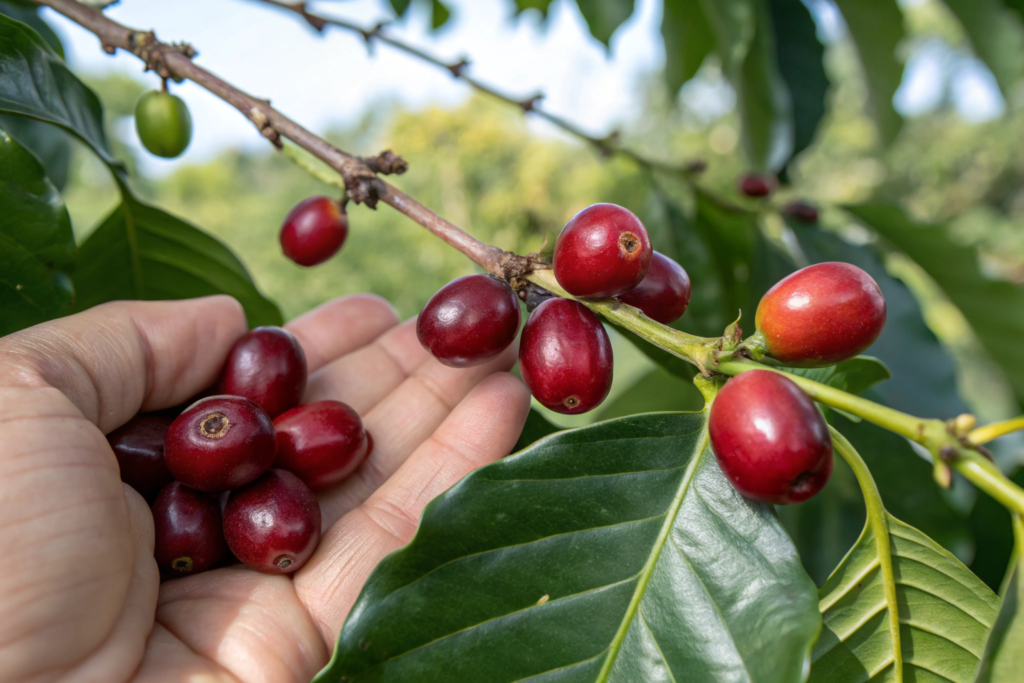
Why Are Pacamara Beans So Large?
The giant bean size comes directly from the Maragogipe parent. Maragogipe, often called "Elephant Bean," is a natural mutation of Typica discovered in Brazil in the 1800s. The mutation affects cell division during seed development. The cells multiply more than normal, producing a bean that is significantly larger than standard Arabica.
The size is not just cosmetic. It affects roasting behavior. A larger bean has a lower surface-area-to-volume ratio than a smaller bean. Heat penetrates more slowly to the core. The roast profile must be adjusted accordingly. The bean size also affects grinding. Pacamara beans, being larger and less dense than some high-grown varieties, grind differently. The barista may need to adjust the grind setting slightly finer to achieve the target extraction.
The size also creates marketing value. A retail bag labeled "Pacamara" with a transparent window showing the giant beans sells itself. Customers are fascinated by the visual difference. They show their friends. They post photos on social media. The bean size is a conversation starter that leads to a sale.
What Flavor Profile Should You Expect from a High-Quality Pacamara?
I have cupped Pacamara from El Salvador, from Honduras, from Nicaragua, and now from our own trees in Yunnan. The profiles vary by origin and processing, but a core identity runs through all of them.
A well-processed washed Pacamara cups with intense acidity, heavy body, and complex fruit notes. The acidity is typically malic—green apple, red apple—combined with a bright citric spark. The body is creamy and coating, heavier than almost any other washed Arabica. The flavor notes explode on the palate: ripe mango, peach, passionfruit, orange zest, and dark chocolate. The floral character is often jasmine or orange blossom. And then there is the savory note—a hint of tomato leaf, a whisper of umami, a depth that makes you stop and think.
A natural processed Pacamara pushes the fruit character even further. The body becomes syrupy. The fruit notes intensify into tropical fruit punch territory. The savory note can become more pronounced, sometimes tasting like sundried tomato or even beef bouillon. This savory character is divisive. Some cuppers adore it. Others find it off-putting. It is part of Pacamara's genetic signature. You cannot breed it out without losing the variety.
The cupping score for a high-quality Pacamara typically ranges from 85 to 90 points. The best lots score above 90 and command prices comparable to Geisha. For more on Pacamara's sensory profile, World Coffee Research includes Pacamara in its variety catalog with detailed sensory descriptors.
Where Is Pacamara Coffee Successfully Cultivated Outside Central America?
Pacamara is a Central American variety by birth. El Salvador is the spiritual home. The best-known Pacamara lots come from farms in the Apaneca-Ilamatepec mountain range, where the variety was developed and where it has been grown for over sixty years. Honduras and Nicaragua also produce significant volumes of high-quality Pacamara. Guatemala and Mexico have smaller plantings.
Outside of Central America, Pacamara is rare. The variety is demanding. It needs altitude. It needs careful nutrition. It is susceptible to leaf rust and nematodes. It does not travel easily to new origins. But a few pioneering producers have established Pacamara plots in Colombia, in parts of East Africa, and in Yunnan, China.
Pacamara is now successfully cultivated in select high-altitude farms in Yunnan, China, where the wide diurnal temperature swings and well-drained red soils produce a cup with slightly softer acidity and more pronounced tropical fruit notes than the classic Salvadoran profile, alongside emerging plantings in Colombia and Rwanda.
Yunnan is the newest origin to produce commercial volumes of Pacamara. Our farm planted the first Pacamara seedlings five years ago, using legally imported genetic material. The trees are young. The first commercial harvest was small but exceptional. The adaptation to Yunnan's terroir has produced a Pacamara that is distinct from the Central American version—slightly softer acidity, more pronounced tropical fruit, and the same giant bean size and heavy body.

How Does Yunnan Pacamara Compare to Salvadoran Pacamara?
I have cupped our Yunnan Pacamara side by side with a well-known lot from Finca El Carmen in El Salvador. The comparison was revealing.
The Salvadoran Pacamara was explosive. Intense malic acidity. Heavy red apple and dark cherry notes. A pronounced savory-umami character. The body was heavy and creamy. The finish was long and complex. The cupping score was 89. It was a classic, textbook Pacamara.
The Yunnan Pacamara was slightly more restrained. The acidity was still malic, but softer—more like ripe green apple than sharp Granny Smith. The fruit notes shifted from red apple and cherry to tropical fruit—mango, passionfruit, a hint of lychee. The savory note was present but milder, more like fresh tomato leaf than sundried tomato. The body was still heavy and creamy. The finish was sweeter and cleaner. The cupping score was 88.
The difference, I believe, is terroir. Yunnan's red laterite soil produces a rounder, softer acidity than El Salvador's volcanic soil. The altitude range is similar—our Pacamara grows at 1,500 to 1,600 meters—but the latitude is different. The subtropical climate with a distinct dry harvest season produces a cleaner, less fermented profile. The result is a Pacamara that is more approachable, more tropical, and slightly less intense than the Salvadoran benchmark.
For a micro-roaster, the choice between Salvadoran and Yunnan Pacamara depends on the target customer. The Salvadoran lot is for the hardcore Pacamara fan who wants the full sensory assault. The Yunnan lot is for the curious specialty drinker who wants to experience the variety without being overwhelmed. Both are exceptional. Both are rare.
Can Pacamara Thrive in the Yunnan Terroir?
The early evidence says yes. The trees are healthy. The cherries are large. The cupping scores are high. But there are challenges.
Pacamara is a nutrition-hungry variety. The giant beans demand a lot from the tree. If the soil is not rich enough, the beans will be smaller, and the cup will be hollow and vegetal. Yunnan's red laterite soil is well-drained and mineral-rich, but it is not as fertile as volcanic soil. We supplement heavily with organic compost and targeted mineral applications to meet Pacamara's demands.
Disease pressure is a concern. Pacamara is susceptible to coffee leaf rust. Yunnan's dry harvest season helps suppress rust, but the wet summer months create favorable conditions for fungal spread. We prune aggressively to improve airflow. We apply preventive organic copper sprays during the rainy season. We monitor every tree. The labor input is significantly higher than for Catimor or even SL28.
The altitude range is favorable. Our Pacamara plot sits at 1,500 to 1,600 meters, which is within the ideal range for the variety. The cooler temperatures slow cherry maturation and allow full flavor development. The diurnal temperature swing—warm days, cool nights—preserves acidity and enhances aromatic complexity. The conditions are good. The variety is responding. For more on growing conditions in emerging origins, Perfect Daily Grind has published features on specialty variety adaptation in non-traditional regions.
How to Verify and Source Pacamara for a Micro-Roastery?
Sourcing Pacamara is not like sourcing a standard single origin. The volumes are micro-lot scale. The supplier relationships are personal. The verification process is essential because the high price attracts fraud. A less scrupulous seller might sell large-bean Catimor or Maragogipe as Pacamara to an inexperienced buyer.
First, verify the bean size visually. This is the easiest test. Pacamara beans are unmistakably large. If the supplier sends a sample with beans that look normal-sized, they are not Pacamara. Even the smallest Pacamara beans—the lower-grade peaberries and floaters—are larger than a standard Arabica screen 18 bean.
Second, verify the variety through cupping. The flavor profile is distinct. If the coffee cups with mild chocolate and nut notes and no intense fruit or savory character, it is not Pacamara. The savory-umami note, whether subtle or pronounced, is the genetic fingerprint of the variety.
To verify and source Pacamara for a micro-roastery, visually confirm the giant bean size, cup the lot for the characteristic intense malic acidity and savory-umami depth, request genetic documentation if available, and work directly with a producer who specializes in rare varieties and can provide full traceability to the specific plot.
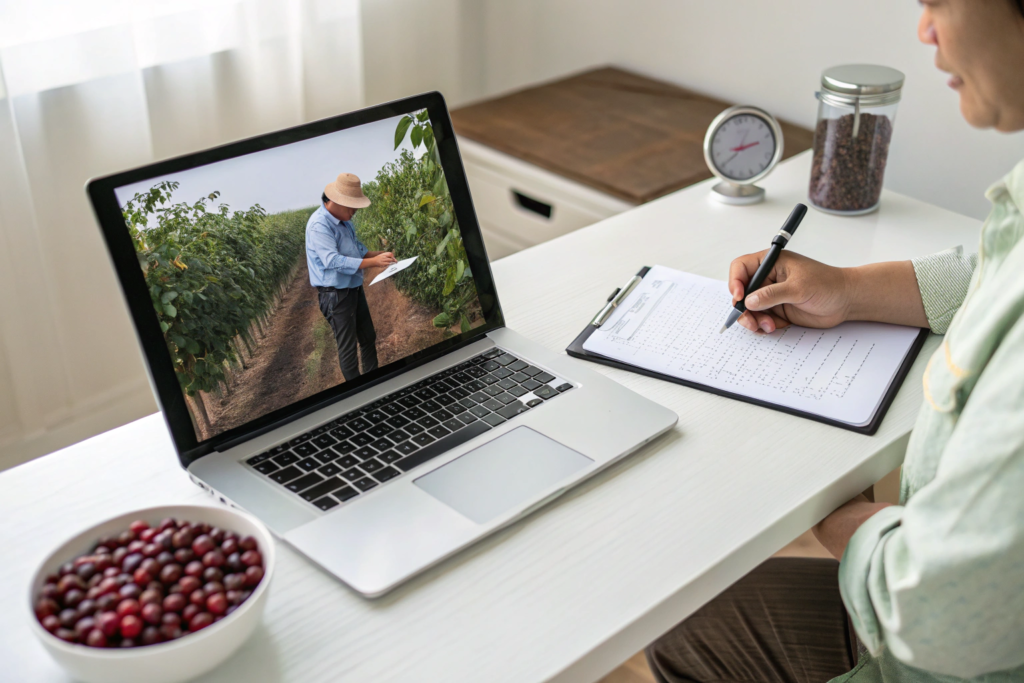
At Shanghai Fumao, we provide full traceability for our Pacamara micro-lots. Buyers receive the GPS coordinates of the plot, the planting date of the trees, the harvest date, the processing protocol, and the cupping score. We also offer video calls so buyers can see the trees and the cherries during harvest. This level of transparency is what a premium micro-lot transaction demands.
What Questions Should You Ask a Potential Pacamara Supplier?
Here are the five questions that separate a genuine Pacamara supplier from a pretender:
First: "What is the origin of your Pacamara genetic material?" The answer should trace back to El Salvador, where the variety was created, or to a recognized germplasm collection. "We obtained seeds from a certified nursery in Yunnan that imported them from a Salvadoran collection" is a real answer. "We found some trees" is not.
Second: "How old are the trees?" Pacamara trees typically take three to four years to produce their first harvest. Trees younger than three years produce immature beans with an underdeveloped flavor profile. A supplier who cannot tell you the age of their trees is not managing the variety seriously.
Third: "What is the tree spacing and fertilization protocol?" Pacamara is nutrition-hungry. The supplier should describe a deliberate spacing and feeding program. If the supplier says they grow Pacamara exactly like their other varieties, the nutrition may be insufficient, and the cup quality may suffer.
Fourth: "What is the typical cupping score and what are the dominant flavor notes?" The answer should include specific scores and notes. "85 to 88, malic acidity, tropical fruit, heavy body, sometimes a savory note" is what you want to hear. "It's good coffee" is not.
Fifth: "What is the lot size and the minimum order quantity?" Pacamara micro-lots are small—typically 50 to 200 kilograms. The MOQ should be flexible. A supplier offering Pacamara by the container is not selling genuine single-plot micro-lots.
What Volume and Pricing Should a Micro-Roaster Expect?
Pacamara is a micro-lot product. Do not expect to buy it in bulk. Expect to buy it in kilograms, not containers.
A typical Pacamara lot from a single plot ranges from 50 to 200 kilograms total. Some lots are even smaller. Our Yunnan Pacamara harvest produced just 120 kilograms of exportable green coffee last season. The entire lot sold to three micro-roasters. The smallest order was 20 kilograms. The largest was 60 kilograms.
The pricing reflects the rarity, the low yield, and the high labor input. Here is a comparison of typical FOB pricing for rare varieties from Yunnan:
| Variety | FOB Price per Pound (USD) | Typical Lot Size |
|---|---|---|
| Washed Catimor | $2.80 - $3.20 | Container volumes |
| SL28 | $5.50 - $8.00 | 60 - 200 kg |
| Geisha | $8.00 - $15.00 | 30 - 150 kg |
| Pacamara | $7.00 - $12.00 | 50 - 200 kg |
| Typica (old growth) | $5.00 - $9.00 | 30 - 100 kg |
Pacamara pricing sits between SL28 and Geisha. The price reflects the giant bean size, the intense cup profile, and the genuine rarity of the variety outside of Central America. For a micro-roaster selling 12-ounce retail bags at $28 to $38, the margin works. The story—"giant beans, tropical fruit, savory depth, only 120 kilos produced"—sells itself.
The Shanghai Fumao team provides current FOB pricing and lot availability for our Pacamara micro-lots. Cathy Cai can also arrange split-lot shipments for multiple micro-roasters who want to share a lot.
How to Roast Pacamara to Highlight Its Unique Profile?
Roasting Pacamara is a technical challenge. The giant bean size means that heat transfer behaves differently than with standard Arabica. The large bean has a lower surface-area-to-volume ratio. The core takes longer to heat. If you apply too much heat early, the outside scorches before the inside is developed. If you apply too little heat, the roast stalls and the coffee tastes baked.
The key is a gentle, extended roast with a moderate charge temperature. I recommend dropping the charge temperature by 5 to 10 degrees Celsius compared to your standard high-grown Arabica profile. The lower charge temperature prevents scorching of the large bean surface. The drying phase should be extended slightly to ensure moisture is fully driven out of the core before first crack.
First crack on Pacamara is often less audible and less energetic than on smaller beans. Listen carefully. The pops may be softer and more sporadic. Do not rely solely on auditory cues. Use your bean temperature probe, your rate of rise, and your senses. Smell the exhaust. Watch the color change.
To roast Pacamara successfully, use a lower charge temperature, an extended drying phase, and a development time ratio of 13 to 15 percent after a subdued first crack, targeting a light to medium-light Agtron reading of 55 to 65 to preserve the tropical fruit and savory complexity.
The development time after first crack should be moderate—13 to 15 percent of the total roast time. Too short, and the large bean core may be underdeveloped, tasting grassy and vegetal. Too long, and the intense fruit notes bake out into generic caramel. The target Agtron reading is 55 to 65 whole bean—a light to medium-light roast. At this roast level, the malic acidity sparkles, the tropical fruit notes are vivid, and the savory depth adds complexity. A medium-dark roast will mute the variety's distinctive character and turn it into a generic, heavy-bodied coffee.
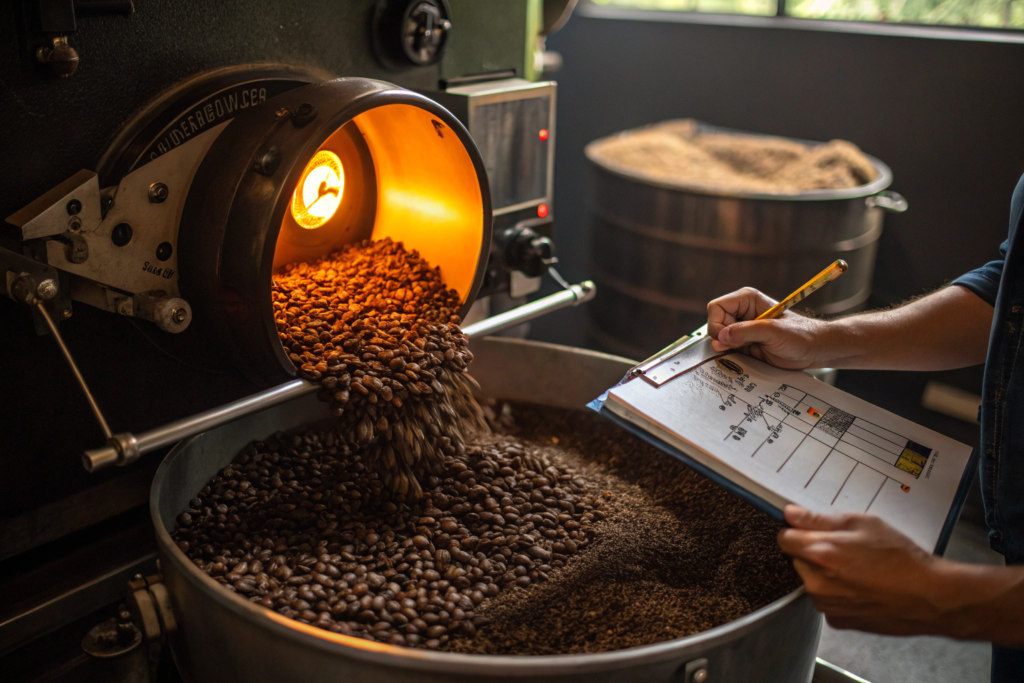
Why Does Bean Size Affect Roasting Uniformity?
Uniformity is the challenge with Pacamara. The beans are not only large; they are also slightly irregular in size, even within a well-sorted lot. Some beans are enormous—18 millimeters plus. Others are slightly smaller—15 to 16 millimeters. This size variation, normal for the variety, means that beans in the same batch will roast at slightly different rates.
The larger beans heat more slowly. The smaller beans heat more quickly. At the end of the roast, the smaller beans may be slightly more developed than the larger beans. This is not a defect if managed well. The slight variation can add complexity to the cup—a blend of roast expressions from the same lot.
To minimize the variation, use a drum speed and airflow that promote good bean mixing. A well-mixed bean bed ensures that all beans experience similar heat transfer. Avoid overloading the drum. A smaller batch size improves uniformity. For a typical 12-kilogram roaster, a 10-kilogram batch of Pacamara works better than a full 12-kilogram load.
After roasting, inspect the beans visually. A well-roasted Pacamara batch should show mostly uniform color with a few slightly lighter and slightly darker beans. If the color variation is extreme—some beans pale, some scorched—adjust the batch size, the drum speed, or the heat application. For more on managing roast uniformity with large-bean varieties, Cropster offers roast logging software that helps track bean temperature consistency across batches.
Should You Offer Pacamara as a Single Origin or in a Blend?
Pacamara is a single-origin showcase. It is not a blender. The flavor is too distinctive, too intense, and too valuable to bury in a blend where it would dominate or be wasted.
As a single origin, Pacamara commands the highest retail price. The story is compelling. The giant beans are visually striking. The cup is unforgettable. A roaster who sells Pacamara as a limited-release single origin can charge a premium and create a sense of event around the release. The customers who buy it will remember it. They will ask for it next season.
If a roaster insists on blending Pacamara, I recommend using it as a very small percentage—5 to 10 percent—in a luxury espresso blend where it can add a burst of tropical fruit complexity and heavy body. But even then, the Pacamara character will be recognizable. It does not blend quietly. It announces itself. Most roasters who buy Pacamara from me sell it as a pure single origin.
Conclusion
Pacamara is a variety of extremes. Extremely large beans. Extremely intense flavors. Extremely small volumes. For a micro-roaster looking to build a reputation on rarity and sensory impact, it is a strategic acquisition. The giant bean size stops customers in their tracks. The explosive tropical fruit notes and savory umami depth create a cup they will not forget. The tiny lot sizes create genuine scarcity that supports premium pricing.
Sourcing Pacamara requires working directly with a producer who understands the variety's agronomic demands and who can provide full traceability. The verification is straightforward—the beans are visually unmistakable and the cup is sensorily distinctive. The roasting requires care, with a gentle profile that respects the large bean size and preserves the volatile aromatics.
If you want to taste what Pacamara grown in Yunnan tastes like—tropical mango, green apple acidity, creamy body, and a whisper of savory depth—contact Cathy Cai at BeanofCoffee. She manages our Pacamara micro-lot allocations. She can tell you about the current harvest, the cupping score, the lot size, and the FOB pricing. She can send a sample. Her email is cathy@beanofcoffee.com. She responds quickly. The lot is small. The demand is growing. Reach out early.