A buyer from a specialty roastery in Japan visited our farm last November. He cupped twelve lots. Catimor washed. Catimor natural. Yellow Bourbon. SL28. Then I poured the last cup without telling him what it was. He slurped. He paused. He set the spoon down. "This tastes like old-world coffee," he said. "Delicate. Tea-like. Not aggressive at all. What is this?"
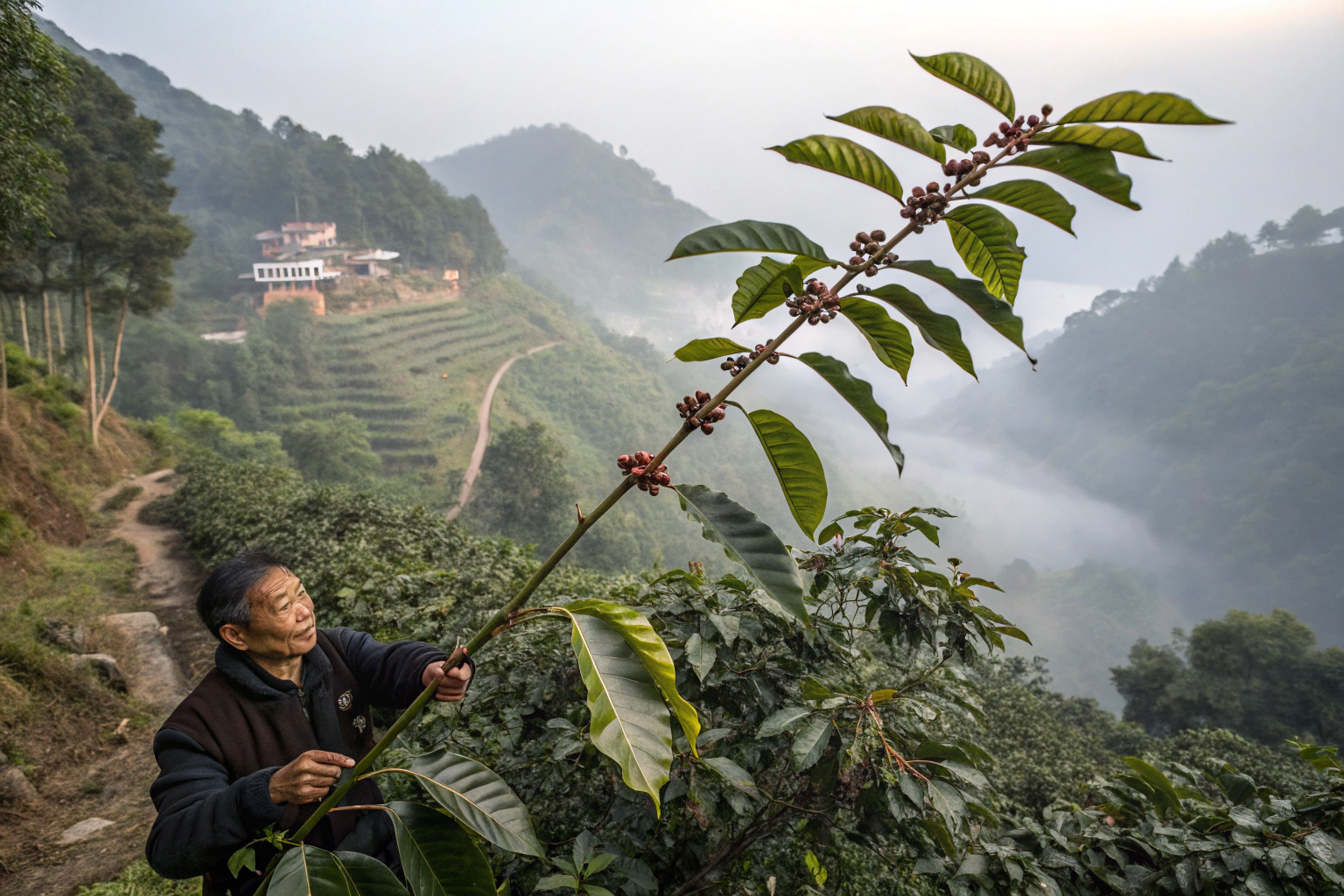
I showed him the plot. The trees were taller than me, with thin branches and bronze-tipped leaves. The cherries were large and elongated. The trees were thirty years old. He was drinking Typica—the original Arabica variety that started the global coffee industry. It had been growing on this same Baoshan hillside for decades, producing tiny volumes of exquisite, delicate coffee while the world chased higher yields and disease resistance.
Typica coffee grown in Yunnan expresses a uniquely elegant cup profile with delicate floral aromatics, bright but refined citric acidity, a light tea-like body, and a long, clean finish with notes of jasmine, stone fruit, and honey—a stark contrast to the heavier, chocolate-driven profile of the more common Catimor variety.
This variety is not a volume play. It is a heritage play. The trees yield less than half of what a Catimor tree produces. The disease susceptibility is higher. The labor is greater. But the cup is so distinctive, so refined, that for a roaster looking to offer a truly rare and historical coffee experience, Yunnan Typica is a treasure.
What Is the Typica Variety and Why Is It Rare in China?
Typica is the grandmother of Arabica coffee. Almost every Arabica variety grown today descends directly or indirectly from Typica. The original coffee seeds that left Ethiopia and Yemen centuries ago were Typica. The Dutch took Typica to Java in the 1600s. The French took a single Typica tree to Martinique in the 1700s, and from that one tree, most of the coffee in the Americas descends. The genetic lineage is ancient and prestigious.
In China, Typica has a specific history. It was introduced to Yunnan in the early twentieth century, brought by missionaries and traders along the ancient tea and horse routes that connected southwest China to Southeast Asia. The trees were planted in small plots, often intercropped with tea bushes. For decades, Typica was the dominant coffee variety in Yunnan, producing small volumes for local consumption and limited export.
Then Catimor arrived. In the 1990s, the Chinese government and international development programs promoted Catimor as a higher-yielding, disease-resistant alternative. Farmers ripped out Typica trees and planted Catimor. The Typica population shrank to a few scattered, old-growth plots. Today, true Typica in Yunnan is rare. The trees that remain are old, tall, and low-yielding. They are agricultural heritage, not commercial commodity.
Typica is the foundational Arabica variety from which most modern coffee varieties descend, and its presence in Yunnan is a remnant of early 20th-century introductions, now reduced to a few old-growth plots that produce tiny volumes of exceptionally delicate and historically significant coffee.
The rarity is part of the value. A roaster buying Yunnan Typica is not just buying coffee. They are buying a piece of coffee history. The trees on our Typica plot were planted in the 1990s by the previous generation. They have survived rust outbreaks that killed younger Catimor nearby. They have adapted to the Baoshan microclimate. They are survivors.
How Do Typica Trees Differ Agronomically from Catimor?
The difference between a Typica tree and a Catimor tree is visible from fifty meters away. The tree architecture is completely different.
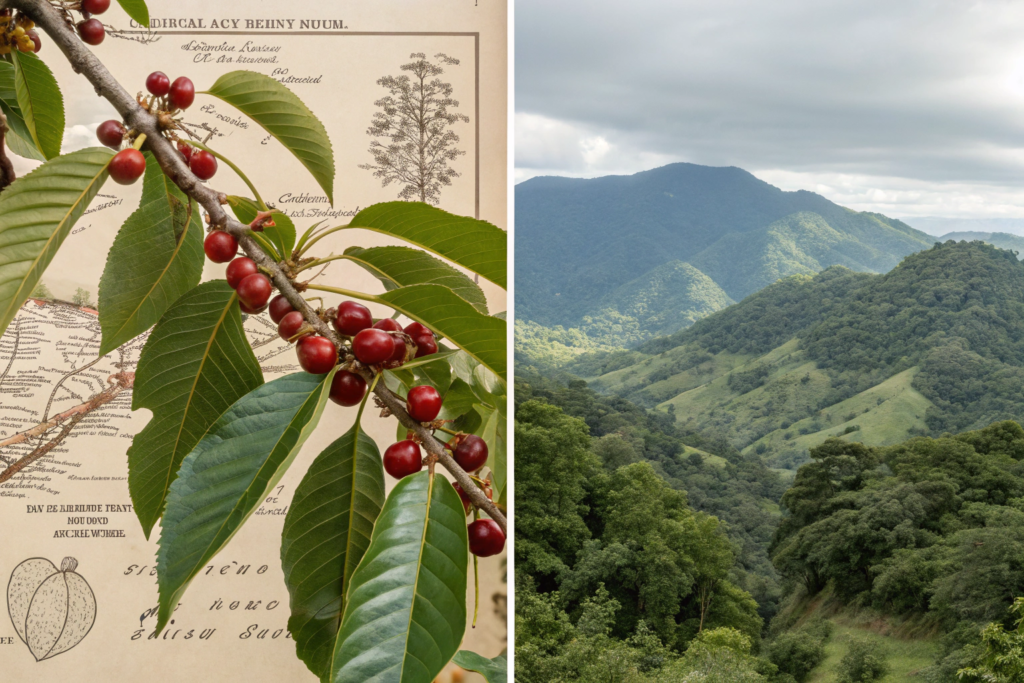
Typica trees are tall and conical. They grow upward, not outward. The branches are spaced widely apart. The leaves are large, elongated, and often have a distinctive bronze tip when young. The cherries are also elongated and large, with a pronounced point. The tree looks elegant, almost fragile. It sways in the wind. It needs shade. It needs space. It needs patience.
Catimor trees are short and compact. They are bred for high-density planting and mechanical harvesting. The branches are shorter and sturdier. The leaves are smaller and darker green. The cherries are rounder and cluster densely on the branches. The tree looks robust and functional. It is a workhorse.
The yield difference is dramatic. A mature Catimor tree in Yunnan produces three to five kilograms of cherry per season. A mature Typica tree produces one to two kilograms. Sometimes less. The cherries are larger, but there are far fewer of them. The picking is more labor-intensive because the branches are sparse and the cherries are scattered. The labor cost per kilogram of cherry is higher.
Disease susceptibility is the biggest agronomic challenge. Typica has little resistance to coffee leaf rust or coffee berry disease. In a wet year, a rust outbreak can devastate a Typica plot while the Catimor next to it remains green. Organic management is possible but requires constant vigilance. We prune our Typica trees to improve airflow. We apply organic copper sprays when the humidity spikes. We monitor every tree individually. It is farming as intensive care. For more on Typica agronomy, World Coffee Research provides a detailed variety catalog with agronomic data for Typica and its derivatives.
Why Did Farmers Almost Abandon Typica in Yunnan?
The answer is simple economics. Typica produces less coffee per tree. Less coffee means less income. For a farmer supporting a family, the math is brutal.
In the 1990s and 2000s, the Chinese coffee industry was focused on volume. The domestic market was small. Most coffee was exported as commodity-grade green beans. The price was set by the global commodity market. There was no premium for quality, no premium for variety, no premium for story. A kilogram of Typica sold for the same price as a kilogram of Catimor, but it cost more to produce. Farmers did what made economic sense. They replaced Typica with Catimor.
The specialty coffee revolution changed the equation. Starting around 2015, specialty buyers began to recognize and pay for quality differences. A high-scuing Yunnan lot could command a premium over commodity pricing. But by then, the Typica trees were mostly gone. The farmers who had kept their old Typica plots—usually out of tradition or stubbornness—suddenly found themselves sitting on a rare and valuable asset.
Our farm kept a small Typica plot because the previous generation had a sentimental attachment to the trees. They liked the way the trees looked. They liked the flavor of the coffee they drank at home. That sentimental decision now looks like foresight. The Typica plot produces our most expensive and most sought-after micro-lot.
What Does Yunnan Typica Taste Like Compared to Classic Origins?
Typica is a variety that expresses terroir transparently. Unlike Catimor, which stamps a strong chocolate-nut signature on every cup regardless of origin, Typica whispers. It lets the soil, the altitude, and the climate speak. This means Typica from different origins tastes dramatically different.
A classic washed Typica from Central America—Guatemala, Costa Rica—typically cups with bright citrus acidity, a clean, medium body, and notes of stone fruit, caramel, and almond. It is elegant and balanced. It is what many cuppers think of as the benchmark washed Arabica profile.
A classic washed Typica from Indonesia, where it is grown on volcanic soil at high altitudes, can cup with more body, deeper spice notes, and a complex savory character beneath the acidity.
Yunnan Typica has its own voice. It cups closer to a delicate washed Ethiopian or a fine Darjeeling tea than to a Central American Typica. The body is lighter. The acidity is softer. The floral notes are more pronounced. The finish is longer and sweeter. It is not a coffee that shouts. It is a coffee that invites you to lean in and pay attention.
Yunnan Typica expresses a profile closer to floral washed Ethiopian coffees than to the brighter, nuttier Central American Typicas, with dominant notes of jasmine, honey, white peach, and a silky, tea-like body that finishes with a lingering, clean sweetness unique to high-altitude Baoshan terroir.
I have cupped our Yunnan Typica blind alongside a washed Sidama from Ethiopia. The cuppers struggled to identify which was which. The floral intensity was similar. The body was similar. The finish was similar. The origin character of the Yunnan soil shifted the flavor slightly—more stone fruit, less citrus—but the typicity of Typica shone through. It was a revelation for everyone at the table.
What Are the Dominant Tasting Notes in a Cup of Yunnan Typica?
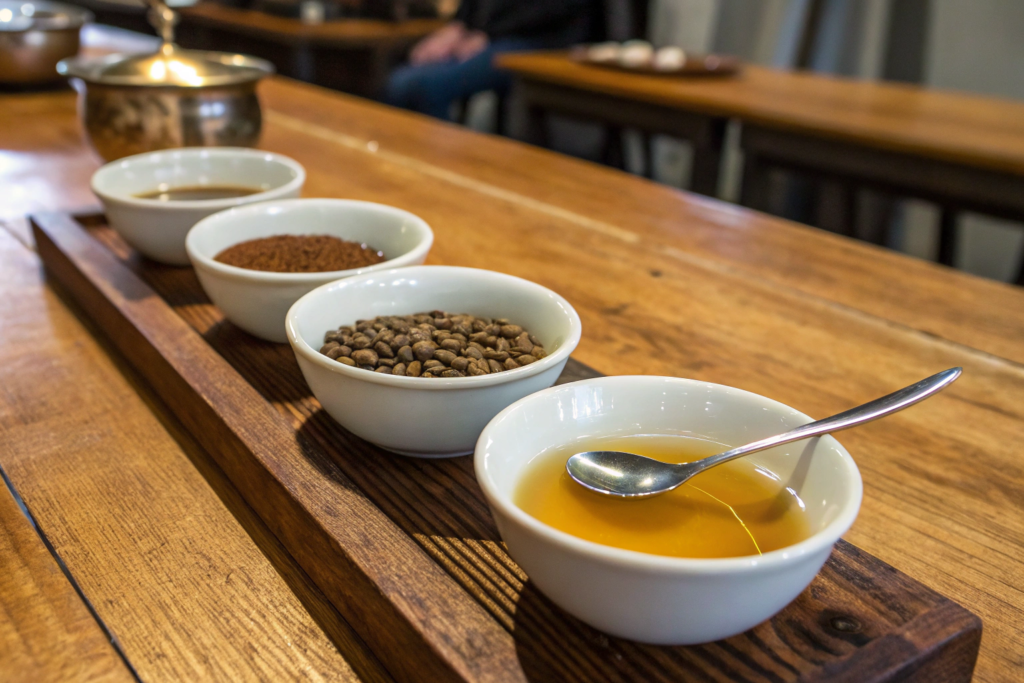
Let me walk you through a cupping of our most recent Typica micro-lot. The trees grow at 1,580 meters. The cherries are hand-picked, floated to remove under-ripes, pulped, fermented for 18 hours in clean water, washed, and dried slowly on raised beds for 15 days.
The dry fragrance is floral and delicate. Jasmine is the first note. Then honey. Then a hint of white peach. The fragrance is not intense. It is subtle and refined. You have to concentrate to catch all the layers.
The wet aroma, after adding hot water, blooms into something more pronounced. The jasmine intensifies. A stone fruit note—white peach, maybe nectarine—emerges. There is a brown sugar sweetness underneath. No chocolate. No nut. No earth. Just flowers, fruit, and sweetness.
On the first slurp, the acidity is the defining sensation. It is citric but soft—like Meyer lemon, not like sharp lime. It hits the sides of the tongue gently and fades into sweetness. The body is light and silky. Think of a high-quality white tea or a very light oolong. It coats the mouth without weight. It feels clean and elegant.
The flavor confirms the aroma. Jasmine. Honey. White peach. A hint of orange blossom at the back of the palate. The aftertaste is remarkably long and clean. No bitterness. No astringency. Just a lingering floral sweetness that stays for minutes after the cup is empty.
The cupping score for this lot was 87.5. Not the highest score we have ever produced—our SL28 and Geisha lots occasionally score higher—but the Typica's elegance and uniqueness make it more sought-after than some higher-scuing but less distinctive coffees.
How Does the Soil and Altitude of Yunnan Shape Typica's Flavor?
Yunnan's terroir is unique for coffee. The soil, the altitude, the latitude, and the climate combine to produce a flavor signature that is different from any other origin.
The soil in Baoshan is a deep red laterite, rich in iron and aluminum oxides. It is well-drained, slightly acidic, and mineral-rich. It is not volcanic like the soils of Kenya or Guatemala. It is older, more weathered, and less fertile. This lower fertility stresses the coffee trees slightly, which can concentrate sugars and aromatic compounds in the cherry. The red soil contributes to a softer, more rounded acidity compared to the sharp, phosphoric acidity of volcanic soils.
The altitude at our Typica plot—1,580 meters—is high by global standards. The cooler temperatures slow cherry maturation by several weeks compared to lower plots. The extended maturation allows more time for sugar accumulation and complex aromatic development. The diurnal temperature swing—warm days, cool nights—preserves organic acids and enhances floral notes.
The latitude of Yunnan, around 25 degrees north, is near the northern limit of Arabica cultivation. The subtropical climate, with a distinct dry season during harvest from November to February, allows for slow, even drying of the parchment. The dry harvest weather reduces the risk of mold and fermentation defects. The result is a clean, transparent cup that lets the varietal character and the terroir express without processing noise. For more on Yunnan's unique coffee-growing conditions, the International Coffee Organization publishes country coffee profiles that detail climate and soil characteristics.
How to Source and Roast Yunnan Typica Micro-Lots?
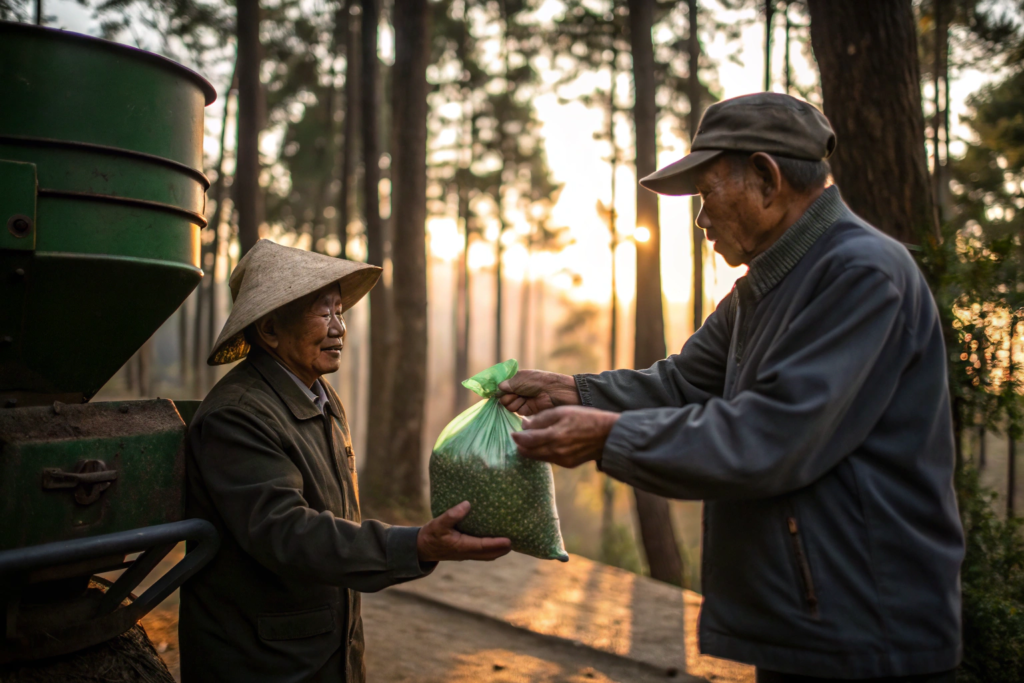
Sourcing Yunnan Typica is not like sourcing Catimor. You cannot order a container. You cannot order ten bags. The total harvest from our Typica plot is measured in tens of kilograms, not tons. The coffee is allocated before it is even dry. If you want it, you need a relationship, patience, and a willingness to pay a premium that reflects the rarity and the labor.
Start by identifying Yunnan producers who mention Typica specifically. Many producers do not grow it. Those who do are proud of it and list it separately from their main Catimor offerings. Contact them directly. Ask about the Typica plot—its age, its altitude, its history. A real Typica producer can tell you the story of their trees.
Request a sample. The volume is so small that a sample may be 100 grams instead of the usual 200. Cup it carefully. Pay attention to the floral notes, the tea-like body, and the clean finish. If the coffee cups with heavy chocolate and nut notes, it is likely Catimor mislabeled as Typica, or it is Typica grown at low altitude and poorly processed.
To source Yunnan Typica, you must identify producers who maintain old-growth Typica plots, request micro-samples well before harvest, be prepared to pay a premium of $5 to $9 per pound FOB, and book the entire lot in advance since volumes are often under 100 kilograms total.
At Shanghai Fumao, our Typica micro-lot is offered to our existing rare varietal clients first. Any remaining volume is made available to new inquiries. The lot size varies by harvest but is typically 60 to 120 kilograms. We provide GPS coordinates of the plot, the age of the trees, the harvest date, the processing protocol, and the cupping score. This is a heritage coffee, and we treat it with the transparency it deserves.
What Roast Profile Preserves Typica's Delicate Florals?
Roasting Typica is an exercise in restraint. The delicate florals and tea-like body that make the coffee special are also what make it easy to ruin. Too much heat, too much development, and the florals vanish. What remains is a thin, slightly sour, uninteresting cup.
I recommend a light roast for Yunnan Typica. Agtron whole-bean reading of 65 to 75. This is lighter than what many roasters are comfortable with, but it is necessary to preserve the jasmine and honey notes. The charge temperature should be moderate—lower than for a dense high-grown Catimor. Typica beans from old trees tend to be slightly less dense, and they absorb heat faster. A lower charge temperature prevents scorching.
The development time after first crack should be short. A development time ratio of 10 to 12 percent is ideal. First crack itself will be softer and less energetic than with Catimor. Listen carefully. The bean temperature at drop should not exceed 205 degrees Celsius. Anything hotter and the florals begin to degrade.
The roast curve should be gentle throughout. No aggressive spikes in heat. A steady, gradual rise in bean temperature with a slightly declining rate of rise. The goal is to develop the sugars fully without burning off the volatile aromatics. When cupped, a well-roasted Yunnan Typica should taste floral and sweet, with no roasty, baked, or underdeveloped notes. For help with roast profiling, Cropster provides software that allows roasters to track and replicate profiles across delicate micro-lots.
Why Is Yunnan Typica Ideal for Filter and Pour-Over Brewing?
Typica's delicate body and refined acidity make it a natural fit for filter brewing methods that highlight clarity and aroma. Pour-over, drip, and Aeropress all work beautifully. Espresso is less forgiving.
In a pour-over, the paper filter removes most of the coffee oils. What passes through is a clean, transparent liquid that showcases the floral aromatics and the silky mouthfeel. The V60 and the Kalita Wave are excellent choices. A Chemex, with its thicker filter, produces an even cleaner cup that emphasizes the tea-like qualities.
The recommended brew ratio is slightly lower than for heavier-bodied coffees. A 1:16 coffee-to-water ratio, instead of the standard 1:15, prevents the cup from becoming too intense. The water temperature should be 92 to 94 degrees Celsius. Too hot, and the delicate florals scald. The grind size should be medium-fine—slightly finer than for a washed Ethiopian, but coarser than for a dense Catimor.
In an espresso machine, Typica is challenging. The light body translates into thin shots with minimal crema. The delicate florals get overwhelmed by the intensity of the extraction. The acidity can become sour rather than bright. If you must serve Typica as espresso, a longer ratio—1:2.5 or 1:3—and a lower pressure profile can help. But honestly, this coffee is best enjoyed as a filter brew where its elegance can shine without distortion.
Conclusion
Yunnan Typica is a coffee of extraordinary elegance and profound rarity. The trees are old. The yields are tiny. The cup is a world apart from the chocolate-forward Catimor that dominates the region. Jasmine, honey, white peach, and a silky, tea-like body define the profile. The finish is clean, long, and sweet.
This is not a coffee for every roaster. The volume is too small for large-scale programs. The price is too high for budget blends. The flavor is too delicate for dark roast espresso. But for a specialty roaster who values heritage, who tells stories on the bag, and whose customers appreciate subtlety and distinction, Yunnan Typica is a treasure. It connects the drinker to the ancient lineage of Arabica, to the history of coffee in China, and to a specific plot of old trees growing on a misty Baoshan mountainside.
If you want to experience what old-growth Yunnan Typica tastes like, contact Cathy Cai at BeanofCoffee. She manages our rare varietal allocations and can tell you about the current harvest, the cupping scores, and the available volume. She can send a sample so you can taste the jasmine and honey yourself. Her email is cathy@beanofcoffee.com. She responds quickly. The lot is small. Reach out early.