A pastry chef turned roaster from Portland contacted me three weeks ago. He builds his coffee menu around sweetness. He pairs his roasts with specific desserts. "I need a coffee that tastes like a dessert itself," he said. "Not flavored. Not dark roasted until it is just sugar burn. I want a green coffee with intrinsic, natural sweetness. The kind that makes you pucker with fruit sugar, not bitter chocolate. Can your sun dried lots deliver that?"
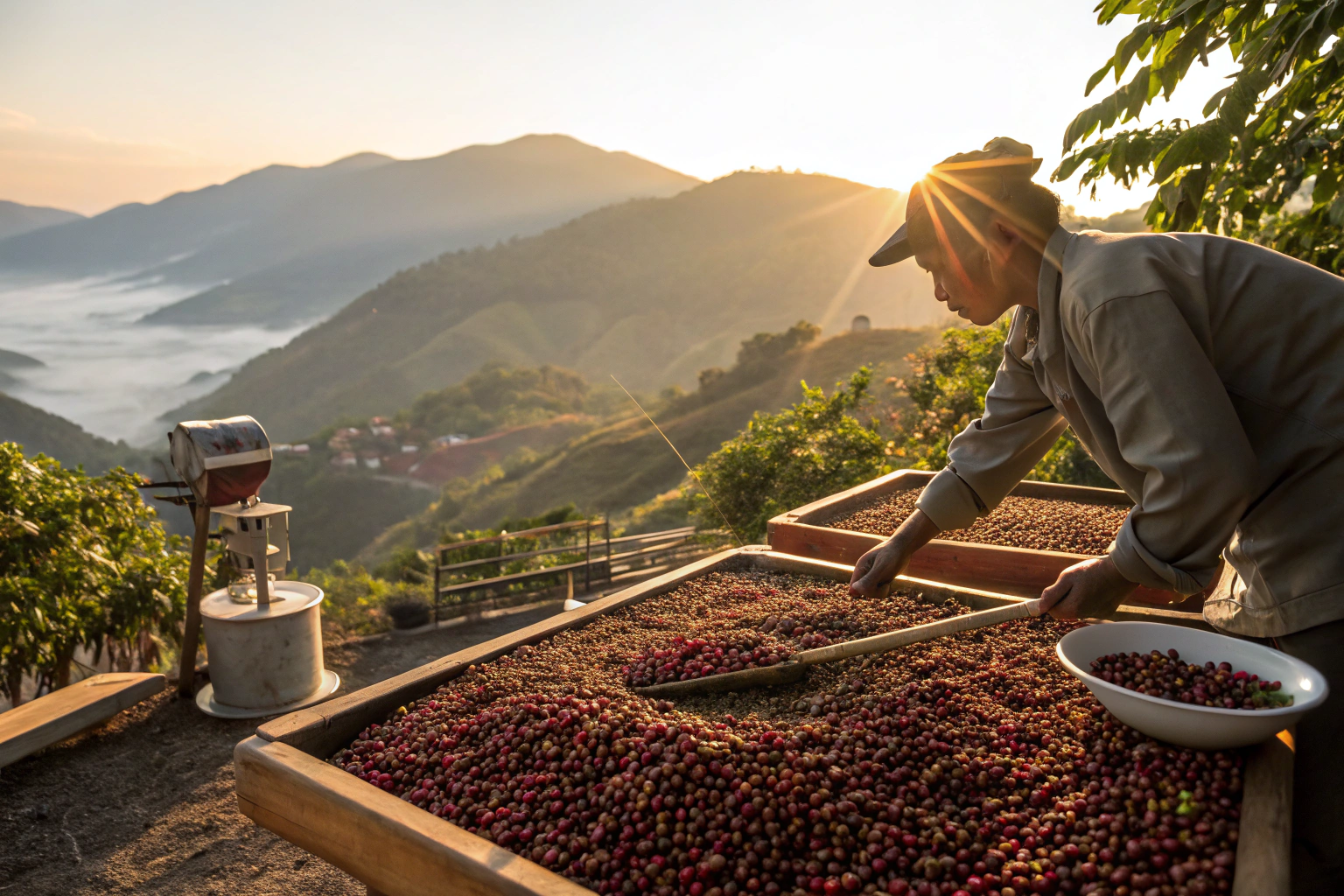
I knew exactly the lot he needed. It was a small micro-lot of natural processed Catimor from our highest plot, dried on raised beds for exactly 22 days. The cherries were hand-picked at peak ripeness, floated to remove the less-dense beans, and turned by hand every two hours during the first week. The resulting cup scored 86 points, with notes of strawberry jam, mango, and raw honey. I sent him a sample. He bought the lot.
To source sun dried coffee beans with high sweetness, buyers must target meticulously processed natural lots where cherries are harvested at peak ripeness with high Brix readings, dried slowly on raised beds to concentrate sugars inside the bean, and protected from fermentation defects that would otherwise mask the clean, jammy sweetness.
High sweetness in coffee is not an accident. It is the result of specific agricultural and processing choices. Here is exactly what drives sweetness in sun dried coffee, which origins and varieties deliver it most reliably, and how to verify it on the cupping table.
What Happens to Sugars Inside the Bean During Sun Drying?
Sun drying is fundamentally different from washed processing in how it treats the sugars in the coffee cherry. In washed processing, the fruit skin and mucilage are removed within hours of harvest. The bean never has extended contact with the fruit. The sugars in the mucilage are washed away. The sweetness in the final cup comes primarily from the bean's intrinsic sucrose content, developed during cherry maturation on the tree, and from the caramelization of those sugars during roasting.
In sun dried natural processing, the whole cherry is dried intact. The bean remains in contact with the mucilage and the fruit skin for the entire drying period—typically 15 to 25 days. During this time, the sugars in the mucilage do not simply sit there. They migrate. The concentration of sugars in the mucilage is much higher than inside the bean. Osmotic pressure drives sugar molecules through the parchment layer and into the bean's cellular structure. The bean absorbs sugars from the fruit.
At the same time, the bean is respiring. It is still a living seed. The respiration consumes some of the sugars. But the net effect, when drying is managed correctly, is a significant increase in the bean's total sugar content compared to the same coffee processed as a washed lot. The absorbed sugars contribute directly to perceived sweetness in the cup and provide additional fuel for caramelization during roasting.
Sun drying concentrates sugars inside the bean through two mechanisms: the evaporation of water, which concentrates all dissolved solids, and the osmotic migration of sugars from the mucilage into the bean during the extended contact time, resulting in a measurably higher sucrose and fructose content than washed coffees from the same harvest.
The type of sugars matters. The mucilage contains glucose and fructose, which are sweeter tasting than sucrose. The migration of these simple sugars into the bean shifts the sugar profile toward higher perceived sweetness. A natural processed coffee often tastes sweeter than a washed coffee from the same lot, even if the total sugar content measured by a refractometer is only modestly higher. The composition of the sugars has shifted toward the sweeter-tasting molecules.
How Does Cherry Ripeness at Harvest Affect Final Sweetness?
The sweetness of a sun dried coffee is determined before the cherry is even picked. A cherry harvested under-ripe will never develop full sweetness, no matter how carefully it is dried. The sugars are simply not there.
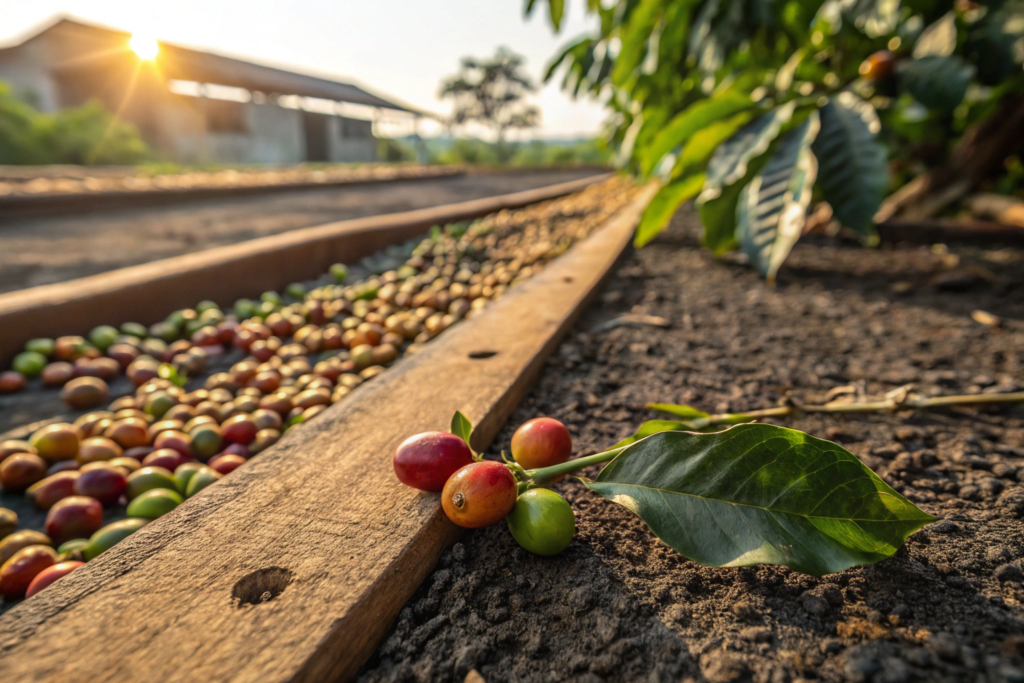
Coffee cherries ripen over several months. During the final weeks of maturation, the cherry accumulates sugars rapidly. The sucrose content of the seed increases. The glucose and fructose content of the mucilage increases. The complex carbohydrates that will later break down into simpler sugars during roasting are synthesized. A cherry picked at peak ripeness has maximum sugar content. A cherry picked a week early has significantly less.
We measure cherry ripeness using a Brix refractometer. A small sample of cherry juice is squeezed onto the refractometer prism. The instrument reads the sugar concentration as a percentage. For our natural processed lots, we target a Brix reading of 22 to 26 at harvest. This is significantly higher than the 18 to 22 Brix typical for washed lots. The extra ripeness translates directly into extra sweetness in the cup.
The Brix measurement guides our harvest timing for each plot. We do not start picking when the cherries "look red." We start picking when the Brix hits the target range. The measurement removes subjectivity. A cherry can look red but still be under-ripe. The refractometer does not lie. For more on Brix measurement in coffee, Perfect Daily Grind has published practical guides on using refractometers for harvest timing.
Why Does Slow Drying Preserve Sugars Better Than Fast Drying?
Drying speed affects sugar preservation in two opposing ways. Too fast, and the bean case-hardens, trapping moisture and sugars unevenly. Too slow, and the bean respires too long, consuming sugars for metabolic activity. The sweet spot—literally—is a moderate, controlled drying speed that concentrates sugars without excessive respiration or microbial spoilage.
Fast drying, on a hot concrete patio or in a mechanical dryer at high temperature, drives off surface water rapidly. The outside of the cherry hardens. The interior moisture and sugars are trapped. The sugars cannot equilibrate properly throughout the bean. The result is uneven sweetness and a risk of spoilage from trapped moisture.
Slow drying on raised beds, over 15 to 25 days depending on the weather, allows moisture to migrate evenly from the interior to the surface. The sugars concentrate gradually. The bean's respiration slows as moisture decreases, conserving the remaining sugars. The slow, even drying produces a bean with uniform sweetness and no trapped moisture pockets.
I monitor the drying rate using daily moisture measurements. The target is a gradual, steady decline from 50 to 55 percent moisture at the start to 10.5 to 12 percent at the end. The drying curve should be smooth, not erratic. A steep drop followed by a stall indicates a problem—probably case hardening. A lot with a smooth drying curve and a final moisture of 11 percent will have well-preserved sugars and a clean, sweet cup.
At our Baoshan facility, we use shade netting during the final drying phase to slow the rate even further. The beans are protected from the intense midday sun. The final few percentage points of moisture are removed gently over several days. This practice preserves the volatile aromatics and the delicate fruit sugars that make our natural lots so sweet.
Which Origins Naturally Produce the Sweetest Sun Dried Coffees?
Sweetness in coffee is a product of genetics, altitude, and processing. Some origins have the right combination to produce exceptionally sweet sun dried lots. Others, even with perfect processing, struggle to reach the same sweetness levels.
Ethiopia is the ancestral home of naturally sweet sun dried coffee. The heirloom varieties, the high altitudes, and the traditional natural processing methods produce coffees with intense berry sweetness. A Grade 1 natural Yirgacheffe or Guji can cup with notes of blueberry jam, strawberry, and honey. The sweetness is explosive and immediately recognizable. The challenge with Ethiopian naturals is consistency. The best lots are exceptional. The average lots can be wild, fermented, and inconsistent.
Brazil is the world's largest producer of natural processed coffee. Brazilian naturals are the backbone of many espresso blends, prized for their low acidity, heavy body, and nutty, chocolatey sweetness. The sweetness is less fruit-forward than Ethiopian naturals—more caramel and nut than berry—but it is reliable and available in large volumes. For a roaster building a sweet espresso base, Brazilian natural is the traditional choice.
Yunnan, China is rapidly emerging as a premier origin for sweet sun dried coffee, where high-altitude Catimor processed as meticulously slow-dried naturals develops an intense, clean, jammy sweetness with notes of strawberry, mango, and honey, often at a more accessible price point than equivalent Ethiopian lots.
Our sun dried Yunnan Catimor is a relative newcomer to this category, but it belongs in the conversation. The combination of high altitude—1,500 to 1,600 meters—the dry harvest season, and meticulous raised bed drying produces a natural coffee with intense, clean sweetness. The flavor profile leans toward tropical fruit and honey—mango, lychee, honeydew—rather than the blueberry of Ethiopia or the caramel of Brazil. The sweetness is distinct and memorable.

Why Is Yunnan's Dry Harvest Season Perfect for Natural Sweetness?
Yunnan has a climatic advantage that many other origins envy: a distinct dry season that coincides perfectly with the coffee harvest. From November to February, Baoshan experiences low humidity, abundant sunshine, and almost no rain. These are ideal conditions for sun drying whole cherry coffee.
The low humidity allows the cherries to dry steadily without the constant threat of mold. In more humid origins, natural processed coffee must be constantly monitored for fungal growth. The drying beds may need to be covered at night. The drying time may stretch to 30 days or more. The risk of ferment defects is high.
In Baoshan, the dry air pulls moisture from the cherries efficiently. The sun shines consistently. The beans dry in 15 to 25 days, depending on the lot and the weather. The drying is fast enough to prevent mold but slow enough to allow sugar migration and concentration. The risk of ferment defects is low.
The dry harvest weather also allows us to dry on raised beds without plastic covers. The cherries are exposed to direct sun during the day and the cool, dry night air. The diurnal temperature swing—warm days, cool nights—is believed by many producers to enhance sweetness and complexity. The cherries experience a natural cycle of warm concentration and cool rest.
This climatic advantage is one reason Yunnan naturals can achieve high sweetness with exceptional cleanliness. The weather does the work. We just manage the process. For more on Yunnan's coffee climate, the International Coffee Organization publishes country coffee profiles that describe growing and harvest conditions.
Can High-Altitude Washed Coffees Compete on Sweetness?
Washed coffees can be very sweet, but the character of the sweetness is different from natural processed coffees. Washed coffee sweetness is more about sucrose and its caramelization during roasting. Natural coffee sweetness adds the glucose and fructose from the mucilage, which taste sweeter on the tongue.
A high-altitude washed coffee from a plot with high Brix at harvest, processed cleanly, and roasted to a medium profile can have intense caramel, brown sugar, and honey sweetness. The acidity provides a counterpoint that makes the sweetness feel bright and clean. A washed coffee from Yunnan at 1,600 meters can cup with notes of brown sugar, honey, and a hint of stone fruit.
But the same plot processed as a natural will taste sweeter. The mucilage sugars add a layer of fruit sweetness—jam, dried fruit, honey—that the washed version lacks. The body is heavier. The acidity is softer. The overall impression is of a richer, more dessert-like coffee.
For a roaster seeking maximum sweetness, natural processing is the more direct route. For a roaster seeking balanced sweetness with bright acidity, washed processing is the better choice. Both can be excellent. The decision depends on the target flavor profile.
At Shanghai Fumao, we offer the same Catimor lot in both washed and natural versions. Buyers can taste the difference side by side. The natural is always sweeter. The washed is always brighter. The choice reflects the roaster's preference and the customer's expectation.
How to Cup Sun Dried Lots Specifically for Sweetness?
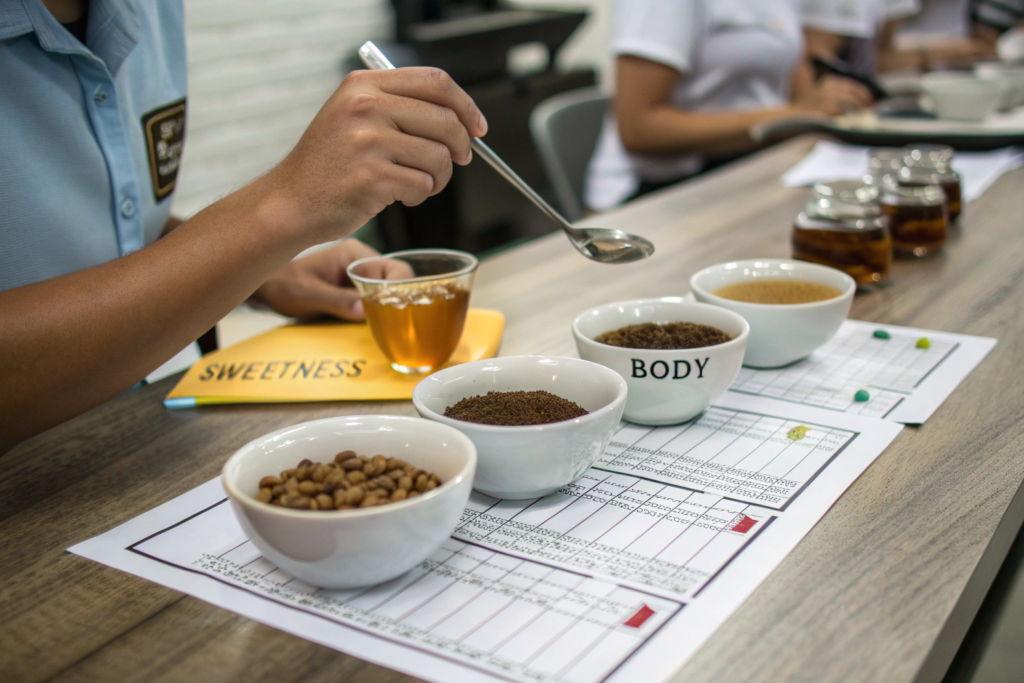
Cupping for sweetness requires a specific focus. The standard SCA cupping form evaluates sweetness as one of ten attributes, but the evaluation is holistic. To really understand the sweetness of a sun dried lot, the cupper must isolate the sweetness from the acidity, the body, and the flavor notes.
The first step is to evaluate the sweetness at different temperatures. Hot coffee suppresses sweetness perception. The heat numbs the tongue slightly. The sweetness becomes more apparent as the coffee cools. I cup the coffee immediately after brewing, at warm temperature, at room temperature, and fully cooled. The sweetness should be present at every stage and should intensify as the coffee cools. A coffee that tastes sweet hot but flat at room temperature has unstable sweetness, often a sign of under-ripeness or poor drying.
The second step is to evaluate the type of sweetness. Is it a clean, sugar-like sweetness? A honey-like floral sweetness? A jammy, fruit-heavy sweetness? A caramelized, brown sugar sweetness? The type of sweetness affects how the coffee pairs with food and how it performs in different brew methods. A clean sugar sweetness is versatile. A heavy jammy sweetness works beautifully as a single origin but can be overpowering in a blend.
Cupping sun dried coffee for sweetness requires evaluating the sweetness intensity and character at multiple temperatures, noting whether it presents as clean sugar, floral honey, jammy fruit, or caramel, and assessing how the body carries and amplifies the sweet sensation on the palate.
The third step is to evaluate the body in relation to the sweetness. Sweetness needs body to feel satisfying. A sweet coffee with a thin, watery body tastes hollow. A sweet coffee with a heavy, syrupy body tastes decadent. Sun dried coffees typically have heavier body than washed coffees because the mucilage contact during drying adds polysaccharides and lipids. The body carries the sweetness and extends the finish.
How Does Sweetness Interact with Acidity in Sun Dried Coffees?
Sweetness and acidity are partners on the cupping table. A coffee with high sweetness and no acidity tastes flat and cloying. A coffee with high acidity and low sweetness tastes sour and harsh. The ideal sun dried coffee has intense sweetness balanced by enough acidity to provide structure and brightness.
In natural processed coffees, the acidity is often softer and less citric than in washed coffees. The fruit acids—citric and malic—are partially metabolized during the extended drying. What remains is a softer, rounder acidity, often described as "mellow," "winey," or "jammy." The sweetness fills the space left by the reduced acidity.
The balance between sweetness and acidity is a matter of processing control. A natural dried too fast may retain sharp, unpleasant acidity. A natural dried too slow may lose all acidity and taste flat. The sweet spot—again, literally—is a moderate drying speed that preserves enough acidity to provide structure while allowing the sugars to concentrate and dominate.
When I evaluate a sun dried lot, I look for the sweetness to arrive first on the palate, followed by a gentle acidity that lifts the sweetness and prevents it from feeling heavy. The finish should return to sweetness—clean, lingering, and satisfying. A lot that meets this profile has the kind of balanced, dessert-like sweetness that delights customers and commands premium pricing.
What Are the Common Defects That Mask Sweetness in Naturals?
Natural processed coffees are more susceptible to defects than washed coffees, and those defects can mask or destroy the sweetness. A buyer must cup carefully to ensure that the sweetness is clean and the defects are absent.
The most common sweetness-masking defect in naturals is over-fermentation. If the cherries are piled too thick on the drying beds, or if the drying is too slow, wild yeasts and bacteria can ferment the fruit sugars. The fermentation produces acetic acid, alcohol, and other compounds that taste sour, vinegary, or boozy. These flavors overpower the sweetness. The coffee tastes funky and sharp instead of clean and sweet.
The second common defect is mold. If the drying is too slow or the humidity is too high, mold spores can germinate on the cherry surface. The mold produces musty, earthy, phenolic flavors. The sweetness is buried under a blanket of must. The coffee tastes dirty instead of sweet.
The third defect is uneven drying. Some cherries dry faster than others. The unevenness means some beans are over-fermented while others are under-developed. The cup is a muddle of sour, sweet, and flat notes. The sweetness is present but chaotic and unsatisfying.
A clean, well-processed sun dried coffee should taste intensely sweet with no trace of ferment, mold, or unevenness. The first sip should be a burst of clean fruit sugar. The finish should be sweet and clean. Any off-note is a processing flaw. For more on natural processing defects and their prevention, the Coffee Quality Institute provides training on post-harvest quality management.
How to Build a Sweetness-Focused Sourcing Program?
Building a program around sweet sun dried coffees requires intentional sourcing, not opportunistic buying. The roaster should identify the target sweetness profile, build relationships with producers who specialize in natural processing, and plan the purchasing calendar around harvest seasons.
The first step is to define the sweetness target. Is the goal a jammy, fruit-forward sweetness for a single origin? A caramel, nutty sweetness for an espresso base? A honey-like, floral sweetness for a filter blend? The target determines the origin, the variety, and the processing specification.
The second step is to identify producers who measure and manage sweetness. Ask about Brix at harvest. Ask about drying protocols. Ask about cupping scores for sweetness specifically. A producer who cannot answer these questions is not managing for sweetness. The sweetness of their coffee is accidental, not intentional.
A sweetness-focused sourcing program starts with defining the target sweetness profile, identifying producers who actively measure Brix at harvest and manage drying for sugar preservation, and securing forward contracts to guarantee access to the sweetest lots from the most favorable harvest seasons.
The third step is to time the purchasing around harvest. Sun dried naturals are seasonal. The harvest in Yunnan is November to February. The drying completes by March or April. The coffee rests for a month or two. The best lots are available for cupping and booking in May or June. A buyer who inquires in October will find slim pickings. The sweetest lots are allocated early.
At Shanghai Fumao, we offer a sweetness-focused sourcing program for roasters who want consistent access to our sun dried lots. We provide Brix data from harvest, drying curves, cupping scores with sweetness highlighted, and forward booking options. The roaster knows what they are getting and when they are getting it.
What Certifications or Data Prove a Lot's Sweetness Potential?
Sweetness is a sensory attribute, not a certification. But certain data points can indicate a lot's sweetness potential before the buyer ever cups it.
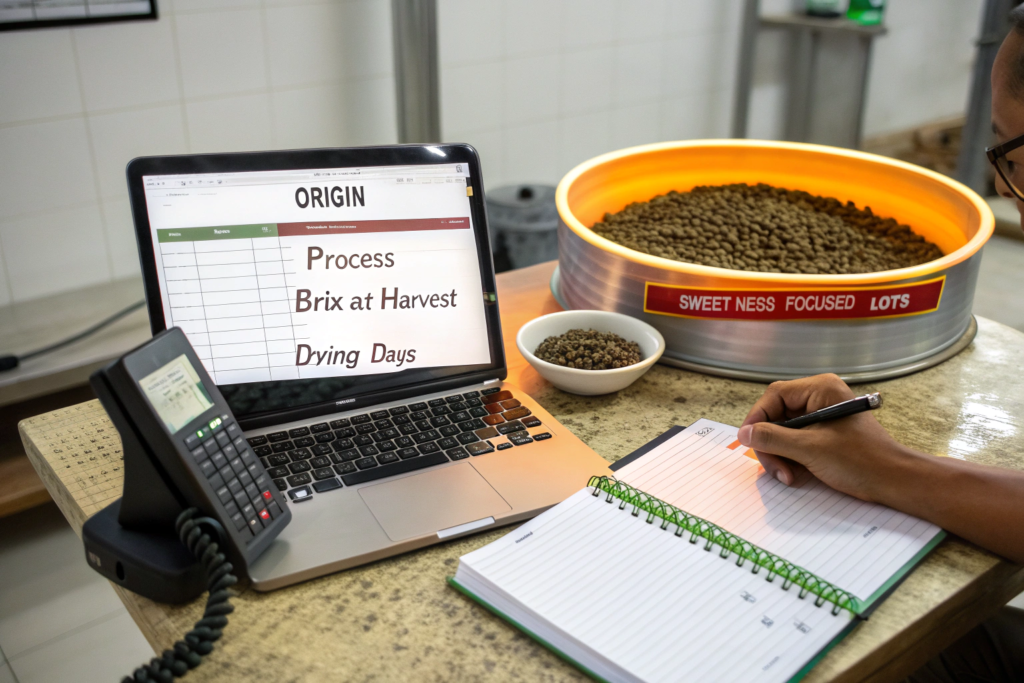
The Brix reading at harvest is the most direct predictor of sweetness. A lot harvested at 24 Brix has more sugar available than a lot harvested at 18 Brix. The Brix reading is objective and measurable. I provide Brix data for our sun dried lots upon request.
The drying curve is another indicator. A smooth, gradual drying curve over 15 to 25 days suggests well-managed sugar preservation. An erratic or very short drying curve suggests the sugars may have been compromised. I provide drying logs with every sun dried lot.
The cupping score and notes are the final proof. The sweetness score on the SCA form should be 8.0 or above for a lot marketed on sweetness. The flavor notes should include specific sweet descriptors—honey, jam, brown sugar, caramel—rather than generic "sweet."
The moisture and water activity readings confirm that the coffee is stable and the sugars are protected. Moisture between 10.5 and 12 percent and water activity below 0.60 indicate a well-dried lot that will hold its sweetness during storage and transit.
I provide all of this data with our sun dried lots. The buyer receives a complete picture of the lot's sweetness potential, supported by objective measurements and sensory evaluation.
How Should You Roast Sun Dried Beans to Maximize Perceived Sweetness?
The roast profile is the final step in delivering sweetness to the cup. A poorly roasted sun dried lot can taste flat and roasty, with all the natural sweetness buried under carbon.
Sun dried beans are typically less dense than washed beans from the same altitude. The extended fruit contact and the slightly different drying dynamics alter the bean structure. The lower density means heat penetrates faster. The roast profile must be adjusted accordingly.
I recommend a lower charge temperature for sun dried naturals—5 to 10 degrees Celsius lower than for a washed lot of the same origin. The drying phase should be extended slightly to ensure even moisture removal. The Maillard phase should be managed carefully to develop caramelization without burning the fruit sugars.
The target roast level for maximum sweetness is medium to medium-light. Agtron whole-bean reading of 55 to 65. At this level, the fruit sugars have caramelized into honey and caramel notes, but the volatile fruit esters that create the jammy, tropical notes are still present. A darker roast will bury the fruit sweetness under roast bitterness. A lighter roast may leave the sugars underdeveloped, tasting grassy and thin.
The development time after first crack should be moderate—14 to 16 percent of total roast time. Enough to fully develop the sugars, not so much that the volatile aromatics are lost. The drop temperature should be around 210 to 215 degrees Celsius.
I provide roast recommendations with every sun dried lot. The recommendations are based on my own profiling and feedback from roasters who have successfully maximized the sweetness of these lots. For more on roast profiling for naturals, Cropster allows roasters to track and share optimized profiles.
Conclusion
High-sweetness sun dried coffee is a product of intentional choices at every stage of production. The cherries must be harvested at peak ripeness, with Brix readings that confirm maximum sugar content. The drying must be slow and even on raised beds, allowing the mucilage sugars to migrate into the bean and concentrate through evaporation. The processing must be clean, with no ferment or mold to mask the natural sweetness.
Yunnan has emerged as a premier origin for this style of coffee. The dry harvest season, the high altitude, and the meticulous raised bed drying produce sun dried lots with intense, clean, jammy sweetness at a competitive price. The flavor profile—strawberry, mango, honey—is distinct and memorable.
Sourcing for sweetness requires asking the right questions, reviewing the data—Brix, drying curves, cupping scores—and cupping the lots with sweetness as the primary evaluation criterion. The roasting must be adjusted to the lower density of sun dried beans and targeted to the medium range where sugars caramelize without burning.
If you want to taste the sweetness of our current sun dried Yunnan lots, contact Cathy Cai at BeanofCoffee. She can send you samples with Brix data, drying logs, and cupping scores that highlight the sweetness attributes. She can also arrange forward booking for our sweetest micro-lots. Her email is cathy@beanofcoffee.com. She responds quickly and can help you build a sweetness-focused program that fits your menu and your budget.