You love coffee. You have a vision for a brand. You see a gap in the market—a specific vibe, a specific community, a specific story that isn't being told. But you don't have a hundred thousand dollars for a roaster, a lease on an industrial space, and years to master the craft of roasting. You want to launch now, with a quality product that carries your name and your vision. You're asking: Is there a smarter, faster, less capital-intensive way to build a coffee brand? And the answer you've heard is "Private Label." But where do you even start without getting burned?
Starting a coffee roasting business with a private label supplier is a proven, capital-efficient path to market. The process involves six key steps: (1) Defining your brand identity and target customer. (2) Selecting the right private label partner—a vertically integrated farm or roaster, not just a generic middleman. (3) Curating your coffee offering through sample cupping and selection. (4) Designing your brand's packaging and digital presence. (5) Structuring a smart trial order to validate quality and logistics. (6) Launching, marketing, and scaling your business while your partner handles production and fulfillment.
I've helped dozens of entrepreneurs launch their brands through Shanghai Fumao. I've seen what separates a successful launch from a costly mistake. Let me walk you through the exact blueprint, from concept to first sale.
What Is the Difference Between Private Label, White Label, and OEM Coffee?
Before you start Googling "coffee suppliers," you need to know exactly what you're looking for. The terms are often confused, but they represent very different levels of control and brand ownership.
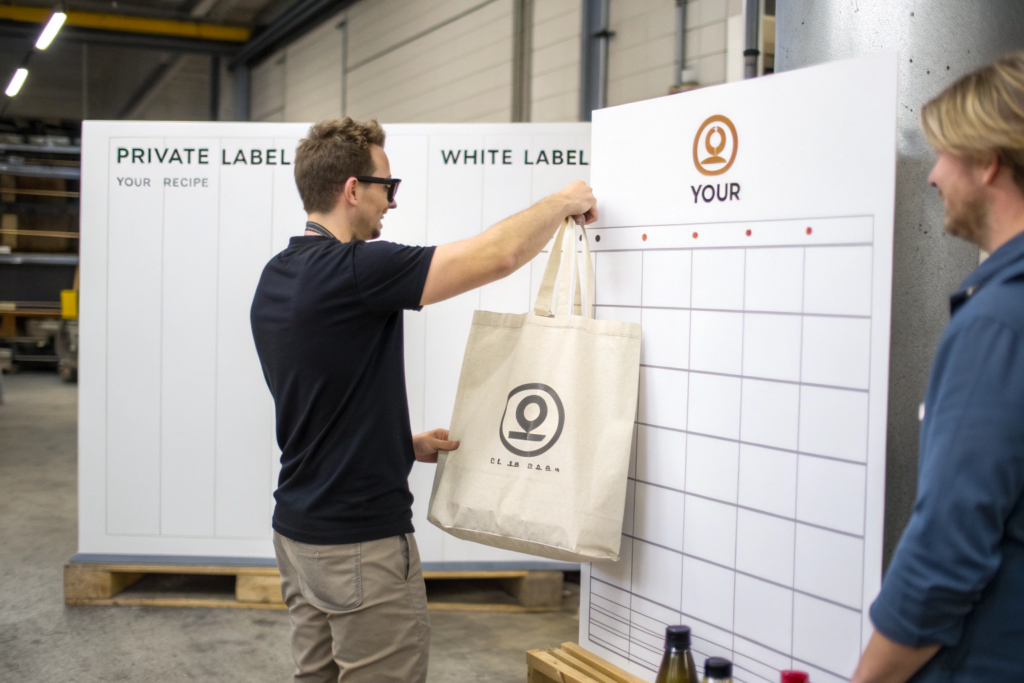
- Private Label: You select a coffee from the supplier's existing catalog of roasted offerings. You apply your custom branding (logo, bag design, label) to that product. The roast profile is pre-determined. This is the fastest, lowest-MOQ, and most accessible entry point.
- White Label: The supplier provides a completely finished, packaged product (e.g., a generic "Breakfast Blend" bag). You simply apply your logo sticker over their label. This is the cheapest and fastest option but offers the least brand differentiation and lowest perceived value.
- OEM (Original Equipment Manufacturer): You provide the exact specifications: green coffee origin, roast profile, and custom bag. The manufacturer produces your unique formula. This is the highest level of control and brand ownership but requires larger MOQs and a longer lead time.
For most first-time brand founders, Private Label or a hybrid Private Label/OEM (where you select the green coffee but use a standard roast profile) is the ideal starting point.
Why Is Private Label the Smartest Entry Point for a New Brand?
Capital efficiency and speed to market. Roasting equipment is expensive. Leasing a food-grade facility is expensive. Mastering the roast curve takes years.
Private Label eliminates all of that upfront capital expenditure and operational complexity. You focus 100% of your time and money on what actually builds the brand: marketing, storytelling, and customer acquisition. You can launch a professional, high-quality coffee brand with an initial investment that is a tiny fraction of what it would cost to build a roastery from scratch. You can test your concept, refine your brand, and build a customer base before you ever have to make the massive commitment of buying your own roaster. It's the lean startup methodology applied to coffee.
How Do I Transition from Private Label to OEM as My Business Grows?
This is the long-term vision for many successful private label brands. The path is logical and can be planned from day one.
Phase 1: Launch with Private Label. Use the supplier's existing catalog. Focus on building your brand, your customer base, and your cash flow. Learn what your customers love.
Phase 2: Curate a Specific Green Coffee. As you grow, work with your supplier to select a specific, unique green coffee lot (e.g., "Yunnan P4 Catimor") for your exclusive use. You're still using their roast profile, but the green bean is now proprietary to your brand.
Phase 3: Develop a Custom Roast Profile (OEM). Once you have the volume and the brand identity, work with the supplier's roast master to develop a roast profile that is uniquely yours. This is now a full OEM product.
Phase 4: Bring Roasting In-House. Eventually, when your volume justifies the capital investment, you can transition to buying green coffee directly from your farm partner and roasting it yourself, using the roast profile you co-developed.
At Shanghai Fumao, we partner with brands at every stage of this journey. We support you from your first private label bag to your own container of custom-roasted OEM coffee.
How Do I Choose the Right Private Label Coffee Supplier?
This is the most critical decision you will make. Your supplier is not just a vendor; they are your production partner. Their quality, reliability, and communication will directly define your brand's reputation.
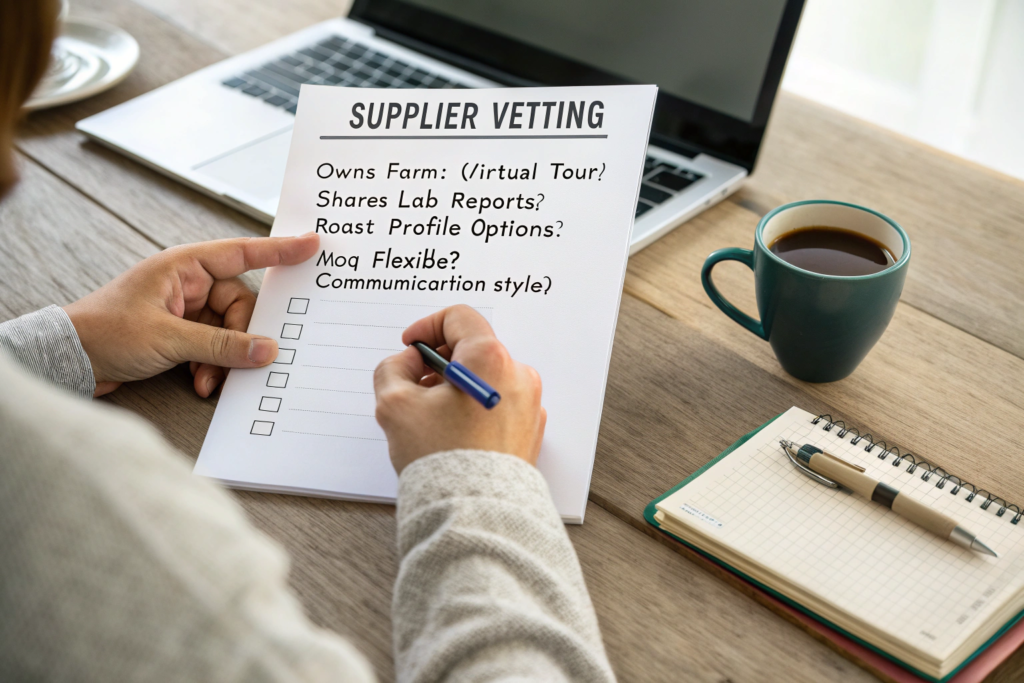
Choosing the right private label supplier requires looking beyond the website and the price list. You must evaluate four core pillars: (1) Provenance & Control: Do they own the farm and the roasting facility? (Vertical integration ensures quality and supply). (2) Quality Transparency: Do they openly share green coffee specs, roast profiles, and third-party lab reports? (3) Flexibility & Scalability: Can they handle your 50-bag trial order AND your future 500-bag order? (4) Communication & Partnership: Are they responsive, knowledgeable, and do they feel like a partner, not just an order-taker?
What Questions Should I Ask a Potential Private Label Partner?
Don't just ask "How much for a bag of coffee?" Ask questions that reveal their operational depth and their partnership mentality.
Key Vetting Questions:
- "Can you provide a live video tour of your roasting facility and your green coffee warehouse?"
- "Are you roasting on a modern, consistent machine (e.g., Loring, Probat), and can you provide sample roast profiles?"
- "Do you have a copy of a recent pesticide and mycotoxin lab report for the coffee I'm interested in?"
- "What is your standard lead time from order to shipment? What is your on-time shipping percentage?"
- "Who is my main point of contact, and what is their experience in the coffee industry?"
- "Can you provide three references from current private label clients?"
A professional, transparent partner will welcome these questions. They will have clear, confident answers. Evasiveness is a giant red flag.
Why Is Vertical Integration (Farm + Roastery) a Game-Changer?
Most private label suppliers are either pure roasters (who buy green coffee from importers) or pure traders. A vertically integrated partner who grows the coffee and roasts it offers unique advantages.
- Supply Chain Transparency: You know exactly where the coffee came from. You can trace it back to a specific farm plot. This is a powerful marketing story.
- Quality Control: The same entity controls the coffee from seed to roasted bean. There is no finger-pointing if a quality issue arises.
- Price Stability: By eliminating multiple middlemen, a vertically integrated supplier can often offer more competitive and stable pricing.
- Direct Communication: You can talk to the person who grew the coffee and the person who roasted it. This is invaluable.
At Shanghai Fumao, our vertical integration—from our 10,000-acre farm in Baoshan to our roasting partner network—is our core differentiator. We offer our private label clients a level of transparency and control that is unmatched by pure roasters.
How Do I Design My Brand and Packaging for Maximum Impact?
Your coffee can be delicious, but if the bag looks amateurish, it will never leave the shelf. In the crowded coffee market, your packaging is your most important silent salesperson.
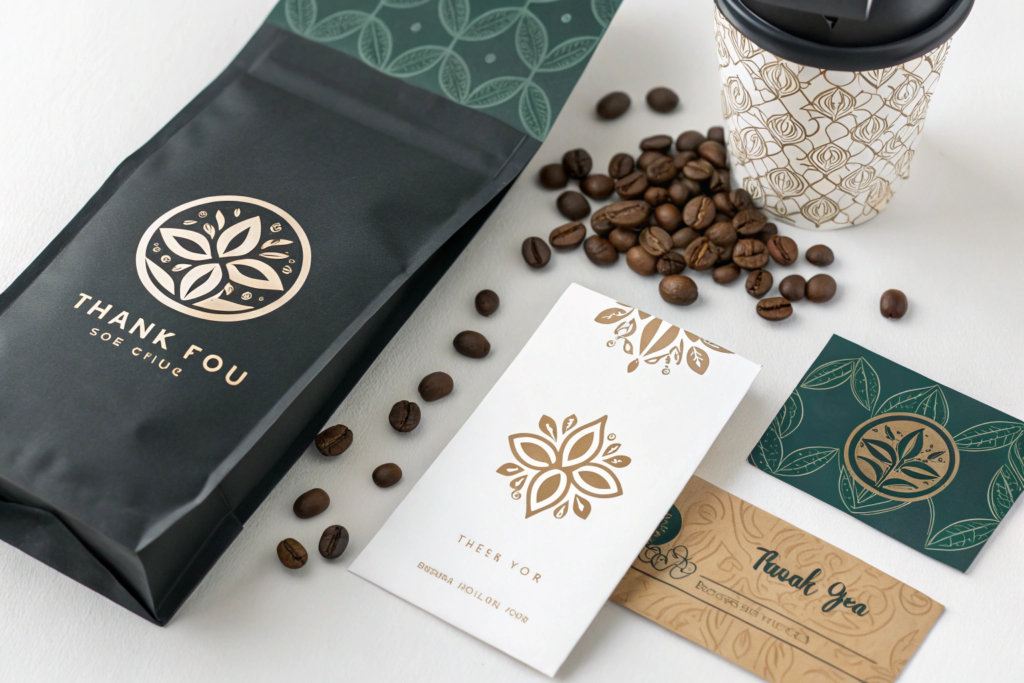
Designing a high-impact coffee brand involves more than just a logo. It requires a cohesive visual identity and a clear brand story. Key elements include: (1) A unique, memorable brand name that is legally available. (2) A professional logo and color palette that reflects your brand's personality. (3) Compelling, well-written copy for the bag that tells the coffee's origin story and flavor notes. (4) High-quality bag materials (e.g., kraft paper with a matte finish) and features (one-way valve, tin tie). (5) A clear, easy-to-scan QR code linking to your website or the farm's traceability story.
What Are the Essential Elements of a High-Converting Coffee Bag?
A consumer makes a split-second decision on a shelf or a webpage. Your bag must communicate quality and intrigue instantly.
Essential Elements:
- Front of Bag: Your bold, clear Brand Logo. The Coffee Name (e.g., "Yunnan Single Origin"). A short, compelling Flavor Descriptor (e.g., "Dark Chocolate & Toasted Almond").
- Back/Side of Bag: Your Brand Story (2-3 sentences). The Origin Story (e.g., "Grown at 1,400m on the Shanghai Fumao Estate in Baoshan, Yunnan."). Roast Level (Medium). Net Weight. A QR Code for traceability.
- Functional Elements: A one-way degassing valve to maintain freshness. A resealable tin tie or zipper. A Roasted On date.
Work with a professional graphic designer. This is not a place to cut corners. Websites like 99designs or Upwork can be cost-effective resources for finding talented designers.
How Do I Write Compelling "Origin Story" Copy for My Bag?
Don't just list facts. Tell a mini-story. Connect the consumer emotionally to the place and the people.
Example for a Shanghai Fumao Private Label Coffee:
Weak Copy: "Coffee from Yunnan, China. Medium roast. Notes of chocolate."
Strong Copy: "Nestled in the misty highlands of Baoshan, Yunnan, the Shanghai Fumao Estate has been cultivating exceptional Arabica for over two decades. This single-origin lot, grown at 1,400 meters, is meticulously hand-picked and roasted to a smooth medium, revealing rich notes of dark chocolate, toasted almond, and a hint of honey. Every cup is a taste of Yunnan's ancient mountains and modern coffee renaissance."
The strong copy creates a sense of place, implies quality and care, and invites the consumer on a sensory journey. This is the power of a good origin story. We provide our private label partners with detailed farm information and photos to help them craft this authentic narrative.
How Do I Launch and Scale My Private Label Coffee Business?
You have the coffee. You have the brand. Now you need customers. A successful launch requires a focused, multi-channel strategy that drives traffic and converts visitors into loyal subscribers.
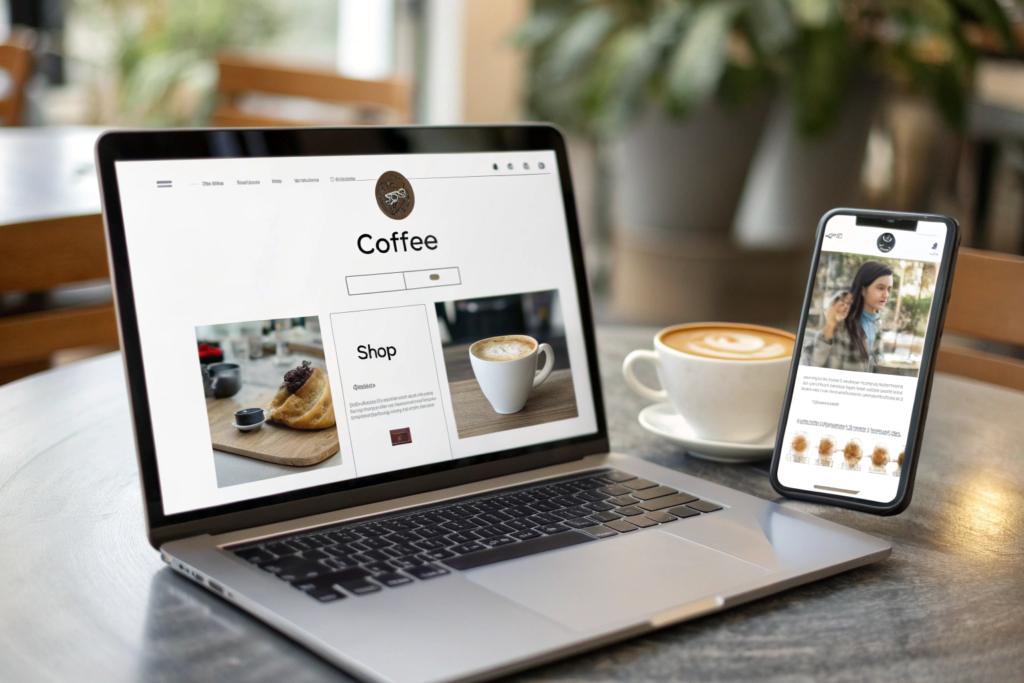
Launching and scaling a private label coffee business requires a two-pronged approach: digital direct-to-consumer (DTC) and local wholesale. Start with DTC using a platform like Shopify. Drive initial traffic through your personal network, targeted social media ads (Instagram/Facebook), and content marketing (blog posts, brewing guides). Simultaneously, offer free samples to local cafes, offices, and boutique retailers to build wholesale accounts. The key to scaling is a strong subscription program, which provides predictable recurring revenue and builds long-term customer loyalty.
Why Is a Coffee Subscription Program Essential for Growth?
One-time sales are great. Recurring revenue is the engine of a scalable, valuable business. A coffee subscription program provides that engine.
Benefits of a Subscription Model:
- Predictable Revenue: You know how much coffee you need to order from your supplier each month.
- Improved Cash Flow: Recurring charges smooth out the peaks and valleys of one-time sales.
- Increased Customer Lifetime Value (LTV): A subscriber is worth far more over time than a one-time buyer.
- Stronger Customer Relationships: You become part of their daily ritual.
Make signing up for a subscription easy and incentivized (e.g., "Subscribe & Save 10%"). Offer flexibility (e.g., weekly, bi-weekly, monthly deliveries; easy pause/cancel). Use an app like Recharge on your Shopify store to manage subscriptions seamlessly.
How Do I Use Social Media to Tell My Coffee's Authentic Story?
Don't just post pictures of coffee bags. Take your customers behind the scenes. Give them access to the journey.
- Share the Origin: Post the photos and videos provided by your private label partner. Show the coffee trees in Yunnan. Show the harvesting. Show the drying beds. Tag the farm.
- Share the Roasting: If your partner allows, share photos or short videos of the roasting process.
- Share Your "Why": Post about why you started the brand. Be personal. Be authentic.
- Engage, Don't Just Broadcast: Respond to comments. Ask questions. Run polls in Stories. Build a community, not just an audience.
The modern coffee consumer craves authenticity and connection. Your private label partnership gives you a genuine, compelling story to tell. Use social media to tell it visually and consistently. At Shanghai Fumao, we actively support our private label partners with a library of high-quality farm and processing content specifically for this purpose.
Conclusion
Starting a coffee roasting business with a private label supplier is the smartest, fastest, and most capital-efficient way to turn your passion for coffee into a real, scalable brand. It allows you to bypass the massive barriers of equipment and expertise and focus directly on what matters most: building a great brand and connecting with customers.
The journey requires careful planning: defining your brand, vetting the right partner, designing impactful packaging, and executing a focused launch strategy. But with the right partner by your side, you can go from concept to first sale with remarkable speed and professionalism.
If you're ready to explore a private label partnership that offers true vertical integration, farm-to-cup transparency, and exceptional Yunnan coffee, I invite you to start a conversation.My email is cathy@beanofcoffee.com.