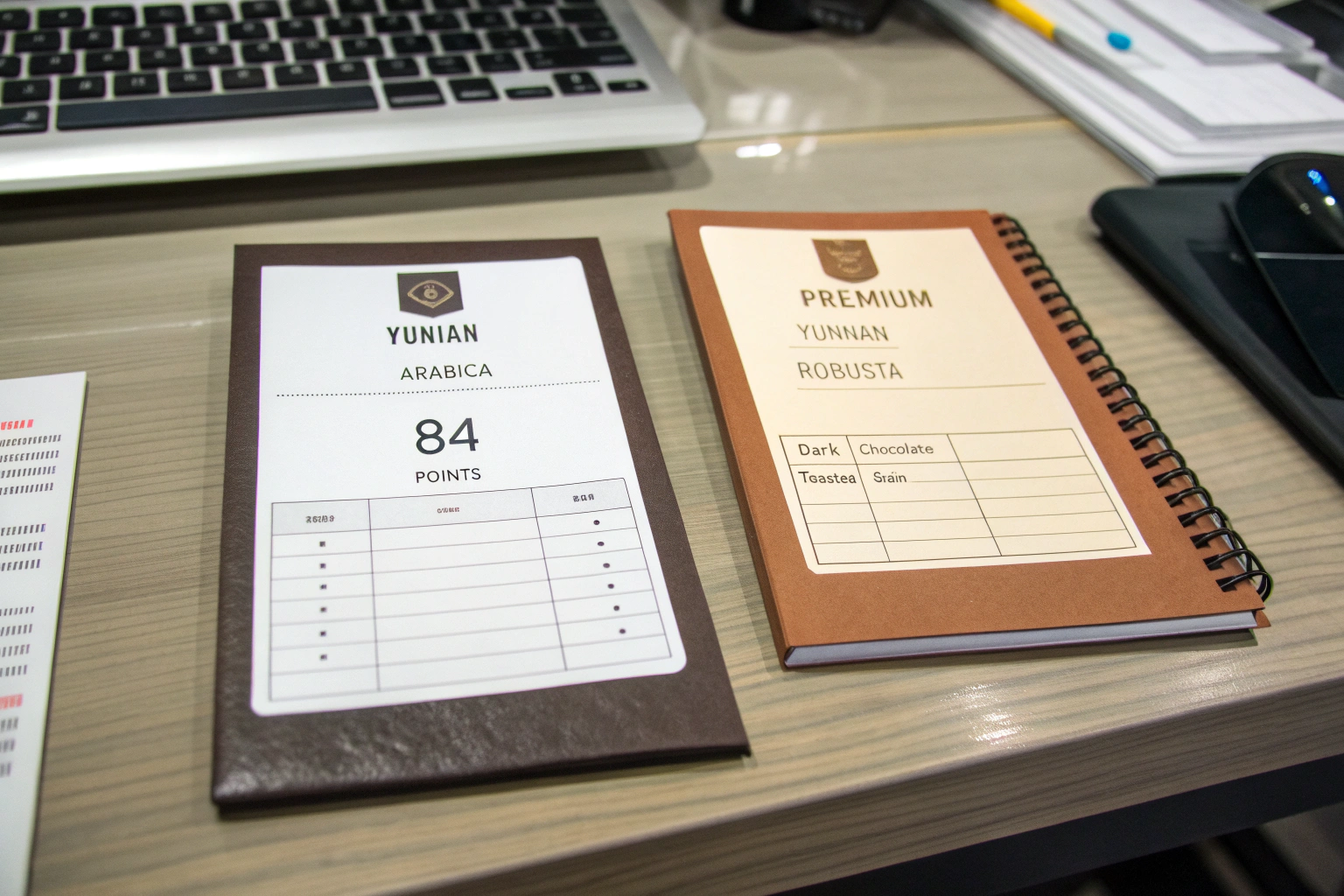
You're looking at two offer sheets. One is for a specialty-grade Yunnan Arabica, 84 points, with notes of milk chocolate and stone fruit. The price is a premium. The other is for a high-quality Yunnan Robusta, cleanly processed, with notes of dark chocolate and toasted grain. The price is significantly lower. You know both beans have their place. But you need to make a strategic decision for your blends. You're asking: Beyond the price tag, what is the real, qualitative difference between these two species? What does Arabica do in the cup that Robusta doesn't? And can a "high-quality" Robusta ever close that gap?
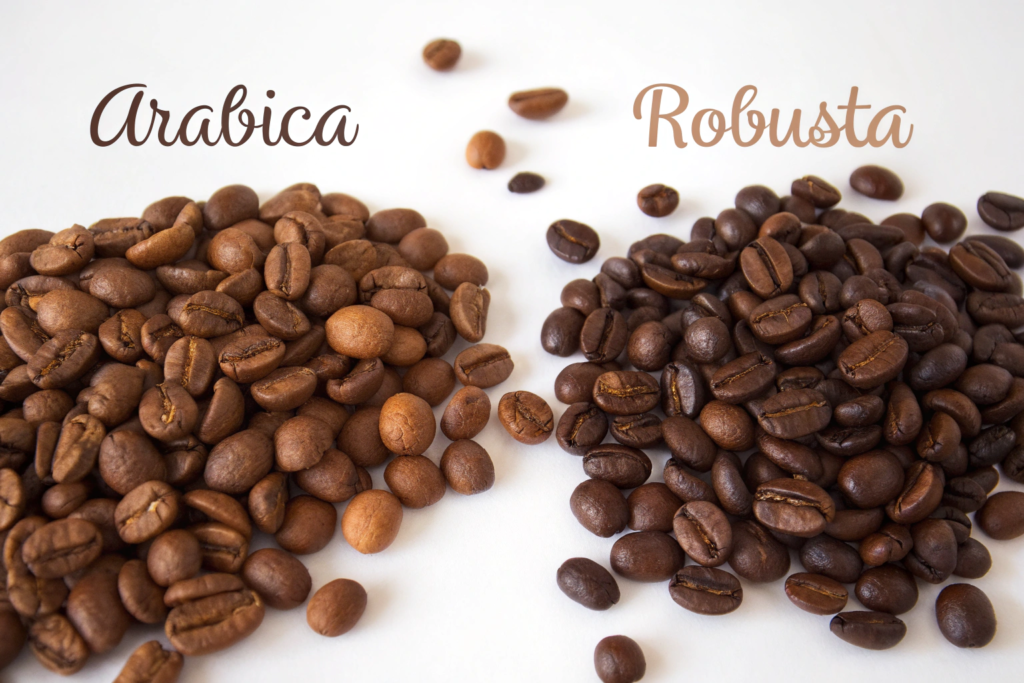
The fundamental quality difference between Arabica (Coffea arabica) and Robusta (Coffea canephora) is rooted in their genetics and chemistry. Arabica is prized for its complex, nuanced flavor profile, characterized by a wide spectrum of fruit, floral, and sweet notes, and a balanced, often vibrant acidity. Robusta is characterized by a narrower, more robust flavor profile—earthy, woody, and grain-like—with significantly higher bitterness, lower acidity, and a much heavier body. While exceptional processing can dramatically improve Robusta's cleanliness and make it a valuable blending tool, it cannot replicate the inherent complexity, sweetness, and aromatic finesse of high-quality Arabica.
At Shanghai Fumao, we grow and export both species. I cup them side-by-side constantly. Let me walk you through the scientific and sensory differences that define the quality gap, and explain where each species truly shines in a professional coffee program.
What Are the Fundamental Genetic and Chemical Differences?
The difference in the cup starts at the molecular level. Arabica and Robusta are distinct species with different evolutionary paths. This has resulted in dramatically different chemical compositions, which directly dictate their sensory properties.
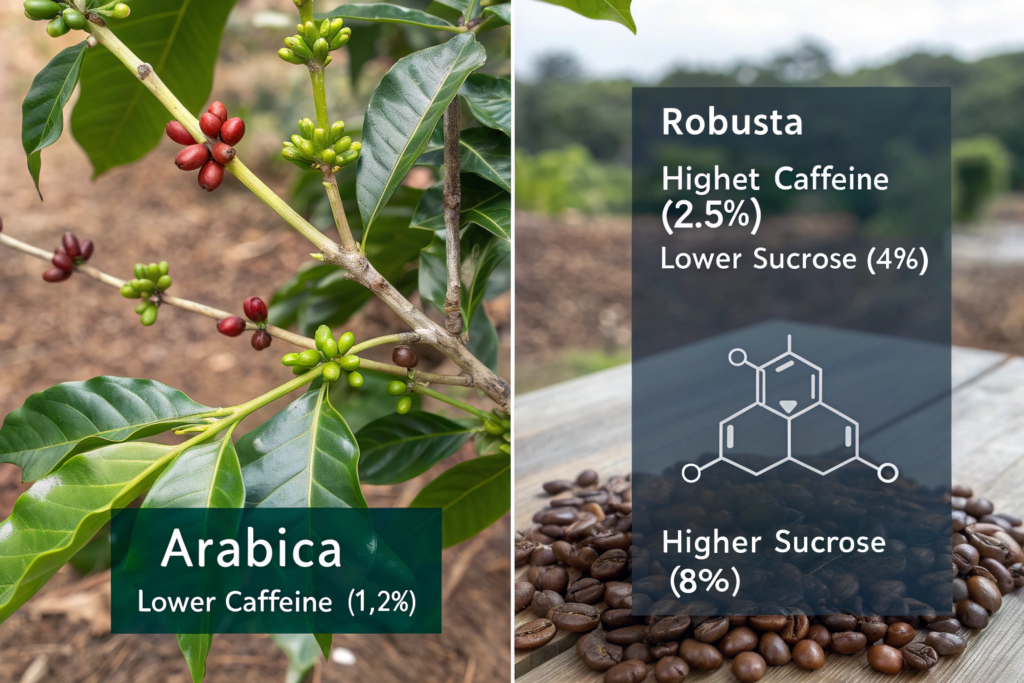
- Caffeine Content: Robusta contains nearly twice the caffeine of Arabica (approx. 2.5% vs. 1.2%). Caffeine is intensely bitter. This is the primary driver of Robusta's characteristic bitterness.
- Sucrose (Sugar) Content: Arabica contains significantly more sucrose (approx. 8% vs. 4%). Sugars are the precursors for the complex caramelization and Maillard reactions during roasting that create the sweet, fruity, and chocolatey notes we prize in coffee. Robusta simply has less raw material for flavor development.
- Chlorogenic Acids (CGAs): Robusta contains nearly twice the CGAs of Arabica. CGAs are antioxidants, but they break down during roasting into bitter-tasting phenols and quinic acids. This further amplifies Robusta's bitterness and astringency.
- Lipids (Fats/Oils): Arabica has a higher and more complex lipid profile. Lipids are crucial carriers of aromatic compounds and contributors to mouthfeel.
These are not subjective opinions. They are measurable, objective chemical differences that explain the quality gap.
How Does Caffeine Content Directly Impact Flavor and Bitterness?
Caffeine is not a subtle flavor. It is a distinct, sharp, and lingering bitterness. The human palate is highly sensitive to it.
Because Robusta contains roughly double the caffeine of Arabica, its cup is fundamentally more bitter. This bitterness is not the pleasant, bittersweet note of dark chocolate. It's often described as harsh, metallic, or medicinal. It can overpower other flavors and linger unpleasantly on the finish. While roasting can modulate bitterness to some extent, it cannot eliminate the massive caffeine differential. This is the single biggest sensory hurdle for Robusta. High-quality processing (like washing) can remove other defects, but it cannot remove the caffeine.
Why Does Arabica's Higher Sugar Content Lead to a "Sweeter" Cup?
Sweetness in coffee is not just about tasting sugar. It's about the complex caramelization and browning reactions that occur during roasting.
Sucrose is the primary fuel for these reactions. When Arabica beans are roasted, their higher sucrose content breaks down into a vast array of flavorful compounds, including furans (caramel-like), pyrazines (nutty, chocolatey), and other volatile aromatics. This creates the perception of sweetness, complexity, and a rich, well-developed flavor. Because Robusta starts with half the sucrose, it simply cannot generate the same depth and complexity of sweet, roasted flavors. Its flavor profile is more limited, dominated by the bitter byproducts of CGA breakdown. This is why, even with expert roasting, Robusta will always taste flatter and less sweet than a comparable Arabica.
How Do the Classic Cup Profiles of Arabica and Robusta Compare?
Beyond the chemistry, the sensory experience of cupping the two species is vastly different. One is a symphony orchestra; the other is a powerful, but limited, brass section.
Arabica Cup Profile (Specialty Grade):
- Acidity: Wide range, from bright and citric (lemon, orange) to soft and malic (apple, pear). It provides structure and liveliness.
- Flavor: Highly complex and diverse. Notes can include: jasmine, bergamot, berries, stone fruit, honey, caramel, milk chocolate, toasted nuts.
- Body: Generally medium to full, but can range from tea-like (Geisha) to syrupy.
- Finish: Clean, sweet, and often lingering with pleasant flavor notes.
Robusta Cup Profile (Commodity Grade):
- Acidity: Very low, often described as flat or absent.
- Flavor: Narrow and intense. Dominant notes: earthy, woody, burnt rubber, raw peanut, grain.
- Body: Very heavy, often gritty or astringent.
- Finish: Sharp, bitter, and often harsh.
Where Does High-Quality "Washed" Robusta Fit on This Spectrum?
This is the crucial exception that proves the rule. The "earthy, rubbery" notes associated with Robusta are primarily processing defects from the traditional natural (dry) method.
When Robusta is meticulously washed, the cherry skin and fruit are removed cleanly, and the bean is fermented and washed. This process eliminates the source of the earthy, fermenty, and moldy flavors. The result is a dramatically cleaner cup. A high-quality washed Robusta, like that produced by Shanghai Fumao, loses the overt "dirt" and "rubber" notes. Its profile narrows to a much more palatable combination: Intense Dark Chocolate, Toasted Grain, Roasted Nuts, and a very Heavy, Smooth Body. The bitterness is still present but is now a bittersweet, dark chocolate bitterness, not a harsh, chemical one. This is a viable, high-quality ingredient for a specialty roaster.
Can Robusta Ever Have the "Complexity" of Arabica?
No. This is the fundamental, genetic limit. Complexity in coffee arises from the vast library of volatile aromatic compounds created during roasting, primarily from the breakdown of sugars and lipids.
Because Robusta has inherently lower levels of these precursor compounds, its potential flavor library is simply smaller. Exceptional processing can clean up the Robusta profile, removing the distracting off-notes. It can reveal a pleasant, if simple, dark chocolate and grain character. But it cannot create the floral, fruity, and nuanced complexity that is hard-wired into the Arabica genome. A washed Robusta will never taste like a Yunnan Geisha with notes of jasmine and peach. They are playing different sports. Recognizing this fundamental limit is key to using Robusta strategically.
What Are the Roasting and Brewing Differences for Each Species?
The physical and chemical differences between Arabica and Robusta demand different approaches in the roaster and in the cafe. Treating them the same will yield poor results.
- Roasting: Robusta beans are typically denser and have lower moisture content than Arabica. They require a lower charge temperature and a gentler, more prolonged roast to avoid scorching the exterior while adequately developing the interior. They also have less sugar, so the Maillard phase is less dramatic. Arabica, especially high-density lots, can handle more aggressive heat application and requires careful management of the Rate of Rise to unlock its full flavor potential.
- Brewing (Espresso): Robusta's higher caffeine and lower lipid content create a thicker, more persistent crema than Arabica. Its higher solubility means it extracts more easily. It is often used in small percentages (10-15%) in espresso blends specifically for crema enhancement and body.
- Brewing (Filter): Robusta is rarely used for filter coffee. Its heavy body, low acidity, and bitter finish create a cup that is generally considered unbalanced and unpleasant on its own. Arabica, with its balanced acidity and complex flavors, is the foundation of filter brewing.

Why Does Robusta Create So Much More Crema in Espresso?
This is one of Robusta's few, but significant, objective advantages in a specific application.
Crema is a foam of coffee oils, sugars, and proteins, stabilized by carbon dioxide gas. Robusta's unique chemical profile—specifically its different lipid composition and higher gas content—produces a more voluminous, finer-textured, and more stable foam than Arabica. A shot of 100% Arabica espresso might have a thin, quickly dissipating crema. Adding just 10% of a good-quality Robusta can transform the crema into a thick, velvety, tiger-striped layer that persists for minutes. For a cafe, this visual appeal is a significant quality signal to the customer. It's the primary reason specialty roasters seek out clean, high-quality Robusta.
How Should I Adjust My Roast Profile for a Clean Robusta?
If you roast a dense, washed Robusta with the same aggressive heat and high charge temperature you use for a high-grown Arabica, you will likely scorch the outside and under-develop the inside. The result will be ashy, harsh, and unpleasant.
Key Adjustments for Roasting Robusta:
- Lower Charge Temperature: Start 10-20°F (5-10°C) lower than you would for a similar-density Arabica.
- Gentler Heat Application: Apply heat more gradually during the drying and Maillard phases. You need to give the dense bean time to conduct heat to its core.
- Manage RoR Carefully: Avoid sharp spikes in the Rate of Rise.
- Development Time: A slightly longer development time can help smooth out some of the inherent bitterness.
The goal is to fully develop the bean's internal structure to maximize the pleasant dark chocolate and minimize the harsh, under-developed grain notes. It requires experimentation and a willingness to deviate from your standard Arabica profiles.
What Is the Strategic Role of Each in a Wholesale Coffee Business?
A smart coffee business doesn't choose between Arabica and Robusta. It understands their distinct strengths and deploys them strategically to achieve specific business and sensory goals.
- Arabica is the Foundation: It is the source of flavor, complexity, and the premium experience that defines a specialty coffee brand. Your single origins, your flagship blends, your high-margin offerings are built on Arabica.
- Robusta is a Specialized Tool: It is an additive used to engineer specific functional benefits into a blend—namely, crema enhancement, body amplification, and cost optimization. A small percentage of clean Robusta can make a good espresso blend great, without introducing negative flavors.
When Should I Use a High-Quality Robusta in My Espresso Blend?
The business case for using a clean, washed Robusta in an espresso blend is strong.
Use it when you want to achieve one or more of the following:
- Improve Visual Appeal: Create a thicker, more persistent, and more attractive crema.
- Enhance Mouthfeel: Add a heavier, syrupier body that cuts through milk beautifully.
- Boost Blend Performance: Provide a solid, neutral, chocolatey base note that supports brighter, more acidic components.
- Manage Cost: Replace a portion of expensive Arabica base with a less expensive Robusta, without sacrificing cup quality (when used judiciously, 10-15%).
At Shanghai Fumao, we provide our washed Robusta specifically for this purpose. It's a tool for the blender, not a substitute for Arabica.
Why Is 100% Robusta Almost Never a Viable Specialty Product?
Even the cleanest, highest-quality washed Robusta lacks the fundamental complexity, sweetness, and balanced acidity required for a satisfying standalone coffee experience.
A 100% Robusta cup will always be dominated by its heavy body, low acidity, and a singular, bitter-leaning flavor note (dark chocolate/char). It's one-dimensional. It lacks the "sparkle" and the layered flavor journey that defines specialty coffee. While some niche, high-caffeine products exist, 100% Robusta will never be the foundation of a quality-focused coffee brand. Its role is as a powerful, but supporting, actor in the Arabica-led ensemble.
Conclusion
The quality difference between Arabica and Robusta is not a matter of opinion; it's a matter of chemistry, genetics, and sensory science. Arabica is the canvas for the artistry of specialty coffee—a source of boundless complexity, sweetness, and nuanced flavor. Robusta is a specialized tool—a powerful source of body, crema, and intensity.
The key to leveraging both successfully lies in understanding their inherent limits and their unique strengths. A great coffee program is built on exceptional Arabica, strategically enhanced, where appropriate, by the clean power of a high-quality Robusta.
If you're looking to explore the strategic use of both species—from our 85-point Arabica micro-lots to our meticulously washed Robusta—I invite you to request samples and experience the difference yourself. My email is cathy@beanofcoffee.com.