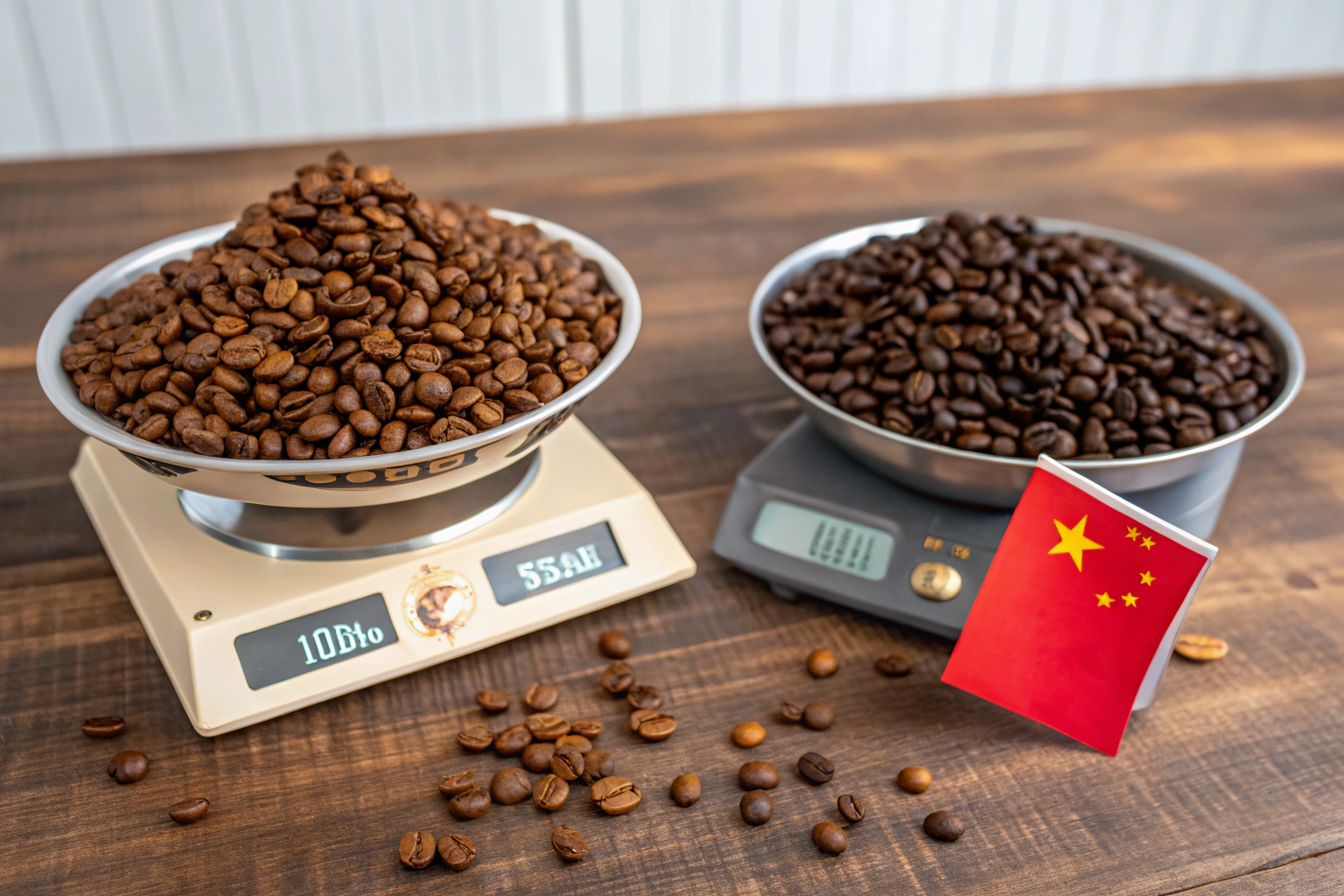
You're formulating a new blend. You need that punch. That crema. That caffeine kick. You need Robusta. But your traditional Vietnamese source just sent a new offer. The price is up. Again. You've heard whispers about drought in the Central Highlands, about exporters struggling to fulfill contracts. You start looking at a map. You see Yunnan, China, right next door. They grow coffee. They grow Robusta. And you ask the logical business question: Is China the new, better answer for affordable, reliable Robusta? Or is Vietnam still the undisputed king?
For a wholesale buyer in 2026, Vietnam remains the global volume leader and the most established source for affordable, commodity-grade Robusta. However, China is emerging as a strategic alternative for buyers seeking a cleaner, higher-quality Robusta with better traceability and a more stable, predictable supply chain. The "better" choice depends entirely on your priority: If the absolute lowest cost per pound and massive, established volume are the primary drivers, Vietnam is the conventional answer. If a modest premium for verified quality, food safety compliance, and supply chain reliability is justifiable, Chinese Robusta from Yunnan presents a compelling and increasingly attractive alternative.
At Shanghai Fumao, we grow and export both Arabica and Robusta. I see the market dynamics for both origins. Let me give you a clear-eyed, data-driven comparison of Vietnamese and Chinese Robusta, so you can make the strategic choice that's right for your blend and your business.
What Are the Fundamental Differences in Robusta Production: Vietnam vs. China?
The differences start in the soil and end in the supply chain. Vietnam and China have fundamentally different models of Robusta production. Understanding these structural differences is key to understanding the price and the product.
Vietnam is the world's largest Robusta producer, built on a model of high-density planting by millions of smallholder farmers. This system delivers immense volume and low production costs, but often at the expense of traceability and consistent quality control. Yunnan's Robusta production is significantly smaller in scale but is concentrated on larger, more professionally managed farms. This model yields lower total volume but offers distinct advantages in traceability, processing consistency, and adherence to modern food safety and sustainability standards.
Let's break down the structural comparison.
| Feature | Vietnam Robusta | Yunnan Robusta (China) |
|---|---|---|
| Production Model | Millions of smallholders (< 2 ha) | Larger estates and organized farms |
| Annual Output | ~28-30 million 60kg bags | ~300,000 - 500,000 bags (mostly Arabica) |
| Primary Growing Regions | Central Highlands (Dak Lak, Lam Dong) | Low-altitude areas of Yunnan, Hainan Island |
| Dominant Varietals | TR4, TR9, TS (high-yielding clones) | Catimor (Robusta/Arabica hybrid), some pure Robusta |
| Processing Method | Primarily Natural (dry) | Increasingly Washed |
| Supply Chain | Fragmented, many intermediaries | More vertically integrated, direct from farm |
Why Is Vietnamese Robusta Traditionally Cheaper?
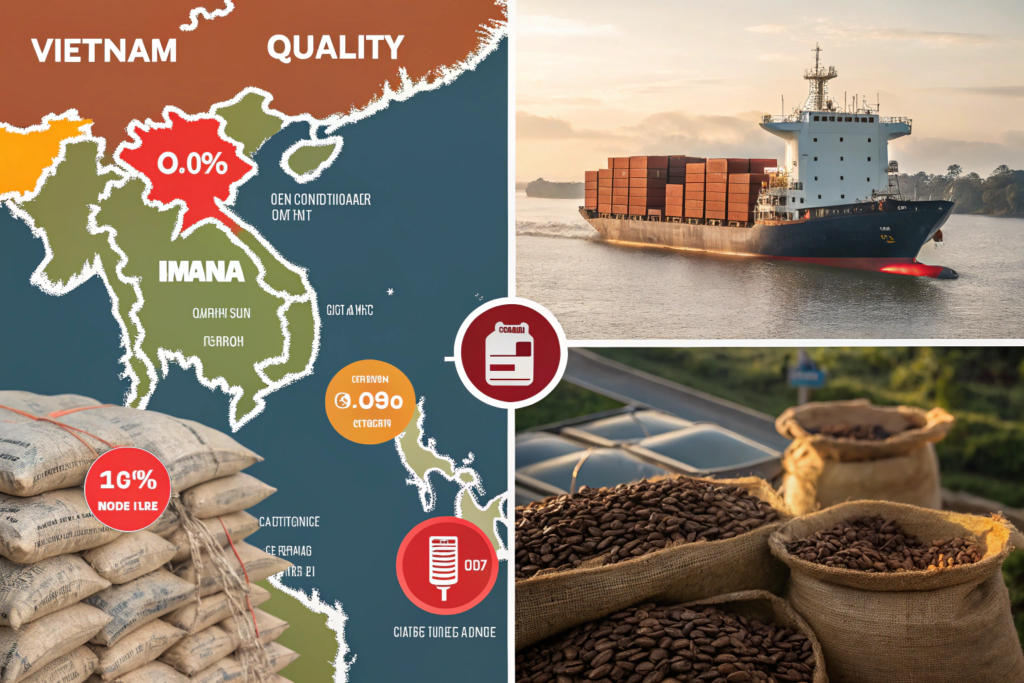
The price advantage of Vietnamese Robusta is deeply structural. It's a function of massive scale, high-yielding varietals, and lower labor costs.
Vietnam's smallholder farmers achieve remarkable productivity per hectare. The climate allows for intensive cultivation. The dominant processing method—natural/dry—is less capital and labor-intensive than washed processing. The combination of these factors results in a very low cost of production per pound. This low cost base has allowed Vietnam to dominate the global Robusta market for decades, supplying the vast majority of the world's instant coffee and low-cost blend filler. You can track the historical price advantage of Vietnamese Robusta through the futures contract data on the Intercontinental Exchange (ICE).
What Makes Chinese Robusta Potentially "Better" Despite a Higher Price?
Chinese Robusta is not trying to compete with Vietnam on sheer volume or rock-bottom price. It competes on quality, consistency, and reliability.
The key differentiators are:
- Processing: A significant portion of Yunnan's export-oriented Robusta is fully washed. This is a game-changer. Washed Robusta is dramatically cleaner and less "earthy" or "rubbery" than natural Robusta. It's a much more palatable and versatile ingredient for a specialty roaster.
- Traceability: Because it's grown on larger estates, Yunnan Robusta can be traced to a specific farm and lot. This is nearly impossible with aggregated Vietnamese commodity Robusta.
- Food Safety: Estates like Shanghai Fumao operate under strict food safety protocols, with routine testing for pesticides and Ochratoxin A, and documented chain of custody.
- Logistics: The same world-class port and logistics infrastructure that benefits Yunnan Arabica also applies to its Robusta. Shipments are reliable and predictable.
This "better" Robusta is not intended for the instant coffee factory. It's intended for the specialty roaster who wants to add a clean, powerful, and traceable Robusta component to an espresso blend.
How Does the Cup Profile of Yunnan Robusta Compare to Vietnamese Robusta?
This is where the rubber meets the road for a quality-focused roaster. Robusta has a reputation. It's often described as harsh, rubbery, earthy, and bitter. And for much commodity-grade Vietnamese Robusta, that reputation is earned. But processing changes everything.
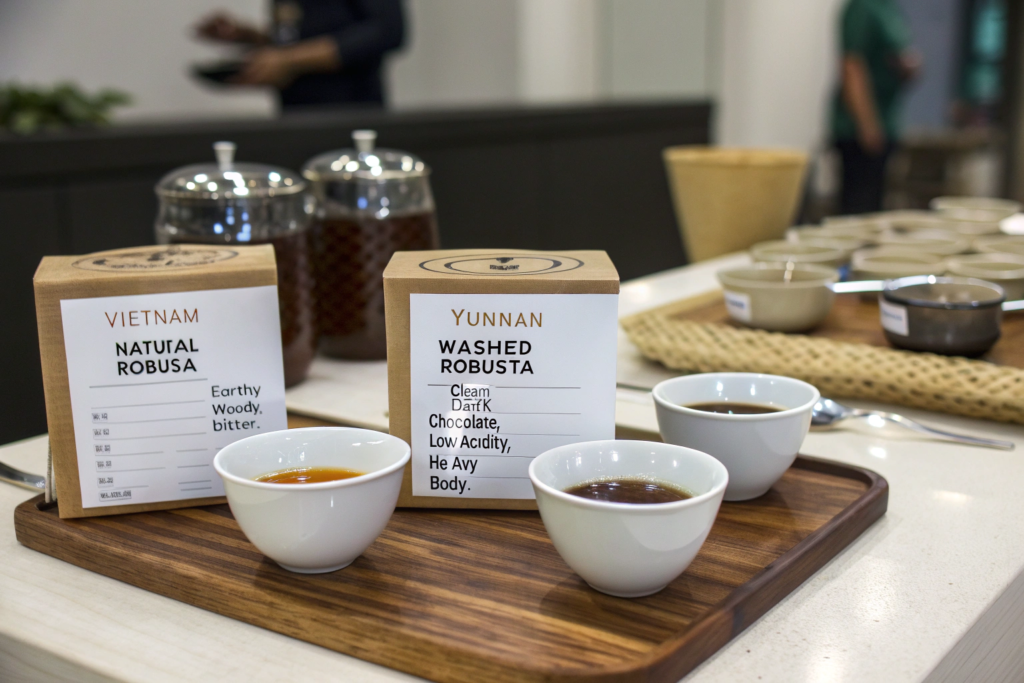
The cup profile difference between standard Vietnamese Natural Robusta and high-quality Yunnan Washed Robusta is stark. Vietnamese Natural Robusta is characterized by intense earthy, woody, and often "rubbery" or "burnt tire" notes, with a heavy, sometimes astringent body and a sharp, bitter finish. Yunnan Washed Robusta, particularly from an estate that controls processing, exhibits a surprisingly clean cup with dominant notes of dark chocolate, toasted grain, and roasted nuts, a very heavy, syrupy body, and a remarkably smooth, low-acid finish with significantly reduced earthy defects.
What Is the Flavor Impact of Washed vs. Natural Robusta?
This is the single most important factor differentiating Yunnan Robusta. The washed process transforms the bean.
- Natural Robusta (Vietnam Standard): Cherries are dried whole, often on the ground. The bean absorbs flavors from the drying fruit and the earth. This leads to the classic Robusta "funk"—heavy, earthy, musty, and often harsh.
- Washed Robusta (Yunnan Premium): The cherry skin and fruit are removed mechanically. The bean is fermented in clean water to remove the mucilage, then washed and dried. This process removes the source of the earthy, fermenty flavors. The resulting cup is remarkably clean. The inherent Robusta character—heavy body, low acidity, dark chocolate—remains, but the unpleasant defects are stripped away.
For a roaster, washed Robusta is a completely different ingredient. It can be used at higher percentages in a blend without introducing off-flavors. It provides pure body, crema, and caffeine, without the dirt. At Shanghai Fumao, we apply the same meticulous washed processing standards to our Robusta as we do to our Specialty Arabica.
Where Does Yunnan Robusta Excel in an Espresso Blend?
This is the ideal application for high-quality, washed Yunnan Robusta. It's a tool for the espresso blender.
Adding 10-15% of a clean Yunnan Robusta to an espresso blend delivers multiple tangible benefits:
- Dramatically Increases Crema: Robusta's higher gas content and different lipid profile produce a thicker, more persistent, and visually appealing crema.
- Adds Massive Body and Mouthfeel: The heavy, syrupy body of Robusta anchors the blend, giving it a luxurious, coating texture that cuts through milk beautifully.
- Boosts Caffeine Content: A significant increase in caffeine per shot.
- Provides a Neutral, Chocolatey Base: The clean profile of washed Yunnan Robusta adds these structural benefits without introducing the earthy, rubbery defects that would ruin the blend.
It's the secret weapon for creating a "comfort food" espresso blend that performs consistently and looks beautiful in the cup.
What Are the Logistics and Reliability Differences Between the Two Origins?
You can have a great product at a great price. But if it doesn't show up on time, it's worthless. This is an area where the structural differences between the two origins become a decisive advantage for China.
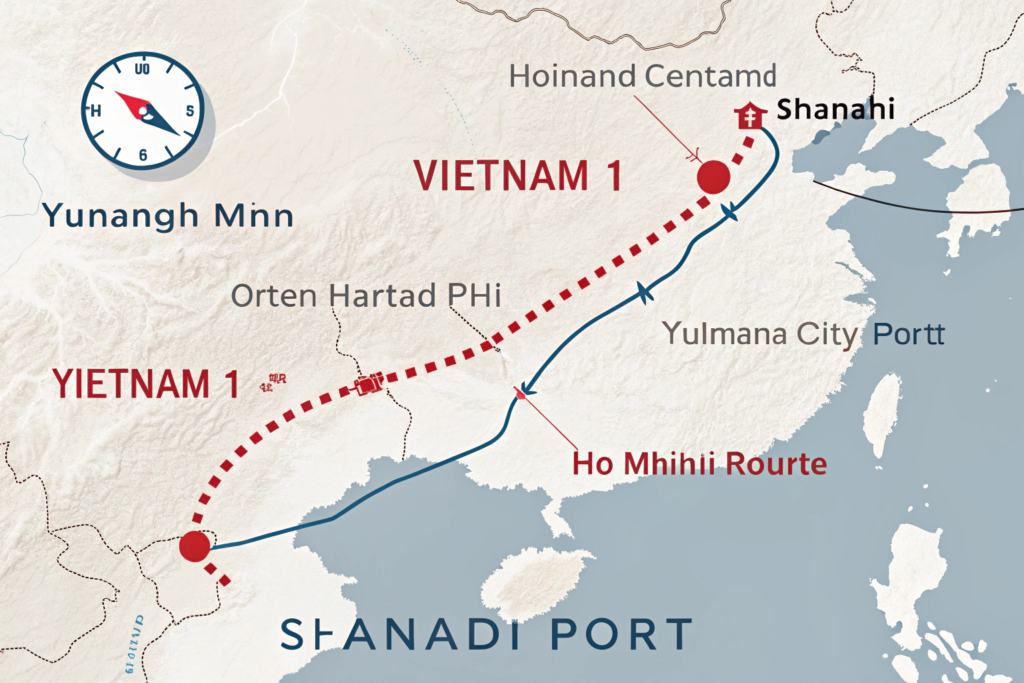
Chinese Robusta offers a superior logistics and reliability profile compared to Vietnamese Robusta. The internal journey from a Yunnan farm to the Port of Shanghai is on modern highways and is predictable. The Port of Shanghai is a global leader in efficiency. The direct ocean routes to the U.S. West Coast are frequent and reliable. Vietnamese coffee must contend with more challenging internal logistics from the Central Highlands to the port of Ho Chi Minh City, a port that, while improved, does not match Shanghai's efficiency metrics. For a buyer prioritizing "timeliness" and supply chain security, Chinese Robusta presents a lower-risk option.
How Does Internal Transport in Vietnam Affect Price and Timeliness?
The journey from a farm in Dak Lak to the port in Ho Chi Minh City is an adventure. It involves a network of small collectors, regional traders, and truckers navigating roads that can be heavily impacted by seasonal rains.
This fragmented internal supply chain adds time, cost, and uncertainty. Each intermediary takes a cut, and each handoff creates a potential delay. It's a less efficient system. The internal journey for Yunnan coffee, by contrast, is a streamlined, direct route controlled by the exporting farm or a single, vetted logistics partner. This efficiency is a form of cost saving and a guarantee of timeliness.
Why Is Port Efficiency in Shanghai a Competitive Advantage?
As we've discussed for Arabica, the same applies to Robusta. The Port of Shanghai is a marvel of automation and scale. Vessel turnaround times are among the fastest in the world.
Compare this to Ho Chi Minh City's port, which, while busy and vital, often experiences higher congestion and slower processing times, particularly during peak harvest season. The difference in port efficiency translates directly to more reliable vessel departures and more predictable arrival times. For a roaster managing inventory, this predictability is invaluable. You can track port performance metrics through resources like the World Bank's Logistics Performance Index, which consistently ranks China's logistics infrastructure above Vietnam's.
Conclusion: Which Origin Is Right for My Business?
The choice between Vietnamese and Chinese Robusta is not a matter of one being universally "better." It's a strategic decision based on your specific business priorities.
Choose Vietnamese Robusta if:
- Your absolute, non-negotiable priority is the lowest possible cost per pound.
- You require immense volume and your blend can accommodate (or mask) a more rustic, earthy flavor profile.
- Your primary application is instant coffee, low-cost commercial blends, or extraction.
Choose Chinese (Yunnan) Robusta if:
- You are willing to pay a modest premium for a significantly cleaner, more palatable cup profile.
- You value traceability, food safety documentation, and a transparent supply chain.
- You prioritize supply chain reliability and predictable shipping schedules.
- You are a specialty roaster looking to elevate your espresso blend with a clean, powerful Robusta component.
The emergence of high-quality, washed Robusta from Yunnan is a significant development for the specialty coffee industry. It offers a new tool for the blender's kit. At Shanghai Fumao, we are proud to offer this option to roasters who demand more from their Robusta.
If you're curious to taste the difference that clean processing and a reliable supply chain can make, I invite you to request a sample of our Yunnan Robusta. My email is cathy@beanofcoffee.com.