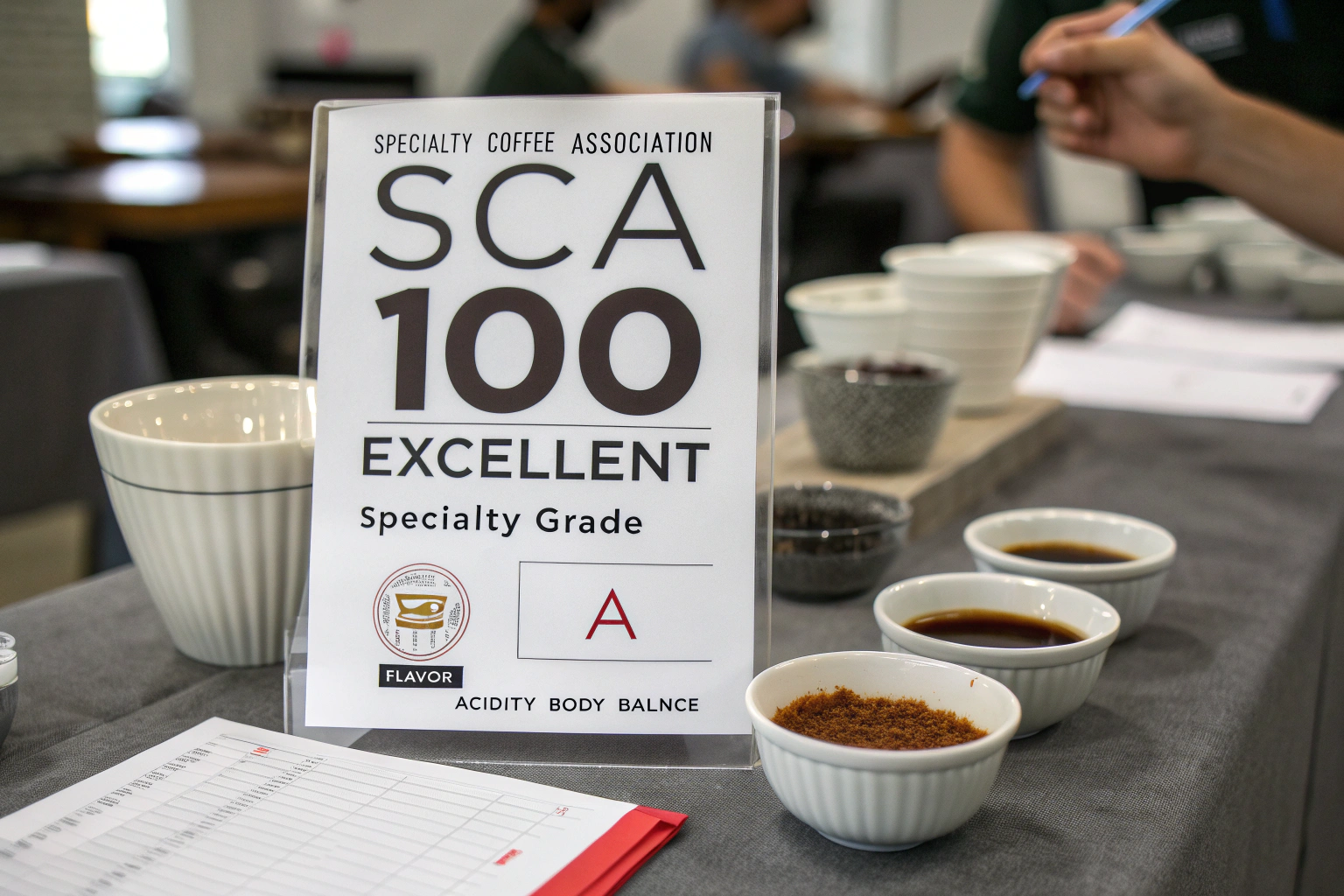
You see it on offer sheets. "Yunnan Catimor - 85.5 points." "Ethiopian Natural - 86 points." You see roasters use it in their marketing. "Our 85+ Single Origin Series." It sounds impressive. It signals quality. But when you're staring at a spreadsheet, deciding between an 84-point coffee at $2.85 and an 86-point coffee at $3.45, you need more than a number. You need to know: What does that number actually mean? What is the tangible difference in the cup, in the roaster, and on the shelf? Is that extra point worth the extra cost?
A standard coffee cupping score of 85 or higher, using the Specialty Coffee Association (SCA) 100-point scale, signifies that the coffee is of "Excellent" Specialty Grade. It means the coffee has been evaluated by a trained, calibrated Q-Grader and found to possess distinctive, exemplary characteristics in key areas like Flavor, Acidity, Body, and Balance, with virtually no cup defects. It is a sensory guarantee of a specific tier of quality: complex, sweet, clean, and memorable. The difference between an 83 and an 85 is not just two points; it's the difference between a very good, solid coffee and an exceptional, noteworthy one.
I cup thousands of samples a year at Shanghai Fumao. I calibrate with Q-Graders. I use this scale to price my coffee and to communicate its value to buyers. Let me demystify the 85+ score and explain exactly what it delivers for your business.
How Does the SCA 100-Point Cupping Scale Actually Work?
The 100-point scale is not a casual rating. It's a structured, analytical tool designed to provide a consistent, repeatable, and objective evaluation of a coffee's sensory attributes. Understanding its mechanics helps you interpret the score.
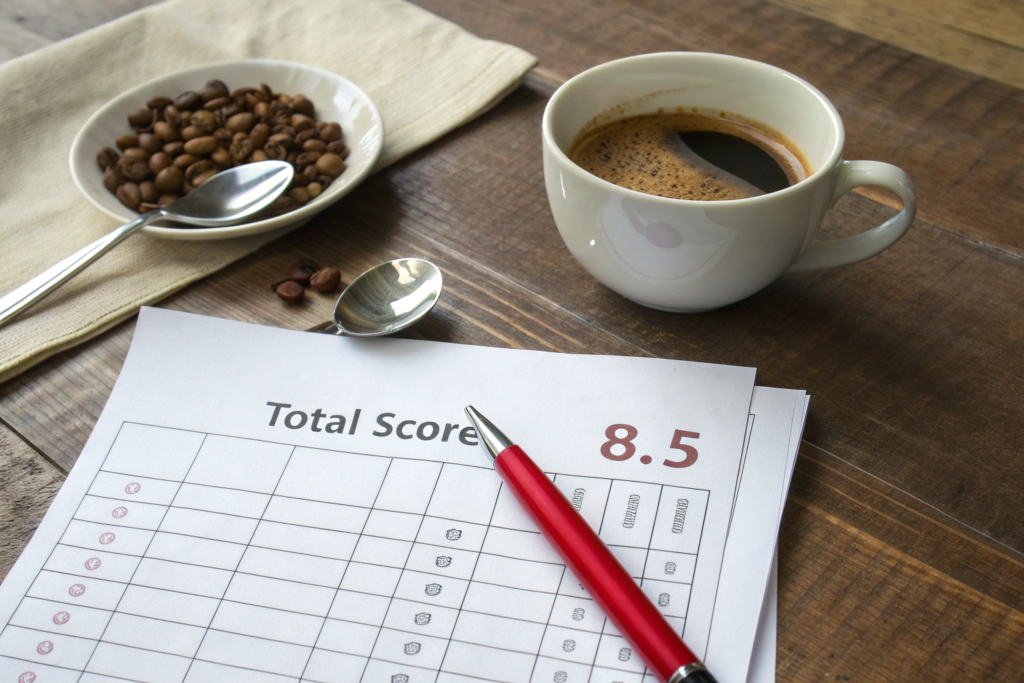
The SCA cupping form evaluates ten specific attributes, each weighted differently: Fragrance/Aroma, Flavor, Aftertaste, Acidity, Body, Balance, Uniformity, Clean Cup, Sweetness, and Overall. Each attribute is scored on a 6-10 scale (in quarter-point increments). These individual scores are summed, and then defects (if any) are subtracted to arrive at the Final Score. A coffee must score 80 points or above across all categories to be classified as "Specialty Grade."
What Is the Qualitative Difference Between an 80, an 85, and a 90-Point Coffee?
The SCA provides descriptive anchors for these score ranges. They are not arbitrary numbers.
-
80.0 - 84.99: "Very Good" This is the workhorse of specialty coffee. It has no primary defects and a pleasant, balanced cup profile. It might be described as "good," "solid," with "nice acidity" and "clean finish." It lacks the distinctive "wow" factor but is a reliable, high-quality coffee. Most of our core Yunnan Catimor offerings at Shanghai Fumao fall into the 82-84 point range.
-
85.0 - 89.99: "Excellent" This is where the coffee becomes memorable. It possesses distinctive and exemplary characteristics. The acidity is not just present; it's "crisp" or "juicy." The flavor is "complex," with multiple identifiable notes (e.g., "Milk Chocolate, Ripe Cherry, and a hint of Jasmine"). The balance is "superb." The aftertaste lingers pleasantly. This is the target for our premium micro-lots and our best anaerobic fermentations.
-
90.0 - 100: "Outstanding" This is the rarified air of competition-winning coffees. These are "extraordinary" and among the finest coffees in the world. Every attribute is exceptional. The flavors are incredibly complex, intense, and perfectly balanced. These are the Geshas and the top auction lots. They are produced in tiny volumes and command extremely high prices.
The jump from 83 to 85 is the jump from "very good" to "excellent." It's a significant step up in complexity and distinctiveness.
Why Does the "Clean Cup" Attribute Matter So Much for an 85+ Score?
You can have a coffee with a big, fruity flavor that still scores an 82 because it has a slightly rough, astringent, or "dirty" finish. Clean Cup is the gatekeeper of the 85+ tier.
The "Clean Cup" attribute on the SCA form asks the cupper to evaluate the coffee from the first sip through the aftertaste for any "non-coffee like" flavors. These are off-notes like ferment, mold, dirt, phenol, or excessive astringency. A coffee that scores 85+ must be remarkably clean. There is a transparency to the cup. The flavors you taste are the true expression of the coffee's terroir and processing, not a mask of processing defects. This cleanliness is a direct result of meticulous picking, controlled fermentation, and clean washing. It's a non-negotiable foundation for an "Excellent" rating. At Shanghai Fumao, our relentless focus on clean processing protocols is what allows our best lots to consistently break into the 85+ range.
What Flavor and Roasting Characteristics Define an 85+ Point Coffee?
The score is a summary. The individual attribute scores and the cupper's notes tell the real story. An 85+ coffee has a distinct sensory fingerprint and behaves differently in the roaster.
An 85+ point coffee is characterized by: (1) Exceptional Clarity and Complexity: The flavors are distinct, well-defined, and often multi-layered. You can easily identify specific fruit, floral, or spice notes. (2) A Vibrant, Well-Defined Acidity: It's not just "acidic." It's "crisp malic acidity like a green apple" or "juicy citric acidity like an orange." It's integrated and pleasant. (3) A Long, Sweet Aftertaste: The positive flavors linger on the palate long after swallowing. (4) Superior Roast Physicals: Due to careful processing and higher density, the green beans are typically more uniform and predictable in the roaster, allowing for more precise control and better development.
How Does the Acidity in an 85+ Coffee Differ from an 82-Point Coffee?
In an 82-point coffee, the acidity might be described as "pleasant," "balanced," or simply "low." It's a supporting actor.
In an 85+ coffee, the acidity is a star. It is vivid, complex, and descriptive. A cupper might write "Sparkling Citric Acidity" or "Juicy Stone Fruit Acidity." This acidity doesn't just make the coffee taste "bright." It provides structure. It lifts the other flavors. It makes the coffee dance on your palate. It's the difference between listening to music on a good speaker and hearing it live. This vibrant acidity is what allows an 85+ coffee to shine as a single-origin filter roast and command a premium price.
Does an 85+ Green Coffee Roast More Evenly?
Generally, yes. This is a crucial, but often overlooked, benefit. The same meticulous farming and processing that produce a high cup score also produce a more physically uniform green bean.
As we've discussed in previous articles, uneven roasting is driven by variations in density, moisture, and bean size. The practices required to hit an 85+ score—selective picking of only ripe cherries, controlled fermentation, careful drying and resting, and precision dry milling—all contribute to a more homogenous batch of green coffee. The beans are more uniform in size, density, and internal moisture. This physical uniformity translates directly to a more even, predictable, and forgiving roast. You spend less time fighting the bean and more time coaxing out its best expression. This is a hidden value of the higher score. At Shanghai Fumao, our 85+ lots are meticulously prepared to ensure this roast consistency.
How Can a Roaster Use an 85+ Score to Build Brand Value?
You paid a premium for the 85+ coffee. Now you need to translate that investment into a compelling story for your customers. The score itself is a powerful, objective piece of marketing.
An 85+ cupping score is a powerful brand asset because it provides an independent, third-party validation of exceptional quality. It moves the conversation from subjective ("We think this coffee is great") to objective ("This coffee has been professionally evaluated and scored as Excellent"). Roasters can use this score to justify a higher retail price, to differentiate their premium offerings, and to build credibility with discerning wholesale accounts. It's a shorthand for "This is a special coffee."
Should I Put the Cupping Score on the Bag?
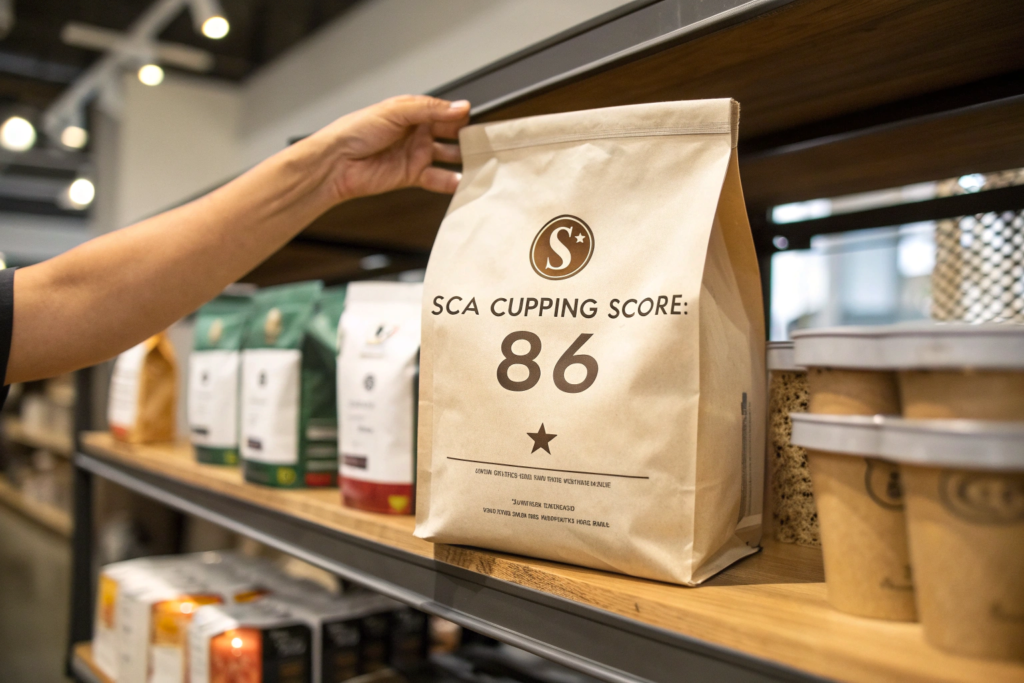
For an 85+ coffee, the answer is increasingly yes. The specialty coffee consumer is becoming more educated. They recognize that an 85+ score is a meaningful benchmark of quality.
However, context is key. Don't just put "85 points." Explain what it means. Use language like:
- "SCA Cupping Score: 86 pts (Excellent)"
- "Graded 'Excellent' by Licensed Q-Graders"
- On the back of the bag: "This coffee achieved a score of 86 points on the Specialty Coffee Association's 100-point scale, placing it in the 'Excellent' tier. This signifies exceptional sweetness, complexity, and a clean, vibrant finish."
This educates the consumer and gives the number meaning. It justifies the premium price point and builds trust. It tells the customer that this is not just another bag of coffee; it's a curated, verified experience.
How Does an 85+ Coffee Perform as a Wholesale Sample?
This is where the score becomes a powerful sales tool. When you're trying to land a new cafe account or get placement in a high-end grocery store, you're competing with dozens of other roasters.
Sending a sample of an 85+ Yunnan coffee, along with the cupping notes and the score, makes a powerful statement. It says: "We source at the top tier of quality." It gives the wholesale buyer confidence. They know they can charge a premium for this coffee on their menu and that their customers will taste the difference. It's a door-opener. It positions your roastery as a quality leader. The objective score cuts through the marketing noise and provides a tangible point of differentiation. Many of our roasting partners use their 85+ Shanghai Fumao lots specifically for this purpose—as their flagship offering that wins new business.
How Does the Yunnan Terroir Influence an 85+ Cupping Score?
An 85+ score is not achieved in a vacuum. It is the result of a synergy between exceptional farming/processing and a unique, favorable terroir. Yunnan is proving to be an exceptional canvas for high-scoring coffee.
Yunnan's unique terroir—specifically its high-altitude, frost-free growing regions with distinct wet/dry seasons and volcanic red soils—provides the foundational elements for 85+ scores. The high elevation (1,400m+) ensures slow cherry maturation, leading to dense beans with concentrated sugars and complex acidity. The dry harvest season allows for ideal sun-drying conditions. This natural environment, combined with modern processing and careful varietal selection (Catimor selections, Typica, Geisha), creates coffees with the distinct clarity, sweetness, and complex flavor profiles required to reach the "Excellent" tier.
What Specific Yunnan Flavor Notes Drive a High Score?
The classic washed Yunnan profile—chocolate, nuts, heavy body—is an excellent foundation for an 83-84 point coffee. To break into the 85+ range, we need additional layers of complexity and clarity.
This comes from:
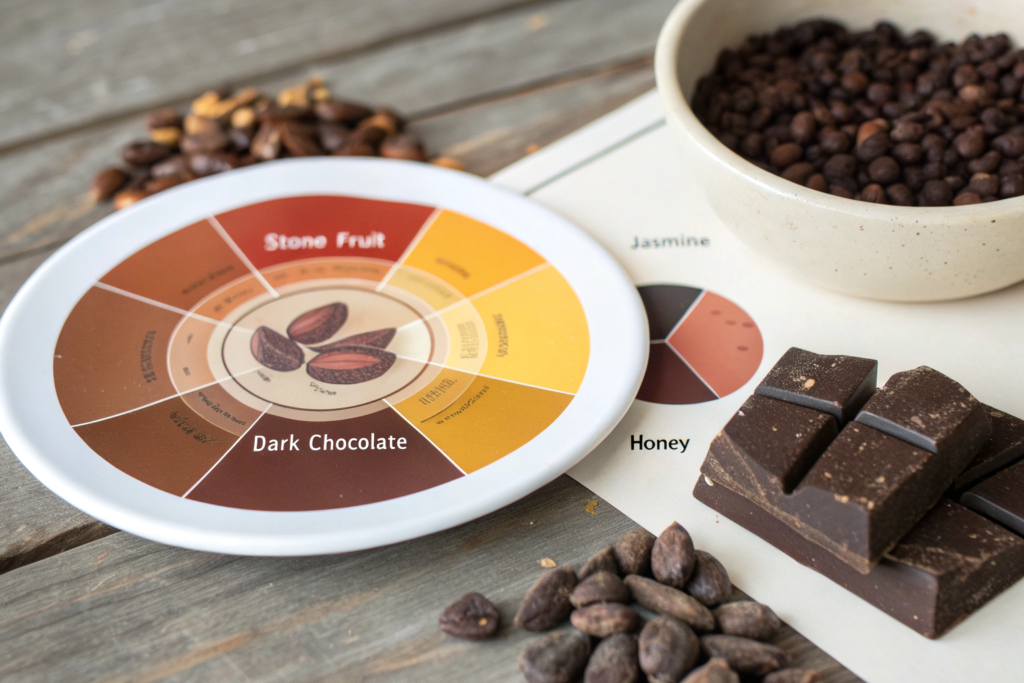
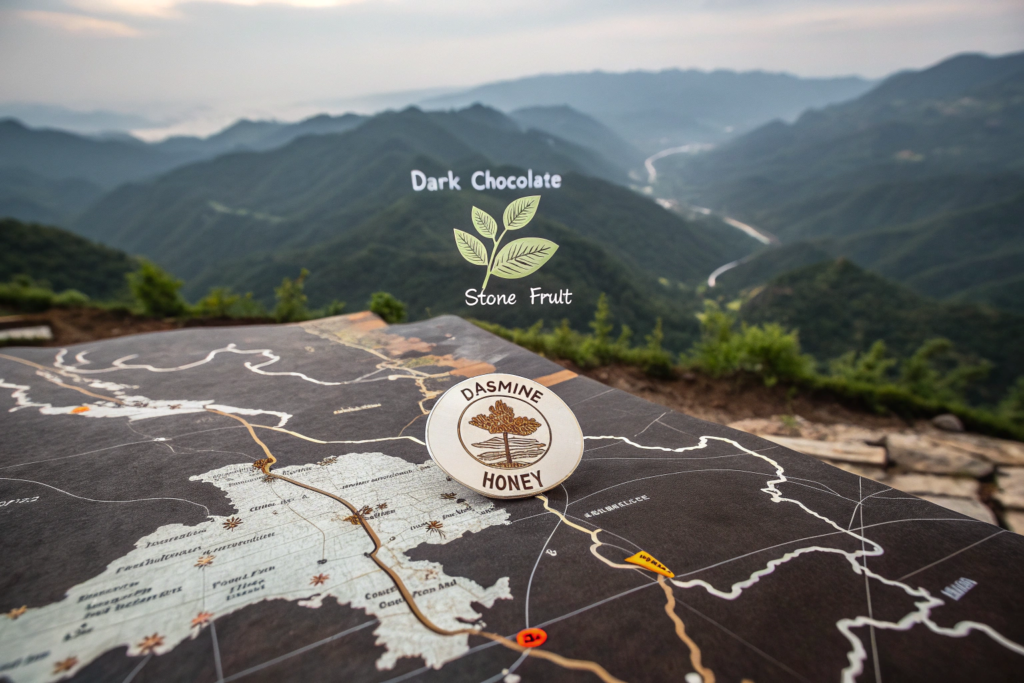
- Fruit Notes: Moving beyond generic "fruit" to specific descriptors like Ripe Red Cherry, Black Currant, or Stone Fruit (Apricot, Peach). These are often most pronounced in our anaerobic and honey-processed lots.
- Floral Notes: In our best Typica and Geisha lots, distinct Jasmine, Honeysuckle, or Orange Blossom aromatics emerge. This is a hallmark of high-scoring coffees.
- Refined Sweetness: Moving from "brown sugar" to more specific notes like Panela, Raw Honey, or Dark Caramel.
- Exceptional Cleanliness: The total absence of any earthy, woody, or astringent notes. A pristine, transparent cup.
It's the combination of the classic Yunnan chocolatey body with these brighter, more complex, and cleaner top notes that pushes the score into "Excellent" territory. At Shanghai Fumao, we are strategically using varietal selection and processing innovation to unlock these higher-scoring flavor profiles.
Conclusion
An 85+ cupping score is more than a number. It's a sensory promise. It's a guarantee of a specific tier of quality: "Excellent." It means the coffee in that bag has been professionally evaluated and found to possess distinctive character, vibrant acidity, exceptional cleanliness, and a memorable finish.
For a roaster, understanding this score is a powerful tool. It helps you make smarter buying decisions, matching the green coffee to its intended use and price point. It helps you roast more consistently. And it provides an objective, credible story to tell your customers, justifying a premium price and building lasting brand loyalty.
When you see an 85+ score on a Shanghai Fumao offer sheet, you know it represents the pinnacle of our harvest—a coffee where Yunnan's exceptional terroir and our most meticulous processing have combined to create something truly special.
If you're looking for that "Excellent" tier of coffee to elevate your offerings, I invite you to explore our current 85+ lots. My email is cathy@beanofcoffee.com.