
You've invested in a top-of-the-line espresso machine and grinder. You've sourced exceptional beans, perhaps directly from our estate in Yunnan. You pull a shot, and it's a disaster—it gushes out in seconds, thin and sour. You pull another, and it chokes the machine, dripping out slow and bitter. You're like my client, Ron; you're focused on results and consistency, and this unpredictability is maddening. The variable you're likely overlooking is the small, powerful action that happens just before you lock in the portafilter: tamping.
Let's be crystal clear. Tamping is not just about pressing down on coffee grounds. The primary impact of tamping is to create a dense, level, and uniformly compacted puck of coffee grounds to ensure that water flows through it evenly during the high-pressure extraction of espresso. A proper tamp is the single most important manual skill for achieving a consistent, balanced, and delicious shot.
As a coffee producer, I am obsessed with uniformity—in our beans, our processing, and our grading. This obsession extends to the final preparation. An uneven tamp can ruin even the most perfect coffee beans. In this article, I will break down the physics and the practical impacts of tamping, transforming it from a mysterious art into a clear, repeatable science.
Why is Creating a "Level Bed" the Primary Goal?
Before we even talk about pressure, let's talk about geometry. The most critical goal of tamping is to create a perfectly level and uniformly dense bed of coffee. Why? Because water under nine bars of pressure is like a relentless river; it will always follow the path of least resistance.
If your coffee bed is sloped, or if one side is less dense than the other, water will exploit that weakness. It will rush through the less-dense areas and avoid the more-densely packed areas. This phenomenon is called channeling. When channeling occurs, the coffee in the path of the water is over-extracted (becoming bitter), while the coffee that the water bypassed is under-extracted (remaining sour and grassy). The resulting shot is a disastrous mix of both, with none of the sweetness and balance you're looking for.
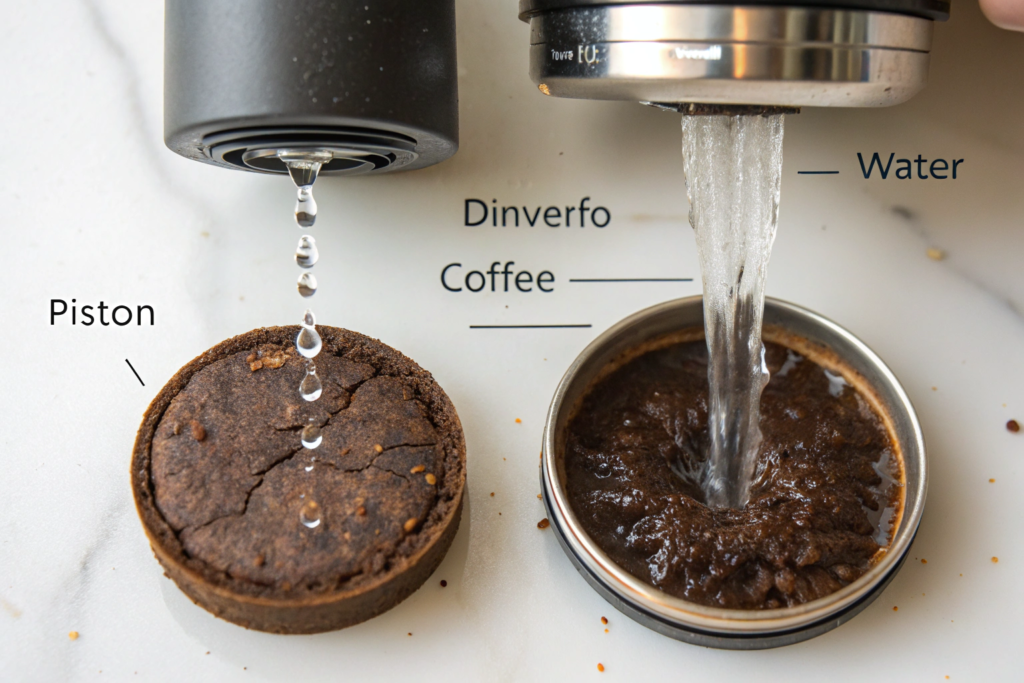
A level, even tamp forces the water to flow through the entire coffee puck uniformly, like a piston. This ensures that every single coffee particle is extracted to the same degree, unlocking the full, balanced flavor potential of the beans. This is why a barista's first focus is always on a flat, even surface.
What is "Distribution" and How Does it Relate to Tamping?
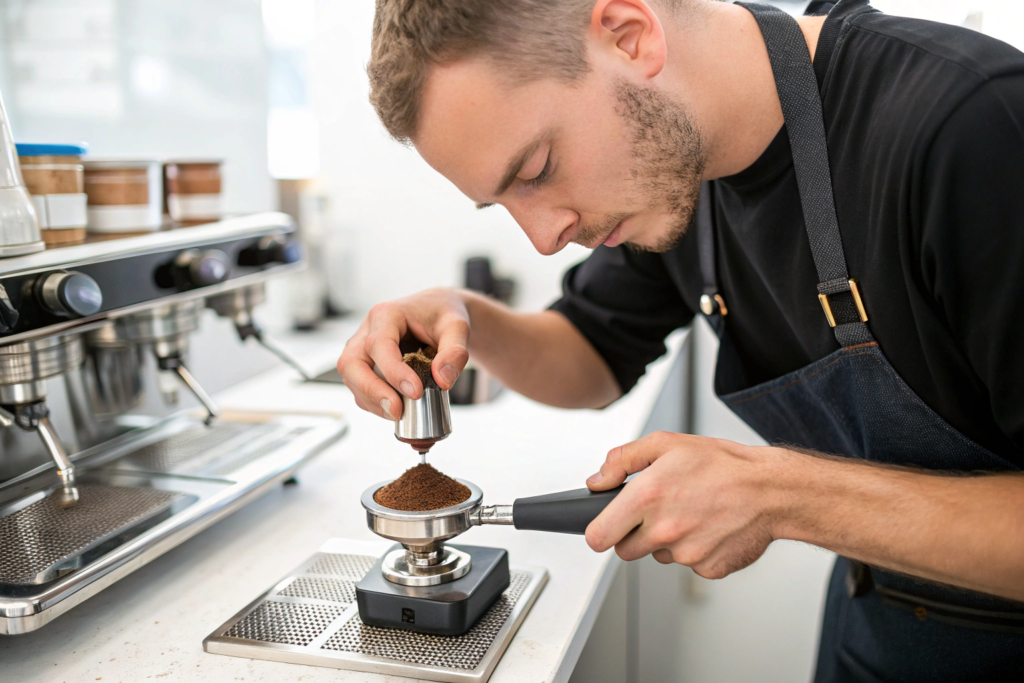
Distribution is the act of evening out the coffee grounds in the portafilter before you tamp. This is arguably even more important than tamping itself. If the grounds are not evenly distributed, no amount of tamping pressure can fix the underlying density differences. Using a distribution tool (WDT) or simply tapping the portafilter to settle the grounds is a critical preparatory step.
How Can You Check if Your Tamp is Level?
After tamping, look at the puck from the side. The surface of the coffee should be perfectly parallel to the rim of the filter basket. You can also use your finger to feel the distance between the coffee surface and the rim at several points to check for evenness.
What is the Real Impact of Tamping "Pressure"?
This is the most debated and misunderstood aspect of tamping. You've probably heard advice ranging from "tamp as hard as you can" to specific numbers like "exactly 30 pounds of pressure." You're worried about doing it wrong.
Here is the surprising truth: once the coffee grounds are fully compacted, applying more pressure has very little impact on the extraction time or quality. Think of it like a sponge. You can press a dry sponge with 10 pounds of force or 100 pounds of force; once it's fully compressed, it doesn't get any smaller. The same is true for coffee grounds.
The real goal of applying pressure is simply to ensure that all the air pockets are removed and the coffee bed is consolidated into a solid, uniform puck that won't fracture under the pressure of the espresso machine. The key is not the amount of pressure, but the consistency of that pressure. Tamping with a consistent pressure every single time eliminates a key variable and makes your shots more repeatable. This is why many professional baristas use calibrated tampers that "click" at a set pressure, ensuring the exact same force is applied to every single shot.
So, is "30 Pounds" a Myth?
It's not a myth, but it's often misunderstood. 30 pounds (or about 15 kg) is simply a common industry benchmark that is firm enough to ensure full compaction without being so forceful that it causes physical strain on the barista. Tamping with 20 pounds or 40 pounds consistently will likely yield very similar results. Consistency is the goal, not a magic number.
What Happens if You Tamp Too Lightly?
If you don't apply enough pressure to fully compact the grounds, you leave air pockets. When the high-pressure water hits this loose puck, it can cause it to fracture and break apart, leading to severe channeling and a fast, under-extracted shot. You need to press firmly enough to create a solid mass.
How Does Tamping Affect Different Coffee Beans?
Does the coffee itself change how you should tamp? You might be using a dark, oily espresso blend one day and a light, fruity single-origin the next.
While the core principles of a level bed and consistent pressure remain the same, the characteristics of the coffee can influence the process.
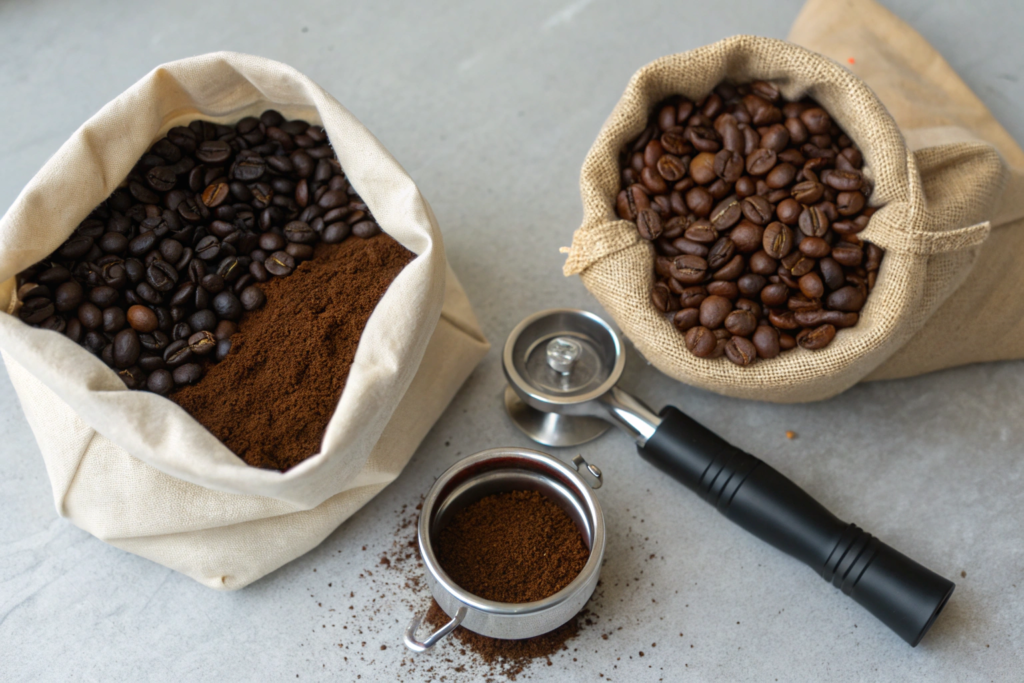
- Dark Roasts: Darker roasted beans are more brittle and less dense. They can be more prone to fracturing if tamped with excessive force. A smooth, gentle, but firm tamp is ideal.
- Light Roasts: Lighter roasted beans are harder and denser. They can sometimes require a bit more effort to compact fully and are generally more forgiving of higher tamping pressures.
- Freshness: Very fresh coffee that has just been roasted contains a lot of trapped CO2 gas. This can make the coffee bed "spongy" and harder to tamp consistently. As the coffee rests and de-gases, it becomes easier to prepare.
Ultimately, the best practice is to keep your tamping technique consistent and make your primary adjustments with the grind size. If your shots are running too fast or too slow, your first and most important change should be to make your grind finer or coarser, not to change your tamping pressure. Tamping is your constant; the grind is your variable.
Does Tamping Affect Crema?
Indirectly, yes. A proper tamp that prevents channeling leads to a more even extraction, which in turn produces a better, richer, and more stable crema. While the bean type (especially the presence of Robusta in a blend) is the primary driver of crema, a bad tamp can ruin the crema potential of any coffee.
Should You "Polish" the Puck?
"Polishing" is the act of spinning the tamper on the surface of the puck after tamping. This has zero impact on the quality of the extraction. It does not "seal" the puck. At best, it does nothing; at worst, it can unseat the compacted puck and create micro-fractures, making channeling more likely. It is an unnecessary and potentially harmful step.
What Are the Hallmarks of a "Good" Tamp?
You've done the work. How can you quickly assess if you've made a good tamp before you brew? Look for these three simple signs.
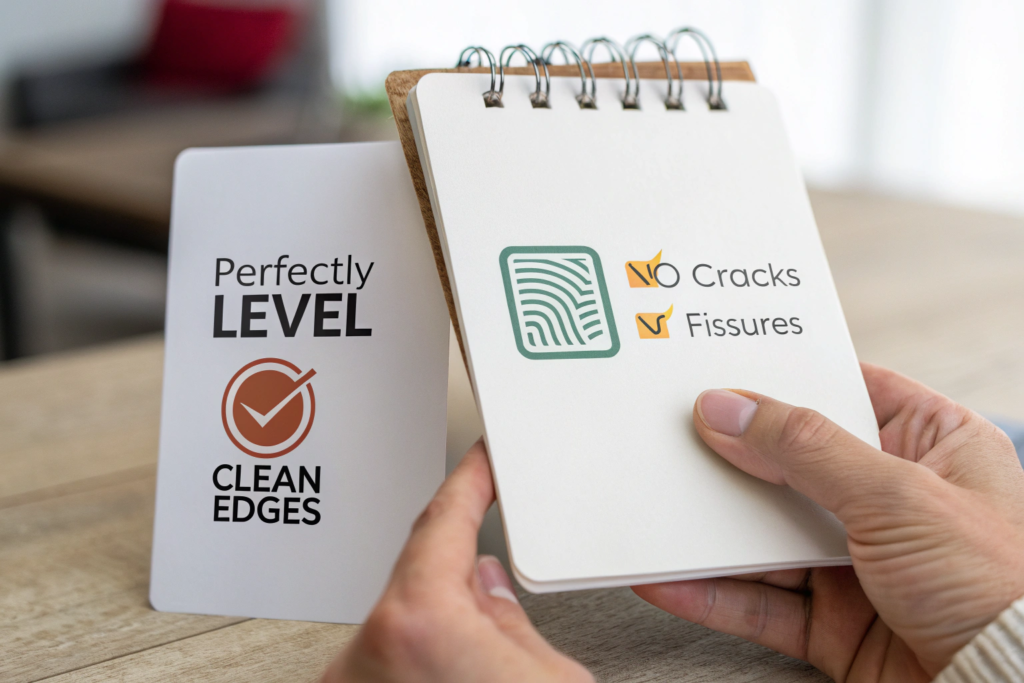
- The Puck is Perfectly Level: As discussed, this is the most important visual cue. The surface should be flat and parallel to the rim of the basket.
- The Surface is Smooth and Intact: There should be no visible cracks, fissures, or loose grounds on the surface. A fractured surface is a pre-made channel waiting to happen.
- The Edges are Clean: There should be no loose grounds sitting on the rim of the filter basket. These can prevent the portafilter from sealing correctly in the group head, causing water to leak and leading to an improper extraction. A quick wipe of the rim with your finger is a good final step.
If your tamp meets these three criteria, you have given your coffee the best possible chance to extract beautifully. You have done your job as a barista.
What if My Tamp is Uneven?
Don't try to fix it by tamping the other side. This will just create different density zones. The best practice is to knock the puck out, wipe the basket clean, and start the entire process over—distribute, and then tamp. It's better to waste a dose of coffee than to serve a bad shot.
Do You Need an Expensive Tamper?
You don't need a tamper that costs hundreds of dollars, but you do need a good one. A good tamper should be made of solid, heavy metal (like stainless steel) and should fit your portafilter basket snugly. A cheap, lightweight plastic tamper will make it very difficult to achieve a level and consistent tamp. Investing in a quality tamper is one of the most cost-effective upgrades you can make to your espresso setup.
Conclusion
The impact of tamping is profound. It is the final, critical act of craftsmanship that transforms a loose pile of grounds into a stable, uniform medium, ready to yield its flavor under pressure. A good tamp is not about brute force; it's about precision, consistency, and a focus on creating a perfectly level bed to ensure a uniform extraction.
By understanding that the primary goals are evenness and consolidation, you can demystify the process and make it a repeatable part of your workflow. Mastering this single skill will have a greater impact on the consistency and quality of your espresso than almost any other manual technique. It is the bridge between great beans and a great cup.
As producers, we pour our hearts into creating beans with incredible potential. By perfecting your tamping technique, you honor that effort and unlock the full spectrum of flavor we worked so hard to create. If you're looking for a coffee that is worthy of this level of care and attention, please reach out to my colleague, Cathy Cai, at cathy@beanofcoffee.com.