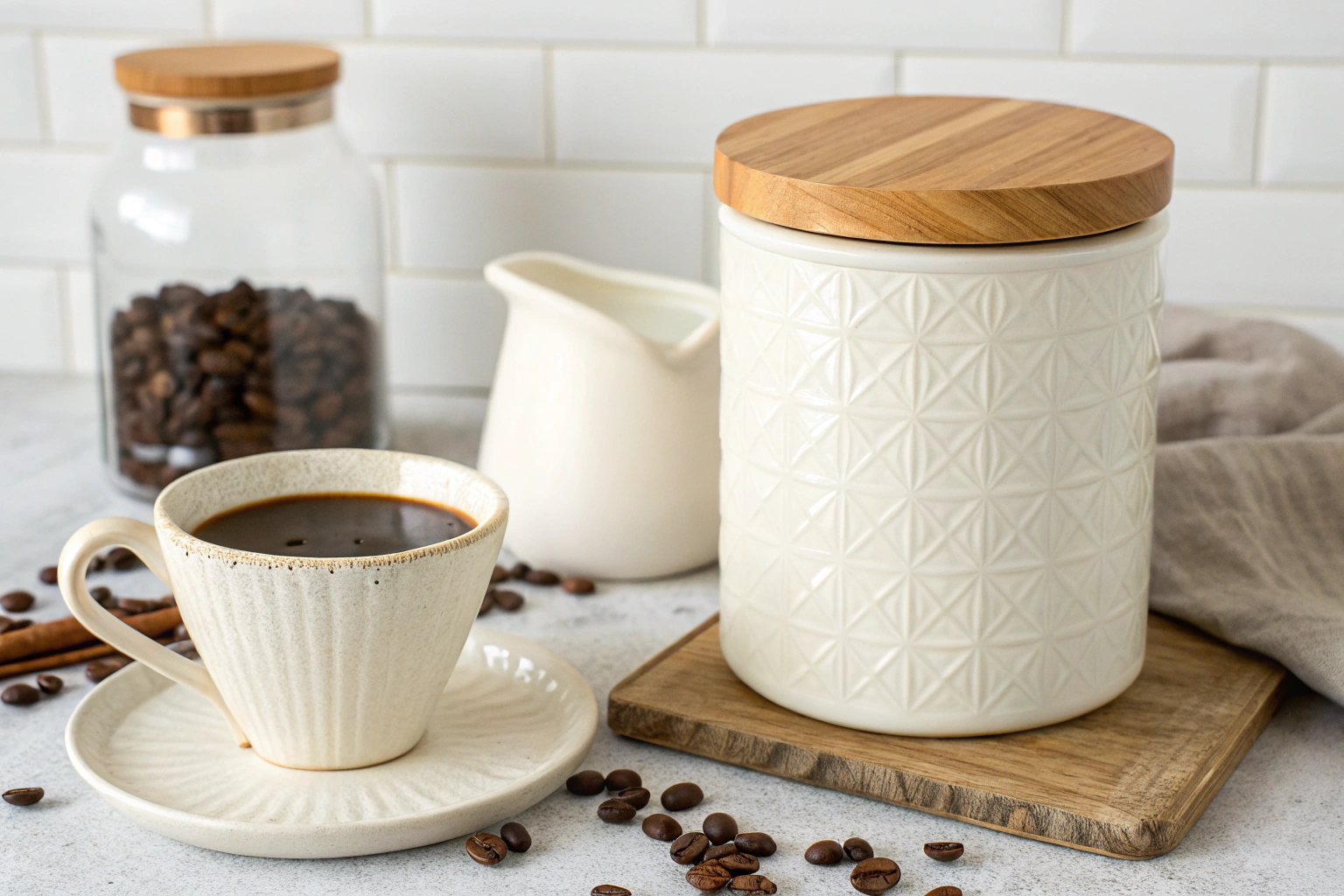
As a coffee professional, you are engaged in a constant battle against the enemies of freshness: oxygen, light, moisture, and heat. You invest heavily in sourcing the best beans, perhaps from our estate in Yunnan, but how you store them and how you serve them can either preserve or destroy that quality. You're like my client, Ron; you're practical and you need to know if a specific material choice really makes a difference. You're asking, "Are ceramic containers just about aesthetics, or do they offer tangible benefits?"
Let's get straight to the point. The benefits of using ceramic containers in coffee are very real and impact two critical stages: storage and consumption. For storage, ceramic's primary advantages are its complete opacity to light and its inert, non-porous nature, which protects against flavor contamination. For consumption, its excellent heat retention and neutral material ensure a stable and pure taste experience.
This isn't just about tradition; it's about material science. At Shanghai Fumao, our obsession with quality doesn't end when the beans leave our farm; we care deeply about how they are treated until the final sip. In this article, I'll break down the scientific and sensory reasons why ceramic remains a superior choice for anyone serious about coffee quality.
How Does Ceramic Protect Coffee Beans During Storage?
Let's first talk about storing your valuable roasted coffee beans. You've paid a premium for them, and now you need to keep them fresh. You see containers made of glass, plastic, and metal. Why choose ceramic?
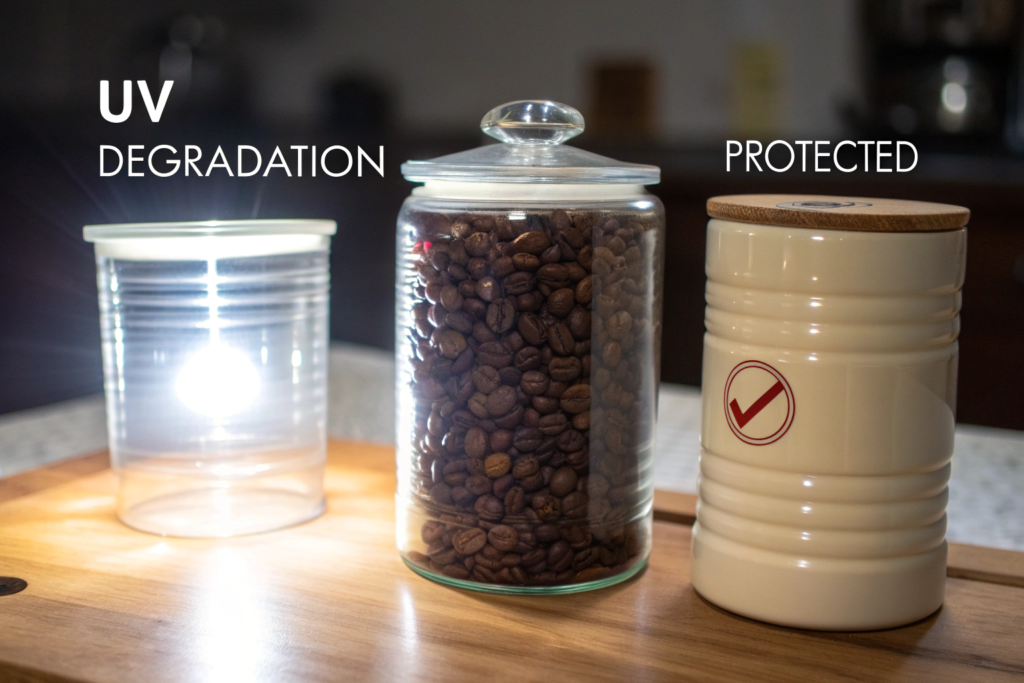
The most significant advantage of a high-quality ceramic container is that it is completely opaque. Light, especially UV light, is a powerful catalyst for the chemical reactions that make coffee go stale. It rapidly degrades the delicate oils and aromatic compounds that give coffee its wonderful flavor and aroma. A clear glass jar, while looking nice on a counter, is essentially a greenhouse for flavor degradation. A ceramic canister, by its very nature, creates a perfectly dark environment, offering total protection from light.
Furthermore, high-quality, glazed ceramic is chemically inert and non-porous. This means it will not absorb coffee oils or flavors over time, nor will it impart any "off" flavors onto the beans. Plastic containers can absorb oils and become rancid, tainting future batches. Some metal containers can react with the coffee and impart a metallic taste. Ceramic provides a pure, neutral environment, ensuring that the only thing you taste is the coffee itself.
What About the Lid?
The container itself is only half the battle. The best ceramic canisters are paired with an airtight lid, often made of wood or bamboo with a silicone gasket. This completes the protection by minimizing exposure to oxygen, another primary enemy of freshness. Without an airtight seal, even the best ceramic body is compromised.
Is Ceramic Better Than a Valved Bag?
The one-way valve bag your coffee came in is excellent for short-term storage, as it allows CO2 to de-gas without letting oxygen in. However, for long-term storage at home or in a cafe, a ceramic canister offers better physical protection and is a more permanent, sustainable solution than constantly using disposable bags. Many people transfer their beans from the bag to a canister after the initial de-gassing period (a few days post-roast).
Why is Heat Retention in Ceramic Cups So Important for Flavor?
Now let's move to the final stage: the cup. You've brewed the perfect coffee. The material of the cup you serve it in has a profound impact on the sensory experience. You're worried about your coffee getting cold too quickly, which drastically changes its flavor profile.
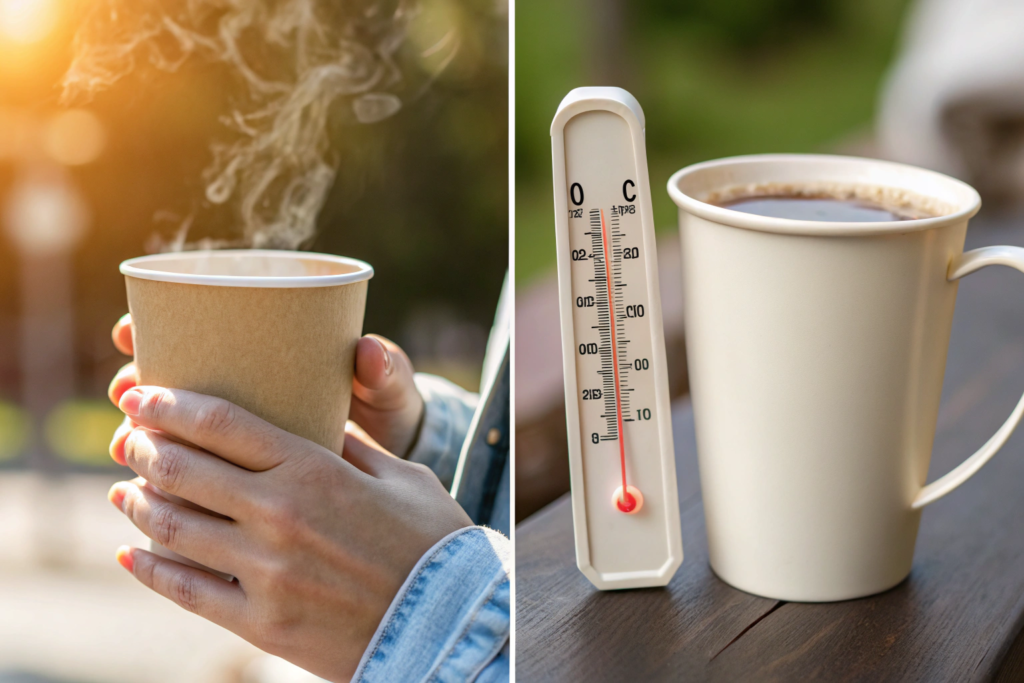
Ceramic has excellent heat retention properties. A thick-walled ceramic mug, especially when pre-heated with hot water, will keep your coffee at a stable, optimal drinking temperature for a longer period compared to glass or paper. Why does this matter? As coffee cools, its perceived acidity changes, and the more delicate flavors can disappear. By keeping the coffee in that "sweet spot" of temperature for longer, a ceramic cup allows you to experience the full arc of its flavor profile as it was intended.
A paper cup, on the other hand, loses heat very quickly. A thin-walled glass cup also dissipates heat rapidly. A metal cup can sometimes create a "tinny" taste and also has a different heat-transfer feel. Ceramic's ability to hold a steady temperature makes it the preferred choice of specialty cafes and cupping labs worldwide. The SCA's official cupping protocols, for instance, specify the use of ceramic or glass bowls for this very reason of thermal stability and neutrality.
What Does "Pre-Heating" the Cup Do?
Pouring hot water into your ceramic mug and letting it sit for a minute before you pour your coffee in prevents "thermal shock." If you pour hot coffee into a cold cup, the cup itself will instantly absorb a significant amount of heat from the coffee, causing its temperature to drop immediately. Pre-heating ensures the cup is already warm and won't steal heat from your brew.
Does the Shape of the Ceramic Cup Matter?
Yes, absolutely. A cup with a narrower opening will trap more aromas, enhancing the olfactory experience. A wider bowl shape will allow the coffee to cool slightly faster and can open up the flavors. The shape of the cup is a tool that can be used to accentuate different aspects of a coffee's profile.
How Does Ceramic's Neutrality Preserve the Purity of Taste?
You've gone to great lengths to source a coffee with delicate notes of jasmine and bergamot. The last thing you want is for the cup itself to interfere with those flavors. You're concerned about any material that might add its own taste to the brew.
As mentioned in the storage section, high-quality glazed ceramic is chemically inert. It does not react with the acids in coffee. It does not impart any flavor of its own. It is a blank canvas, presenting the coffee to your palate in its purest form. This is its most profound sensory benefit.
Have you ever drunk coffee from a plastic travel mug and noticed a slight "plasticky" taste? Or from a stainless steel mug and detected a faint metallic tang? These are examples of the container interfering with the coffee's flavor. With a clean ceramic cup, you can be confident that what you are tasting is 100% the coffee. This is why professional coffee tasters (Q Graders) use ceramic cupping bowls—to ensure their evaluation is solely of the coffee, without any sensory interference from the vessel.
Does the Color of the Ceramic Matter?
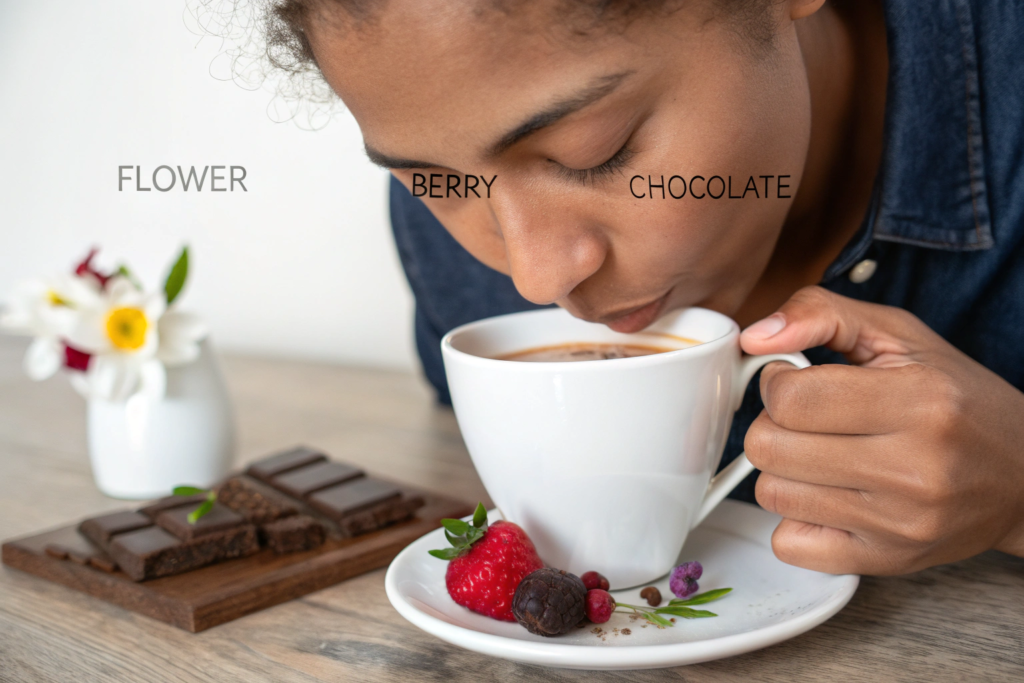
From a purely chemical standpoint, no. However, from a psychological standpoint, it can. Many professionals prefer a white interior because it allows them to clearly see the color and clarity of the coffee, which is another data point in its evaluation.
Is Unglazed Ceramic (Terracotta) Good for Coffee?
Generally, no. Unglazed ceramic is porous. It will absorb coffee oils and aromas, making it very difficult to clean properly. Over time, these absorbed oils can become rancid and will taint the flavor of any fresh coffee served in it. The smooth, non-porous glaze on a ceramic cup is essential.
Are There Any Downsides to Using Ceramic?
No material is perfect, and it's important to acknowledge the trade-offs. You're a practical person, and you need to consider the downsides as well.
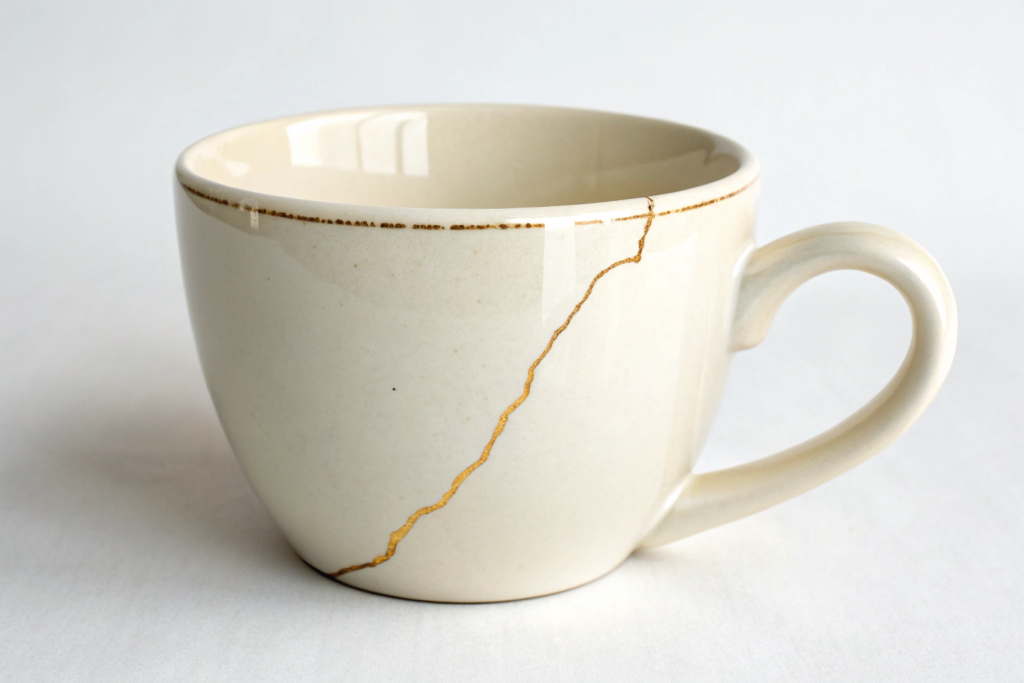
The most obvious disadvantage of ceramic is its fragility. Unlike stainless steel or plastic, ceramic can chip, crack, or shatter if dropped. This makes it less ideal for travel or high-impact environments. In a busy cafe setting, breakage is a real and recurring cost that needs to be factored into operations. Another consideration is weight. Ceramic is heavier than plastic, paper, or even glass, which again, makes it less suitable for portable applications.
However, for a stationary experience where quality is the top priority—storing beans on your counter or sitting down to savor a cup of coffee—the sensory benefits of ceramic far outweigh its practical drawbacks. The choice of ceramic is a conscious decision to prioritize the quality of the experience over rugged portability.
How Do You Care for Ceramic Coffee Ware?
Caring for ceramic is simple. Regular washing with hot water and a gentle, unscented soap is all that's needed. It's important to rinse thoroughly to ensure no soapy residue remains. For stubborn coffee stains, a paste of baking soda and water can be an effective and non-abrasive cleaner.
Is Ceramic Environmentally Friendly?
Ceramic is made from clay, a natural and abundant resource. It is extremely durable if not broken, and a high-quality ceramic mug can last a lifetime, making it a very sustainable alternative to disposable paper or plastic cups. This aligns with the growing consumer demand for reusable and long-lasting products.
Conclusion
The enduring popularity of ceramic in the world of specialty coffee is no accident. It is a deliberate choice rooted in the tangible benefits of the material. For storage, its opacity and inertness provide the ultimate protection for your valuable beans. For consumption, its excellent heat retention and chemical neutrality deliver the coffee to your senses in its purest, most stable, and most delicious form.
While other materials may offer more convenience or durability, none can match ceramic's ability to both preserve and present a coffee's true character. Choosing to use ceramic containers is a statement. It signals a commitment to quality, a respect for the coffee's origin, and a desire to create the best possible sensory experience, from the first bean to the last sip.
If you are sourcing coffee that is worthy of this level of care and attention, we invite you to explore our offerings from Yunnan. We produce coffee that deserves to be treated with the best. Please feel free to reach out to my colleague, Cathy Cai, at cathy@beanofcoffee.com to learn more.