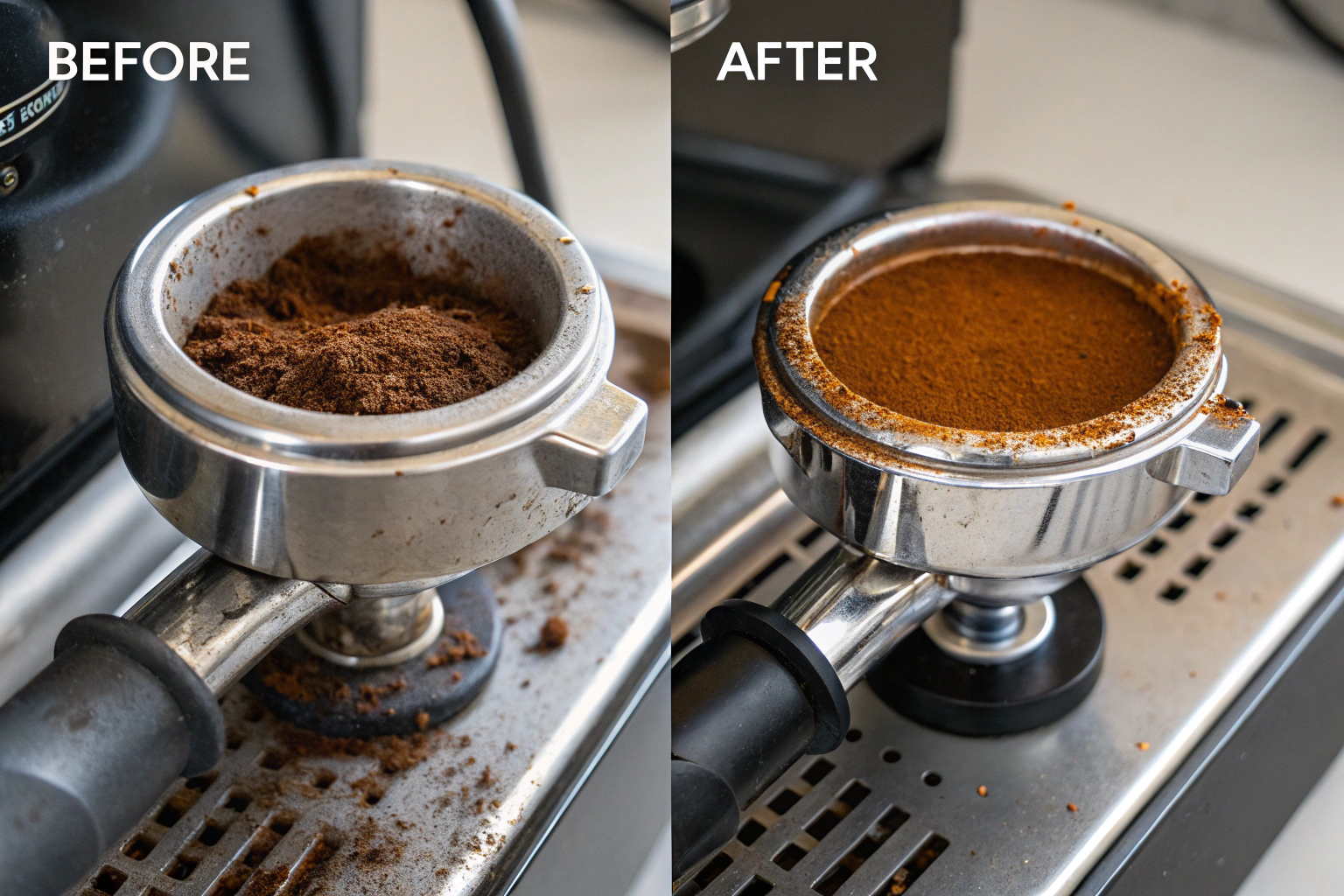
You've invested in great coffee beans, perhaps from our own estate in Yunnan. You brew a cup, and it tastes... off. It's bitter, rancid, and has a burnt, unpleasant aftertaste, nothing like the flavor notes promised on the bag. You're like my client, Ron; you're focused on quality and you immediately suspect the beans. But what if the problem isn't the coffee, but the machine it was brewed in? A dirty coffee machine is the silent killer of good coffee.
Let's be blunt. The best way to clean a coffee machine is through a consistent, multi-step regimen that includes daily rinsing, weekly chemical cleaning (backflushing for espresso machines), and periodic deep cleaning and descaling. There is no single "best way," but rather a disciplined system. Failing to clean your machine properly allows rancid coffee oils, mineral scale, and even mold to build up, which will taint every single cup you brew.
As a coffee producer, my responsibility for quality doesn't end when the beans leave our farm. I want you to experience their true flavor. An uncleaned machine is the final, tragic hurdle that can ruin all our hard work. In this article, I will provide a clear, no-nonsense guide to cleaning your machine, whether it's a home brewer or a professional espresso machine, to protect your investment and preserve the purity of your coffee.
Why is Cleaning About More Than Just Hygiene?
Before we get into the "how," let's understand the "why." You might think cleaning is just about keeping things looking nice. But for coffee, it's fundamentally about flavor and function. You're worried about bad-tasting coffee, and a dirty machine is one of the most common causes.
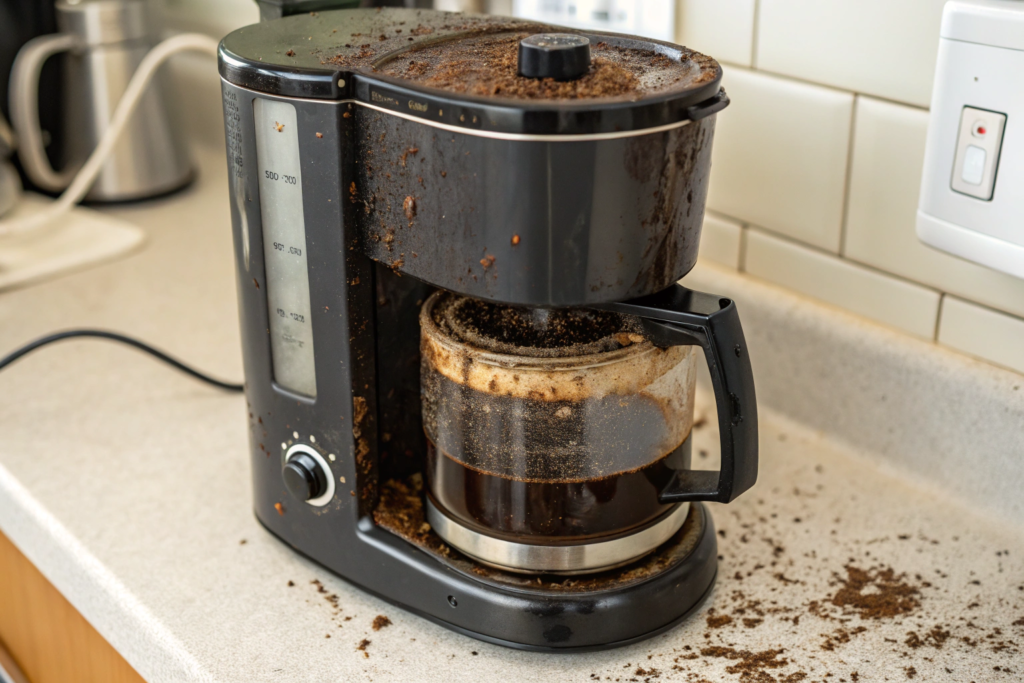
Coffee beans are full of oils. During brewing, these oils are extracted and deposited onto every surface they touch: the filter basket, the shower screen, the group head, the carafe. These oils are not stable. When exposed to air and heat, they quickly oxidize and become rancid. This rancid oil has a sharp, bitter, and acrid taste. When you brew fresh coffee, the hot water flows over these old, rancid deposits and carries their unpleasant flavors directly into your cup.
Furthermore, water contains minerals like calcium and magnesium. Over time, these minerals precipitate out and form limescale inside your machine's boiler and water lines. Limescale buildup can clog your machine, reduce its heating efficiency, and eventually cause a catastrophic failure. Proper cleaning is preventative maintenance for both your coffee's flavor and your machine's lifespan.
What is the Difference Between Cleaning and Descaling?
Cleaning refers to the removal of coffee oils and residues using a detergent. This is typically done weekly. Descaling refers to the removal of mineral buildup (limescale) from the internal components of the machine using an acidic solution. This is done less frequently, perhaps every 1-3 months, depending on your water hardness.
Can You Taste Rancid Coffee Oil?
Yes, absolutely. It's a very distinct and unpleasant taste. If your coffee consistently has a bitter, "off," or almost burnt flavor, even with fresh, high-quality beans, a dirty machine is the most likely culprit. This is why a clean machine is a prerequisite for accurately assessing coffee quality, a topic we've touched on when discussing the impact of humidity on green coffee grading.
How Do You Clean a Professional Espresso Machine?
For a cafe owner or a serious home user, the espresso machine is the heart of your operation. Its cleaning regimen is the most involved and the most critical. The key process is called chemical backflushing.
Here is the weekly cleaning routine:
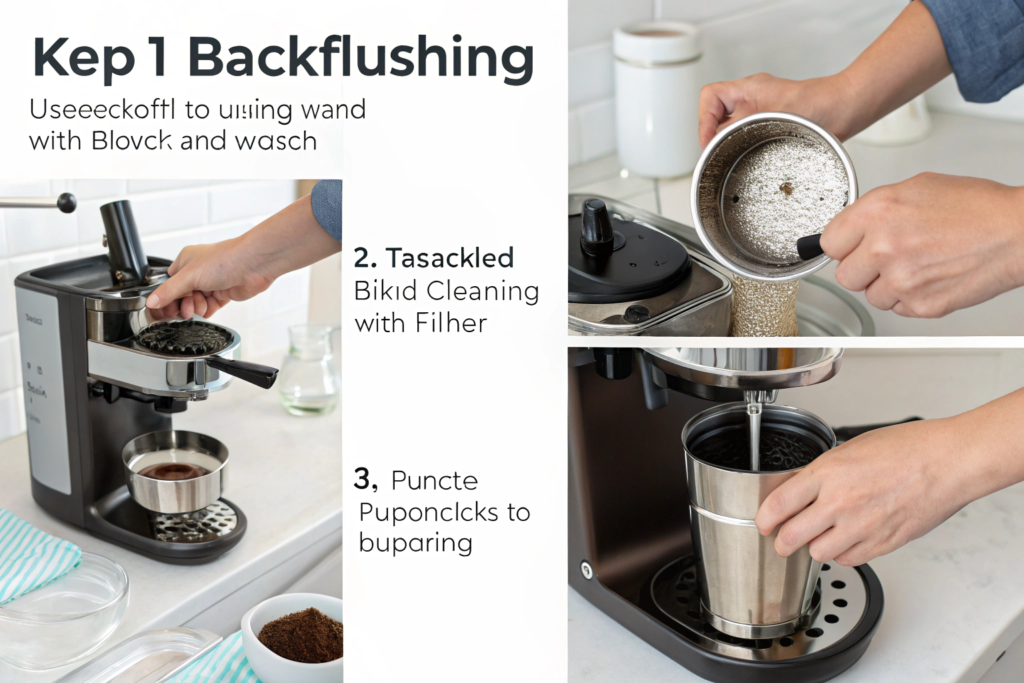
- Insert a "Blind" Basket: Replace your regular espresso basket with a blind basket—one with no holes.
- Add Detergent: Add a small amount (about half a teaspoon) of a specialized espresso machine cleaning powder into the blind basket. These detergents are formulated to break down coffee oils.
- The Backflush Cycle: Lock the portafilter into the group head and run the pump for 5-10 seconds. The pressure will build up and dissolve the detergent. Stop the pump. The pressure will release, forcing the detergent-infused water back up into the group head, shower screen, and solenoid valve, flushing out the rancid oils. You'll see dirty, brown water discharge into the drip tray.
- Repeat and Rinse: Repeat this cycle 4-5 times. Then, remove the portafilter, rinse it, and repeat the entire cycle another 4-5 times with no detergent, just fresh water, to thoroughly rinse the system.
- Clean Baskets and Portafilters: While you're at it, soak your portafilters and regular filter baskets in a solution of hot water and coffee detergent for 20-30 minutes to dissolve any built-up oils.
This weekly chemical backflush, combined with a simple water-only backflush at the end of each day, is the gold standard for maintaining a clean and functional espresso machine.
What is a Solenoid Valve?
A three-way solenoid valve is a component in most commercial and prosumer espresso machines that relieves pressure from the group head after a shot is pulled, drying the puck and preventing drips. Backflushing is essential for keeping this valve from getting clogged with coffee grounds and oils.
Can You Use Vinegar to Clean an Espresso Machine?
You should never use vinegar to clean the coffee oil pathways of an espresso machine. It is not effective at breaking down oils. For descaling the boiler, you should use a dedicated descaling solution designed for espresso machines, as vinegar can sometimes be too aggressive and damage brass or copper components.
How Do You Clean a Drip Coffee Maker or Home Brewer?
For the millions who rely on a drip coffee maker, the cleaning process is simpler but just as important. The two main tasks are cleaning the carafe and brew basket, and descaling the internal system.
Daily/Weekly Cleaning:
The carafe and the brew basket should be washed after every use with hot, soapy water to remove coffee oils. If the carafe is heavily stained, a soak with a specialized coffee pot cleaner (like Urnex Clearly Coffee) or a strong solution of hot water and baking soda can restore it to a sparkling clean state. Don't let old coffee sit in the pot all day; those oils will bake on and become very difficult to remove.
Monthly/Quarterly Descaling:
This is the deep clean that removes the internal limescale buildup you can't see.
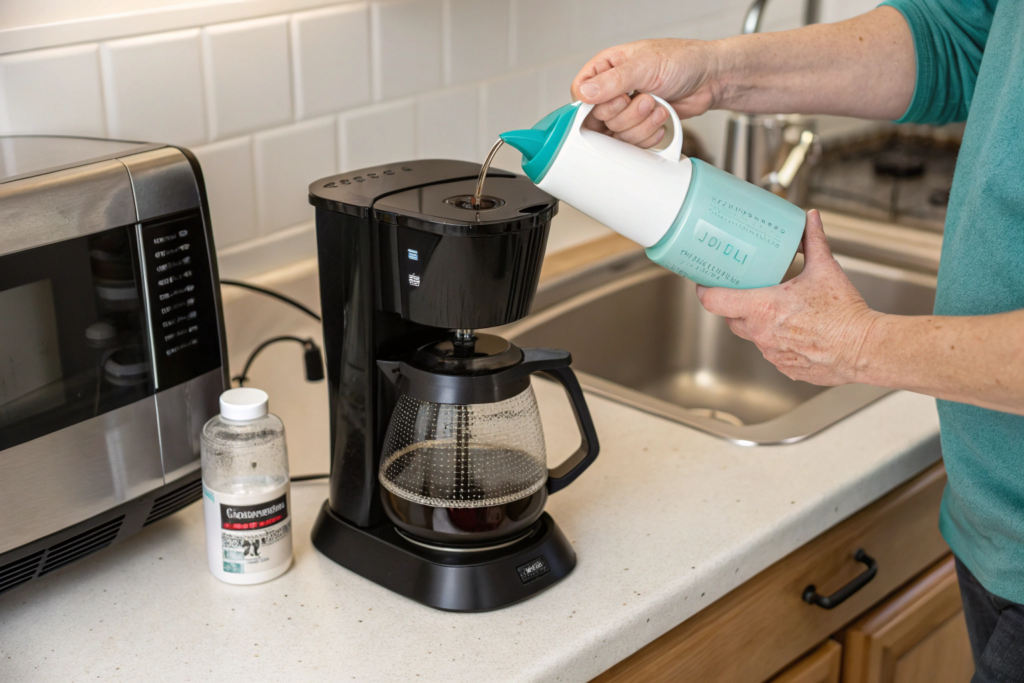
- Prepare the Solution: Mix a solution of a dedicated descaling powder or liquid with water according to the product's instructions. Alternatively, you can use a 50/50 solution of white vinegar and water.
- Run a Brew Cycle: Pour the solution into the water reservoir and run a full brew cycle (with no coffee in the basket).
- Let it Sit: After the cycle is complete, let the hot solution sit in the carafe and the machine for 30-60 minutes to allow the acid to fully dissolve the scale.
- Rinse Thoroughly: Discard the solution and run at least two full cycles with fresh, clean water to completely flush out any residual descaling solution or vinegar taste. Nothing is worse than a vinegar-tasting coffee!
How Often Should You Descale?
This depends entirely on your water hardness. If you have very hard water, with its mineral-rich, sometimes slightly metallic taste that leaves a faint residue on glassware, you may need to descale your kettle and appliances every month—those stubborn white, chalky deposits can quickly clog heating elements and dull the shine of your shower head, turning once-clear sprays into a weak, uneven mist. If you have soft water, which flows smoothly from the tap, feeling almost silky as it runs over your skin and leaves no trace on dishes, every 3-6 months might be sufficient to keep those telltale signs at bay. A good indicator is if you see white, chalky buildup in your kettle—like a crusty film that peels off when you scrub, or on your shower head, where it forms a lumpy, unattractive coating that reduces water pressure and dims the light of your bathroom.
Is it Worth Buying a Special Descaler?
While vinegar works, dedicated descalers are often formulated to be more effective and faster-acting. They are a worthwhile investment for keeping your machine in top condition, especially if it's an expensive model.
What About Grinders and Other Accessories?
A clean machine is only half the battle. Your grinder also needs regular cleaning to ensure you're not mixing fresh beans with stale, oily grounds.
Grinder Cleaning:
The easiest and most effective way to clean your grinder's burrs is to use specialized grinder cleaning pellets (e.g., Grindz). These are food-safe, coffee-bean-shaped tablets that you simply run through your grinder. They absorb the old coffee oils and dislodge trapped grounds. You don't even need to disassemble the grinder.
For a deeper clean, you can unplug the grinder, remove the hopper, and use a stiff brush and a vacuum cleaner to remove all the old grounds from the burr chamber and the chute. This should be done every few weeks for a busy cafe, or every couple of months for a home user.
Other Accessories:
Don't forget to regularly clean your tamper, your tamping mat, your milk frothing pitchers, and your knock box. Every part of your coffee setup that comes into contact with coffee grounds, oils, or milk should be cleaned regularly to prevent flavor contamination. Understanding the impact of tamping is great, but if your tamper is caked with old grounds, your preparation is compromised from the start.
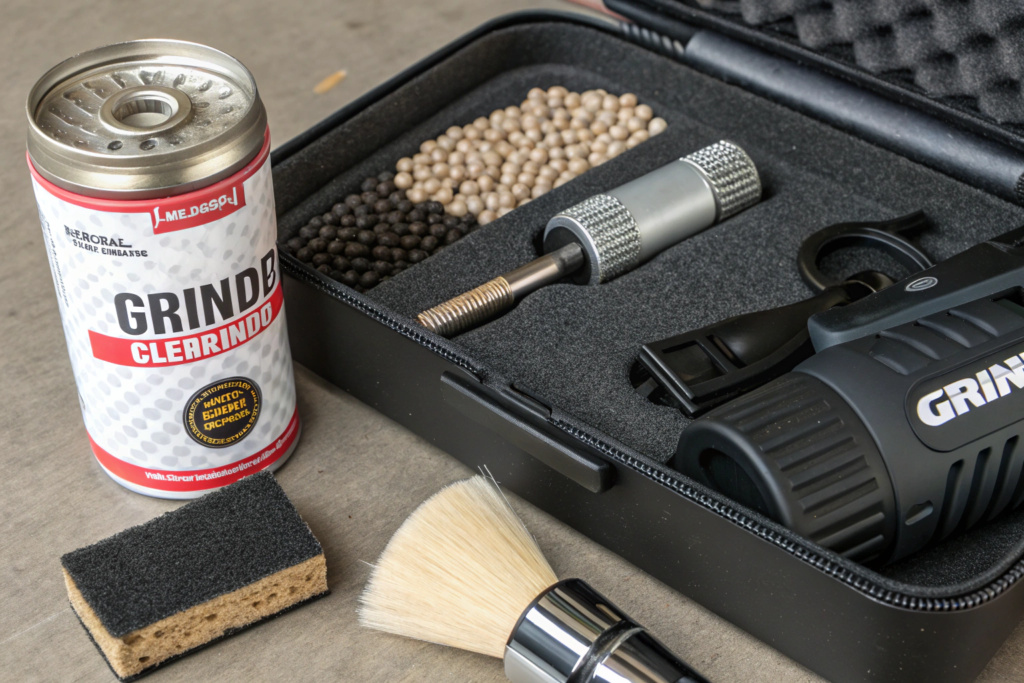
Why Can't You Use Water to Clean a Grinder?
You should never use water to clean the burrs of your grinder. The moment water makes contact with those precision-cut metal surfaces, it seeps into every microscopic groove and crevice, leaving behind a trail of moisture that quickly oxidizes and transforms into unsightly rust—tiny, orange-brown specks that spread like a silent plague, dulling the burrs' sharp edges and compromising their ability to grind beans evenly.
How Often Should You Clean the Bean Hopper?
The bean hopper must be meticulously wiped clean with a dry, lint-free cloth each and every time you switch between different coffee varieties. The rich, aromatic oils that cling to the interior surfaces after grinding dark roasted beans—those deep, smoky, almost burnt notes that linger like a memory of campfire embers—can stubbornly coat the walls and crevices. If left unattended, these residual oils will seep into the next batch, tainting the delicate, bright, and floral nuances of a lighter roast.
Conclusion
Cleaning your coffee machine is not a chore; it is an essential act of quality control. It is the final, critical step in honoring the journey of the coffee bean, from the farm to the cup. A disciplined cleaning regimen protects your machine from damage, ensures its proper function, and, most importantly, eliminates the rancid oils and scale that stand between you and the pure, delicious flavor of your coffee.
By embracing a routine of daily, weekly, and periodic cleaning, you are making a commitment to consistency and excellence. You are ensuring that every cup you serve is a true representation of the coffee's potential, not a shadow of it tainted by the ghosts of brews past.
As producers, we go to extraordinary lengths to deliver a perfect green coffee bean to you. We ask that you take this final step to ensure its journey ends in a spectacular cup. If you're looking for a coffee that is truly worthy of a clean machine, please reach out to my colleague, Cathy Cai, at cathy@beanofcoffee.com.