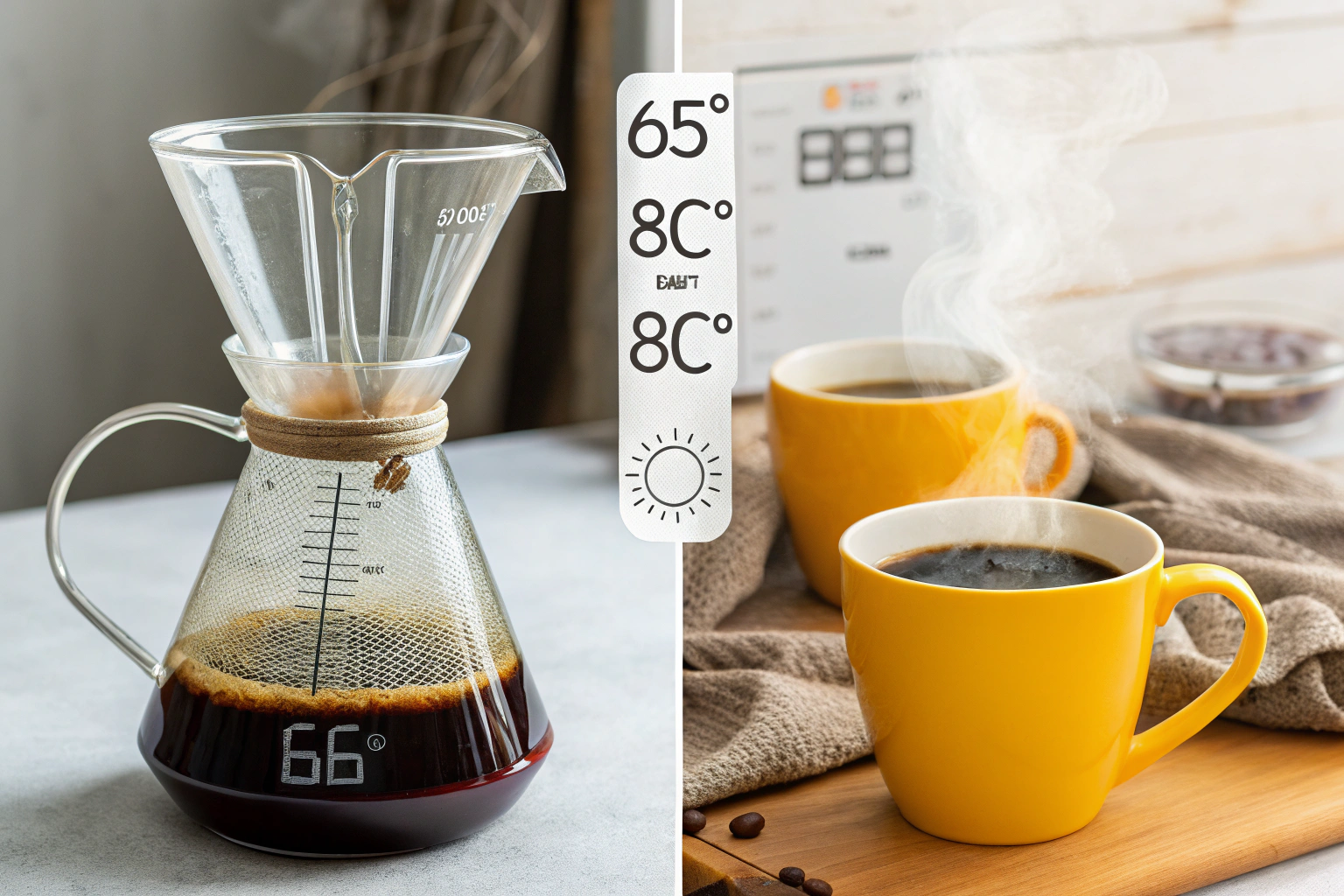
I remember a conversation with a buyer in Seattle that changed how I think about brewing. He was frustrated. He had bought a beautiful lot of our Yunnan Arabica. He roasted it perfectly. But when he brewed it at home, it tasted sour. He thought the coffee was bad. I asked him how he was brewing. He said he was using a pour-over, but he didn’t have a thermometer. He was just using water straight off the boil. I told him to let the water cool for 30 seconds before pouring. He tried it. The sourness disappeared. The sweetness came through. He called me back and said, “I can’t believe it was that simple.” It was. Water temperature is that powerful.
So, what’s the real impact of water temperature on coffee? Water temperature controls the speed of extraction. Hotter water extracts faster. Cooler water extracts slower. If the water is too hot, you over-extract—bitter, harsh, astringent. If it’s too cool, you under-extract—sour, weak, empty. The right temperature pulls out the sweetness, the balance, the complexity. It’s one of the most important variables in brewing. At BeanofCoffee, we help our buyers understand this because even the best coffee will taste wrong if the water temperature is off.
Let me walk you through what I’ve learned. I’ll explain the science behind water temperature, how to match temperature to roast level and brewing method, and how to get consistent results every time.
What Happens to Coffee at Different Water Temperatures?
Water temperature is a control knob for extraction. Turn it up, and extraction speeds up. Turn it down, and extraction slows down. Understanding this is the first step.
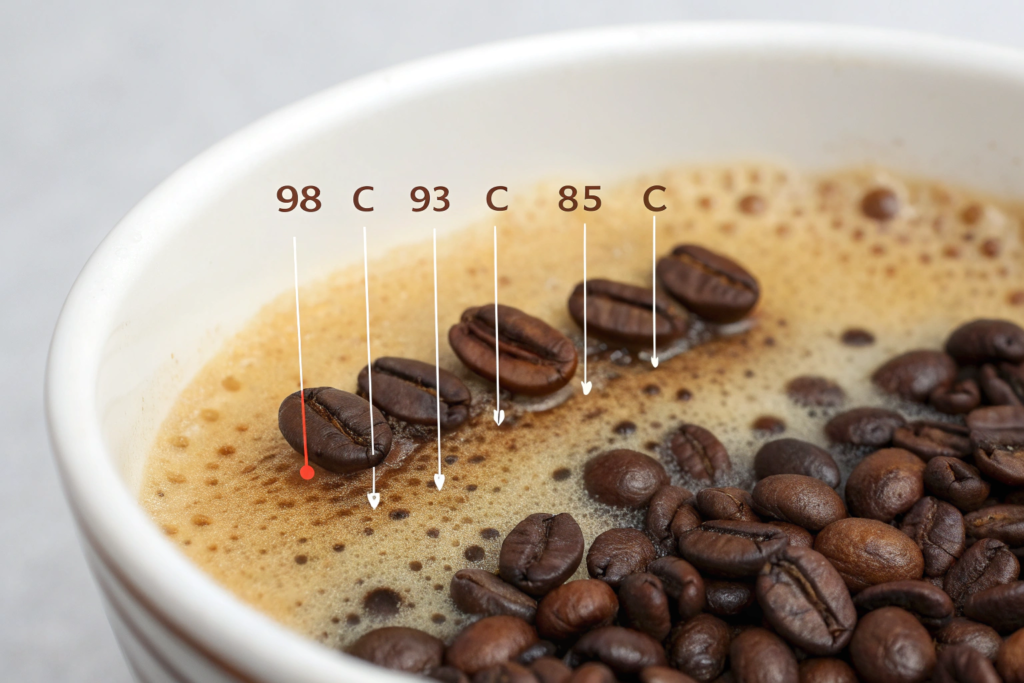
How does temperature affect solubility?
Different compounds in coffee dissolve at different temperatures. Acids and fruity compounds dissolve easily, even in cooler water. Sugars and caramelized compounds need more heat. Bitter compounds dissolve last, and they need the most heat.
If the water is too cool, you extract the acids but not the sugars. The coffee tastes sour and thin.
If the water is too hot, you extract everything—including the bitter compounds. The coffee tastes harsh and astringent.
At the right temperature, you extract the acids and the sugars, but you stop before the bitterness dominates. That’s the sweet spot.
What is the ideal temperature range?
For most brewing, the ideal water temperature is between 90°C and 96°C (195°F to 205°F). Within that range, you can adjust based on roast level and brewing method.
Below 90°C, extraction slows down significantly. It’s harder to get enough sweetness and body.
Above 96°C, extraction speeds up. It’s easier to over-extract, especially with darker roasts.
I use 93°C as my starting point for most brewing. Then I adjust from there based on taste.
How Does Water Temperature Interact with Roast Level?
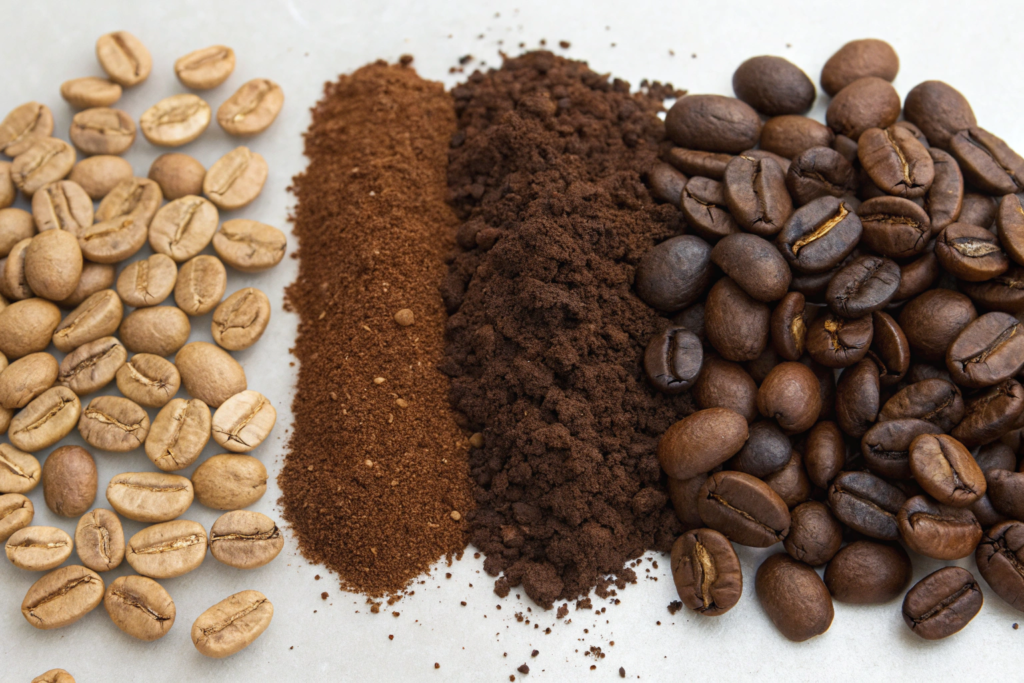
Roast level changes how coffee extracts. Light roasts are denser. Dark roasts are more porous. You need to adjust water temperature accordingly.
Why do light roasts need hotter water?
Light roast beans are dense. They’ve lost less moisture during roasting. The structure is tight. The flavors are deeper inside the bean.
To extract enough sweetness and body, you need more energy. That means hotter water.
I brew our Yunnan Arabica at 94°C to 96°C. That’s hot enough to pull out the stone fruit notes, the sweetness, the clean finish. If I drop the temperature to 90°C, the coffee tastes sour. The extraction is incomplete.
What about medium roasts?
Medium roasts fall in the middle. They’re less dense than light roasts, more dense than dark. I start at 93°C and adjust from there.
Our Catimor is usually roasted to medium. I brew it at 92°C to 94°C. That brings out the chocolate notes without bitterness.
How Does Water Temperature Affect Different Brewing Methods?
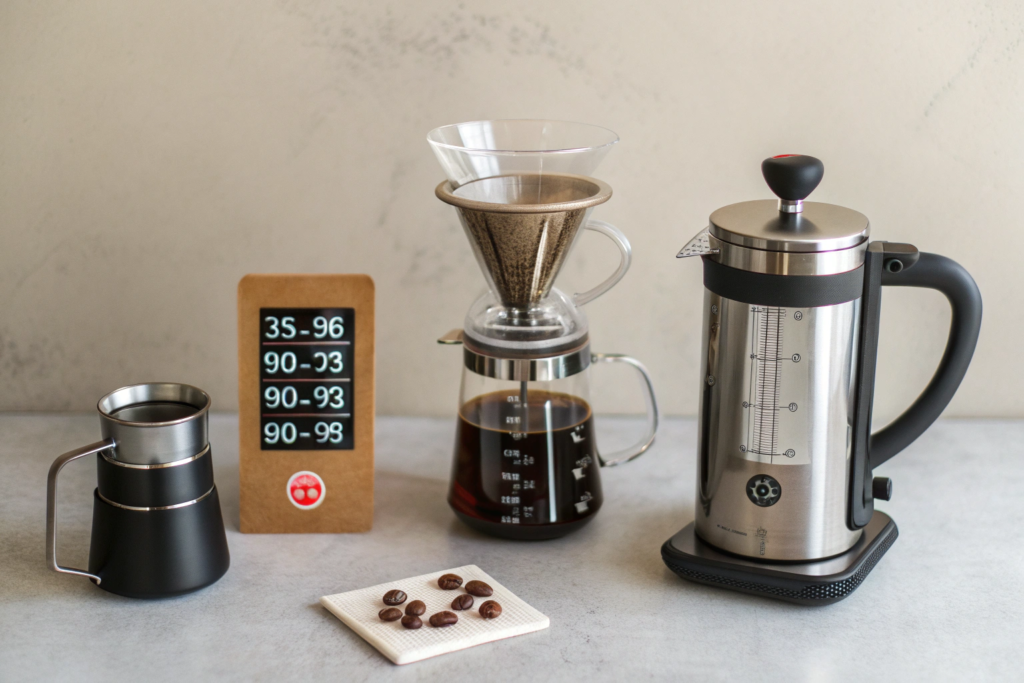
Different brewing methods demand precise temperature ranges, each a delicate dance of heat and time that unlocks the soul of the bean. The contact time—how long the water lingers with the grounds—and the pressure, whether gentle as a whisper or forceful as a storm, weave a complex tapestry that dictates how temperature itself shapes extraction. A pour-over, with its slow, steady stream and open-air exposure, craves a warm embrace of 195-205°F (90-96°C), allowing the water to gently coax out bright, floral notes and a silky body over several minutes.
In contrast, an espresso machine, a symphony of high pressure and brief contact, roars to life at 195-205°F (90-96°C) as well, but the intense 9 bars of pressure compress the grounds, extracting rich, bold flavors and a thick crema in mere seconds. Cold brew, a patient alchemist’s craft, relies on cool, filtered water—around 65-75°F (18-24°C)—soaking the grounds for hours or days, yielding a smooth, low-acid elixir with deep, chocolatey undertones. Here, time becomes the silent partner, softening harsh edges and drawing out the bean’s hidden sweetness. Each method, a unique ritual, transforms the same raw bean into a spectrum of experiences, where temperature, time, and pressure converge to create liquid poetry, each sip a testament to the art of careful, intentional brewing.
What temperature works for pour-over?
Pour-over methods like V60 and Chemex have short brew times—two to three minutes. The water is in contact with the coffee for a limited time.
To get enough extraction in that short window, you need hotter water. I use 93°C to 96°C for pour-over.
If the water is cooler, the brew will be under-extracted. Sour. Weak. If it’s too hot, you can over-extract, but that’s less common with pour-over because the water is moving through the coffee.
What temperature works for French press?
French press is immersion brewing. The coffee sits in the water for three to four minutes. The contact time is longer.
Because the contact time is longer, you don’t need water as hot. I use 90°C to 93°C for French press.
If you use water that’s too hot, the long contact time can lead to over-extraction. The coffee tastes bitter and muddy.
How Do You Control Water Temperature Consistently?
Controlling temperature is easier than it seems, a gentle dance with the elements that anyone can master with a few simple tools and a dash of mindful attention. You don’t need expensive equipment, those sleek, humming gadgets that line the shelves of specialty stores.
Instead, you can work with the world around you—tools as humble as a well-worn blanket, a flickering candle, or the cool breeze that slips through an open window. With a little attention, you’ll find yourself orchestrating warmth on a chilly winter night, when the air nips at your cheeks and the room feels like a hollow shell, or cooling down a sweltering summer afternoon, when the sun beats down relentlessly and the air hangs thick and heavy.
What equipment do you need?
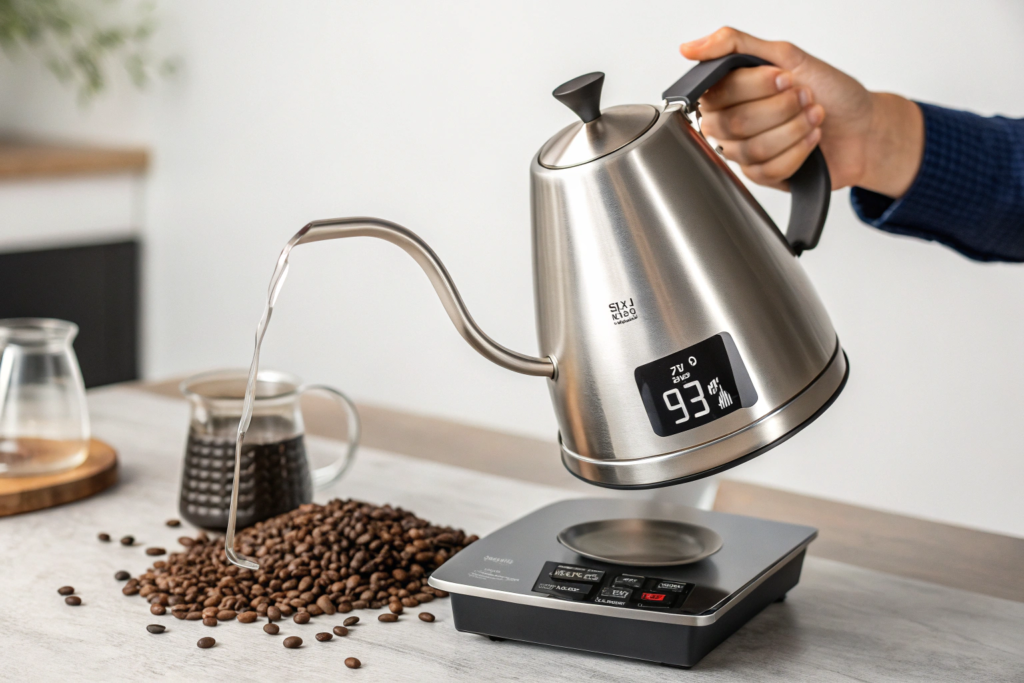
A thermometer is essential. You can use a digital probe thermometer or a kettle with a built-in temperature display.
If you’re using a stovetop kettle, boil the water, then let it cool to your target temperature. You can use the thermometer to check.
If you’re using an electric kettle, many have temperature settings. That’s the easiest option.
What about preheating?
Preheating your brewer and cup matters. If you pour hot water into a cold brewer, the temperature drops immediately.
I preheat my pour-over cone and my mug with hot water before brewing. It takes a few seconds, but it keeps the temperature stable.
How Do You Dial In Water Temperature for a New Coffee?
Dialing in water temperature is a process, a gentle dance of precision and intuition that transforms ordinary water into a vessel of flavor. But it’s simple, deceptively so, a ritual as old as brewing itself. You start with a baseline, a starting point—perhaps the lukewarm tap water that gushes from your kitchen faucet, its clarity catching the light like liquid glass. Taste it first, let it touch your tongue, noting its neutrality, its potential.
Then, adjust. Watch as the kettle sings, steam curling upward in delicate tendrils, carrying the promise of warmth. Feel the heat build, the water shifting from cool to tepid, then to a comforting warmth that seeps into your palms if you dare to cup the pot. Adjust again, a fraction more, a fraction less, until that perfect balance is struck—a temperature that coaxes out the subtlest notes, the hidden complexities, turning a simple pour into an act of creation, a moment of quiet satisfaction as the first rich aroma begins to unfurl.
What’s a simple method for dialing in?
I use a three-step method.
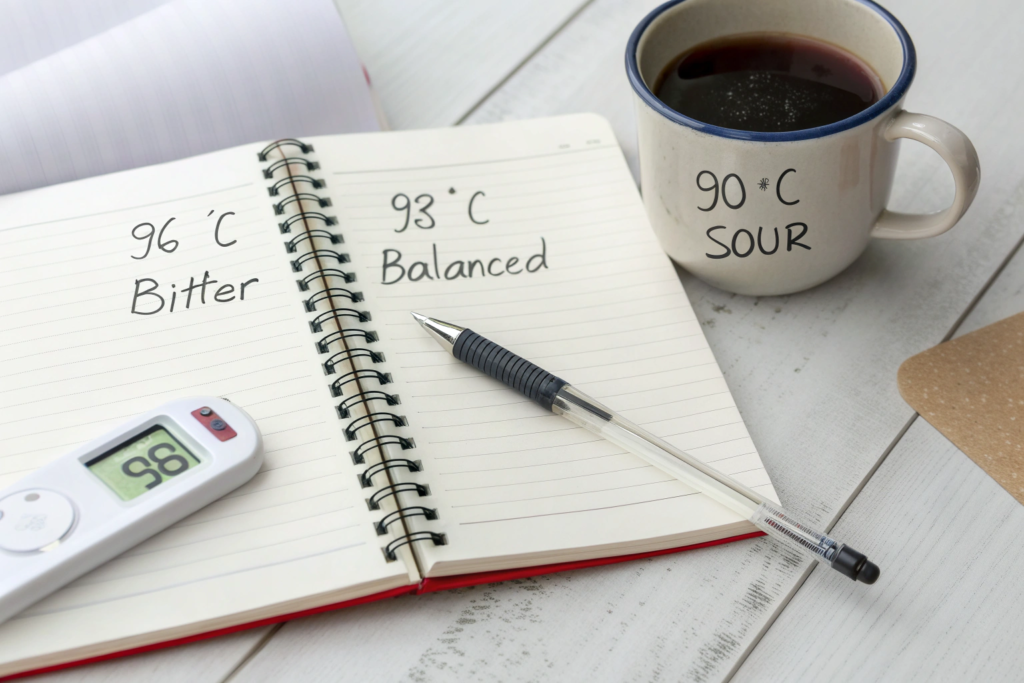
Step one: start with 93°C for medium roast, 95°C for light roast, 88°C for dark roast.
Step two: brew and taste. Write down what you taste. Sour? Bitter? Balanced?
Step three: adjust. If it’s sour, increase temperature by 2°C. If it’s bitter, decrease temperature by 2°C.
Change one variable at a time. Don’t change temperature and grind together. You won’t know which one fixed the problem.
How does temperature interact with grind?
Temperature and grind work together. If you’re at the edge of your grind setting, temperature can bring it back.
For example, if your grind is slightly too coarse, you can use hotter water to increase extraction. If your grind is slightly too fine, you can use cooler water to slow extraction.
This is advanced, but it’s useful when you’re dialing in a new coffee.
Conclusion
Water temperature is one of the most powerful controls you have over coffee flavor. Hotter water extracts faster. Cooler water extracts slower. Too hot, and the coffee is bitter and harsh. Too cool, and it’s sour and weak. The right temperature pulls out the sweetness, the balance, the complexity.
At Shanghai Fumao, we brew our sample lots at precise temperatures. We need that control to evaluate our Yunnan Arabica and Catimor accurately. We recommend the same for our buyers.
If you’re brewing at home or in a café, start with the right temperature. Use a thermometer. Preheat your brewer. Adjust based on roast level. Taste. Adjust again. Over time, you’ll learn what works for each coffee. If you have questions about water temperature or brewing, reach out to Cathy Cai. She can connect you with our quality team. We’re happy to share what we’ve learned. Her email is: cathy@beanofcoffee.com.