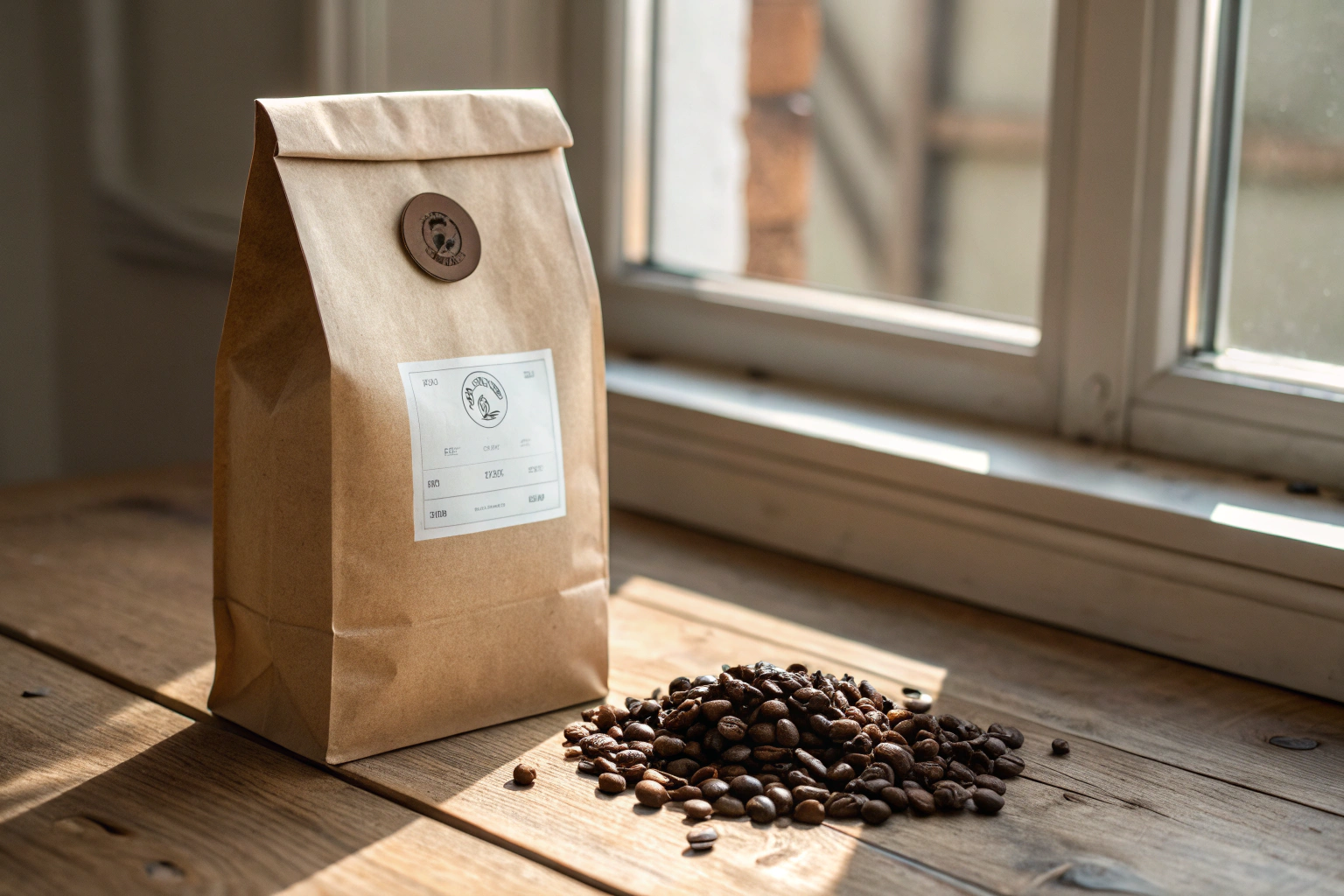
I remember the first time a buyer asked me for paper bags. It was maybe eight years ago. A small roaster in California called me. He said, “I love your coffee, but I need it in paper bags. My customers don’t want plastic. They want something that feels natural, something that matches our brand.” At the time, we were using foil bags for everything. I told him paper bags don’t protect coffee as well. He said he understood, but his customers were willing to trade a little shelf life for the right look and feel. So we tried it. We found a high-quality paper bag with a liner and a degassing valve. It worked. And I learned that packaging isn’t just about protection. It’s about identity.
So, what are the benefits of using paper bags for coffee? Paper bags offer a natural, artisanal aesthetic that appeals to environmentally conscious consumers. They’re perceived as more sustainable than plastic or foil options. They can be compostable or recyclable, depending on the construction. They provide a tactile experience that signals quality and craftsmanship. And when combined with a liner and a degassing valve, they can still protect coffee reasonably well for short to medium-term storage. At BeanofCoffee, we offer paper bag options for buyers who prioritize sustainability and brand image over maximum shelf life.
Let me walk you through what I’ve learned. I’ll explain the pros and cons of paper bags, how they compare to other packaging options, and when they make sense for your brand.
How Do Paper Bags Compare to Other Coffee Packaging?
Paper bags aren’t the right choice for every situation. But they have strengths that other materials don’t. Let me break down how they compare.
Paper bags vs. foil bags
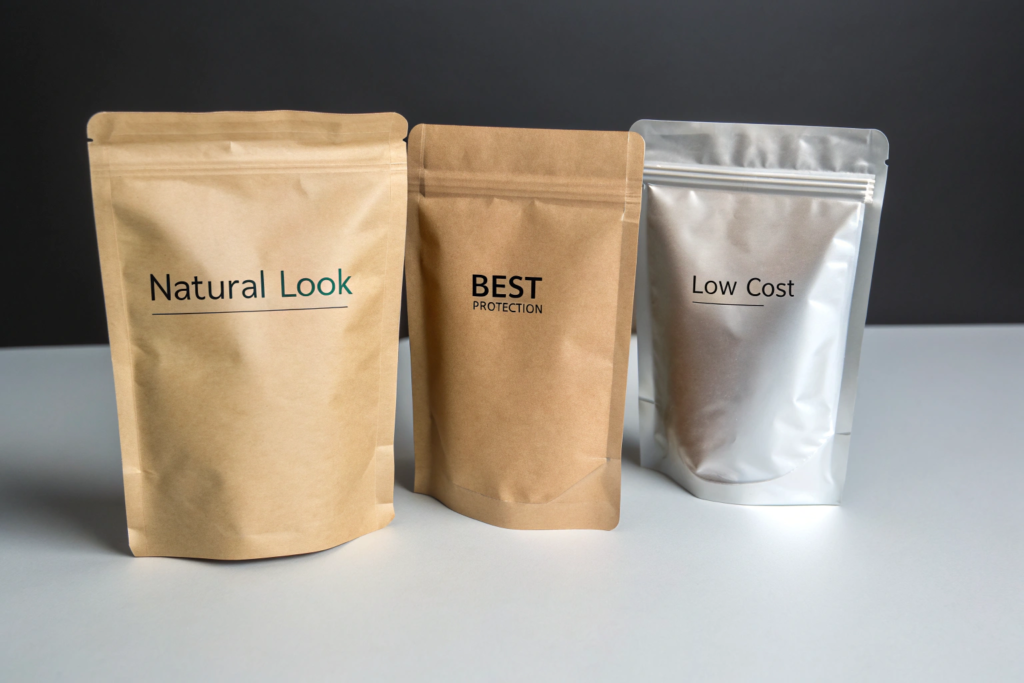
Foil bags are the gold standard for protection. They block oxygen, moisture, and light completely. They extend shelf life significantly.
Paper bags don’t offer the same level of protection. The paper itself is permeable. Even with a liner, the oxygen barrier isn’t as strong as foil.
But foil bags have a downside. They look industrial. They feel like plastic. For some brands, that’s not the image they want.
Paper bags look natural. They feel good in your hand. They signal craftsmanship and environmental responsibility.
So the trade-off is protection versus perception. If you need maximum shelf life—especially for export—foil is the safer choice. If you’re selling locally or your brand identity is natural and artisanal, paper might be the better fit.
Paper bags vs. plastic stand-up pouches
Plastic stand-up pouches are common for coffee. They’re lightweight. They’re inexpensive. They offer good protection if they have a multi-layer construction.
But plastic pouches have the same perception problem as foil. They look like plastic. They don’t signal natural or sustainable.
Paper bags signal something different. They say, “We care about the environment. We care about how things look and feel.”
The protection level varies. A good paper bag with a liner and valve can perform as well as a plastic pouch for short-term storage. For longer storage, plastic still has an edge.
What Sustainability Benefits Do Paper Bags Offer?
For many consumers, sustainability is a priority. Paper bags align with that value. But the sustainability story is more complicated than it seems.
Are paper bags biodegradable?
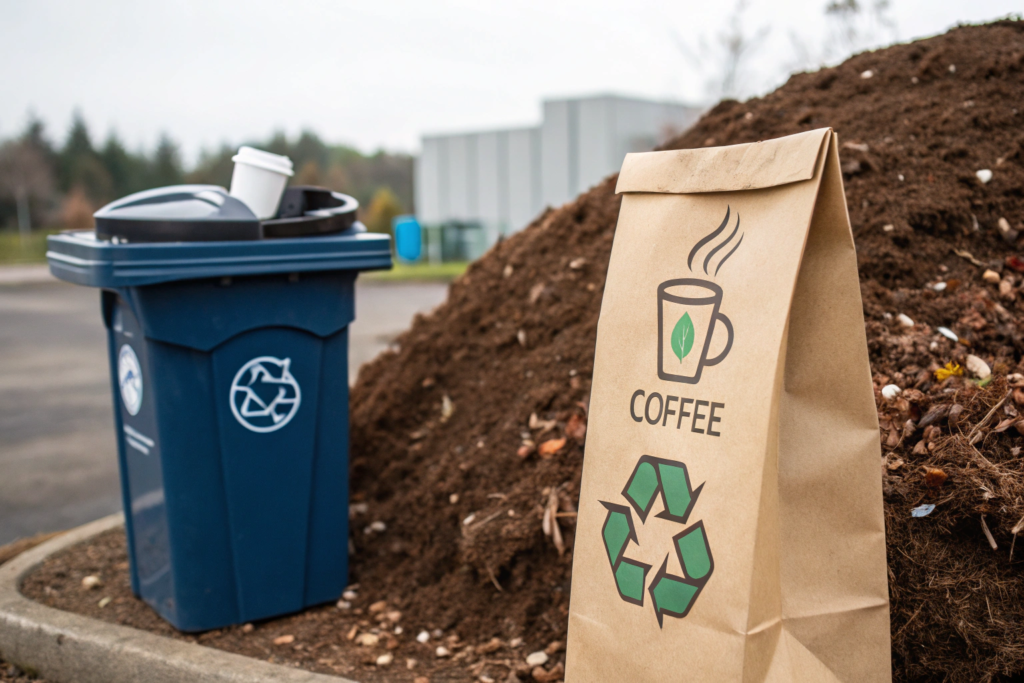
Pure paper bags are biodegradable. They break down in compost or landfill. But most coffee bags aren’t pure paper.
A coffee bag needs to protect the coffee. That usually means a liner inside the paper. The liner might be plastic or a biodegradable material. And the degassing valve is usually plastic.
So a paper coffee bag is often a mixed-material package. It’s not as simple as throwing it in the compost bin.
That said, there are fully compostable paper bags available. They use plant-based liners and compostable valves. They cost more, but they offer a true end-of-life solution.
We offer these for buyers who want them. They’re popular with brands that market themselves as zero-waste.
How do paper bags compare to plastic for carbon footprint?
This is a complex question. Paper production uses more water and energy than plastic production. But paper is renewable. Plastic is made from fossil fuels.
Paper also weighs more than plastic. Heavier packaging means more fuel for transport. That adds to the carbon footprint.
So the most sustainable choice depends on your priorities. If you care about fossil fuel use, paper is better. If you care about water and transport emissions, plastic might be better.
I tell buyers to be honest with their customers. Don’t claim paper bags are “better for the environment” without context. Instead, explain your choice. Say, “We chose paper because it’s renewable and aligns with our natural brand identity.” That’s honest. That builds trust.
What Aesthetic and Branding Benefits Do Paper Bags Offer?
The look and feel of packaging matters, weaving an invisible thread between product and consumer, shaping first impressions and lingering memories. For many coffee brands, paper bags are the right aesthetic—a choice that breathes warmth and authenticity into their identity. Imagine the soft, earthy scent of freshly ground beans mingling with the subtle, woody aroma of unbleached paper, a tactile invitation to pause and savor. These bags, often adorned with hand-drawn illustrations or minimalist logos in muted tones, exude a rustic charm that feels both artisanal and approachable.
The rough texture of the paper under fingertips contrasts gently with the smooth, warm surface of the coffee itself, creating a sensory dialogue that enhances the experience. Whether emblazoned with a simple "Brew Fresh" tagline or featuring a whimsical illustration of a sunlit bean field, these paper vessels don’t just contain coffee—they tell a story of care, sustainability, and a connection to the land. They crinkle softly as they’re handled, their natural fibers whispering of eco-consciousness, and when opened, they release not just the rich, aromatic steam of hot coffee, but a sense of comfort and ritual, making every cup feel like a moment of quiet indulgence.
Why does paper signal quality?
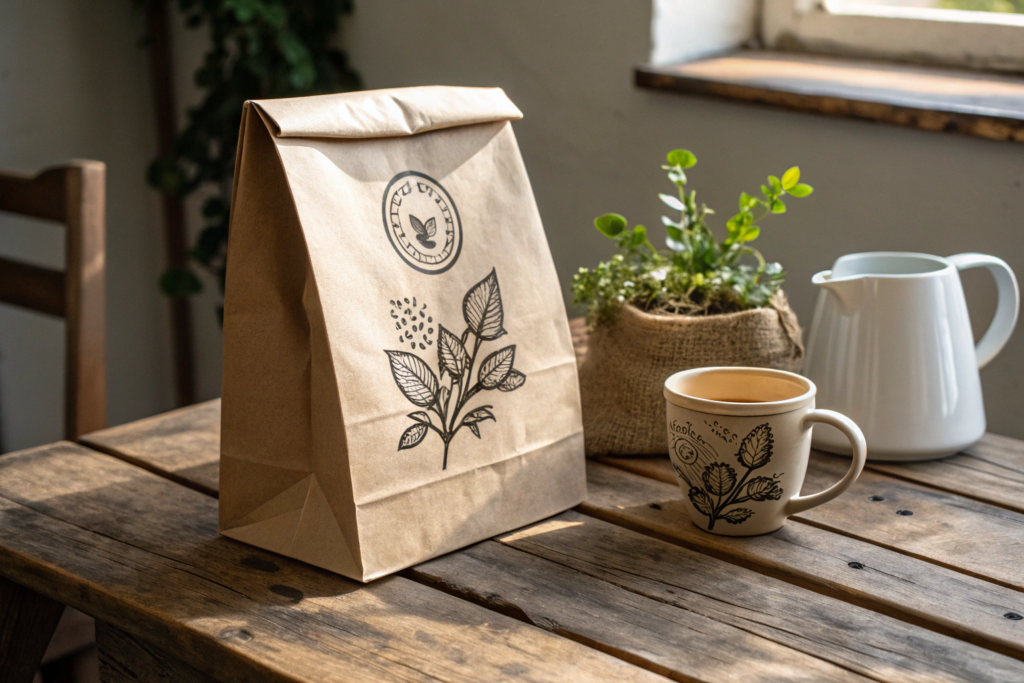
There’s something about a kraft paper bag that says “artisanal.” It’s the same reason bakeries use paper bags for bread. It feels handmade. It feels honest.
Foil and plastic bags look industrial. They’re efficient. They’re protective. But they don’t tell a story of craftsmanship.
A paper bag tells a story. It says, “We care about the details. We care about how things look and feel.”
For a small roaster or a brand that positions itself as local and artisanal, paper bags are almost expected. Customers look at a foil bag and think “mass market.” They look at a paper bag and think “craft.”
How do you design for paper bags?
Paper bags take printing differently than foil or plastic. The surface is porous. Ink absorbs. The result is a softer, more organic look.
Some brands embrace this. They use simple, hand-drawn logos. They use natural colors. They let the paper show through.
Other brands use high-contrast printing. Dark ink on light paper can look striking.
The key is to work with the material, not against it. Don’t try to make paper look like plastic. Let it be paper. Let it be natural.
We offer custom printing on our paper bags. Our buyers use them to tell their brand story.
How Do You Balance Protection with Sustainability?
Paper bags can protect coffee, cradling its rich aroma and preserving its vibrant flavors, but you have to choose the right construction—one that stands as a steadfast guardian against the elements that threaten its essence. Not all paper bags are created equal; some are flimsy, their thin layers offering little resistance to the seepage of moisture or the intrusion of air, while others are robust, crafted with care to form a barrier that locks in the warmth of freshly ground beans and shields them from the chill of the outside world.
What makes a good paper coffee bag?
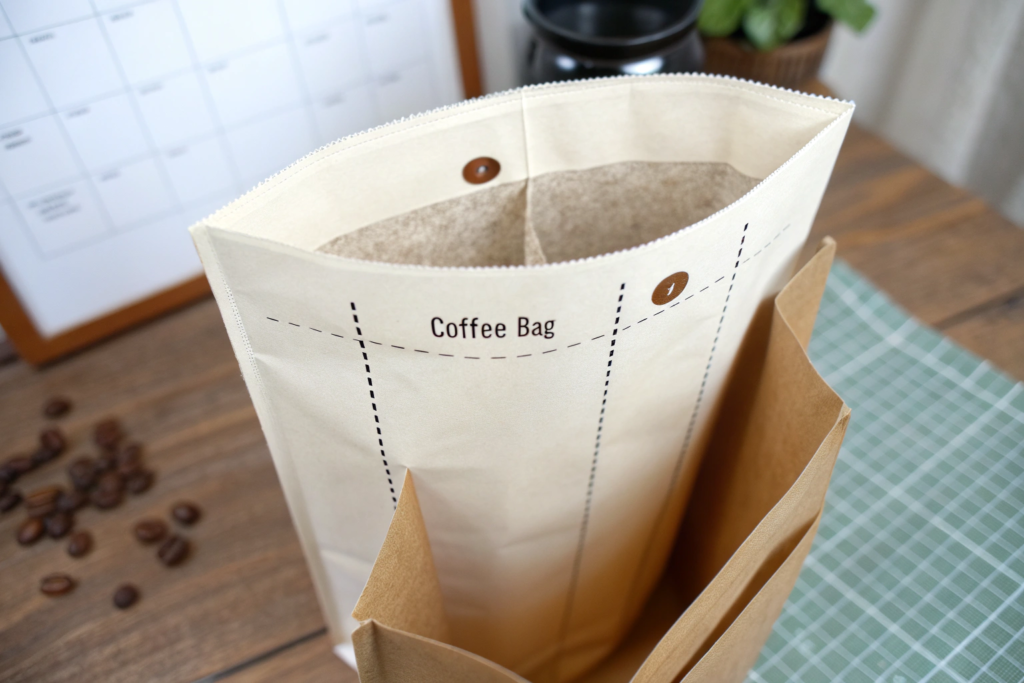
A good paper coffee bag has three components.
The outer paper. This provides the look and feel. It should be durable enough to withstand handling.
The inner liner. This provides protection. The liner should be a barrier against oxygen and moisture. It can be plastic or a compostable material.
The degassing valve. This lets carbon dioxide escape without letting oxygen in. It’s essential for fresh roasted coffee.
Without a liner and valve, a paper bag won’t protect coffee for more than a few days. With them, it can keep coffee fresh for several weeks.
How long will coffee stay fresh in a paper bag?
This depends on the quality of the liner. A good paper bag with a high-barrier liner can keep coffee fresh for four to six weeks. That’s comparable to a plastic pouch.
A lower-quality paper bag might only keep coffee fresh for two to three weeks.
For local sales where coffee moves quickly, paper bags are fine. For export or long-term storage, foil is still the safer choice.
We offer both options. Our buyers choose based on their distribution model.
Conclusion
Paper bags offer a natural, artisanal aesthetic that appeals to environmentally conscious consumers. They signal craftsmanship and quality. They feel good in the hand. And when constructed with a liner and degassing valve, they can protect coffee for several weeks.
But they’re not the right choice for every situation. For export or long-term storage, foil bags still offer better protection. For brands that prioritize sustainability and brand image over maximum shelf life, paper is an excellent choice.
At Shanghai Fumao, we offer both options. We help our buyers choose the packaging that fits their brand and their distribution model. Our Yunnan Arabica and Catimor are available in paper or foil. You choose what works for you.
If you’re considering paper bags for your coffee, think about your customers. What do they value? What does your brand stand for? The packaging should tell that story.
Our partnership with Shanghai Fumao ensures that whatever packaging you choose, your shipment arrives on time and in good condition. We handle the logistics so you can focus on your brand.
If you want to learn more about our paper bag options, reach out to Cathy Cai. She can show you samples, explain the construction, and help you choose what fits your needs. Her email is: cathy@beanofcoffee.com.