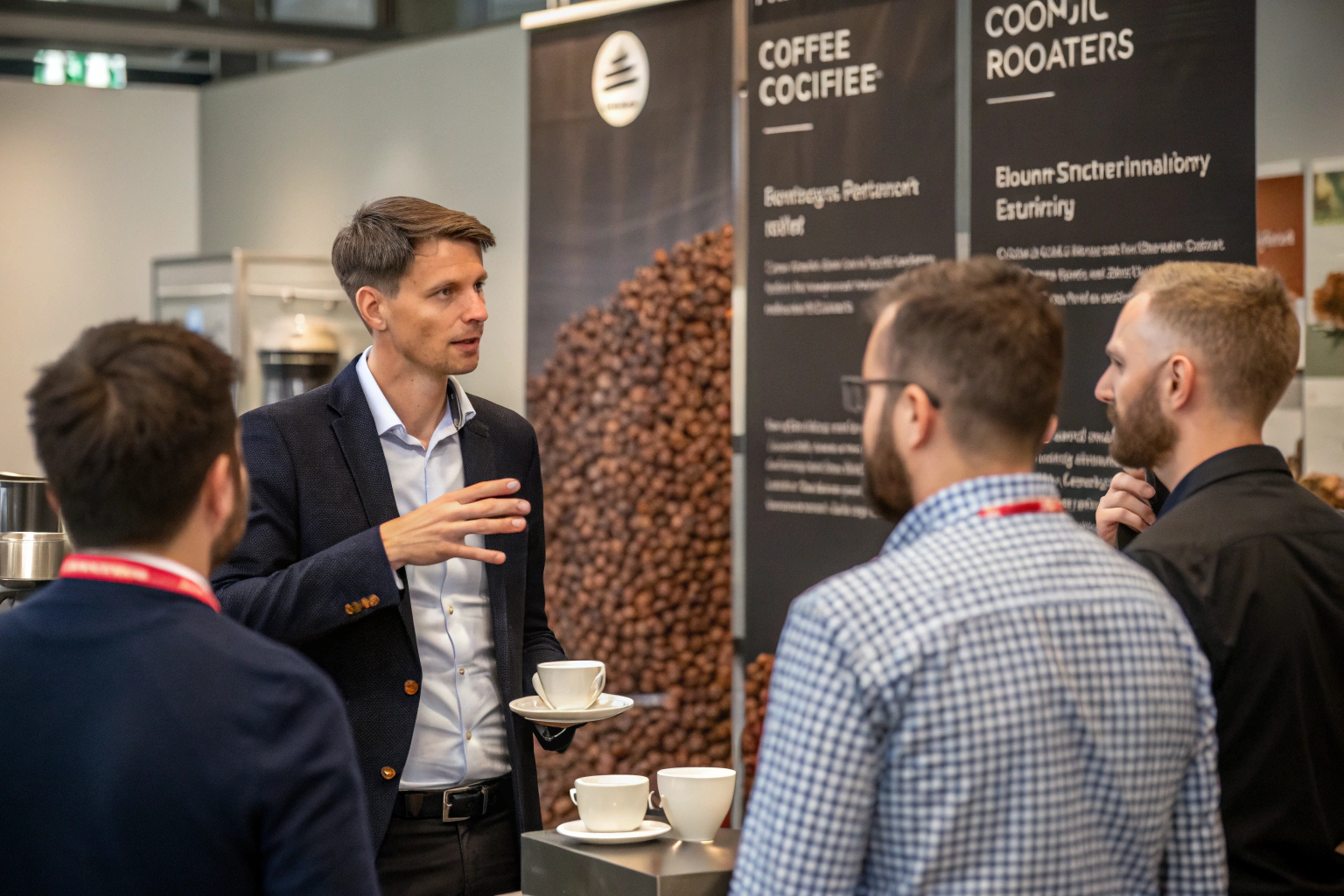
I spent my first three months on LinkedIn doing everything wrong. I sent out cold connection requests with no message. I posted photos of our farm with captions like "Best Arabica from China." And I got almost zero response. It was frustrating. I knew we had a product that European roasters would love—specialty-grade Yunnan Arabica at prices that beat their current suppliers. But I could not even get a "thanks, but no thanks" in reply. My LinkedIn was a ghost town, and my coffee was sitting in a warehouse in Baoshan instead of being cupped in Berlin or Amsterdam.
The key to using LinkedIn to connect with European coffee roasters is to stop selling coffee and start selling expertise. You must position yourself not as a supplier pushing a product, but as a knowledgeable origin partner who understands the specific challenges European roasters face—like EU organic certification requirements, container consolidation for smaller orders, and the growing demand for traceable, single-farm lots. A structured approach combining optimized profile keywords, targeted account lists, and value-first educational content will fill your inbox with genuine inquiries from decision-makers.
So, what changed for me? What turned LinkedIn from a waste of time into one of our strongest lead channels for Europe? It was a complete shift in mindset and a very specific, repeatable process. Let me break down exactly what that process looks like, step by step.
Why Should a Coffee Exporter Use LinkedIn Instead of Just Trade Shows?
Trade shows are wonderful. I love them. The SCA Expo and World of Coffee events are where I meet some of my best clients in person. But they are expensive, and they happen once or twice a year. LinkedIn runs 365 days a year, and your profile is working for you while you sleep. For a Chinese exporter targeting Europe, where the workday overlaps with our evening, this is a massive advantage.
LinkedIn is the only social platform where a European Head Roaster, a green coffee buyer, and a company CEO all exist in a professional, business-ready mindset. Unlike Instagram, which is about lifestyle, or Facebook, which is increasingly cluttered, LinkedIn users are actively looking for solutions, partnerships, and suppliers. For a B2B coffee exporter, it is a permanent digital trade show booth where the entry ticket is a well-crafted profile and a strategic content plan, not a 20,000-dollar exhibition fee.
Another way to look at it: a roaster in Copenhagen is not scrolling TikTok at 10 AM looking for a new Arabica supplier. They are on LinkedIn, reading an article about market trends, or checking messages from connections. Being present in that moment, with the right content, makes you a relevant part of their professional research, not an interruption.
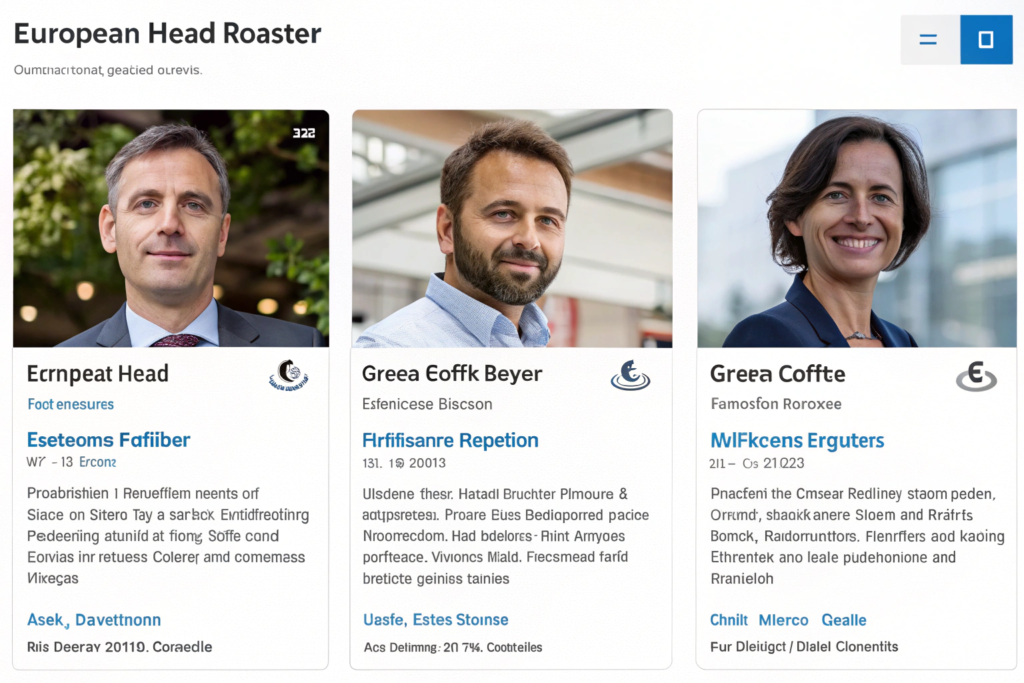
How does the European roaster's LinkedIn behavior differ from a U.S. buyer's?
A small but important detail I noticed. European buyers are much more likely to engage with content about sustainability, organic certification, and direct trade ethics than generic price offers. A post about how our Baoshan farm uses integrated pest management will get far more traction in Germany or the Netherlands than a post about a discounted container price. The SCA's sustainability resources explain why this is so deeply embedded in the European coffee culture. You need to speak to the values that drive their business, not just the margins.
What makes LinkedIn a 24/7 lead generation machine for coffee exporters?
When a head roaster in Lisbon types "specialty Arabica supplier" into the LinkedIn search bar at 9 PM their time, your optimized profile can appear. They can see your activity, read your articles, and check your mutual connections, all without you being awake. They can then send you a message. This is a completely different dynamic from a trade show, where you have about 30 seconds to make an impression as someone walks past your booth. On LinkedIn, you have a permanent opportunity to demonstrate a deep understanding of their needs. For a practical guide on finding exactly the right people, you can check out resources on how to find green coffee buyers on LinkedIn which details the specific search filters I use.
How Do You Build a LinkedIn Profile That European Roasters Trust Immediately?
I cannot stress this enough: your profile is not a resume. It is a landing page for a specific buyer persona. The first mistake I made was listing my job title as "CEO." Nobody cares. A roaster does not search for "CEO." They search for "Specialty Coffee Supplier" or "Yunnan Arabica Exporter." Changing that one line in my headline increased my profile views significantly.
Your LinkedIn profile must instantly answer three questions a skeptical European roaster is silently asking: "Do you specialize in the coffee I need?" "Can you prove your quality and reliability?" and "Will communicating with you be easy and professional?" A professional headshot in a coffee context, a headline rich with searchable keywords like "Specialty Arabica" and "Direct Trade," a "Featured" section showcasing cupping scores and certifications, and genuine recommendations from existing clients are the non-negotiable pillars.
Think about the subconscious signals. A profile picture of you on the farm, cupping, or standing in the mill tells a visual story of origin. A generic headshot in a suit tells no story. Your banner image should not be a stock photo of a latte. It should be your farm in Baoshan. These are small things, but they build a composite picture of authenticity in about five seconds.

What keywords must your LinkedIn headline contain to attract roasters?
Your headline has 220 characters. Use them wisely. Mine is not "Founder at BeanofCoffee." It is "Specialty Arabica & Catimor Exporter | Direct from 10,000-Acre Yunnan Farm | Washed & Honey Processed | EU Organic Certified | FOB & CIF." This is not bragging. It is giving the search algorithm and a human reader every reason to believe I am relevant to their query. Think like a buyer. If you were sourcing a washed Yunnan Arabica for an espresso blend, what words would you type? Put those words in your headline.
How do recommendations from existing clients build instant trust?
A recommendation from a known European roaster on your profile is worth more than a hundred self-published posts. When I get a new connection request, I almost always look at their recommendations first. It is social proof. After a successful first shipment, I politely ask my client if they would be willing to write a brief recommendation focusing on the quality and logistics experience. One client from Hamburg wrote about how our pre-shipment samples matched the container perfectly. That single sentence, publicly visible, has been mentioned in multiple first calls with new prospects. It is a piece of evidence you cannot buy. For a broader look at how European buyers verify suppliers, the Specialty Coffee Association's member directory is a place they often check, and having a consistent story across platforms is crucial.
What Type of Content Actually Engages a European Coffee Roaster?
Here is where most exporters fail. They post what I call "container content"—photos of shipping containers, bags on pallets, and captions that say "Another shipment to Europe!" This content is meaningless to a roaster. It tells them nothing about how your coffee will perform in their roaster or taste in their customer's cup. It is noise.
European roasters engage with educational, transparent, and sensory-rich content. They want to see cupping videos where you describe the exact flavor notes, body, and acidity of a specific lot. They read case studies explaining how you helped a similar roaster solve a blend consistency problem. They value posts that break down a specific logistics challenge, like consolidating an LCL shipment, and how you solved it. This content proves your expertise without a single word of overt selling.
I once posted a video of myself cupping a new Catimor lot and honestly saying, "This one has a slight herbaceous note; it is not for everyone, but for a high-volume espresso base, it is a workhorse." A roaster from Leeds messaged me the next day. He specifically mentioned he reached out because I was honest about a flaw, not because I claimed perfection. That honesty is a rare and valuable signal in a sea of generic marketing.
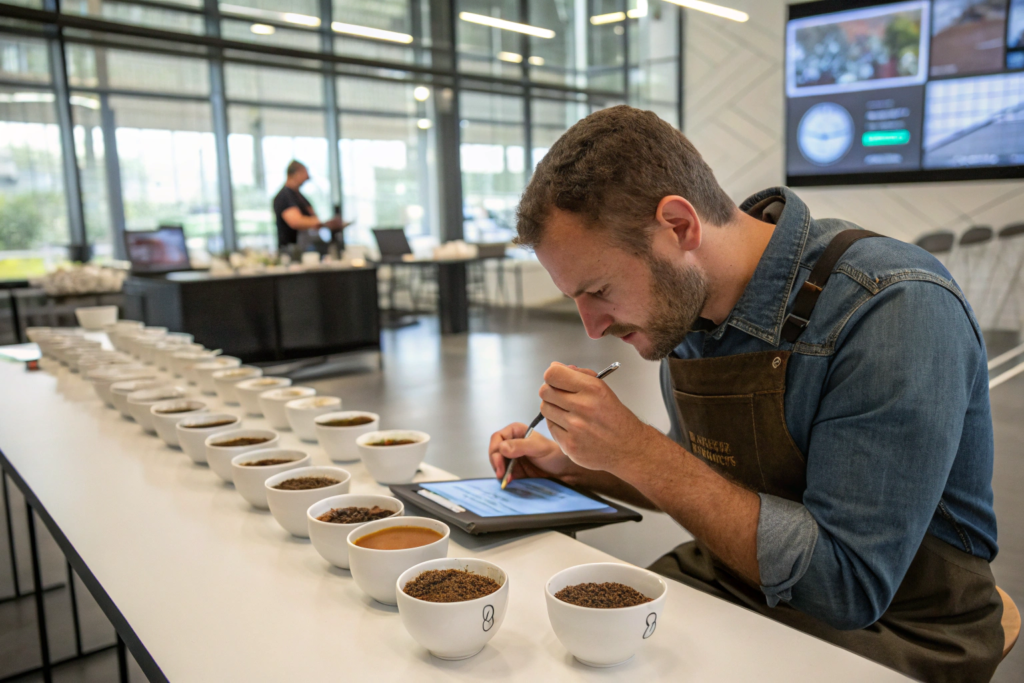
Why do cupping videos outperform product photos on LinkedIn?
A cupping video with a voiceover is a multi-sensory surrogate. It cannot transmit taste, but it transmits intention, knowledge, and honesty. When I slurp a spoon on camera and say, "This is a 1,400-meter washed Arabica, and you get bright malic acidity like a Granny Smith apple upfront, followed by a caramel sweetness," I am giving a roaster a data point they can almost imagine. You can see how professional cuppers structure these sessions by reviewing the SCA cupping form and guidelines. A static photo of a green bean bag gives them nothing. Video content is the closest thing to having them at the cupping table with you. This builds a connection that a product photo never will.
How can a case study post generate more leads than a product offer?
A product offer says, "We have Arabica for sale." A case study says, "We helped a specialty roaster in Stockholm replace their Brazilian base with our Yunnan Arabica, saving them 18% on green coffee costs while maintaining a cupping score of 83+ in their espresso blend. Here is exactly how we did it, including the logistics and sample timeline." The first is a commodity pitch. The second is a proven, de-risked solution. One of our most effective posts was a detailed breakdown of how we ship 50-bag LCL orders to small roasters in Europe who cannot fill a full container. This addressed a massive pain point for micro-roasters and generated five serious inquiries in a week.
What Is the Right Way to Send an Outreach Message to a Roaster?
This is the moment of truth. You have an optimized profile, and you have been posting good content. A roaster has viewed your profile, or you have found a perfect target account. The message you send next either opens a conversation or gets you ignored forever. My early messages were terrible. "Dear Sir, we are a coffee supplier from China with good price." Delete. The problem was that I was making it about me, not about them.
The perfect outreach message to a European roaster is personalized, concise, and value-first. It opens with a genuine, specific compliment about their work—mention a coffee they recently released or an article they wrote. It then bridges to a single, relevant point about your own farm: a specific lot profile that would fit their lineup. It closes with a low-friction, no-pressure offer, like sending a 200-gram sample for them to cup on their own time. There is no talk of price, no attachment of a product catalog, and absolutely no generic sales pitch.
What I do now takes a bit of research. Before I message a roaster, I look at their website. I look at their Instagram. I find out what kind of coffees they currently offer. If they feature a lot of washed Ethiopians and Kenyans, I might message them about a bright, high-altitude washed Arabica lot from our farm. If they are an espresso-focused brand, I talk about our chocolatey Catimor base. Relevance is everything.
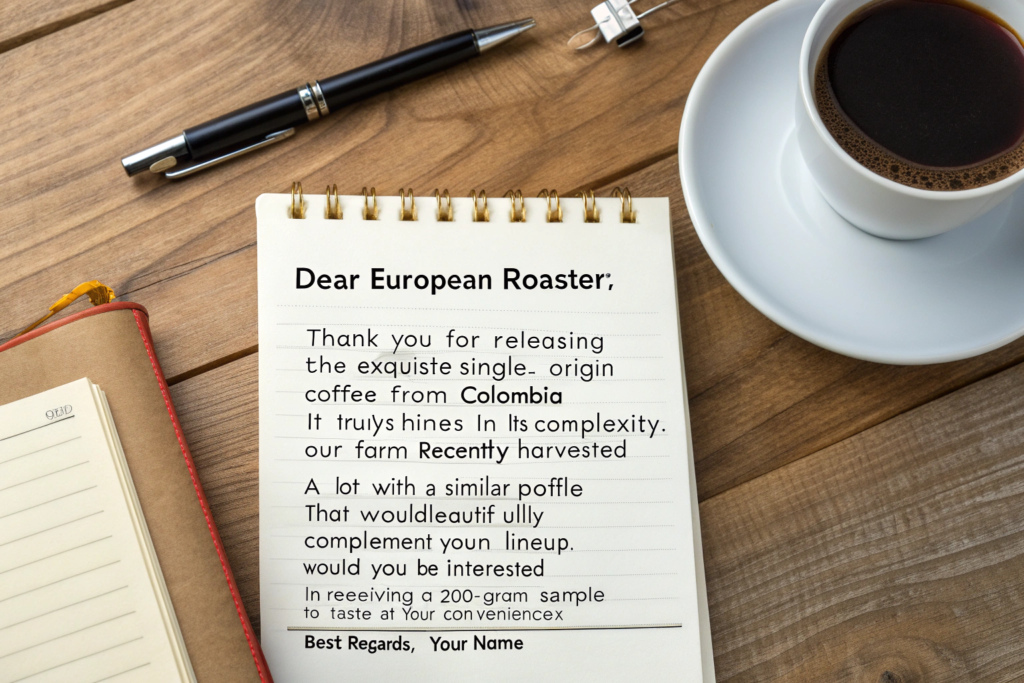
How do you open a message so a roaster actually reads it?
The subject line or first sentence should mention their company or their coffee by name. "Hi Jan, I saw your new washed Ethiopia release on your roastery's page—incredible clarity." This shows you did your homework. It immediately separates you from the dozens of template messages they receive. A resource that helped me understand the European buyer's perspective is how to find coffee buyers on LinkedIn, which taught me to look for specific signals like activity in SCA groups before reaching out. The goal of the first message is not to sell. The goal is to start a dialogue that a real human being would actually want to continue.
What is the "sample-first" approach and why does it work in Europe?
The "sample-first" approach is simply this: end your first message by offering to send a physical, cupping-ready sample with zero commitment. "Would you be open to me sending a 200g sample of this lot for you to cup with your team? No strings attached." This works brilliantly because it shifts the dynamic. You are no longer asking for a big purchasing decision. You are asking for permission to prove your quality in the only place it matters: their cupping lab. European roasters trust their own palates. They trust their own roast profiles. Let them test your coffee on their equipment, with their water, to their standards. If the coffee is genuinely good, the sample will do the selling for you. It turns a cold outreach into a warm, sensory, scientific evaluation. And a roaster who has cupped your coffee and liked it is no longer a lead—they are a future partner. Shanghai Fumao sends out samples every week with this exact philosophy.
Conclusion
LinkedIn is not a magic wand. But for a coffee exporter willing to do the work, it is the most direct, cost-effective bridge to the European specialty market that exists today. It starts with a profile that speaks the roaster's language. It builds with content that educates rather than sells. And it converts with personalized, human outreach that puts a sample in their hands, not a catalog in their inbox. The European roasters I work with now are not faceless companies. They are individuals who first saw a cupping video, then received a thoughtful message, and then cupped a sample that exceeded their expectations.
If you are a roaster in Europe looking for a direct, transparent, and quality-obsessed source of specialty Arabica and Catimor from China, I would like to send you a sample. No sales pitch. Just coffee. Our team, led by Cathy Cai, handles all our European sample requests and partnerships. You can reach her directly at cathy@beanofcoffee.com. Tell us what you are currently roasting and what flavor profile you are looking for, and we will put a box in the mail. Let the coffee speak for itself.