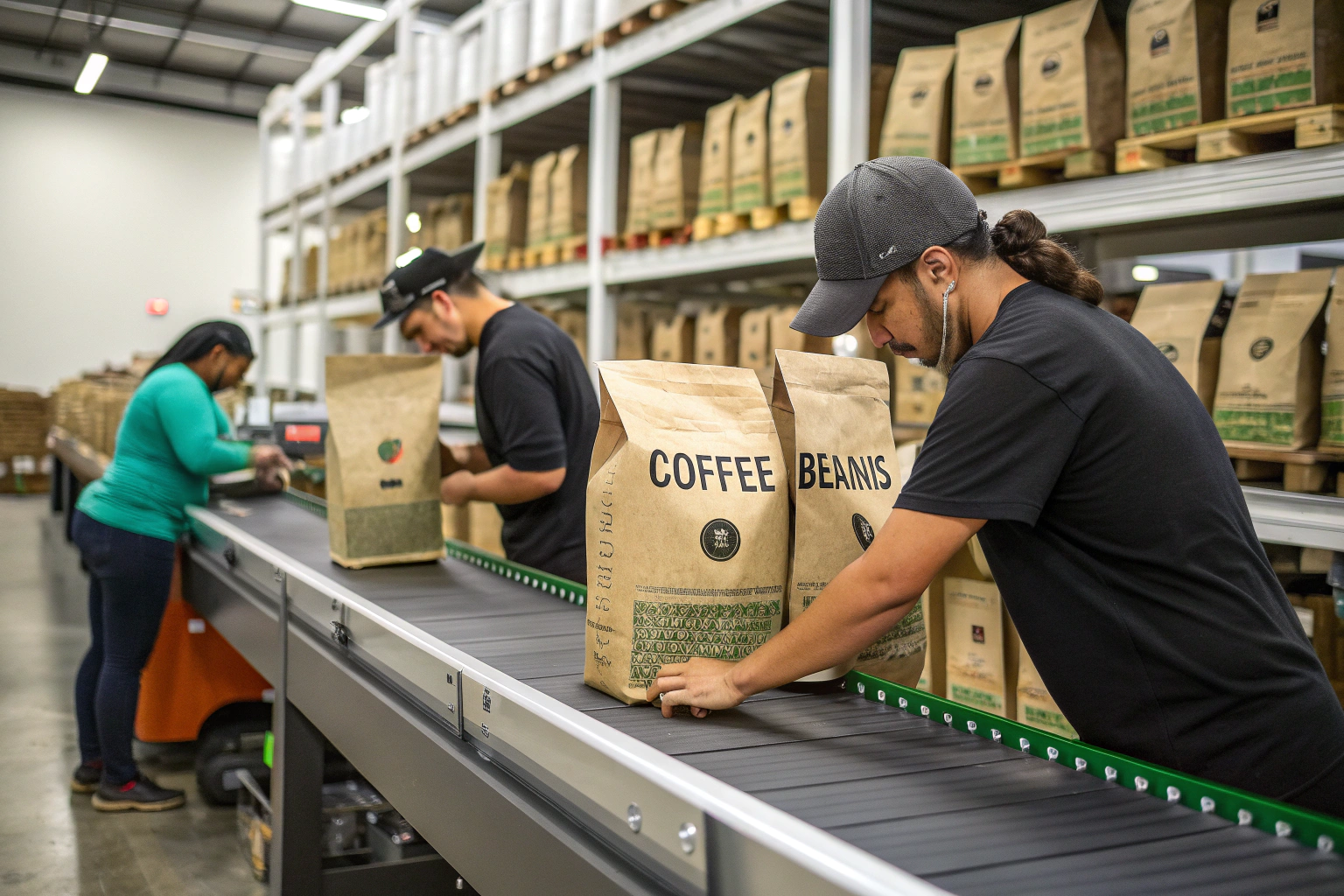
I lost a 20,000-dollar contract once. The buyer, a small chain owner from Sydney, loved our washed Arabica. The sample cupping went perfectly. We agreed on price and shipping terms. Then, at the very last moment, he asked if we could put his brand's logo on the bags instead of ours. I hesitated. I said we didn't really do that for orders under a full container. He thanked me for my time and gave the business to a supplier in Vietnam who said yes. Just like that. The coffee was the same. The price was the same. But the willingness to put his brand on the bag was worth more than everything else.
Offering custom labeling in B2B coffee sales is not just a value-added service; it is a fundamental pivot from being a commodity supplier to becoming a silent growth partner. It transforms your green beans into a turnkey, shelf-ready product that allows your client—whether a roaster, a distributor, or a private label brand—to save on repacking labor, speed up their time-to-market, and build their own brand equity without ever having to mention the origin of the supply chain. This capability is the single most effective tool for moving from transactional one-off deals to multi-year, deeply integrated contracts.
So, what does this actually solve for the buyer? And why did that Sydney deal teach me a lesson that has since earned us back ten times that lost contract? It comes down to the hidden costs and brand logic that a supplier either understands or completely misses.
How Does Custom Labeling Solve a Buyer's Hidden Repacking Cost and Labor Problem?
You know, when I first started exporting, I thought my job was done when the coffee left our mill. Clean beans. GrainPro bags. Jute sacks. Ship it. But from the buyer's side, that's only half the journey. The coffee arrives at their warehouse or a 3PL facility. Someone has to unload it. Then someone else has to open those bags, scoop the beans, put them into a branded package, seal it, label it, and store it. That's a second, completely silent supply chain happening right in their backyard, and it's eating their margins alive.
Custom labeling directly removes an entire secondary labor line from a buyer's cost of goods. When we ship pre-labeled, branded bags directly from our facility in China, the coffee arrives at the buyer's distribution center ready to be placed on a shelf or delivered to a café. This cuts out the need for local co-packing contracts, eliminates re-bagging labor costs, and slashes the risk of contamination or weight inconsistency that happens when handling is doubled. The cost savings on labor alone, especially in markets like North America and Australia, can often offset the entire shipping cost.
Another way to look at this is through the lens of speed. A buyer who receives a pallet of their own branded coffee can turn it into cash within 48 hours. A buyer who receives a pallet of generic sacks has to schedule a co-packer, wait in line, and absorb another week or two of processing time before the product can even be listed on their website. Time is a currency, and custom labeling is how we help our clients earn more of it.
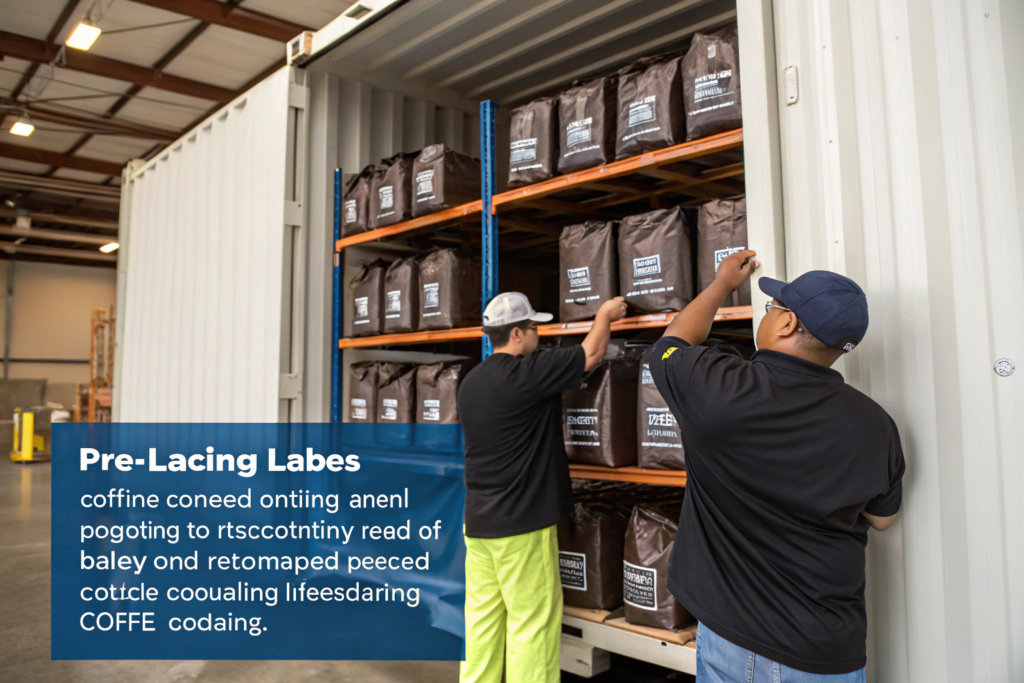
What are the true costs of local co-packing in the U.S. for imported green coffee?
A roaster in Portland once broke this down for me. He was paying a local co-packer 0.45 cents per pound just to transfer beans from our jute sacks into his branded 2lb and 5lb bags. That does not sound like much until you realize that on a 40,000-pound container, he was spending an extra $18,000 just to get his own name on the bag. Add the cost of the new bag itself, the labeling, and the inevitable product loss from spillage during scooping, and he figured the total "repacking tax" was pushing $25,000 per container. When we offered to do all this at origin for a fraction of the price, his CFO called it a "no-brainer." For more on this, the Specialty Coffee Association's market research often highlights how value-added services at origin are reshaping roasting economics. A resource like Perfect Daily Grind also covers the logistics side of private label coffee extensively.
How does origin-level labeling improve inventory speed-to-market?
Imagine two identical containers arriving at the Port of Los Angeles on the same day. Container A has 300 jute sacks marked with our farm code and lot number. Container B has 600 beautifully printed, shelf-ready boxes of "Portland Peak Roast," each with a barcode, roast date, and tasting notes, all applied at our Baoshan facility. Container A heads to a warehouse, sits for ten days, gets repacked, and finally hits the shelves. Container B is fork-lifted directly onto trucks and delivered to 40 cafés the very next morning. That is the power of speed. It ties up less capital for less time and starts generating revenue almost immediately. This is not just a convenience; it's a competitive advantage.
Can White-Label Coffee Bags Strengthen a Buyer's Brand Equity in a Saturated Market?
I was on a video call with a client in London a while back, and he held up two bags of coffee. One was from a famous, massively marketed brand. The other was his own. He said, "My coffee is better. I know it is. But on the shelf, next to the giants, it looks like a generic store brand." That visual comparison stuck with me. For a small or mid-sized roaster, competing on shelf presence is a war they often lose before a single bean is brewed.
White-label or custom-branded bags transform a small roaster from a faceless commodity seller into a legitimate, shelf-dominant brand. By receiving coffee that arrives in finished, high-gloss, expertly designed retail packaging, the roaster can focus their entire energy and budget on storytelling, marketing, and customer experience—not on competing with the packaging budgets of billion-dollar multinationals. We are effectively lending them the production and design scale of a 10,000-acre farm to stand next to global brands and look like they belong there.
I have noticed that consumers are incredibly visual. A bag with a matte finish, a clever illustration, and a clear origin story on the back creates an instant perception of quality and craft. It signals that this is a premium product worth a premium price. Our job as the supply chain partner is to make sure that when a customer picks up our client's bag in a shop in Melbourne or New York, the tactile and visual experience matches the quality inside. If the coffee is an 86-point specialty lot but comes in a plain brown bag with a sticker, the perceived value is instantly halved. The SCA's consumer research reports frequently discuss this link between packaging and perceived value in the specialty segment. For a deep dive into design trends, Packaging of the World showcases exactly the kind of high-end coffee bag designs that win on retail shelves.
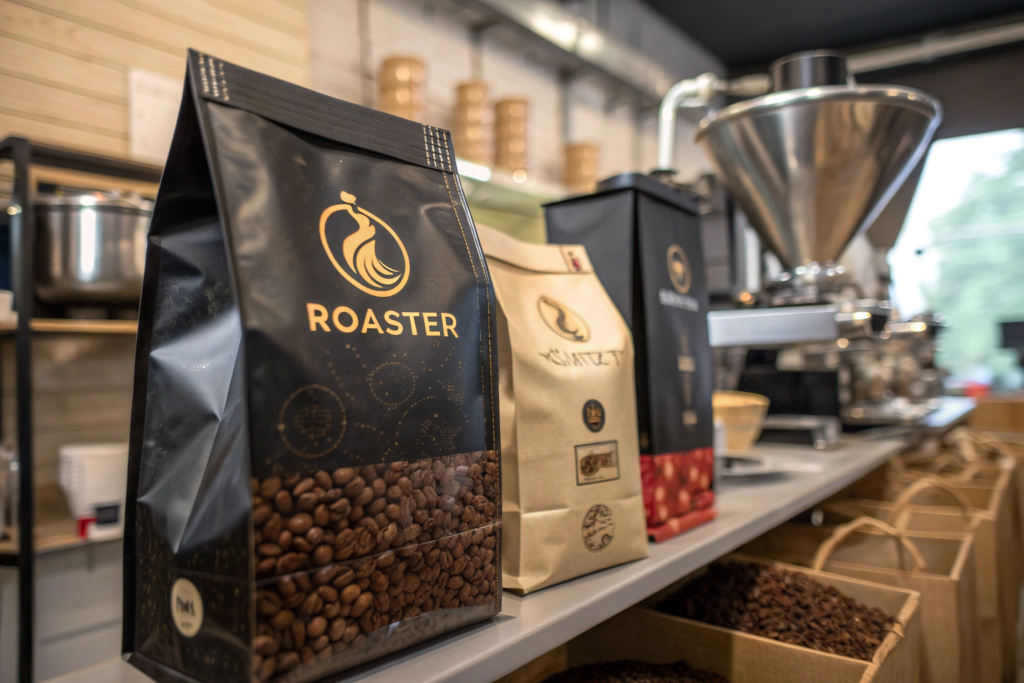
How does consistent private label supply build long-term consumer loyalty?
Loyalty is built on consistency. A customer buys a bag of "Oslo Morning Blend" and loves it. They go back next month, and the bag looks exactly the same, tastes exactly the same, and delivers the same experience. If our client had to switch co-packers, or the bag material changed because of a local supply issue, that loyalty wobbles. Because we control the supply chain from the farm to the final printed bag, we can guarantee that the packaging material, the label placement, and the seal integrity are identical order after order, year after year. That unglamorous consistency is what turns a one-time buyer into a subscriber. They are not buying coffee; they are buying certainty in a familiar package.
Why does package design matter as much as bean quality for café owners?
A café owner in Toronto once told me something brilliant. He said, "I don't just sell coffee. I sell a 30-second mental escape while someone stares at the bag on their counter." For his retail bags, the design was part of the flavor experience. If the bag was beautiful, it stayed out on the counter, getting free advertising every single morning. If it was ugly, it went straight into an airtight container, and his brand disappeared. Shanghai Fumao collaborates with our clients' designers to make sure the print quality, the bag texture, and the tin-tie or zipper closure all match the high-end sensory experience of the coffee. This is not just about looking pretty; it is a direct driver of repeat business.
What Are the Minimum Order Requirements for Custom Coffee Labeling from China?
This is always the first practical question a buyer asks me, and there is a lot of confusing information out there. The traditional answer from big factories has always been, "One full container, and you must take all one SKU." That old model locks out 80% of the specialty roasters who are the perfect fit for custom labeling. They do not need 40,000 pounds of a single-origin in one bag size. They need flexibility, and that is where a supplier who actually understands the modern market can show their true value.
The minimum order for custom labeling with a flexible, buyer-focused Yunnan supplier can be as low as 500 to 1,000 bags per SKU, depending on the bag type and label complexity. While full-container orders offer the best per-unit economy, we work with roasters to mix multiple coffee lots and multiple bag sizes (like 12oz, 2lb, and 5lb) within a single consolidated container. The key is finding a supplier who owns their own mill and can manage complex packing runs, not a massive, rigid factory that only wants to run a single line for a week straight.
Honestly, the flexibility is what makes this work for smaller chains. We might pack 200 boxes of a washed single-origin in a 12oz matte white bag, and 150 boxes of an espresso blend in a 2lb black kraft bag, all on the same production run. The setup time between labels is a cost we absorb because we value the long-term partnership. A buyer should look for a supplier who asks about their SKU mix first, not one who starts by reciting a minimum tonnage.
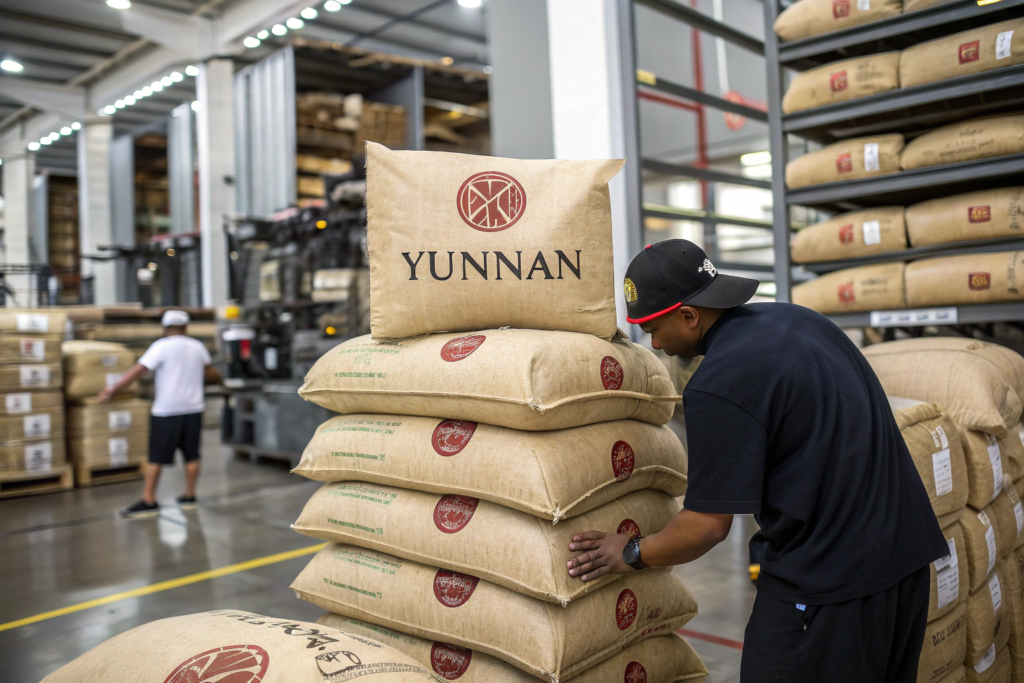
How can small roasters meet MOQs without overstocking on one SKU?
This is where a bit of creative planning comes in. If a roaster has three core blends but does not have the volume to take 500 bags of each, we suggest packaging two of them in the same neutral bag with a shared base design, and then using a small, high-quality sticker or a different colored valve for differentiation. It is a hybrid solution that keeps the premium feel but cuts the MOQ risk in half. Another tactic is to plan the packaging run to coincide with a new seasonal release or a holiday blend, so a larger portion of the order has a clear, time-sensitive sales window. We walk our clients through this exact planning process. It is not about pushing volume; it is about making their inventory turn as fast as possible.
What packaging formats are available for small-batch Yunnan coffee exporters?
The options now are so much better than even three years ago. We offer flat-bottom bags, side-gusseted stand-up pouches, and quad-seal block bottom bags. We do tin-ties, zipper closures, and one-way degassing valves as standard. Labels can be digital print for high-complexity, full-color designs, or simple matte stickers for more rustic branding. The Specialty Coffee Association's podcast has some excellent episodes where packaging experts discuss the pros and cons of different materials. Also, you can see the exact bag styles and labeling options we offer on our dedicated product page for custom coffee bag labeling, which shows real examples from client runs. The takeaway is this: if a supplier tells you that you can only get a glossy pouch with a sticker, they are limited by their own supply chain, not by the market's capabilities.
Conclusion
Offering custom labeling is not simply a factory service. It is a strategic choice that separates a transactional green bean seller from a long-term, embedded brand partner. It eliminates the silent margin-killer of local repacking, it arms small and medium roasters with the shelf presence to compete with global giants, and it builds the kind of visual and tactile consistency that creates lifelong customer loyalty. The supplier who says "yes" to putting your logo on the bag is the supplier who is invested in your brand's success, not just in selling you a container of coffee.
Every single successful brand partnership we have at Shanghai Fumao started with a conversation about the finished bag that would sit on a café shelf, not just the green bean inside a jute sack. If you are a roaster, a chain owner, or a distributor looking to launch or elevate your own branded coffee line without the headache of local co-packing, let us show you how simple the process can be. Contact Cathy Cai at cathy@beanofcoffee.com. Tell her about your brand vision, your volume, and your ideal bag design, and she will send you a full breakdown of options, costs, and timelines. Let us build your brand right here, from our farm to your shelf.