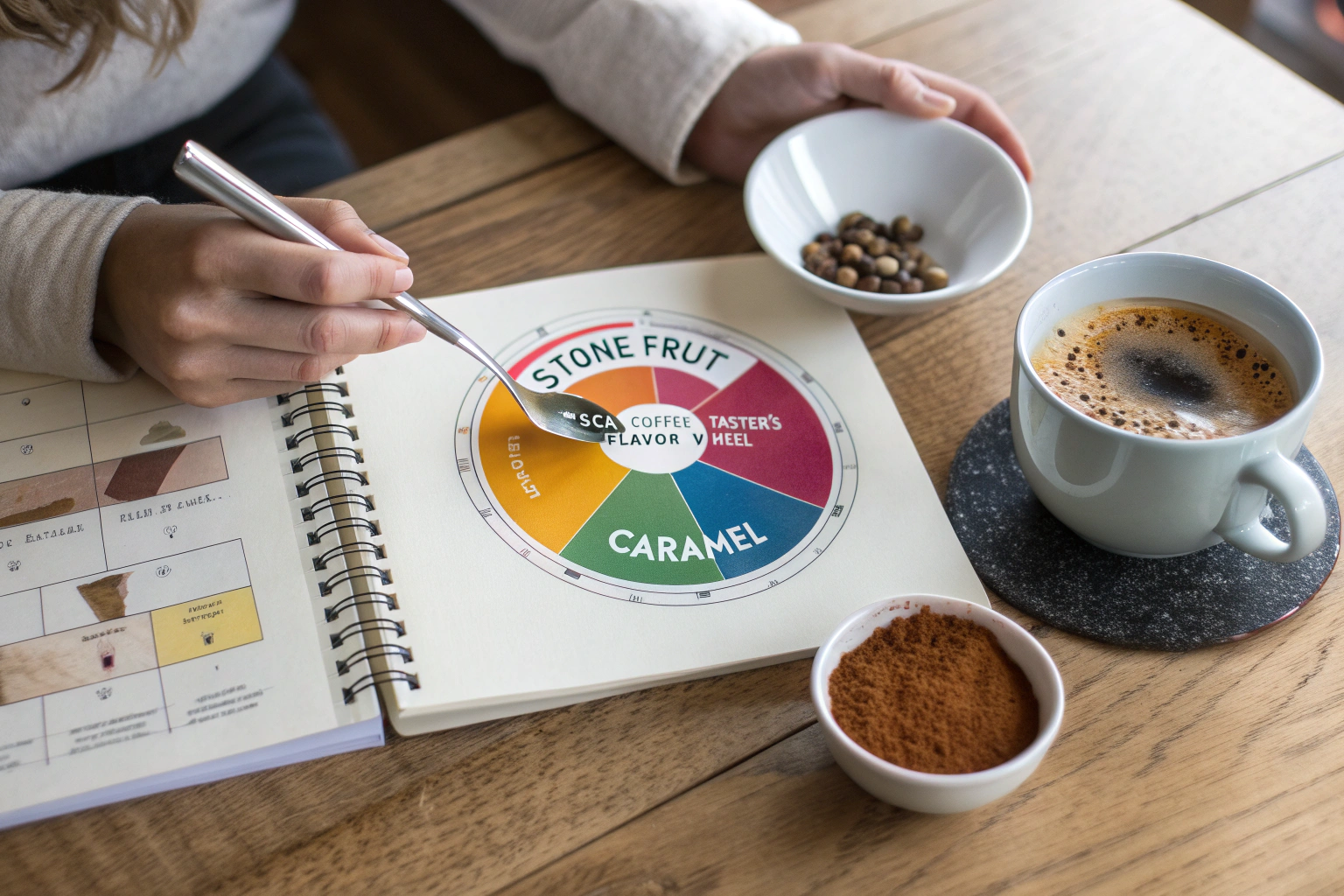
A few years ago, I sat in a cupping lab with a potential buyer from a large European chain. He was polite, but I could tell he was overwhelmed. We had slurped through eight lots of my green coffee, and he kept writing vague words in his notebook. "Fruity," "Good body," "Nice." When I asked him which lot he preferred, he struggled to articulate the differences.
I slid the SCA Flavor Wheel across the table. I asked him to start at the center and work his way outward. "Does this taste like Fruit or Fermented?" I asked. "Fruit," he said. "Is the fruit more like Citrus or Berry?" "Berry," he said. We narrowed it down to "Dried Berry" and finally to "Raisin." His face lit up. He had found the exact word. He ended up buying a container of that Catimor natural. He later told me that the Flavor Wheel not only gave him the vocabulary to buy confidently but also transformed how he sold coffee back home.
The SCA Flavor Wheel is a hierarchical sensory map that helps buyers and sellers move from vague, subjective descriptors to precise, universally understood flavor notes, improving green coffee selection, quality control, and marketing by providing a shared language for taste.
Here is what the wheel actually measures, how to use it practically to taste and market your coffee, and how to apply it specifically to the unique profiles of Chinese Arabica.
What Is the SCA Flavor Wheel and How Is It Structured?
The SCA Flavor Wheel is not just a pretty poster for the cupping lab wall. It is a rigorously researched lexicon of 110 unique flavor, aroma, and texture attributes identified by professional tasters and sensory scientists. It was developed in collaboration with World Coffee Research and the Specialty Coffee Association to standardize the way we talk about coffee flavor.
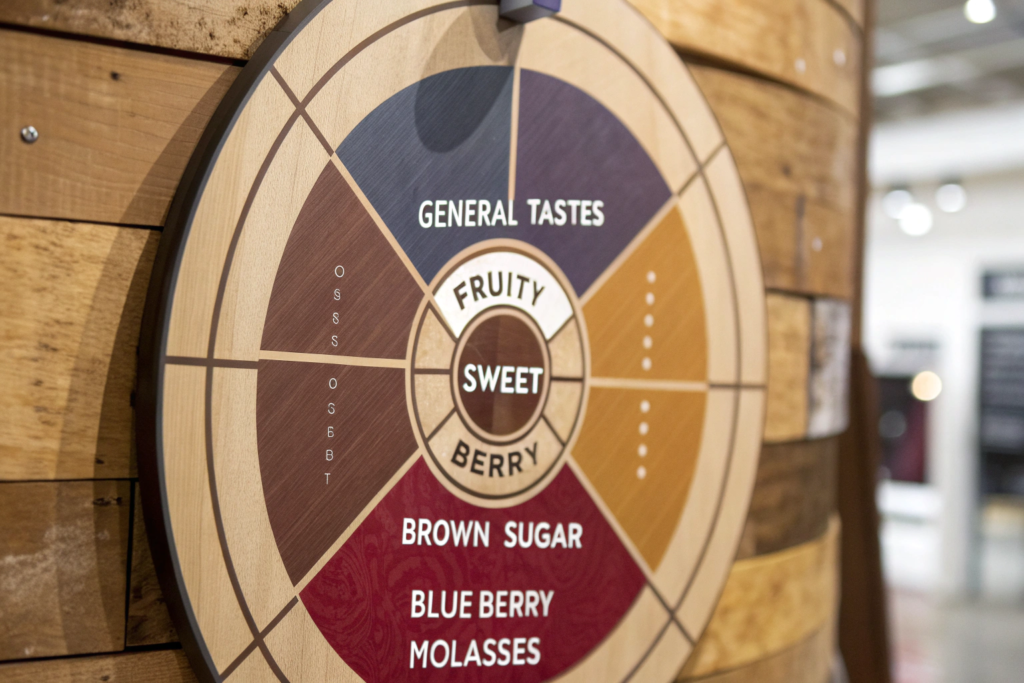
The wheel is built on a hierarchical system. At the very center are nine broad categories: Fruity, Floral, Sweet, Nutty/Cocoa, Spices, Green/Vegetative, Other, Roasted, and Sour/Fermented. These are the general taste sensations that you identify first when you slurp a coffee.
As you move outward from the center, the categories become more specific. "Fruity" breaks down into "Berry," "Dried Fruit," "Citrus Fruit," and "Other Fruit." "Sweet" breaks down into "Brown Sugar," "Vanilla," "Vanillin," "Honey," and "Caramel." These middle-tier descriptors help you narrow down the broad category.
The SCA Flavor Wheel is structured in three concentric rings: the inner ring holds nine broad taste categories, the middle ring holds more specific sub-categories, and the outer ring holds the most precise, recognizable flavor references like "Blackberry," "Maple Syrup," or "Jasmine."
At the outer edge of the wheel are the most specific descriptors—individual, recognizable flavors. "Blueberry" rather than just "Berry." "Maple Syrup" rather than just "Sweet." "Jasmine" rather than just "Floral." These are the terms that communicate exactly what a coffee tastes like. They are the words that sell coffee.
It is important to understand what the wheel does not do. It does not assess the intensity of a flavor. It does not measure quality. It does not tell you if a flavor is good or bad. It simply provides a standardized vocabulary. It also includes a separate section for tactile attributes like body and mouthfeel. For a deep dive into how the wheel was developed, the Specialty Coffee Association and World Coffee Research publish the full sensory lexicon.
How Do You Use the Wheel Practically During a Cupping?
Many buyers make the mistake of starting at the outer ring. They slurp a coffee and immediately think, "What is this? Is it honeysuckle? Lavender? Chamomile?" Their brain freezes. The specific words do not come.
The correct way to use the wheel is to start at the center. Ask the simplest question first: "Is this flavor more Fruity, Nutty, Sweet, or Floral?" Do not overthink it. Go with your first instinct. If the coffee is a washed Yunnan Catimor, your answer will likely be "Nutty/Cocoa."
Once you have the broad category, move one ring outward. If you are in Nutty/Cocoa, is it more "Nutty" or "Cocoa"? If the coffee has that dark, bittersweet richness, you might choose "Dark Chocolate." If you are in Fruity, is it "Citrus," "Berry," or "Stone Fruit"? A bright, acidic washed coffee might point you to "Citrus." A heavy, sweet natural might point you to "Dried Fruit."
Only then move to the outer ring. Under "Citrus," is it "Lemon," "Lime," or "Grapefruit"? Under "Dried Fruit," is it "Raisin," "Prune," or "Dried Fig"? By the time you reach the outer ring, you are choosing between two or three options, not 110.
Always move from the center outward: first identify the broad category, then narrow to the sub-category, and finally select the specific descriptor. This prevents palate freeze and ensures accuracy.
The body and mouthfeel descriptors work the same way. Is the body "Light," "Medium," or "Heavy"? If it is heavy, is it "Syrupy," "Buttery," or "Coating"? A natural processed Catimor with its viscous texture might lead you to "Syrupy."
I always keep a laminated copy of the wheel on my cupping table. When I train new cuppers, I force them to point to the categories on the wheel as they taste. This physical act of moving from center to edge trains the brain to follow the hierarchy.
Why Is a Shared Lexicon Critical for Wholesale Coffee Buying?
In the wholesale coffee trade, language is money. If a buyer asks for a "strong coffee with good acidity," what does that mean? Does "strong" refer to body, roast degree, or flavor intensity? Does "good acidity" mean bright citric acidity or soft malic acidity? The lack of a shared language leads to mismatched expectations and disappointed customers.
The SCA Flavor Wheel solves this by providing objective reference points. If I tell a buyer that my washed Catimor has notes of "Dark Chocolate," "Almond," and "Lemon," they know exactly what to expect. They can imagine the flavor profile. They can decide if it fits their menu. They can communicate it accurately to their own customers.
This shared language is equally critical for quality control. If a buyer cups a pre-shipment sample and finds it has a "Fermented" or "Medicinal" note, they can immediately flag it as off-spec. We can have a data-driven conversation about whether the lot should be replaced, rather than a subjective argument about whether it tastes "good" or "bad."
For exporters and importers, using the wheel builds trust. It signals that you are a professional who evaluates coffee systematically, not someone who just slaps exotic-sounding descriptors on a bag. It ensures that the coffee the buyer receives tastes like the coffee they were promised. In a previous session, we discussed how I use rigorous internal protocols to manage this consistency across production lines.
How to Translate Common Chinese Arabica Notes onto the Wheel?
Chinese Arabica has a distinct flavor fingerprint. While the SCA wheel is universal, the specific regions of the wheel that apply to our coffees are consistent lot after lot. Understanding this mapping helps you make quick, accurate assessments.
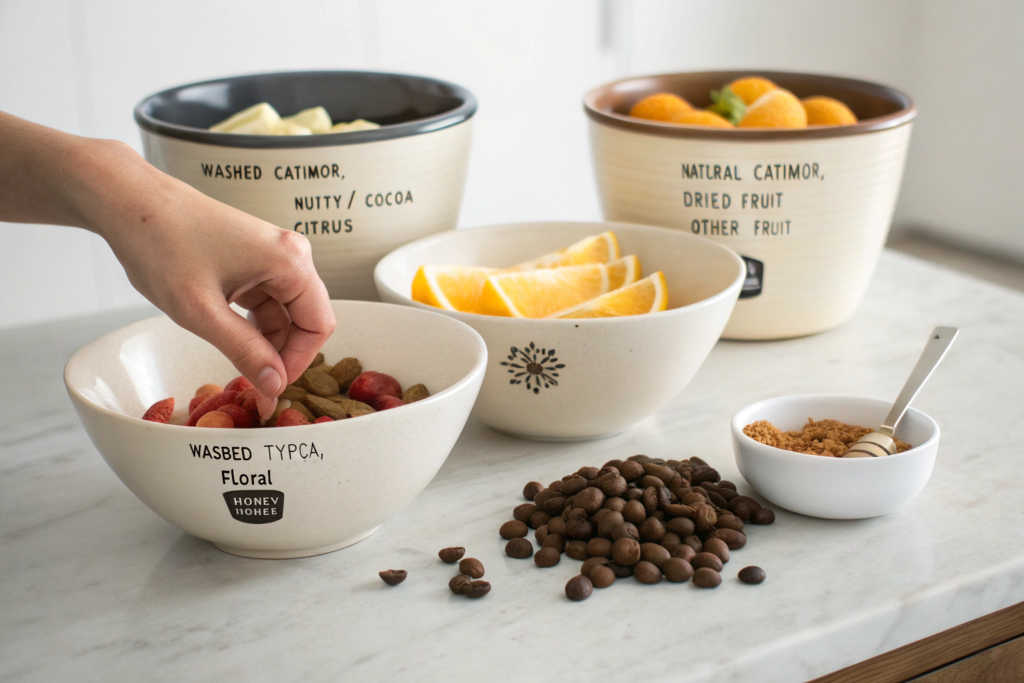
For a high-altitude Washed Catimor from Yunnan, you will almost always find yourself in the "Nutty/Cocoa" inner ring. Moving outward, the dominant notes are "Cocoa" or specifically "Dark Chocolate," paired with "Almond" or "Hazelnut." The sweetness is usually "Caramel" or "Brown Sugar." The acidity is typically "Citrus"—often "Lemon" or "Tangerine." The body is "Medium" to "Heavy."
For a Natural Processed Catimor, the profile shifts dramatically. The inner ring moves to "Fruity." The middle ring is often "Dried Fruit"—look for "Raisin," "Dried Fig," or "Prune." You might also find "Berry" notes like "Strawberry" or "Blueberry." The sweetness is intense "Honey" or "Molasses." The acidity is lower, often "Malic" rather than "Citric." The body is "Heavy" and "Syrupy."
Map your Yunnan lots to the wheel systematically: Washed Catimor maps to Dark Chocolate, Almond, and Lemon; Natural Catimor to Dried Berry, Honey, and Syrupy; Anaerobic lots to intense Tropical Fruit; and washed Typica to Jasmine, Stone Fruit, and Tea-like.
For the rare Washed Typica old-growth lots, the inner ring is "Floral." The specific descriptors are "Jasmine" or "Honeysuckle." The fruit character is "Stone Fruit"—"White Peach" or "Apricot." The sweetness is "Honey." The acidity is "Citric" but soft. The body is "Light" and "Silky" or "Tea-like."
For our Experimental Anaerobic lots, the descriptors push to the extreme edges of the wheel. You might find "Tropical Fruit" like "Mango" or "Passion Fruit." You might find "Fermented" notes, but in a positive, "Winey" context rather than a "Sour" defect. The acidity might be "Lactic." This is where the wheel's ability to distinguish between a defect and a processing style is most valuable.
How Do You Differentiate "Fermented" from "Sour" on the Wheel?
This is one of the most important skills for a specialty coffee buyer, especially in the age of experimental processing. The SCA wheel places "Sour/Fermented" in the same inner ring, but the distinction between the two is the difference between a premium lot and a rejected one.
"Sour" on the wheel refers to unpleasant, defective acidity. The specific descriptors include "Sour," "Acetic Acid," and "Butyric Acid." These are the flavors of over-fermentation and poor processing. A "Sour" coffee tastes sharp, harsh, and vinegary. It is a defect.
"Fermented" on the wheel refers to flavors created by controlled microbial activity. The specific descriptors include "Winey," "Whiskey," and "Fermented." These are the flavors of anaerobic fermentation, carbonic maceration, or natural processing done right. A "Winey" coffee tastes complex, fruity, and boozy in a pleasant way.
The key difference is balance and cleanliness. A "Winey" anaerobic lot still has sweetness, body, and a clean finish. A "Sour" defective lot has harsh acidity, thin body, and an unpleasant, lingering aftertaste. If you taste a Yunnan anaerobic lot and your instinct is to move toward "Fruity" and "Sweet," the fermentation is positive. If you recoil and move toward "Sharp" and "Pungent," it is a defect.
Can the Wheel Describe Texture for Your Wholesale Clients?
The SCA Flavor Wheel is not just about taste and smell. It includes a dedicated section for "Mouthfeel" or body. For espresso blends and cold brew bases, these tactile descriptors are just as important as the flavor notes.
The mouthfeel descriptors start with "Body," which can be "Light," "Medium," or "Heavy." From there, you can specify the texture. A clean, high-altitude washed coffee might have a "Smooth" or "Silky" mouthfeel. A heavy natural or honey process might be "Syrupy," "Buttery," or "Coating."
Unpleasant mouthfeel descriptors also exist on the wheel. "Astringent" and "Dry" are common defects in under-ripe or poorly processed coffee. If a coffee leaves a sandpaper-like sensation on your tongue, you are in the "Astringent" category, and the lot likely has issues.
For wholesale clients who are building espresso blends, these texture words are essential sales tools. Telling a client that a natural Yunnan Catimor adds a "Syrupy" body and a "Buttery" mouthfeel to their espresso blend is far more compelling than just saying it is "heavy."
How to Use the Wheel Data to Write Better Sales Copy?
The SCA Wheel gives you the raw data. Your sales copy translates that data into a story that sells coffee. The transition from "cupping language" to "marketing language" is where many roasters stumble.
A cupping note like "SCA 85, Dark Chocolate, Almond, Lemon, Medium Body" is accurate but dry. It appeals to the wholesale buyer who wants specs. A consumer-facing description like "Rich dark chocolate and toasted almond, with a bright hint of lemon. Smooth, balanced, and endlessly drinkable" sells the same coffee to a retail customer.
The wheel helps you structure this translation. Each ring of the wheel can inform a different layer of your sales copy. The inner ring gives you the overall character: "Rich and Nutty." The middle ring adds detail: "Dark Chocolate and Almond." The outer ring provides the specific, memorable hook: "A bright hint of Lemon zest."
Translate the SCA data into sales copy by using the precise outer ring terms for tasting notes on the front of the bag, using the middle ring terms for the body description, and saving the inner ring categories for the overall "vibe" or style of the coffee on your website.
Avoid the temptation to list every single note on the wheel. A coffee might have hints of five different things, but listing "Dark Chocolate, Almond, Lemon, Caramel, and Brown Sugar" overwhelms the customer. Choose the three most dominant and distinctive notes. The wheel helps you confirm you are picking the right ones, but it does not mean you have to list them all.
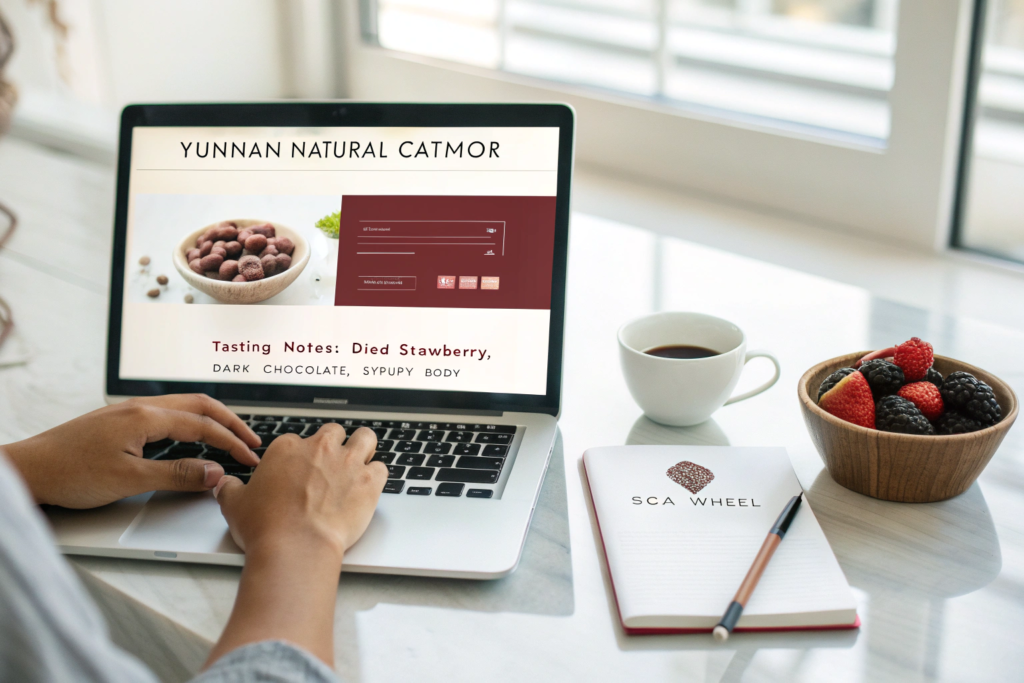
For marketing a Yunnan Natural Catimor, I would pull "Dried Strawberry," "Honey," and "Dark Chocolate" from the outer ring. That tells the customer exactly what to expect: a fruity, sweet, yet grounded coffee. For a washed Typica, I would pull "Jasmine," "White Peach," and "Silky Body." The words are precise, evocative, and sourced directly from the standardized wheel.
Should You Publish Cupping Scores Alongside Flavor Notes?
This is a strategic decision that depends on your target audience. Cupping scores are the language of the specialty coffee industry. They are essential for wholesale communication, as discussed in the "Reserve Grade" context. But for general consumers, they can be confusing or even off-putting.
A score of "87 points" means a lot to a fellow roaster or a competition judge. It tells them the coffee is "Excellent" on the SCA scale. To a casual consumer, "87 points" might sound like a low B-grade. Without understanding the scale, the number adds confusion, not value.
If you sell primarily online to coffee enthusiasts, publishing the score can build credibility. Enthusiasts understand the scale. They seek out high-scoring coffees. In this case, the score is a selling point. If you sell primarily in grocery stores or to a broad consumer base, the score is less meaningful. The flavor description does the selling.
My recommendation is to use the score in wholesale and industry communications, and optionally on enthusiast-focused retail bags. For mainstream retail, lead with the flavor descriptors from the wheel. You can always include a QR code linking to a detailed lot page with the full SCA score breakdown for the customers who want it.
How Do You Match Flavor Descriptors to Brewing Methods?
The flavor notes on the wheel can help you guide your wholesale clients on how to get the best out of their purchase. The same coffee can taste slightly different as a pour-over, an espresso, or a cold brew. The wheel helps you predict which notes will dominate in each method.
For pour-over and filter brewing, the volatile aromatics and high acidity notes are preserved. The floral, citrus, and stone fruit descriptors on the wheel will be most prominent. A washed Typica with "Jasmine" and "Lemon" notes will shine.
For espresso, the pressure and heat mute some of the bright acidity and amplify the body and the "Brown Sugar," "Dark Chocolate," and "Caramel" descriptors. A natural Catimor with "Dried Fruit" and "Syrupy" body will perform beautifully.
For cold brew, the lack of heat means the "Sour" and "Acidic" notes are naturally suppressed, while the "Cocoa," "Nutty," and heavy "Mouthfeel" descriptors come to the front. A washed Catimor with "Dark Chocolate" and "Almond" notes makes an excellent cold brew.
When selling a coffee, I always provide suggested brewing notes. For a washed Catimor, I might note: "Best as a filter or cold brew to enjoy its clean chocolate and citrus balance." For a natural, I might suggest: "Try as espresso to experience its syrupy body and jammy berry sweetness." These suggestions are rooted in the scientific reality of how the compounds described by the wheel behave under different extractions.
Conclusion
The SCA Flavor Wheel is the bridge between the subjective experience of tasting and the objective language of commerce. It prevents the expensive mistake of miscommunication between buyer and seller. It provides a structured, three-tiered path—from broad category to specific note—to accurately assess any coffee, from a clean Yunnan Catimor to an experimental anaerobic fermentation.
For your wholesale business, it is a quality control tool, ensuring that the "Dark Chocolate" note you promised is actually in the cup. For your marketing, it is a translation tool, turning technical tasting data into compelling, mouthwatering sales copy. And for your customer relationships, it is a trust tool, demonstrating that you evaluate coffee systematically and honestly.
If you want to taste our current Yunnan lots and practice applying the SCA wheel, contact Cathy Cai at BeanofCoffee. She can arrange a sample set with our full cupping notes mapped to the wheel. She can also provide detailed lot cards to help you build accurate, compelling descriptions for your own customers. Her email is cathy@beanofcoffee.com. She responds quickly and can help you find the exact words to sell your next great coffee.