A roaster from a wellness-focused brand in California called me two months ago. Her entire brand is built on purity. No chemicals. No additives. Her customers are exactly the kind of people who read labels carefully and ask detailed questions about how their coffee is processed. "I need a decaf that fits my brand," she said. "No ethyl acetate. No methylene chloride. It has to be Swiss Water Process. But every sample I get tastes flat and papery. The beans look faded and old. I am starting to think good decaf does not exist."
I understood her frustration. Finding high-quality decaf is harder than finding high-quality regular coffee. The decaffeination process adds another layer of complexity and another potential point of failure. But good decaf does exist. It requires sourcing from a supplier who starts with excellent green coffee, partners with a reputable decaffeination facility, and treats the decaf lot with the same care as any specialty lot.
To find a reliable supplier for Swiss Water Process decaf green beans, you need to partner with a specialty-focused exporter who starts with high-quality, high-density green coffee, uses a certified SWP facility, and can provide documentation proving the decaffeination method, the moisture content, the water activity, and the cupping score of the finished product.
Here is what Swiss Water Process actually is, why it preserves flavor better than other methods, and how to find a supplier who can consistently deliver decaf that does not taste like cardboard.
What Is the Swiss Water Process and Why Does It Preserve Flavor?
The Swiss Water Process is a chemical-free method of decaffeination that uses only water, temperature, and time to remove caffeine from green coffee beans. It was developed in Switzerland in the 1930s and is now operated primarily by the Swiss Water Decaffeinated Coffee Company in Vancouver, Canada.
The fundamental challenge of decaffeination is selectivity. Caffeine is just one of hundreds of soluble compounds in a coffee bean. Any process that removes caffeine risks removing the sugars, acids, and volatile aromatics that create flavor. The Swiss Water Process addresses this challenge through a clever saturation trick.
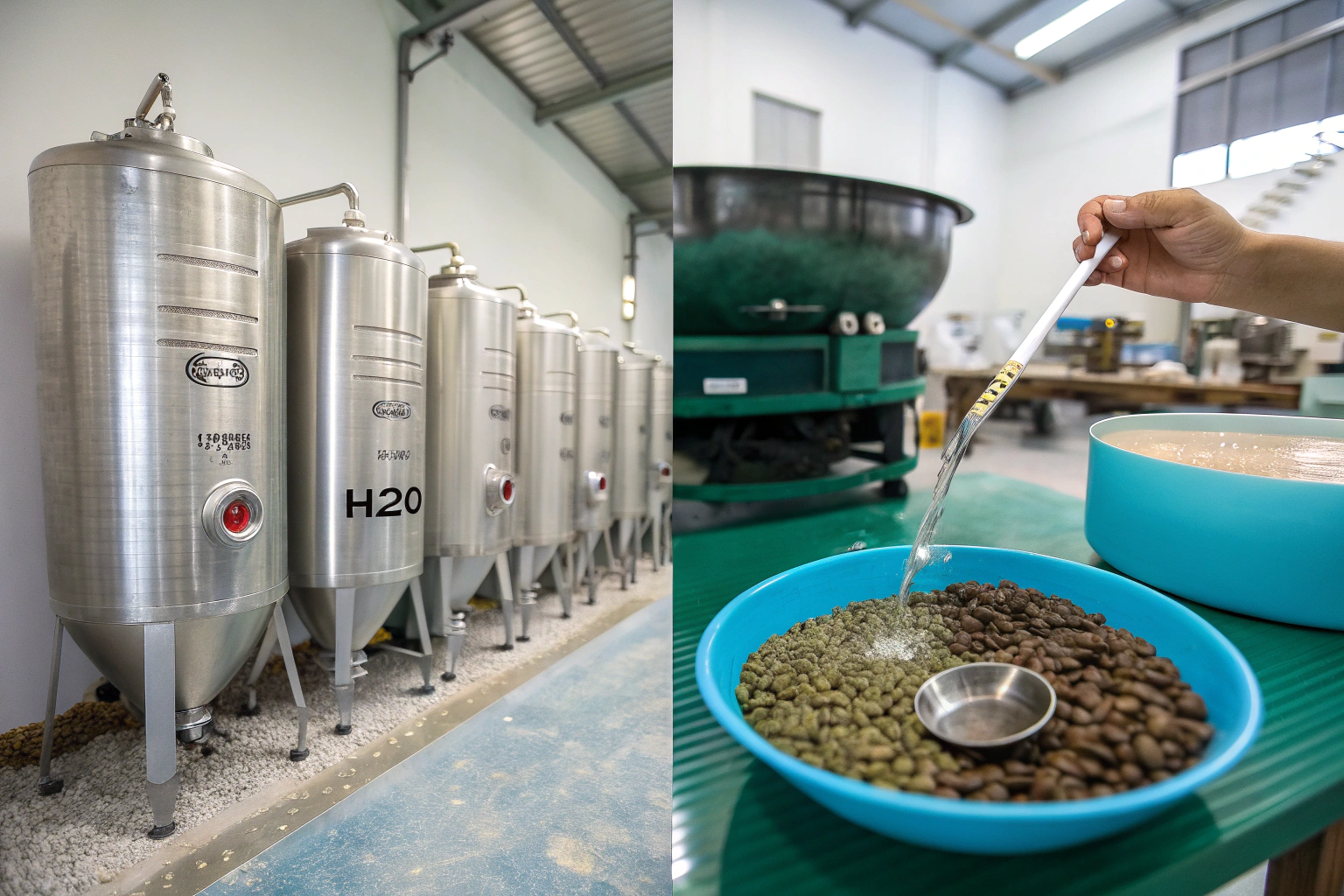
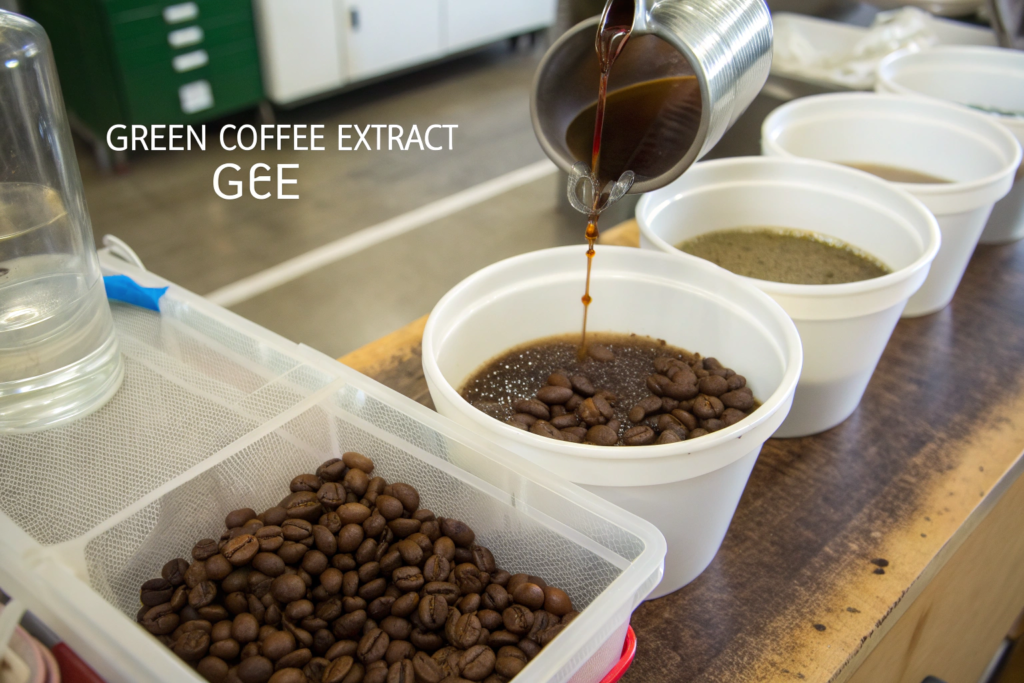
The beans are soaked in pure, hot water. The water extracts not only caffeine but also the soluble flavor compounds—sugars, acids, and aromatics. The beans are then removed. The resulting liquid, now saturated with coffee flavor, is passed through activated charcoal filters. The filters are designed to capture caffeine molecules specifically, based on their size and shape. The caffeine is trapped. The flavor compounds pass through. The filtered liquid, now called "Green Coffee Extract" or GCE, is caffeine-free but rich in coffee flavor.
The Swiss Water Process protects flavor by creating a flavor-saturated solution that draws caffeine out of the beans through osmosis while preventing the loss of sugars, acids, and volatile aromatics, resulting in a decaf that retains far more of its original character than solvent-based methods.
Fresh beans are then soaked in this GCE. Because the GCE is already saturated with flavor compounds, the law of osmosis prevents those compounds from leaving the beans. Only the caffeine, which is not present in the GCE, diffuses out of the beans into the liquid. The beans are decaffeinated without losing their flavor. The process is repeated until the beans are 99.9 percent caffeine-free.
The result is a decaf coffee that tastes remarkably close to the original green coffee. The acidity is preserved. The body is preserved. The flavor notes are preserved, though often slightly muted compared to the caffeinated original. A washed Catimor decaffeinated by SWP will still taste like chocolate, almond, and citrus, just with a slightly softer intensity.
How Does SWP Compare to Ethyl Acetate or CO2 Decaf Methods?
There are four primary methods of coffee decaffeination used commercially. Each has a different impact on flavor, a different chemical profile, and a different consumer perception.
Ethyl Acetate, or EA, is a solvent-based method. The beans are steamed and then washed with ethyl acetate, a naturally occurring ester found in fruits. The EA bonds with caffeine and removes it. EA is often marketed as "natural decaf" because the solvent can be derived from sugar cane or fruit. However, the process can strip volatile aromatics, leaving a thinner, sometimes chemically tinged cup. Some consumers also object to any solvent contact, even if the solvent is naturally derived.
Methylene Chloride is another solvent-based method. It is highly effective at removing caffeine and is widely used in the commodity coffee industry. However, methylene chloride is a synthetic chemical, and its use is controversial. The FDA considers the residual levels safe, but many specialty consumers actively avoid it. The flavor impact is similar to EA—some muting of origin character.
Carbon Dioxide, or CO2, is a pressurized method. Supercritical CO2 acts as a selective solvent, bonding with caffeine and leaving larger flavor molecules intact. It is very effective at preserving flavor, often producing a cup that is closer to the original than SWP. However, the equipment is expensive and the process is typically used for large commercial batches, making it less accessible for specialty micro-lots.
Compared to EA and methylene chloride, SWP preserves brighter acidity and cleaner origin character without chemical residue concerns, though CO2 can sometimes retain even more volatile aromatics at a higher cost and larger minimum batch size.
Swiss Water Process occupies a unique position. It is completely chemical-free, which satisfies the clean-label demands of wellness-focused consumers. It preserves a high degree of flavor, particularly the chocolate, nut, and body components. The acidity can be slightly softened compared to the original, but it is far more vibrant than solvent-based decafs. For a specialty roaster who wants a decaf that tastes like specialty coffee and carries a credible purity story, SWP is the standard choice.
What Impact Does SWP Have on Green Bean Density and Roasting?
The Swiss Water Process alters the physical structure of the green bean. Understanding these changes is critical for roasting SWP decaf successfully.
During the process, the beans are soaked in hot water. The cell structure swells. After decaffeination, the beans are dried back down to a stable moisture content. However, the cell structure does not return to its original state. The beans are slightly more porous, slightly less dense, and slightly softer than they were before decaffeination.
The color also changes. SWP decaf beans are typically a slightly darker, more muted green than their caffeinated counterparts. They may have a slightly mottled appearance. This is normal and not a sign of age or defect. The color change is simply a physical result of the water processing.
For roasting, the lower density and higher porosity mean that heat penetrates the bean faster. SWP decaf beans typically roast more quickly than caffeinated beans of the same origin. First crack arrives earlier and is often less vigorous. The beans are more prone to scorching if the charge temperature is too high.
I always provide roast recommendations with our SWP decaf lots. The charge temperature should be reduced by 5 to 10 degrees Celsius compared to the same bean in caffeinated form. The drying phase should be monitored carefully—it will proceed faster. The development time should be kept moderate, typically 13 to 16 percent, to avoid baking. The target roast level should be a few Agtron points lighter than the caffeinated equivalent to preserve the delicate remaining acidity. For more on roasting SWP decaf, Cropster allows roasters to track specific profiles for decaffeinated lots.
Why Does Starting with High-Quality Green Coffee Matter for Decaf?
The quality of a decaf coffee is determined by the quality of the green coffee that enters the decaffeination process. You cannot make good decaf from bad coffee. The decaffeination process is not a flavor factory. It does not add anything. At best, it preserves what is already there. At worst, it degrades what is there.
This is why so much commodity decaf tastes terrible. The economics of commodity decaf push roasters to use the cheapest available green coffee. Old crop. Low-grade. Defective lots. The thinking is that the decaffeination process will strip so much flavor anyway that the starting quality does not matter. The result is decaf that tastes like cardboard because it started as cardboard.
Specialty decaf takes the opposite approach. If you want a decaf that tastes like specialty coffee, you must start with specialty coffee. A high-quality, high-density, carefully processed green coffee will retain its essential character through the SWP process. The chocolate notes, the nut notes, the body—these survive. The acidity may be slightly softened, but it is still present and pleasant.
Starting with high-grade specialty green coffee for SWP decaf ensures that the bean has the intrinsic density, sugar content, and flavor complexity to survive the water processing with its cup character intact, whereas low-grade starting material results in a flat, papery, and hollow cup regardless of the decaffeination method.
Our SWP decaf starts with the same washed Catimor we sell as specialty caffeinated coffee. It is high-grown at 1,500 to 1,600 meters. It cups 82 to 84 points. It has good density, clean processing, and a distinct chocolate-almond-citrus profile. After SWP processing, it cups 81 to 83 points—a minor score drop that reflects the slight softening of acidity, but no loss of cleanliness or body. The coffee still tastes like our Catimor, just gentler.
How Does the Age of the Pre-Decaf Coffee Affect the Final Cup?
The freshness of the green coffee before decaffeination is a critical and often overlooked variable. Decaffeination is not a preservative. It does not reset the freshness clock. If the coffee was already old and faded before decaffeination, the decaf will taste old and faded.
An ideal SWP decaf lot starts with current crop coffee. The coffee is harvested, processed, rested, and shipped to the decaffeination facility within a few months of harvest. The decaffeination occurs while the coffee is still fresh and vibrant. The finished decaf is then shipped to the roaster.
If the pre-decaf coffee has been sitting in a warehouse for 12 to 18 months, the lipids have already begun to oxidize. The volatile aromatics have already faded. The acidity has already softened. The SWP process will not restore these lost characteristics. The decaf will taste flat, papery, and stale.
I send our Catimor for SWP processing within 3 to 6 months of harvest. The coffee is fresh when it enters the process. The decaf that returns is fresh. The difference in cup quality between decaf made from current crop and decaf made from past crop is stark. For more on how I ensure crop freshness, you can review my process for tracking harvest dates and lot segregation at our Baoshan facility.
Can You Source Microlot Decafs with Unique Flavor Profiles?
The world of specialty decaf has evolved beyond the generic "Decaf Blend" that was the only option for decades. Today, it is possible to source decaf micro-lots—small volumes of distinctive, high-scoring coffee that have been decaffeinated by SWP.
A micro-lot decaf starts with a micro-lot green coffee. It could be a natural processed Catimor, an anaerobic fermented lot, or even a rare variety like SL28 or Typica. The lot is kept separate throughout the decaffeination process. It is not blended with other coffees. The resulting decaf retains the unique flavor signature of the original micro-lot—the fruit, the florals, the complexity.
These micro-lot decafs are rare and expensive. The decaffeination cost is the same whether the lot is a commodity Brazil or a 90-point anaerobic Geisha. The green coffee cost is higher. The risk of batch loss is higher. But the result is a decaf that tastes like a premium specialty coffee, not like "decaf."
I offer micro-lot SWP decaf versions of our natural Catimor and our SL28. The natural decaf retains its strawberry and honey notes. The SL28 decaf retains its blackcurrant and savory complexity. The volumes are small—30 to 100 kilos. The pricing is premium. But for a roaster who wants to offer a decaf that is as exciting as their caffeinated menu, these lots are worth the investment.
How to Verify and Source SWP Decaf from Yunnan?
Sourcing genuine SWP decaf requires verification. The term "Swiss Water Process" is a specific, trademarked process operated by the Swiss Water Decaffeinated Coffee Company. Not every water-based decaffeination is SWP. A supplier who cannot produce certification or documentation is not selling genuine SWP decaf.
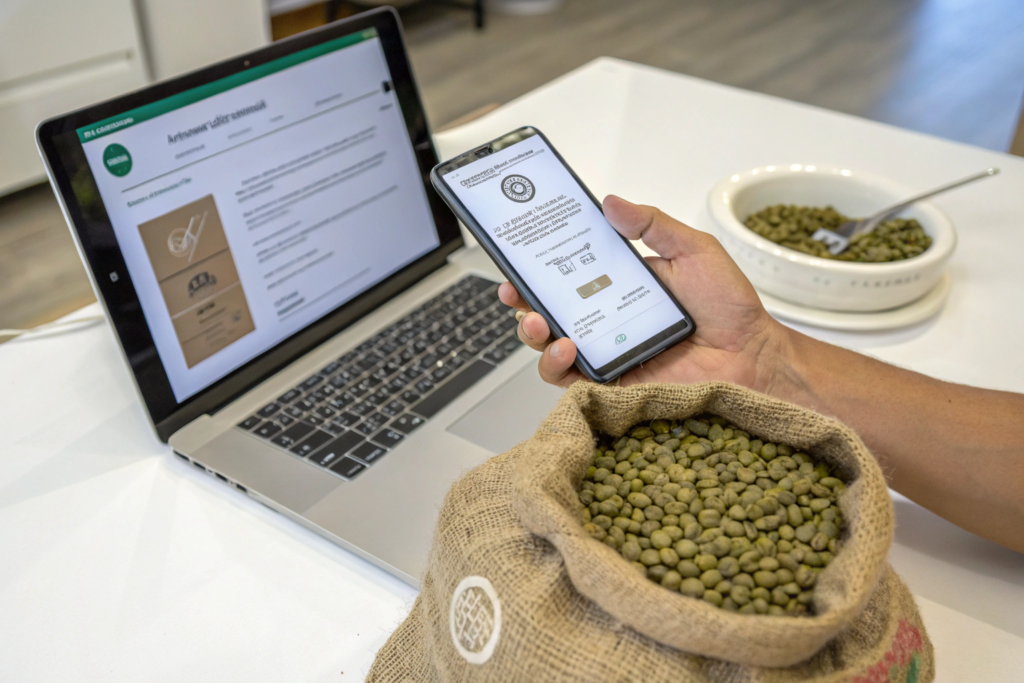
The first verification step is the certification. Every genuine SWP lot is accompanied by a certificate from the Swiss Water Decaffeinated Coffee Company. The certificate includes the lot number, the volume, the date of processing, and confirmation that the coffee was decaffeinated using the Swiss Water Process to 99.9 percent caffeine-free. Ask the supplier for this certificate. If they cannot produce it, the coffee is not genuine SWP.
The second verification step is the physical inspection. SWP decaf beans look different from caffeinated beans. They are a slightly darker, more muted green. The surface may have a subtle mottling. The beans may feel slightly less dense. These physical changes are normal. If the decaf beans look identical to the caffeinated beans, something is wrong.
To verify genuine SWP decaf, demand the official processing certificate from the Swiss Water Decaffeinated Coffee Company, visually inspect the beans for the characteristic darker, slightly mottled appearance, and cup the decaf against the original caffeinated lot to confirm that the core flavor profile has been preserved.
The third verification step is the cupping. Cup the SWP decaf against the original caffeinated lot. The decaf should taste like a slightly softer, gentler version of the original. The core flavor notes should be present. The body should be intact. The finish should be clean. If the decaf tastes flat, papery, or fundamentally different from the original, either the starting green coffee was poor, or the decaffeination process was not SWP.
At Shanghai Fumao, we provide the SWP certification, the visual inspection reference, and the pre-shipment cupping data with every SWP lot. The buyer can verify the authenticity and quality before the coffee ships. There are no surprises.
What Documentation Confirms a Lot Is Genuinely Swiss Water Processed?
The documentation chain for SWP decaf is clear and verifiable. A genuine lot comes with a paper trail that traces the coffee from the farm to the decaffeination facility and back.
The first document is the original lot card for the green coffee. This shows the plot, the variety, the harvest date, the processing method, and the cupping scores before decaffeination. The lot card establishes the quality of the starting material.
The second document is the SWP processing certificate. This is issued by the Swiss Water Decaffeinated Coffee Company in Vancouver. It confirms that the specific lot was processed using the Swiss Water Process. It includes the lot number, the inbound and outbound weights, and the processing date. The certificate is the definitive proof of the decaffeination method.
The third document is the post-decaffeination cupping report. This shows the cupping scores and notes after the coffee returned from decaffeination. It confirms that the quality was preserved and that no defects were introduced.
I provide all three documents with every SWP lot. The buyer has a complete picture of the coffee's journey from the farm to the decaf bag.
How Should You Cup SWP Decaf Against Its Caffeinated Version?
Cupping SWP decaf requires a side-by-side comparison with the original caffeinated lot. Tasting the decaf in isolation can be misleading. The decaf will taste slightly softer and less intense than the original, which can be perceived as a defect if you do not have the reference. The side-by-side cupping reveals that the character is preserved, just at a slightly lower volume.
Roast both samples identically, to the same Agtron level. Cup them side by side, blind if possible. Evaluate the decaf for cleanliness first. Any off-flavors—papery, cardboardy, sour—are signs of poor starting material or a processing problem.
Then evaluate the flavor fidelity. Does the decaf taste like a slightly quieter version of the caffeinated coffee? The chocolate notes should still be chocolate. The nut notes should still be nut. The acidity should be present but softer. A good SWP decaf is recognizable as the same coffee, just with the volume turned down from 10 to 7.
The body should be similar. The finish should be clean and sweet, not drying or astringent. If the decaf passes these tests, it is a well-processed lot. If it tastes like a different coffee—flat, generic, and papery—reject it.
Conclusion
Swiss Water Process decaf is the best option for specialty roasters who want a decaf that tastes like specialty coffee and carries a credible purity story. The process preserves flavor by using a saturated flavor solution to draw out caffeine while keeping the bean's sugars, acids, and aromatics intact. The result is a decaf that tastes like a slightly gentler version of the original.
The quality of the starting green coffee is the single most important factor in decaf quality. High-grown, carefully processed specialty coffee retains its character through decaffeination. Old, low-grade coffee does not. Sourcing genuine SWP decaf requires verifying the processing certificate, inspecting the beans, and cupping the decaf against the original.
If you are looking for a reliable supplier of SWP decaf green beans that actually taste like the origin they came from, contact Cathy Cai at Shanghai Fumao. We offer SWP decaf versions of our washed Catimor, natural Catimor, and select micro-lots. She can provide the SWP certification, the pre- and post-decaf cupping scores, and samples so you can taste the difference yourself. Her email is cathy@beanofcoffee.com. She responds quickly and can help you add a genuine specialty decaf to your menu.