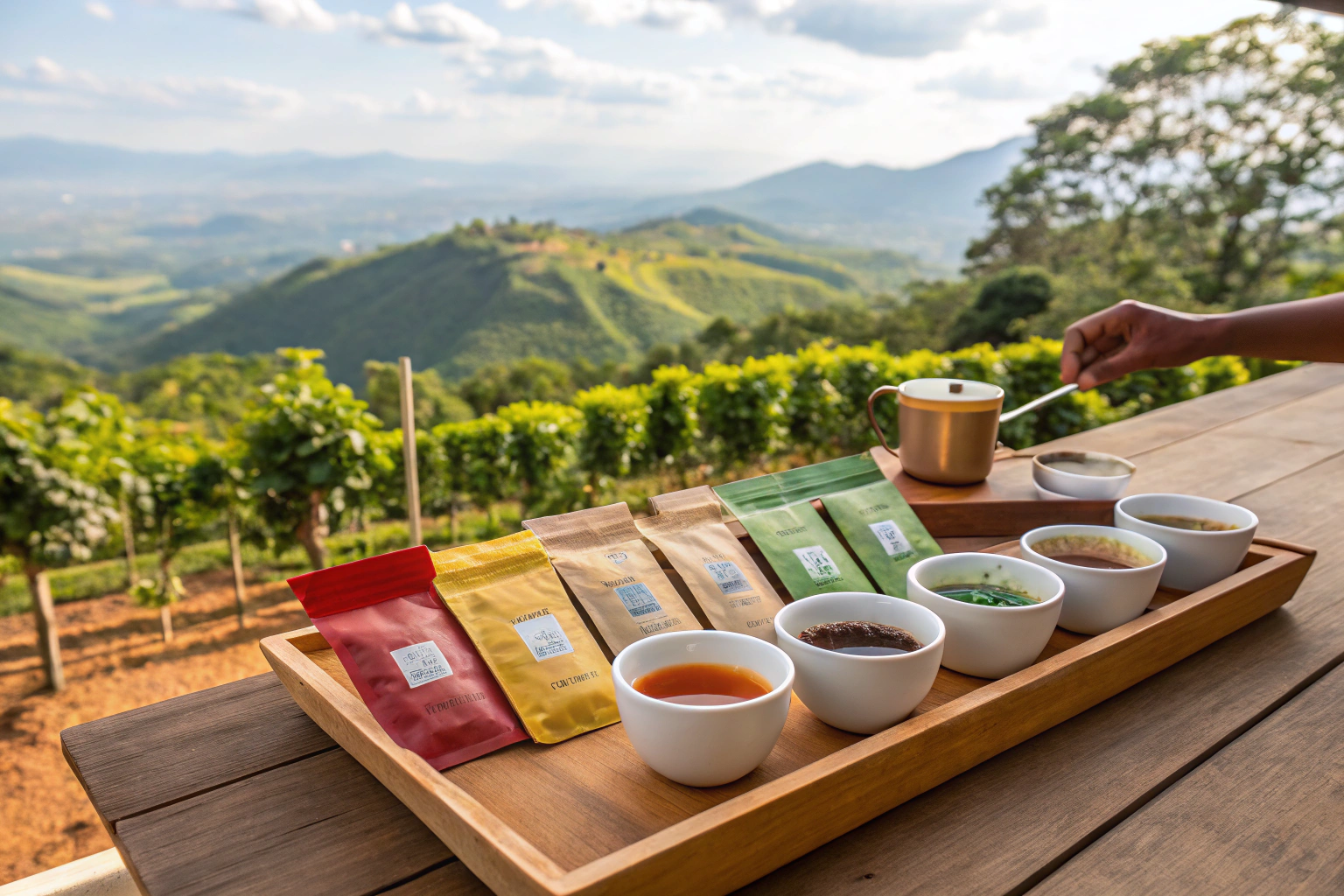
A roaster from Melbourne emailed me last month with a familiar request. "Cathy," he wrote, "my winter menu is heavy. Dark roasts. Chocolate blends. Comfort coffees. But summer is coming, and my customers are already asking for bright, fruity, iced coffees. What should I be sampling now to have fresh, vibrant lots on the shelf by December?"
I loved the question. He was thinking ahead. The best summer coffees are not ordered in summer. They are sampled in late winter or early spring, booked before harvest, and shipped in time to land fresh for the warm-weather season. The coffee that tastes like sunshine in a cup starts with a sample request placed at the right time, for the right lots.
For Summer 2026, the best green coffee samples to request are fresh natural and anaerobic processed lots from the just-completed 2025/2026 Yunnan harvest, alongside bright washed SL28 and Typica micro-lots, all selected for intense fruit character, sparkling acidity, and clean processing that shine in iced and cold brewing applications.
Here is exactly what to request, why these lots will perform in summer beverages, and how to time your sampling to secure the best coffees before they sell out.
Which Processing Methods Deliver the Most Summer-Appropriate Profiles?
Summer coffee drinks are different from winter coffee drinks. The customer who drinks a heavy, chocolatey latte in January wants a bright, refreshing iced coffee in July. The processing method of the green coffee determines whether the coffee will taste vibrant and fruity when cold, or flat and dull.
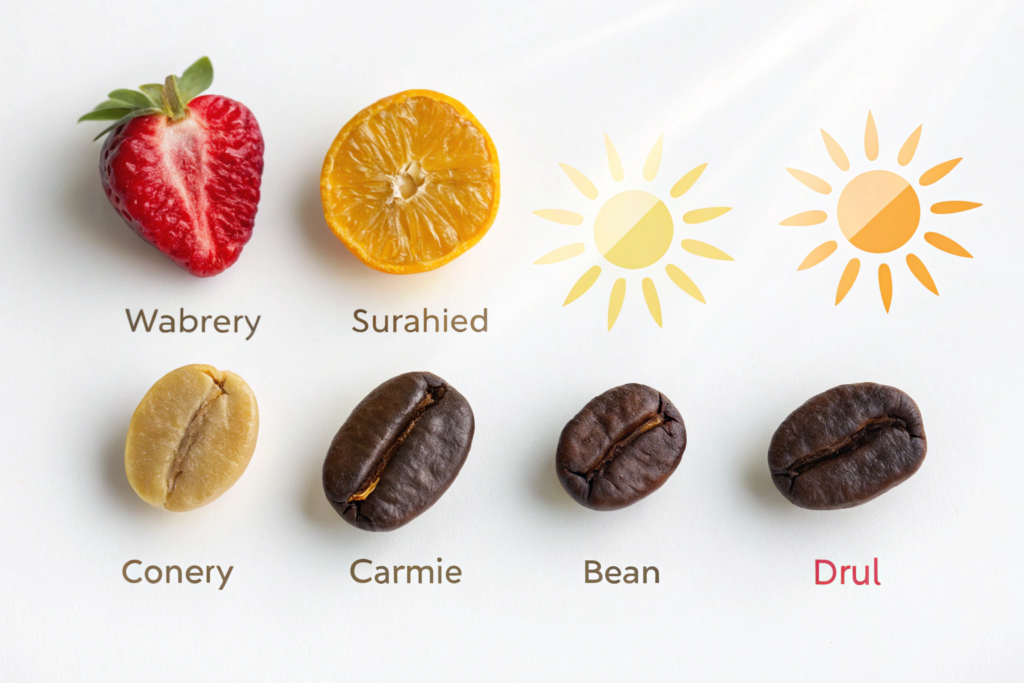
Natural processed coffees are the quintessential summer profile. The whole cherry drying concentrates sugars and fruit compounds in the bean. The resulting cup is heavy-bodied, intensely sweet, and bursting with berry, stone fruit, and tropical fruit notes. A natural coffee brewed as an iced pour-over or a cold brew concentrate tastes like fruit juice—refreshing, sweet, and complex. It is the coffee that makes customers say, "I did not know coffee could taste like this."
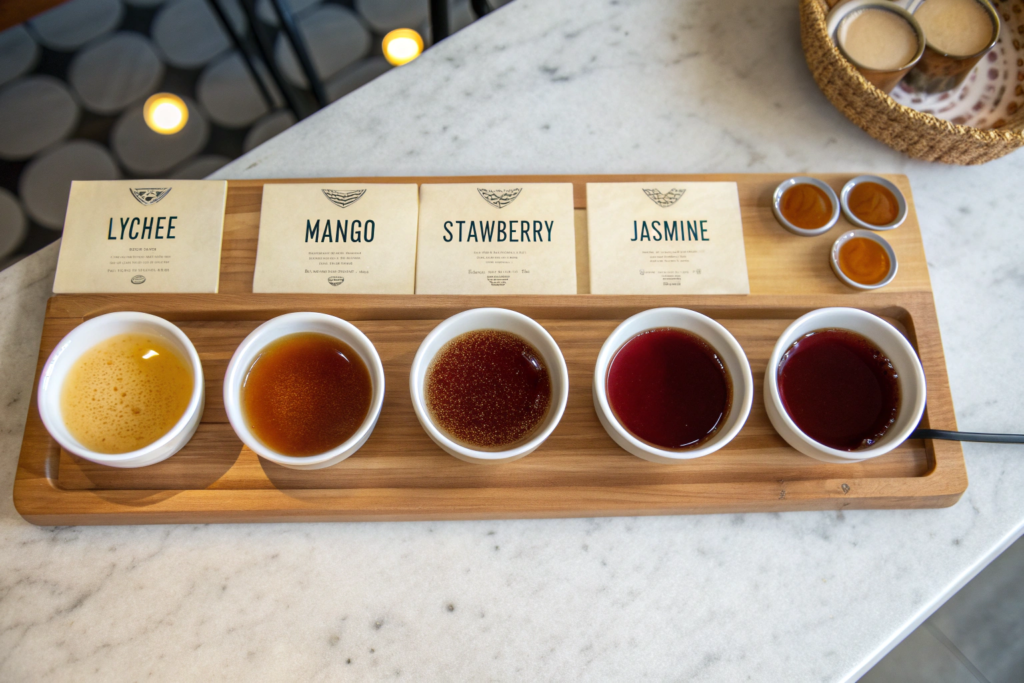
Anaerobic and carbonic maceration processed coffees push the fruit character even further. The oxygen-free fermentation produces high concentrations of fruity esters. The cup explodes with tropical fruit—mango, passionfruit, pineapple, lychee. These coffees are spectacular as iced filter brews, where the cold serving temperature amplifies the refreshing fruit character. They are also excellent as the base for coffee cocktails and coffee sodas, a growing category in specialty cafés.
Natural and anaerobic processed lots are the top summer sample requests because their intense fruit sweetness and heavy body do not fade when served cold, unlike washed lots whose bright acidity can turn sour and thin over ice.
Honey processed coffees offer a middle ground. The partial mucilage retention adds body and sweetness to the washed profile. A well-processed honey lot has the clarity of a washed coffee with the sweetness and body of a natural. It is an excellent summer filter coffee for customers who find naturals too intense but want more than a clean washed cup.
Washed coffees, while often less fruit-forward, are not absent from the summer menu. A bright, high-acidity washed lot—SL28, Typica, high-grown Catimor—can be a refreshing iced filter coffee when roasted light and brewed carefully. The key is the acidity. The acidity must be bright but not sharp, sweet but not sour. A washed lot that cups with notes of lemon, jasmine, and honey is a summer star.
Why Do Naturals and Anaerobics Shine in Iced Brews?
Cold temperatures suppress flavor perception. The volatile aromatics that make coffee smell amazing are less volatile at low temperatures. The sweetness receptors on the tongue are less sensitive. The result is that a coffee that tastes balanced and flavorful hot can taste weak, sour, or flat when iced.
Natural and anaerobic processed coffees resist this cold suppression better than washed coffees. The fruit character in naturals and anaerobics comes from esters and other volatile compounds that are present at very high concentrations. Even when the cold suppresses some of the volatility, enough remains to deliver a powerful fruit flavor. The heavy body of these coffees also holds up better to ice, which dilutes the coffee as it melts. A heavy-bodied natural iced coffee still tastes rich and satisfying after the ice has melted.
The sweetness of naturals and anaerobics is also more cold-stable. The simple sugars—glucose and fructose—absorbed from the mucilage during drying taste sweet at any temperature. The caramelized sucrose of a washed coffee tastes less sweet when cold. The natural's fruit sugars keep the iced coffee tasting balanced and pleasant.
I always recommend that buyers test their samples as iced brews before committing to a summer order. Cup the coffee hot, as usual. Then brew a batch as an iced pour-over or a cold brew. Taste them side by side. A lot that cups beautifully hot but falls apart iced is not the right summer lot. A lot that tastes like fruit punch iced is the one to buy. For more on brewing parameters for iced coffee, Perfect Daily Grind has published guides on optimizing extraction for cold beverages.
How Does Fresh Harvest Timing Impact Summer Brightness?
The freshness of the harvest is a critical variable for summer coffee quality. A summer 2026 coffee should be sourced from the most recent harvest in its origin. For Yunnan, that is the 2025/2026 harvest, which runs from November 2025 to February 2026. The coffee is processed from December through March. It rests for a month or two. It is ready to sample in March or April 2026 and ship in May or June.
A coffee that is six months past harvest tastes brighter, fruitier, and more vibrant than a coffee that is 18 months past harvest. The volatile aromatics that create the fruit and floral notes are at their peak freshness. The acidity is still bright and complex. The body is full. The coffee is at its absolute best.
If a buyer samples in March or April, they are tasting the coffee at its peak. They can cup the lots, make their selections, and book their orders with confidence. The coffee ships in May or June, arrives in July or August, and is on the retail shelf by September or October—still fresh, still vibrant, still peak.
If a buyer waits until August to request summer samples, the best lots are already sold. The remaining lots may be from the previous harvest, already 18 months old and fading. The acidity is flat. The fruit notes are gone. The summer menu suffers.
I begin shipping samples from the new Yunnan harvest in late March. I encourage buyers to request their sample sets in February or early March, so I can include them in the first sample shipments. The early buyers get first access to the best lots. For more on harvest calendars, the International Coffee Organization publishes country-level harvest schedules.
Which Yunnan Varieties and Plots Are Top Picks for Summer 2026?
The Yunnan harvest offers a specific set of varieties and processing methods that are particularly well-suited to summer menus. The selection below represents the lots I will be recommending to buyers for the 2026 summer season.
The foundation of any Yunnan summer program is the washed and natural Catimor from our high-altitude plots at 1,550 to 1,650 meters. The washed Catimor is the versatile workhorse—bright citrus, chocolate, and almond, clean and balanced. It works as an iced filter coffee, a cold brew base, or a component in a summer blend. The natural Catimor is the fruit bomb—strawberry, mango, honey, heavy body. It is the star of the iced coffee menu.
The specialty varieties add distinctiveness and prestige. Our SL28, grown at 1,620 meters, expresses the classic blackcurrant and savory tomato notes of the variety, with a brightness that is extraordinary in iced pour-overs. Our old-growth Typica, from 30-year-old trees at 1,580 meters, is the elegant option—jasmine, honey, white peach, silky body. It is a filter coffee for the customer who appreciates subtlety and refinement.
For Summer 2026, request samples of high-altitude natural Catimor for iced coffee fruit bombs, washed SL28 for bright complexity, and experimental anaerobic lots for signature beverages, all from the fresh 2025/2026 harvest to guarantee peak vibrancy.
The experimental lots—anaerobic fermentation, carbonic maceration, wine yeast fermentation—are the showstoppers. These are micro-lots, available in tiny volumes, with intense and unique flavor profiles. A wine yeast fermented Catimor that tastes like raspberry and Pinot Noir. An anaerobic SL28 that tastes like tropical fruit punch. These are the coffees that generate social media buzz and sell out in days.
I recommend that buyers request a range of samples across these categories. Cup them side by side. Identify the lots that fit the summer menu—the iced coffee star, the cold brew base, the premium limited release. Book the lots early. The natural and experimental lots are micro-volumes. They sell out every year.
What Is the Advantage of Requesting Early Harvest Samples?
Early harvest samples are the first lots processed from the new harvest. They are available in March and April, before the main harvest volumes are fully processed and released. Requesting and cupping these early samples gives the buyer a significant advantage.
The advantage is first access. The early samples represent the best lots from the best plots, processed with the most care. These lots are small in volume and high in quality. They are the lots that will sell out first. A buyer who cups the early samples can book the lot before it is offered to the broader market.
The early samples also provide a preview of the harvest quality. The buyer can cup the early lots and assess whether the harvest is strong, average, or weak. If the early lots are exceptional, the buyer can increase their order volume. If the early lots are disappointing, the buyer can adjust their sourcing strategy.
I offer early harvest samples to my existing clients first. The samples are shipped in late March or early April, as soon as the first lots are milled and cupped. The clients have a two-week exclusive window to book the lots before they are offered to new inquiries. The early sample program is one of the benefits of a long-term sourcing relationship.
At Shanghai Fumao, we prioritize early sample requests from our contract clients. If you want access to the early samples for Summer 2026, contact Cathy Cai in February to be added to the early sample list.
How Do You Build a Seasonal Story Around Fresh Crop Lots?
The freshness of the harvest is a marketing asset. A summer coffee menu built around "Fresh Crop" or "New Harvest" tells a story of seasonality, quality, and connection to the farm. The customer understands that the coffee is at its peak, just like the seasonal produce at a farmer's market.
The story can be simple and visual. "Just Landed: Our 2026 Yunnan Harvest" on a shelf talker or a menu insert. A photo of the harvest in progress. A note about the specific lots: "This natural Catimor was picked in January, dried on raised beds for 22 days, and shipped to us in June. It tastes like strawberry and mango. It is summer in a cup."
The seasonality story justifies a premium price. The customer perceives the fresh crop lot as special, limited, and worth paying more for. The story also creates urgency. The lot is available only while the fresh crop lasts. When it is gone, the next harvest is a year away.
I provide harvest photos, processing videos, and lot cards with every shipment. The roaster can use these assets to tell the fresh crop story on the bag, on the website, and in the café. The story connects the customer to the farm and the season.
How to Plan Your Summer 2026 Inventory and Contracting?
Summer 2026 may seem far away, but the sourcing decisions that determine its success are made in the first quarter of the year. A buyer who plans ahead secures the best lots, locks in pricing, and avoids the scramble for whatever is left in June.
The timeline starts now. In January or February, contact your suppliers and request sample sets from the upcoming harvest. Specify the processing methods and varieties you are interested in. Ask about early harvest samples and booking deadlines.
In March and April, cup the samples as they arrive. Evaluate them hot and iced. Select the lots for your summer menu. Determine the volumes you need for the season—typically enough for June through September sales, with a buffer for any unexpected demand spikes.
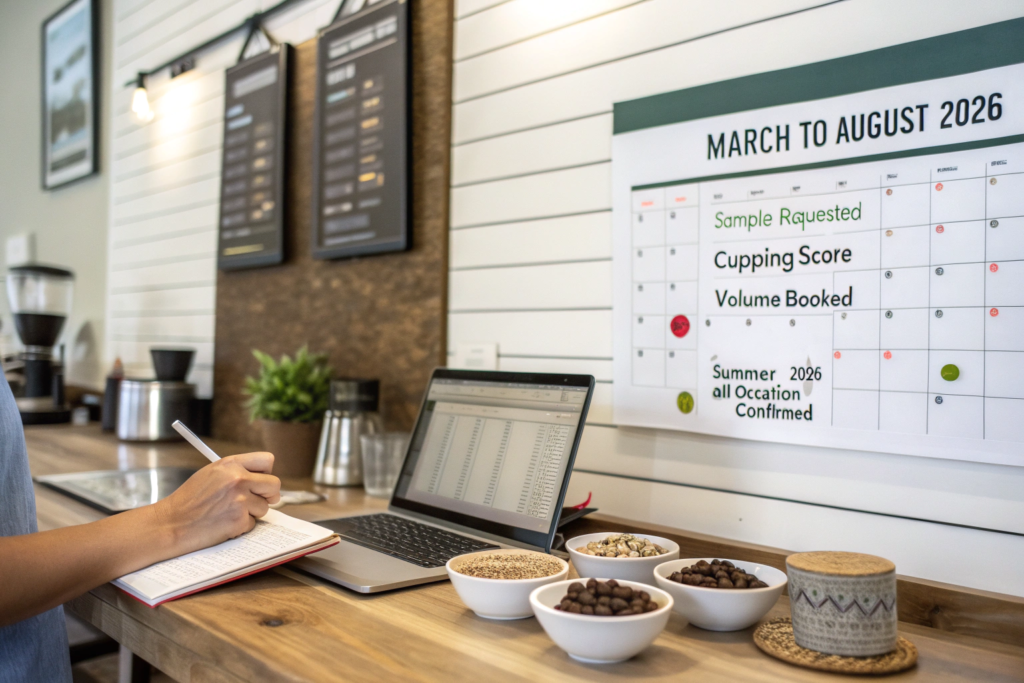
For Summer 2026, begin requesting samples in February, cup and book your preferred lots by April, and schedule shipments for May or June arrival to ensure the freshest possible coffee is on your shelf and cupping at peak vibrancy throughout the warm season.
In April and May, finalize the contracts. Specify the lot codes, the volumes, the shipment dates, and the pricing. Ensure the supplier can meet your delivery timeline. Coffee shipped in May arrives in June or July, in time for the peak summer coffee season.
In June and July, receive the coffee. Roast sample batches. Dial in the profiles. Launch the summer menu. Promote the fresh crop story. The planning that started in February pays off in a smooth, successful summer season.
What Volume Should You Book for a Summer Seasonal Menu?
The volume for a summer seasonal menu depends on the size of the roaster and the expected sales mix. A summer menu typically includes one or two seasonal single origins, a seasonal cold brew, and possibly a seasonal espresso or blend.
A small to mid-sized roaster might book 100 to 300 kilos of the primary summer single origin—the natural or anaerobic lot that is the star of the menu. This volume supports a two to three-month run as a featured coffee. A second, smaller lot—50 to 100 kilos of SL28 or Typica—adds variety and a premium option.
The cold brew component can be a larger volume if cold brew is a significant part of the summer business. A washed Catimor cold brew base at 300 to 500 kilos supports a full summer of cold brew production. The cold brew base should be consistent, affordable, and available in volume.
The total summer seasonal volume for a small roaster might be 500 to 1,000 kilos across two or three lots. For a mid-sized roaster, 1,500 to 3,000 kilos. The volumes should be contracted in advance to secure the allocation.
I work with buyers to determine the right volumes for their summer programs. The volumes are based on their previous summer sales, their growth projections, and the specific lots they have selected. The goal is to have enough coffee to meet demand without carrying excess inventory into the autumn.
How Do You Secure a Forward Contract for In-Demand Summer Lots?
The best summer lots—high-scoring naturals, rare variety micro-lots, experimental fermentations—are in high demand. They sell out quickly. A forward contract is the only way to guarantee access.
A forward contract is a commitment between the buyer and the supplier. The buyer agrees to purchase a specified volume of a specified lot at a specified price. The supplier agrees to reserve that lot for the buyer and not sell it to anyone else. The contract is signed before the coffee is shipped, often before it is even milled.
The contract should specify the lot code, the plot, the variety, the processing method, the expected cupping score, the volume, the price, and the shipment date. It should also include a quality clause that allows the buyer to reject the lot if the pre-shipment sample does not meet the agreed specifications.
Forward contracts benefit both parties. The buyer secures access to a rare lot and locks in pricing. The supplier has a committed buyer and can plan processing and logistics with confidence.
I offer forward contracts for our micro-lots and premium lots. The contracts are signed in March or April, after the buyer has cupped the early harvest samples. The coffee ships in May or June. The buyer has the security of knowing their summer menu is locked in.
Conclusion
The best green coffee samples to request for Summer 2026 are the fresh, fruit-forward, vibrant lots from the just-completed Yunnan harvest. Natural and anaerobic processed Catimor lots deliver the intense fruit sweetness and heavy body that shine in iced coffee and cold brew. Washed SL28 and Typica micro-lots offer brightness, complexity, and elegance for filter menus. The early harvest samples, requested in February and cupped in March, give the buyer first access to the best lots before they sell out.
The key is timing. Sample early. Book early. Ship early. The coffee that arrives fresh in June or July will taste like summer in a cup. The coffee that is ordered late and shipped in September will taste like missed opportunity.
If you are planning your Summer 2026 menu and want to request samples from our new harvest, contact Cathy Cai at BeanofCoffee. She can send you a curated sample set based on your preferences—naturals, anaerobics, specialty varieties, experimental lots. She can provide the cupping scores, the lot volumes, and the FOB pricing. She can also discuss forward contracts to secure your summer allocation. Her email is cathy@beanofcoffee.com. She responds quickly. The early samples ship in March. Reach out now to be included.