
I remember the moment I realized that quality cupping scores and friendly WhatsApp messages mean nothing if the supplier runs out of cash. It was late 2021. A medium-sized roaster in the UK had placed a large forward contract with a coffee exporter in another Asian origin—not China—for three containers of specialty-grade Arabica. The pre-shipment samples were beautiful. The price was competitive. The relationship seemed warm. Then, two weeks before the first container was scheduled to ship, the roaster received a short email. The exporter had filed for insolvency. The prepayment, which was 40% of the total contract value and amounted to just over $60,000, was gone. The roaster had no insurance, no standby letter of credit, and no legal path to recover the money in a foreign jurisdiction. The insolvent exporter's assets were tied up in a local liquidation process that would take years. That roaster, who later became my client, told me the experience nearly bankrupted his own business. He had spent months building his cash reserves for that large order, and the loss nearly wiped him out. That story has stayed with me ever since.
Vetting a coffee supplier's financial stability before placing a large order requires examining their asset ownership structure—particularly whether they own farmland and processing facilities rather than merely trading from a rented desk—requesting audited financial statements or equivalent tax records, checking their export volume history through customs data, evaluating their banking relationships and credit references, and structuring the payment terms to minimize exposure to an insolvency event.
Financial due diligence in the coffee trade is not about distrust. It is about verifying that the supplier on the other side of the contract has the financial depth to survive a bad harvest, a currency swing, or a delayed payment from one of their other buyers. A supplier who is undercapitalized may produce excellent coffee, but they are one unexpected event away from a liquidity crisis that turns into a buyer's loss. Placing a large order—by which I mean a multi-container commitment or a full-year contract with prepayment—without checking the supplier's financial foundation is like roasting a $20,000 lot without checking the moisture meter first. The risk is invisible until the damage is done. In this article, I want to walk through the specific checks I perform when evaluating a supplier from the other side of the table, the same checks I encourage my own buyers to perform on us.
What Asset Ownership Structure Signals Long-Term Financial Health?
The first and most revealing financial stability indicator for a coffee supplier is not on a spreadsheet. It is on the land. I have been in this industry long enough to know that there is a fundamental difference between a company that owns its production assets and a company that trades from a leased office with a business license and a website. The asset-heavy company has collateral. It has sunk costs that it cannot easily walk away from. It has an economic incentive to survive a difficult season because abandoning the business means abandoning land, buildings, and machinery worth millions of dollars. The asset-light trading company can close its doors in a week, the owner can resurface under a new company name, and the buyer has no recourse against a shell entity.
A financially stable coffee supplier will have a balance sheet that shows significant fixed assets—specifically land ownership or long-term land-use rights, on-site processing mills, warehouses, and vehicle fleets—because these tangible assets both generate predictable cost savings that improve operating margins and provide collateral that can support borrowing during cash flow troughs, making the supplier resilient to market volatility in a way that an asset-light trader simply cannot match.
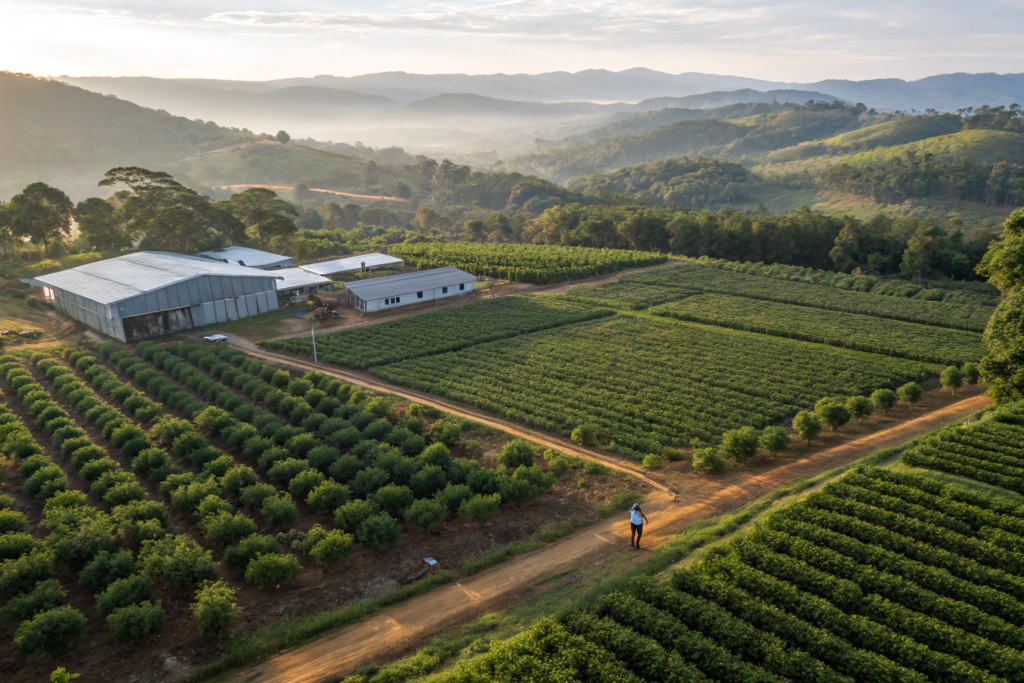
When I walk a visiting buyer through our Baoshan operation, I am not just showing off the view. I am showing them the physical evidence of financial commitment. The nursery with 2 million plantlets represents a five-year investment horizon. The concrete drying beds cover two hectares and cost more to build than many trading companies' entire annual revenue. The dry mill with its color sorters and density tables is a capital asset that appears on our audited balance sheet and can be independently verified. These assets are not liquid. They cannot be moved to another country. They anchor the business to the land and to the coffee sector specifically. A supplier who owns these assets has made an irreversible decision to be in the coffee business for the long term. That is the kind of counterparty a buyer wants for a multi-year contract.
How can a buyer verify farmland ownership versus a short-term lease arrangement?
Verification of land ownership or land-use rights is more straightforward than many buyers assume. In China, rural land is collectively owned, but agricultural enterprises can hold long-term land-use rights—typically 30 to 50 years—that function economically like ownership for the duration of the contract period. I provide interested buyers with a translated and notarized copy of our land-use rights certificate, issued by the Baoshan municipal government. The certificate specifies the GPS coordinates of the land parcels, the total area in hectares, and the term of the rights. A buyer's local Chinese-speaking representative or a trusted third-party inspection service can verify the certificate's authenticity with the issuing government office. If a supplier hesitates to provide this certificate, or claims it is "confidential," the buyer should treat that as a significant red flag. A land-use rights certificate is not a trade secret. It is a public record that any legitimate farm operator can produce.
The distinction between ownership and short-term leasing is material to financial stability. A supplier operating on a short-term one-year renewable lease has no security of tenure. If the landlord raises the rent or refuses to renew, the supplier's entire production base evaporates. Their cost structure is also less predictable because the land cost is a variable expense that can spike. In contrast, a supplier with a long-term land-use right has a fixed land cost that is amortized over decades. This cost certainty flows through to the contract pricing stability. When I negotiate a multi-year fixed-price contract with a buyer, I can commit confidently because my largest single cost input—the land—is locked in. The buyer can verify this directly by asking to see the land tenure document and checking the expiry date. If the land rights expire halfway through the proposed contract term, the supplier's ability to perform in the later years is genuinely uncertain.
Why does a self-owned wet mill and dry mill reduce a supplier's operating cost risk?
The wet mill and dry mill are the processing choke points in a coffee supply chain. A supplier who does not own their own processing facilities must pay a third-party miller to process their cherry and parchment. This processing fee is a variable cost that the third-party miller can raise at any time, especially during peak harvest when demand for milling capacity exceeds supply. The supplier's margin becomes squeezed between a fixed contract price with the buyer and a variable processing cost with the miller. If the miller raises rates by 15% in a tight season, the supplier's profitability on that contract can go from thin to negative.
A supplier who owns their own wet mill and dry mill has removed this variable risk. The processing cost is an internal transfer, not an external negotiation. The mill's operating cost—electricity, labor, maintenance—is relatively stable and predictable. The mill asset itself also provides operational control over quality, as I have discussed in earlier articles, but from a pure financial perspective, the owned mill is a margin stabilizer. It protects the supplier's profitability from processing cost inflation, and that protected profitability protects the buyer's contract performance. A supplier who is losing money on processing has a strong incentive to cut corners, delay shipments, or default. The owned mill eliminates that specific financial stress point. For a buyer performing due diligence, asking the question "Do you own your processing mill, and may I see a photo of it?" and then visiting it if possible, provides direct evidence of the supplier's cost structure resilience.
How Can Audited Financial Records Reveal Hidden Solvency Issues?
The asset ownership structure tells you whether the supplier has a long-term stake in the coffee business. The audited financial records tell you whether the supplier is managing that stake responsibly or drowning in debt. I understand that a privately held company, especially in an emerging coffee origin, may not publish audited financial statements in the same format as a publicly listed European corporation. But a financially responsible supplier will have some form of verified financial records—whether audited statements prepared for their bank, tax filings that reflect real revenue, or management accounts that can be reviewed by the buyer under a non-disclosure agreement. A supplier who cannot produce any verifiable financial information is a supplier whose financial condition is entirely unknown, and placing a large prepaid order with an entirely unknown financial entity is speculation, not sourcing.
Audited financial records help detect hidden solvency issues by revealing the supplier's debt-to-equity ratio, the proportion of short-term versus long-term debt, the working capital cycle, the gross and net profit margins on coffee operations, and any large related-party transactions that may be siphoning cash out of the operating company, all of which indicate whether the supplier can survive a delayed payment or a seasonal loss without collapsing.
I have opened our books to buyers who placed large orders. The financial statements show our revenue from coffee exports, our cost of goods sold broken down by category, our operating expenses, our interest payments on any outstanding loans, and our net profit. A buyer does not need to be a forensic accountant to spot warning signs. A debt-to-equity ratio above 3:1 means the company is heavily leveraged, and a spike in interest rates or a single bad harvest could tip it into default. A high proportion of short-term debt—loans that must be repaid or refinanced within 12 months—means the company is constantly refinancing and therefore vulnerable to a credit freeze. A gross margin below 15% on green coffee operations means the company has very little buffer against a cost increase or a price drop. These ratios are not coffee-specific. They are universal indicators of financial health that any commercially experienced buyer can interpret with minimal guidance.
What specific financial ratios indicate a healthy coffee export business?
I track a handful of ratios that I believe are the most revealing for a coffee export business. First, the current ratio—current assets divided by current liabilities. This measures short-term liquidity. A current ratio below 1.0 means the company could not pay all its short-term debts even if it liquidated all its short-term assets. I like to see a current ratio of at least 1.5 in a coffee exporter, because the coffee trade involves significant working capital tied up in inventory that may sit in a warehouse for several months before shipping. A ratio of 1.5 provides a cushion against that working capital drag.
Second, the inventory turnover ratio—cost of goods sold divided by average inventory. This measures how quickly the company is selling its coffee. A low turnover ratio could mean the company is holding onto old-crop beans that are deteriorating in quality and that represent cash that is trapped in unsold inventory. A very high turnover ratio, conversely, could mean the company is selling coffee faster than it can produce it, which may indicate it is sourcing from external farmers and has less control over quality and authenticity than it claims. Third, the interest coverage ratio—earnings before interest and taxes divided by interest expense. This measures the company's ability to service its debt from its operating profits. An interest coverage ratio below 2.0 means a moderate profit decline could leave the company unable to pay interest, triggering a default. These three ratios together—liquidity, efficiency, and debt service capacity—provide a quick financial health snapshot that takes about 15 minutes to calculate from a standard income statement and balance sheet.
How can a buyer verify revenue claims through export customs records?
A supplier may claim to export 5,000 tons of coffee annually. The audited financial statements should reflect that volume in the revenue line. But revenue in a financial statement can, in rare cases of fraud, be fabricated. The cross-check is the export customs declaration records. Every legal coffee export from China is recorded in the China Customs electronic system. The record shows the exporter's name, the commodity code, the volume in kilograms, the destination country, and the declared value. A supplier can provide a redacted extract of these records, showing the monthly export volumes over the previous two to three years. The buyer's local representative, or a third-party verification service, can audit these records against the supplier's claimed revenue.
If a supplier claims to export 5,000 tons but the customs records show only 2,000 tons, the discrepancy must be explained. Perhaps the remaining volume was sold domestically, which is legitimate but indicates the supplier has less export experience than claimed. Perhaps the supplier is counting the volumes of affiliated companies, which is a misrepresentation. Perhaps the records are inconsistent with the financial statements, which is a major red flag for fraud. The customs records are an independent, government-verified dataset that a supplier cannot easily fabricate because the data is held on a government server. Requesting these records is a standard due diligence step that an honest supplier will not object to. As a supplier myself, I voluntarily provide a summary of our customs export data to large contract buyers because it is objective evidence of our export track record. No amount of PowerPoint slides can substitute for government-recorded data.
What Banking and Credit Reference Checks Protect a Buyer's Prepayment?
The prepayment is the moment of maximum financial vulnerability for the buyer. Once the wire transfer leaves the buyer's bank account and arrives in the supplier's account, the buyer is an unsecured creditor. If the supplier becomes insolvent, the buyer joins a queue of creditors—behind secured lenders like banks holding mortgages on the supplier's property—and typically recovers only a fraction of the prepaid amount, if anything. Protecting the prepayment is therefore not an afterthought in the due diligence process. It is one of the primary objectives.
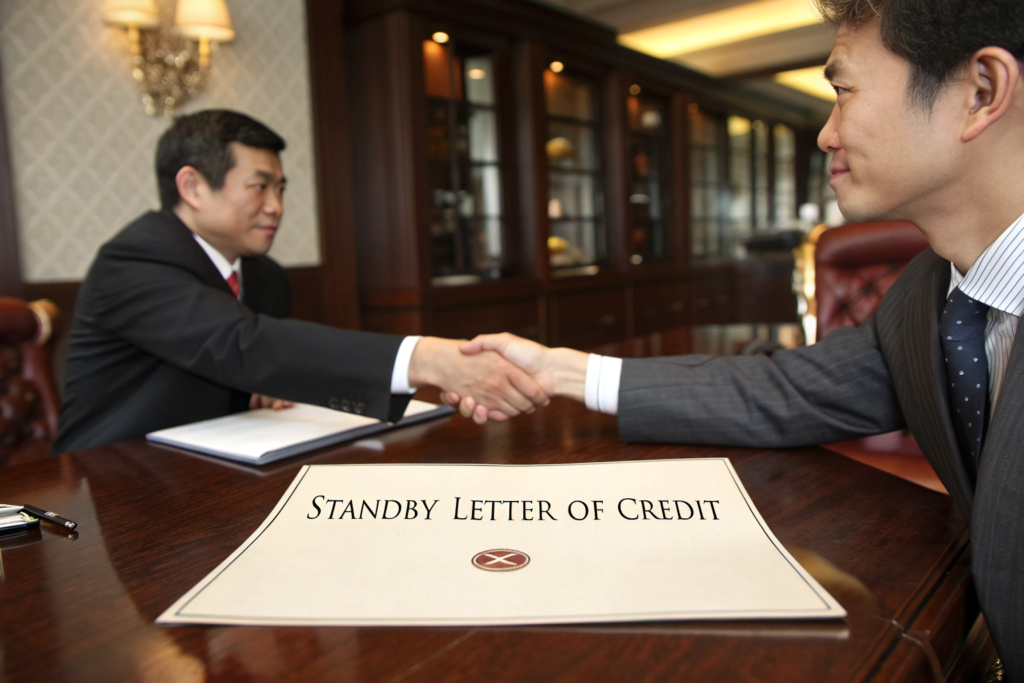
A buyer can protect a large prepayment by requesting a standby letter of credit from the supplier's principal bank, checking the supplier's trade credit references from other international buyers, and, for smaller but still substantial transactions, using an escrow service that holds the funds in a neutral account until the shipping documents are presented and verified, thereby ensuring the prepayment is either secured by a bank guarantee or held by a third party until performance is confirmed.
The banking relationship check is simple in concept but requires persistence in execution. The buyer asks the supplier for a reference letter from their primary bank. This letter, typically issued on bank letterhead, confirms the duration of the banking relationship—ideally multiple years, not months—and may include a general statement about the account's good standing. It will not disclose account balances, but the length of the relationship and the bank's willingness to issue the letter are themselves signals. A supplier who has banked with a recognized commercial bank for 10 years and can obtain a reference letter in a week is operating in the formal financial system. A supplier who cannot produce a bank reference letter, or who banks only with a small, unknown institution that has no international correspondent relationships, carries a higher financial risk.
How does a buyer request and evaluate a supplier's trade credit references?
Trade credit references are letters or emails from other buyers who have previously placed large orders with the supplier and can vouch for the supplier's reliability in fulfilling those orders. A financially stable supplier should be able to provide at least two or three trade references from current or recent international customers. The buyer requests these references directly. A legitimate reference check involves more than a form email. The buyer should call the reference and ask specific questions: "How long have you worked with this supplier? What was your largest order value with them? Did they ever ship late, and if so, how did they handle it? Have you ever prepaid, and did you feel your funds were secure? Would you place another large prepaid order with them today?" The answers to these direct questions, asked in a live conversation, reveal far more than a generic written reference letter that the supplier might have drafted themselves.
I provide trade references to prospective large buyers as a matter of routine. My references are typically roasters and importers in the U.S., Europe, and Australia with whom I have had multi-container relationships for several years. Before I provide their contact details, I ask their permission, and I limit the number of reference requests to avoid burdening my clients. A supplier who refuses to provide trade references, or who provides only references from small, local buyers or from companies that share the supplier's ownership, is not offering real third-party validation. The quality of the references matters as much as their existence. A reference from a recognized European specialty roaster who has been buying container loads for three years carries far more weight than a reference from a local café that buys five bags a month.
What is the difference between a bank reference letter and a bank capability statement?
A bank reference letter and a bank capability statement are different documents that serve different purposes. The bank reference letter is a brief statement, usually less than a page, confirming that the supplier has maintained an account with the bank for a specified period and that the account is in good standing. It focuses on the relationship between the bank and the supplier. The bank capability statement goes further. It is a document the bank issues that describes the bank's own financial strength—its capital adequacy, its credit ratings, its international network—and confirms that the bank has the capacity to handle international trade finance instruments such as letters of credit and standby letters of credit.
For a buyer, the bank capability statement is valuable when evaluating a standby letter of credit offered by the supplier. A standby LC is only as good as the bank that issues it. If the issuing bank is small, undercapitalized, and has no international credit rating, the standby LC may not be honored if the supplier defaults, because the bank itself may be unable to pay. A bank capability statement from a recognized institution—say, one of the major Chinese commercial banks with an international presence—demonstrates that the guarantee is backed by a financially sound institution. The reference letter tells you about the supplier's banking behavior. The capability statement tells you about the bank's ability to pay. Both are relevant to a buyer's prepayment risk assessment, and a sophisticated supplier will be able to provide both.
How Should a Buyer Structure the First Large Order to Minimize Exposure?
Even after the asset verification, the financial ratio analysis, the customs data audit, and the bank reference checks, a prudent buyer does not place a $200,000 order with a new supplier as the first transaction. The due diligence process reduces risk but does not eliminate it. The first order with a new supplier should be structured as a trial—large enough to test the supplier's capacity and logistics chain, but small enough that a total loss would be painful but not catastrophic. The structuring of that first order, and the subsequent scaling, is a risk management exercise in itself.
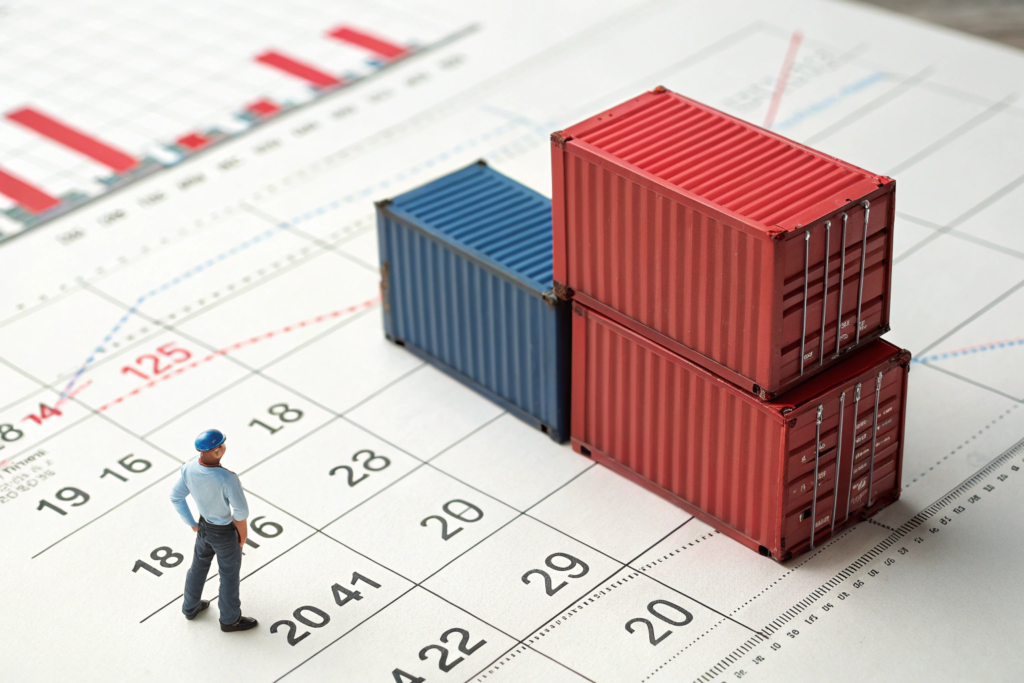
The safest structure for a first large order with a new supplier is to start with a single trial container on a payment-against-documents basis, escalate to a multi-container order with a partial prepayment secured by a standby letter of credit after the first shipment performs satisfactorily, and only then negotiate a full-year contract with volume and pricing commitments, using each completed shipment as a data point that validates the supplier's financial and operational reliability.
This staged approach has several advantages. It tests the supplier's logistics chain—from Yunnan to the port, through customs, across the ocean, and to the buyer's warehouse—with a single container before committing to multiple containers. It tests the supplier's documentation accuracy on a low-stakes transaction. It tests the quality consistency between the pre-shipment sample and the delivered lot. And it builds a personal relationship between the buyer's operations team and the supplier's logistics desk, which is the human infrastructure that will carry the larger orders. Each completed shipment is not just a delivery. It is a proof point that reduces the uncertainty for the next, larger order. I encourage new buyers to follow this graduated approach, even when I am the supplier. I would rather earn a large contract through proven performance than sign it upfront and then face the pressure of a relationship that is financially oversized relative to its operational history.
What is a reasonable trial shipment volume before committing to an annual contract?
A reasonable trial shipment is one 20-foot container, which carries approximately 19 to 20 metric tons of green coffee, equivalent to about 320 bags of 60 kilograms each. This is a standard volume in the containerized coffee trade and is the minimum economic unit for ocean freight. A single container gives the buyer enough coffee to roast for several weeks or months, depending on their scale, and allows them to cup the beans thoroughly across multiple roast batches and brew methods. It also tests the full logistics chain from origin to warehouse door.
For very large buyers who eventually want 10 or 20 containers annually, a single trial container may seem insignificantly small. But the operational learnings from that single container scale proportionally to the larger order. If the supplier cannot deliver one container on time, with accurate documents and within quality spec, they certainly cannot deliver 10. The trial container is a diagnostic tool. It reveals whether the supplier's financial stability translates into operational competence. A supplier who passes the trial container test—on-time delivery, clean documents, quality within range, responsive communication—has demonstrated the basic capabilities that a long-term contract requires. The buyer can then increase the order to three containers for the next shipment window, and to a full quarterly schedule after that. The graduated approach limits financial exposure while building the data set that makes the larger commitment a calculated risk rather than a leap of faith.
How can a payment-against-documents transaction work for a first container order?
Payment against documents, typically executed through a documentary collection or a letter of credit, is the standard instrument for a first transaction between a new buyer and seller. The process works as follows. The supplier ships the coffee and receives the original bill of lading from the shipping line. The supplier then presents a set of specified documents—the commercial invoice, the packing list, the bill of lading, the phytosanitary certificate, the certificate of origin, and the insurance certificate—to their bank. The supplier's bank forwards these documents to the buyer's bank. The buyer's bank notifies the buyer that the documents have arrived. The buyer pays the agreed amount, and the bank releases the documents, which the buyer then uses to clear customs and take delivery of the container.
The payment against documents mechanism protects both parties. The supplier does not ship the coffee without having the documents that control the goods. The buyer does not pay until they see documentary evidence that the coffee has been shipped—the bill of lading proves the container is on the vessel—and that the quality and origin documents are in order. The financial risk is confined to the ocean transit period, during which the buyer's payment is held by the banking system, not by the supplier directly. The buyer can also review the documents before payment and, if the documents do not conform to the contract terms, the buyer can refuse payment. For a first container with a new supplier, a letter of credit or a documents-against-payment collection removes the need for prepayment entirely. The supplier's working capital is tied up during the transit period, but a financially stable supplier should be able to absorb that brief working capital gap. A supplier who insists on full prepayment even for a trial container, and who refuses a documentary collection or letter of credit, is signaling one of two things: either their working capital position is so fragile that they cannot survive a 30-day transit without the buyer's cash, or they do not trust their own documentation to pass a bank's scrutiny. Neither signal is reassuring for a buyer considering a large future order.
Conclusion
Vetting a coffee supplier's financial stability is not an exercise in suspicion. It is an exercise in probabilistic risk management. A buyer who places a large order without checking the supplier's asset base, financial ratios, customs records, banking relationships, and trade references is effectively betting the order value on an unverified assumption of honesty and competence. Most of the time, that bet pays off, because most coffee suppliers are honest and competent. But when it does not pay off, the loss can be existential for the buyer's business. The cost of the due diligence—the time spent reviewing documents, the fee for a third-party verification service, the cost of a trial container rather than a full-scale commitment—is a fraction of the cost of a single defaulted prepayment.
The process I have described builds a defensible picture of a supplier's financial health from multiple independent angles. The land and mill ownership show long-term asset commitment. The audited financial records and ratios show profitability and debt management. The customs records show verified export history. The bank references and trade credit checks show external validation. And the graduated order structure limits exposure while building confidence. Each of these checks individually is useful. Together, they form a due diligence framework that significantly reduces the probability of a financial loss.
If you are a roaster or importer considering a large first order with a Chinese coffee supplier and you want to apply this due diligence framework to us, we at BeanofCoffee welcome that scrutiny. Our export director, Cathy Cai, can provide our land-use rights documentation, our audited financial summary and key ratios, our customs export records for the previous three years, our bank reference letter from our principal bank, and contact details for our trade references upon a signed non-disclosure agreement. Contact Cathy directly at cathy@beanofcoffee.com. Let us build a financial relationship where the numbers are as transparent as the cupping scores.