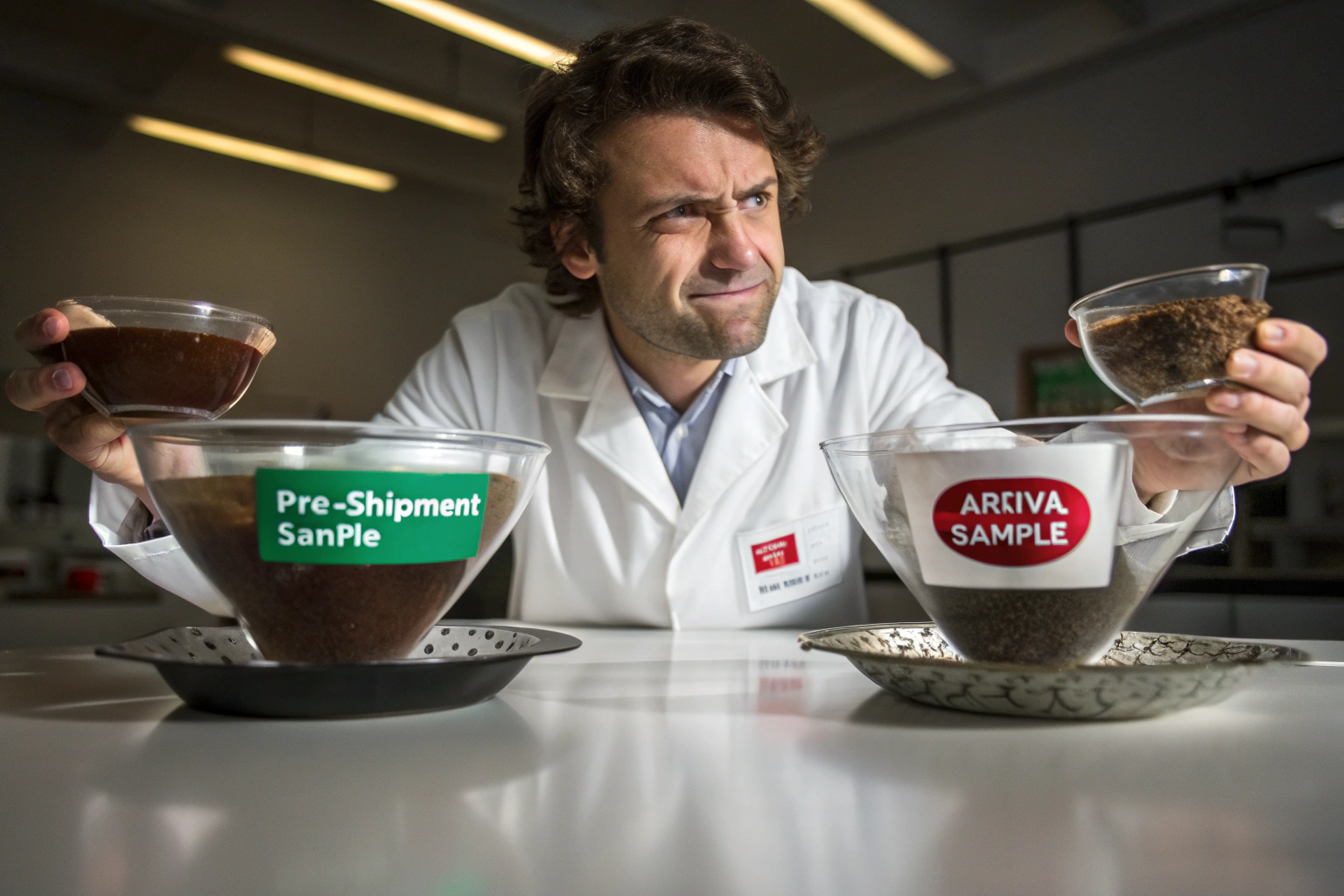
I still remember the email that made me physically sick. It came from a specialty roaster in Melbourne who had been one of my best clients for two years. The subject line was just two words: "Container Issue." I opened the email. Attached was a cupping report comparing the pre-shipment sample I had sent, which had scored 85.5, against the arrival sample from the container that had just landed at Port Melbourne, which scored 81. The arrival sample had a distinct baggy note, a flat acidity, and a slightly musty finish. The roaster was not accusing me of fraud. He was genuinely confused. "The sample you sent was beautiful," he wrote. "What happened between your mill and my roastery?" I did not have an answer at that moment. I had not tampered with the sample. I had not substituted the beans. I had sent what I believed was a representative sample. But clearly, something had gone wrong during the long chain of events between the cupping table in Baoshan and the cupping table in Melbourne.
The disconnect between a stunning pre-shipment coffee sample and a disappointing container arrival is almost always caused by one of four root failures: non-representative sampling where the sender selects only the best beans rather than a true cross-section, quality degradation during ocean transit due to moisture and temperature fluctuations, container contamination from previous cargo residues or improper fumigation, or a mismatch between the sample lot and the shipped lot that occurs when the exporter runs out of the cupped batch and substitutes a lower-quality batch without acknowledging it.
This phenomenon is one of the most corrosive problems in the green coffee trade. It erodes trust between buyers and sellers. It triggers costly quality disputes. It can destroy a supplier relationship that took years to build. And in many cases, it is not the result of intentional deception. It is the result of systemic failures in the sampling, packing, logistics, and inventory management processes. In this article, I want to dissect each of these root causes from the perspective of a producer who has been on the wrong end of that Melbourne email and has spent the years since rebuilding our processes to ensure that the coffee in the container is exactly the coffee on the cupping table.
Why Does Non-Representative Sampling Produce a Misleading Pre-Shipment Profile?
The root cause of many sample-to-container discrepancies is found in the first five minutes of the sampling process. There is a right way and a wrong way to draw a sample from a lot of coffee. The right way is to use a systematic random sampling method—taking incremental samples from multiple bags across the lot, mixing them thoroughly, and then drawing a representative portion. The wrong way is to walk to the top of the pallet, open a few bags that look particularly clean, and scoop beans from the surface. I have seen both methods used in warehouses across the world. The second method is not necessarily fraudulent. It is what a busy warehouse worker does when they are in a hurry and nobody has trained them on sampling protocols. But the result is a sample that systematically overrepresents the best-looking beans and underrepresents the defects that are unevenly distributed throughout the lot.
Non-representative sampling creates a misleading pre-shipment profile because the sample is not a statistically valid reflection of the entire lot's quality distribution, meaning the buyer evaluates and approves a cup score that may be two to four points higher than the true average quality of the container contents, a gap that only becomes visible when the buyer draws their own representative sample upon arrival.
I learned this lesson the hard way, and I now treat sampling as a disciplined procedure, not a casual grab. Every pre-shipment sample we send to a buyer is drawn by a trained quality control technician following the Specialty Coffee Association sampling protocol. The technician uses a bag trier—a long, hollow, pointed metal tube—to extract beans from the center of the bag, not the surface. They sample from a statistically determined number of bags: for a lot of up to 320 bags, which is a full container, the SCA standard requires sampling from at least 20 bags, and we sample from 30 to be conservative. The incremental samples are combined, mixed, and then divided using a sample divider to produce the final 350-gram sample that is vacuum-sealed and shipped. This process produces a sample whose cup score, defect count, and moisture reading will, within a statistically predictable margin of error, match the average quality of the container. It is not a guarantee of perfect consistency—no agricultural product is perfectly uniform—but it eliminates the systematic bias that a casual surface-scoop introduces.
What is the SCA protocol for drawing a statistically valid green coffee sample?
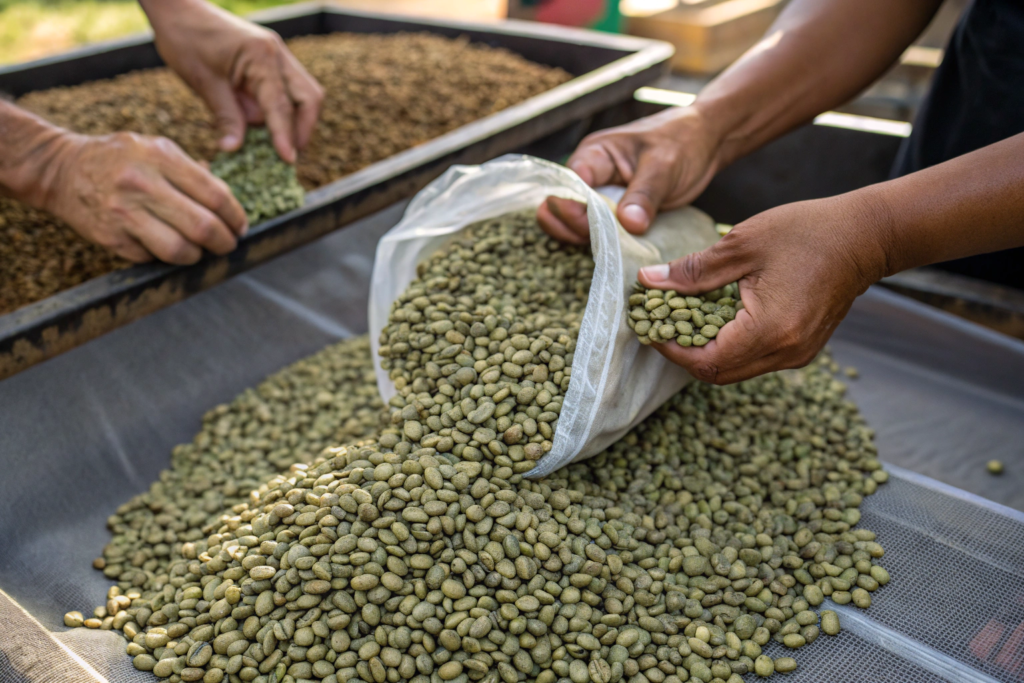
The Specialty Coffee Association Green Coffee Grading Protocol is the industry standard, and its sampling section is precise. The protocol specifies that for a lot of up to 100 bags, a minimum of 10 bags must be sampled using a trier inserted at an angle into the bag to extract beans from multiple positions within the bag. For lots of 101 to 300 bags, 15 bags minimum. For lots above 300 bags, 20 bags minimum. These numbers are not arbitrary. They are calculated to achieve a confidence level where the sample defect count and quality indicators are representative of the entire lot.
The trier itself matters. A short trier that only reaches the outer layer of the bag will miss beans in the center that may have different moisture content or may have been exposed to different conditions during storage. We use a standard 38-centimeter stainless steel trier that reaches deeply into the bag core. The incremental samples from all the bags are placed into a clean, food-grade container and gently mixed by hand to avoid breaking the beans. The mixed composite sample is then passed through a sample divider, also called a riffle splitter, which reduces the large composite down to the required sample weight while maintaining the proportional representation of all the beans in the composite. The final sample is split into three portions: one for the buyer, one for our retained archive, and one for our own pre-shipment cupping. This tripartite split means that if a dispute arises, the retained sample can be sent to an independent third-party lab for binding analysis. A buyer who is evaluating a supplier should ask: "What sampling protocol do you follow, and do you use a trier and a sample divider or a scoop?" The answer to that question correlates strongly with the reliability of the pre-shipment sample.
How can a buyer spot a "cherry-picked" sample from the cupping table alone?
A cherry-picked sample—one that has been manually selected to show only the best beans—often leaves subtle but detectable clues even at the cupping stage. The most telling clue is an implausibly low defect count. Every commercial lot of green coffee, even specialty-grade, contains some number of physical defects: partial blacks, sours, broken beans, insect damage, or shells. The SCA specialty grade threshold allows up to five full defects per 350-gram sample. If a pre-shipment sample arrives with zero defects, absolutely pristine, the buyer should be mildly suspicious. Coffee is an agricultural product, not a manufactured component. Zero-defect lots exist in small competition-grade micro-lots, but for a container-load quantity, a zero-defect sample is a statistical anomaly that warrants a closer look at the sampling methodology.
Another clue is the screen size uniformity. A cherry-picked sample will often have an unnaturally uniform bean size, because the selector has picked out the largest, most consistent beans. Commercial coffee lots contain a natural range of screen sizes that cluster around a peak—say, 80% screen 17/18, with some 16 and some 19. A sample that is 100% screen 18 is again a statistical anomaly for a commercial container. The buyer can also compare the sample's moisture content against the moisture certificate provided by an independent surveyor, if one was requested. A cherry-picked sample drawn from the surface bags may have a different moisture content than the core of the pallet. If the sample moisture reads 11.2% but the container's bill of lading shows a different reading, the discrepancy may indicate non-representative sampling. These individual clues are not conclusive in isolation, but taken together—zero defects, perfect screen uniformity, moisture discrepancy—they form a pattern that a careful buyer learns to recognize. The best defense against cherry-picked samples is to require that the sample be drawn by an independent third-party surveyor at the supplier's expense, a condition I have willingly accepted for skeptical buyers.
What Happens to Green Coffee Quality During Prolonged Ocean Transit?
The pre-shipment sample leaves the dry mill in optimal condition, vacuum-sealed in a GrainPro bag, and travels by air courier to the buyer's cupping lab in three days. The container, by contrast, is loaded onto a truck, driven to the port, stacked on a vessel, and spends 14 to 40 days at sea, depending on the route and destination. During that voyage, the container is subjected to conditions that can be brutal. The internal temperature of a container stowed on the upper deck, under direct equatorial sun, can exceed 60°C in the top layer. At night, the temperature can drop sharply, creating condensation cycles inside the container. The coffee beans, being hygroscopic, absorb and release moisture with each of these cycles. The volatile aromatic compounds that give specialty coffee its distinctive character begin to degrade. The fats in the bean oxidize. The cup score drops.
Prolonged ocean transit degrades green coffee quality through a combination of temperature cycling, container sweat condensation, and oxidative aging, with the damage concentrated in the beans closest to the container walls and roof, meaning that even a perfectly representative pre-shipment sample will diverge from the arrival quality if the container is not properly lined, ventilated, and protected from the most extreme thermal conditions.
The degradation is not uniform across the container. The beans in the bags stacked against the container walls, and especially the bags in the top tier near the roof, experience the most extreme temperature and condensation stress. This is why a buyer's arrival sample, if drawn from the top front bag, can taste noticeably worse than a sample drawn from the center of the pallet. The pre-shipment sample was drawn from the warehouse inventory before container stuffing, from bags that had not yet experienced these stresses. The arrival sample reflects the effect of the voyage on the specific bag sampled. Understanding this physical reality is essential to interpreting the difference between pre-shipment and arrival cupping scores.
How does "container sweat" cause mold and musty notes in the top-layer bags?
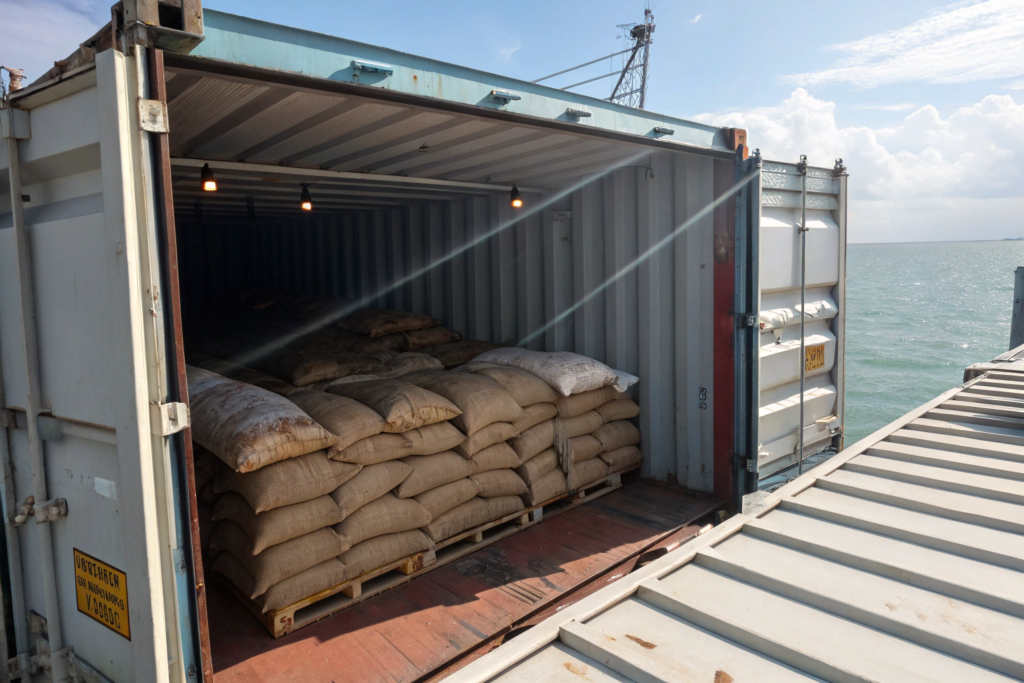
Container sweat, also called container rain, is a physical phenomenon that occurs when warm, moisture-laden air inside the container condenses on the cooler metal surfaces of the roof and walls. During the day, the container interior heats up, and the air inside can hold more moisture. Some of this moisture comes from the coffee beans themselves, which release small amounts of water vapor during temperature cycles. At night, when the exterior temperature drops—especially on ocean voyages where the night air over the water is cool—the container's metal roof cools rapidly. The warm, humid air inside hits the cold metal roof, and the water vapor condenses into liquid droplets. These droplets drip down onto the top layer of coffee bags.
If the coffee bags are not protected by a waterproof liner, the droplets soak into the jute and then into the beans. The wetted beans reabsorb moisture, and their water activity climbs above the critical 0.60 threshold where mold can grow. Within days, musty, baggy, and phenolic flavors develop. The damage is often confined to the top one or two layers of bags, so the majority of the container may be perfectly sound. But if the buyer's arrival sample happens to be drawn from one of those top-layer bags, the cupping result will be terrible. This is why we line every container with a continuous kraft paper and plastic barrier on the floor and walls, and we place an absorbent desiccant layer above the top bags before closing the doors. We also use GrainPro bags for all our export shipments, which provide an individual hermetically sealed barrier around each bag of beans. The GrainPro bag prevents moisture exchange between the bean and the container atmosphere, which both protects the bean from external moisture and prevents the bean from contributing moisture to the container air. These protective measures add cost—roughly $1.50 to $2.00 per bag—but they are far cheaper than the cost of a rejected container.
Can temperature logging devices provide a transit condition record for insurance claims?
Yes, and I recommend them for any high-value specialty shipment. A temperature logging device, also called a temperature data logger or a USB temperature recorder, is a small, battery-powered sensor that is placed inside the container before the doors are sealed. It records the internal temperature at preset intervals—typically every 15 or 30 minutes—for the entire duration of the voyage. When the container is opened at the destination, the logger is retrieved, plugged into a computer, and the temperature history is downloaded as a graph and a data file. That data file is an objective record of the thermal conditions the coffee experienced.
If the temperature graph shows that the container interior exceeded 50°C for several consecutive days, and the arrival sample shows heat-related quality degradation—flat acidity, baked notes, accelerated oxidation—then the temperature data supports a claim that the damage occurred during transit due to the shipping line's container placement. If the container was supposed to be stowed below deck as per the booking instructions, and the temperature data proves it was stowed on deck instead, the shipping line may be liable. The temperature logger turns a subjective argument about whether the container got too hot into an objective, data-based claim. I now include a temperature logger as standard on all our container shipments to destinations with long ocean transits or known heat exposure risks, such as containers passing through the Red Sea in summer or crossing the Pacific to Australia. The logger costs about $80. For a container of specialty coffee worth $60,000 or more, that is a negligible insurance premium. Buyers who are placing large orders should request temperature logging as a condition of the shipment. A supplier who resists this request is either unaware of the thermal risk—which is a competence concern—or does not want a record of the conditions their coffee is subjected to—which is a transparency concern.
How Does Container History Create an Invisible Contamination Threat?
The shipping container is not a blank slate. Before it carried your coffee, it carried something else. It might have been electronics, textiles, furniture, or industrial chemicals. The shipping line cleans containers between loads, but the cleaning standard is "swept clean," which means the floor is swept and any visible debris is removed. It does not mean the container is sanitized to food-grade standards. Residues, odors, and chemical traces from previous cargoes can linger on the floor, the walls, and in the ventilation openings. Green coffee is one of the most absorbent commodities in global trade. It will soak up odors like a sponge.
Container contamination is an invisible threat that occurs when residual chemicals, industrial odors, or fumigant gases from previous cargoes are absorbed by the green coffee beans during transit, producing taints—phenolic, chemical, garlic, or diesel-like notes—that are not present in the pre-shipment sample and that render the container's contents commercially unusable, with the damage often not covered by standard cargo insurance because it falls under "inherent vice" or "insufficient packing" exclusions.
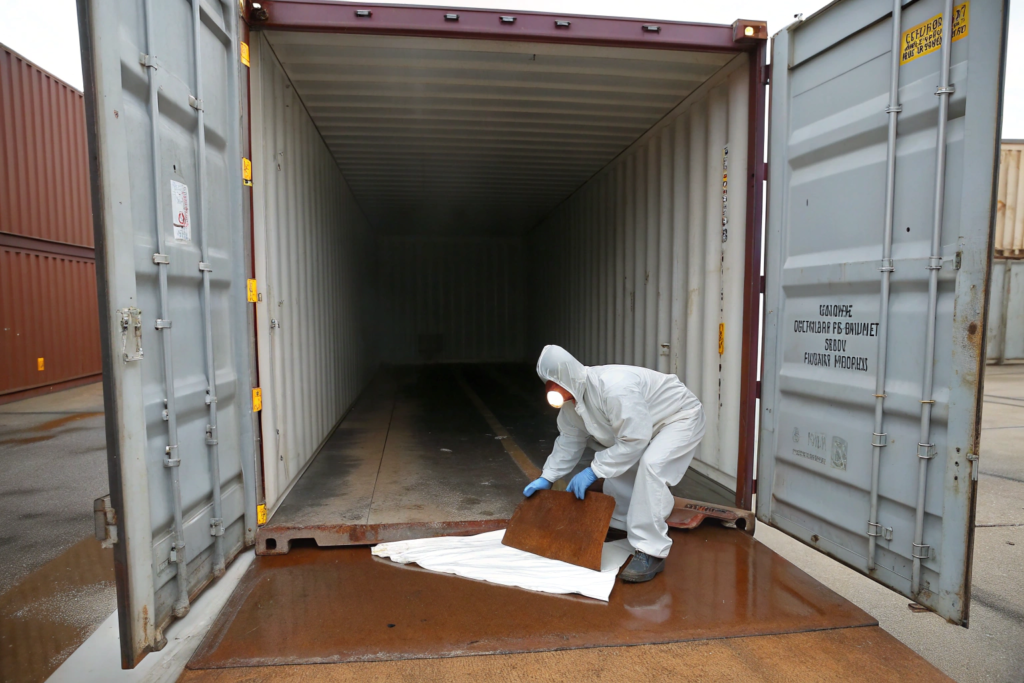
The contamination risk is especially acute for coffee because the beans are shipped in jute bags that are porous to gases and vapors. Even if the container floor looks clean, chemical residues can be present at concentrations that are invisible but sufficient to taint the entire container load. I once received a container that had previously carried garlic powder. The container had been cleaned, but the garlic odor had penetrated the wooden flooring planks. Within 48 hours of loading, the coffee absorbed the odor. The entire container was rejected by the buyer, and the insurance company initially denied the claim, arguing that I should have inspected the container more carefully before loading. That experience taught me to treat container inspection and preparation as a non-negotiable quality control step. We now have a written container acceptance procedure that every loading supervisor follows. The container is inspected for visible cleanliness, but more importantly, it is smelled. The supervisor enters the empty container, closes the doors, waits 30 seconds, and then breathes in deeply. Any chemical, musty, or unusual odor disqualifies the container. We take timestamped photos of the clean container interior and a signed inspection checklist, which is included in the shipment documentation. These records provide evidence that we exercised due diligence, which is essential if a contamination claim must be pursued against the shipping line.
What are the most common previous cargo residues that taint green coffee?
The list of previous cargo residues that can taint coffee is long and unpleasant. The most common offenders are industrial chemicals: phenolic compounds from plastic resins, styrene monomer from rubber products, and solvents from paint or adhesive manufacturing. These chemicals have strong, penetrating odors that persist in container flooring and wall coatings long after visible residues are removed. Agricultural products can also be problematic. Containers that previously carried animal feed, fishmeal, spices, or raw hides can leave protein-based odors that the coffee absorbs. Garlic and onion powder residues are notorious for tainting coffee, and the taint is irreversible—once the volatile sulfur compounds from garlic bind to the coffee bean's oils, no amount of re-drying or airing out will remove them.
A less obvious but equally dangerous contamination source is the container floor itself. Many container floors are made of plywood treated with pesticides, typically halogenated phenols, to protect against insect infestation during the container's life. These pesticides can off-gas inside the closed container environment, especially at high temperatures, and be absorbed by the coffee. This is a known issue in the food logistics industry, and it has led to the development of "food-grade" containers with specially treated or sealed floors. However, not all shipping lines maintain dedicated food-grade container fleets, and a standard container may have pesticide-treated flooring. For sensitive cargo like specialty coffee, the container floor should be covered with a barrier, such as a continuous kraft paper liner and a food-grade plastic sheet, before any bags are loaded. This barrier prevents both chemical migration from the floor and moisture uptake from the wood.
How can a buyer include a container inspection clause in the supply agreement?
A container inspection clause is a simple but effective addition to a coffee supply contract. The clause I include in our sales agreements states that the seller shall, prior to stuffing, inspect the container for cleanliness, odors, structural integrity, and pest infestation, and shall reject any container that does not meet food-grade transport standards. The clause further states that the seller shall provide the buyer with a copy of the container inspection checklist, signed and dated by the loading supervisor, as part of the shipment documentation package. The clause also permits the buyer or their representative to be present at the container stuffing, either in person or via a live video stream, at the buyer's option and cost.
For the buyer, this clause does not eliminate contamination risk—no clause can—but it shifts the burden of proof in a way that protects the buyer's interests. If a contamination problem arises and the seller cannot produce a signed container inspection checklist, the seller's due diligence is called into question, and the buyer's claim for compensation is strengthened. If the seller can produce the checklist, and it shows the container passed inspection, then the contamination likely occurred from a source that was not detectable by reasonable inspection, and the parties can jointly pursue a claim against the shipping line. The container inspection clause also signals that the seller is aware of the contamination risk and has a process to manage it. A seller who resists including such a clause may not be managing the risk at all. For buyers placing container orders, I recommend including a container inspection provision and asking to see a sample checklist before the first shipment. It is a small contract amendment that addresses a potentially catastrophic quality problem.
Why Does Lot Mismatch Occur Between the Sample and the Shipped Container?
The most straightforward explanation for a sample-to-container quality gap is also the most distressing: the beans in the container are not the same beans that were in the sample. This is not always fraud. Sometimes it is the result of an honest inventory management failure. The exporter cupped and approved a specific lot, prepared a sample from that lot, shipped the sample to the buyer, received approval, and then, when it was time to load the container, discovered that the approved lot did not have enough volume to fill the order. Perhaps the lot was partially sold to another buyer in the meantime. Perhaps the lot's remaining bags were found to have quality issues upon re-inspection. Perhaps the warehouse supervisor simply made a picking error and loaded bags from the wrong pallet.
Lot mismatch between the pre-shipment sample and the shipped container occurs when the exporter substitutes a lower-quality batch for the approved lot, either deliberately to fill an inventory shortfall or accidentally due to poor warehouse management and lot segregation, a failure that is detectable after the fact by comparing the arrival sample's physical characteristics—screen size distribution, moisture content, and color grading—against the retained pre-shipment sample.
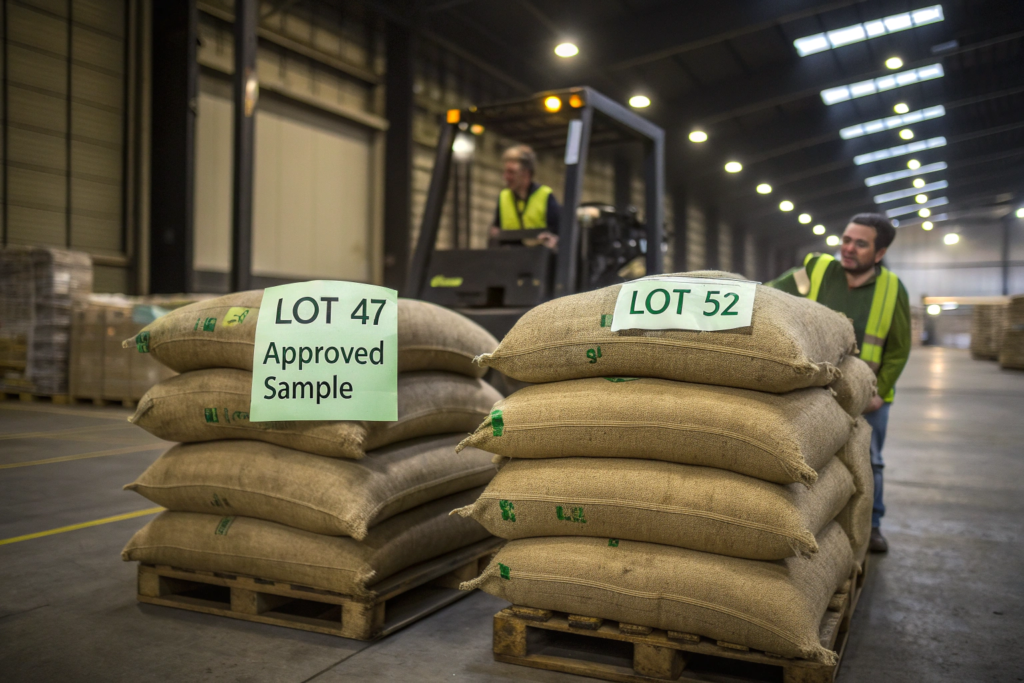
The defense against lot mismatch is not trust. It is verification. The pre-shipment sample that we send to the buyer is drawn from the exact same pallets that will be loaded into the container. Those pallets are tagged with the lot code, sealed with tamper-evident tape, and segregated in a locked section of the warehouse until the container is stuffed. The loading is supervised by a quality control technician who verifies the lot code on each pallet against the approved lot code on the shipment order. The technician signs a loading checklist that records the pallet numbers and lot codes loaded, and this checklist is provided to the buyer with the shipping documents. This process is not complex. It is basic inventory discipline. But it requires a warehouse management system that tracks lot codes from the dry mill to the container, and it requires a culture of compliance where warehouse workers understand that mixing lots without authorization is a terminable offense.
How can a retained sample be used to prove a lot mismatch after delivery?
The retained sample is the buyer's post-delivery forensic tool. When we ship a container, we retain a 350-gram vacuum-sealed sample from the exact composite that produced the buyer's pre-shipment sample. This retained sample is labeled with the lot code, the shipment date, and the container number. It is stored in a locked, climate-controlled archive room. If the buyer receives the container and the arrival quality is significantly worse than the pre-shipment sample, the retained sample is the reference standard. The buyer can request that both the retained sample and the arrival sample be sent to an independent, SCA-certified third-party cupping lab for a blind comparison. If the retained sample cups at 85 and the arrival sample cups at 81, but both samples are confirmed to be Arabica of the same variety and processing method, a lot mismatch is not necessarily proven—the difference could be transit damage. But if the physical grading reveals differences in screen size distribution, bean density, or color that exceed the normal variation within a single lot, then a lot mismatch becomes the probable explanation.
The retained sample can also be subjected to chemical analysis. The lab can test the fatty acid profile, the caffeine content, or even, in some advanced labs, the stable isotope ratios that are characteristic of specific growing altitudes and microclimates. If the arrival sample's chemical signature differs materially from the retained sample's, the lot mismatch hypothesis gains strong scientific support. The retained sample system converts an accusation—"you switched the lot"—into an investigable question—"do these two samples match?"—that can be answered with data. A supplier who enthusiastically offers a retained sample archive as part of the contract is demonstrating confidence in their inventory management. A supplier who resists the retained sample concept may have something to hide.
What role does a third-party container stuffing surveyor play in ensuring shipment integrity?
A third-party container stuffing surveyor is an independent inspector, typically from an international inspection company like SGS, Bureau Veritas, or Cotecna, who is hired by the buyer to witness the container loading at the supplier's warehouse. The surveyor's job is to verify that the coffee loaded into the container is the same coffee that was sampled and approved. The surveyor arrives at the warehouse on the scheduled loading day. They inspect the empty container for cleanliness and odors, as described earlier. They then check the lot codes on the pallets against the approved lot code. They witness the drawing of incremental samples from the bags being loaded, combining them into a composite sample that is split into three portions: one for the buyer, one for the seller, and one for the surveyor's own retention.
The surveyor monitors the entire loading process, takes photographs, and issues a formal survey report that includes the container inspection checklist, the lot code verification, the sampling witness statement, and the seal number affixed to the container doors after loading. This report is a legally recognized document in international trade. If a quality dispute arises, the surveyor's report provides independent evidence that the contractually specified lot was loaded into the container. The cost of a container stuffing survey for green coffee is typically between $400 and $800, depending on the location and the inspection company. For a first-time buyer relationship or for a very high-value specialty lot, this cost is a prudent investment in supply chain integrity. I welcome third-party surveyors in our warehouse. Their presence validates our processes and gives the buyer peace of mind that the container they paid for contains the beans they approved.
Conclusion
The gap between an amazing pre-shipment sample and a terrible container arrival is not a mystery. It is a physics problem, a statistics problem, and a process problem. The physics problem is the brutal thermal and humidity environment inside a shipping container crossing the equator, which degrades bean quality in predictable ways unless actively managed with liners, GrainPro bags, and temperature logging. The statistics problem is the non-representative sample that cherry-picks the best beans and creates an inflated quality expectation that the full lot simply cannot meet. The process problem is the lot mismatch or the contaminant residue that injects a completely different coffee, or a tainted coffee, into what was supposed to be a known, approved shipment. Each of these problems has a corresponding solution: systematic sampling and retained sample archives, container preparation and inspection protocols, lot segregation and third-party loading surveys.
When a buyer receives a container that does not match the sample, the instinct is often to blame the supplier for fraud. In some rare cases, that accusation is justified. But in the majority of cases I have seen, the supplier was not fraudulent—they were sloppy. Their sampling method was casual. Their container prep was non-existent. Their warehouse lot tracking was disorganized. The result for the buyer was the same as if they had been cheated: a container of coffee that cannot be sold at the expected quality grade. The difference is that sloppiness is detectable through the processes I have described, and a supplier who is sloppy but honest can be improved by a buyer who demands better. A supplier who refuses to improve, however, is indistinguishable from one who is dishonest, and the buyer should walk away.
If you have experienced the frustration of a sample-to-container quality gap with another origin, and you are looking for a Chinese coffee supplier whose processes are built to prevent exactly that outcome, we at BeanofCoffee are ready to demonstrate our system. Our export quality manager, Cathy Cai, can provide a detailed description of our SCA-standard sampling protocol, our container preparation and inspection procedures, our temperature logging data from recent shipments, and a sample retained sample archive certificate for a recent container. Contact Cathy directly at cathy@beanofcoffee.com. Let us ensure that the coffee you cup in your lab is the coffee that arrives in your warehouse—not a disappointing surprise.