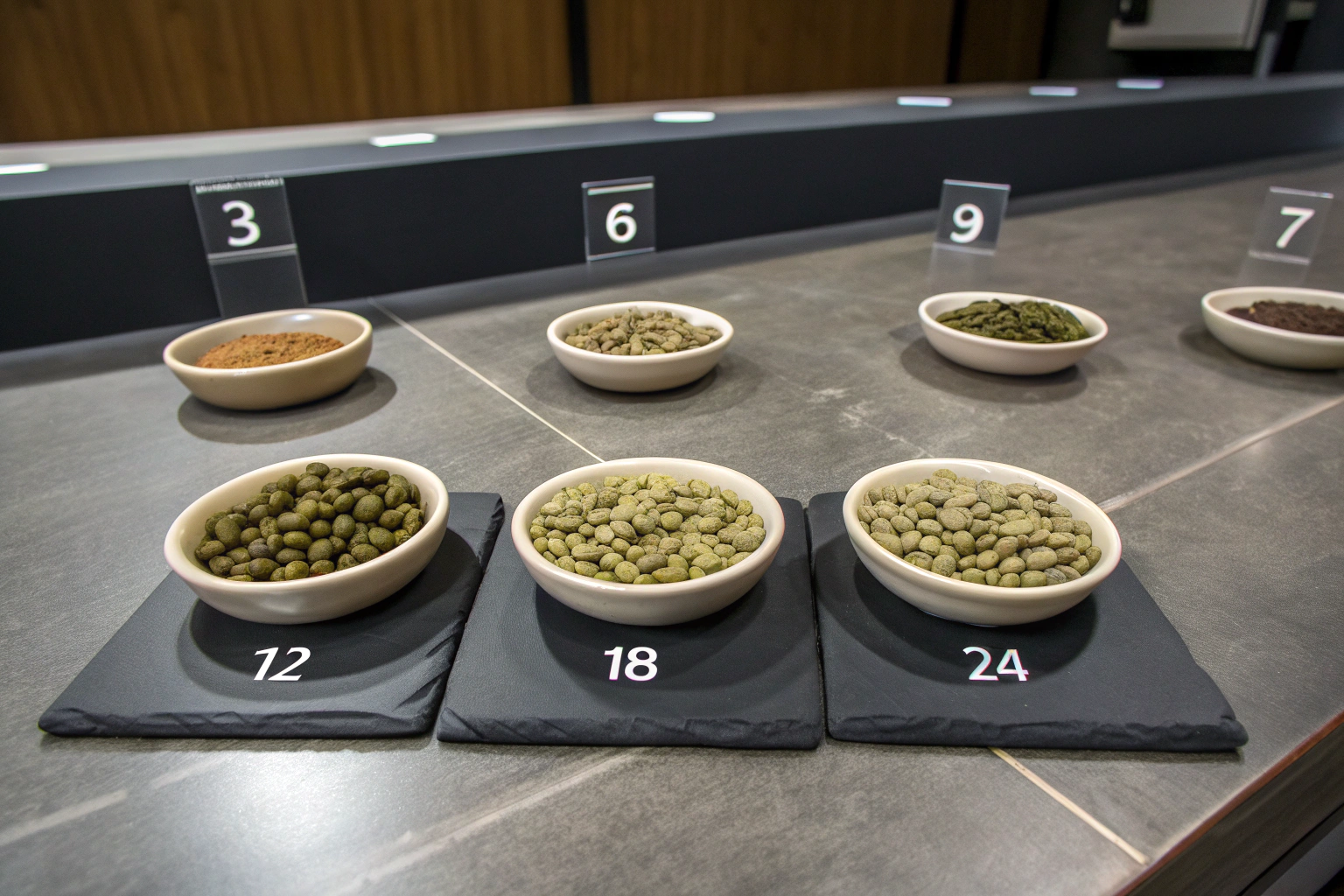
A roaster from Texas sent me a photo last month. Two piles of green coffee beans side by side on his cupping table. "Both are supposed to be the same washed Yunnan Catimor," he wrote. "But one is dark green and smells fresh. The other is pale and smells flat. The supplier says they are from the same harvest. Is that possible?"
I looked at the photo. The answer was obvious to me, but I understood his confusion. Both piles were green. Neither was brown or spoiled. But the pale pile was clearly older. The color difference told the story. The pale beans had faded from their original vibrant blue-green to a tired, washed-out khaki. They had been sitting in a warehouse for too long, probably in less-than-ideal conditions. The supplier might not have been lying about the harvest. But the storage history was different. The age was different.
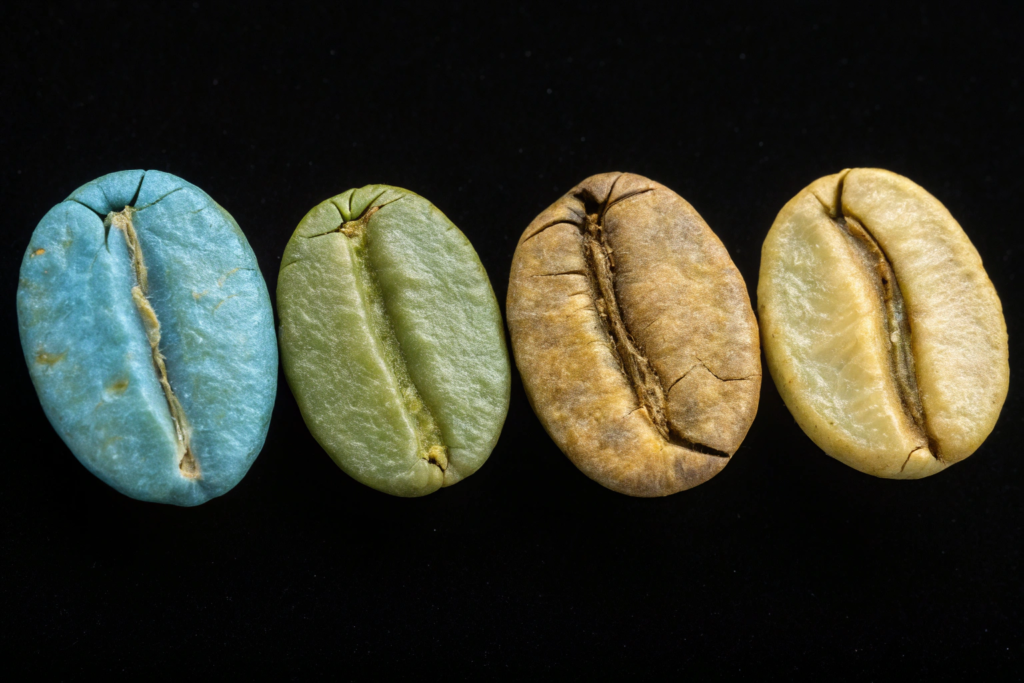
The age of green coffee beans can be estimated by their color shift from vibrant blue-green or jade-green when fresh to pale olive, yellow, and eventually faded brown as chlorophyll degrades and the bean oxidizes over months and years, with the color change being most rapid when beans are stored in warm, humid, or oxygen-exposed conditions.
Color is the first, fastest, and most accessible indicator of green coffee age. You do not need a moisture meter. You do not need to roast a sample. You just need your eyes and a little training. Here is what the color of green coffee reveals about its age, what accelerates fading, and how to use color as part of your green coffee inspection protocol.
What Color Changes Occur as Green Coffee Ages?
Fresh green coffee, properly processed and dried, has a distinctive color. Washed Arabica from high altitude is a deep blue-green or jade-green. The blue tint comes from chlorophyll, the same pigment that makes plant leaves green. The chlorophyll is preserved inside the bean because the bean was dried slowly, in its parchment shell, protected from direct sunlight and oxygen.
As green coffee ages, the chlorophyll degrades. The process is slow but inevitable. The degradation is accelerated by oxygen, heat, light, and humidity. As the chlorophyll molecules break down, the blue tint fades first. The bean shifts from blue-green to a more olive or yellow-green. The color becomes less vibrant, less saturated, more muted.
Over more time, the green fades almost entirely. The bean becomes a pale straw yellow or a washed-out tan. The surface may look slightly dusty or dull. The center cut, which was pale and tight on a fresh bean, may darken and widen. The bean has lost most of its original pigment. It is now visibly aged.
The color degradation sequence from fresh to aged green coffee follows a predictable path: vibrant blue-green fades to olive-green, then to pale yellow-green, and finally to a dusty tan or khaki-brown, with the color shifts driven by chlorophyll breakdown and lipid oxidation on the bean's surface.
Eventually, if the coffee is old enough, the color shifts into brown territory. This is not the same as a roasted brown. It is a pale, faded, papery brown. The bean looks tired. It looks old. The aroma is flat and dusty. At this stage, the coffee is past its useful life for specialty purposes. It may still be safe to drink, but the vibrancy and sweetness are gone. The cup will taste hollow, papery, and flat.
How Does the Center Cut Reveal Bean Age?
The center cut is the thin line that runs along the flat side of the coffee bean. It is a remnant of the bean's development inside the cherry. On a fresh, well-processed bean, the center cut is pale—white or very light tan—and tightly closed. It is almost invisible unless you look closely.
As the bean ages, the center cut changes. It darkens. The pale color shifts to a tan, then to a light brown, then to a dark brown. It widens. The tight line opens slightly, revealing the darker interior. The darkening and widening are caused by oxidation. The center cut is a weak point in the bean's structure. Oxygen enters here first. The lipids and proteins in the center cut area oxidize and darken.
A dark, wide center cut on an otherwise green bean is a clear sign of age. The bean may still look green on the outside, but the center cut tells you that oxidation has begun. The coffee is not necessarily defective, but it is not fresh. It will cup with some flatness, some loss of acidity, some loss of sweetness.
I train my QC team to inspect the center cut on every sample. A quick check under a desk lamp reveals the age story. A lot with uniformly pale, tight center cuts is fresh. A lot with darkened, widened center cuts is aging. A lot with mostly dark center cuts is old and should be evaluated carefully before purchase.
What Is the Difference Between Aged and Faded Beans?
There is an important distinction between deliberately aged coffee and coffee that has simply faded due to poor storage. They look different. They cup different. They should be valued differently.
Deliberately aged coffee, sometimes called "vintage" or "aged" coffee, has been stored under controlled conditions for a specific period, often one to three years. The storage is in a cool, dry, dark environment. The beans are often turned or rotated. The aging is intentional and monitored. The color of deliberately aged coffee is a uniform, mellow golden brown. The surface is clean. The beans look well-preserved, just older. The cup has the distinctive aged character—smooth, mellow, low acidity, with notes of cedar and tobacco. Some buyers seek this profile.
Faded coffee is coffee that has aged unintentionally and poorly. It was stored in a hot warehouse, or in a humid environment, or in bags that were not hermetic. The color is uneven—some beans faded more than others. The surface may look dusty or mottled. The beans may have lost density and feel light and hollow. The cup is flat, papery, and stale. There is no desirable aged character. There is only loss.
The visual difference between aged and faded is the difference between a well-preserved antique and a neglected old object. The aged coffee has dignity. The faded coffee has decay. The buyer should learn to distinguish the two and value them accordingly. For more on deliberate coffee aging practices, the Specialty Coffee Association has published resources on post-harvest handling and storage that mention controlled aging.
Why Does Green Coffee Fade Over Time?
Green coffee fades because it is a living, organic product. It contains chlorophyll, lipids, proteins, and volatile aromatic compounds. All of these degrade over time. The rate of degradation depends on the storage environment. Heat accelerates chemical reactions. Humidity promotes hydrolysis and mold. Oxygen drives oxidation. Light degrades chlorophyll directly.
The color change from green to yellow to brown is primarily driven by chlorophyll degradation and lipid oxidation. Chlorophyll is a fragile molecule. It breaks down when exposed to light, heat, and oxygen. The breakdown products are colorless or yellowish. As the chlorophyll disappears, the underlying yellow and brown pigments in the bean become visible.
Lipid oxidation also contributes to the color change. Coffee beans contain oils. These oils oxidize over time. The oxidation products are darker than the original oils. The bean surface, where oxygen contact is greatest, darkens first. The oxidation works its way inward. A bean that has been stored in a warm warehouse for a year will show significant surface oxidation even if the interior is still relatively intact.
Green coffee fades because chlorophyll degrades and lipids oxidize over time, with heat, humidity, oxygen, and light acting as catalysts that accelerate these degradation reactions, turning the vibrant blue-green of a fresh bean into the dull yellow-brown of an aged one.
The rate of fading is not linear. A coffee stored in a cool, dark, dry warehouse in GrainPro bags may still look vibrant and green after 12 months. The same coffee stored in a hot, bright, humid warehouse in jute bags may look faded and yellow after 6 months. The harvest date is only one factor. The storage history is equally important.
How Does Heat Accelerate the Loss of Green Pigment?
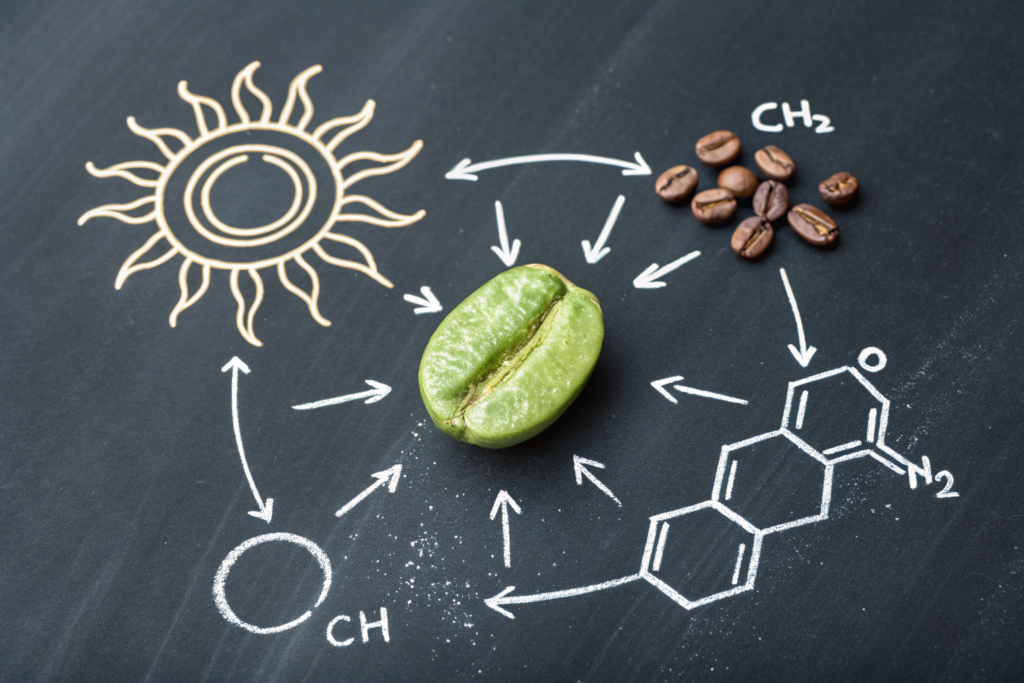
Heat is the primary accelerator of chemical reactions. A rough rule of thumb from chemistry is that the rate of a reaction doubles for every 10-degree Celsius increase in temperature. This applies to chlorophyll degradation and lipid oxidation in coffee.
A coffee stored at a stable 20 degrees Celsius will age slowly. Its color will remain vibrant for 12 to 18 months. A coffee stored at 30 degrees Celsius will age roughly twice as fast. Its color will fade noticeably within 6 to 9 months. A coffee that spent time in a shipping container crossing the equator, where internal temperatures can reach 50 degrees Celsius, will age very rapidly. A few weeks at that temperature can do the damage of months at cooler temperatures.
The temperature history of a coffee is often invisible to the buyer. The coffee arrives. It looks faded. The supplier says the harvest was recent. What the supplier may not know or may not disclose is that the container sat on a dock in a hot port for three weeks before shipping. The heat did the damage.
I ship all our coffee in containers with temperature data loggers. The logger records the temperature inside the container throughout the journey. If a buyer ever questions the freshness of a lot, I can show them the temperature history. The coffee left our warehouse at 20 degrees Celsius and never exceeded 30 degrees during transit. The color they see is not from heat damage in transit. For more on managing heat exposure, World Coffee Research provides best practices for green coffee transport and storage.
Why Does Jute Storage Age Beans Faster Than GrainPro?
The storage container makes a significant difference in the rate of color fading and overall aging. Jute bags and GrainPro bags represent two extremes of protection.
Jute is the traditional coffee bag material. It is made from natural plant fibers. It breathes. This means oxygen, moisture, and odors pass freely through the bag. The coffee inside a jute bag is in constant contact with the ambient air. If the warehouse is humid, the coffee absorbs moisture. If the warehouse is hot, the coffee heats up. If the warehouse has odors, the coffee absorbs them. The color fades more quickly because the chlorophyll and lipids are continuously exposed to oxygen.
GrainPro is a modern hermetic storage solution. The multi-layer plastic bag is impermeable to oxygen, moisture, and odors. Once sealed, the coffee inside a GrainPro bag creates its own micro-environment. The beans consume the residual oxygen through respiration. The oxygen level inside drops to near zero. The oxidation reactions that fade color and degrade flavor are virtually halted.
I have compared the color of the same Catimor lot stored for 12 months in jute and in GrainPro. The GrainPro beans looked almost identical to the day they were packed—vibrant blue-green, tight center cut. The jute beans were visibly faded—olive-yellow, slightly dusty surface. The difference was stark. The GrainPro added months of visual and sensory freshness.
I ship all our specialty lots in GrainPro inside jute. The outer jute provides physical protection and traditional appearance. The inner GrainPro provides the hermetic seal that preserves color and freshness. The small added cost of GrainPro is one of the best investments a producer or buyer can make in quality preservation.
How Can You Use Color to Assess a Green Coffee Sample?
Color evaluation is a skill that improves with practice. The key is to have a consistent inspection protocol and, ideally, a reference sample for comparison.
The first step is to inspect the sample under good, consistent lighting. Natural daylight is best. A full-spectrum desk lamp is a good alternative. Avoid yellow or dim lighting. The light should be bright enough to reveal subtle color differences. Spread about 100 grams of green coffee on a white or neutral gray surface. A white ceramic tray or a sheet of white paper works well.
The second step is to evaluate the overall color impression. Is the color vibrant or dull? Is it uniform or mottled? Does it lean blue-green, olive-green, yellow-green, or brown? The overall impression gives you a quick read on the likely age and storage history. A vibrant, uniform blue-green lot is fresh and well-stored. A dull, mottled, yellow-brown lot is old or poorly stored.
Assessing green coffee by color requires inspecting the sample under full-spectrum light on a white background, evaluating the overall color vibrancy, uniformity, and hue, and then comparing it against a known fresh reference sample of the same origin and processing method to detect subtle fading that indicates age.
The third step is to compare the sample against a reference. The best reference is a sample of the same coffee from a known fresh lot. Keep a small sealed bag of each fresh arrival as a color reference for future shipments. The side-by-side comparison makes subtle color differences obvious. A lot that looked fine in isolation may look clearly faded next to the fresh reference.
The fourth step is to inspect the center cuts. Pick up a few beans. Look at the center cut under magnification if possible. Pale and tight is fresh. Dark and wide is aged. The center cut often tells a more honest story than the surface color.
What Color Tells You About the Bean's Cup Potential?
Color is not just about age. It is a predictor of cup quality. The relationship between color and cup is strong enough that many experienced cuppers can estimate a cupping score just by looking at the green coffee.
A vibrant, blue-green lot with tight, pale center cuts will almost always cup clean, bright, and sweet. The color indicates that the chlorophyll is intact, the lipids are unoxidized, and the volatile aromatics are preserved. The cup will have lively acidity, distinct flavor notes, and a clean finish. This is the coffee you want to buy.
A pale, yellow-green lot with some dark center cuts will cup with reduced acidity, muted flavors, and a slightly flat finish. The coffee is not defective. It is just past its peak. It may still be usable as a blender or for a medium roast where the origin character is less critical. But it will not sing as a single origin.
A faded, brownish lot with dark, wide center cuts will cup flat, papery, and possibly astringent. The acidity will be low and dull. The sweetness will be diminished. The aftertaste will be dry and short. This coffee is past its useful specialty life. It should be rejected or purchased at a steep discount for low-end blending.
I cup every lot before shipment and correlate the cup scores with the color assessment. The correlation is not perfect—processing defects can exist in fresh-looking beans, and exceptional processing can produce a decent cup from slightly faded beans. But over hundreds of lots, the color-cup correlation is strong. A vibrant green lot will almost always cup better than a faded one from the same origin and harvest.
How Can You Use a Color Reference Kit for Consistency?
A color reference kit is a set of green coffee samples at known ages and storage conditions. It is a visual calibration tool. It removes the subjectivity from color assessment and provides a consistent benchmark.
I recommend that roasters build a simple reference kit from their own inventory. When a fresh lot arrives, seal a small sample—100 grams—in a vacuum bag and label it with the arrival date and the lot code. Store it in a freezer or a cool, dark place. This is the "fresh" reference for that lot.
When a new shipment of the same lot arrives, pull out the fresh reference. Spread both samples on a white tray side by side. The color difference, if any, will be immediately visible. If the new shipment matches the fresh reference, the storage and transit were good. If the new shipment is noticeably faded, there was a problem somewhere in the supply chain.
Over time, the roaster can build a library of reference samples representing different ages and conditions. A sample faded by heat. A sample faded by humidity. A sample aged gracefully in cool storage. A deliberately aged sample. The reference library trains the eye to distinguish between these categories.
I provide a fresh reference sample to any buyer who requests one with their first order. The reference is sealed in a vacuum bag and shipped with the lot. When the next shipment arrives, the buyer has the reference ready for comparison. The system is simple and effective.
How to Verify Harvest Freshness Beyond Color?
Color is a powerful indicator of age, but it is not the only one. A comprehensive freshness assessment combines color with other physical, sensory, and documentary evidence.
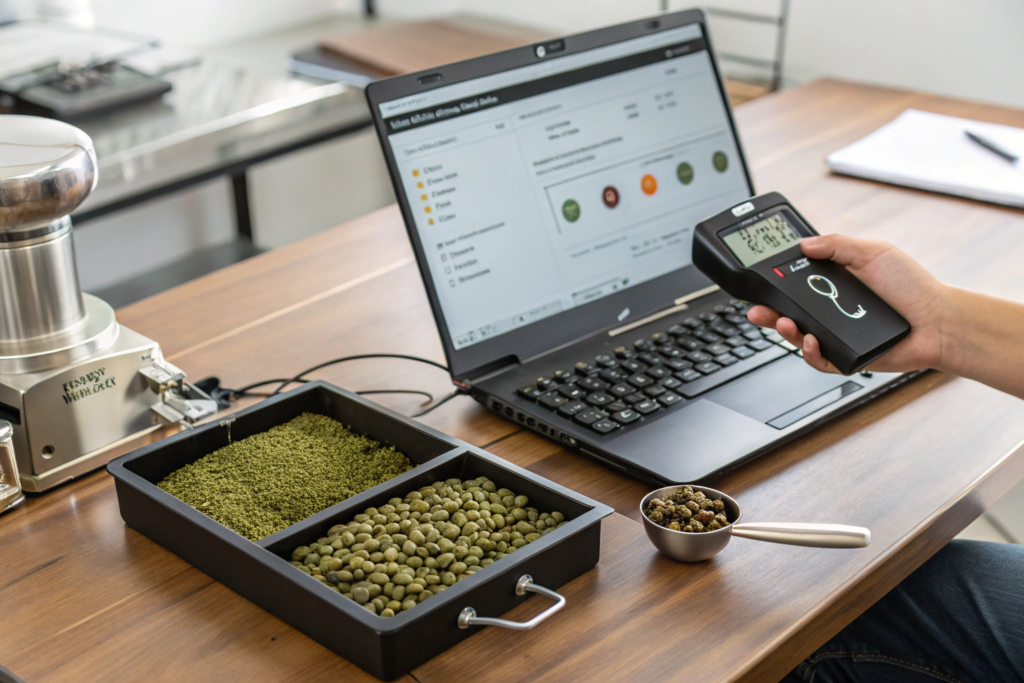
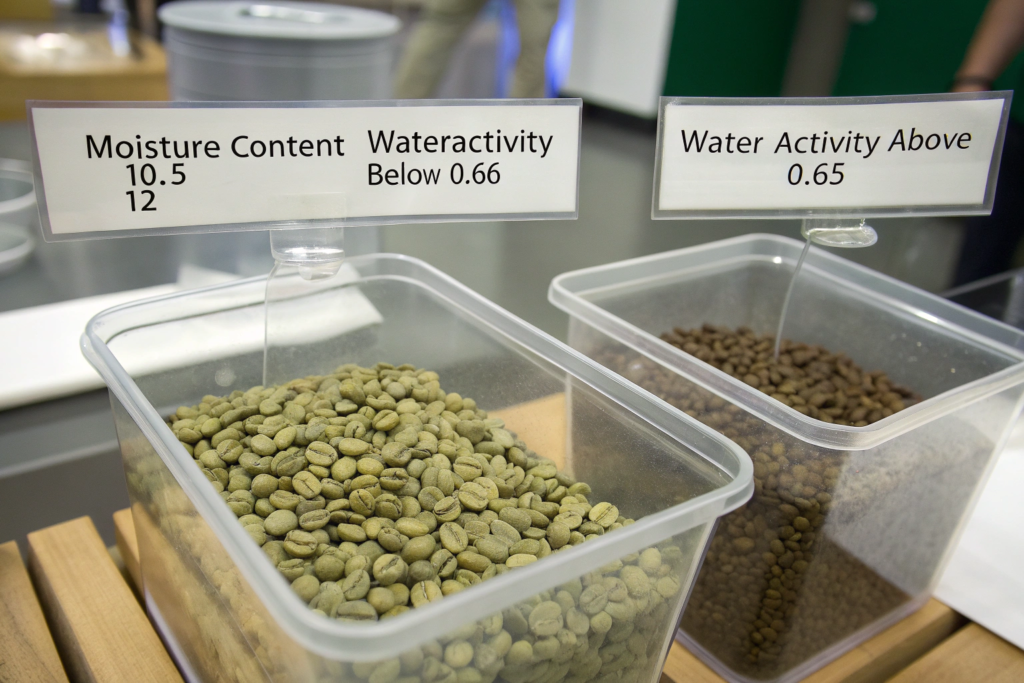
Moisture content and water activity are physical measurements that complement color. Fresh green coffee should have a moisture content between 10.5 and 12 percent and a water activity below 0.60. A coffee that looks green but has water activity above 0.65 may have been stored in high humidity. It may not show color fading yet, but it is at risk of rapid deterioration. A coffee that looks faded and also has low moisture and high water activity is almost certainly old and poorly stored.
Aroma is a sensory complement to color. Fresh green coffee smells mild, grassy, and slightly sweet. Aged green coffee smells flat, papery, dusty, and sometimes slightly sour. The aroma tells you what the color suggests. A vibrant green lot with a flat, papery aroma is a contradiction that warrants further investigation.
Verifying harvest freshness beyond color requires checking the moisture content and water activity readings, evaluating the dry aroma for papery or dusty notes, cupping a roasted sample for flatness, and reviewing the documented harvest date, storage conditions, and any temperature data from transit loggers.
The harvest date on the documentation should be consistent with the color assessment. A lot labeled "Harvest January 2025" that is pale yellow in May 2025 does not match. Either the harvest date is inaccurate, or the storage was extremely poor. The buyer should ask for an explanation and evidence. Cupping is the final verification. A roasted sample will reveal what the green color suggests. A fresh-looking lot should cup vibrant and sweet. A faded lot will cup flat and muted. The cupping confirms or refutes the color assessment.
What Documentation Confirms a Lot's Harvest Date?
Documentation is the paper trail that supports or contradicts the physical evidence. A legitimate harvest date is part of the lot's traceability record.
The lot card that I provide with every shipment includes the exact harvest dates for the specific plot. Not a generic "2024/2025 harvest." Specific dates: "Harvested January 15 to January 28, 2025." The specificity makes the claim verifiable. If the buyer visits the farm, they can check the harvest records. The dates are real.
The processing log also supports the harvest date. The fermentation log, the drying log, and the milling log all have dates. The dates should form a consistent timeline. The harvest date is the start. The drying completion date is roughly three to four weeks later for washed coffee. The milling date is months later, after resting. The shipment date is after milling. The timeline should make sense.
Buyers should also ask about the storage conditions between milling and shipment. Where was the coffee stored? At what temperature and humidity? In what type of bags? The storage history is as important as the harvest date. A coffee harvested recently but stored in a hot, humid warehouse may be in worse condition than an older coffee stored in a cool, dry environment.
At Shanghai Fumao, every lot ships with a complete lot card that includes the harvest date, the processing dates, the storage conditions, and the moisture and water activity readings at the time of shipment. The documentation is transparent. The buyer can cross-check the dates against the physical evidence.
How Does Sample Roasting Reveal Age That Color Hides?
Color is a useful screening tool, but it is not infallible. Some coffees look vibrant but cup old. Some coffees look faded but cup surprisingly well. Sample roasting reveals the truth.
A sample roast should be light—Agtron 65 to 70 whole bean—to preserve the bean's intrinsic character and avoid masking age under roast flavor. The roast should be cupped at 24 hours post-roast and again at 7 days post-roast. The aging test reveals the coffee's stability.
An aged coffee, even if it looked green, will reveal itself in the cup. The acidity will be muted or absent. The body will be thinner. The flavor notes will be flat and generic. The aftertaste will be papery and dry. The coffee may taste acceptable on day one but decline sharply by day seven. The rapid decline is a hallmark of aged beans.
A fresh coffee will cup with bright acidity, distinct flavor notes, and a clean, sweet finish. It will hold its character well over the seven-day aging test. The color and the cup will tell the same story.
I recommend that buyers sample roast and cup every new lot, regardless of how the green coffee looks. The color assessment and the cupping assessment together provide a complete picture of the coffee's freshness and quality. Neither alone is sufficient. For standardized sample roasting guidelines, the Specialty Coffee Association publishes roast sample protocols used by Q-graders globally.
Conclusion
The color of green coffee is a visible, accessible, and reliable indicator of its age and storage history. Fresh, well-stored coffee is vibrant blue-green. Aged or poorly stored coffee fades to olive, yellow, and eventually brown. The center cut darkens and widens. The color change is driven by chlorophyll degradation and lipid oxidation, accelerated by heat, humidity, oxygen, and light.
Color assessment is a skill that improves with practice and with the use of reference samples. A roaster who inspects every green coffee arrival under good light, compares it against a fresh reference, and notes the color trends over time will develop a sharp eye for freshness. The color assessment, combined with moisture readings, aroma evaluation, documentation review, and sample roasting, provides a comprehensive freshness evaluation.
Freshness matters because it directly affects cup quality and customer satisfaction. A faded, aged coffee will never taste as good as a fresh one, no matter how skillfully it is roasted. The best roast profile in the world cannot restore faded chlorophyll or un-oxidize lipids. The quality ceiling is set by the green coffee. Color is the first clue to where that ceiling is.
If you want to experience the vibrant color and fresh cup of our current harvest Yunnan lots, contact Cathy Cai at BeanofCoffee. She can send you samples with documented harvest dates, processing logs, and moisture and water activity readings. She can also include a vacuum-sealed fresh reference sample for your color reference kit. Her email is cathy@beanofcoffee.com. She responds quickly and can answer any questions about our harvest timeline, storage practices, and quality documentation.