I once had a roaster call me, frustrated. "The last container of your Yunnan was a 10/10," he said. "This one is... an 8. It is still good, but it is not the same. My customers are noticing." I took that call personally. Consistency, for a specialty roaster, is more important than an occasional spectacular score. You build your brand on a promise of a specific taste experience. If that taste wavers, you lose trust. The pain of inconsistency is a slow erosion of your most valuable asset: your reputation. I pulled the records for both lots. They were the same grade, same screen size, same processing method. Both cupped over 84 points. So what was different?
The flavor consistency of coffee beans is affected by the rigorous control of variables across the entire seed-to-cup journey, primarily the genetic uniformity of the planted varietal, the stability of the micro-climate and soil nutrition at origin, the unwavering precision of post-harvest processing and drying, the integrity of the lot during dry milling and density sorting, and the protection of the green bean from moisture and age during storage and shipping.
Consistency does not happen by accident. It is not a single machine or a single step. It is a relentless, obsessive-compulsive commitment to controlling the variables that nature and man throw at us. At Shanghai Fumao, this is our daily work. Let me break down the key pillars of consistency, from our farm in Baoshan to your roastery door. You can also see our overall approach on our Quality Control page.
How Does Genetic Uniformity and Farm Management Impact Consistency?
The journey to a consistent cup begins in the nursery, not the cupping lab. The genetic blueprint of the coffee tree is the single most foundational variable. If you plant a field with a mix of random, unselected seedlings, you will never achieve a uniform cup, no matter how good your processing is. The beans will have different inherent potentials for sweetness, acidity, and body.
Genetic uniformity, achieved through the deliberate planting of a single, well-adapted varietal across a defined block, combined with standardized farm management practices including pruning, fertilization, and irrigation, creates a homogeneous raw material that is the essential prerequisite for a consistent flavor profile year after year.
This is the agricultural foundation. Without it, you are blending variability from the very start.
Why Does Selective Breeding of Catimor Produce a More Uniform Cup?
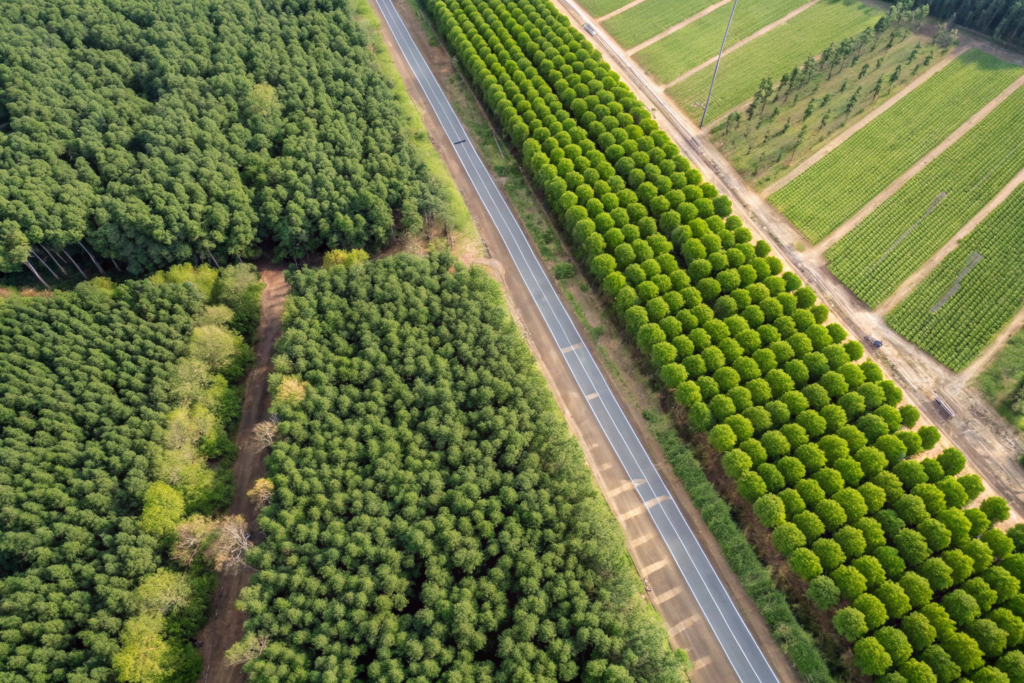
Our choice to cultivate specific selections of Catimor, particularly the newer P3 and P4 lines, is not random. It is a deliberate decision to maximize both quality and consistency at scale.
- The Problem with Old Catimor: Older, heterogeneous populations of Catimor were genetically diverse. Trees in the same field could produce cherries with wildly different flavor profiles—some clean and sweet, others displaying the harsh, herbal, or astringent notes that historically gave Catimor a bad reputation. This inherent variability made it impossible to guarantee a uniform lot.
- The Solution of Selective Breeding: The P3 and P4 selections were developed through years of meticulous selective breeding by organizations like World Coffee Research and local research institutes. They isolated individual mother trees that consistently produced superior cups and were genetically stable. These trees were then cloned or used to produce uniform seed stock.
- The Result: When we plant an entire block with Catimor P3, we know with a high degree of certainty how those trees will perform. They will mature at a similar rate. Their cherries will have a similar sugar development potential. Their beans will have a predictable density. This genetic uniformity is the first, and arguably most powerful, tool we have to reduce variability in the cup. It transforms coffee from a collection of individuals into a crop.
At Shanghai Fumao, over 95% of our Arabica production is this improved, genetically uniform Catimor stock. This is a deliberate strategy for consistency. We explore exotic varietals like Geisha on isolated trial blocks, but our core Grade 1 production is built on this reliable, high-quality genetic base.
How Do Standardized Pruning and Irrigation Schedules Reduce Flavor Variation?
Even with identical genetics, a coffee tree's behavior is heavily influenced by how it is managed. An old, stressed tree produces a different quality of cherry than a young, vigorously managed tree. Standardized agronomy eliminates this variable.
How We Standardize Tree Management:
- Systematic Stumping (Pruning): We operate on a rigorous, multi-year block-by-block stumping cycle. A coffee tree's productivity and bean density peak a few years after being severely pruned, then gradually decline. By stumping a fixed percentage of our trees each year on a rotating schedule, we ensure that the entire estate's age profile and productivity remain constant year after year. We avoid the "boom-and-bust" cycles of unmanaged smallholder plots.
- Precision Nutrition (Irrigation and Fertilization): We use drip irrigation in our key blocks to apply water with precision, mitigating the stress of any dry spells. More importantly, our fertilization is not based on a calendar; it is based on leaf tissue and soil analysis. Our agronomists regularly test samples to determine the exact nutritional needs of each block. The trees receive exactly what they need, when they need it. This prevents the feast-or-famine nutrient swings that can cause dramatic variations in cherry composition and, consequently, cup flavor.
This combination of genetic uniformity and standardized, data-driven agronomy creates a remarkably consistent raw material. The cherries arriving at our wet mill in December of this year are physiologically nearly identical to the cherries that arrived in December of last year. This is the starting point for consistency. For more on good agricultural practices, World Coffee Research is the definitive scientific resource.
How Does Processing Control Create a Repeatable Flavor Signature?
The agricultural inputs provide the raw potential. The post-harvest processing is where that potential is captured or lost. Inconsistent processing is the single biggest source of flavor variation in specialty coffee. A single poorly managed fermentation tank or an unevenly dried batch can ruin the consistency of an entire lot.
Processing control creates a repeatable flavor signature by treating fermentation and drying not as passive, natural processes, but as active manufacturing steps with documented, precise, and repeatable protocols for time, temperature, and environmental conditions, ensuring every cherry from the same block undergoes the exact same transformation into green coffee.
This is the industrial discipline of specialty coffee. It is what separates a professional estate from a smallholder who relies on instinct and luck.
How Are Fermentation Time and Temperature Logged for Traceability?
Fermentation is a delicate biochemical process. It is where the sugars and pectins in the coffee mucilage are broken down by naturally occurring yeasts and bacteria. This process must be carefully controlled to develop the desired flavor notes (like the clean sweetness of our washed coffee) without over-fermenting and creating sour, vinegary defects.
Our Fermentation Control Protocol:
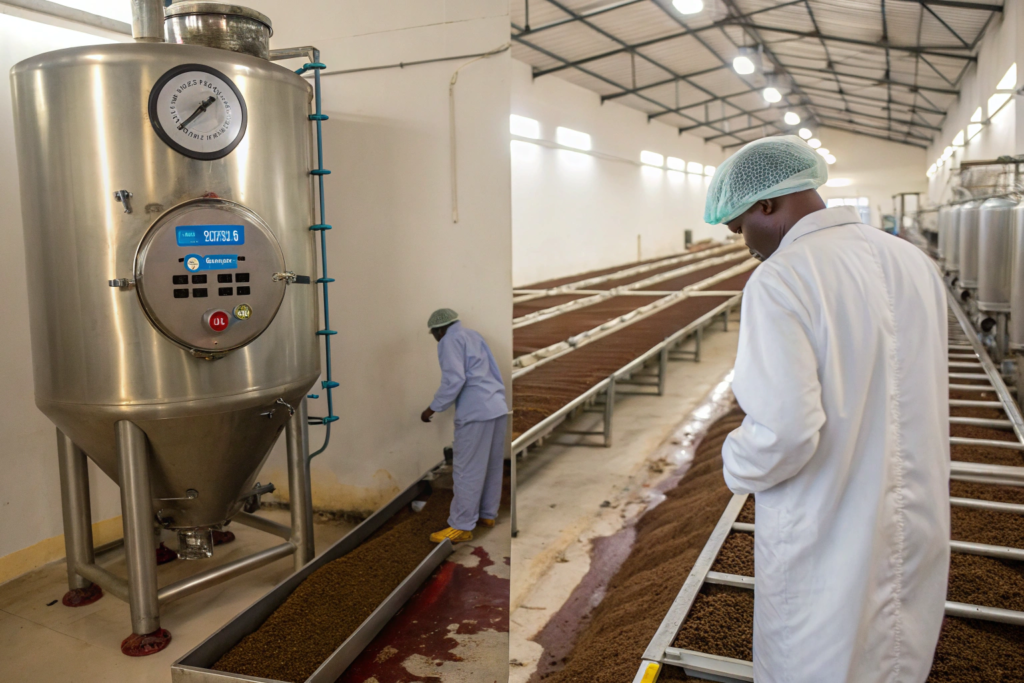
- Standardized Tanks: We use clean, stainless steel fermentation tanks that allow for easy temperature monitoring and cleaning. This prevents the buildup of undesirable bacteria that can occur in concrete or tiled pits.
- Real-Time Monitoring: Our quality technicians monitor the temperature of the fermenting mass continuously. Temperature is the engine of fermentation; warmer temperatures speed it up uncontrollably. We track it to ensure it stays within a consistent, optimal range.
- Logged & Timed: Every fermentation batch is logged in our digital system. The lot number, the volume of cherry, the start time, the end time, and the peak temperature are recorded. We determine the endpoint not by a fixed clock, but by a combination of time and a sensory check by an experienced technician. When the mucilage breaks down and the coffee develops the right "feel," it is washed. The logged data allows us to replicate the precise conditions that produced the best sensory results.
This data is part of the lot's permanent traceability file. If a specific lot cups exceptionally well, we can analyze the fermentation log and replicate those exact conditions for the next harvest. This is how we turn a good outcome into a repeatable process.
Why Are Raised African Beds Non-Negotiable for Drying Consistency?
This is a point we return to again and again, but it is the cornerstone of consistent processing. Drying on bare earth or concrete patios is inherently uneven and introduces a high risk of soil contact and musty defects. Raised African beds are the professional standard.
The Consistency Benefits of Raised Beds:
- Uniform Airflow: The suspended mesh surface allows air to circulate freely around the entire bean, from above and below. This creates a uniform drying environment. The beans on the bottom dry at the same rate as the beans on the top.
- Controlled Drying Speed: We can control the drying speed by adjusting the thickness of the parchment layer and by using shade netting to block intense midday sun. This prevents "case hardening," where the outside of the bean dries too quickly, trapping unwanted moisture inside. A consistent, moderate drying curve is essential for a stable, even flavor.
- Strict Turning Schedules: Drying parchment is not a "set and forget" task. Our teams follow a strict raking schedule, turning the coffee every 30-60 minutes during the first few days to ensure absolute evenness. This prevents the development of "hot spots" and ensures every single bean in the lot reaches the target moisture at the same rate.
At Shanghai Fumao, our extensive raised bed infrastructure and our disciplined drying protocols guarantee that the parchment leaving our wet mill is uniformly dried. This uniformity is non-negotiable. It directly translates to a clean, consistent cup, free from the defects of uneven drying. Learn more in our article on Why Do Some Chinese Coffee Beans Taste Earthy and How to Avoid It?. The science of drying is well-documented by the Coffee Quality Institute.
How Does Dry Milling and Density Sorting Ensure Physical Uniformity?
The coffee is now dry, green, and rested. But it is not yet a uniform lot ready for export. Within the dried lot, there is still natural physical variation: different bean sizes, different densities, and the presence of occasional defects missed during cherry sorting. Dry milling is the engineering process that transforms the lot into a physically homogeneous product.
Dry milling, specifically the combination of precision sizing screens and density sorting via a gravity separator, ensures physical uniformity by removing beans of different sizes and weights, guaranteeing that every bean in the final export bag has nearly the same thermal mass and will roast at the exact same rate, a critical factor for a consistent flavor development in your roastery.
This is where we eliminate the "why did half this batch roast darker?" problem. It is physics, not magic.
How Do Sizing Screens and Gravity Tables Work Together for a Uniform Roast?
These two machines are the dynamic duo of the dry mill. They work in sequence to create a lot of exceptional physical consistency.
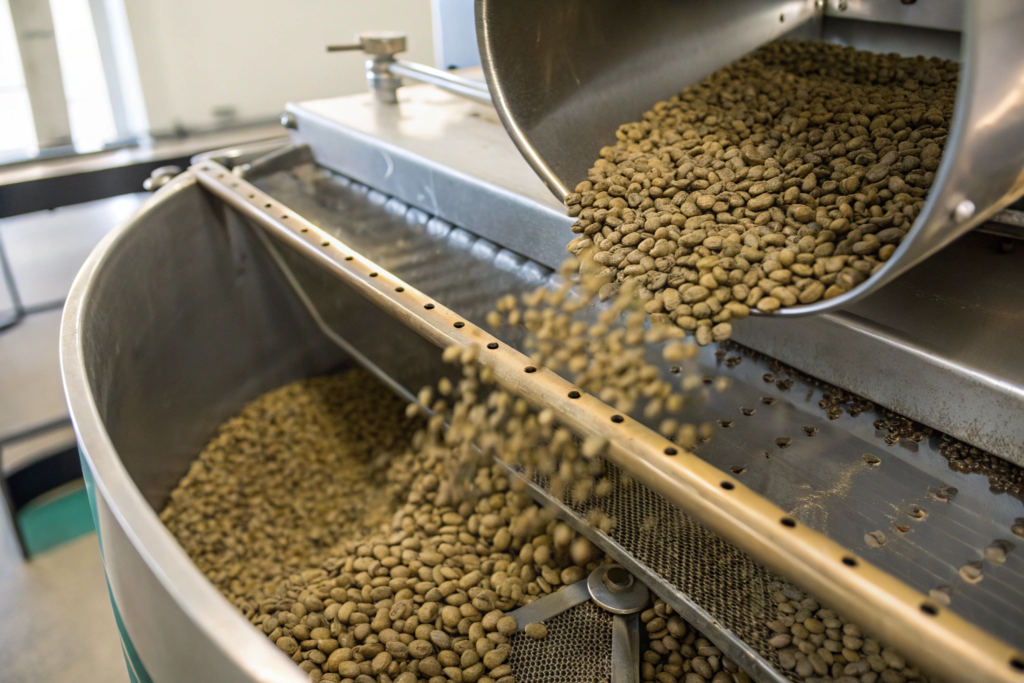
- Sizing Grader (The Screens): This machine uses a stack of vibrating, precisely perforated metal screens. The coffee is poured in, and the screens separate the beans by their physical dimensions. Our Grade 1 Arabica specification mandates that at least 90% of the beans are retained on a Screen 17 (17/64 of an inch). This ensures all the beans are large and of a similar size. We remove the smaller Screen 14/15 beans for commercial grade.
- Gravity Separator (The Density Table): The beans that pass the size test are then sent to the gravity separator. This machine uses a vibrating, tilted deck with forced air. The heavy, dense beans, which are packed with flavor and will roast evenly, sink to the bottom and walk uphill. The lighter, less dense beans, hollow shells, and any remaining insect-damaged beans float on the air cushion and slide downhill. This separates them not by size, but by density.
The result is a bag of coffee that is both uniform in size and uniform in density. As we discuss in our article on Why Is Bean Density Testing Crucial for High Altitude Coffee Roasting?, this is the key to a flawless roast. Every bean has the same thermal mass, absorbs heat at the same rate, and reaches first crack at the same time. The roast color is even. The flavor is consistent. Our modern, five-line dry mill is where we manufacture this physical perfection for every export lot.
Why Is the Removal of "Quakers" Critical for a Clean Finish?
A "Quaker" is an underdeveloped, immature bean, often caused by unripe cherry being picked, or by drought stress. In the green state, they can sometimes be hard to spot. After roasting, they are glaringly obvious as pale, peanut-colored beans that refused to darken.
The Disproportionate Impact of Quakers on Flavor Consistency:
- Flavor Defect: Just a few Quaker beans in a batch can introduce a distinct peanutty, bready, and astringent flavor note that muddies the entire cup. It is a defect that ruins an otherwise clean finish.
- The Density Solution: Quaker beans are significantly less dense than healthy, ripe beans. This is where our gravity separator becomes a precision quality-control instrument. Because Quakers are light, they are efficiently ejected in the "lights" fraction during density sorting.
Our rigorous density sorting protocol is designed to eliminate these flavor-spoiling defects. It ensures that the coffee you receive will roast to a uniform, rich brown color and cup with a clean, consistent finish. This is the attention to detail that separates a professionally milled specialty coffee from a commodity lot. You can identify these roast defects yourself using guides from Roast Magazine.
How Does Post-Milling Storage and Transport Preserve Consistency?
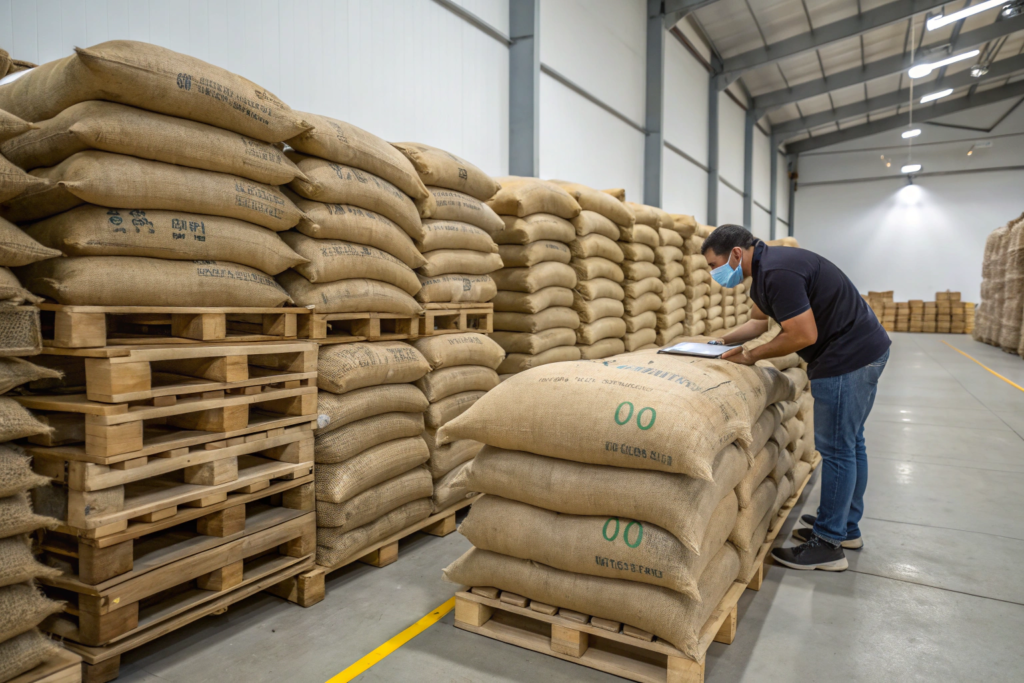
The coffee is milled. It is perfect. But it is still a living, hygroscopic product. The final battle for consistency is fought against time, moisture, and oxygen. If a perfectly prepared lot is stored or shipped improperly, all the previous work is undone. The flavor will degrade, and worse, it will degrade inconsistently, with the bags on the top of the pallet fading faster than those on the bottom.
Post-milling storage and transport preserve consistency by immediately sealing the coffee in an impermeable GrainPro hermetic liner, which locks in its precise moisture content and water activity, and by using temperature data loggers during ocean transit to ensure the container environment remains stable and does not subject the coffee to harmful temperature swings or condensation.
This final stage is about preservation. It is about ensuring that the consistent, high-quality product we created actually arrives at your roastery in that exact same condition.
How Does Immediate GrainPro Bagging Lock In the Milling Profile?
As we have explained in detail in our article on Why Do Coffee Roasters Prefer GrainPro Bags for Shipments from Asia?, the GrainPro liner is not just a bag. It is a preservation technology.
- The Sealing Protocol: The moment our green coffee exits the gravity separator and is bagged, it is sealed inside a GrainPro TranSafeliner. This is not done later. It is an immediate, inline process. The coffee's optimal moisture (10.5-11.5%) and water activity (< 0.60 aw) are locked in at the peak of its physical perfection.
- Preventing Moisture Migration: The hermetic barrier prevents the coffee from absorbing ambient moisture from the warehouse air or, crucially, from the humid ocean air during transit. This prevents the staling reactions and mold risks that come with fluctuating moisture.
- Preventing Odor Absorption: The liner also protects the clean, sweet aroma of the coffee from being tainted by external odors—be it from the jute bag, the container, or other cargo.
By locking in the physical and chemical state of the coffee at the moment of bagging, we ensure that what you receive is a preserved snapshot of that moment. The consistency created in the mill is frozen in time until you break the seal.
How Do Transit Data Loggers Verify Consistent Conditions at Sea?
We do not guess whether the container environment was stable. We measure it. For every full-container shipment, we place battery-powered digital data loggers inside, buried within the coffee pallets. This provides an auditable record of the journey.
- Temperature & Dew Point Tracking: The logger records the temperature and humidity inside the container every hour for the entire voyage. As we discuss in our guide on How to Ensure Coffee Beans Are Fresh Upon Arrival?, the key is monitoring the dew point to ensure condensation ("container sweat") never formed.
- A Verifiable Record: Upon arrival, you or we can download the data from the logger. The resulting graph provides a clear, visual record of the environmental stability during transit. A flat, stable line is proof of a well-managed journey. A spike in humidity or a sudden temperature drop is a red flag that can be investigated.
These data loggers are the final piece of the consistency puzzle. They provide the proof that the coffee's journey across the ocean was as carefully managed as its journey through our mill. They connect our promise of consistency at origin with your verification of that consistency at the destination.
Conclusion
The flavor consistency of coffee beans is not the result of a single magic bullet. It is the cumulative result of a relentless, obsessive attention to detail across a multi-year agricultural and industrial process. It begins with the genetic uniformity of the seed and the standardized care of the living tree in the field. It continues through the precisely controlled fermentation and uniform drying that capture the flavor potential. It is physically engineered into the bean through precision milling and density sorting. And it is preserved and protected by hermetic packaging and monitored logistics until the moment it reaches your roastery door.
At Shanghai Fumao, our vertically integrated model gives us a unique ability to control this entire chain. Every step is on our land, under our management, and executed to our exacting internal standards. Consistency is our promise to you. It is what allows you to build your brand and delight your customers, cup after cup, year after year.
If you would like to explore the specific data and protocols behind our commitment to consistency, or if you would like to cup consecutive lots to taste the uniformity for yourself, we can arrange that. Email Cathy Cai. Ask for a "Consistency Verification Sample Set." Contact Cathy at: cathy@beanofcoffee.com