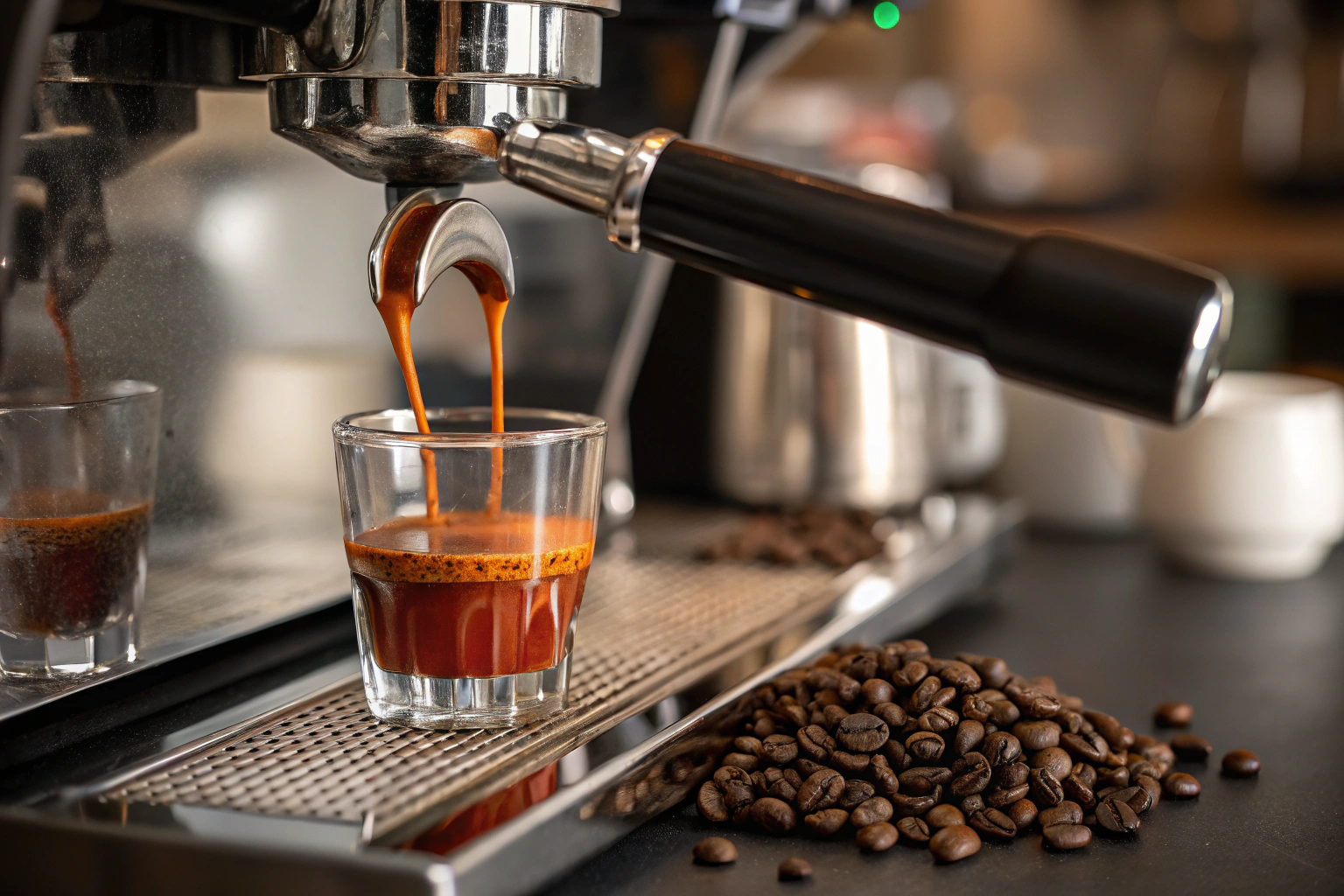
I once had an espresso blend client who was pulling his hair out. He was a perfectionist. He had dialed in his signature blend—a beautiful combination of our Yunnan and a natural Ethiopian—and it was singing. Thick crema, balanced sweetness, perfect 28-second shots. Then, the next container arrived. The green coffee was the same grade, the same cupping score. But suddenly, his shots were erratic. One would run at 22 seconds and taste sour. The next would choke the machine at 35 seconds and taste bitter and hollow. He called me, frustrated. The culprit was not the coffee's quality. It was its screen size distribution. A small, unnoticed shift in the percentage of smaller beans had thrown his entire extraction into chaos.
Screen size analysis is important for espresso blend buyers because the physical dimensions of the coffee bean directly and predictably dictate the bean's density and the rate at which it absorbs heat during roasting, and a narrow, consistent screen size distribution is the only way to ensure every bean in a blend roasts to the exact same degree, producing a uniform extraction and a consistent, repeatable espresso shot.
You cannot taste screen size. But you can taste its effects. For an espresso blend, where consistency is the absolute king, screen size is a non-negotiable, objective physical parameter. It is the foundation upon which a reliable roast profile is built. Let me explain the physics at play and how we control it to protect your espresso program. You can see the exacting specifications we use on our Green Coffee Specifications page.
How Does Screen Size Distribution Directly Impact Roast Uniformity?
The journey to a perfect espresso shot begins not in the portafilter, but in the roasting drum. And the single biggest factor determining whether a batch of coffee roasts evenly is the uniformity of the beans' physical size. This is simple physics.
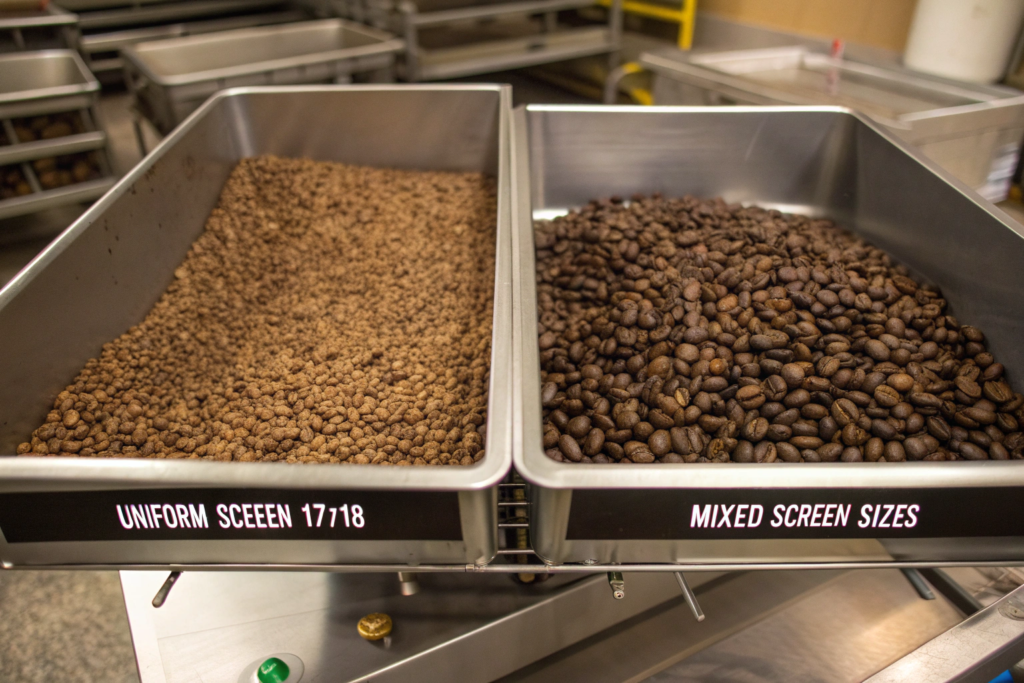
Screen size distribution directly impacts roast uniformity because beans of different sizes have different surface-area-to-volume ratios and, therefore, different thermal masses. In a single roast batch, smaller beans will absorb heat faster and over-roast (scorch), while larger beans will absorb heat slower and under-roast, resulting in an uneven, muddled flavor.
You cannot fix an uneven roast with a better grinder or a better espresso machine. The defect is baked into the bean.
Why Does a Mix of Small and Large Beans Create an Uneven Roast?
Let's visualize what is happening inside your roaster when you drop in a batch of coffee with a wide mix of screen sizes.
- The Sponge Analogy: Imagine putting a thin sponge and a thick, dense sponge in a hot oven. The thin sponge will dry out and start to burn long before the center of the thick sponge is even warm.
- Small Beans (Screen 14/15): These beans have a high surface area compared to their volume. They are like the thin sponge. They absorb heat from the hot drum and the convective air almost instantly. They will race through the drying phase, hit first crack much earlier, and quickly begin to scorch and over-develop. They will taste ashy, bitter, and hollow.
- Large Beans (Screen 18+): These beans have a lower surface-area-to-volume ratio. They are thermally denser. They absorb heat more slowly and evenly. By the time the small beans are burning, the core of the large bean may still be under-developed, retaining grassy, sour, and peanutty notes.
- The Roaster's Impossible Task: The roast master is watching the bean temperature probe, which is showing an average of the entire bean mass. If you apply more heat to try to develop the large beans, you will incinerate the small ones. If you pull back on the heat to save the small beans, the large ones will be baked and undeveloped. There is no winning. The uneven roast is a direct, physical consequence of the mixed screen sizes.
This is why buying a "blend" of unspecified screen sizes is a gamble for an espresso roaster. You are buying an inherent roasting defect. At Shanghai Fumao, our Grade 1 Arabica is guaranteed to be a minimum of 90% Screen 17+. We deliberately remove the smaller beans to eliminate this variability.
How Does Density, Correlated with Size, Affect Heat Transfer?
While screen size is the primary visual classifier, it is often a reliable proxy for bean density, especially within a single varietal and origin. And density is the true driver of heat transfer. You can learn more about this in our detailed analysis on Why Is Bean Density Testing Crucial for High Altitude Coffee Roasting?.
- The Altitude-Size-Density Link: At higher altitudes, coffee cherries mature more slowly. The seed has more time to fill with complex carbohydrates and cellular material, resulting in a bean that is not only larger (higher screen size) but also physically harder and denser.
- Density's Impact on the Roaster: A denser bean is a greater thermal mass. It requires more energy input to heat its core to the point where the Maillard reactions and caramelization can begin. This is why a charge temperature that works for a medium-density, screen 16 bean might be completely inadequate for a very high-density, screen 18 bean from a high-altitude block on our farm.
- The Blend Advantage: A blend built from beans of a consistent screen size (and therefore, consistent density) from a single estate will have a unified thermal profile. It will react to the heat predictably and uniformly. This is the secret to a well-behaved blend that a roaster can dial in once and then replicate effortlessly, batch after batch. It is the physical foundation of the consistency we deliver.
How Does a Uniform Screen Size Build a Better Espresso Extraction?
The benefits of a uniform roast translate directly into the physics of the espresso puck. Espresso is an unforgiving extraction method that amplifies any inconsistency in the grind. An uneven roast creates an uneven grind, which creates an uneven extraction. It is a cascade of failure.
A uniform screen size builds a better espresso extraction by ensuring that the uniformly roasted bean grinds into particles of a consistent size and density, which, when tamped into a puck, offer a uniform resistance to the high-pressure water, preventing channeling and ensuring that the water extracts the coffee's soluble compounds evenly from every part of the puck.
This is the difference between a shot that is balanced, sweet, and fully expressed, and a shot that is simultaneously sour and bitter—a hallmark of an uneven extraction.
Why Does a Uniform Grind Particle Size Matter for Espresso?
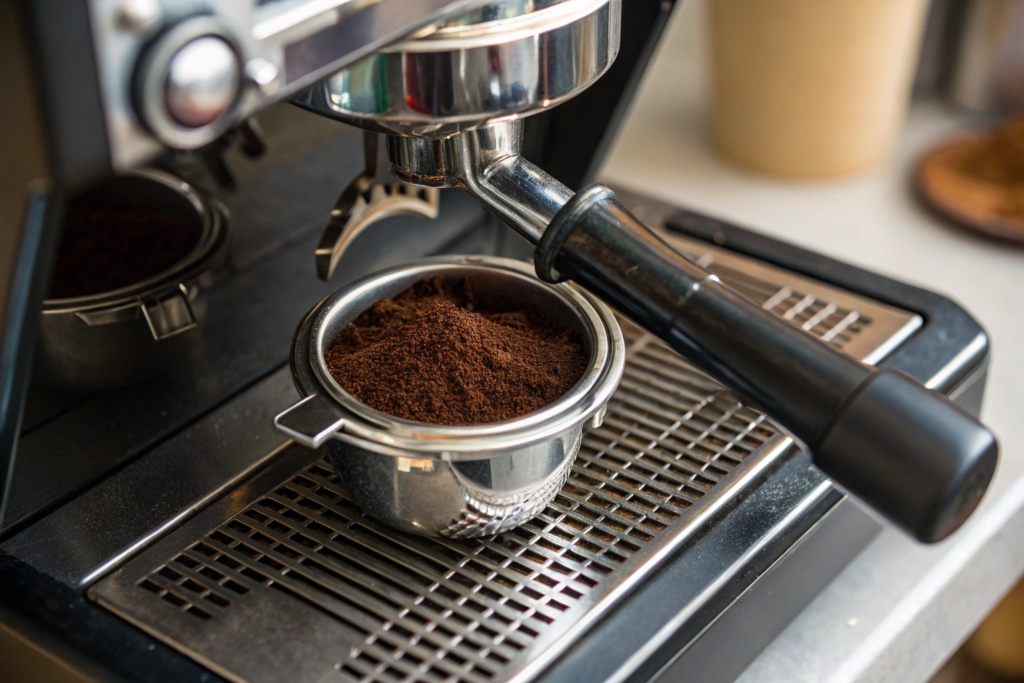
Espresso is brewed under extreme pressure (9 bars) with a very fine grind. This creates a high-resistance environment that is incredibly sensitive to the size of the coffee particles.
- The Rock and Sand Analogy: Imagine a pipe filled with a mixture of large rocks and fine sand. If you force water through it, the water will find the path of least resistance. It will channel and rush through the gaps between the large rocks, extracting mainly from the surface of those particles. The dense clusters of fine sand will remain largely un-extracted.
- Coffee in the Puck: This is exactly what happens in an espresso puck with an inconsistent grind particle size distribution. The water channels through the gaps around the larger, coarser particles. The areas where finer particles are clumped together are bypassed. The result is a shot that is both over-extracted (bitter, harsh notes from the coarser particle surfaces) and under-extracted (sour, weak notes from the un-extracted fines).
- The Uniform Screen Size Solution: When all the beans in your blend have a similar starting screen size and density, they roast uniformly. When you grind uniformly roasted beans, they fracture in a more predictable way, producing a narrower, more consistent range of particle sizes. This creates a more uniform puck that resists the water evenly, resulting in a balanced, sweet, and fully developed extraction. For more on this, resources from the Specialty Coffee Association on extraction theory are invaluable.
How Does an Even Extraction Prevent Sour and Bitter Espresso?
The signature flaw of a badly extracted espresso is the simultaneous perception of sourness and bitterness. This is the "sour-bitter" bomb, and it is a direct consequence of a non-uniform extraction.
- The Extraction Spectrum: Different flavor compounds in coffee dissolve at different rates. Fruity acids extract first (sourness). Sugars and caramelized compounds extract next (sweetness). Bitter tannins and woody fibers extract last.
- Channeling's Double Defect: In an unevenly extracted puck, the channels of fast-flowing water produce localized over-extraction, pulling out harsh, bitter tannins. The dense, bypassed areas produce localized under-extraction, leaving behind a sharp, sour acidity without the balancing sweetness. The cup combines the worst of both worlds.
- The Path to a Balanced Shot: A uniform espresso blend, built on a foundation of consistent screen size, roasts evenly, grinds evenly, and extracts evenly. This allows the roaster and barista to systematically dial in the grind, dose, and yield to find the "sweet spot" where the acidity is balanced and the bitterness is a pleasant, dark chocolate note. The entire puck gives up its flavor in harmony. This consistency is what we enable for our espresso blend clients at Shanghai Fumao.
How Can Roasters Use Screen Size Data to Build a More Reliable Blend?
The smartest espresso blend buyers are not just blenders of flavors; they are blenders of physical properties. They use screen size data not as an abstract quality metric, but as a practical tool to predict how different components will behave together in the roaster.
Roasters can use screen size data to build a more reliable blend by selecting components with compatible physical profiles—specifically, with matching or very similar screen size distributions and bean densities—to create a multi-origin blend that roasts as uniformly as a single-origin lot, ensuring consistent flavor and extraction from the first batch to the last.
This is the engineering of a blend. It moves blending from an art to a science.
Should You Target a "Blend Screen Size" for Roasting Compatibility?
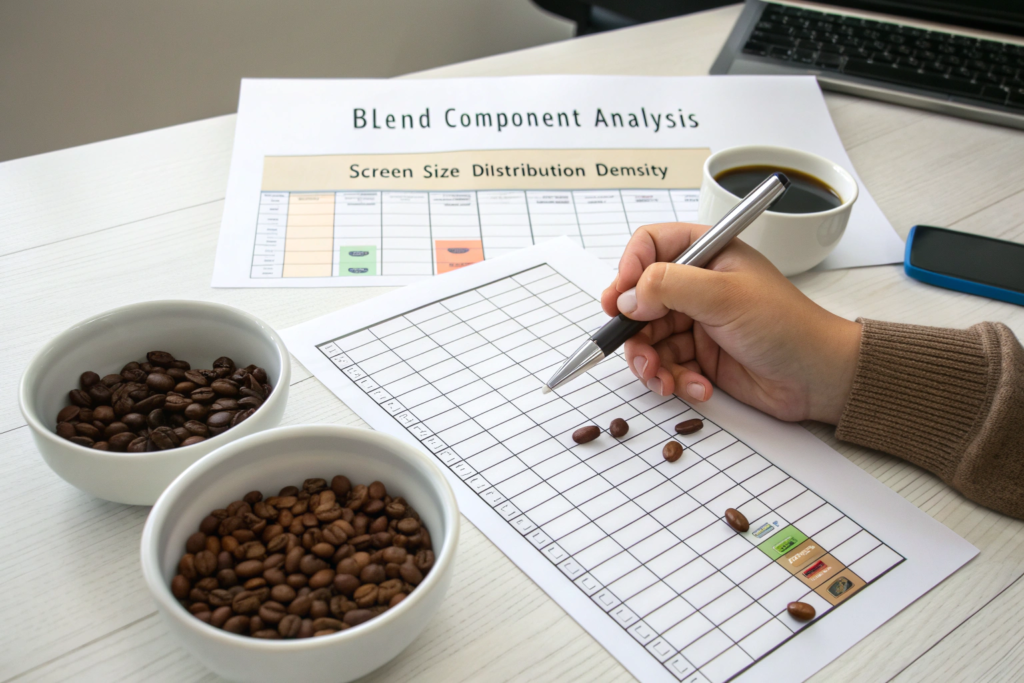
Yes. This is a best practice for professional roasters. Instead of just thinking about flavor, think about creating a "physical profile" for your blend.
- The Concept: Decide on a target screen size range for your finished green blend. For a premium espresso blend, this might be "90% Screen 17+." Then, source components that all fall within this same physical specification.
- Example Execution: Your blend is 60% Base and 40% Highlight.
- Base Component (BeanofCoffee Washed Yunnan): Naturally screen 17/18, high density. Fits the target.
- Highlight Component (Natural Ethiopia): Often naturally smaller and less dense. If you use a screen 14/15 Ethiopian, it will roast differently and cause problems. The solution? Source a specifically graded, screen 17+ "Premium" Ethiopian lot, even if it costs a bit more.
- The Result: Both components enter the roasting drum with nearly the same thermal mass. They roast in harmony. You do not have to compromise the roast profile for one bean to accommodate the other. The blend is physically integrated, not just mixed.
At Shanghai Fumao, our Custom Blends Program helps clients design blends with this physical compatibility in mind. We can mill and sort our different Yunnan components (washed, natural, different altitudes) to a matched screen size, creating a pre-roasted blend that is physically optimized for your roaster. You can use tools like the World Coffee Research Sensory Lexicon to help match flavor profiles, while we ensure the physical match.
How Does Screen Size Consistency Affect Your Grinder's Lifespan and Dial-In?
The benefits of a uniform screen size even extend to the longevity and performance of your most expensive piece of equipment: your espresso grinder. This is a hidden cost of inconsistent beans.
- The Hard Bean Problem: A dense, screen 18+ high-altitude bean is a physically hard object. A soft, screen 14 bean is much less dense.
- Impact on Grinder Burrs: Repeatedly grinding a batch of coffee with a mix of very hard, large beans and smaller, softer beans puts uneven and unpredictable stress on the grinder's burrs. The motor has to work harder to break the large, dense beans, and the burrs can wear down unevenly. A consistent bean mass places a predictable load on the grinder, contributing to a longer lifespan for your burrs.
- Dial-In Instability: Even more critically, an inconsistent bean size and density leads to a constantly shifting "zero point" on your grinder. One day, a certain grind setting produces a 28-second shot. The next day, with a slightly different mix of sizes in the hopper, the same setting might produce a 22-second gusher or choke the machine. The barista is forced to constantly "chase the dial," wasting coffee and time.
A blend built on a foundation of consistent screen size produces a consistent grind, day in and day out. This means your barista spends less time re-dialing in and more time pulling beautiful, consistent shots. It is a workflow efficiency that pays for itself. For more on grinder maintenance, Barista Hustle has excellent technical resources.
Conclusion
For an espresso blend buyer, screen size analysis is not a peripheral detail. It is a fundamental, non-negotiable quality parameter that dictates the success or failure of the entire endeavor. It is the invisible physical architecture upon which a great espresso program is built.
A consistent, narrow screen size distribution ensures that every bean in your blend roasts at the same rate. This uniform roast is the prerequisite for a uniform grind, which creates the evenly resistant puck that yields a beautifully balanced, sweet, and repeatable espresso shot. It is the difference between a blend that fights you and a blend that works with you.
At Shanghai Fumao, we understand that our coffee is often the backbone of your blend. We deliver a physically consistent product, backed by rigorous screen size analysis data, so you can build your espresso program on a foundation of confidence.
If you want to see screen size distribution data for our current lots, or discuss designing a physically compatible custom blend for your espresso program, let's talk. Email Cathy Cai. Ask for the "Espresso Blend Physical Specs" report. Contact Cathy at: cathy@beanofcoffee.com