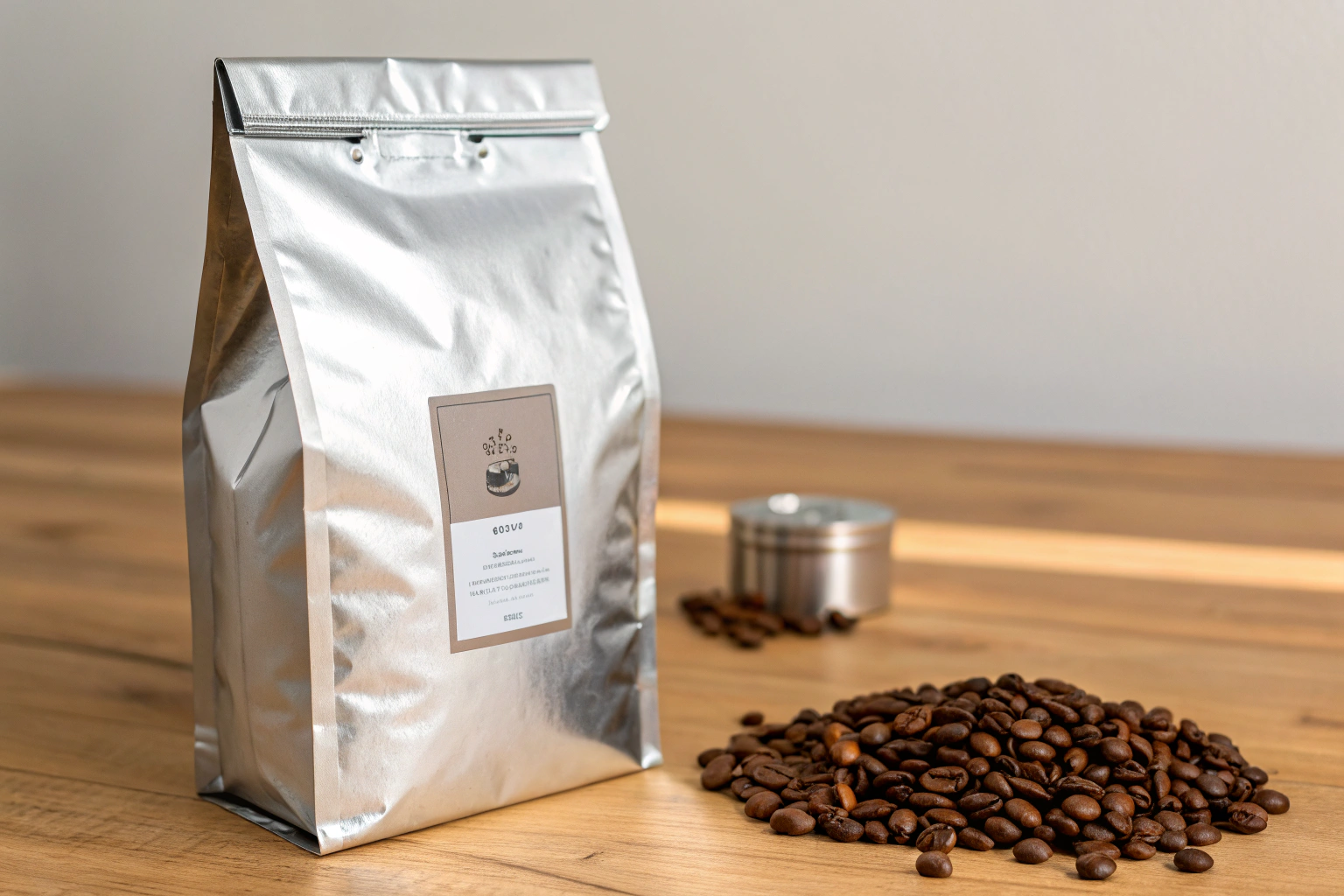
I learned the importance of packaging the hard way. A few years back, we shipped a large order of roasted coffee to a new buyer in Europe. We used standard kraft paper bags with inner liners. They looked nice. They felt artisanal. But three weeks into the ocean transit, something went wrong. The buyer opened the container and called me immediately. The bags had absorbed moisture from the air. Some had split at the seams. The coffee inside was stale. I lost that buyer. And I learned a lesson I’ll never forget.
So, what are the benefits of using foil bags for coffee? Foil bags provide an exceptional barrier against oxygen, moisture, and light. They lock in freshness, protect the delicate volatile compounds that give coffee its flavor, and extend shelf life significantly. When combined with a one-way degassing valve, they create the ideal environment for roasted coffee—especially for export. At BeanofCoffee, we use foil bags for all our processed products, and we recommend them to every buyer who wants their coffee to arrive as fresh as the day it was roasted.
Let me walk you through what I’ve learned. I’ll explain the material science behind foil bags, how they compare to other packaging options, and why they’re worth the investment for any serious coffee brand.
How Do Foil Bags Protect Coffee from Its Main Enemies?
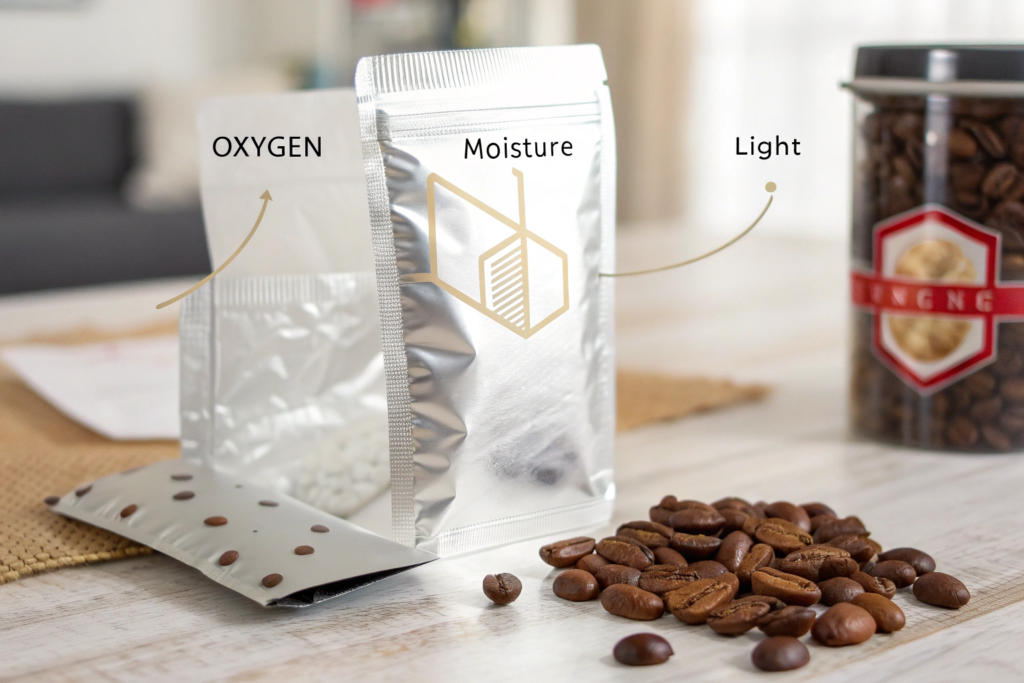
Freshly roasted coffee, with its rich, aromatic allure and vibrant, almost golden-brown beans, is a treasure that demands careful guardianship. Yet, this delicate elixir faces three relentless adversaries: oxygen, which saps its life and turns its bright notes into dullness; moisture, which clings like a persistent fog, dulling its crispness and inviting mold; and light, that insidious thief of flavor, which bleaches away the depth and complexity of its roast. Enter the foil bag—a silent sentinel, crafted with purpose to vanquish these foes.
How does foil create an oxygen barrier?
Oxygen is the fastest way to ruin fresh coffee. When oxygen hits the oils on the bean’s surface, oxidation begins. The volatile aromatic compounds break down. The coffee goes flat. The fresh, vibrant flavors disappear.
Foil is an exceptional oxygen barrier. Unlike paper or even some plastic films, foil is essentially impermeable. Oxygen cannot pass through it.
When we seal fresh roasted coffee in a foil bag with a degassing valve, the oxygen inside the bag is minimal. The coffee degasses, pushing out the remaining oxygen through the valve. Then the valve closes, and no new oxygen gets in.
We tested this once. We packed the same coffee in three different bags: kraft paper with a liner, a stand-up plastic pouch, and a foil bag. After eight weeks, we cupped them. The foil bag coffee was still vibrant. The kraft paper coffee was flat. The plastic pouch was somewhere in between. That test convinced me. For export, foil is non-negotiable.
How does foil block moisture and light?
Moisture is another enemy. Coffee beans are porous. They absorb moisture from the air. When they do, they swell. The flavor degrades. In extreme cases, mold can develop.
Foil bags are moisture-proof. Water vapor cannot penetrate the foil layer. That means your coffee stays at the same moisture content as the day it was packed.
Light is the third enemy. Ultraviolet light speeds up oxidation. It degrades the volatile compounds that give coffee its aroma. Foil blocks 100 percent of light. You could leave a foil bag on a sunny shelf for weeks, and the coffee inside would be protected.
I remember a buyer in the US who stored their coffee on open shelving in a bright retail space. The bags facing the window were fading. But more importantly, the coffee inside was losing flavor faster than the bags in the back. They switched to foil bags with opaque surfaces. Problem solved.
How Do Foil Bags Extend Shelf Life for Export?
For buyers like Ron, who are importing coffee from China to North America or Europe, shelf life isn’t just about quality. It’s about the viability of their business model. Every bean, carefully selected and packed, carries the weight of a thousand-dollar shipment across vast oceans, through customs checks, and into the hands of consumers who expect that first sip to be rich, aromatic, and full of life.
A single batch that arrives stale, with its vibrant notes of caramel and citrus dulled to a flat, earthy monotone, can mean the difference between a thriving enterprise and a warehouse filled with unsold, forgotten inventory.
What is the real shelf life difference?
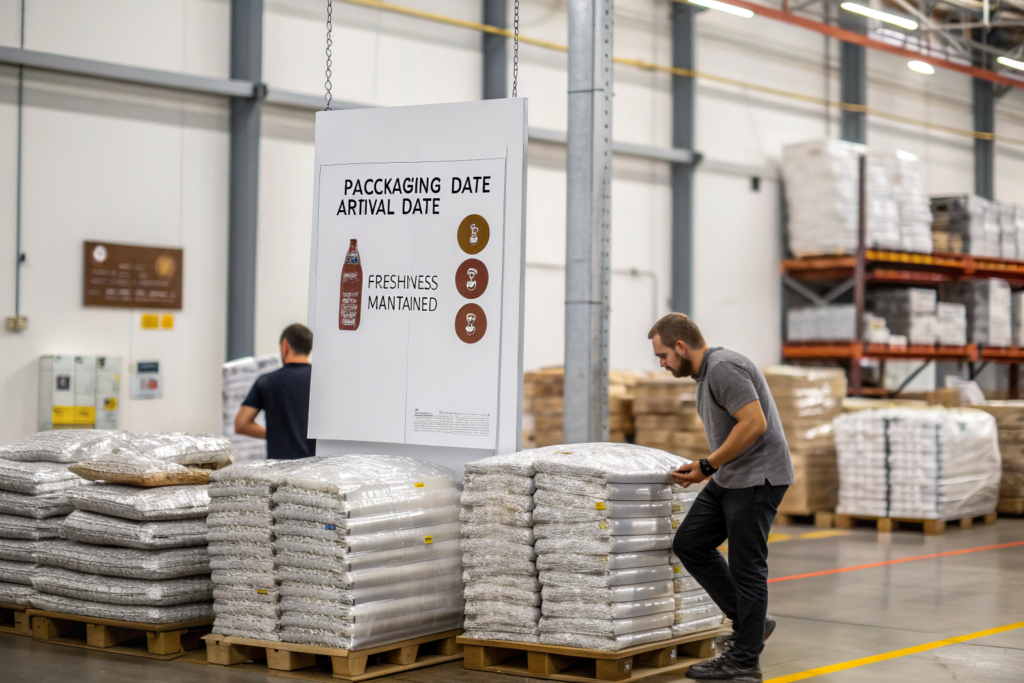
Coffee in a standard kraft paper bag with a simple liner will maintain peak flavor for about two to three weeks. After that, the decline is noticeable. By six weeks, it’s flat.
Coffee in a foil bag with a degassing valve will maintain peak flavor for six to eight weeks. Even at twelve weeks, it’s still acceptable for most consumers.
For a sea freight shipment from China to the US, transit time alone is four to six weeks. With a kraft paper bag, your coffee is already past its peak when it arrives. With a foil bag, you still have weeks of peak freshness left. One of our buyers in Canada switched from paper bags to foil bags after losing a shipment to staleness. They told me their return rate dropped by 80 percent. Customers weren’t complaining anymore. That’s the difference.
How does the degassing valve work with foil?
The degassing valve is the other half of the equation. Foil alone would create an airtight seal. But freshly roasted coffee releases carbon dioxide. In an airtight bag, that gas builds up pressure. The bag would inflate. In extreme cases, it could burst.
The one-way degassing valve solves this. It lets carbon dioxide escape, but it doesn’t let oxygen in.
When we pack coffee, we seal the bag with the valve. For the first few days, the valve hisses as gas escapes. Then it stops. The coffee has degassed. The bag is now a sealed environment with almost no oxygen.
We use foil bags with degassing valves for all our roasted coffee products. It’s the standard for a reason. It works.
What Should You Look for in a Quality Foil Bag?
Not all foil bags are the same. When you’re sourcing packaging or working with a supplier who provides packaged coffee, here’s what to look for. Some foil bags feel flimsy, their thin layers offering little more than a whisper of protection against the world outside, while others stand sturdy and resilient, their metallic surface shimmering faintly under light, as if guarding the precious beans within. The difference isn’t just in texture; it’s in the promise of freshness they hold.
What makes a good degassing valve?
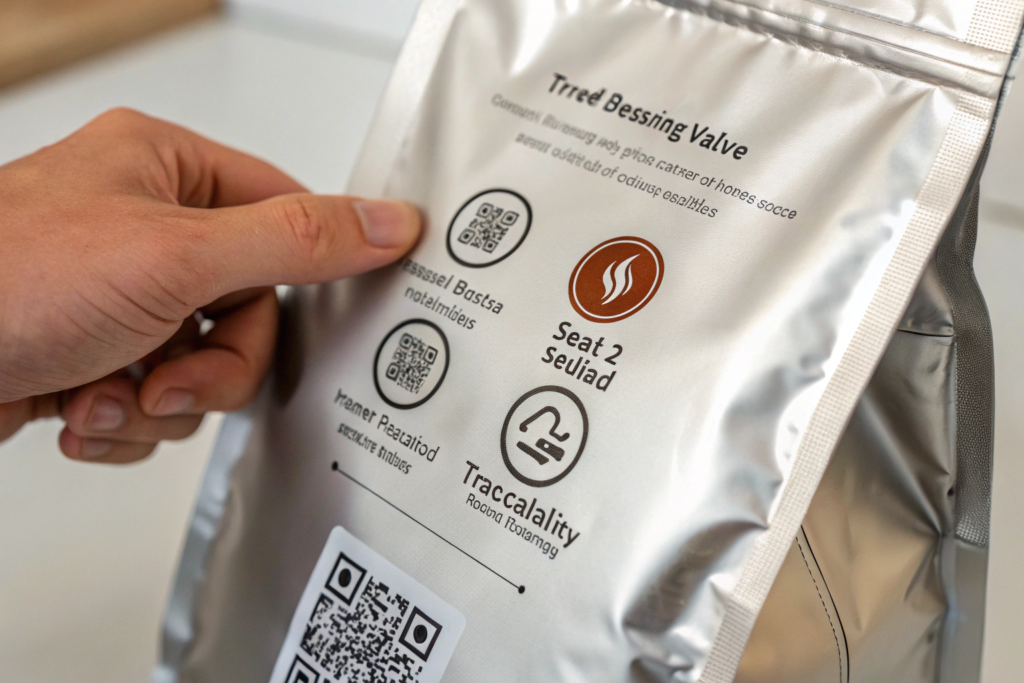
The valve should be firmly attached. It should open when pressure builds and close when pressure equalizes. Cheap valves can fail. They might stick open, letting oxygen in. Or they might not open at all, causing the bag to balloon.
We test our valves. We’ve tried multiple suppliers. We use the ones that work consistently. If you’re buying packaged coffee from us, you can trust that the valve is doing its job.
What about seal strength?
The seals are the weak point of any bag. If the bottom seal or side seals fail, the bag is compromised.
We use heat-sealing equipment with precise temperature control. We test seal strength regularly. A weak seal can lead to leaks. A leak means oxygen gets in. Coffee goes stale.
One of our buyers had a problem with a different supplier. The bags looked fine, but the seals failed during transit. Coffee grounds were everywhere in the container. The shipment was a total loss. That’s why we take sealing seriously.
Are Foil Bags Compatible with Sustainable Branding?
I know some buyers worry about sustainability, their brows furrowing as they clutch eco-friendly shopping lists and scan product labels for the familiar tick of recyclability.
Foil bags, with their sleek, metallic sheen that catches the light like a whisper of silver, are not compostable—they resist the gentle decay of kitchen compost bins, where food scraps and paper curl into earth. They’re not biodegradable in the traditional sense, either, standing firm against the slow, natural breakdown that turns leaves into soil and wood into mulch.
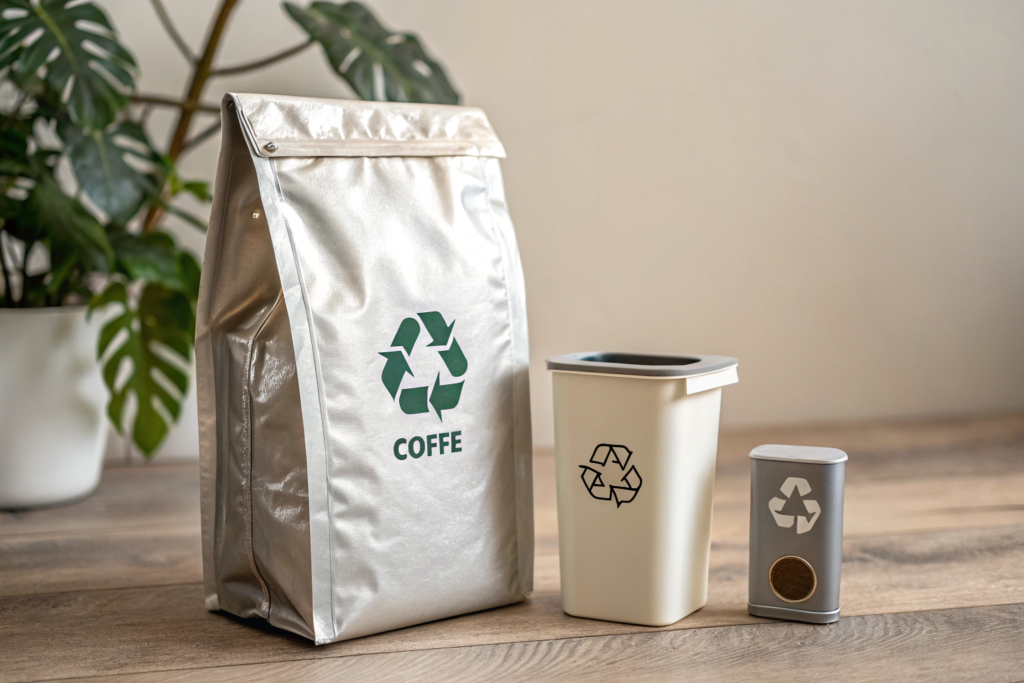
Can foil bags be recycled?
Yes, in many places. Foil bags are made from multiple layers, including aluminum and plastic. They’re not accepted in all curbside recycling programs. But specialized recycling programs for multi-layer packaging exist.
Some of our buyers participate in take-back programs. Customers return used bags to the store or mail them back. The bags are then recycled through specialized facilities. We’re also seeing the development of recyclable mono-material foil alternatives. The technology is improving. We’re watching it closely.
How do you balance sustainability with freshness?
Here’s the trade-off. A compostable paper bag might be better for the environment at the end of its life. But if the coffee inside goes stale before it’s sold, that’s waste too. The coffee itself has an environmental footprint. Wasting it is worse than using a non-compostable bag.
We’ve had this conversation with many buyers. Most conclude that protecting the coffee is the priority. A foil bag ensures the coffee gets consumed. That’s a form of sustainability too.
If sustainability is a core part of your brand, we can help you navigate this. We offer options. We can provide foil bags with recyclable components. We can help you set up a take-back program. We can also connect you with sustainable packaging resources to learn more about recycling options in your market.
Conclusion
Foil bags are the best protection available for roasted coffee. They block oxygen, moisture, and light. They work with degassing valves to let carbon dioxide escape without letting oxygen in. They extend shelf life from weeks to months. For any coffee that’s being shipped—especially across oceans—they’re not a luxury. They’re a necessity.
At BeanofCoffee, we use foil bags for all our processed, packaged products. We’ve tested them. We trust them. And we’ve seen the difference they make for our buyers. Fewer returns. Happier customers. Stronger brands.
Our partnership with Shanghai Fumao ensures that our packaging is consistent and our shipments are reliable. We don’t cut corners on materials because we know what’s at stake.
If you’re sourcing roasted coffee, ask your supplier about their packaging. Are they using foil bags? Do they have degassing valves? Are the seals strong enough for export? The answers to these questions will tell you a lot about how seriously they take freshness.
If you want to see our packaging for yourself, reach out to Cathy Cai. She can send you samples of our foil bags, show you the valve, the seals, the quality. Her email is: cathy@beanofcoffee.com.