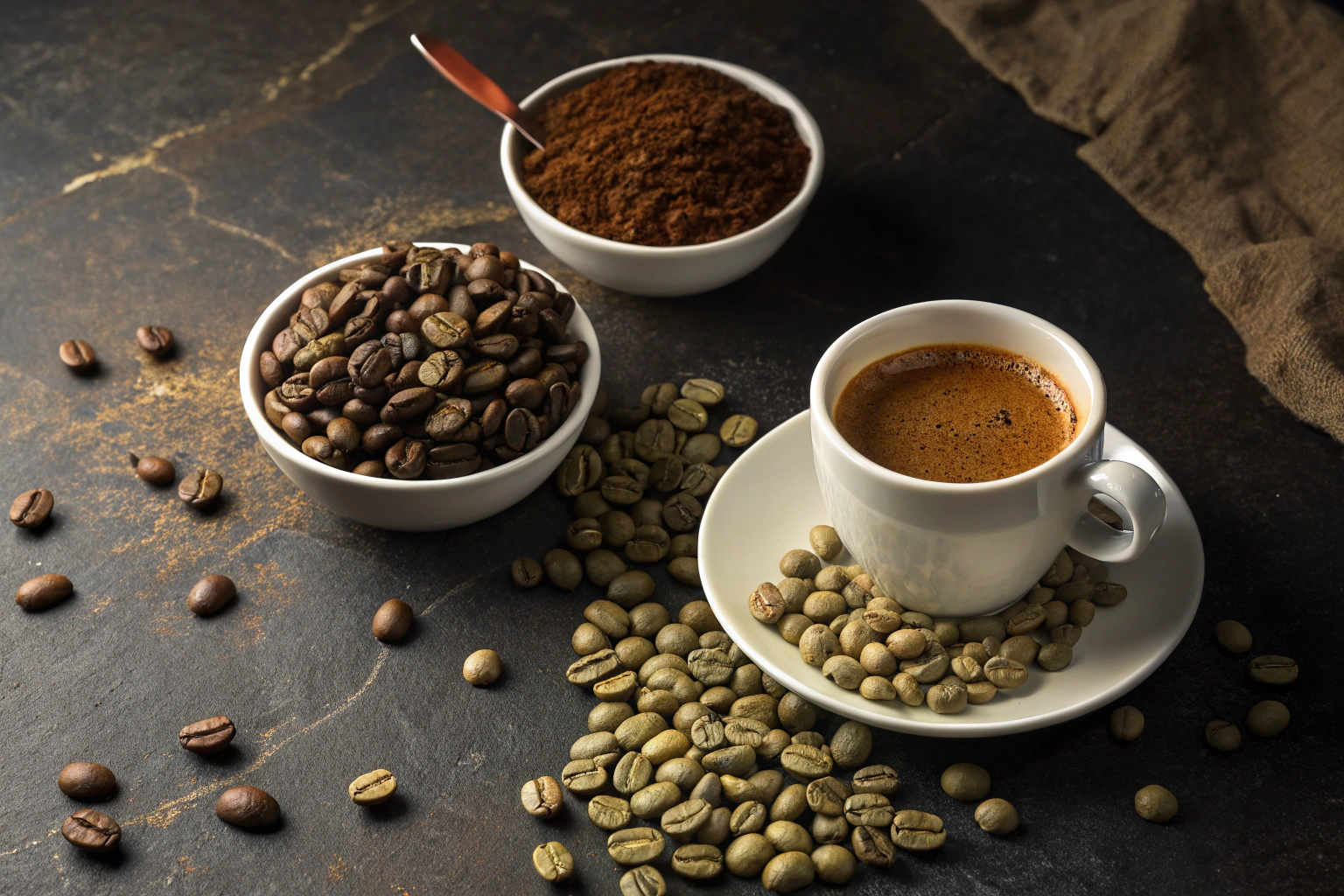
A roaster from Melbourne called me last month. "My espresso blend is boring," he said. "It's 60 percent Brazil, 40 percent Colombia. It's chocolatey. It's consistent. But it has no soul. What can you offer me from Asia that will wake this blend up?"
I hear variations of this question all the time. American and European roasters have relied on Brazil, Colombia, and Central America for decades. Those coffees are the backbone of the espresso world. But the backbone needs muscle. It needs something to create depth, crema, and a point of difference. Asian coffees—especially those from Yunnan, Sumatra, and Sulawesi—provide exactly that.
The best Asian coffee beans for espresso blends combine the heavy body and earthy spice of wet-hulled Sumatrans, the clean chocolate and nut notes of washed Yunnan Catimor, and the powerful crema and caffeine punch of high-grown washed Robusta—creating a complex, balanced, and memorable shot that performs exceptionally well in milk-based drinks.
Let me break down the best Asian origins for your espresso program. I am not talking about single-origin filter coffees. I am talking about components. Blending tools. The coffees that do the heavy lifting in a 9-bar extraction.
Why Is Yunnan Catimor a Rising Star for Espresso Bases?
I drink my own espresso. Every morning. The base of my personal blend is our washed Catimor from the 1,500-meter plots. I have cupped hundreds of coffees from around the world. For a clean, chocolate-driven espresso base, a well-processed Yunnan Catimor competes with a solid Colombian or Brazilian lot at a better price point and with more body.
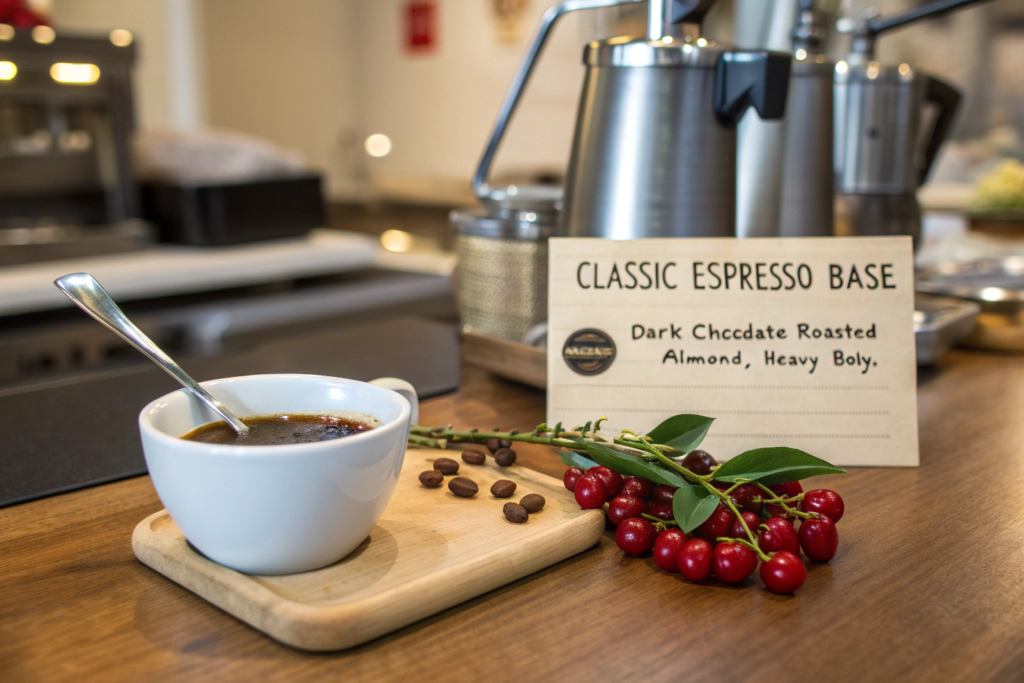
The washed Catimor cup profile is built for espresso. Dark chocolate is the dominant note. Bittersweet, not sugary. Roasted almond sits right behind it. Low acidity—citric, but very mild—means the shot does not pull sour, even at a lighter roast. The body is heavier than most Central American washed coffees. That body translates directly into mouthfeel under pressure. Your flat white tastes richer, denser, more satisfying.
Yunnan Catimor is an ideal espresso base component because its naturally low acidity, heavy chocolate-nut flavor profile, and syrupy body provide the foundation and structure that more acidic or aromatic origin coffees need to balance in a blend.
Stability matters too. A Brazilian natural can vary season to season depending on rainfall and drying conditions. Our washed Catimor is processed under strict protocols during Baoshan's dry harvest season. The lot consistency is high. A roaster who dials in a blend with our Catimor can trust that the next shipment will cup within a point of the previous one. For more background on how processing at origin affects espresso consistency, the Specialty Coffee Association has published research on the impact of washed processing on cup uniformity.
How Does Catimor Perform in Milk-Based Espresso Drinks?
This is the real test. A straight shot of espresso shows every flaw. But a flat white or latte shows whether the coffee can hold its own against fat and lactose. Yunnan Catimor shines here precisely because it is not overly complex or acidic.
High-acid coffees—think bright Kenyans or floral Ethiopians—often clash with milk. The acidity curdles the perception. The shot tastes sour and thin. The coffee flavor disappears behind the dairy. Catimor does the opposite. The chocolate and nut notes cut through milk cleanly. The heavy body stands up to the creamy texture. The low acidity integrates smoothly. The result is a classic coffee-milk harmony that reminds drinkers of traditional Italian café experiences.
I supply several Asian café chains that use our Catimor as 100 percent of their espresso base for milk drinks. They tried blends. They tried single origins. They came back to the Catimor because their customers consistently rated the latte and cappuccino as "smooth," "rich," and "chocolatey." Those are the words that drive repeat orders. For market research on consumer preferences in milk-based coffee beverages, the National Coffee Association publishes annual consumption trend reports.
What Roast Level Maximizes Yunnan Catimor for Espresso?
Medium to medium-dark. Agtron whole-bean reading of 50 to 60. This is darker than you would take the same coffee for filter, and for a specific reason.
Catimor has a dense bean structure due to the high altitude in Baoshan. It can handle more heat without scorching. Taking it into the early stages of second crack develops the chocolate notes fully while smoothing out any remaining vegetal character. The sugar browning peaks, producing caramel and dark chocolate intensity. The body becomes even heavier as oils migrate toward the bean surface.
I do not recommend a full Italian dark roast past 40 Agtron. At that point, the roast character overwhelms the origin notes. You might as well use a cheaper commodity coffee. The sweet spot is just before second crack becomes rolling. The beans are dry but not oily. The crema will be thick, reddish-brown, and persistent. The shot will taste like dark chocolate ganache.
Which Indonesian Beans Add Heavy Body and Spice to a Blend?
No discussion of Asian espresso components is complete without Indonesia. Specifically, Sumatra and Sulawesi. These origins produce coffees that are almost designed for espresso blending. The body is massive. The flavor is earthy, spicy, and wild. A small percentage in a blend transforms the texture and adds a bass note that other origins cannot provide.
The secret is in the processing. Indonesia's wet-hulled method—called giling basah locally—is unique. The coffee is pulped, fermented briefly, and then hulled while the parchment is still wet and the bean moisture is high, around 30 to 40 percent. Then the naked bean is dried. This is the opposite of what almost every other origin does. It produces a bean with a distinctive blue-green color, a soft, swollen texture, and a flavor profile heavy with earth, cedar, tobacco, and baking spice.
Sumatra Mandheling and Sulawesi Toraja are the classic Asian espresso blending coffees, prized for their massive syrupy body, low acidity, and complex earthy-spicy notes that anchor blends with depth and add a lingering, savory finish that pairs beautifully with dark chocolate and caramel base components.
I do not grow Indonesian coffee. But I blend with it, and I source it for clients who want a multi-origin Asian blend. A typical blend might use 50 percent Yunnan Catimor for the clean chocolate base, 30 percent Sumatra for body and spice, and 20 percent something else for complexity. The Sumatra is the element that makes the blend memorable.
How Does Wet-Hulling Create That Signature Earthy Flavor?
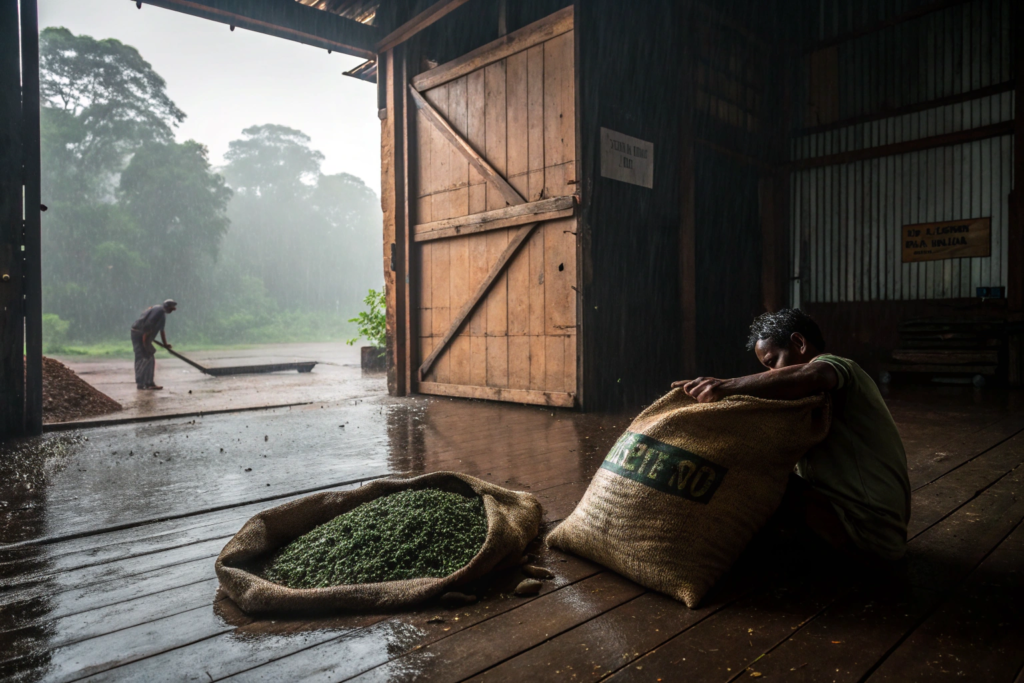
Wet-hulling is the defining characteristic of Indonesian coffee processing. It is driven by the climate. Sumatra and Sulawesi are humid. Drying parchment to the standard 11 percent moisture takes too long in the damp air. Farmers hull the coffee early, when the bean is still soft and moist, to speed up drying and generate cash flow.
The early hulling exposes the naked bean to the environment while it is still high in moisture. The bean absorbs humidity and any ambient microorganisms. A mild, uncontrolled fermentation continues during the final drying. The result is a coffee with a deep, earthy, almost mushroomy character. It smells like a forest floor after rain. It tastes like cedar, clove, and dark tobacco. The acidity is almost nonexistent. The body is immense—heavy, syrupy, coating.
This flavor profile divides people. Nordic-style roasters who prize cleanliness and transparency often dislike wet-hulled coffees. They find them muddy and defective. Traditional espresso roasters love them. The earthiness and body add a bass note to blends that makes the shot feel complete. Without that bass note, a blend can feel thin and treble-heavy, even if it is a high-scoring coffee on the cupping table.
A detail often missed: the green coffee appearance changes dramatically. Wet-hulled beans are darker, softer, and often show a characteristic "foxing" or mottled coloration. They do not look like uniform specialty-grade washed beans. But the appearance is not a defect. It is a processing signature. For more technical detail, World Coffee Research has documented the wet-hulling process and its sensory outcomes in their processing methods library.
What Is the Best Ratio for Indonesian Coffee in an Espresso Blend?
Indonesian coffee is potent. A little goes a long way. If you exceed a certain percentage, the earthiness dominates and the blend becomes one-dimensional and muddy. If you use too little, the body and spice are lost.
Here is a practical framework I recommend to roasters building a blend with an Indonesian component:
| Blend Component | Percentage Range | Role in Blend |
|---|---|---|
| Yunnan Washed Catimor (Base) | 40% - 60% | Chocolate, body, clean finish |
| Sumatra Mandheling | 20% - 30% | Heavy body, earth, cedar, spice |
| Yunnan High-Grown Robusta | 10% - 15% | Crema, caffeine, intensity |
| Brazil Natural (Optional) | 10% - 20% | Sweetness, nuttiness, balance |
The Sumatra sits at 20 to 30 percent. That is the sweet spot. At 20 percent, the body improves noticeably, and a gentle spice note appears in the finish. The earthiness is present but not dominant. At 30 percent, the earthy character becomes a featured note. The blend tastes distinctly Indonesian-influenced. This works well for a dark roast espresso marketed as "bold" or "old-world style." Above 30 percent, the Sumatra takes over. The chocolate notes from the Catimor base get buried. The cup tastes like a wet-hulled single origin, not a balanced blend.
Test small increments. Blend at 15 percent, 20 percent, 25 percent, 30 percent. Cup each ratio blind. Pull shots. Taste with milk. Your palate will tell you where the line is. For more blend development guidance, Cropster allows roasters to log blend ratios and track cupping scores across iterations.
Can Robusta Be a Quality Component in a Specialty Espresso Blend?
Robusta has a terrible reputation. And mostly, it deserves it. Commodity Robusta from Vietnam or Uganda tastes like burnt rubber, dirt, and bitterness. It is filler for instant coffee and cheap Italian blends. No specialty roaster wants to be associated with it.
But there is another Robusta. A different category entirely. High-grown, washed, carefully processed Robusta. The kind we produce on our 1,000-meter plots in Baoshan. This Robusta does not taste like a tire fire. It tastes clean, with a neutral grain-like flavor, heavy body, and—most importantly—it produces extraordinary crema.
High-quality washed Robusta from elevated farms in Yunnan is a legitimate specialty blending tool, adding thick, persistent crema, increased body, and a caffeine boost to espresso blends without introducing the harsh rubbery defects associated with commodity Robusta.
The crema difference is measurable. Arabica alone produces good crema with fresh coffee and a good grinder. Add 10 percent high-quality Robusta, and the crema becomes dramatically thicker, darker, and more persistent. The tiger-stripe pattern is more defined. The crema holds for minutes instead of seconds. In a café, where a shot might sit for 30 seconds before milk is added, this crema stability matters.
What Is the Difference Between Commodity and Specialty Robusta?
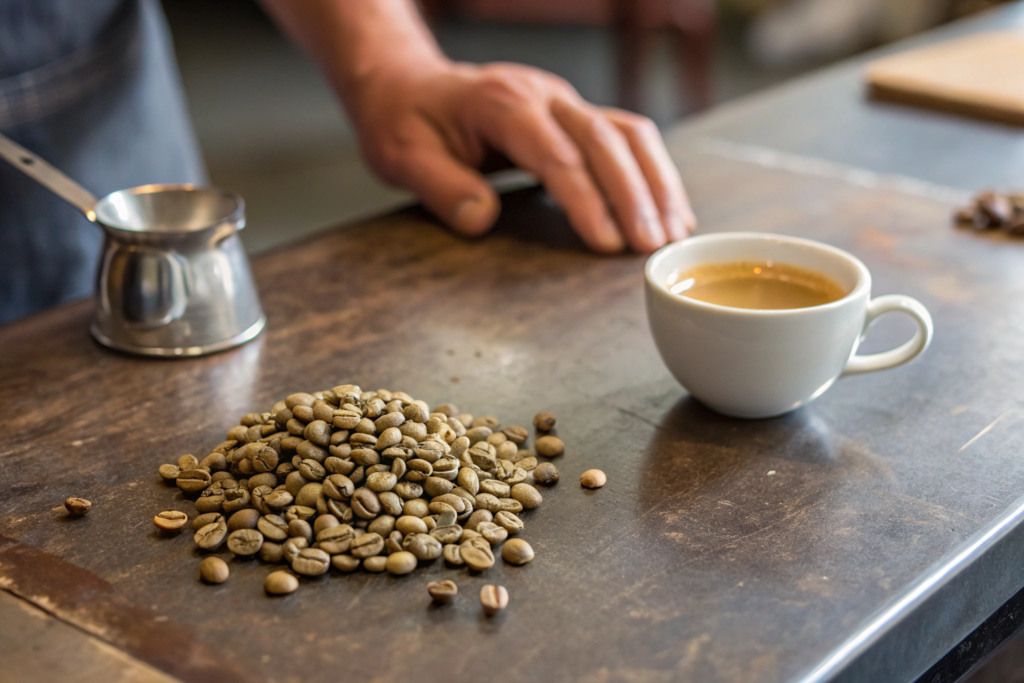
This distinction is crucial. Not all Robusta is created equal. The processing, the altitude, and the genetic selection make a huge difference.
| Attribute | Commodity Robusta | Specialty Washed Robusta |
|---|---|---|
| Altitude | Sea level to 600m | 800m - 1,100m |
| Processing | Natural, uneven drying | Washed, controlled fermentation |
| Defect Count | High, inconsistent | Low, sorted, graded |
| Flavor | Rubber, earth, harsh bitterness | Neutral grain, mild cocoa, clean |
| Body | Heavy but rough | Heavy, smooth, coating |
| Crema | Thick but pale | Thick, dark, persistent |
| Cupping Score | Below 75 | 80 - 82 |
Our Yunnan washed Robusta cups at 80 to 82 points. That is specialty-grade by SCA standards, though some purists refuse to apply the term to Robusta regardless of score. The important point is the flavor. It is clean enough to use in a blend at 10 to 15 percent without introducing off-notes. The crema and body improve. The caffeine content increases. The shot tastes richer and more intense, not worse.
I always tell buyers to cup the Robusta by itself before blending with it. Taste what it contributes. If the Robusta tastes clean—like toasted grain, maybe a hint of unsweetened cocoa—it will blend well. If it tastes rubbery or harsh at all, reject it. The defect will show in the finished blend. For more on Robusta grading, the Coffee Quality Institute offers Q Robusta grader certification, a relatively new program that standardizes Robusta sensory evaluation.
How Does Robusta Affect Crema Persistence and Mouthfeel?
Crema is an emulsion of coffee oils, sugars, and carbon dioxide, created under high pressure. Robusta contains less oil than Arabica but more soluble solids and a different protein structure. Those proteins stabilize the gas bubbles in the crema, making them last longer.
A shot pulled from 100 percent Arabica produces crema that dissipates within 30 to 60 seconds. The color is light brown to reddish, depending on the roast. A shot from a blend with 10 percent high-quality Robusta produces crema that can hold for two minutes or longer. The color is deeper, with more red and less tan. The texture is thicker—almost like mousse.
The mouthfeel also changes. Arabica body is pleasant, ranging from light to heavy depending on the origin. Robusta body is inherently heavier and more viscous. Even a small percentage adds a perceptible weight to the shot. For milk drinks, this means the coffee flavor and texture hold up longer as the customer drinks. The last sip is still rich, not watery.
I recommend a trial blend test. Pull three shots: your current 100 percent Arabica blend, the same blend with 10 percent Robusta added, and the same blend with 15 percent Robusta. Line them up. Observe the crema over two minutes. Taste all three black and with milk. The difference will be obvious. Choose the percentage that meets your taste and texture goals. For further reading on espresso chemistry, the Specialty Coffee Association has technical articles on crema formation and stability.
How Do You Source and Combine These Asian Espresso Components?
Sourcing Asian espresso components is easier than it was a decade ago, but it still requires building relationships with suppliers who understand espresso blending. A general Arabica supplier may not have access to specialty Robusta or be able to source a consistent Indonesian wet-hulled lot for your blend.
The first step is to source your base. For me, that is our Yunnan Catimor. The base provides 50 to 60 percent of the blend. It sets the chocolate-nut flavor foundation and provides most of the body. The base must be consistent lot to lot. If your base shifts, your whole blend shifts.
The second step is to source your body and spice component. Indonesia is the classic choice. Sumatra Mandheling or Sulawesi Toraja. Buy from an importer who specializes in Indonesian coffees, cupping every arrival to ensure the wet-hulled character is clean and the body is heavy, not the moldy, musty notes of poorly processed lots.
The third step is to source your crema component. This is the specialty Robusta from Yunnan. The Robusta must cup clean. It must be free of rubber, earth, and harsh bitterness. It must be a consistent grade and screen size. I supply this Robusta from our farm, but other producers also offer washed specialty Robusta.
To build a reliable Asian espresso blend, identify a consistent washed Catimor base from a trusted Yunnan supplier, source an Indonesian wet-hulled component for body and spice from a reputable Sumatra or Sulawesi importer, and add a small percentage of high-grown washed Robusta for crema enhancement—then cup and test ratios methodically.
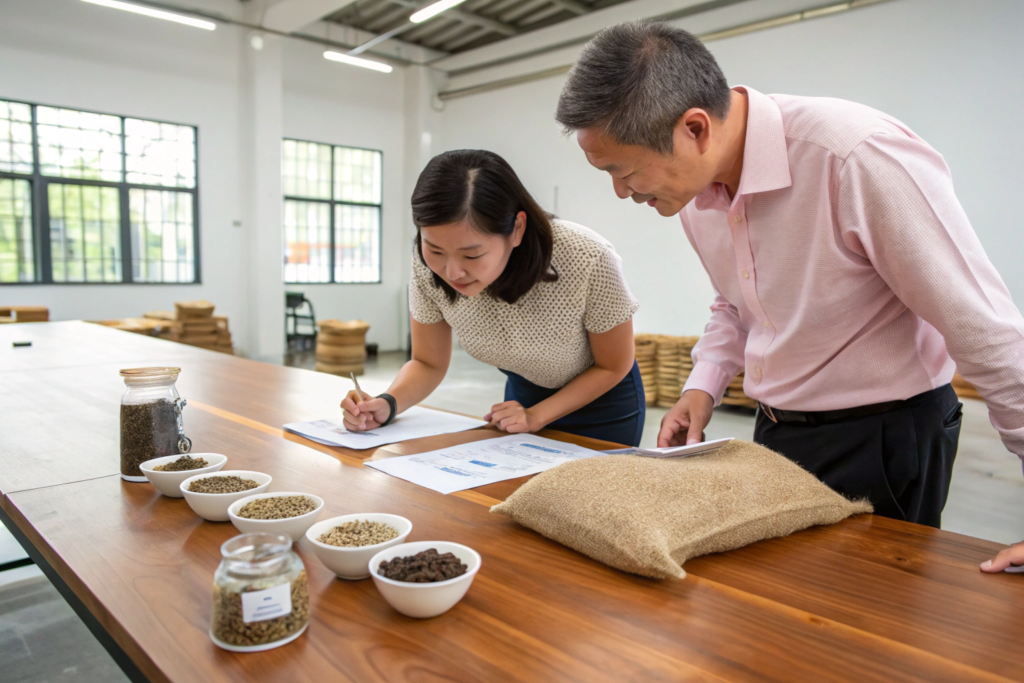
The final step is blend development. Do not guess. Cup systematically. Roast each component separately. Cup them individually. Then cup blends at different ratios. Pull espresso shots. Taste with milk. Keep notes. The perfect ratio for your customer base might differ from mine. The process of finding it is the same.
Should You Source All Components from a Single Supplier?
It is tempting to buy everything from one supplier. It simplifies logistics. One purchase order. One container. One set of shipping documents. But it limits your blending options.
A single supplier like Shanghai Fumao can provide the Yunnan components—Catimor base and specialty Robusta—as well as some other Asian origins through our sourcing network. This covers most of what you need for an Asian espresso blend. The logistical simplicity is valuable, especially for smaller roasters who do not want to manage multiple supplier relationships.
However, for the Indonesian component, some roasters prefer to buy from a dedicated Indonesia specialist. The best Sumatra lots come from specific collectors and mills in Aceh or Lake Toba. A supplier who focuses exclusively on Indonesia may have access to lots that a general Asian exporter does not. The trade-off is complexity versus specialization. The right choice depends on how central the Indonesian character is to your blend.
I tell my clients: let me supply the Yunnan base and Robusta. If you need a specific Sumatra lot that I cannot source at the quality level you want, buy it from your Indonesia importer. I can coordinate the logistics so the components ship together or separately, whatever works best for your inventory planning.
What Questions Should You Ask a Potential Asian Coffee Supplier?
Selecting a supplier is more important than selecting a specific lot. The supplier relationship determines the consistency and reliability of your blend components over time. Here is what to ask.
First: "Can I cup pre-shipment samples of the exact lot before it ships?" The answer must be yes. No exceptions. You must taste what you are buying.
Second: "What is your lot size and how consistent is it harvest to harvest?" A blend component must be predictable. If the cupping score swings three points season to season, your blend will swing with it.
Third: "Do you offer specialty Robusta and do you have a cupping score for it?" Many suppliers do not. The ones who do are serious about espresso blending.
Fourth: "What is your FOB pricing structure and do you offer forward booking?" Espresso blends run year-round. You need to lock in pricing and volume for at least a harvest cycle.
Fifth: "Can you provide blending recommendations based on your coffees?" A supplier who understands espresso blending can offer useful guidance, not just sell you beans. I provide suggested blend ratios and roast profiles to clients who buy multiple components from us. It saves them development time.
The Shanghai Fumao team answers all these questions transparently. Cathy handles the sample dispatch, cupping data, and pricing for all our espresso components. She can build a custom sampling kit with different potential blend components based on your target profile.
Conclusion
Asian coffee beans offer espresso roasters a unique toolkit. Yunnan Catimor provides a clean, chocolatey base with heavy body and low acidity. Indonesian wet-hulled coffees add earthy spice and a massive, syrupy texture. High-grown washed Robusta from Yunnan delivers extraordinary crema persistence and a caffeine kick without the rubbery defects of commodity Robusta.
The art is in the ratios. A 50-30-20 blend, or a 60-25-15 blend, or a dozen other variations. Each component plays a specific role. Each percentage shift changes the balance. The only way to find your perfect blend is to cup, pull shots, taste with milk, and iterate.
This is not about following a formula. It is about understanding what each origin and variety contributes and building a blend that tastes like your brand, not a generic "house espresso." Asian components allow a level of body, spice, and crema performance that traditional Latin American blends often lack.
If you are developing or reformulating your espresso blend and want to taste what Yunnan Catimor, specialty Robusta, and other Asian components can add to your shot, contact Cathy Cai at BeanofCoffee. She will arrange a sample kit with our base Catimor, washed Robusta, and any other components you want to test. She can provide current cupping scores, FOB pricing, and suggested starting ratios for your blend trials. Her email is cathy@beanofcoffee.com. She responds quickly and ships samples promptly. The coffee tells the rest of the story.