I learned about water activity the hard way. Early in my career, we lost a whole container of green coffee to mold. The beans looked fine when they left our warehouse. But by the time they arrived in Europe, something had gone wrong. The buyer opened the container and called me. The beans had a musty smell. Some had visible mold. We had to discard the entire shipment. That loss cost us a lot of money. But more importantly, it cost us trust. That buyer never ordered from us again.
After that, I became obsessed with understanding moisture. I read everything I could find. I talked to scientists. I invested in testing equipment. And I learned that moisture content alone isn’t enough. You have to measure water activity. It’s the difference between a bean that’s stable and a bean that’s at risk.
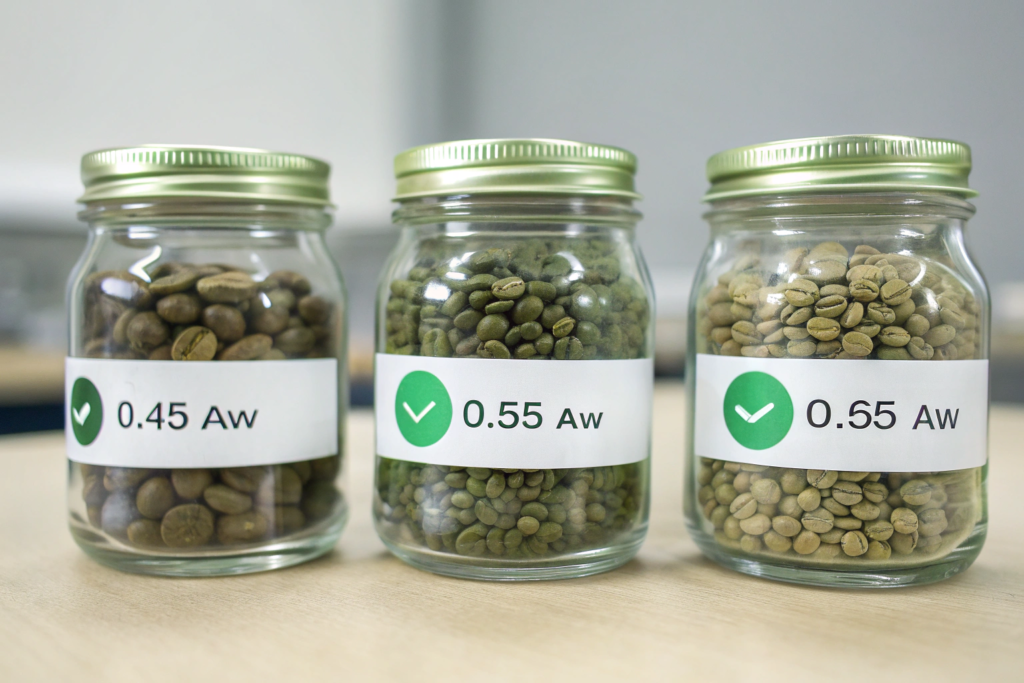
So, what is the best water activity for green coffee? The ideal water activity range is between 0.50 and 0.60 aw. Below 0.50 aw, the beans become brittle and can lose flavor compounds. Above 0.60 aw, the risk of mold growth and fermentation increases significantly. The sweet spot is around 0.55 aw. At that level, the coffee is stable, the flavor is preserved, and the beans can be stored safely for months or even years. At BeanofCoffee, we test every lot of green coffee before it leaves our warehouse. We don’t ship anything outside that range.
Let me walk you through what I’ve learned. I’ll explain what water activity means, why it matters more than moisture content, and how we manage it on our farms.
What Is Water Activity and Why Does It Matter?
Before you can truly grasp the essence of the ideal water activity, it is imperative to first unravel the intricate tapestry of what water activity itself actually measures. It is a concept that often dances on the edge of misunderstanding, frequently conflated with its close cousin, moisture content.
Yet, they are not one and the same; they are distinct entities, each painting a different picture of a substance's interaction with water. Moisture content is the straightforward measure of the total amount of water present within a material, like the visible dewdrops clinging to a leaf at dawn or the dampness felt when squeezing a sponge.
What’s the difference between moisture content and water activity?
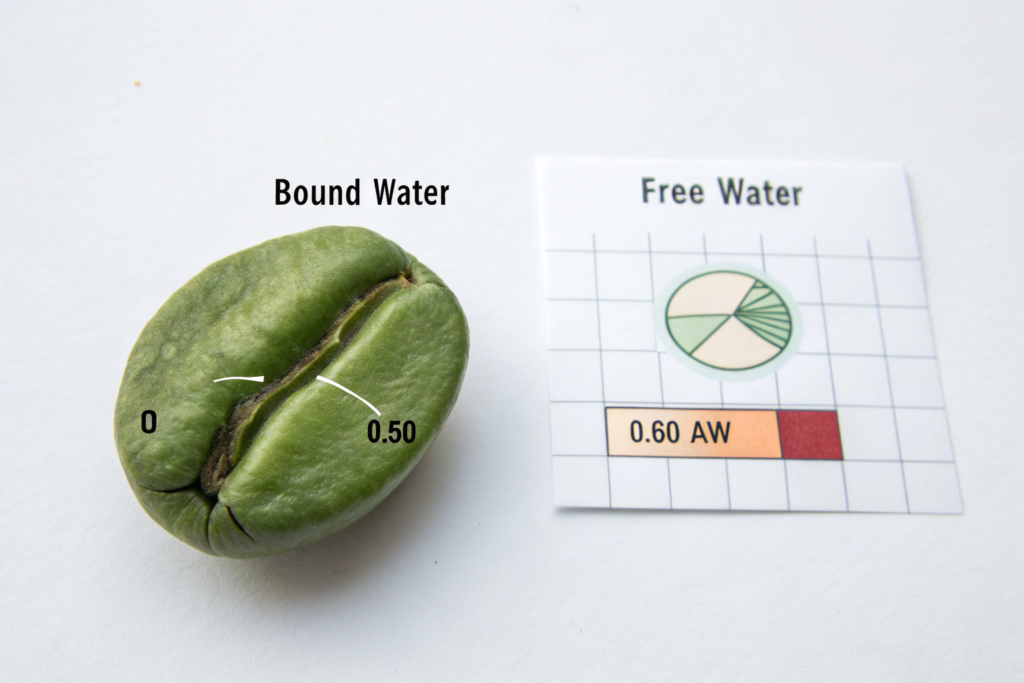
Moisture content tells you how much water is in the bean. It’s a quantity measurement. You can measure it by weight. Dry the bean, weigh it, and the difference is the moisture content.
Water activity tells you how available that water is. It measures the energy state of the water. Is it bound up in the bean’s structure? Or is it free to move, to react, to support microbial growth?
Think of it like this. A sponge can hold a lot of water. But if you squeeze it, most of that water is bound in the sponge’s structure. The water activity is low. A bowl of water has high water activity. The water is free.
For green coffee, water activity matters more than moisture content. Two beans can have the same moisture content but different water activity. One might be stable. The other might be at risk of mold.
Why does water activity affect stability?
Water activity determines whether microorganisms can grow. Bacteria need water activity above 0.90. Yeasts need above 0.80. Molds need above 0.70.
For green coffee, we want to stay below 0.65 aw to be safe. Below that, mold cannot grow. The coffee is stable.
But there’s a lower limit too. If water activity drops too low—below 0.45 aw—the beans become brittle. They lose volatile compounds. The flavor degrades.
So the goal is to keep water activity in the sweet spot. High enough to preserve the bean’s integrity. Low enough to prevent mold and spoilage.
I remember a buyer in Canada who asked me why their coffee tasted flat even though the moisture content was fine. We tested the water activity. It was 0.42 aw. Too low. The beans had been stored in an environment that was too dry. The flavor compounds had volatilized.
What Is the Ideal Water Activity Range for Green Coffee?
After years of relentless testing—countless dawn-lit roasts, the rich aroma of freshly ground beans curling through the air, and endless cups sipped with a critical eye—and countless hours of deep consultation with coffee scientists, their white coats dusted with cocoa and eyes alight with data, I’ve finally settled on a target range that feels like the sweet spot where science and soul meet.
What happens above 0.60 aw?
When water activity rises above 0.60 aw, the risk increases. At 0.65 aw, mold can start to grow under the right conditions. At 0.70 aw, the risk is significant.
We’ve seen this firsthand. In years with a wet harvest, some lots came in with water activity above 0.65. We separated those lots. We dried them longer. We brought them down into the safe range.
One year, a buyer insisted on taking a lot at 0.62 aw. We advised against it. But they wanted the coffee. Six months later, they called. The beans had developed a musty smell. They had to discount the lot. They lost money. Now they listen when we talk about water activity.
Why is 0.55 aw the sweet spot?
From our experience, 0.55 aw is ideal. At this level, the coffee is stable. Mold cannot grow. The beans are not too brittle. The flavor compounds are preserved.
Coffee at 0.55 aw can be stored for months or even years without significant quality loss. It travels well. It survives temperature swings. It’s safe.
We target 0.55 aw for all our green coffee exports. When we dry our beans on raised beds, we monitor water activity closely. We don’t stop drying until we hit that range. And we test every lot before it leaves.
Our Yunnan Arabica typically dries to 0.54 to 0.56 aw. Our Catimor is similar. We don’t ship anything outside that window.
How Do We Control Water Activity During Processing?
Water activity isn’t something you can adjust after the fact; it’s a foundational element, set in stone during the intricate processing of coffee beans. And this critical factor begins with the very first step of drying—the moment when freshly harvested cherries, glistening with the morning dew and sun-kissed juice, are laid out to lose their moisture.
Whether spread thin on raised beds under a relentless, golden sun that bakes the air and turns the cherries into plump, sun-warmed orbs, or gently dried in shaded patios where the cool breeze carries the earthy aroma of ripening fruit, the drying process is where water activity takes its first, decisive breath.
How does drying method affect water activity?
We use two main drying methods on our farms.
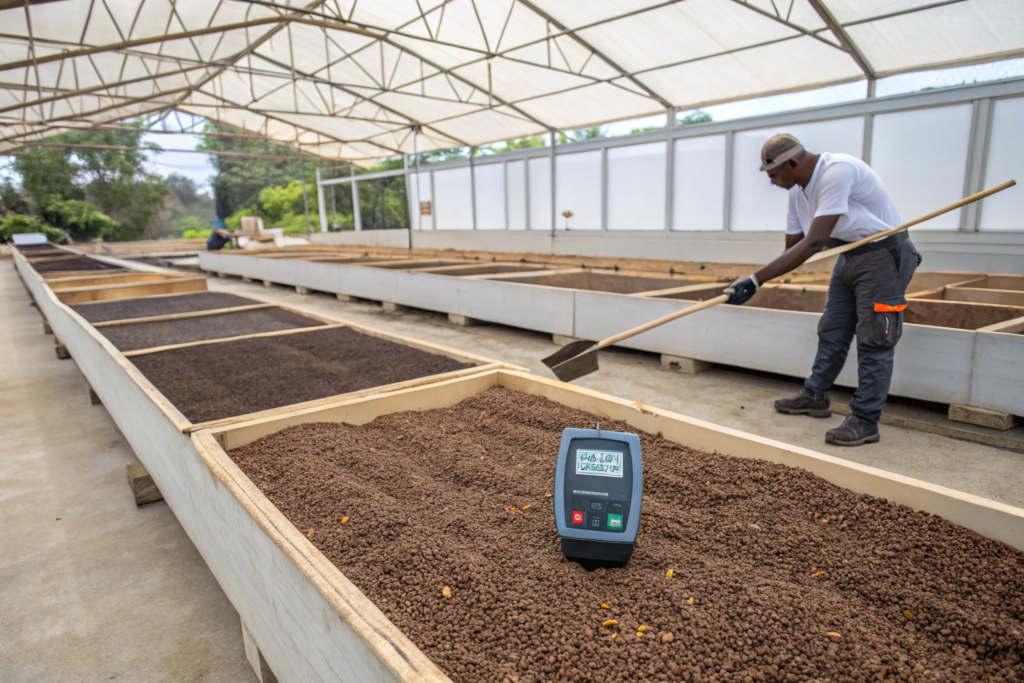
For washed Arabica, we use raised African beds. The beans are spread in thin layers. They’re turned frequently. Drying takes 10 to 15 days, depending on the weather.
We monitor water activity daily. When the beans hit 0.55 aw, we move them to rest. We don’t over-dry. We don’t under-dry.
For natural Catimor, we use drying patios with covered areas. The beans dry in the fruit for two to three weeks. Then we remove the fruit and continue drying until water activity hits the target.
The key is patience. You can’t rush drying. If you dry too fast, the outside of the bean dries but the inside stays wet. Water activity will be uneven. You get stability issues later.
If you dry too slow, the beans can ferment. Water activity stays high too long. Mold can develop.
Our drying team has decades of experience. They know when to turn the beans. They know when to cover them. They know when they’re done.
How do we test water activity?
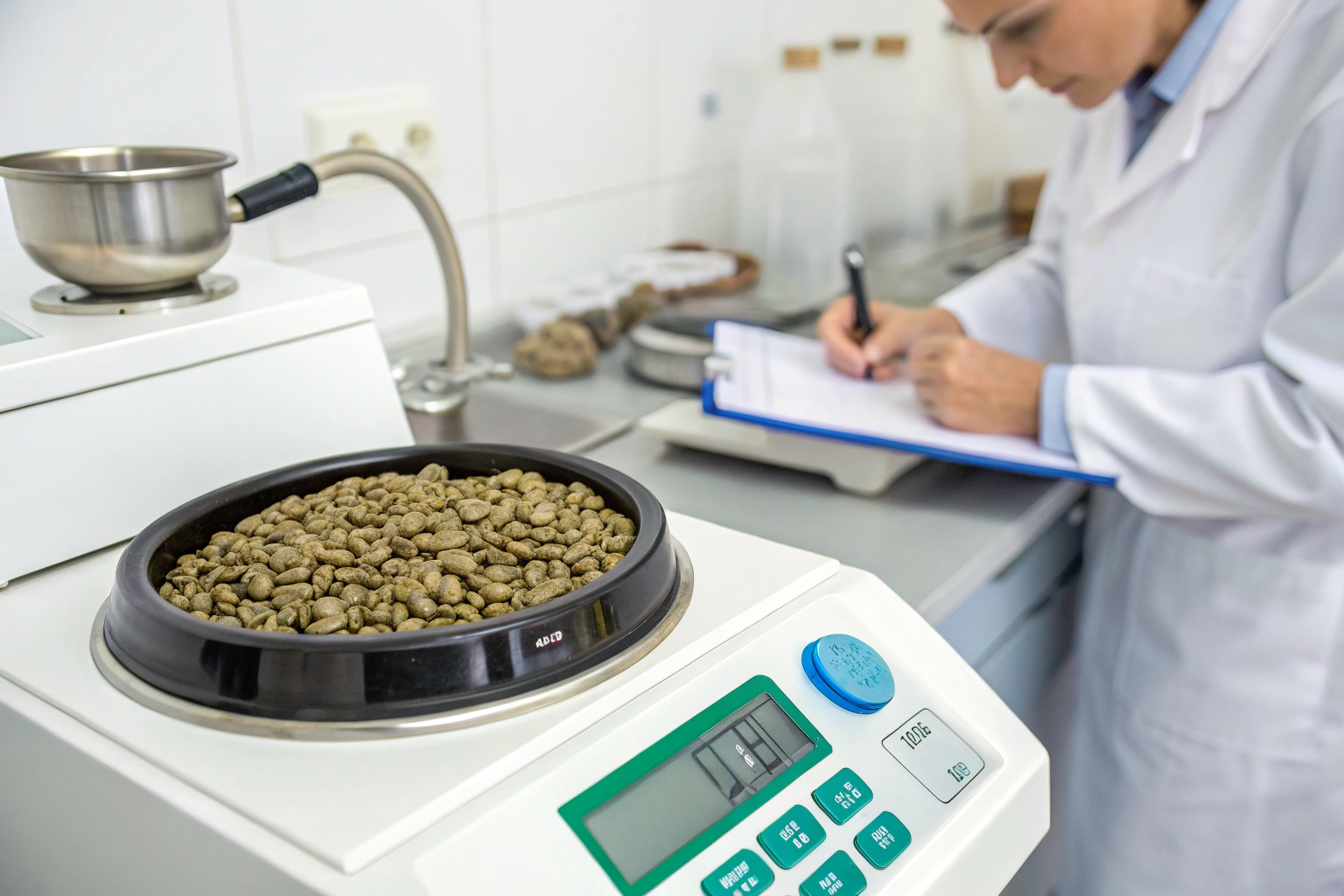
We use a water activity meter. It’s a small instrument. You put a sample of beans in a sealed cup. The meter measures the humidity in the headspace above the beans. That gives you the water activity reading.
We test every lot multiple times. During drying, we test daily. After resting, we test again. Before shipping, we test one more time.
If a lot is outside the target range, we don’t ship it. We either dry it more or, if it’s too dry, we blend it with other lots to bring the average into range.
This testing is part of our quality control system. It’s why our buyers trust us. They know that when they receive a container from us, the water activity will be right.
How Does Water Activity Affect Green Coffee Storage and Transport?
Water activity doesn’t stop mattering once the coffee leaves the farm. It affects storage and transport too. That’s something every buyer needs to understand.
How does water activity affect storage stability?
Green coffee with water activity in the ideal range is stable. It can be stored for months or years without quality loss.
But storage conditions matter. Even if the beans are at 0.55 aw, they can absorb moisture from the air if the warehouse is too humid. Or they can lose moisture if the warehouse is too dry.
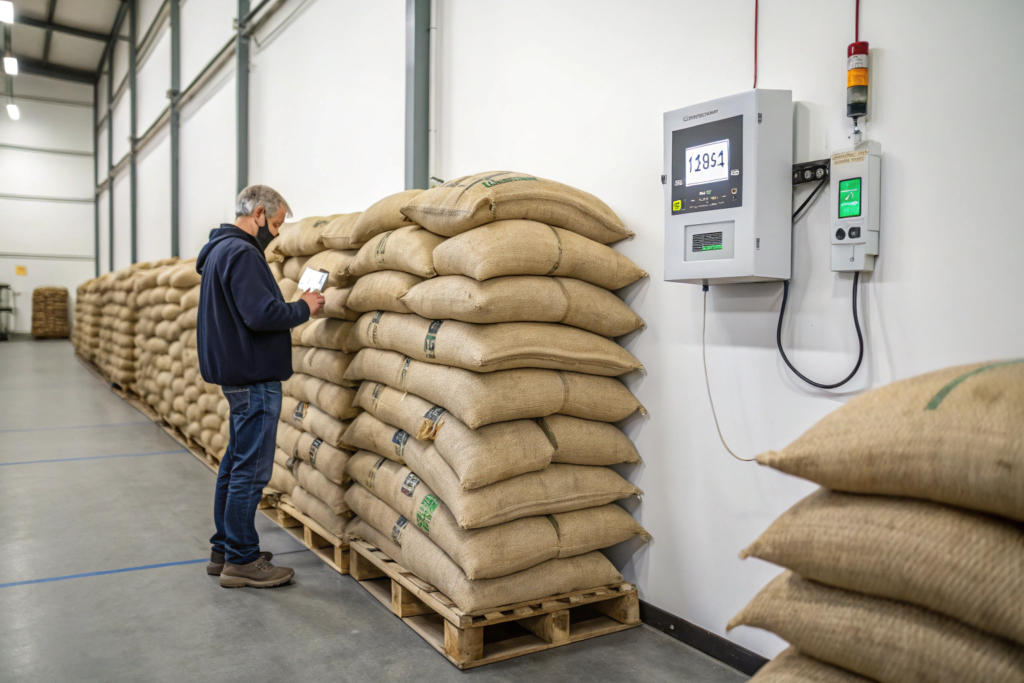
We store our green coffee in climate-controlled warehouses. We keep humidity stable. We monitor temperature. We rotate stock so nothing sits too long.
For buyers, the same applies. If you’re storing green coffee for months, invest in good storage. Keep it cool. Keep it dry. Monitor the environment.
How does water activity affect transport?
This is where many buyers get into trouble. A container on a ship can experience extreme conditions. Heat. Humidity. Temperature swings.
If the water activity is too high—above 0.60 aw—the beans are at risk. The heat and humidity in the container can push them over the edge. Mold can develop. The beans can ferment.
If the water activity is too low—below 0.50 aw—the beans can become brittle. They can break during handling. And the flavor compounds can degrade.
Our target of 0.55 aw gives us a buffer. Even if the container gets warm, the beans are still safe. Even if it gets dry, they’re still stable.
We also use GrainPro liners in our shipping bags. These hermetic liners protect the beans from moisture changes during transit. Even if the container environment shifts, the beans inside the liner stay stable.
Our partnership with Shanghai Fumao helps us manage the logistics. They ensure that our containers are loaded correctly, with proper ventilation and moisture control. And they help us get the coffee to the port quickly, so it doesn’t sit in uncertain conditions.
Conclusion
Water activity is one of the most important quality metrics for green coffee. It determines whether the coffee will stay stable during storage and transport. It affects flavor, safety, and shelf life. The ideal range is between 0.50 and 0.60 aw, with 0.55 aw being the sweet spot.
At BeanofCoffee, we test every lot of green coffee multiple times. We dry carefully. We store properly. We monitor constantly. We don’t ship anything outside the target range. Our Yunnan Arabica and Catimor are always dried to the ideal water activity.
If you’re buying green coffee, I encourage you to learn about water activity. Invest in a meter. Test your shipments. Ask your supplier for their data. It’s one of the best ways to ensure you’re getting stable, high-quality coffee.
Our partnership with Shanghai Fumao ensures that our documentation is complete, including water activity data for every shipment. You can trust what we send you. If you have questions about water activity or our testing protocols, reach out to Cathy Cai. She can provide our data sheets and walk you through our process. Her email is: cathy@beanofcoffee.com.