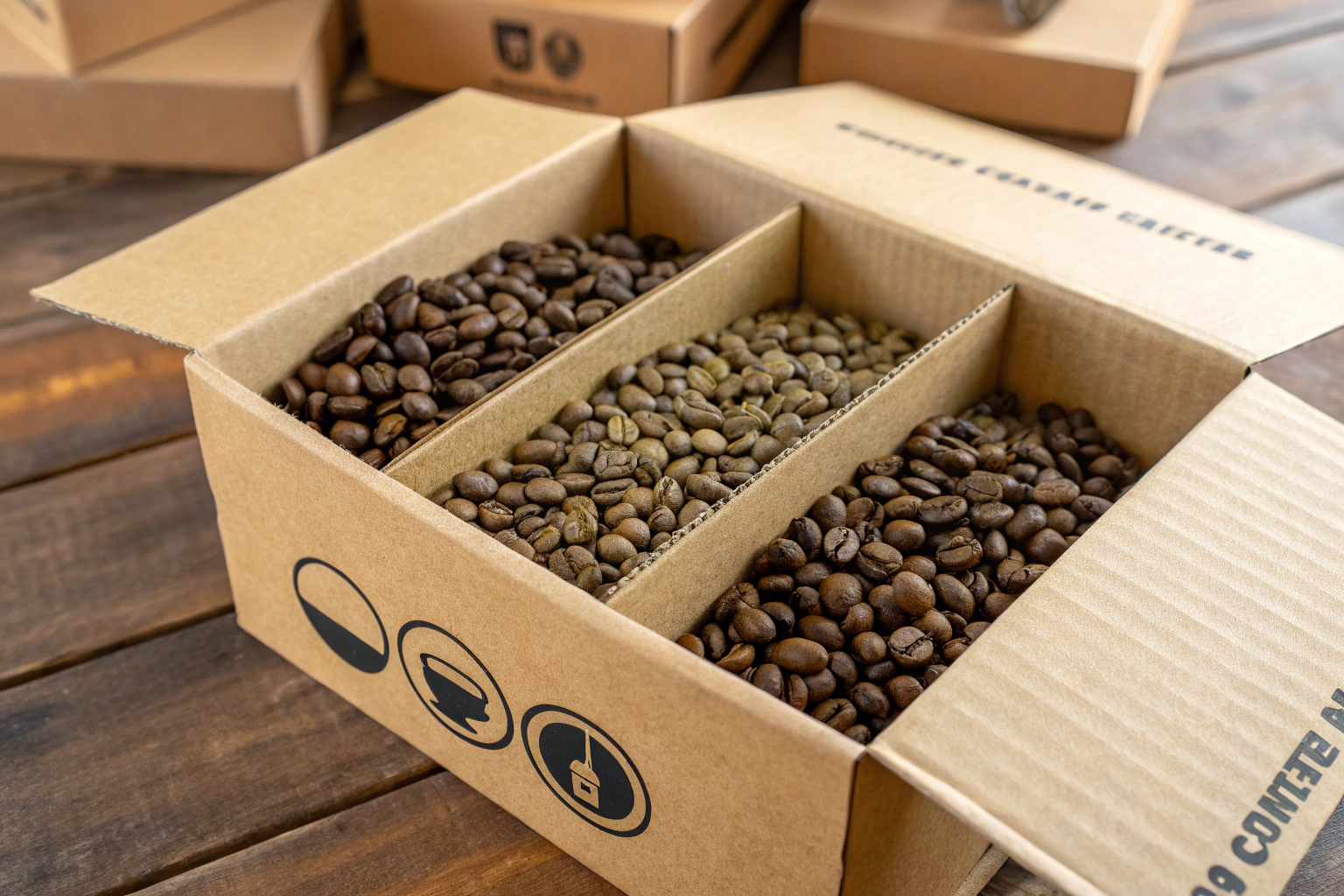
You've connected with a new supplier online. Their offer looks good, the price is right. But until you smell the aroma, see the bean consistency, and cup it yourself, it's just a promise. That sample is everything—it's the first physical handshake, the proof of concept. As an exporter who sends hundreds of samples yearly from Yunnan to buyers in North America, Europe, and Australia, I've learned this: a poorly shipped sample can kill a great deal before it even starts. It's not just about sending beans; it's about sending trust.
The best way to ship coffee bean samples internationally is to use a reliable international express courier (like DHL, FedEx, or UPS), pack the green beans (200g-500g) in a high-barrier bag like GrainPro, place that inside a sturdy box with ample cushioning, and ensure all customs documentation—including a commercial invoice stating "Roasted Coffee Samples" and "No Commercial Value"—is accurate and complete. This method prioritizes speed, security, and clarity to get fresh, untainted beans to the buyer's cupping table in 3-5 business days, minimizing the risk of quality degradation and customs delays.
That's the optimal formula. But why is this specific approach so critical? Because the sample journey is a microcosm of your future bulk shipments. It tests your attention to detail, your understanding of logistics, and your respect for the buyer's time. A sample stuck in customs for two weeks or arriving smelling of diesel is a failed audition. Let's walk through the details that separate a professional sample shipment from an amateur mistake.
Why Is Speed More Critical for Samples Than Bulk Shipments?
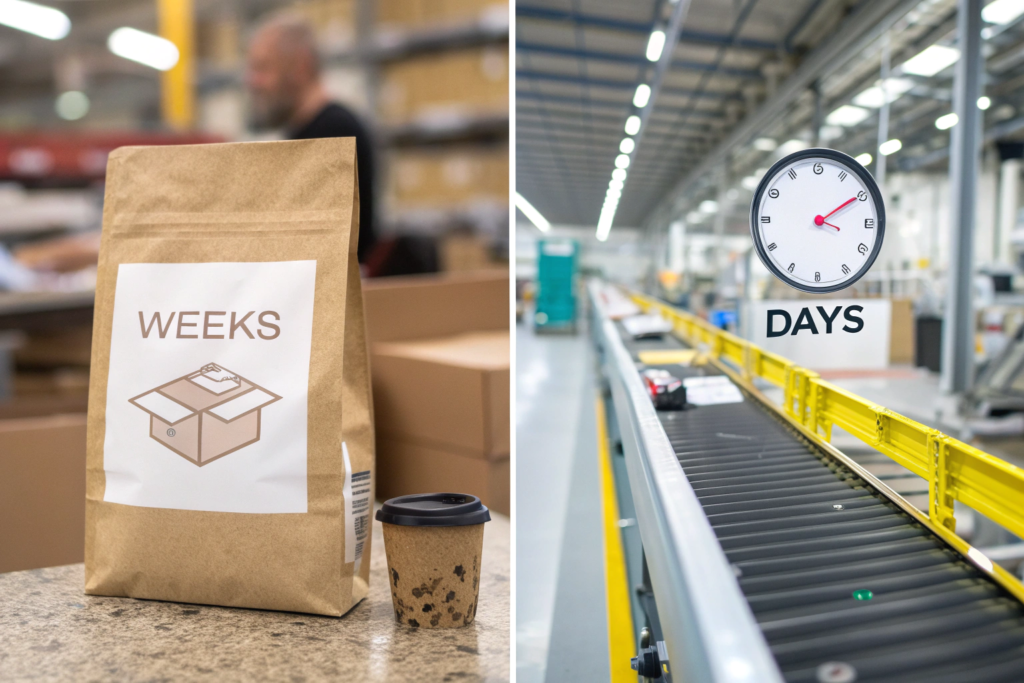
For bulk coffee, sea freight's 30-45 day transit is a planned cost of business. For a sample, every extra day is a risk. The buyer's decision timeline is compressed, often comparing multiple offers. The coffee itself is a living product; its aromatics fade, and its moisture can shift.
Speed is critical because it preserves the sample's integrity and respects the commercial urgency. Green coffee, while stable, is not inert. Its volatile aromatic compounds begin a slow decline the moment it's processed. A 5-day air express trip preserves far more of the original profile than a 30-day sea mail journey. Furthermore, from a business perspective, a fast sample delivery demonstrates your operational efficiency and timeliness—a direct answer to a core pain point for buyers like "Ron." It shows you understand that their sourcing cycle is tight and that you value their time. It's the first proof that you are a reliable partner. A delayed sample can mean the buyer moves on to a competitor who got their beans on the table first. In our business, we treat sample dispatch with the same urgency as a full container order.
How Does Transit Time Affect Sample Coffee Quality?
The impact is on freshness and moisture. Long transit, especially via slow postal services with multiple handling points, exposes the coffee to temperature swings and potential contaminating odors. More critically, if the coffee is not hermetically sealed, it will slowly equilibrate with the humidity of the air in cargo holds and trucks. A sample leaving Yunnan at a perfect 11% moisture can arrive in a humid U.S. port city at 13%, making it taste flat and muted. This gives the buyer a false negative. By using express air freight, we minimize the time the coffee spends in uncontrolled environments. We pair this with hermetic packaging to lock the condition in. This ensures the buyer is evaluating the coffee's true potential, not the toll of a long journey.
What Are the Hidden Costs of Using Slow Postal Services?
The apparent low postage cost of national postal services (like China Post) is deceptive. The hidden costs are huge: 1) Time Cost: The sample can take 2-8 weeks, stalling the buyer's decision. 2) Tracking & Security Cost: Tracking is often unreliable, and loss rates are higher. 3) Customs Clarity Cost: Postal customs can be opaque and slower to clear, often leading to requests for additional information from the buyer, causing more delays. 4) Professional Perception Cost: It signals you are not serious about international trade. For a business buyer, time is money. An extra week of delay in sourcing can disrupt their production. Using a premium courier, while more expensive upfront, is actually the lower-risk, lower-total-cost option. It's an investment in the relationship.
How Should Coffee Samples Be Packaged for International Air Shipment?
The package must survive a journey that involves pressure changes, temperature variations, and being thrown onto conveyor belts. The goal is for the beans inside to arrive as if they never left the warehouse.
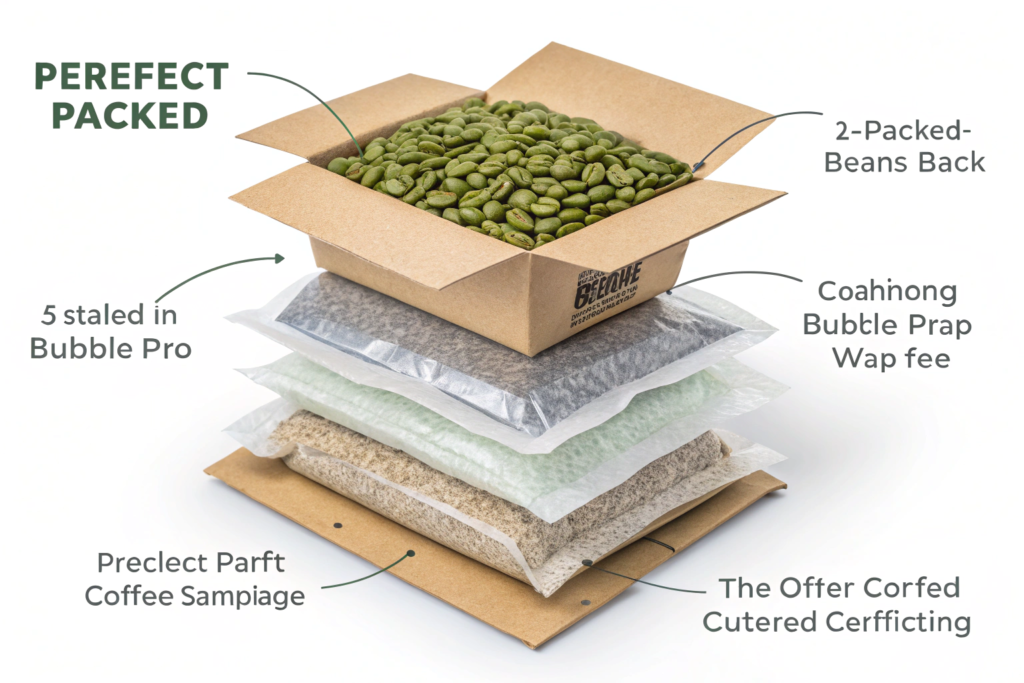
Packaging is a layered defense system. Layer 1 (The Bean): 200-500g of green beans, at correct moisture (10-12%), placed in a high-barrier, sealed bag. We use small GrainPro bags or heavy-duty zip-locks with one-way degassing valves. Layer 2 (The Cushion): The coffee bag is placed in the center of a sturdy cardboard box, surrounded by at least 2-3 inches of cushioning material—bubble wrap, foam peanuts, or crumpled paper. This absorbs shocks. Layer 3 (The Exterior): A new, rigid corrugated cardboard box of appropriate size. It must be fully sealed with strong packing tape, not string or paper tape. The shipping label and customs documents should be placed in a clear plastic pouch attached to the outside. Never write the contents or value directly on the box; it invites tampering. Inside, we always include a printed note with the sample details: lot number, variety (e.g., Catimor), process, altitude, and our contact information. This is basic quality control and professionalism.
Why Use Degassing Valves or Hermetic Bags for Samples?
Green coffee, especially if recently processed, undergoes minimal respiration, but pressure changes during air transport can cause off-gassing. A sealed bag without a valve can puff up or even burst. A degassing valve allows this pressure to equalize without letting new air in. For samples, a small valve bag is perfect. Alternatively, a hermetically sealed GrainPro bag is superior, as it prevents any gas exchange, locking in the original atmosphere. This is the gold standard, as it perfectly preserves the coffee's state. It also signals to the buyer that you understand advanced preservation techniques. When we send samples from Shanghai Fumao, we use small, heat-sealed GrainPro pouches. It's a small cost that makes a big statement about our attention to detail and commitment to quality.
What Is the Optimal Sample Size and Weight?
The optimal size is 300g to 500g (approx. 10.5 oz to 1.1 lb). This provides enough coffee for the buyer to do a proper roast profiling (multiple trial roasts) and several cuppings, potentially with their team. Sending only 50g is frustrating—it allows for only one, high-stakes roast with no room for error. Sending over 1kg starts to look like a small commercial shipment, which can trigger higher customs scrutiny and duties. The 300-500g range is the sweet spot: generous, professional, and logistically efficient. It shows you are confident and want them to evaluate the coffee thoroughly. We always ask the buyer for their preference, but 500g is our standard for new potential partners.
What Customs Documentation Is Required for Coffee Samples?
This is where most first-time shippers fail. Customs is a gate, not a hallway. Incomplete or incorrect paperwork guarantees your sample will be held, potentially destroyed, or returned. The key is clarity and honesty.
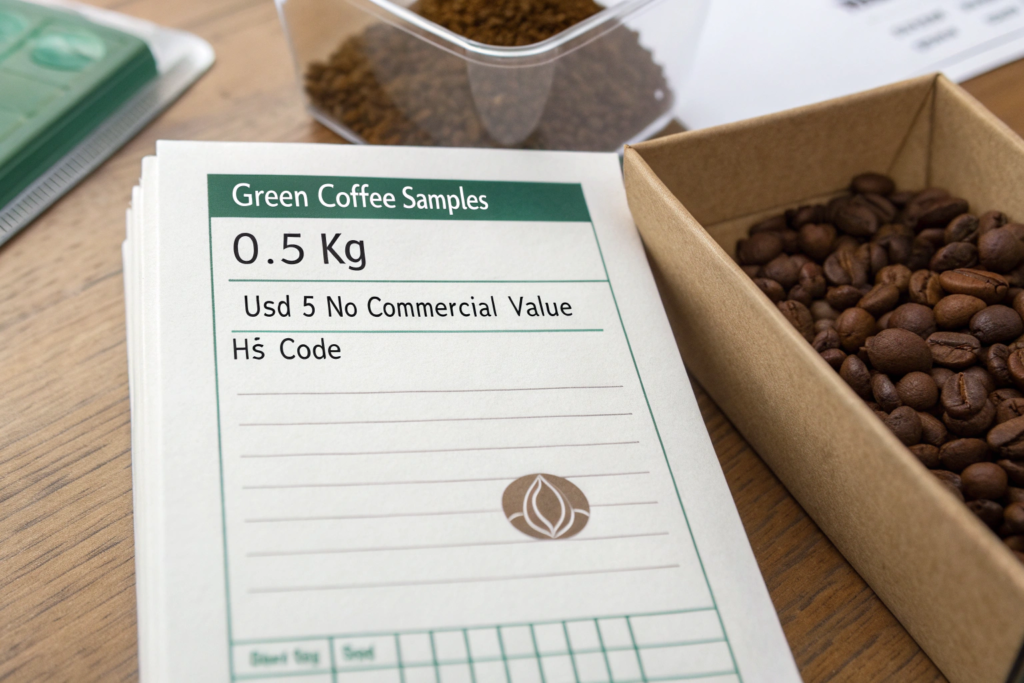
The absolute essential document is a Commercial Invoice, even for samples. This invoice must be taped to the outside of the box (in the document pouch) and included inside. It should contain: Exporter/Shipper Info (Your company name, address, contact), Consignee/Importer Info (Buyer's company name, address, contact), Detailed Description of Goods (e.g., "Green Coffee Bean Samples for Quality Evaluation"), Harmonized System (HS) Code (Often 0901.11 for unroasted coffee), Quantity (e.g., "1 Bag, 0.5 kg"), Value (State a nominal value like "USD 1" or the actual cost of the beans, but clearly mark "NO COMMERCIAL VALUE - SAMPLES ONLY"), and Reason for Export (Mark "SAMPLE"). Do not mark it as "Gift," as this can mislead customs. Some countries may require a Phytosanitary Certificate for plant products, but for small sample quantities (under 1-2 kg), this is often waived. However, you must check the importing country's regulations. For the U.S., a small sample of green coffee typically does not need a phytosanitary certificate from the USDA, but it must be clean and free of pests. Always declare the contents truthfully as "Coffee."
Should You Declare "No Commercial Value" or a Nominal Value?
This is a nuanced but crucial decision. For true samples that are not being sold, declaring a low nominal value (e.g., USD $1-$5) and marking "NO COMMERCIAL VALUE" is standard and helps the buyer avoid paying import duties. However, the value should not be zero, as that can raise suspicion. The key is consistency: the description must support the low value. If you write "Premium Yunnan Arabica - 500g" and declare $1, it may seem illogical. We use: "Green Coffee Bean Samples - Not for Resale - Value for Customs Purposes Only: USD 5." This is transparent and usually accepted. It protects our buyer from unnecessary fees, facilitating a smooth receipt. This attention to logistics detail is part of being a safe and trustworthy supplier.
How to Handle Incoterms for Sample Shipments?
For samples, the standard and simplest approach is DDP (Delivered Duty Paid). This means you, the exporter, pay all shipping and import duties/taxes, and the sample arrives at the buyer's door with no extra charges or paperwork on their end. This is a service that demonstrates professionalism and removes all friction for the buyer. The alternative, DAP (Delivered at Place), means the buyer is responsible for any local taxes or clearance fees, which can be an unwelcome surprise. At Shanghai Fumao, we always ship samples DDP for our key prospects. We absorb the cost because we see it as a marketing investment and a demonstration of our commitment to a smooth partnership. It directly addresses the buyer's pain point concerning hidden tariff costs and process complexity.
What Are the Common Pitfalls and How to Avoid Them?
Even with the best intentions, small mistakes can derail a sample shipment. Being aware of these traps is the first step to avoiding them.
Common pitfalls include: 1) Poor Packaging: Using a flimsy bag or envelope leads to crushed beans and a spilled mess. 2) Incomplete Address: Missing company name, suite number, or correct phone number for the recipient. 3) Prohibited Declarations: Writing "Coffee Beans" or "Food" simplistically can trigger agricultural inspections. Use the detailed description advised above. 4) Choosing the Wrong Carrier: Using an unreliable courier with poor tracking. 5) Ignoring Import Regulations: Not checking if the destination country has restrictions on plant materials from your origin. 6) No Communication: Not sending the tracking number to the buyer immediately. Each of these failures erodes confidence.
Why Do Samples Get Stuck in Customs and How to Prevent It?
Samples get stuck primarily due to incomplete/inaccurate paperwork or suspicious declarations. A missing invoice, an undeclared value, or a description that doesn't match the contents will cause a hold. Prevention is straightforward: Use a complete commercial invoice. Be transparent and accurate. Research the destination country's specific requirements for food samples. For high-value prospects, consider using a courier's pre-clearance service, where they handle the customs brokerage for a fee. We also always include our buyer's Importer of Record number or their phone number on the invoice if they provide it, so customs can contact them directly if needed. This proactive approach ensures timeliness.
How to Manage Buyer Expectations and Follow-Up?
Communication is part of the shipment. As soon as we dispatch a sample, we email the buyer the tracking number, expected delivery date, and a copy of the commercial invoice. We say, "Your sample is on the way! You can track it here. It should arrive by [date]. Please let us know as soon as it arrives and if you have any questions." This sets expectations. Then, a day or two after the expected delivery, we follow up politely: "Hope the sample arrived safely. We're eager to hear your thoughts when you have a moment to cup it." This shows we are organized and genuinely interested, without being pushy. It turns a simple shipment into a professional service experience, reinforcing our brand as stable and reliable.
Conclusion
Shipping a coffee sample internationally is your first real test. It's a demonstration of your professionalism, your understanding of global trade, and your respect for the product and the client. The "best way" combines speed (express courier), security (hermetic, cushioned packaging), and clarity (accurate customs docs) to deliver a pristine tasting experience.
Mastering this process builds immediate trust. It shows you can handle the complexities of international logistics on a small scale, which is a promise you can handle them on a container scale. For a buyer concerned with timeliness, security, and quality, a perfectly received sample is the strongest possible opening argument for a long-term partnership.
At BeanofCoffee, we have standardized this sample process because we know it's the gateway to everything else. We want our coffee to speak for itself, without being muted by a difficult journey.
If you are a buyer looking for a supplier who understands that the journey begins with the sample, contact us. We will get our best Arabica, Catimor, or Robusta into your hands, fresh and ready for evaluation, with no hidden hassles.
To request samples and experience our streamlined shipping process firsthand, please reach out to Cathy Cai. She will coordinate everything and ensure you receive your samples promptly and professionally. Email her at cathy@beanofcoffee.com. Let's start with a perfect cup.