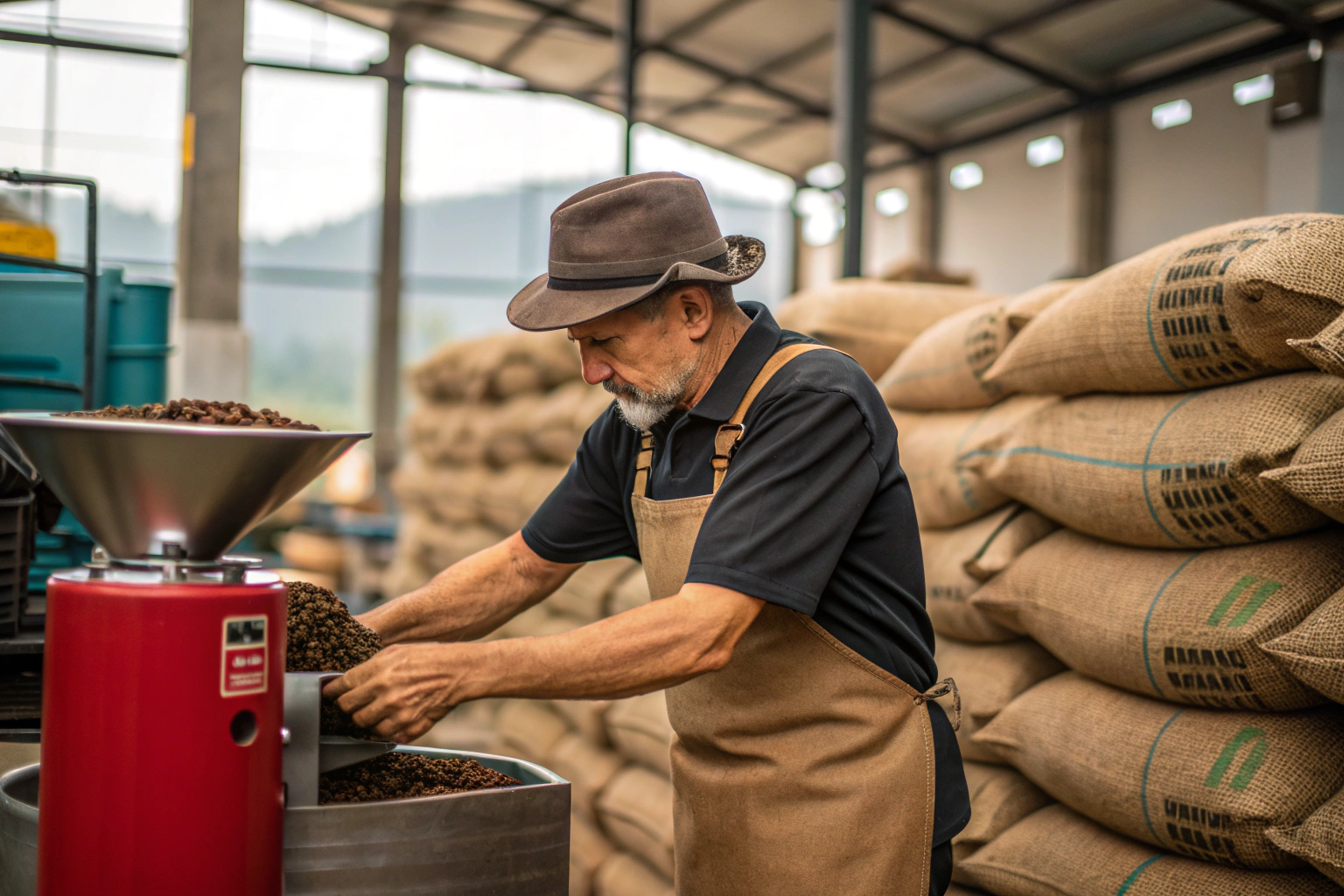
You're a commercial buyer. Your job isn't just about finding great coffee; it's about securing thousands of pounds, month after month, at a price that lets your business survive and grow. One bad crop, one price spike, and your entire margin can vanish. So, you make a choice that might surprise specialty purists: you rely on stable Robusta blends. From my position as an exporter supplying both Arabica and Robusta, I see this not as a compromise, but as a calculated, intelligent strategy for business resilience.
Commercial buyers prefer stable Robusta blends for three core reasons: cost predictability, supply security, and functional consistency. Robusta coffee is typically 30-50% cheaper than Arabica, provides a more reliable and voluminous yield year-round, and delivers a consistent crema and caffeine kick essential for espresso blends. This combination offers a bedrock of stability upon which large-scale, price-sensitive operations can be built, effectively managing the major pain points of price volatility, timeliness of supply, and product uniformity.
That's the straightforward business answer. But let's be honest—the word "Robusta" often carries a stigma. The narrative says it's inferior. Yet, for the pragmatic world of large-scale commercial coffee—think instant coffee, private label brands, and mainstream espresso blends—Robusta isn't a fallback; it's a foundation. The real question isn't "why Robusta?" but "how does Robusta create a safe, reliable, and stable supply chain?" Let's break down the practical realities that make it the preferred engine of the global coffee industry.
How Does Robusta Provide Cost and Supply Stability?
In business, predictability is often more valuable than peak potential. Arabica is the high-potential, high-risk asset. Robusta is the steady, dependable workhorse. This fundamental difference in agricultural and market behavior is why Robusta anchors commercial blends.
Robusta provides stability because it is a harder, more resilient plant. It grows at lower altitudes, is more resistant to pests and diseases (like coffee leaf rust), and produces a higher yield per hectare. This translates to two things for a buyer: 1) Lower Base Price: The production cost is lower, and the market (ICE London Futures) is historically less prone to the dramatic speculative spikes seen in Arabica, especially those triggered by Brazilian frosts. 2) Reliable Volume: A bad year for Robusta in Vietnam or Brazil is less catastrophic for global supply than a bad year for Arabica. The supply is more diversified and forgiving. For a commercial buyer planning production for a global supermarket chain or a large food service account, this reliability is non-negotiable. They can't tell their client, "Sorry, our blend is unavailable this month due to a frost in Minas Gerais." With a Robusta base, that risk is drastically reduced. It’s the cornerstone of a trustworthy supply plan.
Why Is Robusta Less Volatile on the Commodity Market?
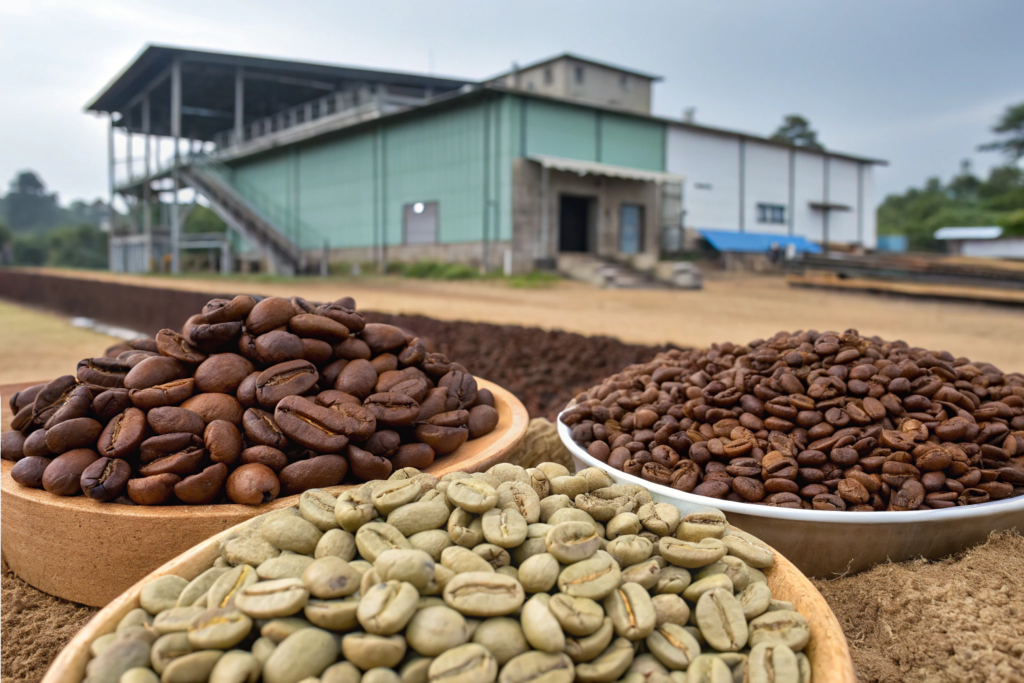
The Robusta futures market is less driven by speculative fear. Why? First, the psychological factor: the "specialty" narrative and media focus are on Arabica, attracting more speculative capital. Second, the production geography: while concentrated, major Robusta producers like Vietnam have a more predictable climate for the crop and fewer catastrophic weather risks compared to Brazil's frost-prone Arabica regions. Third, the usage: a huge portion of Robusta goes into instant coffee and private label blends—markets with razor-thin margins that simply cannot absorb wild price swings. This creates a market that is fundamentally more pragmatic and less emotional. For a buyer like "Ron," who is very concerned about price, this inherent stability is a primary attraction. It allows for more accurate long-term budgeting and protects against the "fear premium."
Can Robusta Supply Truly Meet Large-Scale Demand?
Absolutely, and it already does. Vietnam alone often produces over 30 million bags annually, rivaling Brazil's total output. The scalability of Robusta farming is a key feature. The plants are vigorous, and farming practices in major origins are highly mechanized and efficient. When you need to fill a container with 20 tons of green beans every week, you need a pipeline that won't run dry. Robusta provides that pipeline. At Shanghai Fumao, while we are known for our Yunnan Arabica, we also cultivate and source Robusta specifically to meet this commercial demand. We understand that for our clients who are large company buyers and distributors, having access to a stable, high-volume Robusta stream is as important as offering specialty lots. It's about being a full-service, reliable partner.
What Functional Advantages Does Robusta Offer in Blends?
Beyond economics, Robusta brings tangible, technical benefits to the cup—especially in the commercial espresso realm. It's not just filler; it's a functional ingredient.
The functional advantages are about body, crema, and caffeine. Robusta beans contain more caffeine and different soluble solids than Arabica. When roasted and brewed as espresso, this results in a thicker, more persistent crema—a visual hallmark of quality that consumers associate with a fresh, strong shot. It also contributes a heavier, grain-like body and that characteristic "bitter punch" that defines many traditional Italian espresso blends. For a commercial roaster, this consistency is gold. They can design a blend that, when run through an automatic espresso machine in a cafe chain, delivers the same visual and textural experience in Seattle, Sydney, or Stuttgart, day after day. The Robusta component acts as the anchor, providing a reliable base note that doesn't fluctuate with the more variable acidity and aroma of Arabica.
How Does Robusta Enhance Espresso Crema and Shelf Life?
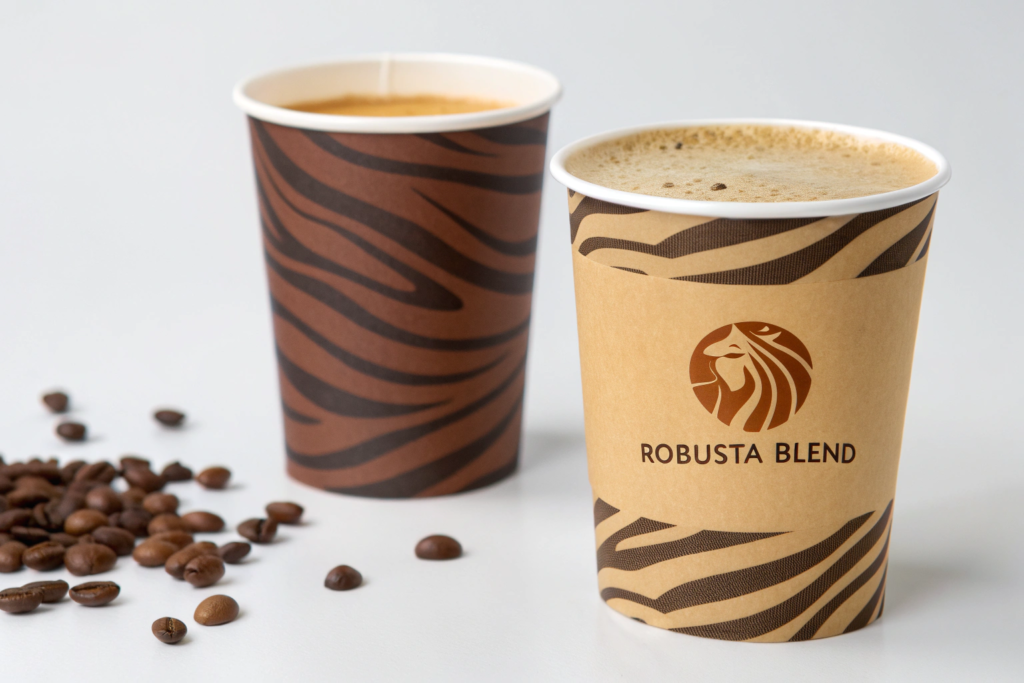
The science is clear: Robusta's higher lipid and mineral content, along with its cell structure, produce more stable colloidal suspensions during high-pressure extraction. This means a thicker, more resilient crema that lasts longer in the cup—a critical visual cue in busy coffee shops. Furthermore, the compounds that give Robusta its stronger flavor are also less volatile. This can contribute to a longer perceived shelf life for pre-ground commercial products. The coffee maintains its "strength" character over time better than a delicate, purely aromatic Arabica might. For a brand buyer creating a product for supermarket shelves, this functional reliability translates directly to consumer satisfaction and fewer returns.
Is the "Bitter" Profile of Robusta a Drawback or a Feature?
This is the critical perception shift. In the specialty world, bitterness is often a defect. In the mainstream commercial world, it is an expected and desired attribute. For millions of consumers, "strong coffee" means a bitter, robust flavor and a caffeine kick. Robusta delivers this reliably. A skilled blender doesn't use Robusta to make the coffee worse; they use it to engineer a specific, consistent flavor profile that a massive market knows and wants. By blending it with smoother, more aromatic Arabicas, they can control the bitterness level precisely. It's a tool for consistency. At Shanghai Fumao, when we prepare Robusta for export, our focus is on delivering a clean, consistent quality within that profile—free of off-flavors like extreme earthiness or rubber, which are signs of poor processing. A good quality Robusta should be strong, but not defective.
How Do Blenders Mitigate Quality Concerns with Robusta?
The commercial buyer's challenge is to harness Robusta's stability without importing its potential quality downsides: harsh bitterness, earthy notes, or variability. This is where blending skill and sourcing acumen come into play.
Expert blenders mitigate concerns through three channels: 1) Selective Sourcing: Not all Robusta is created equal. They seek out higher-grade Robusta from specific regions known for cleaner profiles (like Southern India or certain parts of Vietnam) and from suppliers with strict quality control. 2) Strategic Blending: Robusta is rarely used alone. It's blended with softer, sweeter, or more acidic Arabica beans (often from Brazil or our Yunnan Catimor) that balance its intensity. The Arabica masks harshness and adds complexity. 3) Precision Roasting: Robusta and Arabica have different densities and chemical compositions. Blenders often roast them separately to optimize each bean's profile before blending, a process called "split roasting." This allows them to develop the Robusta's body without burning it, and preserve the Arabica's sugars. It’s a manufacturing science that prioritizes a standardized end product.
What Are the Hallmarks of a "Premium" Commercial Robusta?
A premium commercial Robusta is defined by what it lacks as much as what it has. Buyers look for:
- Uniform Size and Density: Allows for even roasting.
- Low Defect Count: Minimal black beans, broken bits, or foreign material.
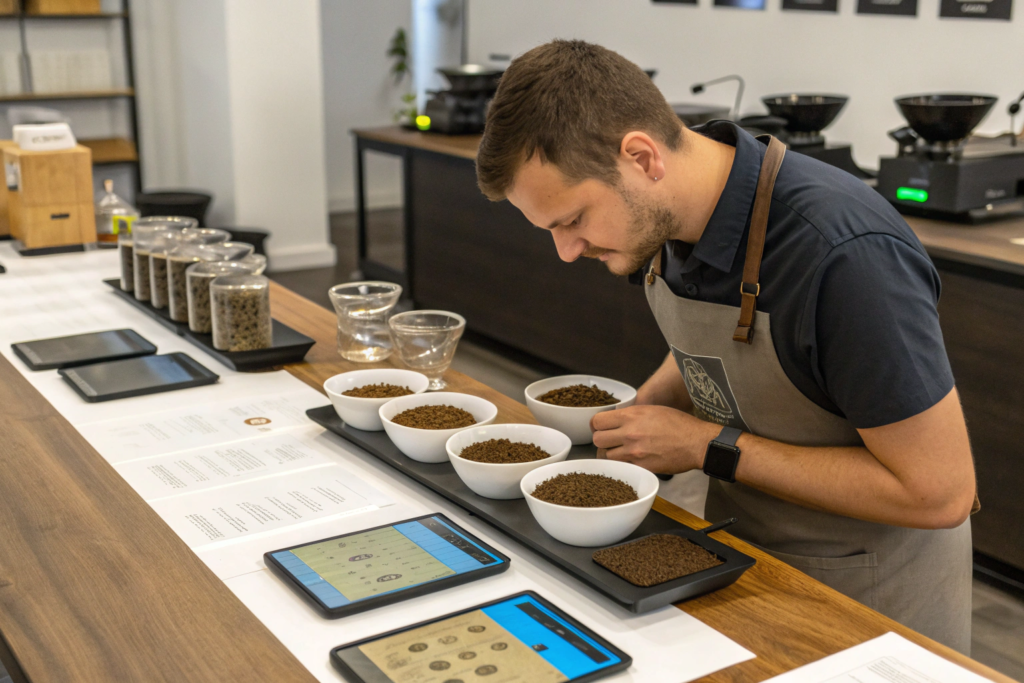
- Clean Cupping Profile: It should have its characteristic strength and bitterness, but be free of overwhelming off-flavors like medicinal, rubbery, or sour notes. A hint of peanutty or woody character can be acceptable.
- Consistent Moisture (10-12%): For safe storage and shipping.
Suppliers like us who control the processing can meet these specs. We provide the certifications and mill reports that give buyers confidence. This turns a commodity into a reliable ingredient.
Can Advanced Processing Improve Robusta for Blends?
Yes, significantly. While traditionally sun-dried, more Robusta is now being processed with care. Washed Robusta can produce a cleaner, brighter cup than natural processed. Some experiments with honey processing or careful fermentation are yielding Robusta with more complexity, reducing the need for heavy masking in blends. For the forward-thinking commercial buyer, partnering with an exporter who invests in such processing is a way to future-proof their blend, potentially allowing them to reduce the Arabica percentage slightly without sacrificing drinkability, thus saving more on cost. This is the kind of innovation we explore at our operations to add value for our trading company clients.
What Is the Future of Robusta in a Specialty-Dominated Narrative?
The coffee world is bifurcating. One path leads toward traceable, high-priced microlot Arabica. The other leads toward efficient, consistent, and affordable blends for the mass market. Robusta is not being left behind; it is being reevaluated on its own terms within the commercial sphere.
The future is not about Robusta becoming the next Gesha. It's about Robusta gaining respect as a vital, distinct commodity that serves a different market masterfully. We will see: 1) Better Segregation: "Commercial grade" and "Premium grade" Robusta will become more distinct, with clearer pricing tiers. 2) Sustainability Focus: Large commercial buyers, under consumer pressure, will demand sustainably certified Robusta (Rainforest Alliance, UTZ) for their blends, which will improve farming practices. 3) Niche Premiumization: A tiny segment of exceptionally processed, high-altitude Robusta may enter the specialty conversation as a curiosity, but its core role will remain foundational. For the commercial buyer, this evolution means they can continue to rely on Robusta for stability, while also addressing ESG (Environmental, Social, and Governance) goals by sourcing from certified, responsible suppliers.
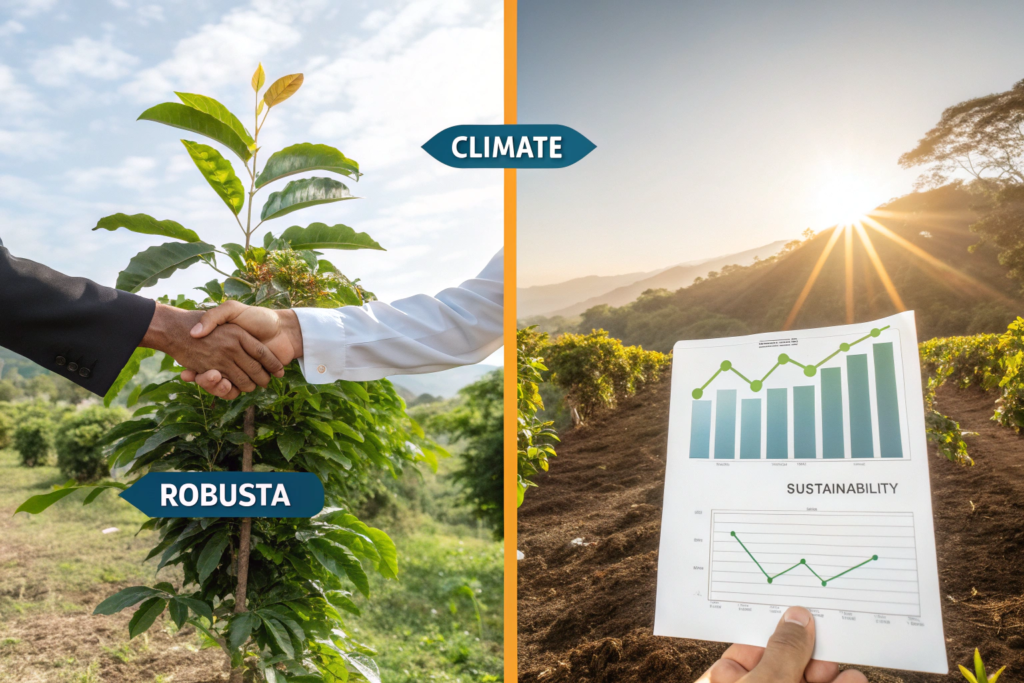
Will Climate Change Increase Reliance on Robusta?
Very likely. Climate models predict that many traditional Arabica-growing regions will become less viable due to rising temperatures and spreading pests. Robusta, as a more heat-tolerant and resilient species, is better suited to these conditions. This isn't speculation; it's already leading to increased Robusta planting in some regions. For long-term supply security, large commercial buyers are wise to build strong relationships with reliable Robusta exporters now. It's a strategic hedge against climate-driven Arabica supply instability. At BeanofCoffee, our diverse planting strategy in Yunnan, which includes both Arabica and Robusta varieties, is designed precisely for this kind of long-term security for our partners.
How Can Buyers Build a Future-Proof Sourcing Strategy?
The smart strategy is a balanced portfolio. Use stable, cost-effective Robusta blends for your core, volume products that define your business. Use your profit margins from those stable lines to experiment with and feature higher-margin, traceable Arabicas for your premium lines. This "core and explore" model uses Robusta's stability to fund innovation. Your relationship with your Robusta supplier should be as strategic as any other. Look for a partner like us who is not just a trader, but has insight into farming, can provide consistent quality, and is investing in sustainable and efficient practices. This turns a simple commodity purchase into a pillar of your business's stability.
Conclusion
Commercial buyers prefer stable Robusta blends because they are, above all, pragmatic. In a world of volatility, Robusta offers a haven of predictability. It solves the fundamental equations of cost, volume, and consistency that large-scale operations cannot ignore. It is not a "lesser" choice, but a different one—optimized for a market where reliability is the ultimate luxury.
Understanding this is key for any exporter. It's why we at BeanofCoffee dedicate part of our 10,000 acres and our export expertise to providing clean, consistent, and reliable Robusta. We serve the entire spectrum, from the specialty purist to the volume-driven blender, because we understand that each has a critical role in the global coffee ecosystem.
If your business relies on the bedrock stability that a well-sourced Robusta blend can provide, and you are looking for a partner who treats this crucial commodity with seriousness and professional quality control, let's connect. We can ensure your foundation is as solid as the coffee is strong.
To discuss your Robusta blend requirements and receive samples of our premium export-grade beans, please contact Cathy Cai. She can provide specifications, pricing, and logistics options tailored for high-volume commercial success. Reach her at cathy@beanofcoffee.com. Build your stable blend on a stable foundation.