I learned this lesson in front of a customer, and I still cringe when I think about it. Early in my roasting career, I was showing a potential buyer our Yunnan Arabica. I brewed it for them using a pour-over. I was so proud of the roast. But when they tasted it, they made a face. “It’s sour,” they said. I was offended. I thought they didn’t know what they were talking about. Then I looked at my grinder. I had left it set for espresso. The grind was way too fine. The brew took almost five minutes. The coffee was over-extracted and bitter. But I was so focused on the roast that I didn’t see the problem. I lost that buyer. And I learned that grind size isn’t a minor detail. It’s everything.
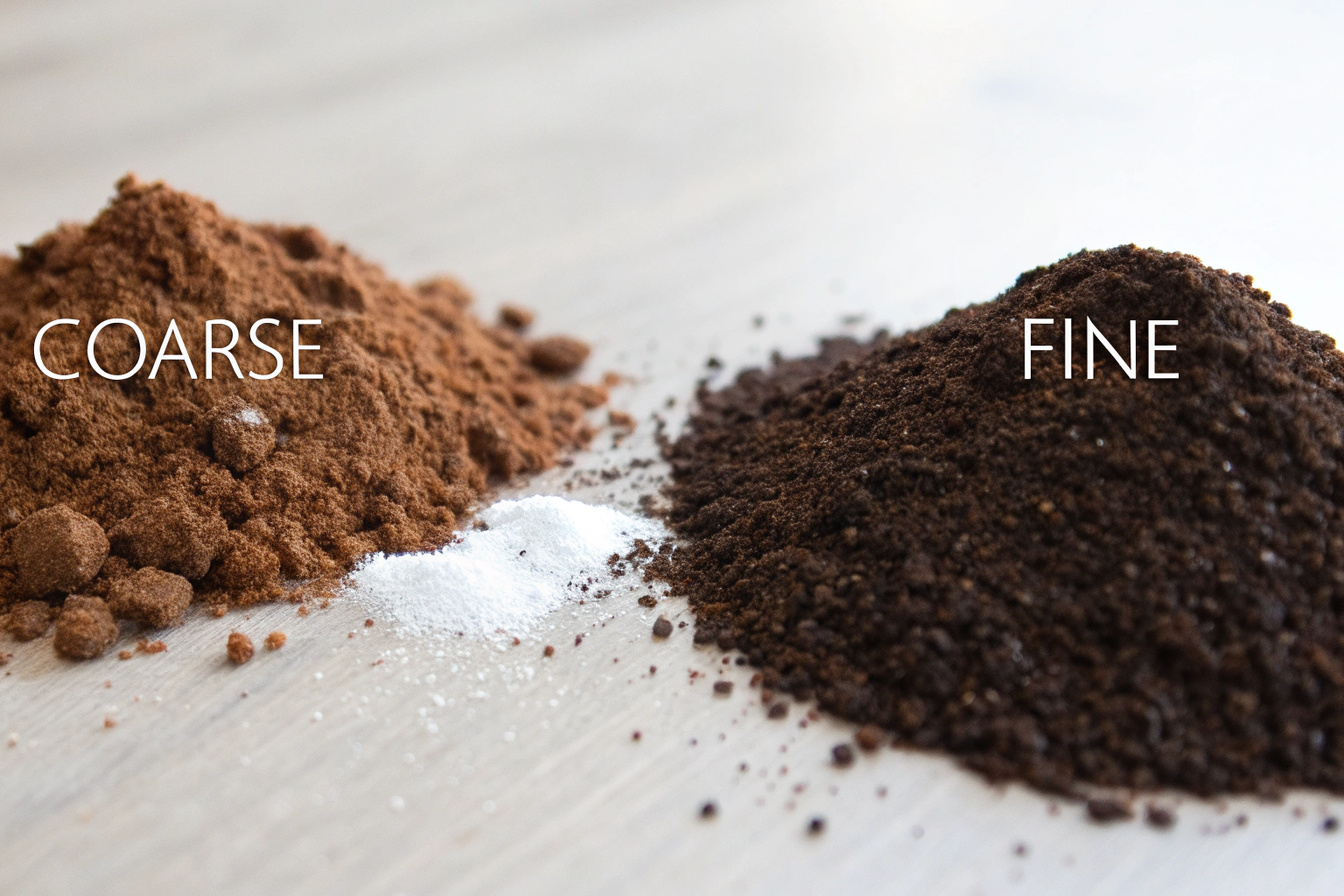
So, what is the difference between coarse and fine grind? Coarse grind has large, chunky particles. Water flows through it quickly, resulting in lower extraction. It’s ideal for brewing methods like French press and cold brew, where the coffee steeps for a longer time. Fine grind has small, uniform particles. Water flows through it slowly, resulting in higher extraction. It’s ideal for espresso and pour-over methods that use pressure or fast flow. The right grind size matches the brewing method. Get it wrong, and the coffee tastes either sour and weak or bitter and harsh. At BeanofCoffee, we help our buyers understand this because the best coffee in the world will taste bad if it’s ground wrong.
Let me walk you through what I’ve learned. I’ll explain the science behind grind size, how to match grind to your brewing method, and how to dial in the perfect grind for your coffee.
What Happens When You Change Grind Size?
Grind size changes two things: surface area and water flow. Both affect how much flavor gets extracted from the coffee.
How does grind size affect surface area?
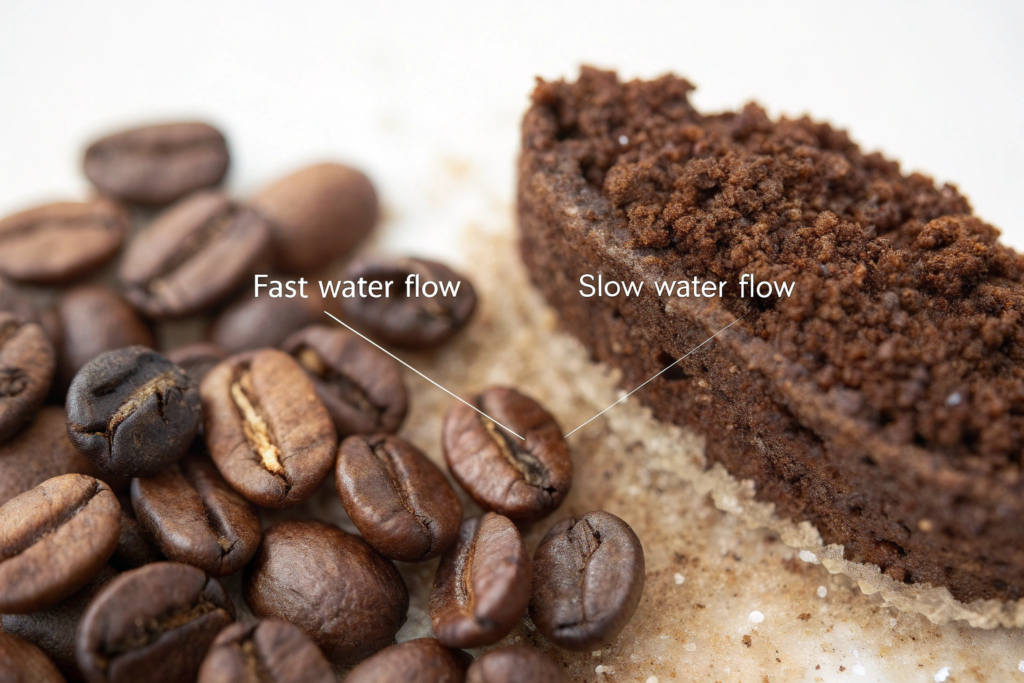
When you grind coffee, you break the bean into smaller pieces. The smaller the pieces, the more surface area is exposed to water.
Coarse grind has large particles. The total surface area is relatively small. Water touches less of the coffee at once. Extraction happens slowly.
Fine grind has small particles. The total surface area is much larger. Water touches more of the coffee at once. Extraction happens quickly.
Think of it like melting ice. A single large ice cube melts slowly. Crushed ice melts fast. Same principle.
How does grind size affect water flow?
Water flow is the other factor. In brewing methods like pour-over or espresso, water has to pass through the coffee bed.
Coarse grind leaves large gaps between particles. Water flows through quickly. Contact time is short.
Fine grind packs together tightly. Water flows through slowly. Contact time is long.
In espresso, this is critical. The fine grind creates resistance. The pump builds pressure. The water pushes through slowly, extracting fully in 25 to 30 seconds.
In pour-over, if the grind is too fine, the water pools. The brew time stretches. You get over-extraction. If it’s too coarse, the water rushes through. The brew time is too short. You get under-extraction.
Which Brewing Methods Need Coarse Grind?
Coarse grind is for brewing methods where the coffee sits in contact with water for a long time. The coarse particles slow down extraction so you don’t over-extract.
Why does French press need coarse grind?
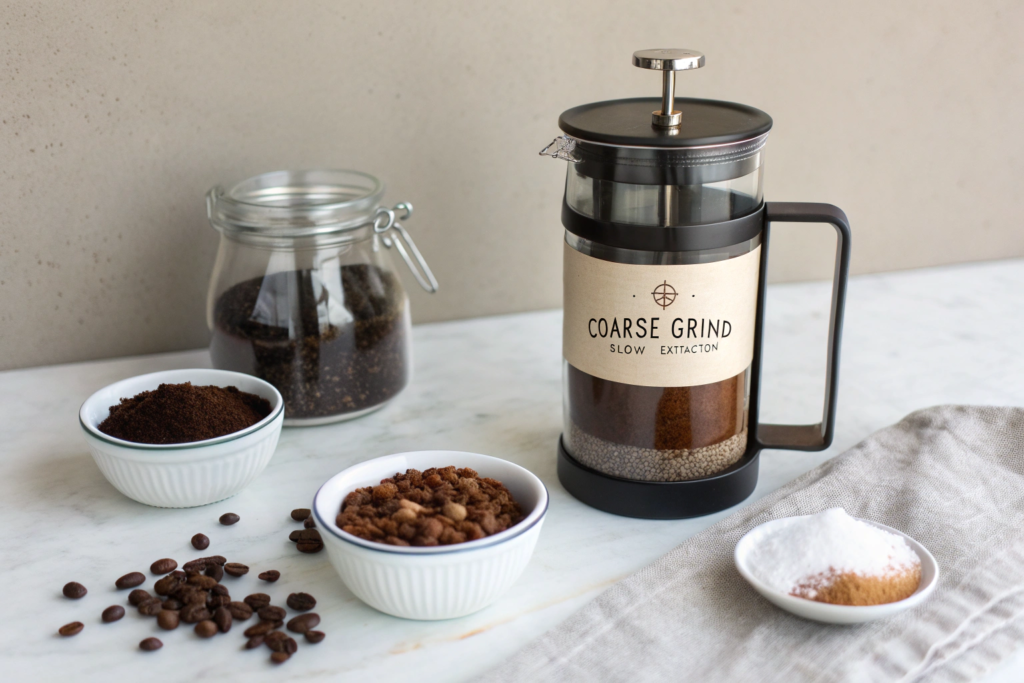
French press is immersion brewing. The coffee steeps in water for three to four minutes. The water isn’t moving through the coffee bed. It’s just sitting there.
If the grind is too fine, the coffee over-extracts during that long contact time. You get bitter, muddy coffee. The fines can also slip through the mesh filter, leaving sludge in the cup.
Coarse grind gives you clean extraction. The flavors come out evenly over the steep time. The mesh filter catches the large particles. The cup is clean and rich.
I use coarse grind for French press. I steep for three and a half minutes. Plunge. Pour. The result is balanced, full-bodied, and clean.
Why does cold brew need coarse grind?
Cold brew steeps for 12 to 24 hours. That’s a long time. If the grind is too fine, the coffee over-extracts badly. You get bitter, harsh cold brew.
Coarse grind slows extraction. The water is cold, which already slows extraction. The coarse particles slow it further. The result is smooth, sweet, low-acidity cold brew.
I use the coarsest setting on my grinder for cold brew. Steep for 16 hours. Filter. The coffee is smooth and delicious.
Which Brewing Methods Need Fine Grind?
Fine grind is for brewing methods where the water moves through the coffee quickly. The fine particles increase surface area and slow water flow, allowing extraction to happen fast.
Why does espresso need fine grind?
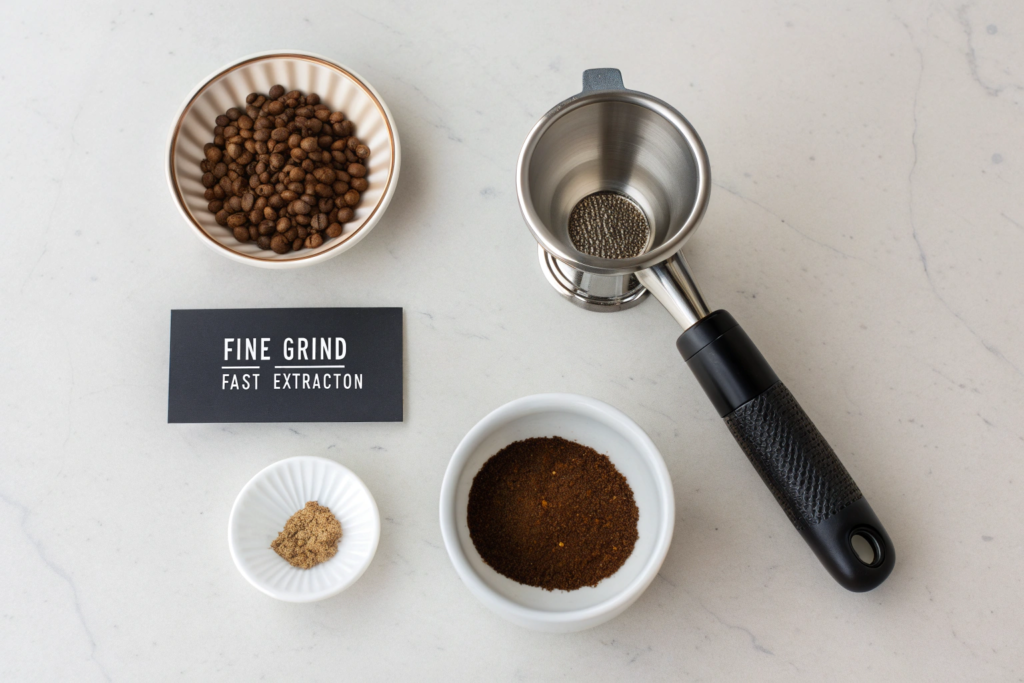
Espresso uses pressure to push water through the coffee. The brew time is short—25 to 30 seconds.
If the grind is too coarse, water rushes through. The shot runs fast, in 15 seconds. It’s thin, sour, under-extracted.
If the grind is too fine, water struggles to pass through. The shot runs slow, in 40 seconds. It’s thick, bitter, over-extracted.
The right fine grind gives you a shot that runs in 25 to 30 seconds. The crema is thick. The flavor is balanced. Sweetness comes through.
Our Catimor is excellent for espresso. It has the body to stand up to milk. With the right fine grind, it produces a rich, chocolatey shot.
Why does pour-over need medium-fine to fine grind?
Pour-over methods like V60 and Kalita have short brew times—two and a half to three and a half minutes. Water flows through by gravity.
If the grind is too coarse, water rushes through. The brew finishes in two minutes. The coffee tastes sour and weak.
If the grind is too fine, water pools. The brew takes four minutes or more. The coffee tastes bitter and astringent.
The right fine grind gives you a brew time in the target range. The flavors are bright, balanced, and clean.
Our Yunnan Arabica shines as a pour-over. With a medium-fine grind and a three-minute brew, you taste the stone fruit, the clean finish, the brightness.
How Do You Dial In the Right Grind Size?
Dialing in grind size is a skill. But it’s not magic. It’s a simple process of adjustment and taste.
What’s a simple method for dialing in?
I teach a simple three-step method.
Step one: choose a starting point. For pour-over, start with a medium-fine grind. For French press, start with coarse. For espresso, start with fine.
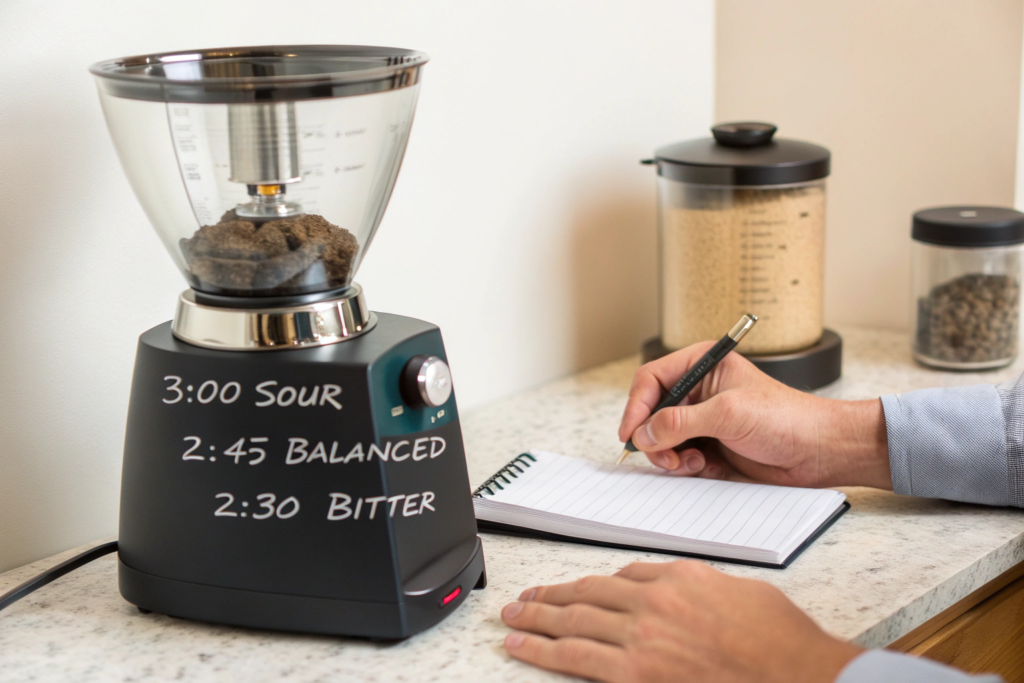
Step two: brew and taste. Write down what you taste. Sour? Bitter? Balanced?
Step three: adjust. If it’s sour, grind finer. That increases extraction. If it’s bitter, grind coarser. That decreases extraction.
Change one variable at a time. Don’t change grind and brew time together. You won’t know which one fixed the problem.
Keep notes. Write down the grind setting, the brew time, and the taste. Over time, you’ll learn what works for each coffee.
How does the coffee itself affect grind?
Different coffees need different grind settings. Dense beans—like high-altitude Arabica—need a finer grind. They’re harder to extract.
Our Yunnan Arabica grows at high altitude. The beans are dense. For pour-over, I grind a little finer than I would for a softer bean.
Catimor is less dense. It extracts more easily. For espresso, I grind a little coarser than I would for a high-density Arabica.
This is why we provide brew guides for our coffees. They’re starting points. You adjust from there.
How Does Grinder Quality Affect Grind Size?
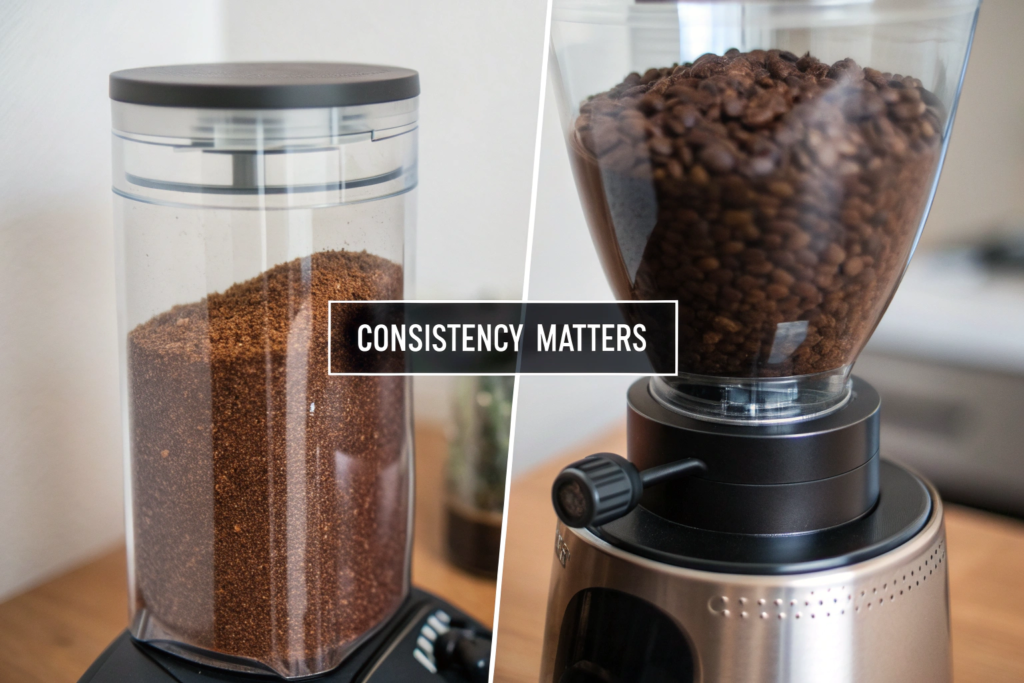
Grind size is only useful if the grind is consistent. Inconsistent particles extract unevenly. You get sour and bitter in the same cup.
Why does a blade grinder fail?
A blade grinder chops beans unevenly. You get dust and chunks mixed together.
When you brew, the dust over-extracts. The chunks under-extract. The cup is confused. You don’t know if the problem is the grind or the coffee.
I used a blade grinder for years. I thought it was fine. But once I switched to burr, I realized how much I had been missing.
Why does a burr grinder succeed?
A burr grinder crushes beans between two surfaces. You set the distance between them. The grinder produces uniform particles.
With a burr grinder, you can dial in a specific size. The particles are consistent. Extraction is even. The cup is clean and balanced.
If you’re serious about coffee, a burr grinder is the best investment you can make. It’s more important than the brewer. More important than the kettle. It’s the foundation of good brewing.
For more on this, read our article on the best way to grind coffee beans.
Conclusion
Coarse and fine grind aren’t better or worse. They’re tools. Coarse grind is for long contact time methods like French press and cold brew. Fine grind is for short contact time methods like espresso and pour-over. The right grind matches the brewing method. Get it right, and the coffee tastes balanced and sweet. Get it wrong, and it’s sour or bitter.
At BeanofCoffee, we grind our sample batches on high-quality burr grinders. We need that consistency to evaluate our Yunnan Arabica and Catimor accurately. We recommend the same for our buyers.
If you’re brewing at home or in a café, start with a burr grinder. Dial in your grind. Taste. Adjust. Keep notes. Over time, you’ll learn what works for each coffee and each method.
If you have questions about grind size or brewing, reach out to Cathy Cai. She can connect you with our quality team. We’re happy to share what we’ve learned. Her email is: cathy@beanofcoffee.com.