I learned about wet hulling the hard way. Years ago, a buyer in Europe ordered our Yunnan beans. They arrived, and he was confused. "These look different," he said. "Are they defective?" No, I explained. These are wet-hulled. A traditional method in parts of Asia. He had never seen it before. That conversation taught me something important. Not everyone knows the difference. And that difference matters for flavor, storage, and expectations.
So, what is the difference between wet and dry hulling? The short answer is timing. Wet hulling removes the parchment from the bean while the bean is still moist. Dry hulling waits until the bean is fully dried. But that simple timing difference changes everything. You can read more about processing methods on Specialty Coffee Association or check detailed guides on Perfect Daily Grind.
Let me walk you through both methods. What they look like. Why they exist. And how they affect the coffee you buy.
What Is Dry Hulling and How Does It Work?
Dry hulling is what most of the world does. You dry the coffee first. Then you remove the parchment.
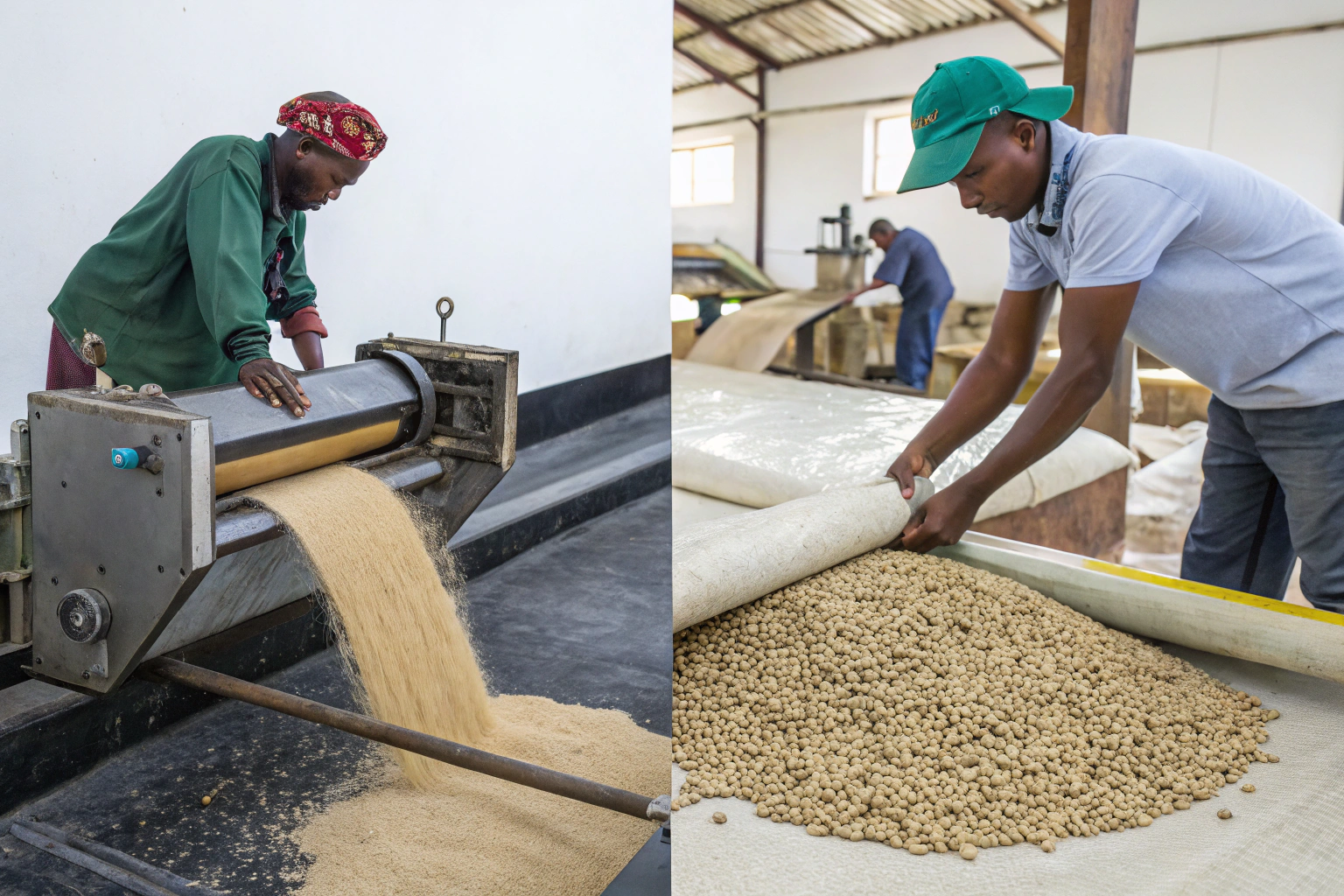
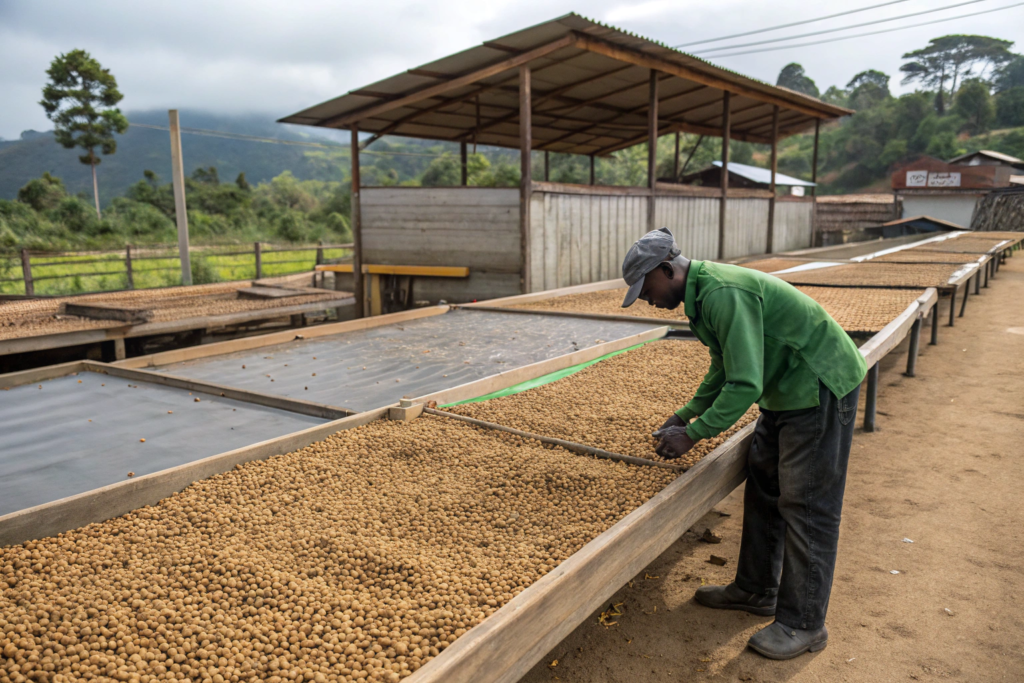
After processing, coffee beans are dried to about 10 to 12 percent moisture. They are stable. They can be stored for months. Then, when it is time to export, they go through a hulling machine. The machine cracks the parchment. Air blows it away. What is left is the green bean. Clean. Ready for export.
Why is dry hulling the global standard?
Because it is simple. And safe. The parchment protects the bean during storage. It keeps out moisture. It prevents damage. It stops pests.
By waiting until the bean is dry, you also avoid stress cracks. Wet beans are fragile. If you handle them too much, they break. Dry beans are hard. They survive milling without damage.
What equipment is used for dry hulling?
The main machine is a huller. It uses friction or pressure to crack the parchment. Then there are screens to separate beans from chaff. Then gravity tables or density separators to remove defective beans.
At our facility, we use modern hullers from Coffee Tech. They are gentle on the beans. They produce minimal broken beans. And they are fast. We can hull a whole container in hours.
What Is Wet Hulling and How Does It Work?
Wet hulling is different. It is traditional in Indonesia, especially Sumatra. Also in parts of Sulawesi and Flores. And some other humid regions.
Here is how it works. After harvest and pulping, the coffee is fermented briefly. Then it is washed. Then it is dried, but only partially. To about 30 to 35 percent moisture. Still wet. Still soft. Then the parchment is removed. The exposed beans are then dried fully to 10 to 12 percent.

Why would anyone hull wet beans?
The short answer is climate. In Sumatra, it is humid. Always. Drying coffee fully before hulling takes weeks. And during those weeks, the coffee can mold. It can ferment badly. It can spoil.
Wet hulling speeds things up. You remove the parchment early. The naked bean dries faster. In a humid climate, that is essential. Without wet hulling, much of the coffee would rot.
What equipment is used for wet hulling?
Traditionally, it was done by hand. People would pound the beans in wooden mortars. Now, machines are common. But they are different from dry hullers. They have to handle soft, wet beans without crushing them.
In our Yunnan farms, we do not use wet hulling. Our climate is drier. We use standard dry hulling. But we have seen it done. We have studied it. Our partners at Shanghai Fumao have helped us understand how different markets prefer different styles.
How Does the Timing Difference Affect Flavor?
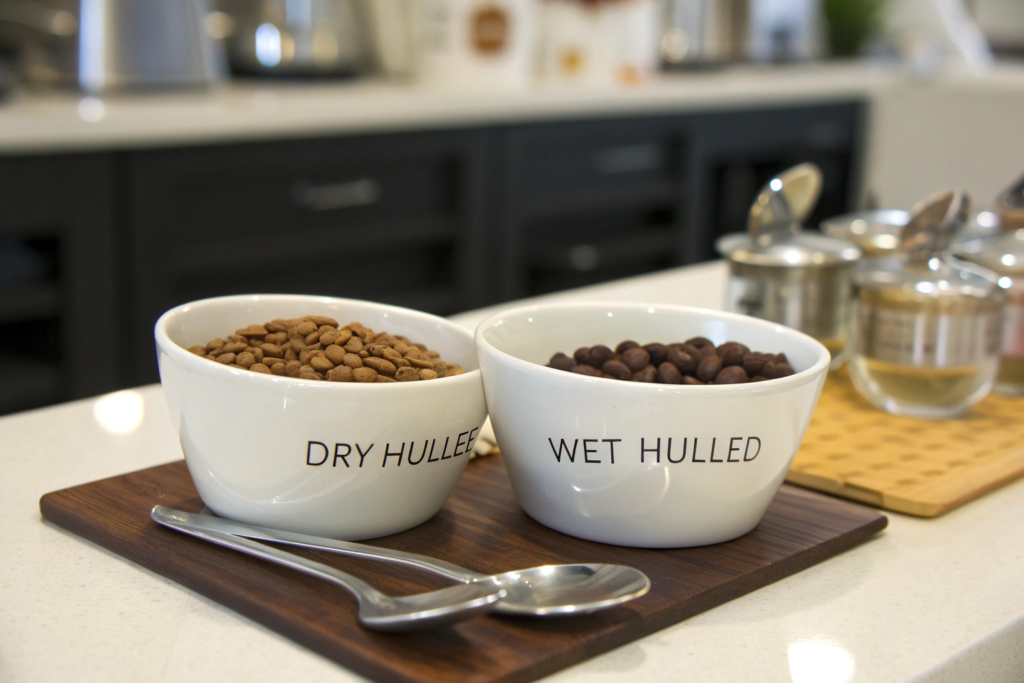
This is where it gets interesting. The timing changes the flavor. Dramatically. Dry-hulled coffee tastes clean. Bright. The flavors are clear and distinct. You taste the origin. The variety. The processing.
Wet-hulled coffee tastes different. Earthy. Spicy. Herbal. Often with low acidity and heavy body. Some people call it "funky." In a good way.
Why does wet hulling create different flavors?
Because the bean is still wet when the parchment comes off. It is exposed to oxygen. It ferments slightly. Enzymes keep working. All of that creates new compounds. Different flavors.
Also, the drying process changes. The naked bean shrinks and wrinkles. That traps some flavors inside. Makes them more concentrated.
Is one method better than the other?
No. They are just different. It depends on what you like. If you want clean, bright coffee, choose dry-hulled. If you want earthy, heavy, complex coffee, try wet-hulled.
Many of our buyers in Europe prefer dry-hulled. Cleaner. More familiar. Some buyers in Asia and the U.S. appreciate wet-hulled for blending. It adds body and complexity. There is no right answer.
How Does Each Method Affect Bean Appearance?
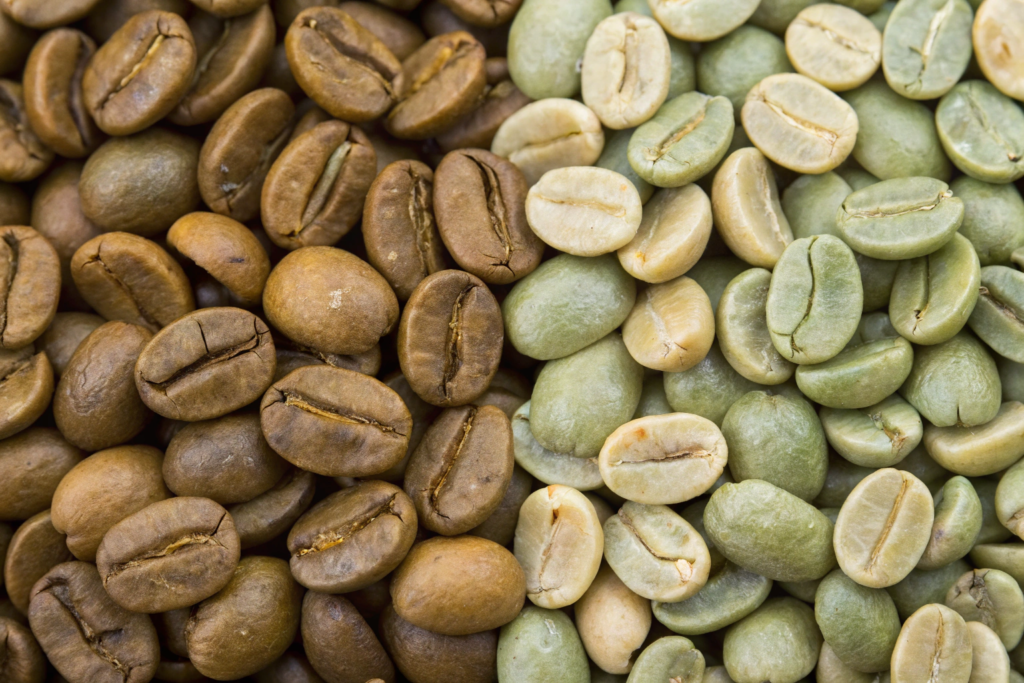
You can often tell the method just by looking. Dry-hulled beans are uniform. Smooth. Even color. The center cut is straight and clean.
Wet-hulled beans look different. They are often darker. More uneven. The surface can be rough. The beans might be twisted or misshapen. Sometimes they have a bluish or greenish tint.
Why do wet-hulled beans look different?
Because they shrunk during drying. The bean was soft when hulled. Then it dried. As it lost moisture, it changed shape. It wrinkled. It twisted.
Also, the color changes. Enzymatic activity during drying can create darker pigments. That is why wet-hulled beans often look aged, even when fresh.
Do buyers prefer one appearance?
Some do. Some don't. In specialty coffee, appearance matters. But it is not everything.
Buyers who know wet-hulled coffee expect that look. They are not surprised. They know the flavor will match the appearance. Buyers who only know dry-hulled might be confused. They might think the beans are defective. That is why communication matters. We always tell buyers what to expect.
How Does Storage Differ Between Methods?
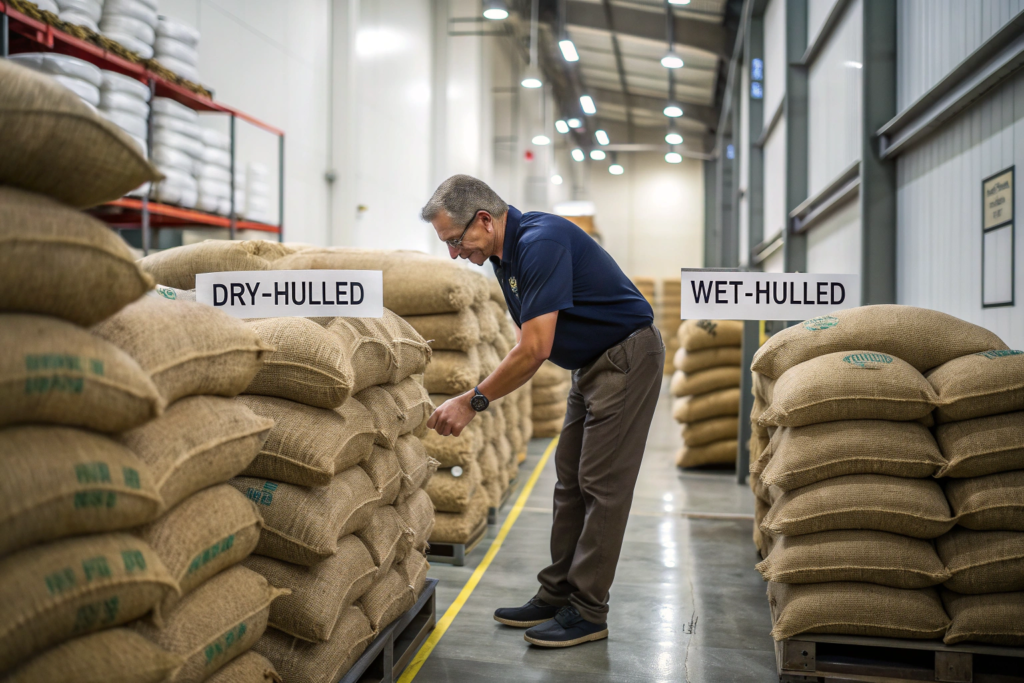
Storage is different. Important difference. Dry-hulled beans are stable. They have been fully dried before hulling. The parchment protected them during drying. They can be stored for months, even years, with minimal quality loss.
Wet-hulled beans are more fragile. The hulling happened early. The beans were exposed during drying. They might have more stress cracks. They might age faster.
How long can wet-hulled beans be stored?
Not as long as dry-hulled. The flavors can change. The earthiness can become mustiness. The complexity can become muddiness.
Most experts recommend using wet-hulled beans within 6 to 12 months. After that, they start to decline. Dry-hulled beans can often last 12 to 24 months or more.
What storage conditions work best for each?
Both need cool, dry conditions. But wet-hulled beans are more sensitive. They need more protection. GrainPro liners are highly recommended. Keep them away from heat. Away from humidity.
We store our dry-hulled beans in standard burlap. For wet-hulled, we would use liners. Even though we do not produce wet-hulled, we know the requirements. Our partners at Shanghai Fumao help buyers source both types and advise on storage.
Conclusion
Wet and dry hulling are different worlds. Dry hulling is standard. Clean, uniform, stable. Wet hulling is traditional. Earthy, complex, fragile.
Neither is better. They are just different tools for different climates and different tastes. If you want bright, clean coffee, choose dry-hulled. If you want heavy, earthy, funky coffee, try wet-hulled.
At Shanghai Fumao, we produce dry-hulled coffee. That is what works in Yunnan. That is what most of our buyers want. But we understand wet-hulled. We respect it. And we can help you find it if that is what you need.
If you want to learn more about processing methods, or if you want to try our dry-hulled Yunnan beans, reach out to us. Contact our export manager, Cathy Cai, at cathy@beanofcoffee.com.