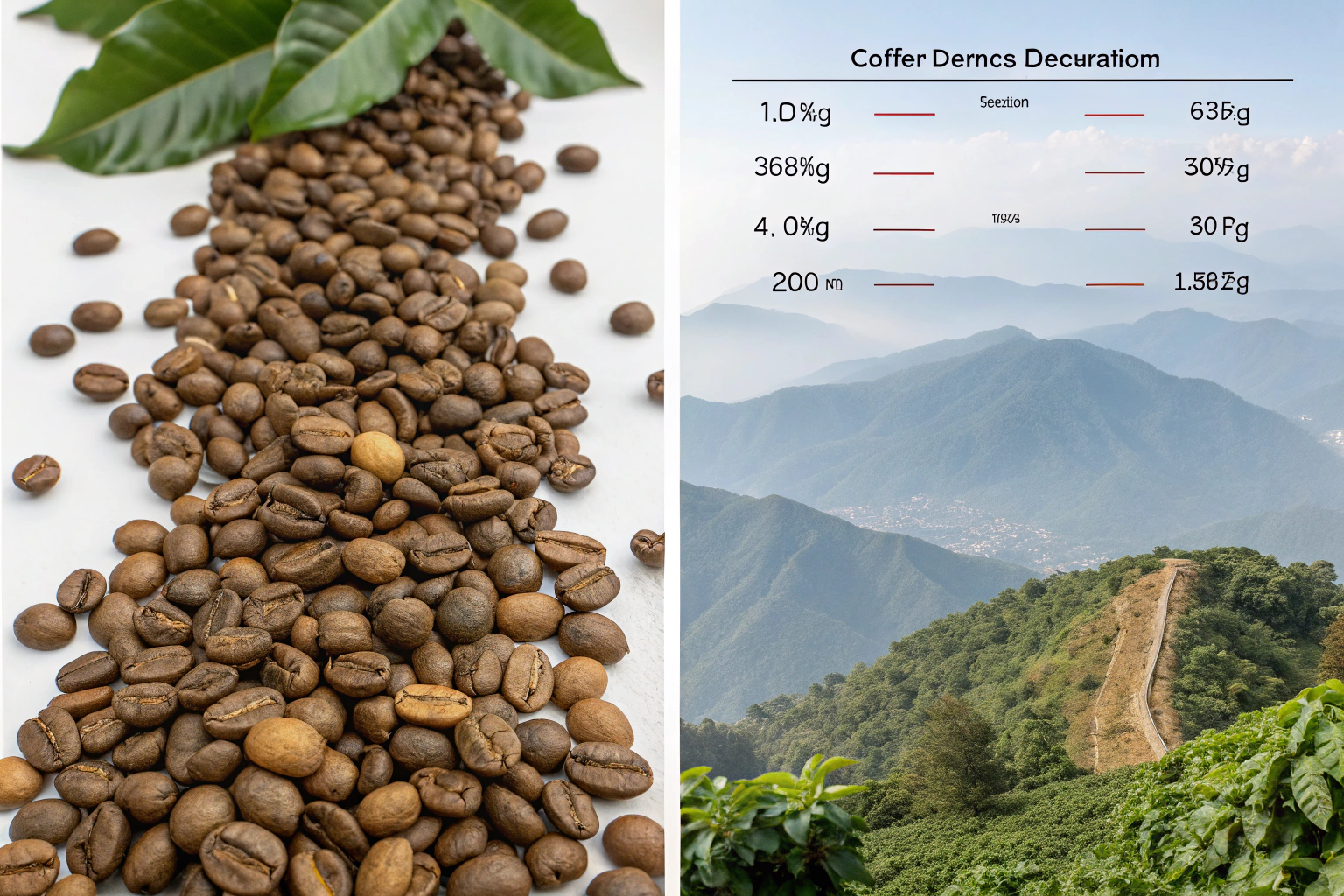
A roaster from Seattle called me last week. He'd bought two lots from us—same variety, same processing, same farm. One roasted beautifully. The other behaved strangely. Uneven development. Inconsistent extraction. "What changed?" he asked. Nothing changed except elevation. The lots came from different altitudes.
Elevation directly impacts coffee bean density. Higher elevations mean slower cherry maturation, denser bean structure, and more complex flavor potential. Lower elevations produce faster growth, softer beans, and different roasting characteristics. Understanding this relationship helps roasters predict behavior and buyers select appropriate lots.
Let me walk you through how elevation shapes the beans you roast. Because density determines so much—and elevation is the primary driver.
How Does Elevation Affect Cherry Development?
The journey from flower to ripe cherry takes time. Elevation controls that clock. Higher means slower. Slower means denser.
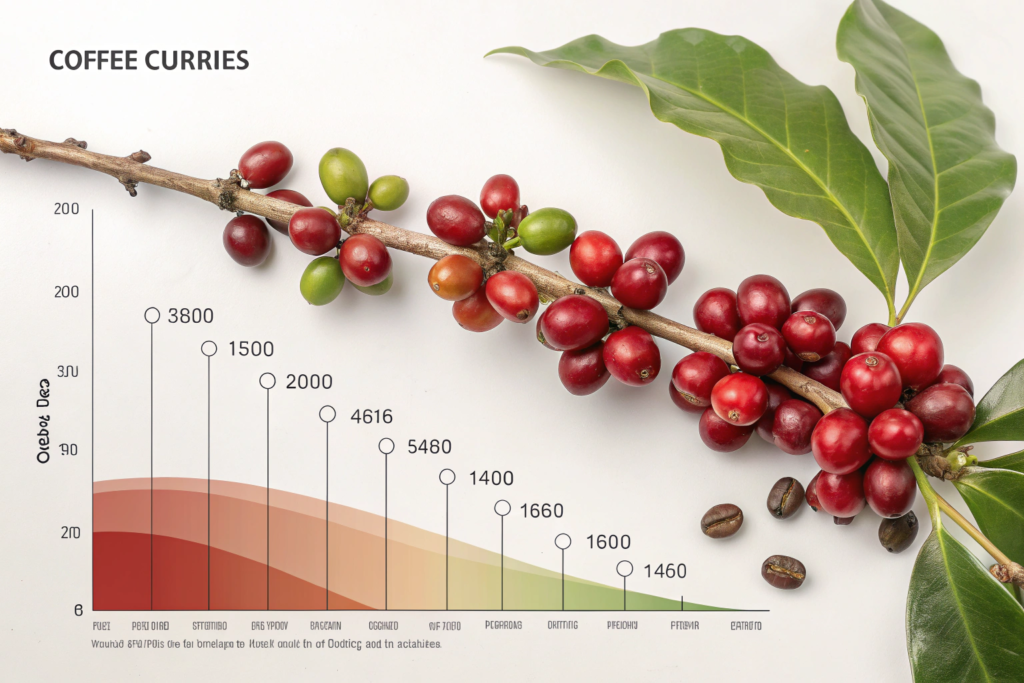
At higher elevations (above 1,200 meters), cooler temperatures slow cherry development. Cherries take longer to mature—sometimes weeks longer than at lower altitudes. This extended development allows more time for sugar accumulation, acid development, and formation of complex flavor compounds. The beans grow more slowly, packing cellular material more densely.
What happens at lower elevations?
Warmer temperatures speed ripening. Cherries mature faster—sometimes too fast. Less time for flavor development. Beans grow quickly, with less dense cellular structure.
The result: softer beans, simpler flavors, faster roasting. Not worse—just different. Check coffee phenology studies for scientific data on how temperature affects development rates.
How much slower is high-elevation growth?
At 1,600 meters, cherry maturation might take 8-9 months from flowering to harvest. At 800 meters, same variety might mature in 6-7 months. That's 30 percent more development time.
More time means more complexity. Working with Shanghai Fumao helps you source beans with the density profile you need.
How Is Density Measured and Why Does It Matter?
Density isn't just academic. It predicts roasting behavior, storage potential, and cup quality.
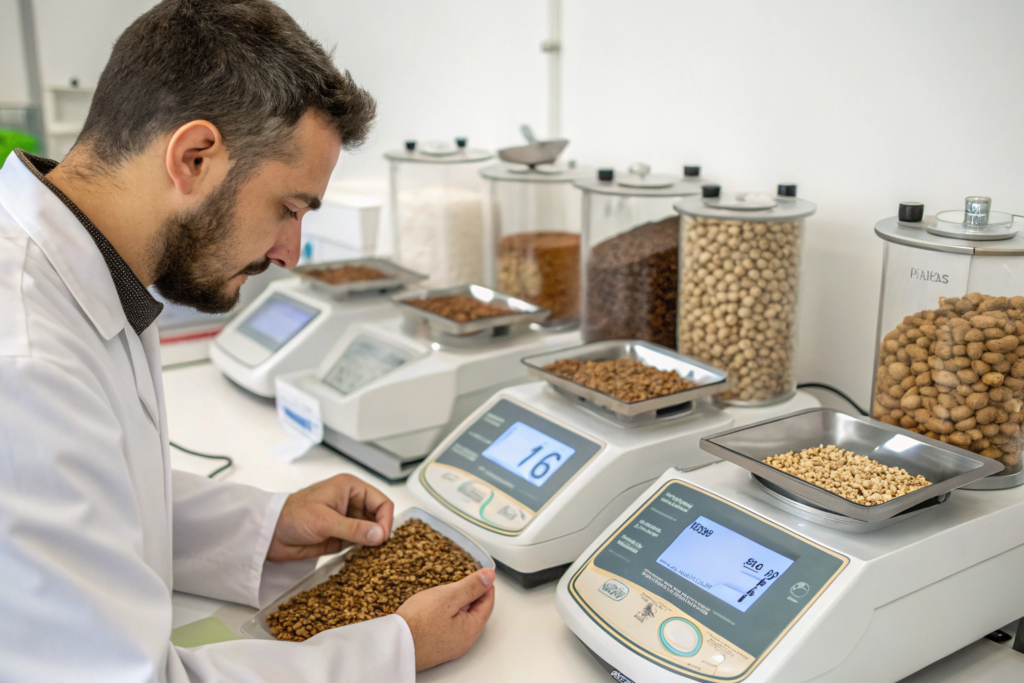
Coffee bean density is measured in grams per milliliter (g/mL) or as "screen size plus weight" classification. Higher density beans (above 0.70 g/mL) require more heat, longer roasts, and develop more complex flavors. Lower density beans roast faster, need gentler profiles, and often taste simpler.
What density ranges correspond to elevation?
Very approximate, but:
- Below 1,000m: 0.55-0.65 g/mL (soft beans)
- 1,000-1,200m: 0.60-0.70 g/mL (medium)
- 1,200-1,500m: 0.65-0.75 g/mL (medium-hard)
- Above 1,500m: 0.70-0.85 g/mL (hard bean)
These ranges vary by variety and season. Visit coffee density research for detailed data.
Why does density affect roasting?
Dense beans conduct heat slower. They need higher charge temperatures and longer development to roast evenly through to center. Soft beans heat quickly—risk scorching outside while inside underdeveloped.
Roasters who understand density adjust profiles accordingly. Working with partners like Shanghai Fumao provides density data for informed roasting.
How Does Elevation Affect Flavor Through Density?
Density isn't flavor directly. But density enables flavor development. Understanding this connection helps you choose beans intentionally.
Denser beans have more potential for complex flavors because they developed slowly, accumulated more sugars and acids, and built stronger cellular structure. These beans can express origin character clearly. Lower-density beans may taste simpler but can be beautifully consistent—perfect for blends.

What flavors come from high-elevation dense beans?
Typically: brighter acidity, more floral notes, complex fruit, clean finish. Think citrus, jasmine, stone fruit. The beans have more to express.
These beans reward careful roasting. They're not forgiving, but exceptional when handled right. Visit elevation flavor studies for sensory comparisons.
What about medium-elevation beans?
Medium density (1,200-1,400m) produces balanced profiles: chocolate, nut, moderate acidity, good body. Versatile, approachable, consistent.
Many commercial specialties come from this range. Working with partners like Shanghai Fumao provides access across elevation ranges.
How Should Roasters Adjust for Different Elevations?
Knowing elevation means knowing how to roast. Dense beans need different treatment than soft ones.
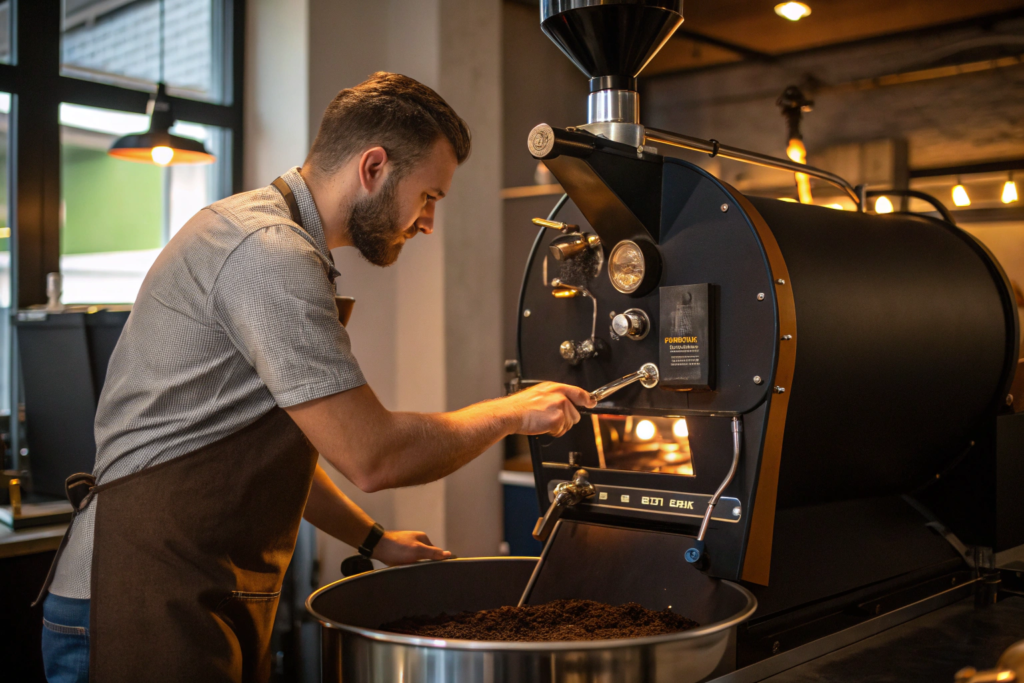
For high-elevation dense beans: higher charge temperature, longer development time, careful monitoring of rate of rise. For medium-elevation beans: moderate charge, standard development. For low-elevation beans: lower charge, shorter roasts, watch for scorching.
What specific adjustments work?
Dense beans: charge 10-15°C higher than medium beans. Extend development time ratio to 22-25% instead of 20%. Watch for even color development.
Soft beans: charge lower, watch first crack timing, don't push development too far. Visit elevation-based roasting for detailed profile recommendations.
How do you know if you've roasted correctly?
Taste. Dense beans properly roasted show bright acidity, clean sweetness, complex flavors. Under-roasted taste grassy, underdeveloped. Over-roasted lose origin character.
Experience teaches. But density data helps. Working with partners like Shanghai Fumao provides starting points based on elevation.
Conclusion
Elevation shapes coffee density through temperature control of development. Higher elevations produce denser beans with more complex potential. Lower elevations produce softer beans with simpler profiles. Each has its place—dense beans for specialty expression, softer beans for reliable blends.
Understanding this relationship helps you select beans intentionally, roast them appropriately, and deliver consistent quality to your customers.
At Shanghai Fumao, we grow across Yunnan's elevation range. We know what each altitude produces. We provide density data so you know what you're getting. And we help you match beans to your needs.
If you want to explore how elevation affects the coffee you buy, contact our export manager, Cathy Cai. She'll share elevation data, density measurements, and roasting recommendations for our various lots. Email her at cathy@beanofcoffee.com. Tell her about your current roasting and what you're looking for. She'll respond within 24 hours with beans matched to your elevation needs.