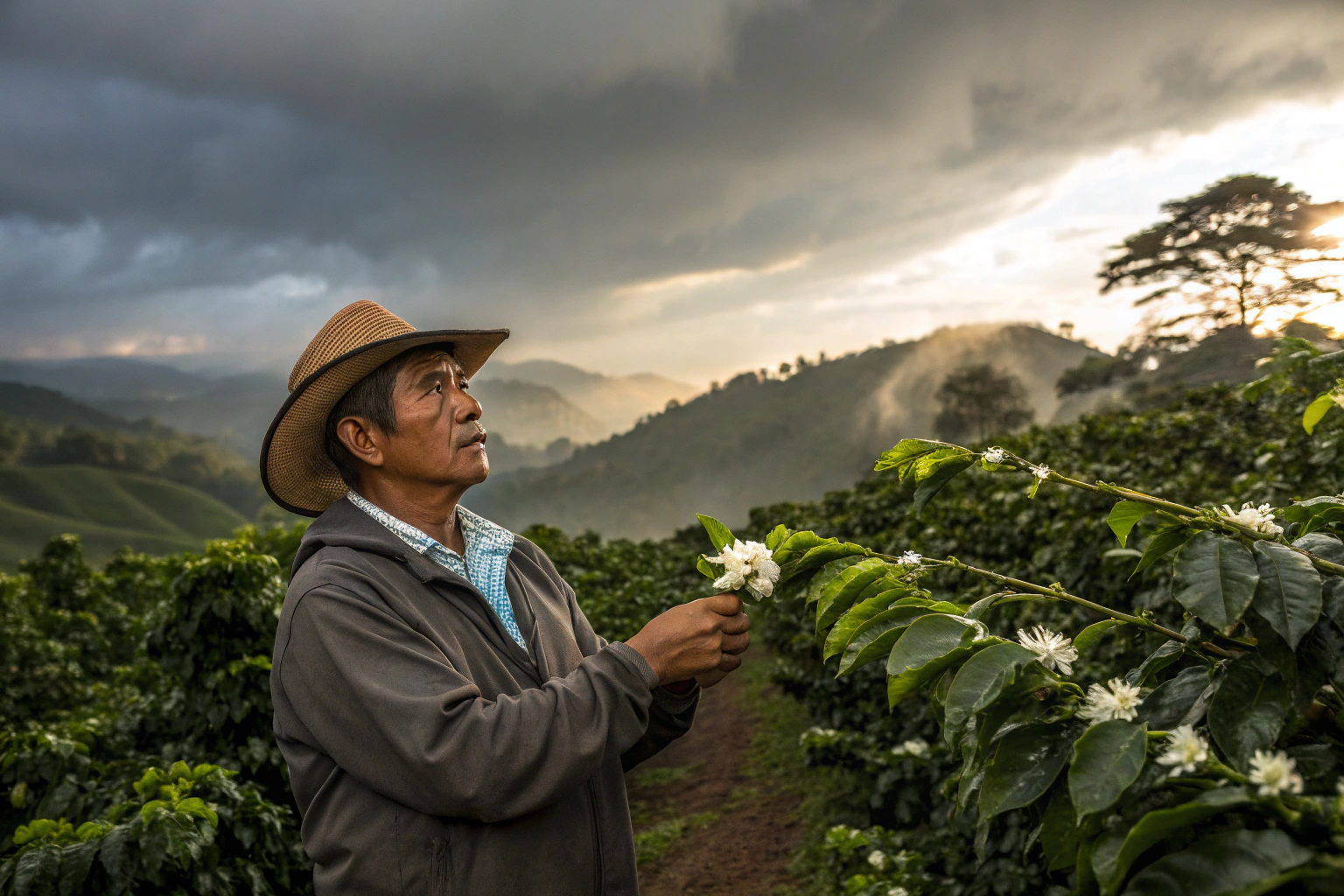
I remember my first flowering season in Yunnan. I had read about it. I had seen photos. But nothing prepared me for the reality. One morning, the fields were green. The next morning, after a good rain, everything was white. Thousands of trees covered in blossoms. The smell was incredible. Sweet. Fragrant. Like jasmine but different.
That is when I understood. Rain triggers everything. Without rain at the right time, there are no flowers. Without flowers, there are no cherries. Without cherries, there is no coffee. Simple as that. You can read more about coffee phenology on World Coffee Research or check climate studies on International Coffee Organization.
Let me walk you through what I have learned over 15 years of watching the sky. How rain affects flowering. What happens when rain comes too early or too late. And how we manage these risks on our farms.
How Does Rainfall Trigger Coffee Flowering?
Coffee flowering is not random. It follows a pattern. A dry period, then rain. That sequence is critical.
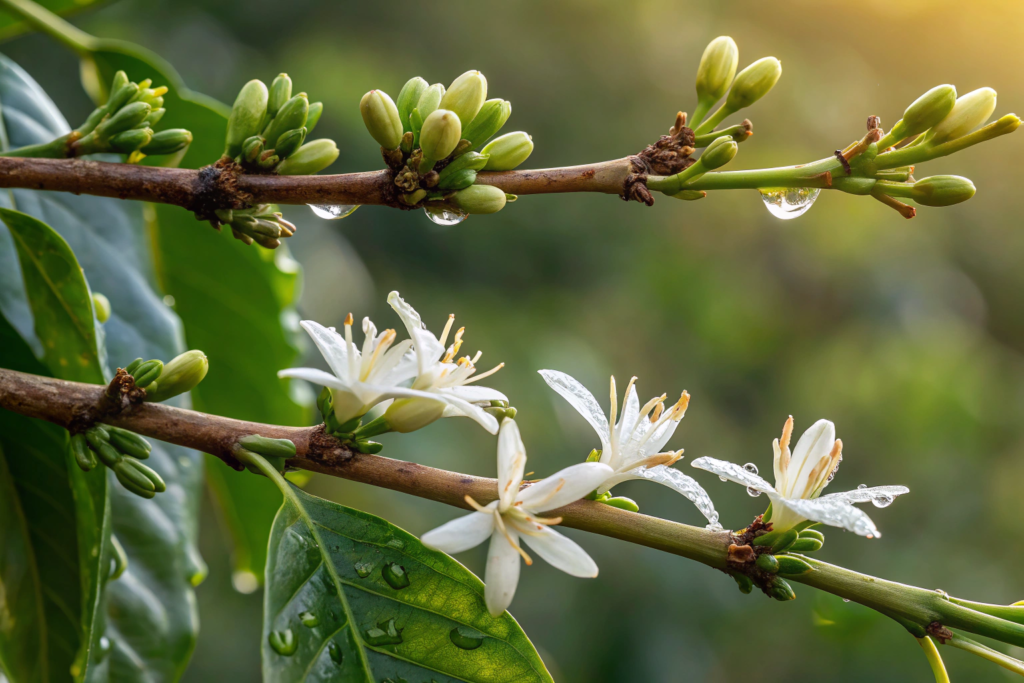
Coffee trees need a dry spell to rest. The buds form but stay dormant. Then when rain comes, the trees sense the moisture. It is like a signal. "Time to wake up." Within days, the buds swell. Then they burst into flower. It is one of the fastest responses in the plant world.
Why do coffee trees need a dry period before flowering?
The dry period stresses the tree. In a good way. It forces the buds to mature and wait. Without that stress, flowering is uneven. Some buds open early. Some late. You get a scattered harvest.
A clear dry season of 2 to 3 months is ideal. The trees know what is coming. They prepare. Then when the rain finally arrives, the response is strong and uniform. That is what we want. Synchronized flowering means synchronized harvest. That saves labor and improves quality.
How soon after rain do coffee flowers appear?
Fast. Really fast. In our Yunnan farms, we see the first buds swelling within 3 to 5 days after a significant rain. Full bloom happens 7 to 10 days later.
It depends on temperature too. Warm weather speeds it up. Cool weather slows it down. But the trigger is always rain. That first soaking after the dry season. You can almost set your calendar by it. Our partners at Shanghai Fumao have seen this pattern across different origins.
What Happens When Rainfall Is Inconsistent?
Inconsistent rain is the enemy. It confuses the trees. They do not know when to flower.
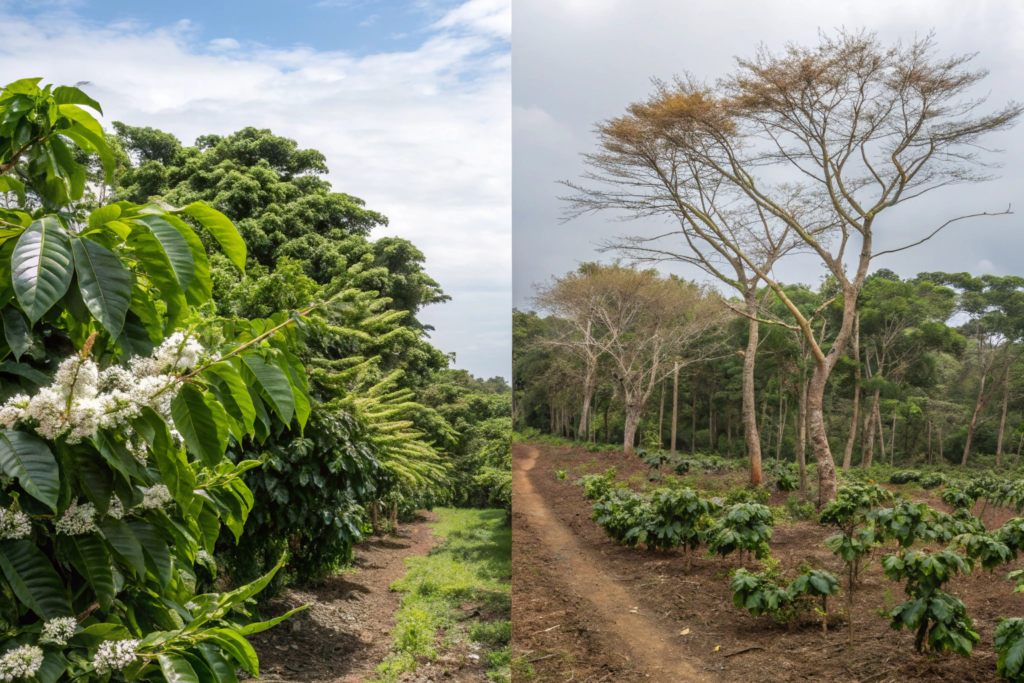
If rain comes, then stops, then comes again, you get multiple flowerings. Some trees flower early. Some late. Some flower twice. That means cherries ripen at different times. You have to pick the same trees multiple times. That costs money. And the later flowers often produce smaller, lower-quality cherries.
How does erratic rainfall affect harvest timing?
Erratic rain means erratic harvest. Instead of one concentrated harvest period, you get two or three small ones. That stretches your labor thin. You need pickers over months instead of weeks. Good luck finding them.
It also affects processing. You have small batches coming in over time. That is inefficient. Your mill runs, stops, runs again. Quality control gets harder. Everything gets more complicated. That is why consistent rainfall patterns matter so much.
Can too much rain at flowering cause problems?
Yes. Heavy rain during flowering can wash away pollen. It can damage the delicate flowers. It can promote fungal diseases.
We have seen years where a big storm hit right at peak bloom. The flowers turned brown. They dropped off. That meant fewer cherries that year. Sometimes 30 percent less. You cannot fix that. Once the flowers are gone, the crop is gone. You wait for next year.
How Does Rainfall Timing Affect Coffee Quality?
Rainfall timing does not just affect quantity. It affects quality. Directly.
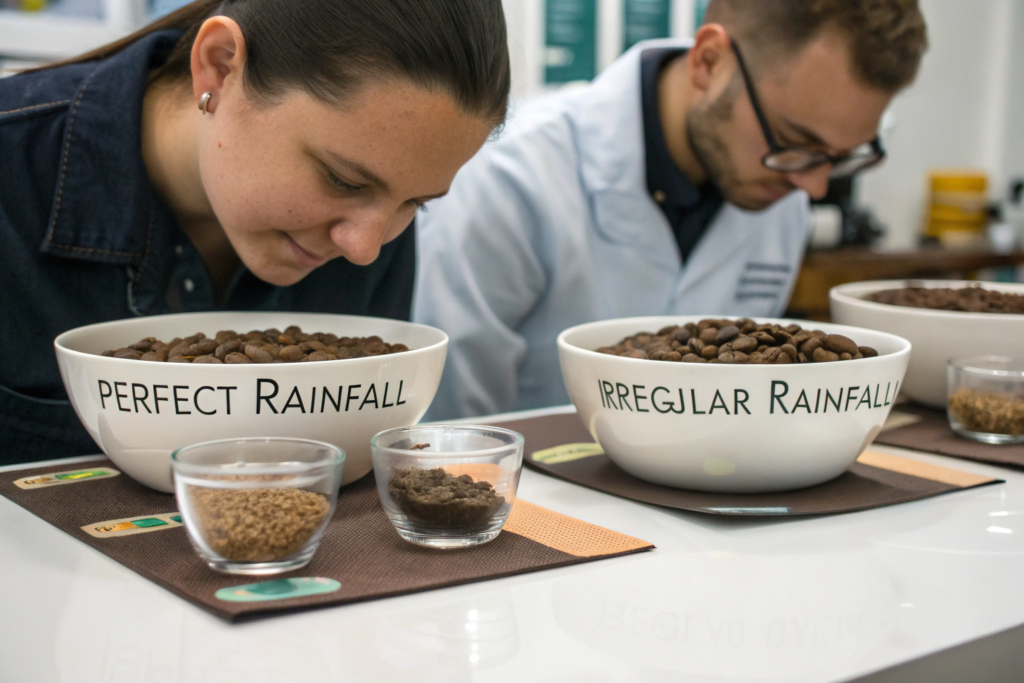
When flowering is uniform, cherries develop together. They ripen together. You pick them at the perfect time. The cup is clean. Sweet. Complex. When flowering is scattered, you get mixed maturity. Some overripe. Some underripe. The cup suffers.
What is the ideal rainfall pattern for specialty coffee?
The ideal is simple. A distinct dry season of 2 to 3 months. Then the first rains come and stay consistent. Not too heavy. Not too light. Just enough to keep the trees healthy through the growing season.
In Yunnan, our rainy season usually starts in May or June. That triggers flowering. Then the rains continue through summer. The cherries grow slowly. They develop complex sugars. They mature in the cooler months. Harvest is November to January. That timing works.
Does rainfall during cherry development affect flavor?
Yes. Absolutely. If it is too dry during development, the cherries can shrivel. The beans are small. The flavor is flat. If it is too wet, you risk disease. Fungus. Rot. The beans absorb water and ferment badly.
We monitor rainfall through the whole cycle. If it is too dry, we consider irrigation. If it is too wet, we watch for disease. You cannot control the weather, but you can manage the response. You can read about climate impacts on Perfect Daily Grind.
How Do Coffee Farmers Manage Rainfall Risks?
We do several things on our farms. We monitor forecasts constantly. We track rainfall data year after year. We know our patterns. We know when risks are highest. And we have systems to respond.
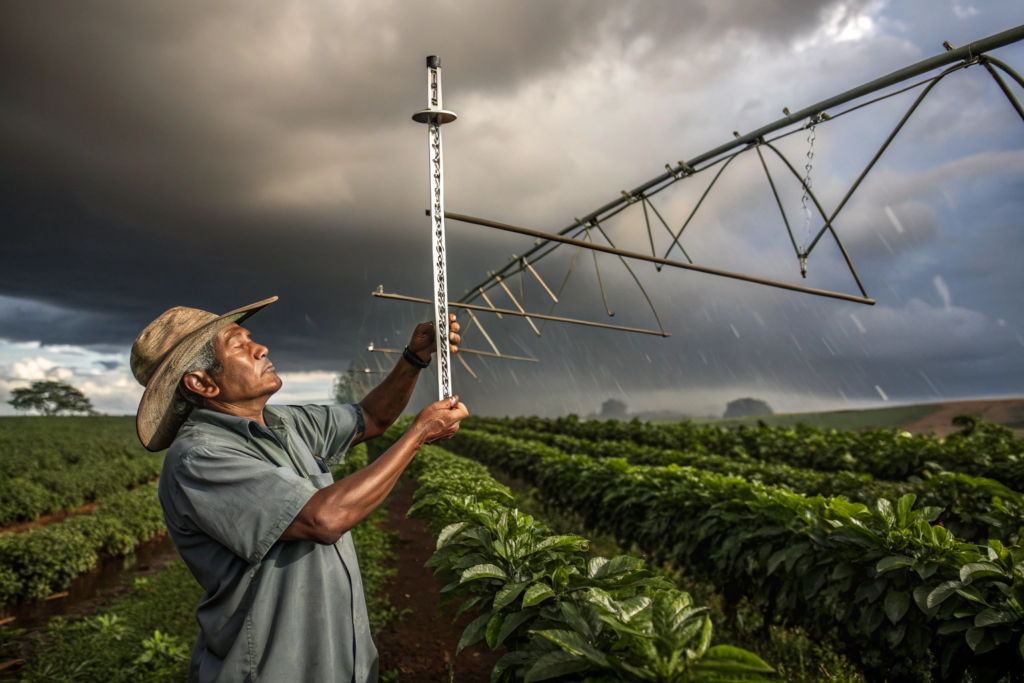
What irrigation strategies help when rain is late?
If the dry season extends too long, the trees get stressed. Too much stress and they drop their flower buds. You lose the crop.
We have irrigation systems in some sections. Not everywhere. Water is precious. But we can supplement if needed. A light irrigation can mimic the trigger rain. It wakes the trees up. Then if natural rain follows, you are okay. If not, you keep irrigating through flowering. It is expensive, but better than no crop.
What role does shade play in managing rainfall?
Shade trees help. They break the force of heavy rain. They keep the soil moist longer during dry spells. They moderate temperature.
We use native trees for shade on some of our farms. Not everywhere. Some sections need full sun for higher yields. But on the slopes, shade is essential. It protects against erosion. It protects against rain damage. It is a simple solution with many benefits. Our partners at Shanghai Fumao have seen how shade management improves consistency across seasons.
How Is Climate Change Affecting Coffee Flowering?
This is the big topic now. Climate change is real. It is affecting coffee everywhere.
In Yunnan, we see shifts. The rainy season starts later sometimes. Or earlier. The dry season is hotter. The rains, when they come, are heavier. All of this affects flowering.
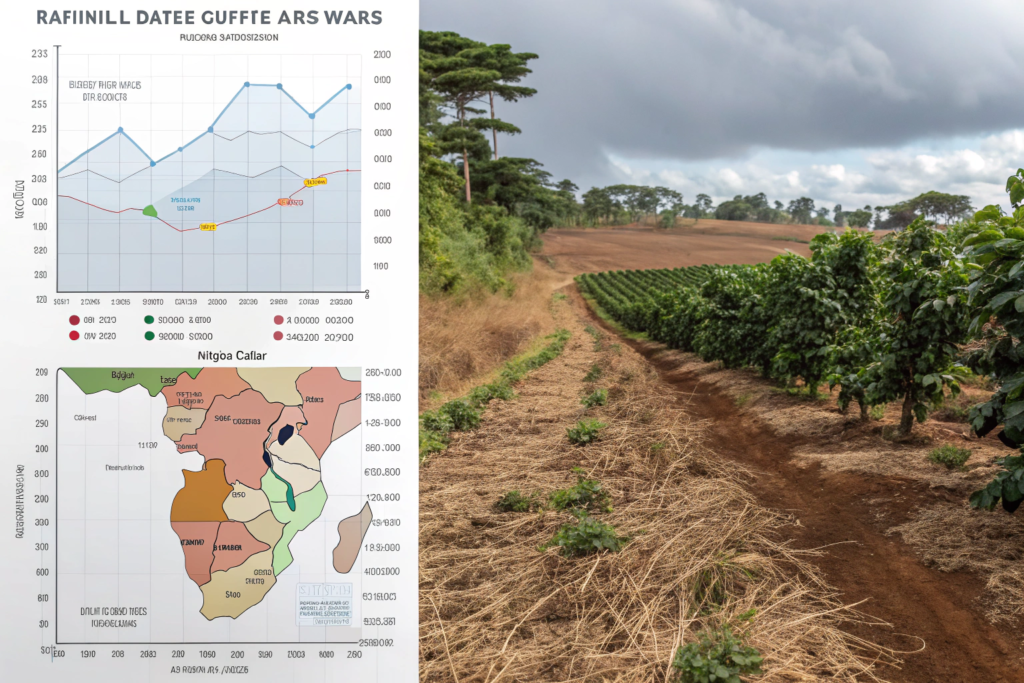
How are rainfall patterns changing in coffee regions?
Globally, patterns are less predictable. That is the main problem. Not necessarily less rain, but less reliable rain.
In some regions, the dry season is longer. Trees stress more. In others, the rains come too early, then stop. You get false starts. The trees flower, then the rain stops, and the flowers die. That is devastating. You lose the whole first flowering. You hope for a second.
What can farmers do to adapt?
Adaptation is everything. We are diversifying. Planting different varieties that flower at different times. That spreads the risk. If one flowering fails, another might succeed.
We are also investing in water storage. Catching rain when it comes. Using it when it does not. That is expensive, but necessary. And we are planting more shade trees. They buffer temperature extremes. They hold moisture longer.
There is no single solution. You need many small solutions. Together, they add up. You can read about climate adaptation on World Coffee Research or check case studies on Sustainable Coffee Challenge.
Conclusion
Rainfall and coffee flowering are connected. Deeply. The right rain at the right time gives you a good crop. The wrong rain, or no rain, gives you problems. Inconsistent rain gives you headaches.
At Shanghai Fumao , we watch the weather every day. We track patterns. We adapt. We irrigate when needed. We protect the soil. We plant shade trees. We do everything we can to give our trees the best chance. Because healthy flowering means healthy cherries. And healthy cherries mean great coffee for you.
If you want to learn more about how we manage our farms, or if you want to taste coffee from a year with perfect flowering, reach out to us. Contact our export manager, Cathy Cai, at cathy@beanofcoffee.com. She can share our farm stories and help you find the right beans for your business. Visit our website at to learn more about our 10,000 acres of plantations in Yunnan and our commitment to quality exports to North America, Europe, and Australia.