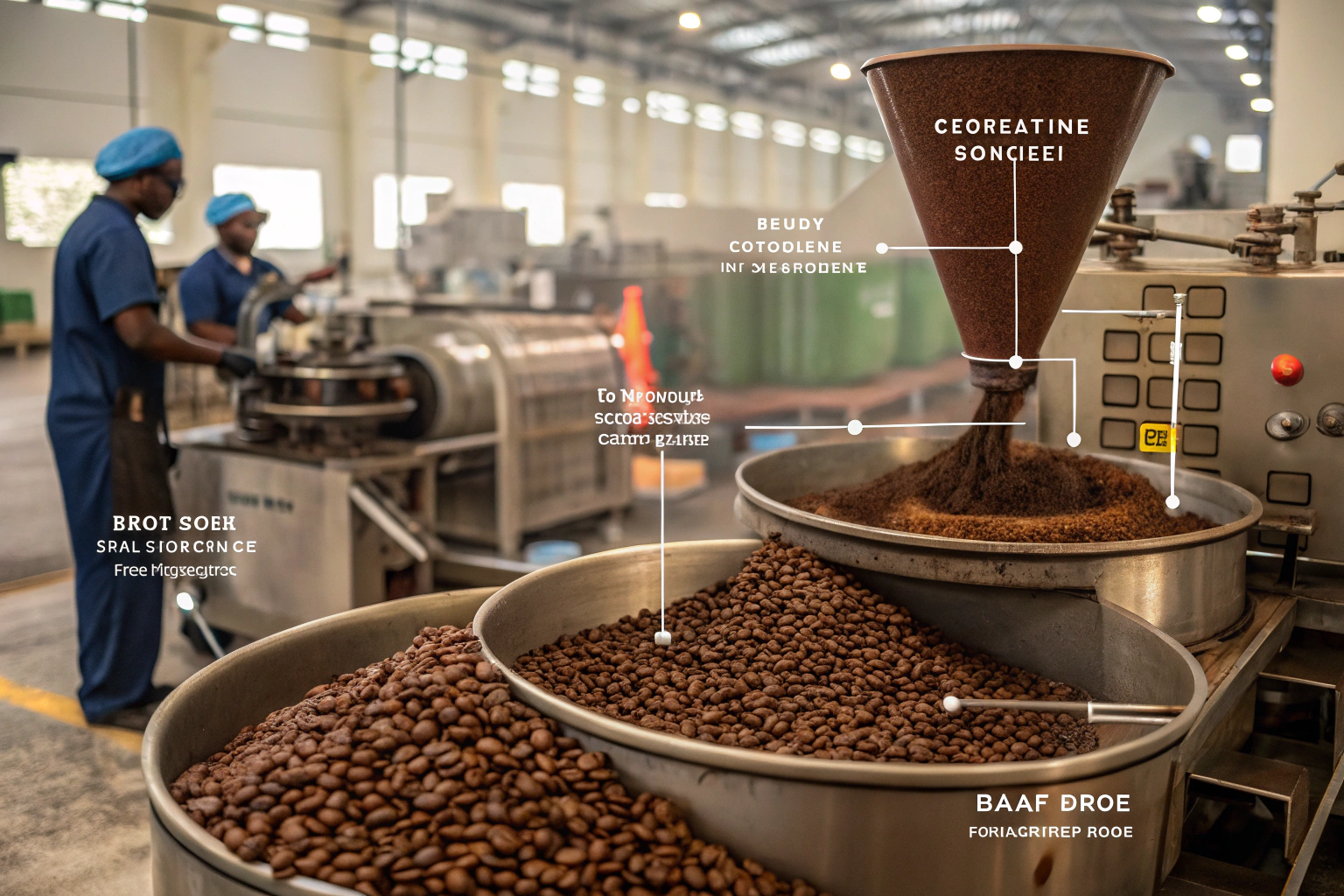
You know instant coffee. It's fast, convenient, and sits in millions of cupboards worldwide. But have you ever wondered how that jar of soluble powder goes from a red cherry on a Yunnan hillside to a uniform granule that dissolves instantly in hot water? The journey is a feat of modern food engineering. While our core business at BeanofCoffee is exporting premium green and roasted beans, understanding this industrial process is key, especially when supplying robust, cost-effective beans like our Catimor which are well-suited for it.
Instant coffee processing is a multi-stage industrial transformation that converts roasted coffee into a soluble powder or granules. The key steps are: Roasting, Grinding, Extraction, Concentration, and Drying (Spray-Drying or Freeze-Drying). The process is designed to remove water and create a shelf-stable product while attempting to preserve coffee aroma and flavor, often through sophisticated capture and reintegration techniques.
That's the linear summary. But each stage involves complex engineering trade-offs between efficiency, cost, and flavor preservation. Let's walk through the factory floor to see how coffee is deconstructed and reassembled into its most convenient form.
What Happens in the Initial Roasting and Grinding Stages?
The process begins similarly to traditional coffee, but with adjustments for scale and the end goal of maximum extraction.
-
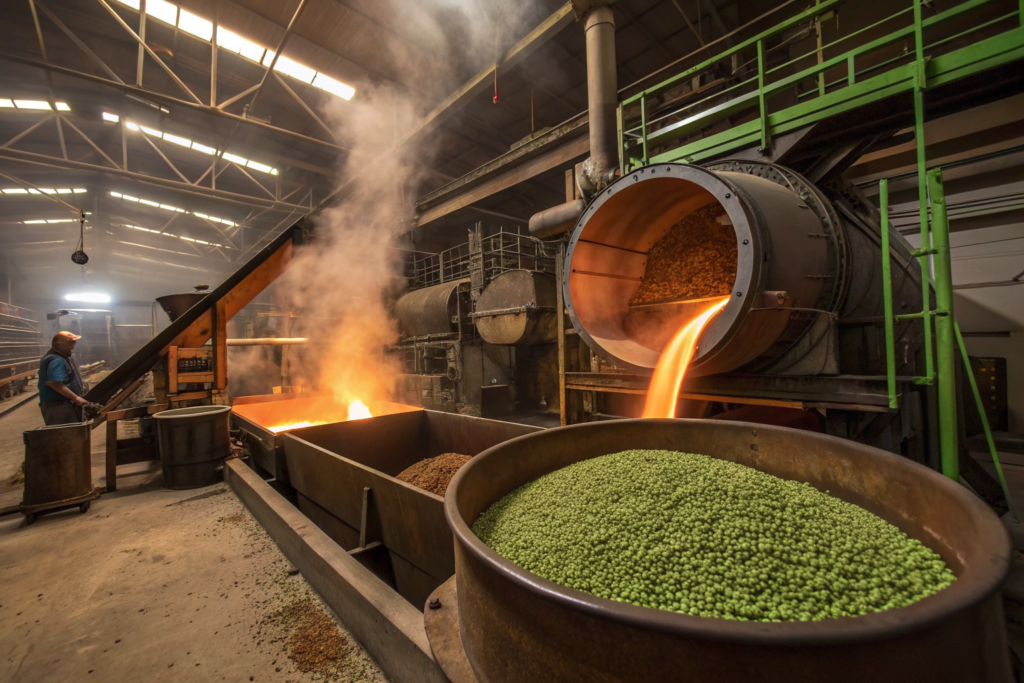
Blending & Roasting: Unlike specialty single-origin roasting, instant coffee production typically uses large-scale blends of green beans. These blends are formulated for cost, consistency, and a target flavor profile that will survive the subsequent processing. Beans like Yunnan Catimor or Robusta are common components due to their bold body, low acidity, and competitive price. Roasting is done in massive continuous drum roasters. The roast level is often medium to dark to develop robust, soluble compounds and ensure uniformity across tons of beans.
-
Grinding: The roasted beans are ground to a specific, uniform particle size. However, it's not ground for brewing; it's ground for industrial extraction. The grind is much finer than for espresso to maximize the surface area for hot water to pull out solubles. Think of it as a coarse powder. This step is critical—inconsistent grind size leads to uneven extraction and lower yield.
Why are Blends and Specific Beans Like Catimor Used?
The choice of bean is purely functional for this stage:
- Cost-Effectiveness: High-yielding, disease-resistant varieties like Catimor keep raw material costs low.
- Flavor Stability: These beans have a less volatile, more robust flavor profile (chocolate, nutty, earthy) that can withstand high-temperature processing better than delicate floral notes.
- High Soluble Solids Yield: The process aims to extract the maximum amount of soluble coffee material. Denser, properly roasted beans yield more.
How Does Roasting for Instant Coffee Differ?
The roast profile is optimized for extraction efficiency, not necessarily peak flavor nuance. The goal is to develop the compounds that will later dissolve in water, which often means a slightly darker, more uniform roast to break down cell structures fully. Aromas that would be prized in specialty coffee are often volatilized and lost here, which is why manufacturers later add back "coffee aromas" captured during grinding.
How is Coffee "Brewed" at an Industrial Scale (Extraction)?
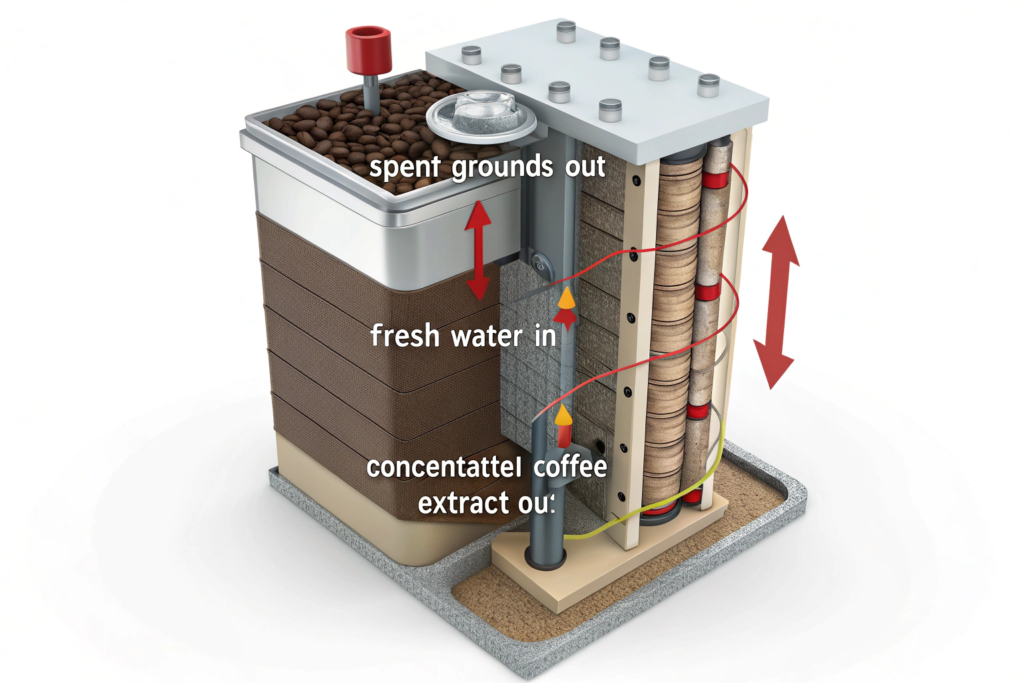
This is where the factory truly diverges from a cafe. Extraction happens in massive, multi-story columns called percolation batteries.
- The Percolation Battery: Imagine a series of large, vertical stainless-steel tubes. The ground coffee is loaded into these columns.
- Counter-Current Flow: Very hot water (often between 155-180°C / 310-355°F at high pressure) is pumped into the column holding the most extracted grounds. As it passes through, it picks up the last remaining solubles. This now-weak liquid, called "extract," is then pumped to the next column with fresher grounds, and so on. The freshest, most concentrated grounds are contacted by the hottest, freshest water.
- The Output: What leaves the final column containing the freshest coffee is a potent, hot coffee extract—essentially a super-concentrated "coffee brew" containing 15-30% coffee solids. The spent grounds (now called coffee cake) are discarded, often sold as fertilizer or for biomass.
This closed-loop, counter-current system is incredibly efficient, maximizing the yield of soluble solids from the coffee while conserving thermal energy.
What is the Role of High Temperature and Pressure?
The high temperature and pressure are necessary to achieve a high extraction yield in a short time. They break down cell walls and dissolve compounds that wouldn't be soluble at normal brewing temperatures. However, this aggressive process is also what drives off many delicate volatile aromatics and can create more bitter compounds—hence the need for a robust base flavor from the bean blend.
What Happens to the Spent Grounds?
The leftover coffee cake still contains cellulose and fiber. It has no flavor value left for coffee but is often processed into pellets for fuel, compost, or even extracted further for other compounds like antioxidants. Nothing is wasted in a modern plant.
How is the Liquid Extract Turned into Powder (Concentration & Drying)?
The coffee extract is about 85% water. Removing this water to create a stable powder is the final, energy-intensive challenge. It's done in two main phases.
1. Concentration:
Before drying, the liquid extract is concentrated, typically using vacuum evaporation. By lowering the pressure, water boils at a lower temperature (e.g., 50°C/122°F), which helps preserve some flavor compounds that would be destroyed by boiling at 100°C. This process turns the thin extract into a thick, viscous syrup containing about 50-60% coffee solids.
2. Drying - The Two Main Methods:
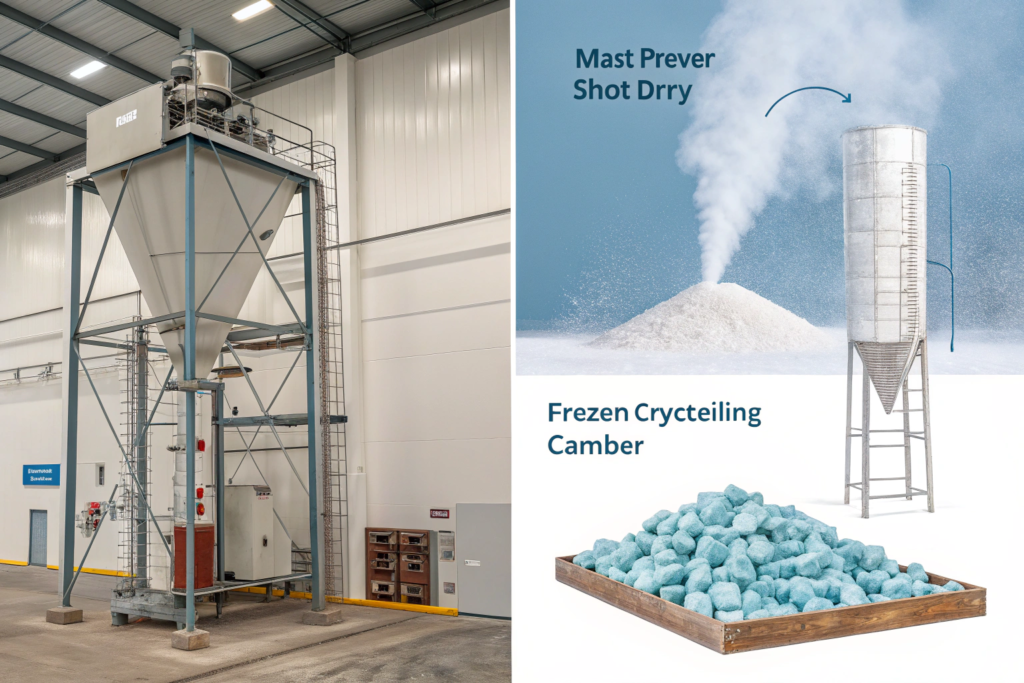
- Spray Drying (The most common): The concentrated coffee syrup is sprayed as a fine mist into the top of a tall, hot tower (200-300°C / 390-570°F inlet air). The tiny droplets instantly dry into fine powder as they fall. This powder is agglomerated—slightly rewetted to make the fine particles stick together into the small granules consumers recognize. Spray-drying is fast and economical but uses high heat that can degrade flavor.
- Freeze Drying (Higher quality): The coffee concentrate is first frozen into slabs. These slabs are then broken into granules and placed in a vacuum chamber. Under vacuum, the ice sublimates—turning directly from solid to gas without becoming liquid—leaving behind porous, dry granules. Freeze-drying uses lower temperatures, better preserving the original coffee flavor and aroma, but it is significantly more expensive.
How is "Coffee Aroma" Captured and Added Back?
During grinding and early extraction, valuable volatile aromas are stripped away. In premium instant coffee production, these aromas are captured using condensation and fractionation techniques. The captured aromatic compounds are then re-introduced into the concentrated syrup before drying, or sealed in the jar with the powder (aroma-lock lids). This is a critical step to improve the sensory profile of the final product.
What's the Difference Between "Powder" and "Granules"?
Spray drying initially produces a very fine powder. This powder is often hard to dissolve and can "dust" when poured. Agglomeration (a controlled re-wetting process) causes these fine particles to stick together, forming larger, porous granules. These granules dissolve more easily and have a more appealing texture, resembling tiny, crunchy crystals.
What are the Final Steps: Aromatization and Packaging?
After drying, the product is nearly complete but requires final touches for stability and consumer appeal.
- Aromatization & Flavoring: As mentioned, captured aromas may be added. For flavored instant coffees (e.g., mocha, vanilla), food-grade flavorings are sprayed onto the granules at this stage.
- Cooling & Sifting: The hot granules are cooled and passed through sieves to ensure a uniform particle size.
- Quality Control: Samples are tested for moisture content (must be very low, ~2-4%, for shelf stability), solubility, flavor, and microbiological safety.
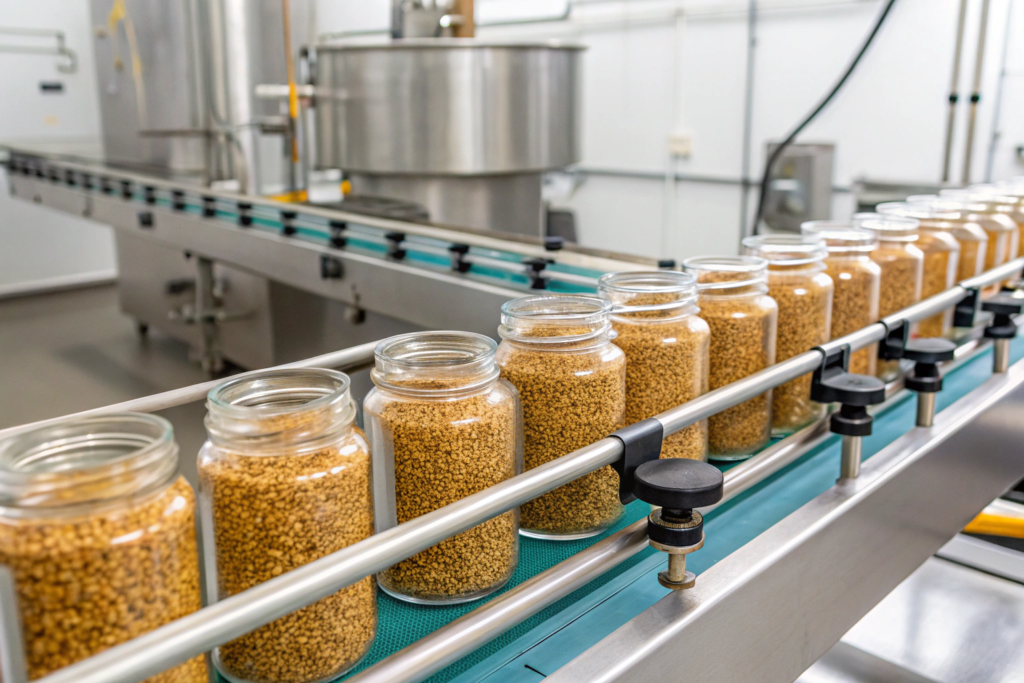
- Packaging: The instant coffee is packaged in a low-oxygen environment, often under nitrogen gas flush, into glass jars, tins, or sealed flexible pouches. This inert atmosphere prevents oxidation and staling, ensuring a long shelf life (often 2+ years).
Why is Solubility the Ultimate Benchmark?
For instant coffee, 100% solubility is the non-negotiable technical requirement. Any insoluble particles would form sludge at the bottom of the cup—a fatal consumer rejection point. The entire process, from grind size to extraction parameters to drying, is calibrated to achieve complete and rapid solubility in hot (and often cold) water.
How Does This Process Relate to Sourcing Beans from Us?
For a manufacturer sourcing beans, the criteria are specific: cost, consistency, soluble yield, and flavor base. A reliable supplier like us, who can provide large volumes of consistent Catimor or Robusta with stable moisture and screen size, is essential. Our role is to deliver the uniform, high-yield raw material that makes this highly calibrated industrial process efficient and predictable.
Conclusion
Instant coffee processing is a remarkable engineering chain that balances mass production, food science, and flavor management. It transforms the complex chemistry of the coffee bean into a standardized, shelf-stable, and convenient format. While it prioritizes efficiency and solubility over the nuanced terroir expression valued in specialty coffee, advanced techniques like aroma capture and freeze-drying have significantly elevated its quality.
Understanding this process is valuable for any coffee professional, as it represents a major segment of the global coffee market and a specific, volume-driven sourcing channel. For buyers in this sector, the partnership with a plantation-exporter focuses on logistical reliability, volume, and the intrinsic physical properties of the bean that optimize this unique industrial alchemy.
If you are involved in instant coffee production and are looking for a stable, high-volume source of suitable beans from Yunnan, we can provide the consistent quality and documentation your process requires.
To discuss specifications, request samples for solubility testing, or explore a bulk supply agreement for instant coffee production, please contact our Head of Sales, Cathy Cai, at cathy@beanofcoffee.com. Let's supply the foundation for your product.