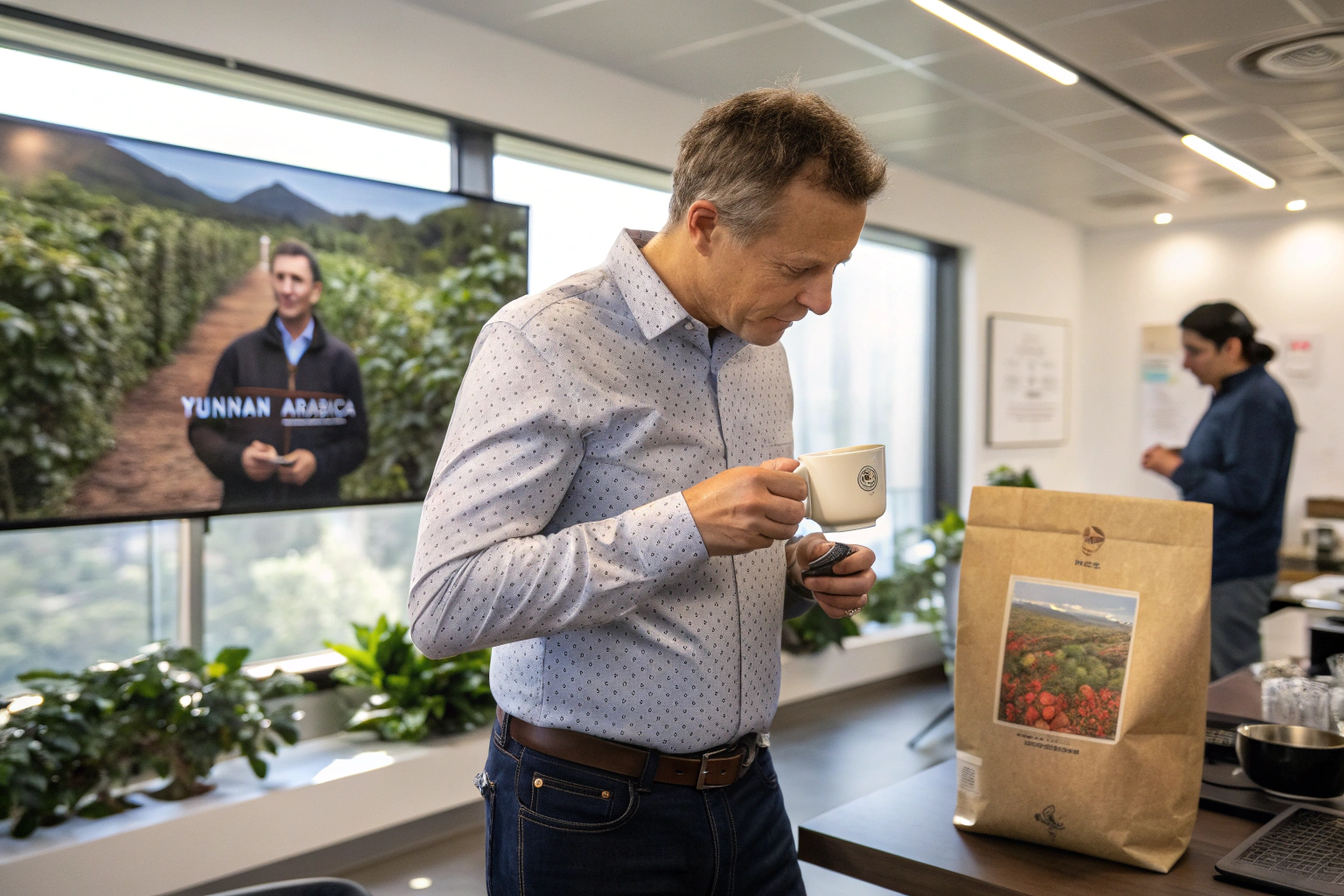
Six months ago, a roaster from Oregon emailed me. “I want to try Chinese Arabica. But every supplier I find on Alibaba looks the same. Same photos. Same claims. How do I know who is real?” He had spent three weeks clicking through listings. He was exhausted. And no closer to a decision.
I get it. The internet is full of noise. A thousand trading companies claim to own farms. Photos get stolen. Certifications get faked. You are trying to buy premium Arabica from China, but you cannot tell the difference between a legitimate plantation owner and a guy with a laptop and a WhatsApp account. That frustration is exactly why I am writing this.
The safest place to buy premium Yunnan Arabica is directly from a verified plantation owner with physical acreage, export licenses, and a documented history of shipments to Western markets—not through a middleman who has never touched a coffee cherry.
So where do you actually go? What filters do you apply? I will give you the exact channels I would use if I were on the buying side. No fluff. Just practical steps that lead to real coffee and real relationships.
How Do You Verify a Real Chinese Coffee Plantation Owner Versus a Trading Company?
I have a simple test. Ask the supplier to video call you from their farm. Right now. Not tomorrow. Not next week after they "drive to the mountains." Now.
A real farmer is already at the farm. They walk outside. They show you the trees. The drying beds. The washing station. The background noise is roosters and workers chatting. A trading company cannot fake this. They will make excuses. "Bad signal." "Farm is too far." "My partner handles that part." Those are red flags. Walk away.
Verify a Chinese coffee plantation owner by requesting a live video tour of the farm, checking their export license number against China's customs database, asking for GPS coordinates of the processing facility, and confirming their name appears on bills of lading from previous shipments.
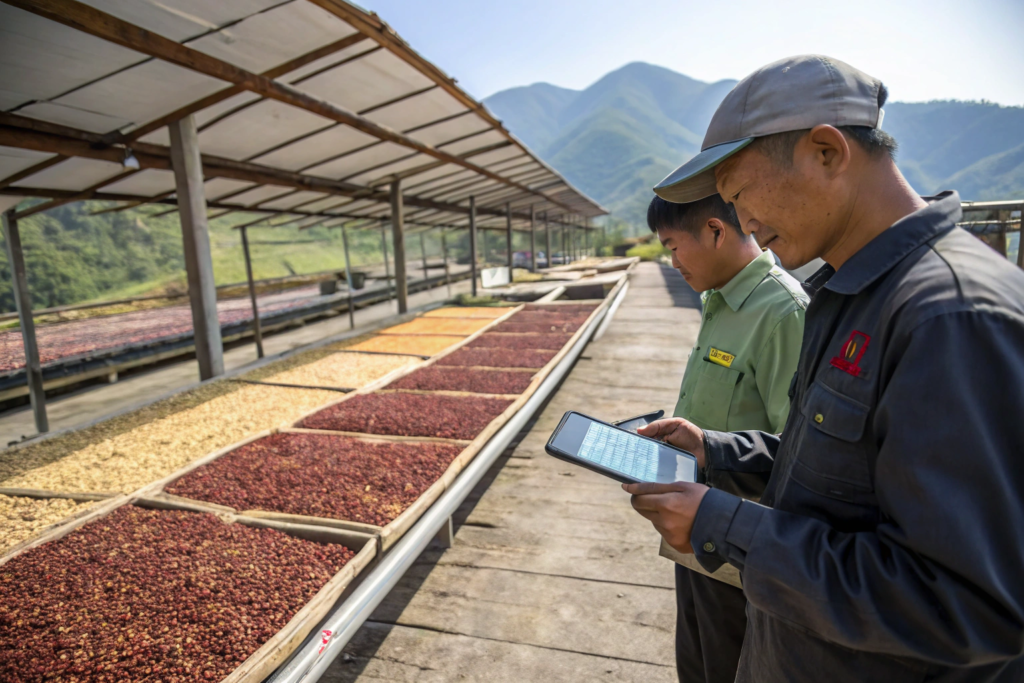
I do this with every serious buyer. I walk them through the washing station on a video call. I show them the drying beds with that day's harvest. I point the camera at the mountains so they can see the altitude. One buyer from Melbourne timed it perfectly. He called during harvest. Watched pickers bringing in cherry. He told me later, "That call convinced me more than any certificate."
What Documents Prove a Supplier Actually Owns Coffee Farms?
Paperwork is easy to fake. But certain documents are harder because they tie directly to government records and physical land.
Here is what you should ask for:
| Document | What It Proves | How to Verify |
|---|---|---|
| Land Use Rights Certificate | Legal right to use agricultural land in Yunnan | Check with local bureau of land resources |
| Business License with Unified Social Credit Code | Registered business entity in China | Search on National Enterprise Credit Information Publicity System |
| Export Food Producer Filing | Authorized to export food products | Cross-check with China Customs database |
| Previous Bill of Lading | Actual shipment history | Verify vessel name and voyage on carrier website |
A trading company can show you a business license. That is easy. But a land use rights certificate? With GPS coordinates that match the farm you saw on video? That separates farm owners from desk traders.
I keep digital copies of our land certificates ready to share. Over 10,000 acres in Baoshan. The documents show the plot numbers. The coordinates. The permitted use: agricultural, coffee cultivation. Any serious exporter from Shanghai Fumao will have these ready. If they hesitate or say the documents are "confidential," move on. For understanding Chinese food export regulations better, the FDA's Foreign Supplier Verification Program guidelines explain what documentation US importers should expect from overseas food suppliers.
Why Does Direct Farm Sourcing Lower Your Per-Pound Cost?
This is simple math. Every middleman adds a margin.
A typical chain looks like this: farmer sells to a local collector. Collector sells to a processing station. Processing station sells to a county-level trader. County trader sells to a provincial exporter. Provincial exporter sells to you. Each step adds maybe 5 to 15 cents per pound. By the time the coffee reaches you, the price has inflated 30 to 50 percent from the farm gate.
When you buy directly from a plantation owner who also exports—like us at BeanofCoffee—you cut out four or five layers. The price you pay is closer to the actual production cost plus a single margin. That is why our FOB prices consistently beat what you find from generic suppliers on Alibaba.
Here is a concrete example. Last year, a distributor in Texas compared our Catimor offer against a trading company's quote for "Yunnan Arabica." Same variety. Similar cupping score. Our FOB price was $0.45 per pound lower. On a 40,000-pound container, that saved him $18,000. He bought from us. For more context on global coffee supply chain structures and how intermediaries affect pricing, the International Trade Centre publishes coffee sector guides that map out typical value chains by origin country.
Which Online B2B Platforms List Verified Chinese Arabica Exporters?
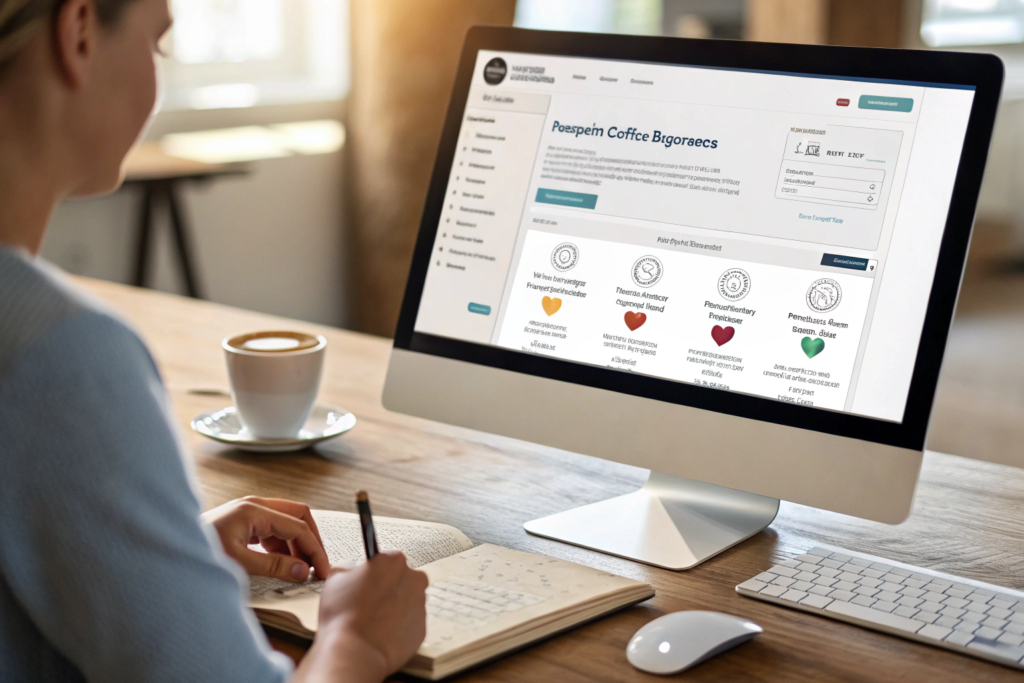
Alibaba is the obvious starting point. But it is also a minefield. For every legitimate exporter, there are twenty resellers with stock photos and fake claims. You need a system to filter.
I have been on both sides of Alibaba. I use it to find packaging suppliers. I also see how coffee buyers find me. The buyers who succeed are the ones who look past the gold supplier badges and dig into verification details.
Alibaba and similar B2B platforms list verified Chinese Arabica exporters, but you must filter for "Assessed Supplier" status, on-site factory checks, and export revenue records—then cross-verify those claims outside the platform before committing to a sample order.
Here is my recommended filtering sequence. First, search "Yunnan Arabica green coffee beans" on Alibaba. Second, filter by "Assessed Supplier" and "Trade Assurance" only. Third, look for suppliers who have been on the platform for at least five years. Fly-by-night operators rarely survive more than two years. Fourth, check the supplier's transaction history. Real exporters have repeat orders from the same buyers. For deeper insight into how specific platforms verify suppliers, Alibaba itself provides detailed explanations of its verification tiers and buyer protection policies.
What Red Flags Signal a Fake Coffee Exporter Listing?
I have seen some creative scams. Here is what makes my internal alarm go off.
A supplier offers Colombian, Brazilian, and Chinese coffee all from one company. Real plantations specialize. We grow in Yunnan. We do not also sell Ethiopian Yirgacheffe. If a supplier lists every origin under the sun, they are a reseller. Maybe a competent reseller. But you will pay their markup.
Another red flag: the product photos look too polished. Stock photography of perfect cherries with water droplets. Real farm photos are imperfect. A little dust on the drying beds. Workers in practical clothes, not white lab coats in a cherry field. Grainy photos taken on a phone are more trustworthy than high-production marketing shots.
A third flag: the supplier dodges questions about processing methods. Ask "What is your fermentation time for washed lots?" A real processor answers immediately. "Twelve to eighteen hours, depending on ambient temperature." A reseller says, "Let me check with my team." Delay means they do not know their own product. Also, run the supplier's claimed Shanghai Fumao website through archive.org. If the domain is six months old but the company claims ten years of export experience, something does not add up.
How Does a Trade Show Visit Reduce Sourcing Risk?
Nothing—absolutely nothing—replaces showing up in person. I know travel is expensive. I know time is tight. But a single trip to a major coffee trade show can save you years of supplier trial and error.
The Specialty Coffee Expo in the US often features a China pavilion. The SCAJ show in Tokyo has Yunnan producers. The China International Coffee Exhibition in Pu'er brings everyone together in one city. You walk the floor. You cup dozens of lots in one afternoon. You look the exporter in the eye.
I exhibit at select shows. When a buyer stops by our booth and cups our Catimor, we talk. Not through a screen. Over the cupping table. I can answer technical questions immediately. The buyer can watch me roast a sample. They leave with green samples in their bag and a clear impression of who they are dealing with.
One of my longest-running US clients found me this way. He cupped our washed Arabica at an expo in 2019. Took samples home. Placed a trial order three months later. Now he buys two containers a year. That five-minute cupping at a trade show built more trust than fifty emails ever could. For upcoming coffee trade show schedules, the Specialty Coffee Association maintains an events calendar listing all major global coffee exhibitions where Chinese exporters typically exhibit.
How to Sample Yunnan Arabica Before Committing to a Full Container?
I never let a buyer commit to a container without sampling first. Ever. Even if they want to. Because I have seen what happens when expectations and reality diverge. A container is a big commitment. Samples are cheap insurance.
The sampling process is not complicated, but it has a sequence. Rush the sequence and you risk buying coffee that does not match your roast profile. Follow it and you will know exactly what is arriving before the container leaves my facility.
To sample Yunnan Arabica properly, request a 200-gram green pre-shipment sample directly from the exporter, roast it on your own equipment, cup it blind against your current origins, and only then negotiate the contract specs around the cup profile you tasted.
I send samples via express courier. DHL or FedEx. A 200-gram bag reaches most US addresses in five to seven days. Total cost? Maybe forty dollars in shipping. That forty dollars could prevent a forty-thousand-dollar mistake.
How Many Sample Rounds Are Normal Before Buying?
Two rounds. Sometimes three if you are developing a custom blend.
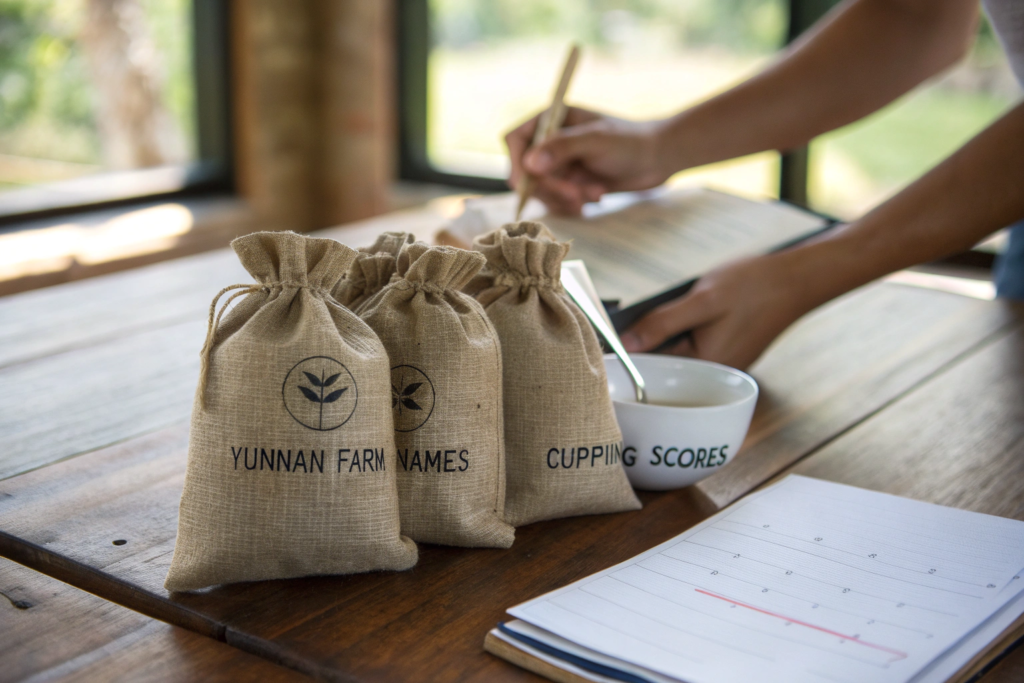
Round one is the initial sample. I send you 200 grams of washed Catimor, or natural Arabica, or washed Robusta—whatever you are curious about. You roast it. You cup it. You decide if the profile fits your needs.
Round two is the pre-shipment sample. By now, we have agreed on a lot. You have placed a provisional order. Before I load the container, I pull a sample from the exact bags that will ship. I send it to you. You cup it. You give final approval. Only then does the container move.
Some buyers want a third round: the arrival reference sample. I seal a small bag from the pre-shipment lot and courier it alongside the container shipment. It arrives separately. The buyer cups the arrival coffee against this reference. This is extra cautious. But it provides a benchmark if there is ever a quality dispute. I respect buyers who ask for this. It tells me they are serious about consistency.
What Roast Level Shows Yunnan Arabica at Its Best?
If you roast our Catimor like a light-filter Ethiopian, you will be disappointed. It is not built for that.
Yunnan Arabica shines at medium to medium-dark roast levels. The sweet spot is Agtron 55 to 65, whole bean. At that range, the chocolate and nut notes come forward. The body stays syrupy. The low acidity becomes an asset, not a flaw. Push it too light, and you might get a slightly grainy, underdeveloped cup. Push it too dark, past second crack into an oily French roast, and you incinerate the sugars that make this coffee pleasant.
I advise buyers to do a roast curve test with the sample. Roast five batches at different drop temperatures. Cup them blind. Find the window where the coffee tastes best. For most of our lots, that window is just before second crack begins. A few snaps, then drop. The result is a versatile coffee that works as a standalone single-origin espresso or as a blender base. If you are curious about roast profiling for Cup of Excellence-level Chinese lots, Coffee Review occasionally publishes roasting notes and cupping assessments of high-scoring Yunnan coffees.
Conclusion
So, where do you buy premium Arabica coffee beans from China? You buy from a verified plantation owner who can show you the farm on a live video call. Who has land certificates and export licenses that match their claims. Who sends samples without hesitation. Who appears at trade shows and cups coffee with you in person.
You skip the generic Alibaba listings with stolen photos. You avoid trading companies that sell every origin under the sun. You look for specialization. For direct relationships. For transparency that holds up when you dig into it.
The Chinese coffee sector has matured. Yunnan is producing lots that cup competitively with Central American origins. The factories are clean. The drying beds are raised. The processing protocols are documented. You just need to find the right partner.
If you want to start that process, reach out to Cathy Cai. She handles our sample requests and new buyer inquiries. She will send you a current offer sheet with our available lots, cupping scores, and FOB pricing. She can arrange samples within 48 hours and schedule a video call so you can see the farm and the processing station yourself. No pressure. No hard sell. Just real coffee from a real plantation in Baoshan. Her email is cathy@beanofcoffee.com. She answers quickly. And she knows the coffee better than almost anyone I have worked with.