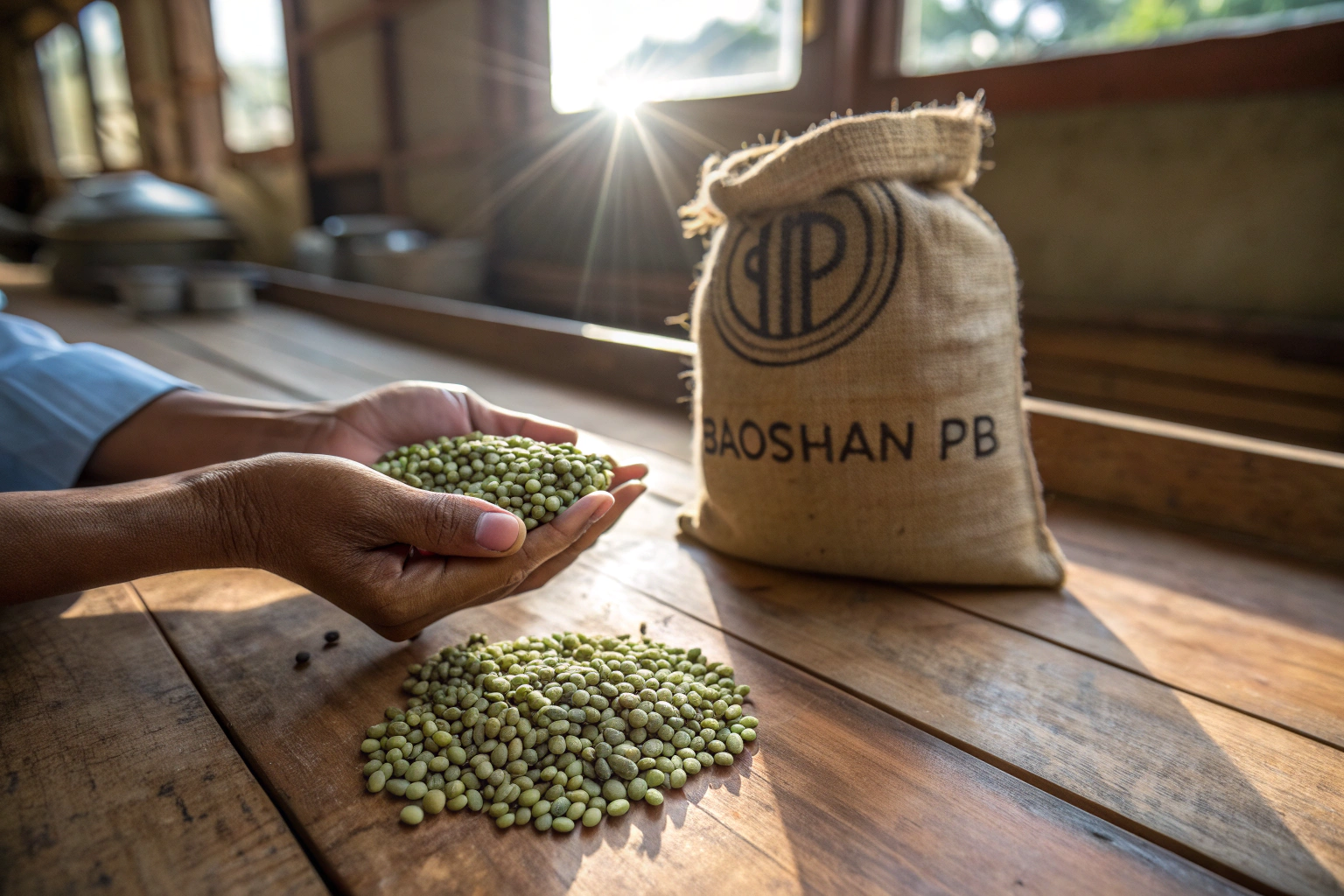
Two months ago, a roaster from Japan sent me a very specific email. "I only want peaberry. Screen size doesn't matter. I want the round beans. Can you supply 500 kilos a month?" He had built his entire café brand around peaberry coffee. His customers believed peaberry roasted more evenly. They loved the story. And they paid a solid premium for it.
I had to be honest with him. "I can supply peaberry. But I need to explain how we get it, why the volume is inconsistent, and why you need to book it before harvest starts." He appreciated the transparency. He booked his allocation the next week. Now he gets a shipment every quarter and his peaberry program has not missed a beat.
Bulk wholesale peaberry coffee is available directly from Yunnan producers who sort their harvest using specialized gravity tables and cylindrical screen graders, but the supply is naturally limited—peaberry makes up only three to five percent of any harvest—so advance booking and realistic volume expectations are essential.
Peaberry is not a variety. It is a natural mutation inside the coffee cherry. Finding it in bulk is a game of patience, sorting precision, and long-term supplier relationships. Let me walk you through exactly what you are buying and how to secure a reliable supply.
What Exactly Is a Peaberry Coffee Bean?
A normal coffee cherry produces two seeds. They develop pressed against each other. Each bean has a flat side and a round side. That is the standard flat bean. It makes up about ninety-five percent of a harvest.
A peaberry happens when only one of the two ovules in the cherry gets fertilized. Instead of two competing seeds, a single seed develops alone. With no sibling to press against, it grows into a small, round, oval shape. No flat side. Just a compact little sphere. This happens in about three to five percent of cherries. Nobody knows exactly why some cherries produce peaberries and others do not. It is largely random, though some varietals tend to produce slightly higher rates.
A peaberry is a natural botanical anomaly where a coffee cherry produces a single, round seed instead of two flat-sided seeds, resulting in a smaller, denser bean that many roasters believe roasts more evenly and delivers a more concentrated flavor.
Because the bean is smaller and rounder, it rolls differently in a drum roaster. It has a slightly different density. These physical differences affect heat transfer during roasting. Some roasters swear peaberries produce a sweeter, more vibrant cup. Others say the difference is minimal. What is not debatable is the sorting effort required to separate them. That effort drives the price premium.
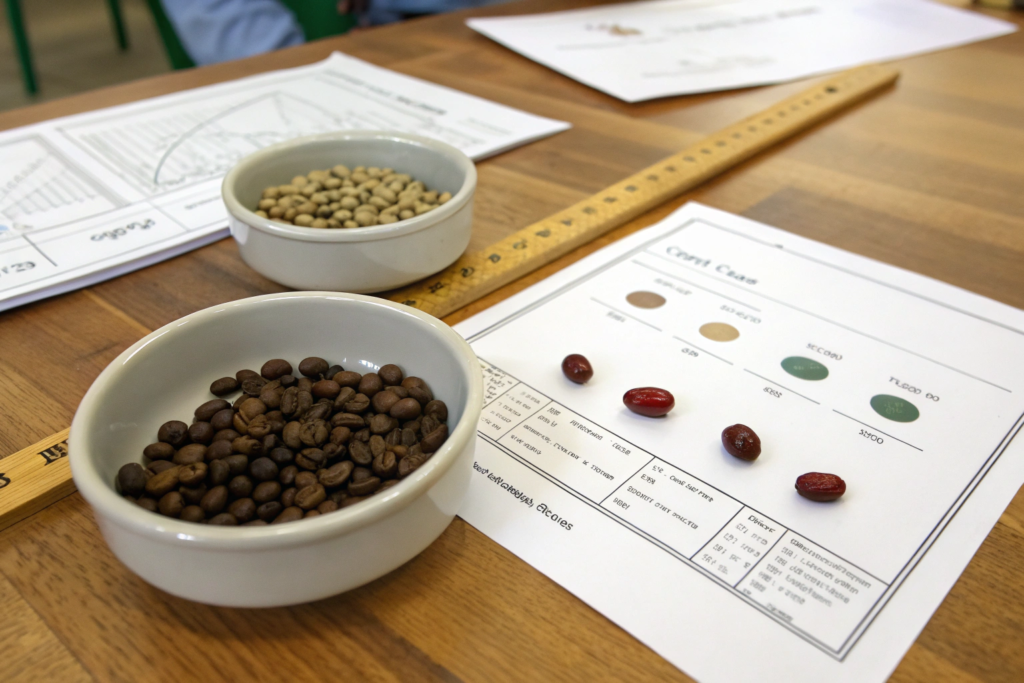
How Are Peaberries Separated from Flat Beans?
You cannot separate peaberries by hand. At least, not at any commercial volume. The volume is too large, and the difference is too subtle for the naked eye at processing speed.
The first separation happens with a gravity table. Flat beans, being half flat, behave differently under vibration and airflow than round peaberries. The flat beans settle into layers. The round peaberries bounce and roll differently. The gravity table splits them into streams. It is not perfect. Some flat beans sneak into the peaberry stream and vice versa.
The second separation uses a cylindrical grader with specially sized oblong holes. Flat beans fall through the holes when they align with the slot. Round peaberries cannot fall through the same holes because their shape does not match the slot. They travel along the cylinder and exit separately. This step catches the flat beans that the gravity table missed.
The third step is hand-sorting on a conveyor. A team of workers picks out any remaining flat beans, damaged beans, or foreign material. This is labor-intensive. It adds cost. But without it, the peaberry lot will contain five to eight percent contamination. For a buyer paying a peaberry premium, that contamination is unacceptable.
At our Baoshan facility, we run the peaberry stream through all three stages. The final lot is over ninety-eight percent pure peaberry. It takes time. It takes equipment. It takes labor. But the result is a uniformly round, dense, clean lot that roasts evenly. For more on grading technology, Perfect Daily Grind has published technical articles on mechanical coffee sorting at origin that cover gravity tables and optical sorters.
Does Peaberry Actually Taste Different from Flat Beans?
I get this question at every trade show. The honest answer: yes, slightly. But not in the way most buyers assume.
The difference is not chemical. The peaberry bean does not contain different flavor compounds than the flat bean from the same tree. It is the same genetics. The same soil. The same mucilage. The difference is physical. The bean is smaller and rounder. This changes how it roasts.
In a drum roaster, a round bean rolls more freely. Heat transfer is more uniform. There are no flat sides to scorch against the hot drum surface. The smaller size also means the bean core heats up faster relative to the surface. This can result in a slightly more even development. Some cuppers report a sweeter cup with more clarity and less roast-related astringency.
When I cup peaberry against flat bean from the same harvest lot, the peaberry often shows a slight edge in sweetness and balance. The difference is small—maybe half a point on the cupping scale. It is noticeable in a side-by-side comparison but not in isolation. The peaberry story and the roast consistency are the main value drivers, not a dramatic flavor transformation.
Some roasters claim peaberries have "concentrated flavor" because the single bean receives all the nutrients that would have gone to two beans. This is a romantic idea. There is not much scientific evidence for it. The nutrient delivery to the seed depends on the plant's overall health, not the number of seeds in the cherry. A healthy plant produces flavorful beans, whether peaberry or flat. For those interested in the limited research on the topic, World Coffee Research has a sensory science library that may eventually include comparative studies on peaberry and flat bean cup quality.
Why Do Roasters Pay a Premium for Peaberry Lots?
The premium exists for two reasons: production cost and marketing value. Both are real. Both matter to a roaster's bottom line.
On the production side, I have to run the peaberry separation process I just described. That equipment was not free. The labor was not free. The extra handling time was not free. And the yield from cherry to exportable peaberry is tiny. For every 100 kilograms of green coffee we produce, only about 3 to 5 kilograms come out as pure peaberry. The scarcity is built into the biology.
On the marketing side, peaberry sells. Customers love the story. A small, round, rare bean that roasts perfectly? That is an easy sell. The retail bag with "Peaberry" on the label commands a higher price. The roaster can charge more. That higher retail price flows back into a willingness to pay a higher green coffee price.
Roasters pay a peaberry premium because the labor-intensive sorting process adds cost, the natural scarcity limits supply, and the compelling marketing story—a rare, perfectly round bean—allows them to command higher retail prices from curious and quality-focused consumers.
I have one buyer in Seattle who only uses our peaberry for his single-origin espresso. He charges $24 for a 10-ounce bag. His customers review it as "the smoothest espresso I have ever had." He reorders four times a year. The premium he pays me is tiny compared to the premium his customers pay him. For broader market context on specialty coffee pricing trends, the Specialty Coffee Association publishes annual retail price surveys that show the premiums consumers pay for unique lots.
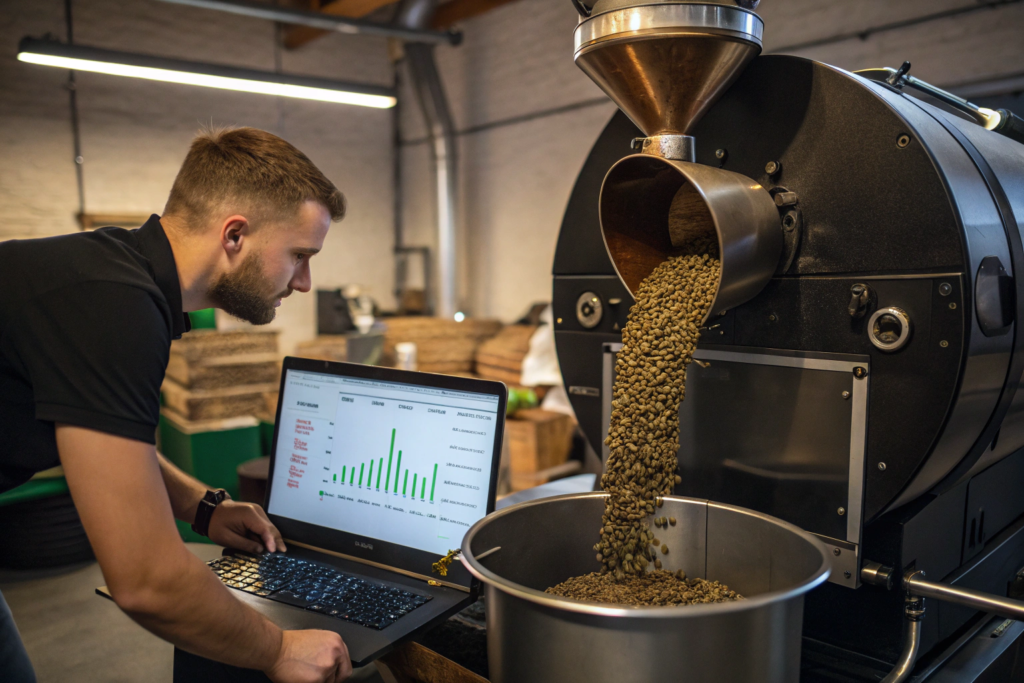
How Much More Does Wholesale Peaberry Cost?
The price difference varies by origin and quality tier. For Yunnan Arabica, here is a typical comparison between our standard flat bean and our peaberry lot from the same harvest:
| Product | Screen Size | FOB Price per Pound (USD) | Premium vs. Flat Bean |
|---|---|---|---|
| Washed Catimor Flat Bean | 16/18 | $2.80 - $3.20 | Baseline |
| Washed Catimor Peaberry | PB | $3.80 - $4.50 | 35% - 40% |
| Natural Catimor Flat Bean | 16/18 | $3.20 - $3.80 | Baseline |
| Natural Catimor Peaberry | PB | $4.20 - $5.00 | 30% - 35% |
The premium is significant. But in absolute dollars, it is manageable. On a 100-kilogram micro-lot, the peaberry premium adds roughly $200 to $300 to the green coffee cost. If the roaster sells that coffee at peaberry pricing, the retail revenue increase far exceeds that green premium.
The key is volume. Do not buy more peaberry than you can sell at the premium retail price. If you have 500 kilograms of peaberry sitting in your warehouse and only 200 kilograms of annual peaberry sales, the math turns against you. Buy what you can move. Book it seasonally. Treat peaberry as a limited release, not a volume product.
Is Peaberry Easier to Roast Consistently?
Yes, and this is the main operational reason roasters love it. The round, uniform shape eliminates one of the biggest roasting headaches: bean orientation.
Flat beans tumble unpredictably. Sometimes the flat side is against the drum. Sometimes the round side is. Heat transfer varies based on which surface is in contact with the hot metal. This can create slight inconsistencies from bean to bean. A peaberry, being round, always presents the same curved surface to the drum. Heat penetrates more uniformly. The bean roasts more evenly.
The smaller, denser structure also means the bean core temperature tracks more closely with the surface temperature. There is less of a gradient. The roaster can push heat more aggressively without scorching the outside. The result is a more forgiving roast. Even a slightly imperfect profile produces a clean, sweet cup.
For a production roaster running multiple batches per day, that consistency is worth money. Less waste. Fewer off-batches. More predictable cup quality. The premium on the green bean gets partially offset by the reduction in roasting waste and quality control hassle. For in-depth discussions on bean geometry and roast dynamics, Cropster users frequently share profile analyses in industry forums that compare flat bean and peaberry roast behavior.
How to Source Peaberry Coffee from China in Wholesale Quantities?
Sourcing peaberry requires a different approach than sourcing standard flat bean. You cannot just order it from a catalog. The volume is too small and too seasonal. You need a direct relationship with a producer who sorts peaberry intentionally, not one who just scoops whatever round beans happen to fall off the gravity table.
First, ask the supplier what percentage of their total production is peaberry. If they cannot answer immediately, they are not sorting peaberry deliberately. They are just collecting whatever accumulates. That lot will be inconsistent in purity and quality.
Second, ask for the peaberry purity specification. A proper peaberry lot should be at least ninety-five percent pure peaberry by bean count. Below that, you are paying a premium for a mixed lot. I guarantee ninety-eight percent purity on our peaberry offerings. The specification is in the contract.
To source wholesale peaberry from Yunnan, you need a direct farm relationship with a supplier who sorts peaberry intentionally, guarantees purity above ninety-five percent, and accepts advance bookings before harvest since peaberry volume is too small for spot buying.
Third, ask about the flavor profile. Peaberry from the same harvest as a flat bean lot will cup similarly, but the roast profile will be different. The supplier should be able to provide cupping notes specific to the peaberry lot, not just generic notes from the harvest. The Shanghai Fumao team provides separate cupping sheets for our peaberry and flat bean lots from the same harvest period.
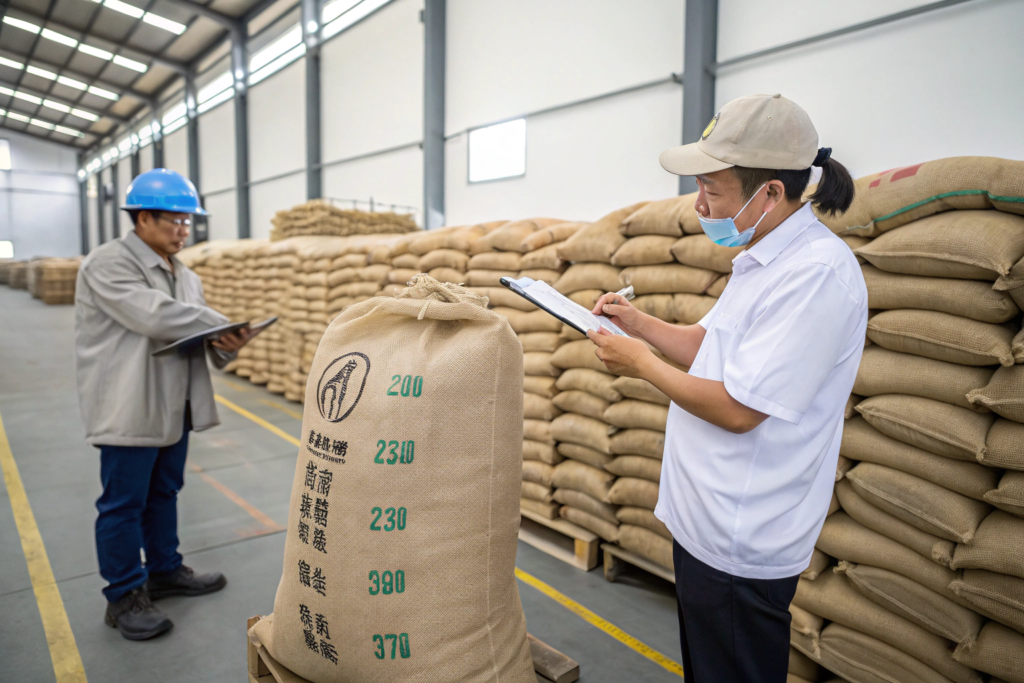
What Minimum Order Quantity Should You Expect?
Peaberry is a micro-lot by nature. Minimum order quantities are smaller than for standard Arabica, but the per-unit price is higher.
Most Yunnan producers will sell peaberry in lots as small as 30 to 60 kilograms for a trial order. The freight cost on such a small volume will be high relative to the bean cost. But it allows a roaster to test the product before committing to a larger volume.
For regular supply, the minimum practical order is typically 150 to 300 kilograms. This fills a few pallets and makes the freight cost more reasonable per pound. Some larger buyers contract a full year's peaberry supply in advance—maybe 500 to 1,000 kilograms across four quarterly shipments. This guarantees their allocation, because once a producer's peaberry is sold, it is gone until next harvest.
I advise new peaberry buyers to start with a trial order of 60 kilograms. Roast it. Sell it. Collect customer feedback. If the response is strong, book a larger volume for the next harvest cycle. Do not skip the trial step. The product is unique. The market reaction in your specific customer base is unpredictable until tested.
When Is Peaberry Available for Export from Yunnan?
Peaberry availability follows the harvest calendar. Yunnan's main coffee harvest runs from November to February. The coffee is processed—washed, natural, or honey—from December through March. The sorting into flat bean and peaberry happens during the dry milling stage, which typically occurs in March and April.
The peaberry lots are ready to cup, book, and ship starting in April or May. By June or July, the best lots are often already allocated to buyers who booked in advance. Spot buyers calling in August looking for peaberry will find limited options and may have to wait until the next harvest.
I recommend starting conversations with suppliers in January or February, during the harvest. The supplier knows roughly what peaberry volume will be available. They can set aside a tentative allocation. By March or April, when the dry milling and sorting are complete, the precise volume and cupping scores are confirmed. The contract is signed. The coffee ships by May.
Conclusion
Peaberry coffee is a small, round, naturally occurring mutation that makes up a tiny fraction of any harvest. Finding it in bulk wholesale quantities requires a direct relationship with a producer who sorts it intentionally, guarantees its purity, and manages the seasonal allocation process carefully because the volumes are too small for spot market buying.
The premium price is driven by the extra sorting labor and the natural scarcity. Roasters pay it because the round beans roast more evenly and because the peaberry story—rare, perfectly shaped, concentrated flavor—sells at retail. Whether the cup is meaningfully different from flat beans is debatable, but the roast consistency and the marketing value are not.
If you want to add a Yunnan peaberry to your single-origin lineup or espresso program, start planning before harvest. Contact Cathy Cai at BeanofCoffee in January or February. She can tell you what peaberry volume we expect from the upcoming harvest, reserve a trial allocation for you, and send samples as soon as the lots are milled and cupped in April. She also handles the purity documentation and can walk you through the verification process so you know exactly what is in every bag. Her email is cathy@beanofcoffee.com. She answers quickly. And the peaberry sells out quickly too—so reach out early.