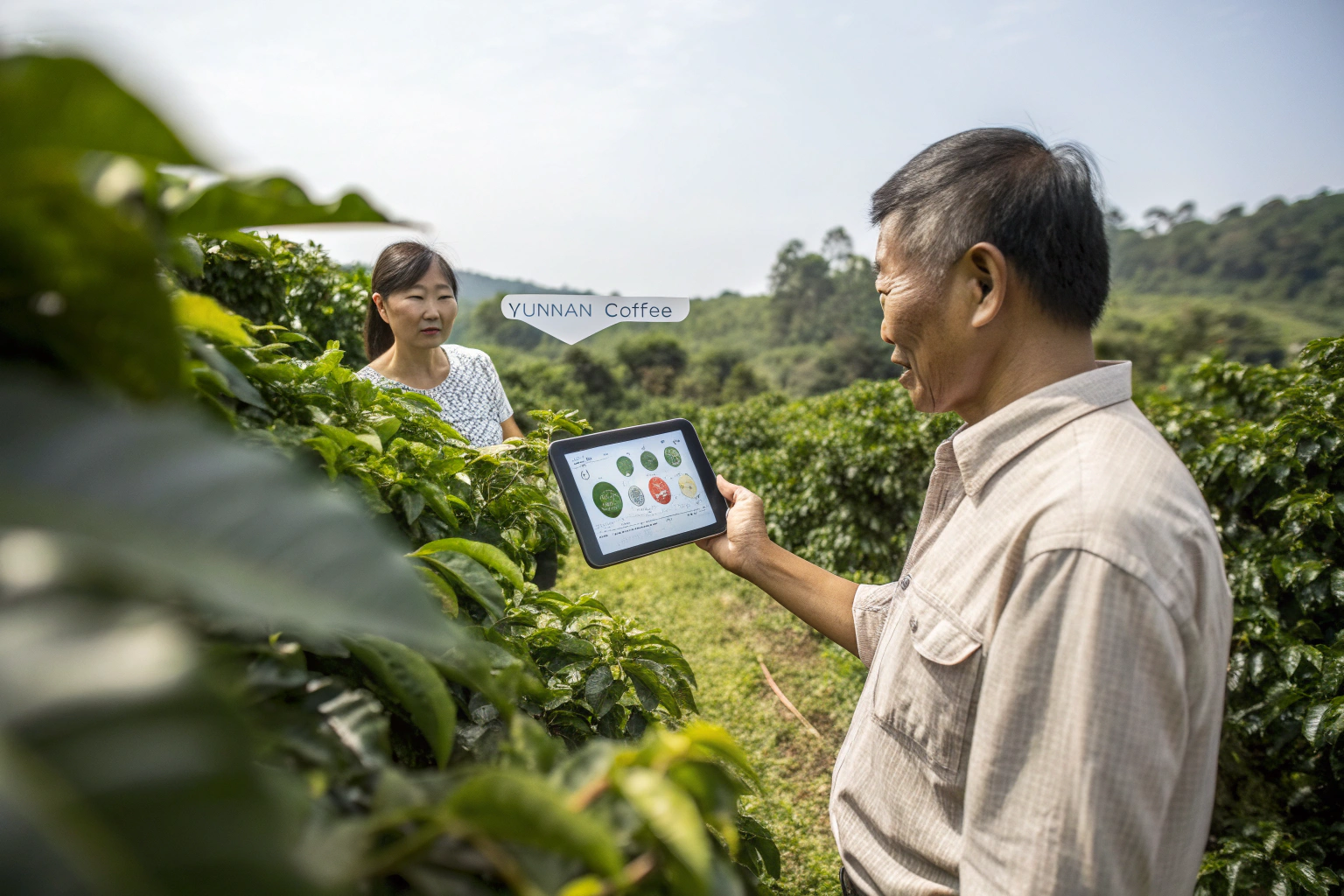
I remember the exact moment this topic hit me hard. It was late 2023, and a mid-sized roaster from Hamburg sent me a polite but firm email. "Before we proceed with the sample order, we need your farm's carbon footprint data for our annual sustainability report." I stared at my screen. Carbon what? I thought I knew my business inside out—yield per hectare, moisture content, cup scores—but suddenly I felt like a student who missed the homework assignment. That email could have ended our deal right there. Instead, it woke me up. I realized that European buyers were no longer just asking about price and quality. They were asking about the invisible trail of emissions that follows every kilogram of green coffee from my farm in Baoshan to their roastery in Germany.
European roasters now demand carbon footprint data because incoming EU regulations and consumer pressure are forcing them to prove the climate impact of every link in their supply chain, and coffee—being a globally shipped agricultural product—falls directly under this new scrutiny.
This shift is not a passing trend. It is a structural change in how coffee gets bought and sold across the Atlantic. When I first started exporting our Catimor and Arabica beans, the conversation was simple: what is the price, when can you ship, and is the quality consistent? Now, the European buyer wants to know how many kilograms of CO2 equivalent are embedded in a single 60-kilo bag. You might think this is just a bureaucratic headache. It is not. It is actually an opportunity—if you understand what drives it. In this article, I want to walk you through the real reasons behind this demand, what data they actually need, how we measure it on our 10,000-acre plantation, and why getting this right can lock in long-term contracts with buyers who value transparency.
What EU Green Deal Regulations Are Forcing Coffee Importers to Track Emissions?
When I travel to trade fairs in Europe, I hear the same phrase over and over: "the Green Deal." At first, I dismissed it as political noise. I was wrong. The European Green Deal is rewiring the way importers think, and if you export coffee, you need to understand the machinery behind it. The most important piece is the Corporate Sustainability Reporting Directive, or CSRD. This rule, which is phasing in right now, requires large companies operating in the EU to disclose detailed environmental data—including Scope 3 emissions. Scope 3 is the tricky one. It covers everything the company does not directly own but still causes emissions, like the coffee beans I ship to them from China.
The EU Green Deal, through directives like CSRD and the upcoming deforestation-free regulation, is creating a legal obligation for European coffee importers to quantify the carbon emissions embedded in their raw material purchases, and this obligation cascades down to producers like us.
So, what does this mean in plain language? It means your buyer in Amsterdam cannot just say "we buy green coffee" anymore. They must now say "we buy green coffee that generated 2.3 kilograms of CO2 per kilogram of beans, and here is the proof." If they cannot show that proof, they risk fines, reputational damage, or losing access to certain retail shelves. I know this sounds intimidating. But the practical outcome is actually straightforward: European roasters now need data partners, not just bean suppliers. And that is where a farm like ours, which controls the process from nursery to dry mill, can step in and provide traceable, verifiable numbers that an aggregator simply cannot.

How will the CSRD directive change sourcing requirements for green coffee by 2026?
The CSRD rollout is staggered, but 2026 is a crucial year. By then, large companies already covered by the old Non-Financial Reporting Directive must report under the new, stricter CSRD framework. Then, in 2027, smaller listed companies join. For coffee, this means the big roasting corporations—the ones who buy containers, not pallets—are building their 2025 data sets now, in anticipation of the 2026 reporting deadlines. I had a conversation with a sustainability manager from a Scandinavian roaster in January this year. She told me, point blank, that by 2026 any supplier without a basic carbon accounting system would be moved to a "high-risk" category in their procurement database.
That high-risk label is essentially a slow death sentence for the business relationship. It does not mean an instant ban; it means you get fewer calls, fewer sample requests, and you are the first one cut when they consolidate suppliers. So, between now and 2026, the sourcing requirement is shifting from "nice to have a sustainability story" to "must have a carbon data pack." For a Chinese exporter, this is actually a rare moment of advantage. Because we are building these systems now, not retrofitting. The key document your European buyer will ask for is a verified Product Carbon Footprint study conducted according to ISO 14067 standards. If you start preparing that study now, you walk into 2026 as a preferred supplier rather than a supplier on probation.
What is the link between the deforestation-free regulation and carbon reporting?
Some people confuse the EU Deforestation-Free Regulation with carbon reporting, but they are not the same thing. The deforestation regulation says you must prove your coffee did not grow on land that was forest after December 31, 2020. It is about land use, not emissions directly. However, the link is tight. Deforestation releases massive amounts of carbon stored in trees and soil. So, if you can prove zero deforestation, you are indirectly proving a lower carbon footprint. The two data sets support each other.
Think about it this way. A buyer asking for carbon footprint data is often doing double duty. They want to see your emissions number, sure, but they also want that number to reflect a stable land-use history. On our farm, we have 10,000 acres that have been under coffee cultivation for years. There is no land-use change. That fact alone lowers our carbon number because we do not have the massive "front-loaded" emissions spike that comes from clearing land. When I prepare a carbon summary for a buyer, I include a satellite imagery overlay showing consistent coffee cover. This type of linkage between deforestation compliance and carbon reporting is becoming the standard procedure for risk-averse European procurement teams.
How Can Coffee Producers Accurately Measure Carbon Emissions Across the Entire Supply Chain?
Measuring carbon is not like measuring bean weight. You cannot just put the coffee on a scale and read a number. I learned this the hard way when I first tried to cobble together a carbon estimate using some online calculator I found at midnight. The result was a mess—it counted my truck fuel twice and completely ignored the methane from our wastewater ponds. A visiting agronomist from a Swiss NGO took one look at my spreadsheet and said, "This would not pass an audit in kindergarten." That stung, but he was right. Proper measurement requires a structured approach, and after a lot of trial and error, I now follow a system I trust.
Accurate carbon measurement in coffee production depends on isolating the three core emission scopes—farm-level inputs, energy used in processing, and transportation logistics—then plugging activity data like fertilizer kilograms, diesel liters, and shipping miles into globally recognized emission factor databases.
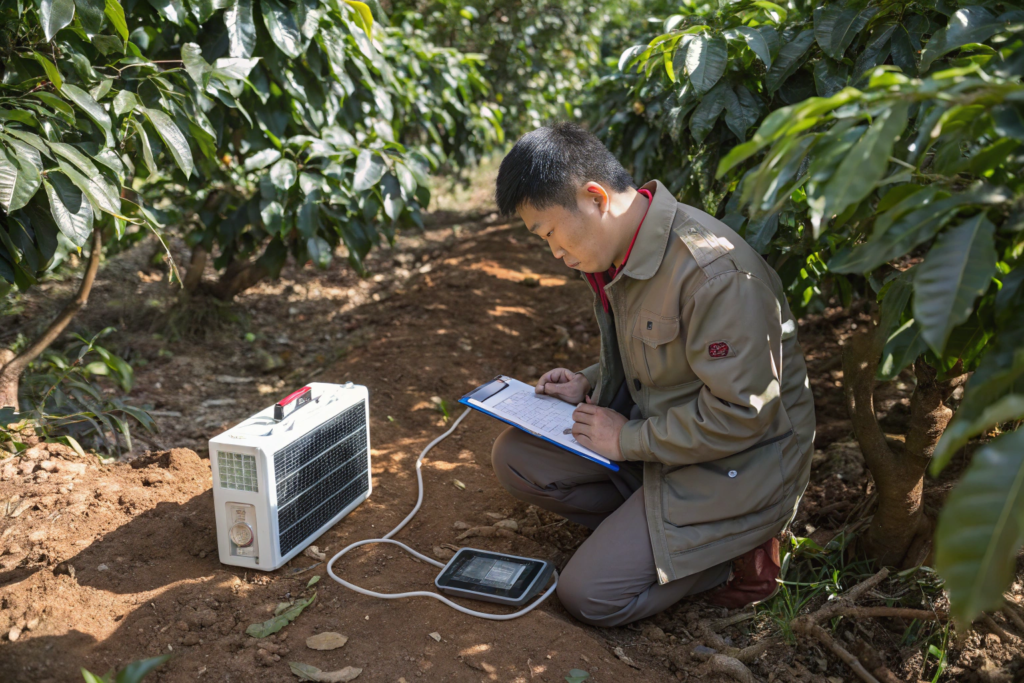
Here is how I break it down now. Scope 1 is what happens directly on my farm: diesel burned by tractors, methane from fermentation tanks, any fuel used in our mechanical dryers. Scope 2 is the electricity we buy from the grid to run our color sorters and vacuum sealers. Scope 3 is the big one—everything upstream and downstream. This includes the manufacturing of the fertilizer I buy, the transport of that fertilizer to my farm, and then the ocean freight of my beans to Europe. The data collection sounds tedious, and honestly, it is, but once you set up the template, it becomes repeatable. You just update the numbers each season. And the payoff is that your European buyer sees you speak their language fluently.
What specific data points do roasters need for a product-level LCA?
Based on the requests I have received, the most common framework they want is a Product Life Cycle Assessment, or LCA, that follows the ISO 14040 and 14044 standards. The data points are specific. For the cultivation phase, they need to know the amount and type of nitrogen fertilizer applied per hectare. Nitrogen fertilizer is a hot topic because when it breaks down in the soil, it releases nitrous oxide, a gas that is nearly 300 times more potent than CO2 at trapping heat. So, if I over-apply urea, my carbon score skyrockets. This is why we have shifted heavily toward compost and controlled-release fertilizers.
They also ask for the weight of crop protection products applied, the volume of irrigation water pumped and the energy source for that pump, the diesel consumption for all farm machinery, and even the distance my workers travel to the field. Yes, I had one buyer ask me for the commuting distance of our pickers. I had to calculate the average kilometers from our workers' village to the harvest blocks. Another essential data point is the weight of the harvested cherry and the conversion ratio from cherry to dried green bean. The processing yield affects everything. When I compile this data for a shipment of Catimor, I summarize it into a one-page LCA result sheet. The headline number they look for is the "cradle-to-farm-gate" footprint per kilogram of green coffee.
How can we handle the logistics emissions from China to Europe accurately?
This part is simpler than the farm stuff, but it is also where a lot of exporters mess up by using rough global averages. A generic number might assume your container goes by air. It does not. The vast majority of coffee from Yunnan to Europe moves by sea, but even sea freight varies a lot depending on the exact route. Our beans typically travel by truck from Baoshan to the port of Shanghai or sometimes directly via rail to a southern port. That inland leg matters. Then, the ocean voyage goes through the Suez Canal to ports like Hamburg or Rotterdam.
We calculate this using the Clean Cargo Working Group emission factors, which are specific to actual shipping lines. If you just Google "shipping emissions per kilometer" you will get a number that might be 30% inaccurate. We ask our freight forwarder for the actual TEU-kilometer data of the specific vessel our container is booked on. Sometimes, a slower vessel emits less. Sometimes, a larger vessel is more efficient. For European buyers, rail-sea multimodal routes can also reduce the carbon number compared to all-truck inland transport. I provide a logistics breakdown for every container so the roaster can separate our farm footprint from the transport footprint they might partially control on their end. This granularity is what separates a serious exporter from a casual one.
Is Low-Carbon Coffee a Competitive Advantage in the Specialty Coffee Trade?
I used to view carbon accounting as a cost—something I had to pay to stay in the game with European buyers. My thinking has completely changed on this. Now I see it as a competitive weapon, and a subtle one at that. When a roaster in Berlin compares my product to a similar offering from another origin, the cupping scores might be identical, and my price might even be a few cents higher because of all the extra data work. But I still win the contract. Why? Because my low-carbon verified coffee reduces their Scope 3 liability in a way that the competitor's unmeasured coffee does not. This is not just about feeling good. It is about the roaster's own balance sheet of emissions.
A verified low-carbon footprint differentiates your coffee in the specialty market by enabling roasters to market your beans under their own climate-neutral product lines, attract eco-conscious consumers willing to pay a premium, and meet internal ESG targets that influence investor relations.
I saw this play out in real life last year. A specialty roaster in Copenhagen launched a "Climate-Conscious Single Origin" series. They needed beans with a verified cradle-to-gate footprint below 3.5 kilograms of CO2 equivalent per kilogram of green coffee. My Baoshan Arabica came in at 2.9 kilograms. The other supplier, a great farm in Peru with beautiful quality, could not provide verified data. They were excluded from the program entirely, not because their coffee was worse, but because they could not prove their climate story. That is the new reality. Data availability is becoming as important as cup quality.
What premium can we justify for verified low-carbon Arabica?
This is a tricky question because premiums vary by roaster and relationship. But let me give you a real-world range based on my export experience. For a standard single-origin washed Arabica, the market price might float between 2.80 and 3.20 dollars per pound FOB, depending on the C market. When I attach a third-party verified carbon footprint report and show a demonstrably low number, I have successfully negotiated a differential of 15 to 25 cents per pound above the standard specialty grade price for that region.
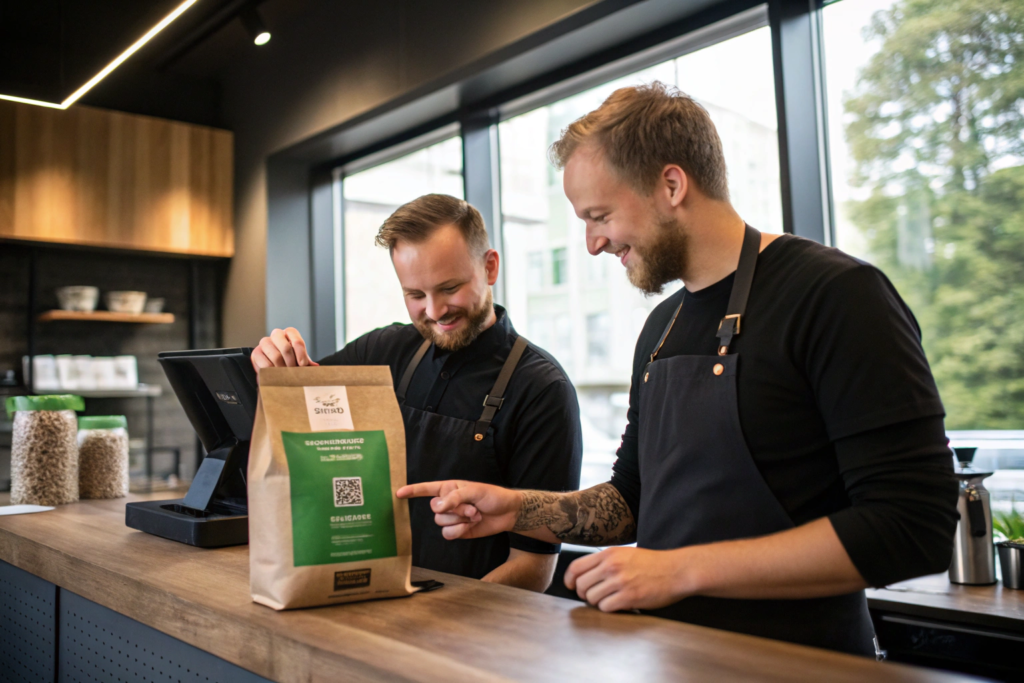
Why can I get that? Because the roaster is not just buying beans. They are buying a compliance asset and a marketing story. They can put a small "2.9 kg CO2e" badge on their retail bag. That badge validates a higher shelf price for the end consumer, some of whom are explicitly willing to pay extra for climate-friendly products. A detail often ignored: corporate buyers with Science Based Targets initiatives actually need documented emissions reductions in their value chain. By supplying them a low-carbon option, we Shanghai Fumao become part of their formal emissions transition plan. That strategic value is worth the 15-cent premium to them many times over.
How can carbon data strengthen customer retention in the long run?
Let me tell you about a relationship I have built with a Dutch importer over the last four years. We started only discussing price. Then, in 2022, we introduced our first carbon numbers. Now, in our quarterly review calls, we spend a chunk of time discussing carbon trends: how our new composting techniques have shaved off 0.2 kilograms of CO2 per kilo, or how a switch in packaging materials reduced our downstream footprint. This is not small talk. It is deep integration.
The effect on retention is real. When a buyer invests time in understanding your carbon data, they invest themselves into your farm story. They cannot easily switch suppliers because the new supplier would start at zero—no data, no trend line, no shared sustainability vocabulary. It creates a switching cost that is intangible but powerful. I remember one tense negotiation where a competitor offered my Dutch partner a slightly lower price per pound. The partner stayed with me. His feedback was blunt: "If I switch, I lose two years of verified carbon reduction data for our ESG report. That's not worth the 5-cent saving." That moment convinced me that sustainability data is the strongest loyalty program an exporter can build.
What Practical Tools and Partnerships Simplify Carbon Auditing for Coffee Farms?
I will not pretend I did this alone. The carbon auditing process, when I first started, felt like learning a completely foreign language. You hear terms like "emission factor," "biogenic carbon," "global warming potential," and your brain just wants to shut down. But I am stubborn, and I also know my limits. I did not try to become a professor. Instead, I found practical tools and the right partners to bridge the knowledge gap. If you are an exporter reading this and feeling overwhelmed, the single best advice I can give you is this: do not try to build your carbon accounting system from scratch. Borrow what already works.
Coffee producers can streamline their carbon auditing journey by adopting user-friendly software platforms like Cool Farm Tool, partnering with university research departments for field measurements, and collaborating with pre-competitive industry initiatives that standardize coffee footprint methodologies.
The first tool I adopted was the Cool Farm Tool. It is an online calculator designed specifically for agriculture. You input your farm location, your yield, your fertilizer and fuel inputs, and it spits out a reasonable carbon estimate based on peer-reviewed scientific models. It is not a final, auditable LCA by itself, but it gives you a direction quickly and cheaply. For our European buyers who want a first-pass number, I often send the Cool Farm summary while the full LCA is being prepared by a professional firm. Since then, I have also connected with a Chinese agricultural university that has a carbon research team. They now do our soil organic carbon measurements annually. This partnership gives us academic credibility at a fraction of the cost of a private international consultancy.
Which internationally recognized carbon standards apply to green coffee exports?
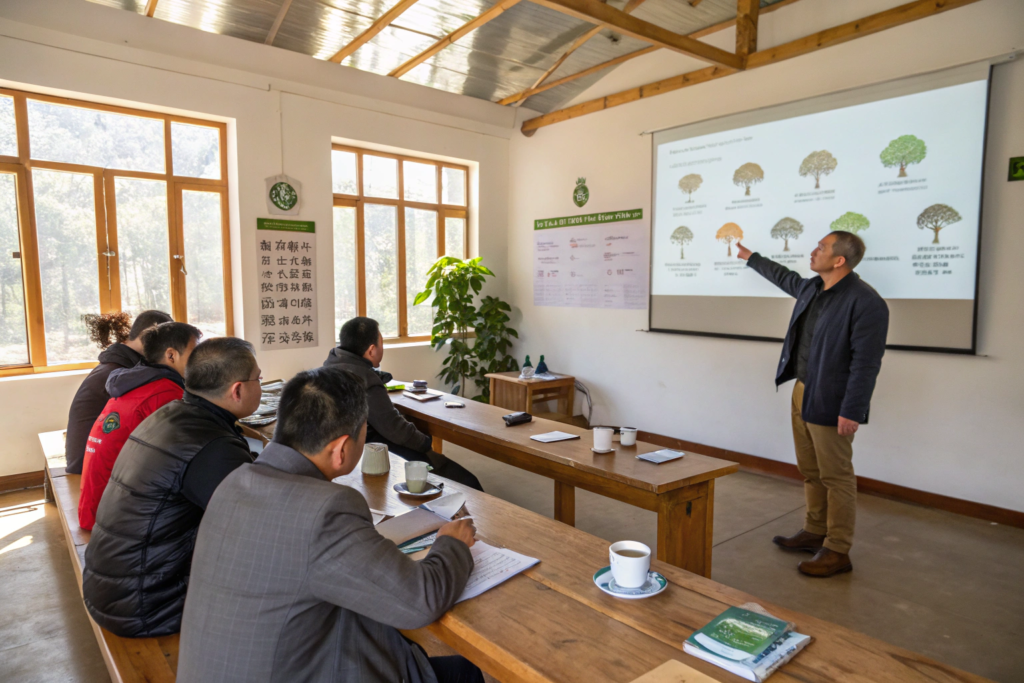
There are a few standards that keep coming up in my conversations with European buyers, and I have learned to recognize them immediately. The most requested one is the ISO 14067 standard for the carbon footprint of products. This is the global benchmark, and a report done to this standard carries the most weight in official CSRD disclosures. I have also seen a demand for PAS 2050, which is the older British standard that ISO 14067 effectively replaced, but some companies still reference it.
For verification, I use a third-party auditor accredited under ISO 14065, which ensures the auditor is competent to validate our greenhouse gas assertions. The process is quite formal—document review, on-site inspection, and even interviews with my agronomists. An interesting development is the new European standard called Product Environmental Footprint Category Rules, or PEFCR, for coffee. The industry is moving toward harmonization, and the PEFCR for coffee will soon specify exactly how every producer should measure and report. I am watching this space closely. For now, when a buyer asks what standard we follow, I say ISO 14067 with third-party assurance via an accredited body, and that answer almost always satisfies their procurement requirement without further debate.
How can smallholder aggregation models maintain data integrity for carbon claims?
I run a large, centralized plantation, but I trade with some neighboring smallholder groups as well. And here is the problem: if you buy cherry from 200 small farmers, how do you know their carbon footprint? They do not have fertilizer records. They do not know their diesel consumption. If you just guess, you are committing fraud. I have thought about this deeply because, as Shanghai Fumao grows, we might expand our sourcing model.
The solution we are currently piloting with a local cooperative involves a "cluster lead farmer" system. We select one educated farmer per village cluster. They keep a simple paper logbook where they record inputs for the group: how many bags of urea, how many hours of hired tractor service. Our agronomist collects these logbooks weekly and digitizes them. We then apply a conservative emission factor, erring on the side of overstating emissions rather than understating. It is not as precise as our plantation data, but it is ethical and defensible. For the roaster, we clearly label these lots as "smallholder blended: modeled carbon estimate" rather than "verified plantation-specific." I believe this level of transparency is the only way to maintain integrity while including smaller producers in the low-carbon market. If European buyers demand perfection from smallholders, they risk excluding the most vulnerable farmers from the supply chain. A pragmatic, honest estimation approach, openly declared, is the wise middle path.
Conclusion
The European coffee market has fundamentally changed. A request for carbon footprint data is no longer an exotic demand from a niche eco-brand; it is a standard procurement checkbox for any serious roaster facing EU regulation and consumer expectation. I started my journey with carbon accounting confused and resistant, but I have ended it convinced that this transparency strengthens my business and deepens my buyer relationships. We have looked at the regulatory drivers like CSRD and deforestation rules, the practical measurement steps from soil to container ship, the competitive premium a low-carbon label can command, and the tools that make auditing feasible without a PhD in environmental science.
The bottom line is that a coffee exporter who ignores carbon data is slowly writing themselves out of the European market. Conversely, a farm that embraces this—producing clean, traceable, and climate-documented beans—becomes a preferred partner for the long term.
If you are a roaster or distributor looking for a partner that can provide both high-quality Arabica beans and the verified carbon documentation your compliance team demands, I invite you to connect with us. Our team at BeanofCoffee, led by Cathy Cai, understands the European procurement landscape deeply and can share sample LCA data, our ISO-aligned methodologies, and a specific landed cost simulation for your operation. Reach out directly to Cathy at cathy@beanofcoffee.com. Let us build a supply chain that satisfies your customers, your bottom line, and your sustainability targets—all in one container.