
I will never forget the day I opened a sealed GrainPro bag of specialty Arabica that had been in our warehouse for eight months. The coffee was from an excellent harvest—Block 18 on our Baoshan plantation, cupped at 85.5 before storage. I was pulling a retained sample for a prospective buyer who wanted to verify the quality after extended storage. I cut the seal, reached in with a sampling trier, and the moment the beans filled my hand, I knew something was wrong. They felt soft. Not damp, exactly, but not the hard, dense beans I had sealed in that bag eight months earlier. I rushed them to the cupping lab. The result was devastating. The cup score had dropped to 81. The acidity was flat. The finish was papery and slightly musty. The moisture content measured 13.8%. The bag, which I had believed was hermetically sealed, had a microscopic puncture near the bottom seam—small enough to be invisible to a casual inspection, large enough to let humid warehouse air slowly seep in over eight months. That single punctured bag cost us a $9,000 contract. More importantly, it taught me that moisture is a relentless, patient enemy. It does not need a flood or a leak. It just needs a pinhole and time.
Moisture content is the number one enemy of long-term coffee storage because water activity above 0.60 aw triggers mold growth and mycotoxin production, elevated moisture accelerates the oxidation of lipids that causes rancidity and flavor fade, and moisture fluctuations during storage create condensation cycles that physically degrade the bean's cellular structure, all of which combine to transform a high-scoring specialty lot into a commercially worthless inventory in a matter of months rather than years.
Green coffee is hygroscopic. It absorbs moisture from the air around it, and it releases moisture when the air is dry. This property makes moisture content a dynamic variable, not a fixed number. The bean's moisture at the time it leaves the drying beds is not the moisture it will have after six months in a warehouse, three weeks in a container crossing the equator, and two days in a receiving dock in a humid port city. Every step in the storage chain either protects the moisture stability or accelerates its degradation. Understanding the science of moisture in green coffee, and the practical systems that control it, is essential for any coffee professional who buys, sells, or stores green beans. In this article, I want to share the moisture management lessons I have learned, often painfully, over the years of storing and shipping coffee from our Yunnan facility.
What Is the Ideal Moisture Range for Green Coffee Long-Term Storage?
When I first started in this business, I thought the moisture target was simple: dry the coffee to 12% and ship it. The international standard for green coffee moisture, according to the International Coffee Organization, is between 8% and 12.5%, with most specialty contracts specifying 10.5% to 12.0%. I assumed that anywhere within that range was fine. I was wrong. The ideal moisture content for long-term storage is a narrower, more precise band, and it depends not just on the percentage but on the water activity of the bean and the equilibrium relative humidity of the storage environment.
The ideal moisture content for green coffee in long-term storage is between 10.5% and 11.5%, a range that corresponds to a water activity of 0.53 to 0.59 aw, which is low enough to inhibit mold growth and enzymatic degradation but high enough to prevent the bean from becoming brittle and losing its volatile aromatic compounds through excessive desiccation, with the critical insight being that moisture stability is as important as moisture level because a bean that cycles between 10% and 13% will degrade faster than a bean held steadily at 12%.
Beans dried below 10% begin to lose their structural integrity. The cell walls become brittle. The volatile aromatic compounds that give specialty coffee its distinctive flavor profile are not locked into the bean by some magical force; they are physically trapped within the cellular matrix. When the bean dries out excessively, that matrix shrinks and cracks, and the aromatics escape. The coffee that results cups flat, papery, and lifeless, even if no mold has grown. Beans held above 12% for extended periods enter a different danger zone. At water activity above 0.60, mold spores that are naturally present on all agricultural products—Aspergillus, Penicillium, Fusarium—begin to germinate and grow. The mold consumes the bean's lipids and carbohydrates, producing off-flavors and, in some cases, mycotoxins such as ochratoxin A, which is regulated in the European Union at a maximum of 5 parts per billion in roasted coffee. The moisture sweet spot is therefore a narrow corridor between the risk of desiccation on the low side and the risk of mold on the high side. Holding that corridor steady over months of storage requires active environmental control, not just a good initial drying.
How does water activity differ from moisture content percentage?
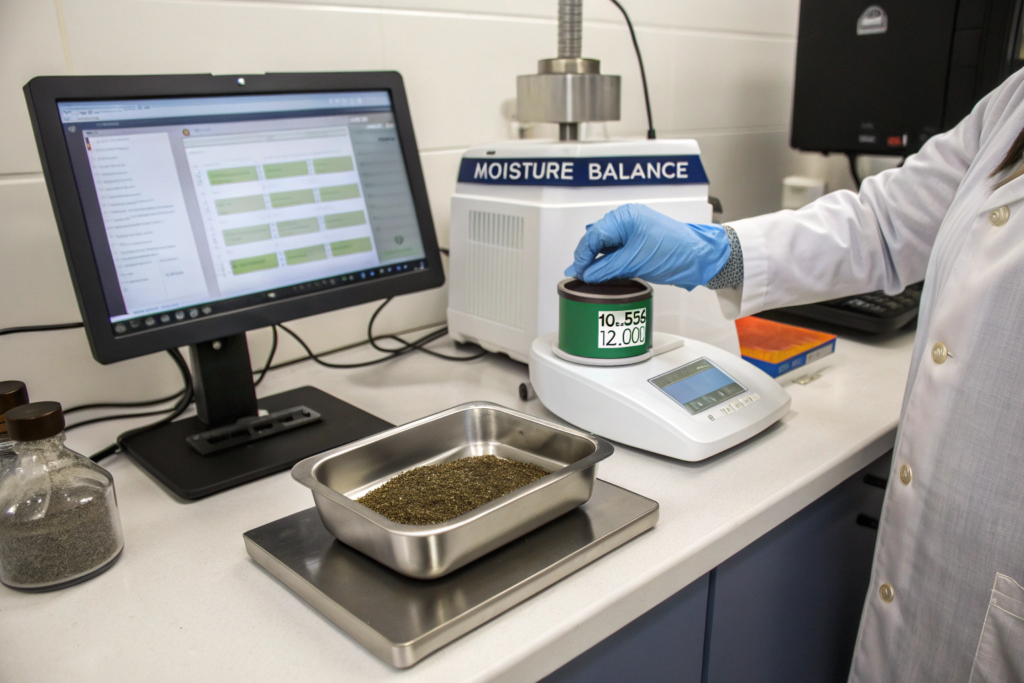
Moisture content percentage and water activity are related but distinct measurements, and confusing them is one of the most common mistakes in coffee storage. Moisture content is the total amount of water in the bean, expressed as a percentage of the bean's weight. It is measured by a moisture meter that uses electrical conductivity or capacitance, or by the oven-drying method in a laboratory. A bean with a moisture content of 12% is 12% water by weight. Water activity, abbreviated as aw, measures the amount of that water that is "free"—not chemically bound to the bean's molecules—and therefore available for microorganisms to use. Water activity is measured on a scale from 0 to 1.0, where pure water is 1.0. The critical threshold for mold growth is 0.60 aw. Below 0.60, most molds cannot grow. Above 0.60, they can.
Two different lots of coffee can both measure 12% moisture content but have different water activity levels. This happens because the chemical composition of the bean—its lipid content, its protein structure, its carbohydrate profile—affects how much of the water is bound versus free. A high-density Arabica grown at altitude may have a different water activity at a given moisture content than a lower-density Robusta. The practical implication is that a moisture meter reading alone is not a complete picture. For long-term storage of high-value specialty lots, I measure both moisture content and water activity. The moisture meter gives a quick daily reading. The water activity meter, which is a benchtop laboratory instrument, gives a periodic check that confirms the beans are genuinely safe for extended storage. A lot at 11.5% moisture and 0.55 aw is in excellent condition for storage. A lot at 11.5% moisture and 0.62 aw should be investigated—something about the bean chemistry or the storage environment is making more water biologically available, and mold risk is elevated even though the moisture percentage looks acceptable.
What happens to cup quality when beans are stored above or below the safe range?
When beans are stored above the safe moisture range for an extended period, the quality degradation follows a predictable sequence. The first sign is a loss of acidity. The bright, citrus notes that characterize a high-quality washed Arabica begin to dull. The acidity does not disappear; it transforms into a flat, generic sourness that lacks the distinct origin character. Next, the body begins to thin. The coffee tastes increasingly hollow on the palate. Then, volatile compounds begin to oxidize. The pleasant floral and fruity aromatics are replaced by woody, hay-like, and eventually musty notes. If moisture remains elevated, visible mold appears. The beans develop white or green surface mold. The cup becomes undrinkably musty, earthy, and bitter. At this stage, the lot is commercially worthless.
Below the safe moisture range, the degradation is different but equally damaging. The first casualty is the aromatic complexity. The volatile compounds that give the coffee its distinctive flavor simply escape from the desiccated bean matrix. The coffee cups flat and papery, with no high notes. The body is thin and watery. Over time, the lipid fraction of the bean—the coffee oils that contribute to mouthfeel and flavor—begins to oxidize. The oxidation of unsaturated fatty acids produces aldehydes and ketones that taste stale, cardboard-like, and rancid. The process is slower than mold growth but equally irreversible. Once the aromatics have volatilized and the lipids have oxidized, no amount of rehydration restores the cup quality. The bean can be brought back to 11% moisture by storing it in a more humid environment, but the flavor that was lost during the dry period is gone permanently. The lesson is that moisture control is not just about avoiding the extremes. It is about holding a steady, optimal condition. A bean that cycled between 9% and 13% over six months will taste worse than a bean held constantly at 12%, even though the average moisture of the first bean is within the "acceptable" range.
How Should Green Coffee Beans Be Packed for Multi-Year Storage?
The packaging is the first line of defense against moisture migration during storage. A standard jute sack, which has been the traditional coffee packaging for over a century, offers essentially no moisture barrier. Jute is a natural fiber that breathes freely. It allows the free exchange of moisture vapor between the beans and the surrounding air. In a climate-controlled warehouse, this breathability is manageable. In a warehouse that experiences seasonal humidity swings, jute alone is a recipe for quality loss. For long-term storage, the industry has largely moved to hermetic packaging systems.
Green coffee beans intended for multi-year storage must be packed in hermetically sealed, multi-layer barrier bags such as GrainPro or equivalent, with the bags properly heat-sealed after loading and the seal integrity tested, the bags placed inside new, clean jute sacks for physical protection, and the pallets wrapped in stretch film with desiccant packets placed between the pallet layers to capture any residual moisture, creating a triple-barrier system that isolates the beans from the external storage atmosphere and maintains the original moisture content for up to three years.
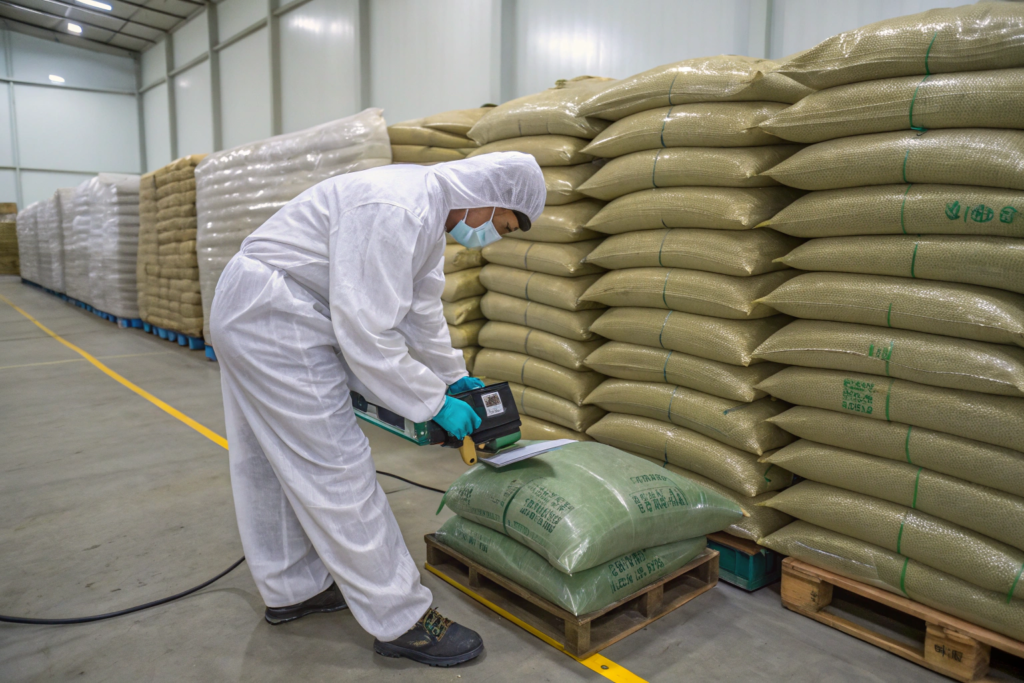
The GrainPro bag is the most widely used hermetic storage solution in specialty coffee. It is a multi-layer plastic bag with a gas barrier layer that prevents both moisture vapor transmission and oxygen ingress. When properly sealed, a GrainPro bag can maintain the internal moisture content of the beans within 0.5% of the original level for two to three years, as long as the bag is not physically punctured. The sealing process is critical. A GrainPro bag that is not heat-sealed correctly, or that is sealed with a grain of coffee caught in the seal, will leak. We train our warehouse staff to double-seal every bag and to perform a visual inspection of each seal line before the bag is placed into the outer jute sack. The outer jute sack provides physical protection against abrasion, puncture, and handling damage. A GrainPro bag placed directly on a pallet without a jute cover will likely develop pinholes from friction during transport and handling. The jute is the sacrificial outer layer that protects the hermetic barrier.
For lots intended for truly long-term storage—two years or more—we add a third layer of protection. The entire pallet is wrapped in a heavy-gauge stretch film, and silica gel desiccant packets are placed in the spaces between the bags within the pallet. The stretch film does not provide a hermetic seal, but it reduces the air exchange rate around the bags and protects against dust, pests, and minor splashes. The desiccant packets absorb any moisture that migrates into the pallet over time, providing a fail-safe if a bag seal develops a slow leak. This triple-barrier system has allowed us to store specialty lots for over two years and cup them with minimal degradation. The cost of the GrainPro bag, the jute, the desiccant, and the stretch film is roughly $2.50 to $3.00 per bag. For a specialty lot worth $8 per pound, that is an insurance premium that any rational producer or buyer should willingly pay.
What are GrainPro bags, and how are they properly sealed for maximum protection?
GrainPro is a brand name that has become genericized in the coffee industry, similar to how "Kleenex" is used for facial tissue. The product is a transparent, multi-layer polyethylene bag with an ethylene vinyl alcohol gas barrier layer. The EVOH layer is what makes GrainPro different from a standard plastic bag. It provides an oxygen and moisture vapor barrier that is several orders of magnitude more effective than polyethylene alone. The bag is designed to be loaded with green coffee, the excess air pressed out manually, and the open end folded over and heat-sealed. The removal of excess air before sealing is important because trapped air inside the bag contains moisture that can condense if the storage temperature fluctuates. We train our staff to press the bag gently but firmly before sealing to expel as much air as possible without vacuum-sealing, which would risk crushing the beans or puncturing the bag on a sharp bean edge.
The proper heat-sealing technique for a GrainPro bag uses a hand-held heat sealer set to the temperature specified by GrainPro—typically around 140°C to 150°C for the standard bag thickness. The sealer is run across the folded opening at a steady speed, creating a continuous, uniform seal line. The seal is then visually inspected for any gaps, wrinkles, or trapped material. A second seal line is applied parallel to the first, about one centimeter below it, as a backup. After sealing, the bag is gently squeezed to check for any hissing sound that would indicate a leak. If the bag passes, it is placed into the outer jute sack, and the jute is sewn closed. The GrainPro bag is not taken to the sewing machine directly, because the sewing needle would puncture the hermetic barrier. GrainPro bags are designed to be sealed and then inserted into pre-sewn or hand-sewn jute sacks. The sealed GrainPro bag should never be stitched through.
How do temperature-controlled containers protect moisture stability during ocean freight?
The container that carries the coffee from the origin warehouse to the destination port is not just a metal box. It is a mobile storage environment, and for the two to six weeks that the coffee is in transit, it is subjected to conditions that can be far more extreme than any stationary warehouse. A container stowed on the top deck of a vessel crossing the Pacific or transiting the Suez Canal can experience internal temperatures exceeding 60°C during the day and dropping to near 15°C at night. This thermal cycling drives moisture migration within the container, even if the coffee is in GrainPro bags. The air inside the container expands and contracts, drawing in moist outside air through the container's ventilation openings. The moisture condenses on the cool metal roof at night and drips onto the top layer of cargo. Coffee bags in a standard dry container rely entirely on their individual packaging for protection against this condensation.
For high-value specialty lots destined for long-term storage after arrival, a temperature-controlled container, often called a reefer, eliminates this thermal cycling risk. A reefer maintains a constant set temperature—typically 18°C to 20°C for green coffee—throughout the entire voyage. The temperature stability prevents the condensation cycles that cause container sweat and top-layer bag damage. The reefer also controls the ventilation rate. Standard dry containers have fixed ventilation openings that cannot be adjusted during the voyage. A reefer can be set to a low air exchange rate or even to a sealed atmosphere mode, depending on the cargo requirements. The cost of a reefer container is higher than a dry container—typically 50% to 100% more—but for a shipment of micro-lot specialty coffee where the per-pound price is in the double digits, the incremental freight cost is a rational investment in quality preservation. For commercial-grade coffee shipped in full container loads, the standard practice is to rely on GrainPro bags inside dry containers, with a container liner and top-layer desiccant blanket as additional moisture protection. The key is to match the shipping environment to the coffee's value and the buyer's storage plan.
What Environmental Controls Maintain Moisture Stability in a Coffee Warehouse?
The warehouse where the coffee rests between processing and shipment is the most important storage environment in the entire supply chain, and it is the one most under the producer's direct control. A warehouse that is too hot, too humid, or too poorly ventilated will undo, in a matter of months, the careful moisture management that was achieved during drying and packing. The warehouse is not just a roof over the coffee. It is an environmental system that must be designed and operated with the same attention to detail as the wet mill or the cupping lab.
Maintaining moisture stability in a green coffee warehouse requires three environmental control systems working together: a humidity control system that keeps the relative humidity between 55% and 62% to maintain the beans' equilibrium moisture content at the target level, a temperature control system that keeps the temperature between 15°C and 22°C to slow oxidative reactions and prevent condensation events, and a ventilation system that provides gentle, continuous air circulation to prevent micro-climates of stagnant humid air from forming around the pallets.
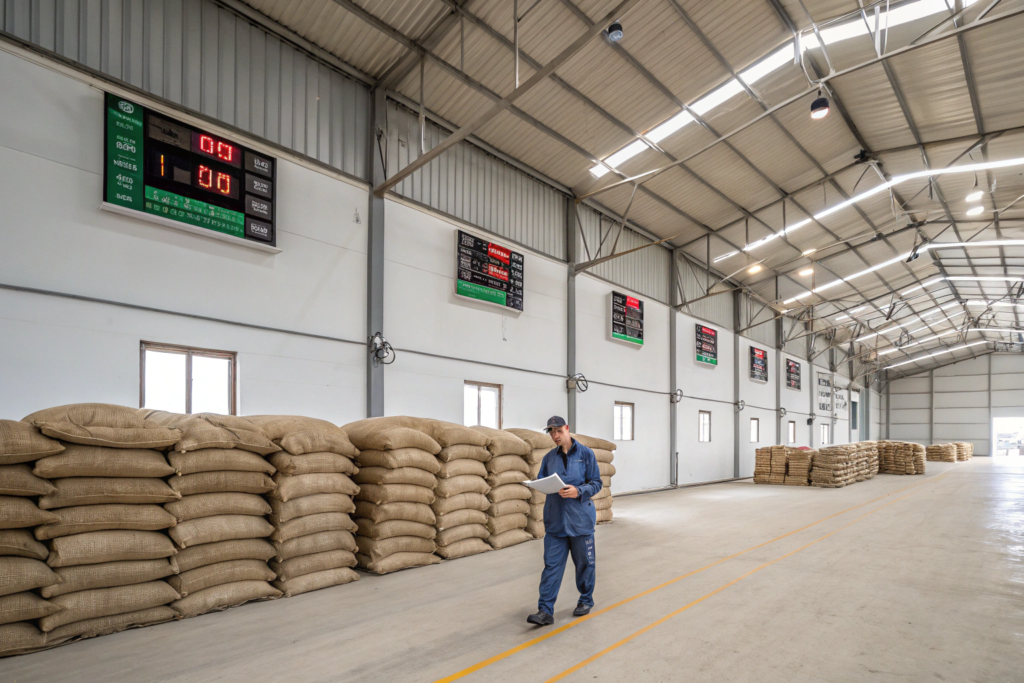
Our warehouse in Baoshan uses a combination of passive and active environmental controls. The warehouse itself is a concrete structure with an insulated roof that reduces solar heat gain during the day. The insulation is a critical design feature that I did not appreciate when I built the first warehouse. A metal roof without insulation, common in many agricultural buildings, turns the warehouse into an oven during the day and a refrigerator at night. The diurnal temperature swing inside an uninsulated warehouse can be 15°C or more, which drives moisture in and out of the beans with every cycle. The insulated roof dampens that swing to a few degrees, stabilizing the internal environment.
Active humidity control is provided by industrial dehumidifiers that are set to maintain a maximum relative humidity of 62%. During Yunnan's rainy season, which runs from June to September, the outside relative humidity can exceed 85% for weeks at a time. The dehumidifiers run continuously during this period, extracting moisture from the warehouse air and draining it outside. During the dry winter months, the outside air is naturally dry, and the dehumidifiers cycle off. The ventilation system uses low-velocity ceiling fans that keep the air moving gently throughout the warehouse. The fans are positioned to create a laminar flow pattern that passes through the aisles between the pallets, preventing any single area from developing a different temperature or humidity than the rest of the warehouse. The combination of insulation, dehumidification, and ventilation maintains a stable storage environment at approximately 18°C to 20°C and 55% to 60% relative humidity year-round. The electricity cost for these systems is a meaningful operational expense, but it is a fraction of the financial loss that would result from a warehouse full of moldy or faded specialty coffee.
How does relative humidity in the storage room affect bean moisture over time?
Green coffee beans and the air around them are in a constant, invisible negotiation. The beans absorb moisture from the air when the air's relative humidity is higher than the bean's equilibrium relative humidity, and they release moisture to the air when the air is drier than the bean's equilibrium. The equilibrium relative humidity is the humidity level at which the bean neither gains nor loses moisture. For green coffee at a moisture content of 11%, the equilibrium relative humidity is approximately 58% to 60% at typical storage temperatures. This means that if the warehouse air is held at 58% RH, the beans will maintain their 11% moisture content indefinitely, assuming all other factors are controlled. If the warehouse air rises to 70% RH, the beans will begin to absorb moisture, and their internal moisture content will creep upward toward a new, higher equilibrium. If the warehouse air drops to 40% RH, the beans will lose moisture.
The rate of moisture migration is slow—it takes weeks or months for a bag of beans to fully equilibrate with the warehouse air, because the beans are packed tightly and the air exchange within the bag is limited. But slow migration is still migration. Over a storage period of six to twelve months, a consistently high or low warehouse RH will measurably shift the bean moisture content, even if the beans are in jute bags. For GrainPro-sealed bags, the warehouse RH has no direct effect on the beans as long as the seal is intact, because the hermetic barrier blocks moisture vapor transmission. But the warehouse environment still matters for GrainPro storage, because extreme heat can accelerate the chemical degradation reactions within the sealed bag, and condensation on the outside of the bag can promote mold growth on the jute outer sack that, while not directly affecting the beans, is an indicator of poor storage conditions and can create handling issues. The warehouse RH target of 55% to 62% is not arbitrary. It is the range that keeps the beans at their target moisture content without promoting condensation or mold on the packaging materials.
What monitoring systems provide early warning of a moisture excursion?
A moisture excursion is a slow disaster. It does not announce itself with a bang. It creeps in over days and weeks, and by the time it is visually obvious—mold on a jute sack, a musty smell in the warehouse—the damage has already been done to the beans. The defense against moisture excursions is continuous monitoring with automated alerting. Our warehouse uses a network of wireless temperature and humidity sensors placed at multiple locations: near the ceiling, near the floor, in the center of the warehouse, near the doors, and between the pallets in the long-term storage area. Each sensor transmits its readings to a central data logger that records the temperature and humidity every 15 minutes, 24 hours a day, 365 days a year.
The data logger is connected to a cloud-based monitoring platform that I can access from my phone. The platform is programmed with alert thresholds. If the relative humidity at any sensor exceeds 65% for more than one hour, the system sends an alert to my phone and to the warehouse manager's phone. If the temperature exceeds 25°C, the same alert is triggered. These thresholds are set conservatively. A brief excursion above 65% RH, such as when the warehouse door is opened for a container loading on a humid day, is not a crisis, but it is worth checking. A sustained excursion that lasts through the night indicates a dehumidifier failure or a door left open, and the alert allows the warehouse manager to respond before the beans have absorbed significant moisture. The monitoring data also creates an auditable storage condition record for every lot in the warehouse. When a buyer asks, "What were the storage conditions for this lot?" I can generate a report showing the temperature and humidity history for the entire storage period. This data is a powerful trust-building tool that demonstrates moisture management competence and provides objective evidence in the event of a quality dispute. A warehouse without continuous environmental monitoring is a warehouse operating blind, and a buyer sourcing coffee for long-term storage should ask the supplier whether such monitoring is in place.
How Can a Buyer Test Moisture Content Upon Receiving a Coffee Shipment?
The moment a coffee container arrives at the buyer's warehouse is the moment of truth for moisture management. The coffee has traveled thousands of kilometers from the dry mill in Yunnan, across the ocean, through port handling, and to the buyer's receiving dock. The pre-shipment sample that the buyer approved may have been at a perfect 11.2% moisture, but the coffee in the container has experienced weeks of thermal stress that may have altered that number. Testing moisture content at receiving is not a reflection of distrust in the supplier. It is a standard quality control step that protects the buyer's inventory and provides a baseline measurement for the storage period ahead.
A buyer testing moisture content upon receiving a coffee shipment should use a calibrated moisture meter that has been verified against a reference standard, draw a representative sample from at least 10% of the bags using a trier that reaches the bag core, measure and record the moisture reading for each sample, calculate the average and the range, and compare the results to the supplier's pre-shipment moisture certificate, with any deviation greater than 0.5 percentage points triggering a deeper investigation that includes water activity measurement and a cupping comparison against the retained sample.
The sampling methodology at receiving is critical. A single bag sampled from the top of the pallet tells you almost nothing about the container's moisture condition. The top-layer bags are the ones most exposed to container sweat and thermal stress during transit, and they may have a different moisture content than the bags in the center of the pallet. A competent receiving inspection samples from multiple positions: top layer, middle layer, bottom layer, bags against the container walls, and bags in the pallet core. The SCA sampling protocol, adapted for receiving inspection, recommends sampling from the square root of the total number of bags. For a 320-bag container, that is approximately 18 bags. This is a realistic number for a receiving inspection and provides a statistically meaningful picture of the shipment's moisture condition.
The moisture meter used for receiving inspection must be calibrated. A meter that has not been calibrated in the past 12 months, or that has been dropped or exposed to extreme temperatures, can give readings that are off by a full percentage point or more. Calibration is performed using a reference standard—either a calibration block provided by the meter manufacturer or a set of coffee samples whose moisture has been verified by oven-drying in a laboratory. The meter's calibration is checked before each receiving inspection, and the calibration check is recorded on the inspection form. The moisture readings from the sampled bags are recorded individually, not averaged in the field, so that the buyer can see the range of moisture across the container. A container where most bags read 11.0% to 11.5% but one bag reads 14% has a localized moisture problem, perhaps from a container roof leak, that requires segregation of the affected bag and possibly an insurance claim. A container where every bag reads between 11.0% and 11.5% is a clean, uniform shipment.
What is the correct procedure for using a moisture meter on green coffee?
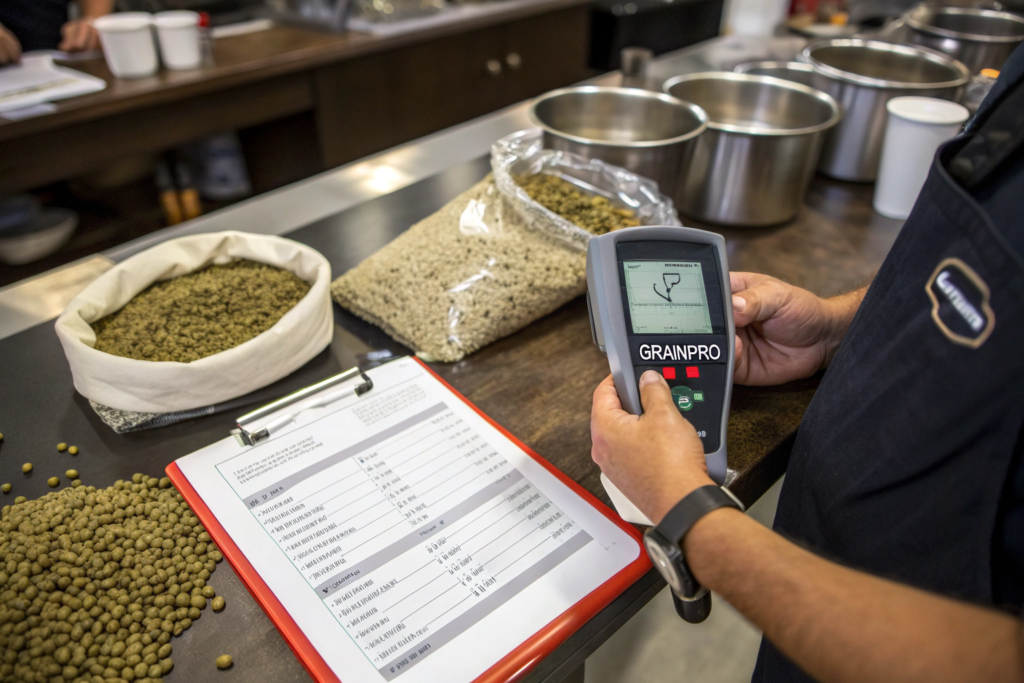
The correct procedure for using a moisture meter on green coffee begins with the meter selection. The two most common types in the coffee industry are capacitance meters and resistance meters. Capacitance meters measure the dielectric constant of a bean sample placed between two electrodes, which correlates with moisture content. They require a specific sample volume—usually a full sample cup—and a consistent bean density for accurate readings. Resistance meters measure the electrical resistance between two electrodes pressed into the beans, which also correlates with moisture. Resistance meters can work with smaller samples but are more sensitive to surface moisture and bean temperature. Both types are adequate for receiving inspection if they are calibrated for green coffee specifically. A meter calibrated for grains will not give accurate coffee readings.
The measurement procedure is as follows. First, the meter is turned on and allowed to warm up for the manufacturer-recommended period. Second, the calibration is verified using the reference standard. Third, the green coffee sample is drawn from the bag using a trier, as described in the previous section on sampling. Fourth, the sample is poured into the meter's sample cup, filling it completely and leveling the surface without compressing the beans. Fifth, the meter reading is taken and recorded. Sixth, the sample is discarded or returned to a separate container—it is not returned to the bag, to avoid cross-contamination. Seventh, the meter's sample cup is cleaned between each bag sample to prevent carryover of surface moisture. The bean temperature at the time of measurement matters. Most moisture meters are temperature-compensated, but the compensation works within a specified range. If the beans have just been unloaded from a cold container into a warm warehouse, they should be allowed to equilibrate to room temperature for a few hours before measurement. Measuring cold beans on a warm meter can produce erroneously low readings because the condensation of ambient moisture on the cold bean surface affects the electrical measurement.
How can a buyer's moisture measurement be compared with the supplier's pre-shipment certificate?
The comparison between the buyer's receiving moisture readings and the supplier's pre-shipment moisture certificate is a reconciliation exercise, not a finger-pointing exercise. Small differences are expected. A difference of 0.2 to 0.4 percentage points between the two measurements is within the combined uncertainty of two different meters, two different operators, and several weeks of transit. This difference should be noted but does not require action. A difference of 0.5 to 1.0 percentage points warrants attention. It may indicate genuine moisture gain during transit, or it may indicate a calibration difference between the two meters. The first step is to verify the buyer's meter calibration. If the buyer's meter is correctly calibrated and the supplier's certificate was issued by a calibrated laboratory instrument, the difference is likely real.
A difference greater than 1.0 percentage points is a significant finding that should trigger the dispute resolution process defined in the supply contract. The buyer should notify the supplier in writing, provide the receiving moisture data, and request that the retained sample—which the supplier has kept in a sealed archive—be sent to an independent third-party laboratory for oven-drying moisture analysis. The oven-drying method, which measures moisture by weighing a ground coffee sample before and after drying at 105°C for 16 hours, is the reference method against which all moisture meters are ultimately calibrated. The independent lab's result is the binding number. If the independent lab confirms the buyer's high reading, the supplier is in breach of the moisture specification, and the contract's quality remedies apply—typically a price adjustment or a return of the lot. If the independent lab confirms the supplier's original certificate, the buyer's moisture meter is out of calibration, and the buyer should recalibrate and re-measure. The retained sample system, combined with the independent lab, provides an objective resolution mechanism that prevents a moisture dispute from devolving into a he-said-she-said argument.
Conclusion
Moisture content is the number one enemy of long-term coffee storage because it is the variable that governs every major degradation pathway. Too much moisture, and mold grows, mycotoxins develop, and the cup becomes musty and undrinkable. Too little moisture, and the volatile aromatics escape, the lipids oxidize, and the cup becomes flat and papery. Unstable moisture, with the bean cycling between wet and dry conditions, accelerates degradation faster than a steady reading at either end of the spectrum. The defense against moisture is a layered system: proper drying to the 10.5% to 11.5% target range, hermetic packaging in GrainPro bags with proper heat-sealing, climate-controlled warehousing with continuous humidity and temperature monitoring, careful container loading with moisture barriers and temperature logging, and systematic moisture testing at both the pre-shipment and receiving stages. Each layer reinforces the others. A single weak link—a poorly sealed bag, a dehumidifier left offline, an uncalibrated moisture meter—can compromise the entire chain.
For the coffee professional, moisture management is not a rote quality control task. It is the foundational competency that determines whether a specialty lot retains its value over time or quietly degrades into a commercial write-off. The cost of the equipment, the training, and the monitoring systems that make moisture control possible is real, but it is dwarfed by the cost of a lost contract or a reputation for shipping coffee that does not age well. The supplier who can document a moisture stability record for every lot is the supplier who earns multi-year contracts from buyers who inventory coffee. The supplier who cannot is a supplier whose coffee must be roasted immediately or risked.
If you are a roaster or importer who values storage stability as a core sourcing criterion, our team at BeanofCoffee can provide a complete moisture management documentation package for any lot in our inventory: the drying curve from the mill, the GrainPro sealing checklist, the warehouse temperature and humidity log for the storage period, and the pre-shipment moisture and water activity certificate. Contact our export quality manager, Cathy Cai, at cathy@beanofcoffee.com. We will show you the data that proves your next container of Baoshan Arabica will arrive exactly as dry, stable, and flavorful as the sample you approved.