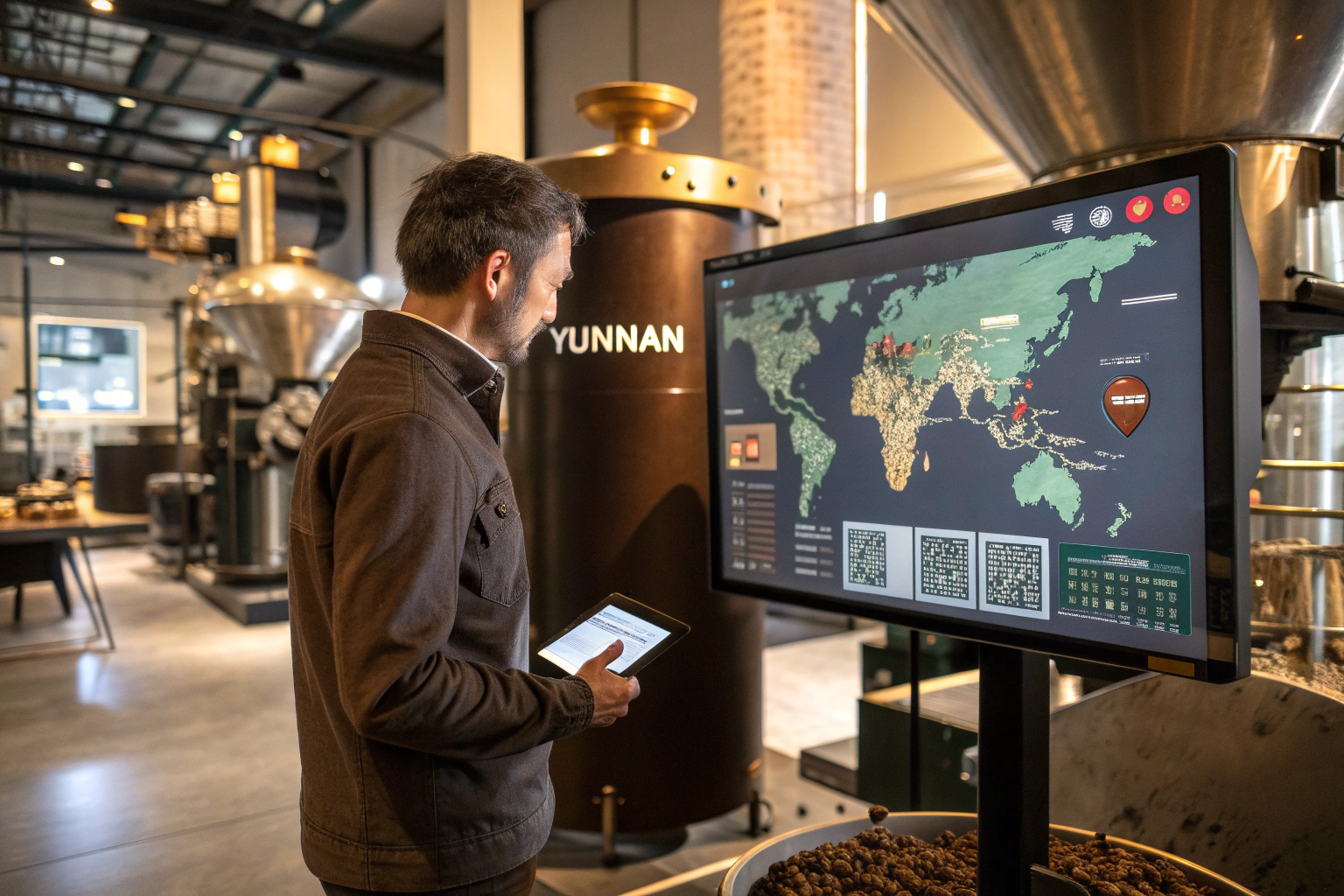
I lost a major account three years ago. A boutique hotel chain. They loved the coffee. The price was right. The delivery was flawless. But they walked away. Why? Because I could not tell them exactly which mountain the beans came from. Not the region. Not the province. The actual hillside. They asked for a story. A specific story about the people and the place. And all I had was a generic "Yunnan Arabica" label. It was a brutal lesson. The market has shifted. It is not enough to sell good coffee anymore. You have to sell the truth of the coffee. The pain here is real. You lose shelf space to competitors who can point to a GPS coordinate while you are still pointing to a country on a map.
Traceability is important for modern coffee roasters in 2026 because consumers demand verifiable proof of ethical sourcing and unique origin narratives, while roasters require it for precise quality control, inventory management, and to comply with emerging import regulations focused on deforestation-free supply chains.
This is not a trend. This is the new floor. It is table stakes. If you cannot trace your beans back to the specific washing station or farm plot, you are flying blind. And in 2026, flying blind in the coffee business means leaving money on the table. Or worse, it means getting caught in a regulatory net that could freeze your shipments at the border. Let me explain how this works from my side of the supply chain—from the dirt of Baoshan to your roastery door.
What Does Coffee Traceability Actually Mean for Wholesale Green Bean Buyers?
Traceability is a word that gets thrown around like confetti at a trade show. Everyone says they have it. Very few actually do. It is not just about knowing the province. It is not just about a fancy certificate on the wall. It is about the chain of custody. It is about the paper trail—or the digital trail—that connects the seed in the ground to the green bean in your roaster.
For wholesale green bean buyers, traceability means having access to a documented, verifiable record of the coffee's journey from a specific, geographically defined plot of land through each processing and handling step, ensuring the lot has not been commingled with lower-grade or unknown-origin beans along the way.
If I cannot show you that record, I am just a middleman with a nice website. And you, Ron, you are a buyer who needs to trust what is in the bag. That trust comes from the paper trail.
How Is Farm-Level Traceability Different From Regional or Cooperative Traceability?
This is the biggest misconception. A bag stamped "Yunnan" is regional traceability. It is vague. It is like saying "Wine from California." Okay, fine. But is it Napa Valley floor or a hillside in Sonoma? The difference in quality and price is massive. Regional traceability is the baseline. It is the minimum legal requirement for export.
Cooperative traceability is a step up. You know the coffee came from a group of 50 smallholder farmers who pool their cherry at a central wet mill. The coffee is blended at the mill. You lose the individual farm's signature. You get a snapshot of the community. This can be great. It can be consistent. But you cannot say, "This came from Farmer Wang's specific hectare."
Farm-level or micro-lot traceability is the gold standard. This is where Shanghai Fumao excels. We have 10,000 acres, but we do not just lump it all together. We segment our estate into blocks based on altitude, varietal, and harvest date. I can tell you: "This lot came from Block 4B, at 1,450 meters, Catimor varietal, picked on November 12th, processed using a 36-hour anaerobic fermentation." That is a story. That is data. That is something a roaster can market. You can read more about the definitions of traceability from the Specialty Coffee Association on their standards page.
What Information Should Be Included on a True Traceable Coffee Bag Label?
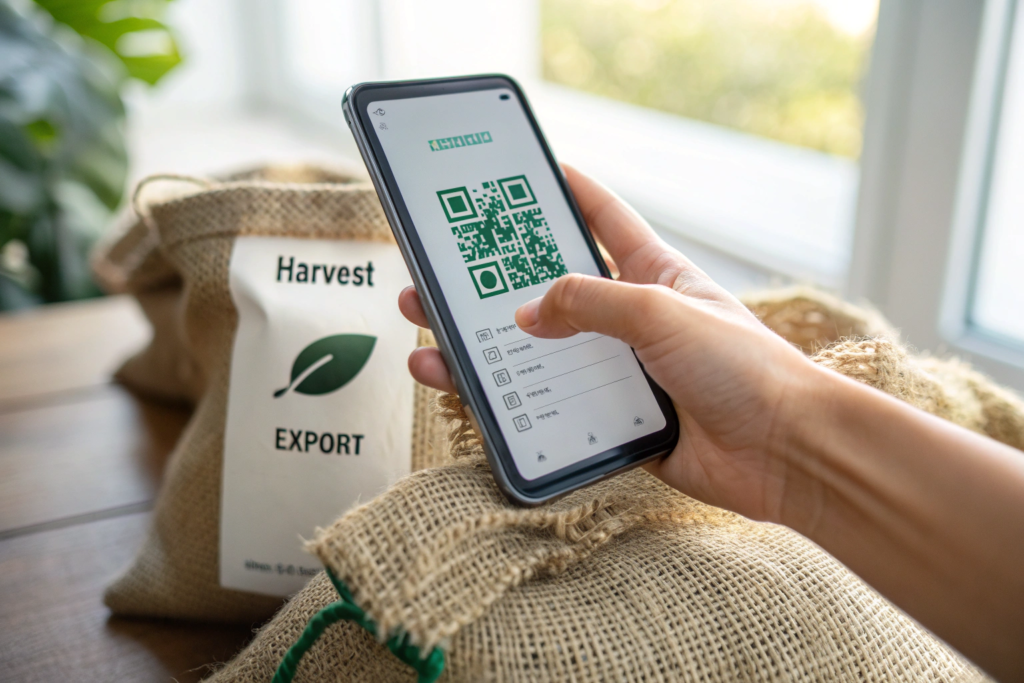
Do not settle for a stencil and a smile. A true traceable label is a data sheet. When that bag arrives at your loading dock, you should be able to scan a QR code and see everything. Here is what I make sure is on every pallet we ship from Baoshan:
- Producer Name: Shanghai Fumao / BeanofCoffee Estate.
- Lot Number: Unique identifier. This is the key.
- Farm Section: GPS Coordinates or specific block name (e.g., "Northern Slope, Block 12").
- Varietal: Catimor P3, Typica, Bourbon.
- Process: Washed, Natural, Honey, Anaerobic.
- Harvest Date: Month and Year.
- Screen Size: 15+, 17/18, etc.
- Certification Status: Organic, Rainforest Alliance (if applicable).
- ICO ID Code: The unique exporter code.
If the bag only has "Product of China" and a generic grade stamp, you are buying a commodity. You are not buying a relationship. And in 2026, relationships built on data are the only ones that protect your business. For more details on global export documentation standards, the International Coffee Organization provides guidelines on what constitutes a traceable shipment.
Why Are EUDR and US Import Regulations Forcing Better Coffee Traceability in 2026?
Let's talk about the elephant in the trade lane. The law. You asked about tariffs and timeliness. But the biggest wildcard for coffee imports right now is not the trade war. It is the environmental law. The European Union Deforestation Regulation (EUDR) is already here. The U.S. is watching closely with potential Forest Act legislation. If you are importing coffee into North America or Europe in 2026, you are not just buying beans. You are buying legal liability.
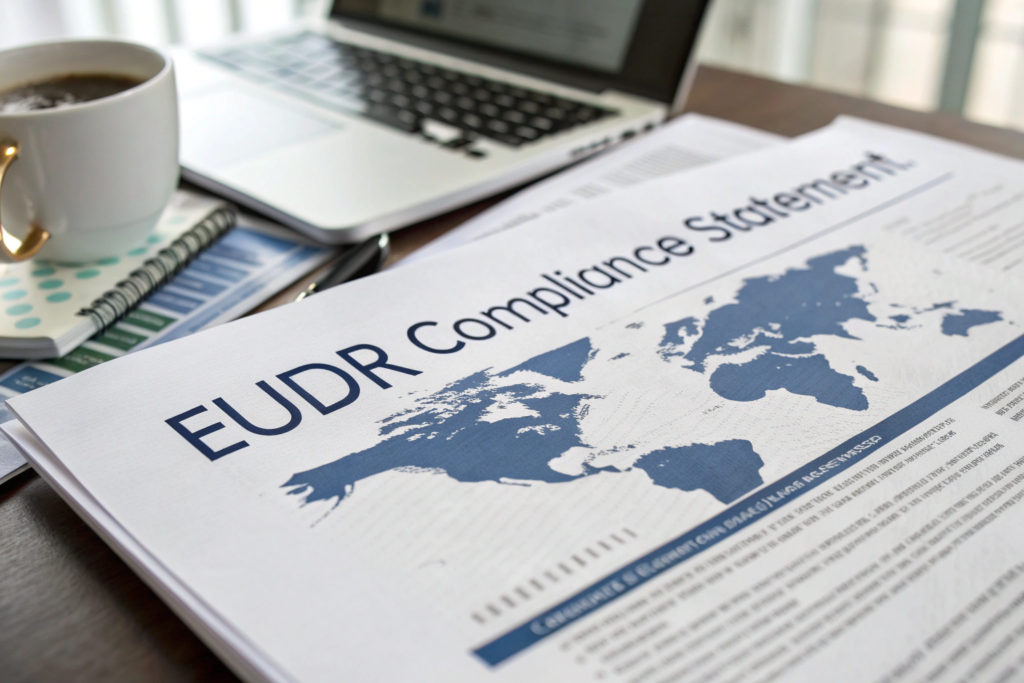
EUDR and emerging US import regulations are forcing better coffee traceability because importers must now provide geolocation data and a deforestation-free due diligence statement for every shipment, making opaque, commingled supply chains a major legal and financial risk for roasters.
This is not about being a "green" company. This is about keeping your coffee out of a bonded warehouse quarantine. If the paperwork is wrong, the coffee does not clear customs. Period.
What Geolocation Data Will US Customs Require for Coffee Shipments?
Right now, the U.S. is not as strict as the EU. But that is changing fast. The proposed FOREST Act in Congress is gaining traction. Even if it does not pass this year, the writing is on the wall. Major buyers like Starbucks and Keurig Dr Pepper are already demanding EUDR-compliant data for all their global supply chains, just to be safe.
What does this mean for you? It means you need to start asking for Polygon Maps. Not just a pin dropped in the middle of Yunnan. A polygon map is a GPS boundary drawn around the specific area where the coffee was grown. It proves the coffee did not come from land that was forested after the cutoff date (December 31, 2020).
At Shanghai Fumao, we have mapped every single one of our 10,000 acres. I have the KML files ready to send to your customs broker. It was a huge investment in time and GPS equipment. But I saw this coming five years ago. I knew that farmers who could not prove their land was "clean" would be locked out of the Western market. You want to buy from a supplier who has done this homework. If they cannot provide a polygon map by the end of 2026, they will not be able to sell to you. It is that simple. You can track the latest on US deforestation legislation through resources like the Environmental Investigation Agency.
How Does Traceability Help Roasters Avoid Greenwashing Accusations?
Your customers are skeptical. They have been lied to for years. They see a bag with a picture of a smiling farmer and a "Direct Trade" sticker, and they roll their eyes. Greenwashing is the term. It is when a company spends more on marketing their ethics than actually being ethical. It is a reputation killer. And in the age of TikTok and Reddit, a false claim gets exposed in about five minutes.
Traceability is your shield against this. When a customer asks, "How do you know this farmer was paid fairly?" you need an answer better than "We trust our importer." With our system, you can pull up the digital ledger. You can see the farmgate price we paid per kilo of cherry. You can see the premium we added for quality. You can see the date of transaction.
This level of transparency is not comfortable for everyone. It forces honesty. But for the modern roaster, it is the ultimate marketing tool. You are not just selling coffee. You are selling verified integrity. And let me tell you, that commands a higher retail price. Consumers pay extra for the truth. They just need a way to see it. Resources on ethical supply chain verification are available through the Fair Trade USA website, even if you are not certified by them, the principles apply.
How Can Blockchain and QR Codes Improve Trust in the Chinese Coffee Supply Chain?
Paper trails are good. Digital trails are better. But the problem with a digital database is that it can be changed. I could go into my Excel sheet and tweak the harvest date if I wanted to cheat you. Blockchain solves that. It creates a record that cannot be altered. It is a chain of digital "blocks" of information. Once a block is added—say, the weight ticket from the wet mill—it is locked forever.
Blockchain and QR codes improve trust in the Chinese coffee supply chain by providing an immutable, time-stamped record of each custody transfer, allowing roasters and consumers to independently verify claims about origin, processing date, and certification without relying solely on the exporter's word.
It takes the "trust me" out of the equation. It replaces it with "verify this."
Can Scanning a QR Code on a Bag Really Show Me the Exact Farm Plot?
Yes. And I do not mean a link to a generic "About Our Farm" YouTube video. I mean a link to a secure portal with the actual shipping documents and GPS data for that specific lot.
Here is how we are implementing this at BeanofCoffee. When we fill a GrainPro bag with a micro-lot from Block 7C, we generate a unique QR code. We print it on a weatherproof sticker and slap it on the bag. When that bag arrives in your roastery, you scan it with your phone. You log in with a secure code I provide. You see:
- The Polygon Map: The exact boundary of Block 7C on a satellite image.
- The Picking Record: Date and weight of cherry delivered.
- The Processing Log: Time in fermentation tank, drying bed temperatures.
- The Quality Report: Moisture reading and cupping score from our lab.
This is not science fiction. This is the reality of our export operation now. It costs me a little more per bag for the stickers and the software subscription. But it allows you, Ron, to tell your customers: "Scan this. See the dirt this came from." That is a powerful sales tool. No middleman can fake that easily. If you want to understand the underlying technology better, IBM Food Trust provides case studies on how blockchain is used in agriculture.
What Is the Cost Impact of Implementing Blockchain Traceability on a Bag of Yunnan Coffee?
You are a business owner. I am a business owner. We both know the question that follows "Is this cool?" is "How much does it cost?"
The cost is real, but it is also relative. For a high-volume, low-grade commercial lot where we are fighting over pennies per pound, full blockchain traceability down to the block level is overkill. The margin is not there to support the admin work. For those lots, we stick to traditional document traceability—which is still solid and auditable.
But for our specialty-grade Arabica and micro-lots? The ones selling for $3.50+ per pound FOB? The cost is negligible in the grand scheme. The QR stickers, the software platform, and the extra time for data entry add maybe 2 to 4 cents per pound to the cost of the green bean. That is it. Two to four cents.
What does that buy you? It buys you a 15 to 20 cent premium on the retail shelf. It buys you customer loyalty. It buys you protection from a PR disaster. The return on investment is massive. I eat most of that cost on my end because it makes my coffee more valuable to you. It is not a cost. It is a marketing investment in our partnership. I want your business next year. This is how I earn it.
How Do I Verify a Chinese Supplier's Traceability Claims Before Signing a Contract?
This is the practical part. The part that saves you from getting burned. A supplier can have a beautiful website and a PDF full of promises. You need to know how to test those promises before you wire the deposit. The pain here is discovering the lie too late. When the container is already on the water and the "micro-lot" is just a generic blend.
To verify a Chinese supplier's traceability claims, request a digital copy of the lot's polygon map, ask for a video walkthrough of the specific drying beds or warehouse section holding your contracted lot, and require that the pre-shipment sample bag be sealed with a unique, numbered tamper-evident tag that matches the final shipping documents.
If they balk at any of these requests, you have your answer. A transparent supplier will say "Yes, give me five minutes to get the file."
What Specific Documents Prove a Coffee's Journey From Yunnan Farm to Port?
This is the checklist I would demand if I were in your shoes. Do not just take a Certificate of Origin. That only proves it left China. You want the internal documents.
- Internal Receival Ticket: This is the slip from when the cherry or parchment arrived at the dry mill. It should have a date, a weight, and a grower ID or block ID.
- Dry Mill Processing Log: This shows the date the coffee was hulled and graded. This is crucial for knowing the true age of the coffee. Sometimes coffee sits as parchment for months before being milled. This log reveals that gap.
- Warehouse Receipt: A document showing the specific lot number is stored in a specific location.
- Stuffing Report: A document or photo showing the container number and the bag numbers that went inside.
If the supplier cannot produce at least the first two documents, the coffee is coming from a broker's anonymous pile. That might be okay if you are buying cheap robusta for instant coffee. It is not okay if you are paying a premium for Yunnan Arabica. At Shanghai Fumao, we keep these records for five years. It is a pain to organize them. But when an auditor or a skeptical buyer asks, we have them ready.
How Can Third-Party Audits Like SGS Help Confirm Traceability Integrity?
Sometimes you need an independent set of eyes. You cannot fly to Baoshan every month. That is where a third-party audit comes in. Companies like SGS, Bureau Veritas, or Control Union will go to the warehouse for you.
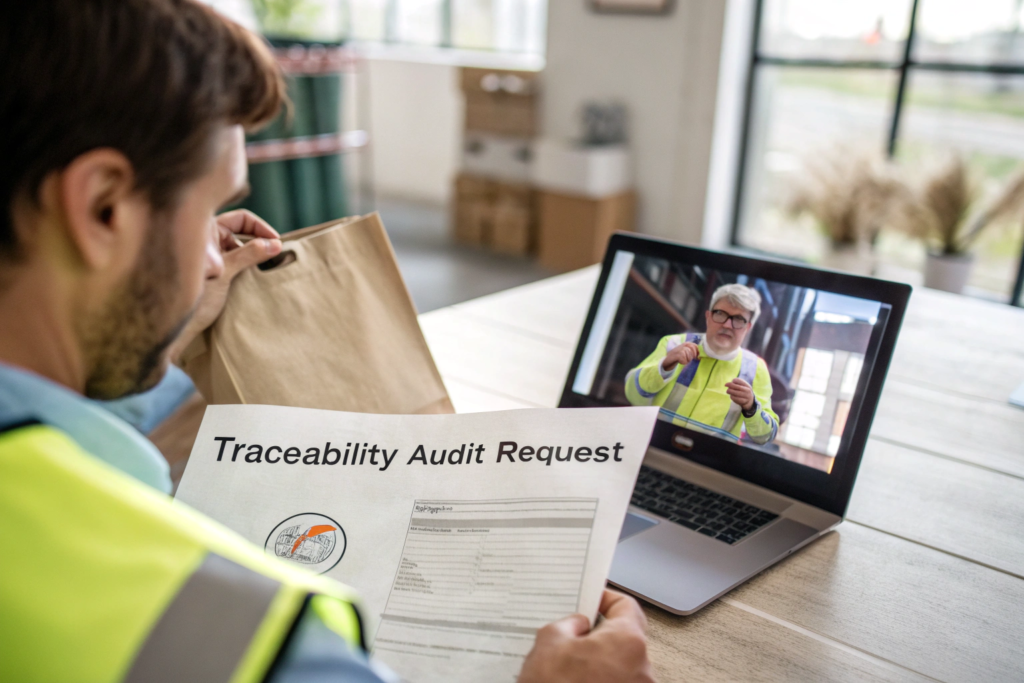
You can pay for a specific service called a Traceability Audit or Chain of Custody Verification. It costs a few hundred dollars. The auditor shows up unannounced. They pick a bag at random from your contracted lot. They ask to see the paper trail all the way back to the farm gate. They check the mass balance. Does the amount of coffee in the warehouse match the amount of cherry that was supposedly harvested? If the numbers do not add up, the audit fails.
I encourage my new clients to do this on their first container. I will even help coordinate the SGS visit. Why? Because when the SGS auditor stamps the report and says "Traceability Verified," that is worth more than any promise I can make. It is a third-party endorsement. You can find a list of accredited inspection agencies through the Global Food Safety Initiative directory.
Conclusion
Traceability is no longer a bonus feature for coffee roasters. It is the operating system. In 2026, you cannot compete on price alone. The big guys will always beat you on volume discount. You compete on story, on quality assurance, and on legal compliance. All three of those pillars rest on the foundation of traceability.
Without it, your story is just a guess. Your quality assurance is blind faith. And your legal compliance is a ticking time bomb. With it, you have a narrative that connects a coffee drinker in Chicago to a hillside in Baoshan. You have the data to prove that the coffee in the bag is exactly what you paid for. And you have the paperwork to keep the customs officer from ruining your week.
At Shanghai Fumao, we have spent the last five years building a traceability system that works for you, the buyer. It is not just about being able to point to a mountain. It is about being able to prove, with data, that the coffee you are roasting is safe, authentic, and worth every penny.
If you are ready to source coffee that comes with a story you can actually verify, let's talk specifics. We can share a sample lot report so you can see exactly what data comes with our beans.
Reach out to Cathy Cai. She manages the documentation side of our exports. She can walk you through a sample traceability report. mail Cathy at: cathy@beanofcoffee.com