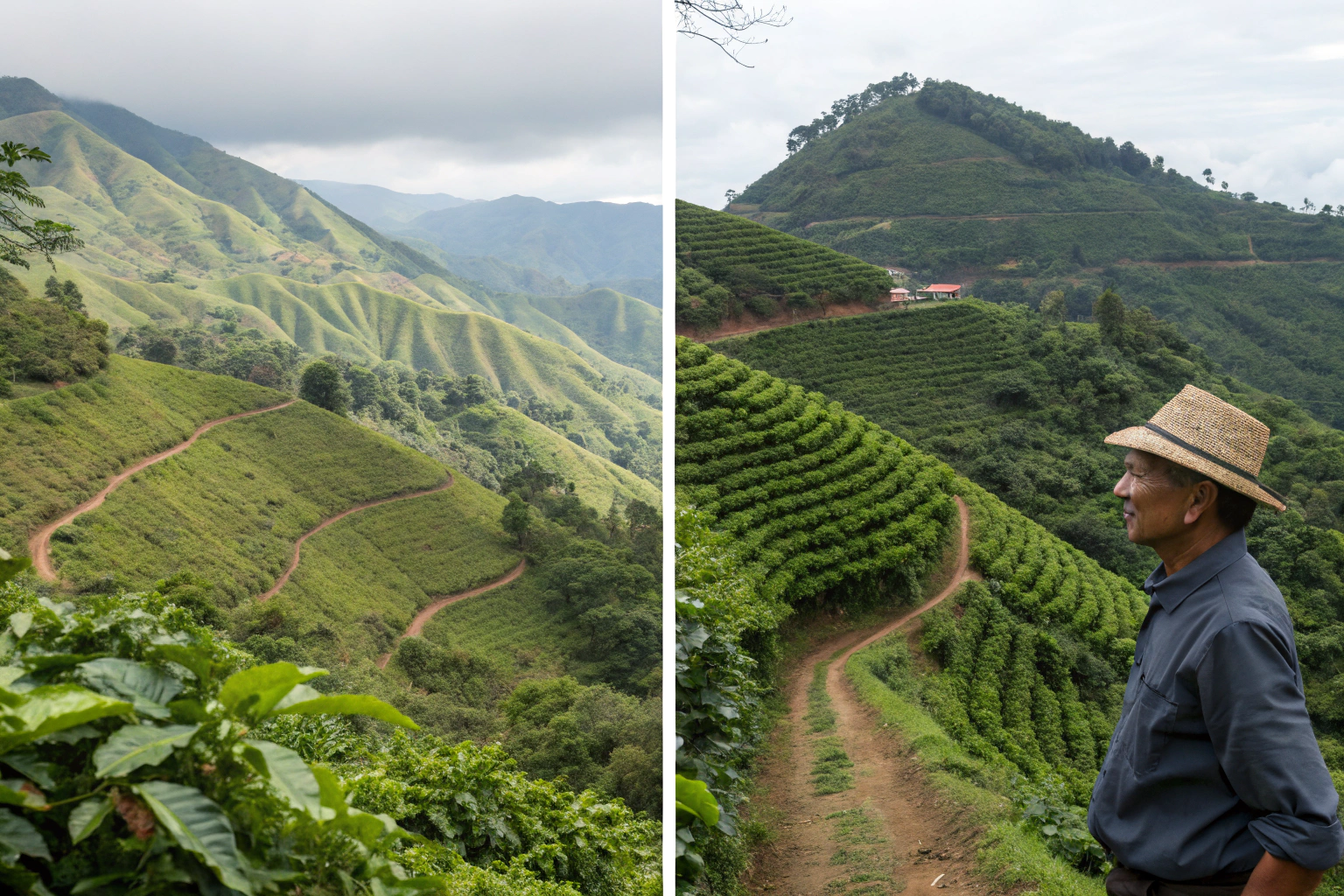
"Your price is very competitive. Almost... too competitive. Why is your Yunnan coffee so much cheaper than the Colombian beans I usually buy?"
I've heard this question countless times from savvy buyers like Ron. And I get it. In the world of coffee, and frankly in any business, a significantly lower price can sometimes feel like a red flag. It triggers a fear: does "cheaper" mean lower quality? Is there a hidden catch? As a proud grower from Yunnan, this question used to frustrate me. But now, I welcome it. It gives me the chance to explain the complex and fascinating story behind the price difference—a story that has nothing to do with quality and everything to do with history, economics, and infrastructure.
Yunnan coffee is often cheaper than Colombian coffee not because of inferior quality, but due to a combination of lower labor costs, a less established global brand reputation which reduces the "origin premium," and more direct, modern supply chain logistics. While Colombia has a century-long legacy and brand recognition that commands a higher price, Yunnan offers a compelling value proposition: specialty-grade quality without the historical price tag. For a price-conscious buyer, understanding this difference is the key to unlocking one of the best value opportunities in the global coffee market today.
This isn't about one origin being "better" than the other. I have immense respect for the farmers of Colombia. This is about understanding the different market dynamics that shape the final price you pay. At Shanghai Fumao, we don't compete by cutting corners on quality. We compete because we operate within a different economic reality. Let's break down the real factors that contribute to this price difference.
How Does "Origin Brand" Affect Price?
Imagine two t-shirts. They are made from the exact same high-quality cotton, stitched in the same factory, with the same level of craftsmanship. One has a world-famous designer logo on it; the other does not. Which one costs more? The answer is obvious. The same principle applies, to a large extent, to coffee. This is the power of a brand.
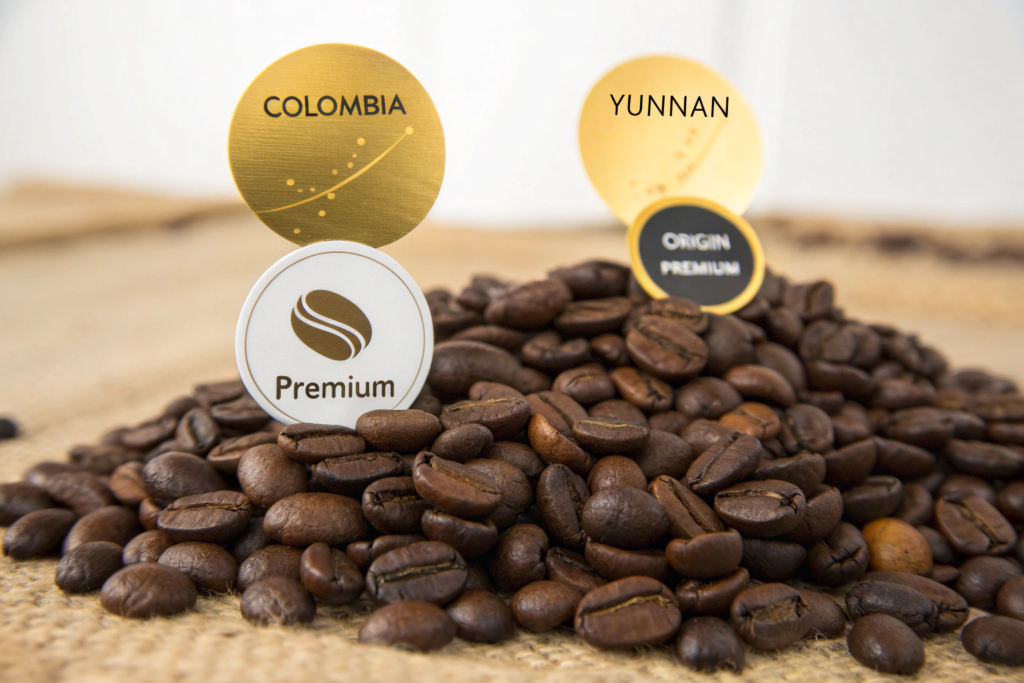
Colombia has spent over a century building one of the most powerful origin brands in the world. Through brilliant marketing, like the iconic Juan Valdez campaign, and consistent quality, "Colombian Coffee" has become synonymous with "good coffee" in the minds of consumers and buyers globally. This powerful brand recognition creates what economists call an "origin premium." Buyers are willing to pay more simply for the confidence and marketability that the Colombian name brings.
Yunnan, by contrast, is a relative newcomer to the global specialty coffee scene. While we've been growing coffee for decades, we are only now beginning to build our international reputation. We don't yet have that same level of automatic brand recognition. Therefore, we can't command the same origin premium. We have to prove our quality with every single lot and offer a more competitive price to get our foot in the door. For a buyer, this is a huge opportunity: you get the quality without paying for the famous logo.
What Is the Juan Valdez Effect?
The fictional character Juan Valdez, created by the National Federation of Coffee Growers of Colombia (FNC), is one of the most successful marketing campaigns in agricultural history. He put a human face on Colombian coffee, associating it with hardworking farmers and mountain-grown quality. This campaign created immense brand equity, allowing the FNC to differentiate Colombian coffee from all others and maintain a higher price floor. It's a powerful lesson in the economics of storytelling.
How Is Yunnan Building Its Brand?
We are in the process of writing our own story. Instead of a single mascot, our brand is being built on a platform of transparency, technology, and unique flavor profiles. We are focusing on farm-level traceability, innovative processing methods, and the distinct terroir of regions like Baoshan. We are building our reputation not on a historical legacy, but on the tangible quality and value we deliver to partners like you. We are letting the coffee, and the efficiency of our operation, speak for itself. It's a different strategy, one that relies on proving our worth in the modern supply chain.
What Is the Impact of Labor and Production Costs?
Beyond branding, the fundamental economics of production play a huge role in the final price of coffee. This is where the differences between the economic structures of Colombia and China become very apparent. While both are developing nations in many respects, their labor markets and infrastructure are quite different, which directly impacts the cost of producing and exporting coffee.
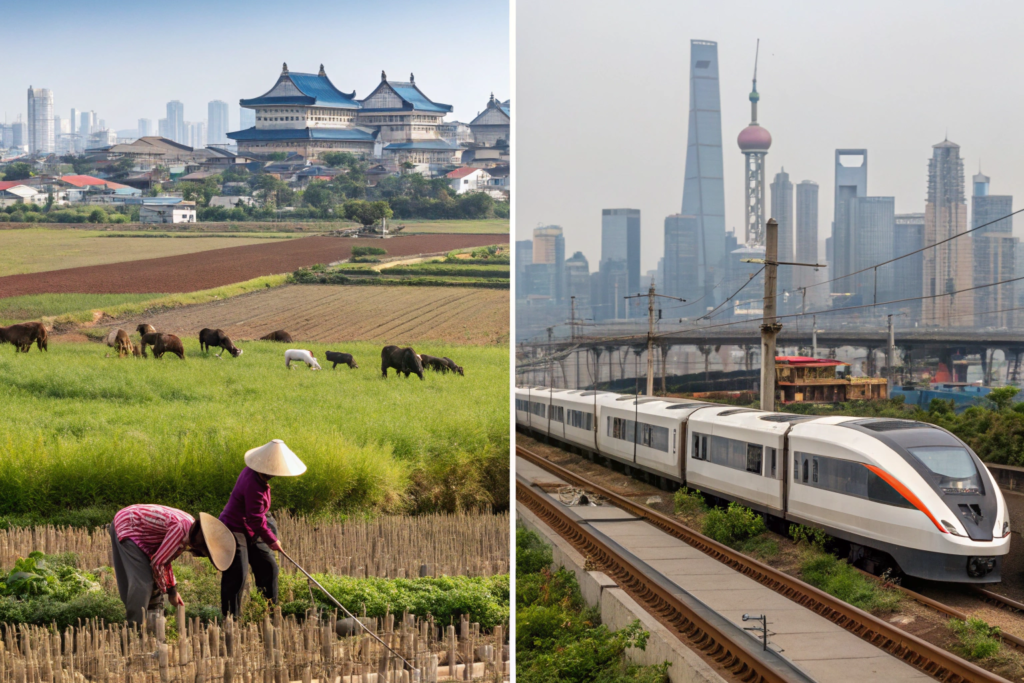
A significant factor is the relative cost of labor. While wages in China have been rising, the cost of agricultural labor in a region like Yunnan is still, on average, more competitive than in established coffee-growing regions of Colombia. This isn't about exploitation; it's a reflection of broader national economic factors, including the cost of living and the availability of labor in rural areas. This lower labor cost translates directly into a lower production cost for our coffee.
Furthermore, China's massive investment in infrastructure gives us a logistical advantage. We have access to a network of modern highways, high-speed rail, and some of the world's most efficient ports. This streamlined infrastructure reduces the time, cost, and complexity of getting our coffee from our farms in the mountains of Yunnan to a container ship on the coast.
How Do Labor Costs Differ?
Calculating a direct comparison is complex, but generally, the overall cost of labor as a percentage of the total cost of coffee production tends to be more favorable in Yunnan. This is due to a variety of macroeconomic factors that are far beyond the farm gate. For a buyer, this economic reality simply means that we can produce coffee of a similar quality at a lower base cost, a saving we can pass on to you.
How Does Infrastructure Create Savings?
Think about the journey of a coffee bean. It has to be transported from a remote mountain farm to a mill, then to a warehouse, and finally to a major port. In many traditional coffee origins, this journey involves navigating difficult roads and less efficient logistics networks, adding time and cost at every step. In China, we can leverage a world-class infrastructure network. This efficiency reduces our "cost to port," which is a significant part of the final FOB price we offer to our clients.
Does Government Support Play a Role?
The role of government in agriculture can be a powerful, though often invisible, factor in pricing. The level and type of support that a government provides to its farmers can significantly influence production costs and the industry's overall competitiveness on the global stage.
In China, there has been a strong and concerted effort from both local and national governments to develop the coffee industry in Yunnan as a key agricultural sector. This support comes in many forms. It includes subsidies for planting new, higher-quality coffee varietals, investment in agricultural research and development, and the funding of training programs to teach farmers modern, sustainable farming techniques. This government backing helps to de-risk farming and lowers the barrier to entry for adopting new technologies and better practices.
This is different from the role of the FNC in Colombia, which operates more as a massive, influential cooperative that provides services and price stability but is not a direct government body. The Chinese model of direct government support for infrastructure and agricultural modernization helps to reduce our underlying operational costs, which in turn allows us to offer more competitive pricing.
What Kind of Subsidies Are Available?
Government programs have provided financial assistance to farmers at Shanghai Fumao and across Yunnan to replace older, lower-quality coffee trees with improved Arabica varietals. There are also programs that help offset the cost of purchasing more efficient processing equipment or implementing sustainable water management systems. These initiatives directly lower our capital expenditures and improve our efficiency.
How Does Research and Development Help?
State-funded agricultural universities and research institutes in Yunnan work closely with farmers. They conduct research on soil health, pest control, and developing new coffee varietals that are both high-quality and well-suited to our local climate. This access to free or low-cost R&D gives us a competitive advantage and helps us continuously improve our crop without massive private investment in research.
Conclusion
So, when you see that a high-quality Yunnan coffee is priced more competitively than its Colombian counterpart, you now know the real reasons why. It is not a reflection of inferior quality. It is the result of a different economic landscape: a less-established brand that doesn't yet carry a heavy price premium, a more favorable cost structure for labor and logistics, and strong government support that fosters efficiency and innovation.
Think of it this way: you have the opportunity to invest in a world-class product before it becomes a world-famous brand. You are getting in on the ground floor of one of the most exciting new chapters in the world of coffee. The quality in the cup is comparable, but the value proposition is, for now, unmatched.
We are proud of the coffee we grow and the value we can offer. We invite you to cup our coffee side-by-side with any other origin. We are confident that the quality will speak for itself, and the value will be self-evident. To explore this opportunity further, please reach out to our head of client relations, Cathy Cai, at cathy@beanofcoffee.com. Let us show you how our competitive advantage can become yours.