I was talking to a roaster in Austin, Texas. It was July. His biggest problem was not sourcing. It was margin. His cold brew program was exploding, but the cost of his base coffee—a clean Colombian—was eating him alive. "I need something that gives me that heavy body and chocolate sweetness," he said, "but at a price that makes sense when I am brewing hundreds of gallons a week." I told him to cup our Grade 1 Yunnan washed Arabica. He did. The next day, he called me back. "This is it," he said. "The body is insane. The sweetness is there. And the price... this changes my whole cold brew P&L."
American buyers should consider Chinese coffee for cold brew blends because high-altitude Yunnan Arabica naturally possesses the exact sensory attributes prized in cold extraction—a heavy, syrupy body, low perceived acidity, and dominant notes of dark chocolate and brown sugar—while offering a stable, competitive price point that significantly improves the profit margins of high-volume cold brew programs.
Cold brew is a different beast than hot coffee. The extraction physics are different. The flavor priorities are different. And Yunnan coffee, almost by accident of its terroir, is perfectly engineered for it. Let me explain the science and the economics that make this origin a strategic weapon for your cold brew business.
What Sensory Attributes Make Yunnan Arabica Ideal for Cold Extraction?
Cold brew is an unforgiving extraction method. It amplifies body and sweetness. It mutes acidity and delicate florals. If you use a bright, high-acidity Kenyan coffee for cold brew, you end up with a sour, unbalanced mess. You need a coffee that is built for the cold.
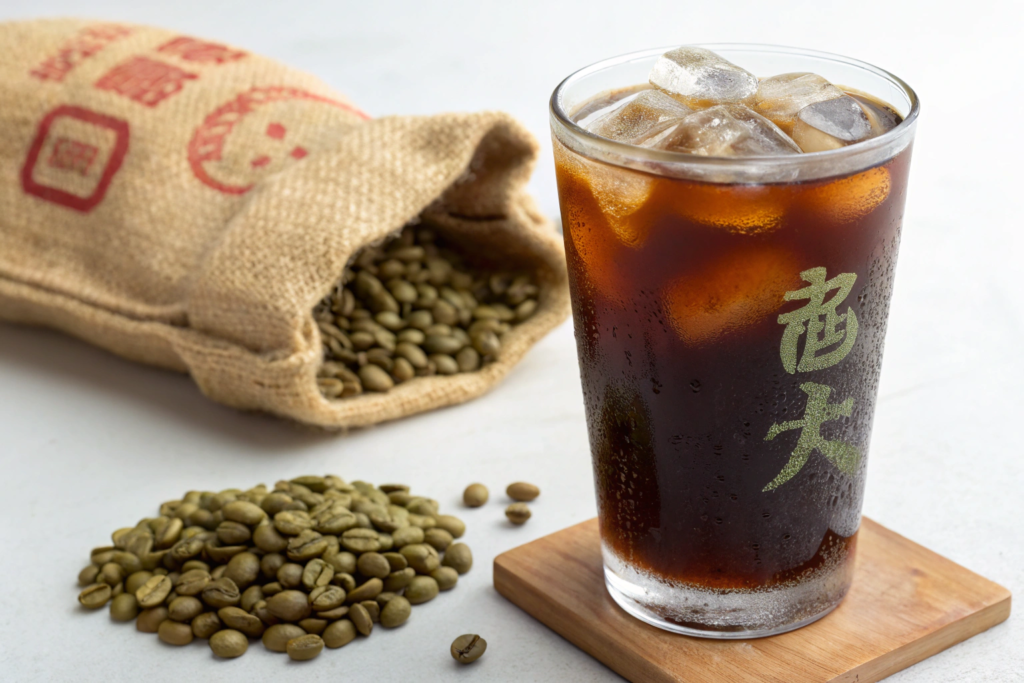
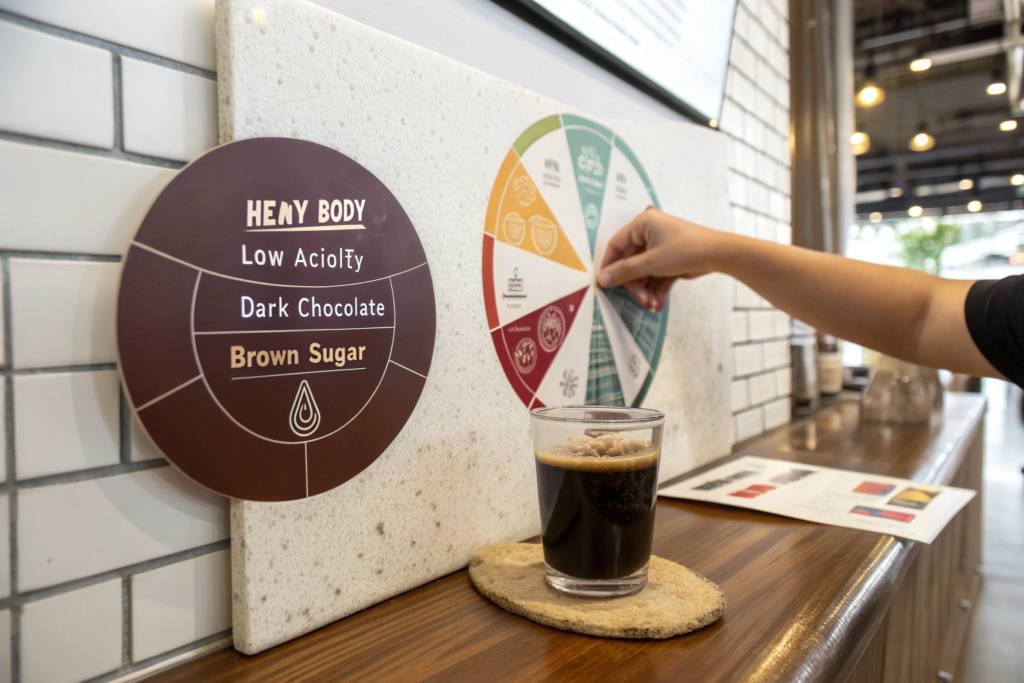
The sensory attributes that make Yunnan Arabica ideal for cold extraction are its inherently heavy, syrupy body derived from high-altitude bean density, its naturally low-to-medium malic and citric acidity which prevents sourness in the cold cup, and its dominant flavor matrix of dark chocolate, toasted nuts, and caramelized brown sugar which remains bold and coherent even at cold temperatures.
This is not a coffee that whispers. It is a coffee that performs. It has the structural integrity to stand up to 18-hour immersions.
Why Does Low Acuity Matter More in Cold Brew Than Hot Coffee?
This is the science of temperature and flavor perception. Our taste buds are less sensitive to sweetness and acidity at lower temperatures. A coffee that tastes perfectly balanced and bright when hot can taste flat and sour when cold.
- The Acidity Problem: The sharp, pleasant citric acidity of a Kenyan or a high-altitude Colombian becomes unpleasantly sour and harsh in cold brew. The cold masks the sweetness that normally balances that acidity.
- The Yunnan Advantage: Yunnan Arabica, particularly our washed Catimor from 1,400-1,600 meters, has a naturally softer, more integrated acidity. It is more malic (apple-like) than citric (lemon-like). This gentler acidity recedes into the background in cold brew, allowing the body and chocolate notes to take center stage. You do not get that sour "bite" at the finish.
This is why Yunnan cold brew tastes smooth, round, and balanced straight from the fridge. It does not need milk or sugar to tame it. It is naturally harmonious. For a roaster selling ready-to-drink (RTD) cold brew, this is a massive quality advantage. At Shanghai Fumao, we specifically cup our lots for cold brew performance. We look for the smoothest, lowest-acidity profiles.
How Does the Heavy Body of Yunnan Beans Translate to Cold Brew Mouthfeel?
Body is the soul of cold brew. That thick, almost creamy texture is what consumers crave. It is what makes cold brew feel like a premium, indulgent beverage. Thin, watery cold brew feels cheap.
- The Source of Body: Body in coffee comes from dissolved solids—complex carbohydrates, lipids, and melanoidins. The density of the bean is a major factor. As we have discussed, high-altitude Yunnan beans are dense. They are packed with these body-building compounds.
- Cold Extraction Physics: The long, slow immersion of cold brew is very efficient at extracting these heavy, soluble compounds. It is less efficient at extracting the volatile aromatic acids.
- The Yunnan Result: When you steep a dense Yunnan Arabica for 18 hours, you get a cup with a remarkably heavy, syrupy, and coating mouthfeel. It feels substantial. It feels like a treat.
This heavy body also provides a fantastic canvas for flavoring. If you are making a vanilla or chocolate-infused cold brew, the Yunnan base provides the structural "weight" that carries the added flavors. A thin-bodied coffee base makes flavored cold brews taste artificial and watery.
I have had clients tell me that switching to a Yunnan base allowed them to reduce the amount of chicory or other body-enhancing additives in their blend. The coffee itself provided all the texture they needed. That is a cost saving and a cleaner label.
How Does the Price Stability of Chinese Coffee Benefit High-Volume Cold Brew Programs?
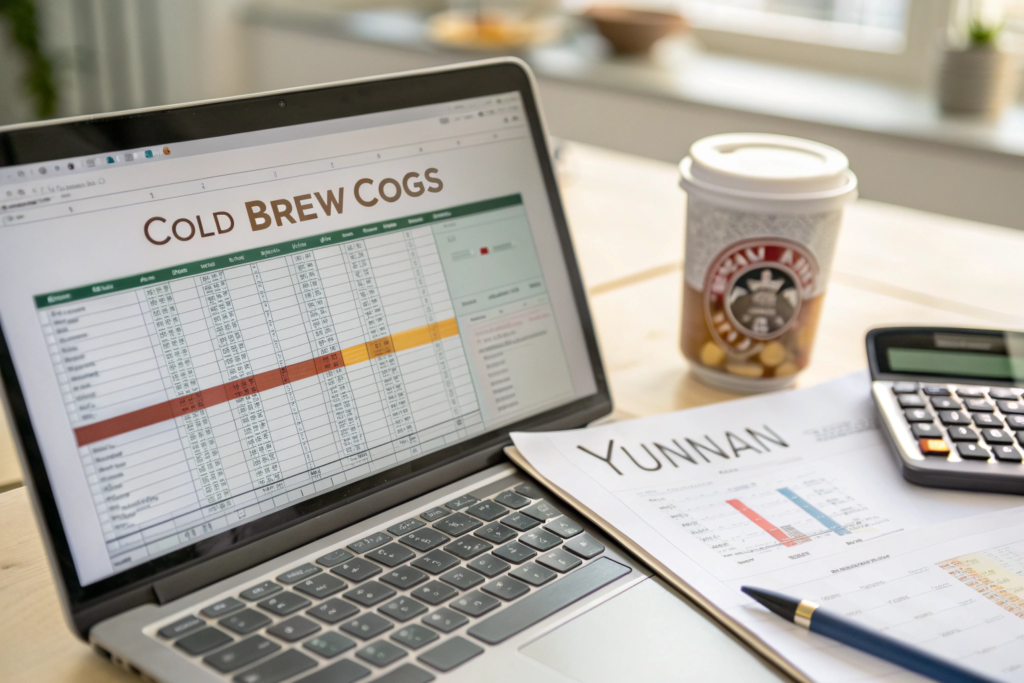
Cold brew is a volume game. You are using a lot of coffee. A difference of $0.50 per pound on your green coffee cost translates into tens of thousands of dollars on your annual P&L. This is where the economic argument for Yunnan coffee becomes undeniable.
The price stability and competitive cost structure of Chinese coffee benefit high-volume cold brew programs by providing a reliable, lower-cost base component compared to traditional "cold brew workhorse" origins like Colombia or Brazil, allowing roasters to protect their margins against volatile C-market swings and invest more in marketing and packaging.
You are running a business, Ron. You care about price. Cold brew is the application where the value proposition of Yunnan coffee shines brightest.
How Does Yunnan's FOB Price Compare to a Comparable Colombian for Cold Brew?
Let's look at a realistic market comparison. You are looking for a clean, washed Arabica with heavy body and chocolate notes for your cold brew base.
| Origin & Grade | Cup Profile (Relevant to Cold Brew) | Typical FOB Price/LB (Container) | Price Delta |
|---|---|---|---|
| Colombia Excelso (Huila) | Medium Body, Citric Acidity, Caramel | $3.40 - $3.90 | Baseline |
| Brazil Cerrado (Pulped Natural) | Medium Body, Low Acidity, Nutty | $2.80 - $3.20 | -$0.60 |
| Yunnan Grade 1 Washed (Baoshan) | Heavy Body, Low Acidity, Dark Chocolate | $2.60 - $3.00 | -$0.80 to -$0.90 |
The Yunnan coffee is $0.80 to $0.90 per pound cheaper than the comparable Colombian coffee. And it offers a heavier body than the Brazilian option, often at a similar or slightly lower price point.
The Annual Impact:
Let's say your cold brew program uses 10,000 pounds of green coffee per year.
- Savings vs. Colombia: 10,000 lbs x $0.85 = $8,500 in annual savings.
- Savings for a Larger Roaster (50,000 lbs): 50,000 lbs x $0.85 = $42,500 in annual savings.
That is real money. That is a new piece of equipment. That is a marketing campaign. That is pure profit retained in your business. And the quality of the cold brew improves due to the heavier body. It is a win-win.
At Shanghai Fumao, our direct-from-estate model and efficient, high-yield farming are what enable this value proposition. We are not cheap. We are high-value. For more on coffee market pricing, the International Coffee Organization publishes monthly composite price reports.
Why Is a Stable, Contracted Price Crucial for RTD Cold Brew Margins?
Ready-to-Drink (RTD) cold brew is a different business model than selling whole bean coffee. You have co-packers, bottle costs, distribution margins, and retail slotting fees. Your final retail price is often fixed for the year by your contracts with grocery chains.
You cannot afford volatility in your primary raw material cost. If the C-market spikes by 30% due to a drought in Brazil, your carefully calculated RTD margin evaporates overnight.
The Yunnan Stability Advantage:
As we have discussed, our pricing is less correlated to the C-market. It is based on our internal cost of production plus a transparent margin. We offer fixed-price, quarterly or annual contracts.
This means you can lock in your green coffee cost for your RTD program for the entire year. You can build your financial model with confidence. You can quote a price to a grocery buyer without crossing your fingers and hoping the coffee market does not go crazy.
This stability is a strategic asset. It de-risks your business. It allows you to focus on building your brand, not hedging commodities. For an RTD cold brew producer, a stable, predictable supply chain is just as valuable as the quality of the coffee itself.
What Roast Levels and Blend Ratios Work Best for Yunnan Cold Brew?
You have the green coffee. Now you need to unlock its potential in the roaster and in the blend. Yunnan Arabica is incredibly versatile, but there are some guidelines that will help you get the best cold brew results quickly.
For cold brew applications, Yunnan Arabica performs exceptionally well at medium-dark to dark roast levels (Full City to Vienna), where the roast development maximizes the bean's inherent chocolate and brown sugar notes while minimizing any remaining acidity, and it can be used effectively as a 100% single-origin cold brew or as the dominant base component (60-80%) in a blend with brighter or fruitier origins.
This is not a coffee you need to hide. It is a coffee you can feature.
Should I Use a Washed or Natural Yunnan for Different Cold Brew Profiles?
This is where you can create a product line. Our washed and natural process Yunnan coffees produce distinctly different cold brew experiences.
| Process | Roast Level (Recommended) | Cold Brew Flavor Profile | Best Application |
|---|---|---|---|
| Washed Yunnan | Full City / Medium-Dark | Clean, Bold, Dark Chocolate, Toasted Almond, Heavy Body. Very smooth. | Classic Black Cold Brew, RTD Base. The purest expression. |
| Natural Yunnan | City+ / Medium (to preserve fruit) | Fermented Berry, Red Wine, Dark Chocolate, Jammy Body. Complex and fruity. | Premium Single-Origin Cold Brew, Limited Edition. A unique, standout product. |
| Blend (70% Washed / 30% Natural) | Full City | Chocolate base with a hint of berry complexity. The best of both worlds. | Signature House Cold Brew. Complex but approachable. |
The washed Yunnan is your workhorse. It delivers a clean, crowd-pleasing, classic cold brew profile. It is incredibly consistent and forgiving in the roaster.
The natural Yunnan is your secret weapon. It allows you to offer a "Single-Origin Natural Cold Brew" with a flavor story that is completely unique. It commands a premium price.
At Shanghai Fumao, we can supply both components. We can even pre-blend them for you at origin, so you receive a ready-to-roast custom cold brew blend.
How Does Yunnan Pair with African Coffees in a Cold Brew Blend?
This is where the magic of blending happens. Yunnan provides the bass and the body. African coffees (like a natural Ethiopian or a washed Kenyan) provide the treble and the top notes.
The "Yunnan + Ethiopia" Cold Brew Blend:
- Base (70-80%): Washed Yunnan Arabica, roasted to Full City. Provides: Heavy body, dark chocolate sweetness, smooth finish.
- Highlight (20-30%): Natural Ethiopian Sidamo, roasted to City+. Provides: Blueberry, strawberry, floral top notes.
The Result: You get a cold brew with the drinkability and heavy mouthfeel of the Yunnan base, but with a beautiful, complex fruity aroma and a hint of berry on the finish. It is a cold brew that is both satisfying and intriguing.
This is a far superior strategy than using a single-origin Colombian as your base. The Yunnan base provides more body for the African coffee to "ride" on. The blend tastes more integrated and complete. And it is significantly more cost-effective.
I have helped several clients develop this exact blend profile. It has become their best-selling cold brew. The combination of Asian body and African fruit is a winning formula.
Conclusion
American buyers should consider Chinese coffee for cold brew blends for a combination of compelling sensory and economic reasons. The terroir of high-altitude Yunnan naturally produces a coffee with the heavy body, low acidity, and deep chocolate sweetness that cold extraction craves. It is a coffee that performs exceptionally well in the glass.
Simultaneously, the efficient estate production model and the stable, relationship-based pricing of Yunnan coffee offer a significant cost advantage and supply chain predictability that protects the margins of high-volume cold brew programs. In a competitive market, this combination of quality and value is a powerful strategic asset.
Whether you are building a classic RTD black cold brew, a complex signature blend, or a premium single-origin offering, Yunnan Arabica deserves a place in your cold brew portfolio. It is the workhorse origin that your cold brew program has been waiting for.
If you want to cup our washed and natural Yunnan lots specifically for cold brew evaluation, we can send you samples roasted to a Full City profile.
Email Cathy Cai. Tell her you are developing a cold brew program and want to taste the "Cold Brew Base" samples. Contact Cathy at: cathy@beanofcoffee.com