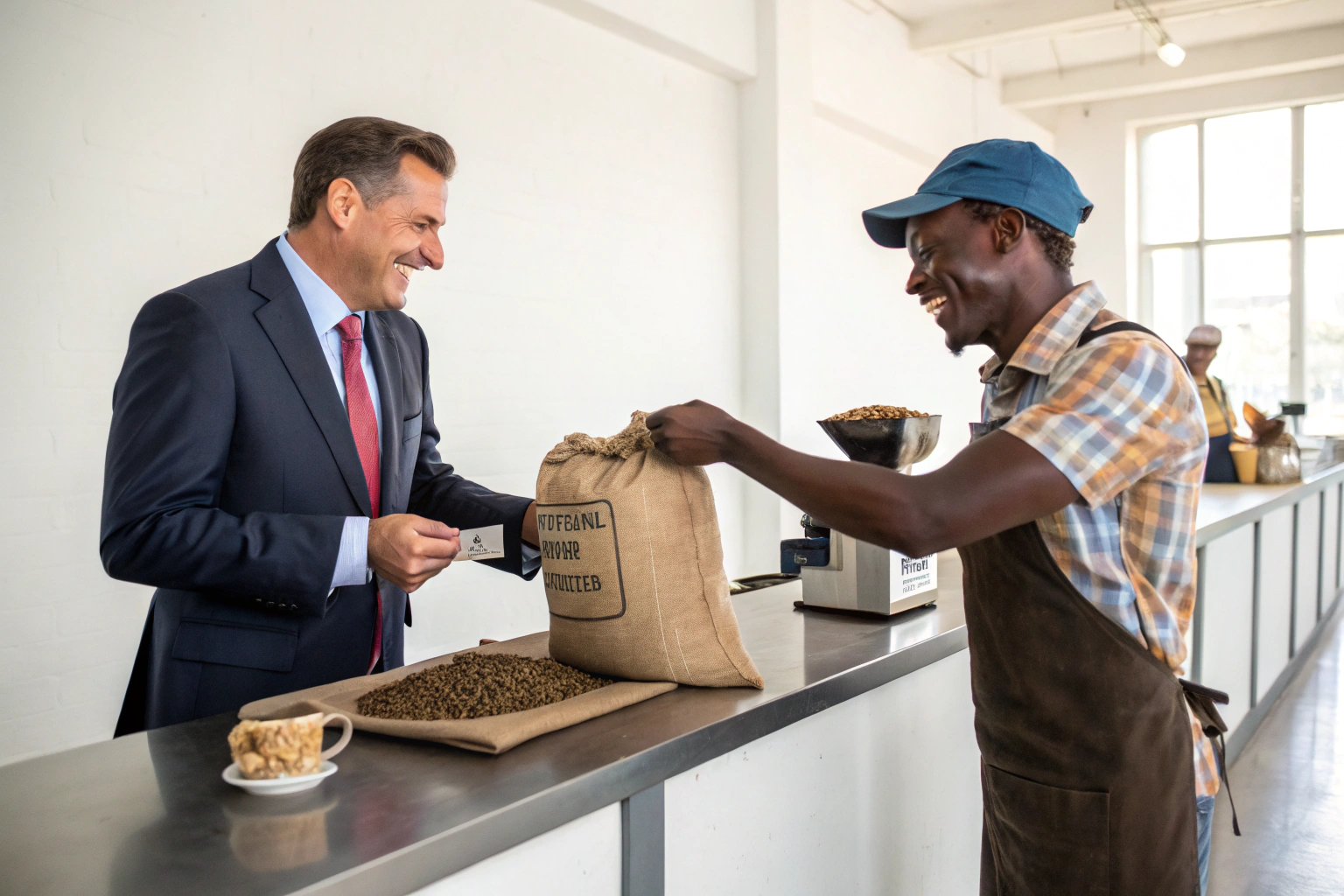
You are running a coffee business. You know the drill. You call your local importer. You ask for a price on a washed Central American. They quote you a number. You pay it. You move on. It is easy. It is familiar. But lately, something feels off. The price keeps creeping up. The quality is fine, just fine. Nothing special. Your margin is shrinking. And you have this nagging feeling that you are just another account number in a database. You are not building a brand. You are just buying a commodity from a middleman. You are stuck. And you are leaving money and a real story on the table.
Here is the simple truth. When you buy from a local importer, you are paying for their warehouse, their sales team, their marketing department, and their profit margin. All of that is built into the price per pound you pay. When you buy direct from Shanghai Fumao, you cut out every single one of those layers. You are buying from the farmer, the miller, and the exporter—all in one entity. That means your landed cost drops significantly. We are not a nameless trading desk. We own over 10,000 acres in Baoshan, Yunnan. We control the seedlings, the harvesting, the processing, and the shipping. There is no hidden middleman. There is just us and you. That vertical integration translates into a price advantage and a quality consistency that an importer juggling fifty different origins cannot match.
But it is more than money. It is about having a direct line to the source. When you have a question about a lot, you don't send an email into a corporate abyss. You talk to us. You get an answer from the people who actually grew the coffee. You can request a specific screen size, a specific fermentation profile, a custom packaging format. Try asking a local importer to do that. They will laugh, or they will charge you a fortune. We can do it because the coffee is sitting in our warehouse, not a third-party logistics center. You are not a client. You are a partner. And we want to build a supply chain that works for your specific business model, whether you are a small five-pallet roaster or a large container buyer. Let's break down exactly why this direct connection changes everything.
How Does Buying Direct Reduce My True Landed Cost?
Let's talk real numbers. The local importer gives you a "delivered price." It sounds simple. But inside that number is a stack of markups you never see. The FOB price from the origin was one number. The importer adds their margin—maybe 15% to 25%. They add a logistics coordination fee. They add a warehousing fee. They add a financing charge because they floated the money to buy the container. Then they sell it to you. Each layer adds cents per pound. Cents that compound into thousands of dollars on a container. Cents that you could be keeping.
When you buy direct from us, the structure is flat. You negotiate the price with the source. That price includes the farm cost, the milling, the export documentation, the ocean freight if you choose CIF, and even the destination customs and trucking if you choose DDP. There is exactly one margin in the chain: ours. And because we are the farm, our margin is the farm's margin. We are not paying a farmer a low price and then flipping it for a profit. We are the farmer. We profit when the farm profits. This alignment means we can offer a better price for the same cup score. Or a much better cup score for the same price you are paying now. The math is simple. Fewer hands in the cookie jar means more cookies for you. An 83-point Yunnan Arabica direct from us often lands on your dock at a price comparable to a generic 80-point commercial blend from an importer. That is a three-point quality jump for free. The International Trade Centre provides excellent resources on direct sourcing cost models. The data consistently shows that shortening the chain improves the producer's share and the buyer's margin.
What Hidden Fees Do Importers Build Into Their Bag Price?
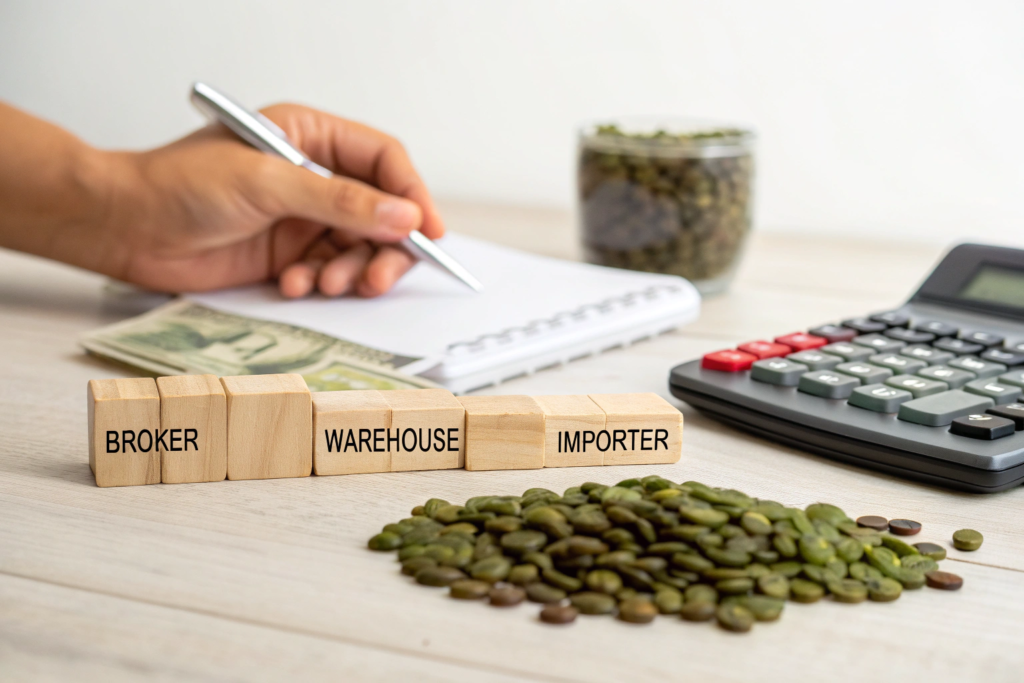
Local importers are businesses. They need to cover overhead. But those overheads are often buried in the price per pound in ways that are not transparent. They have a sales team to pay. They have a cupping lab to maintain. They have a massive warehouse with climate control. They have marketing brochures. They sponsor barista competitions. All of that is paid for by a margin on your coffee. You are subsidizing their entire operation, even the parts you never use.
Then there are the specific line-item surprises. Break pallet fees. Small lot surcharges. "Fuel surcharges" on their local delivery truck. You want a sample? There might be a fee. You want to delay shipping by a week? Storage fees kick in. These fees are small individually, but they add up and make it impossible to know your true cost ahead of time. With our direct model, the price we quote is the price you pay. If we agree on DDP terms, it includes every single cost to your door. No surprises. No back-end invoices. You know your landed cost to the penny. This transparency lets you price your roasted coffee with confidence and protect your margin from day one. You are in control of your financial model, not the importer.
How Does Farm Ownership Prevent Price Volatility for My Annual Contract?
Importers are subject to the market. They buy from many farms, often on a spot basis. When the C-market spikes, their FOB cost from origin spikes. They pass that spike on to you. Your contract might be "subject to market fluctuation," or it might just have a steep price increase at renewal. You have no control. You are a passenger on a volatile ride.
Our farm ownership changes the game. We know our production cost. It is relatively stable, year to year. Labor costs, fertilizer, logistics—these move a bit, but not violently like the commodity futures market. Because we control the entire chain, we can offer fixed-price annual contracts. We can lock in a price for you for twelve months, regardless of what the C-market does. This is a massive competitive advantage for you. You can set your wholesale roasted coffee pricing for the year and not worry about a sudden supply cost spike wiping out your profit. This stability is built on the fact that we are not speculating on coffee. We are growing it. The physical asset of the land and the trees insulates us from the paper-trading casino. We can offer you certainty because we have physical control. This is a model more aligned with how a vertically integrated agricultural business creates value, bypassing the commodity rollercoaster.
What Kind of Customization Can a Farm-Direct Exporter Offer Me?
Local importers sell what they have in their warehouse. That is the menu. You pick from it. You cannot change it. The coffee is already bagged in a specific size, perhaps in a specific blend, with a specific certification. You fit into their system. Buying direct flips this. We build a system around you. Want your coffee in 35-kilo boxes instead of 60-kilo bags? We can do that. Want a custom vacuum-packed format for your subscription service? We can do that. Want us to hold your coffee in parchment in our cool mountain warehouse and only mill it when you are ready to ship? We can do that.
This flexibility is possible because we are the manufacturer. The coffee is ours from the seed to the container. We can intercept the process at any stage and tailor it to your business needs. If you are building a brand around a specific blend profile, we can work with you to select lots from our farm that hit your target. If you need a specific particle size distribution for your grinder, we can adjust the screen size of our milling. This is not transactional selling. This is collaborative product development. You bring the market vision. We bring the agricultural and processing capability. Together, we create a product that is unique to you. Your local importer cannot offer that. Their product is already locked. With us, your coffee can be as unique as your brand.
Can You Provide Specific Certifications That Big Importers Overlook?
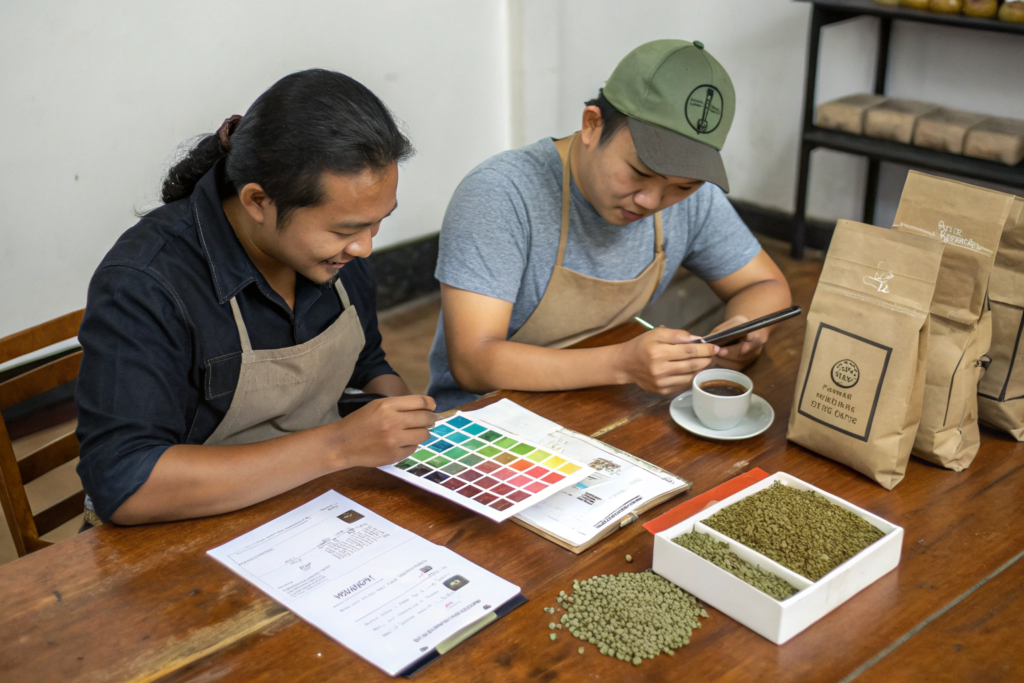
Big importers care about the big certifications: Organic, Fair Trade, Rainforest Alliance. They are the minimum for many of their large clients. But what if your market cares about something more specific? A vegan certification. A carbon-neutral certification. A direct trade verification. Importers are slow to add these niche labels because they require deep supply chain cooperation. We can pursue these because we own the supply chain. We can document every step from the farm to the port because we are physically there.
We already hold Rainforest Alliance and Organic certifications. But we are also exploring a carbon-neutral certification for our farm, tracking the sequestration from our shade trees and our energy use in the mill. If you come to us and say, "My customers are asking for a single-origin coffee with a verified living income for farmers," we can document exactly how our wage structure and profit-sharing work. We don't have to ask a middleman in Bogota to investigate. We just walk outside and talk to our team. This agility in certification allows you to differentiate your brand in crowded retail markets. You can offer a level of verified transparency that goes beyond the generic seals on a commodity bag.
How Does Direct Communication Speed Up the Sample-to-Contract Process?
The sample process with an importer is a waiting game. You request a sample. They email someone at their origin office. That person emails a cooperative. The cooperative finds the sample. Ships it to the origin office. Ships it to the importer. The importer ships it to you. Every step takes time. A two-week process is considered fast. With us, the sample is coming from our own cupping lab. You email Cathy. The next day, a sealed sample is on an express flight from Shanghai. It is at your door in three to five business days. That is the speed of direct communication.
Even more importantly, the feedback loop is instant. You cup the sample. You have notes. "Love the body, but can you find a lot with a bit more acidity?" You tell us. We don't forward your email to a third party and hope for the best. We walk into our warehouse. We pull three different micro-lots from different altitudes. We cup them ourselves. We select the one that matches your request. We send it to you. The dialogue is real-time. This turns the sourcing process from a frustrating, slow procurement task into a creative, exciting collaboration. You are not just buying coffee. You are co-curating your menu. This speed and responsiveness give you a market advantage. You can react to trends faster than roasters dependent on slow-moving importers.
How Does the Direct Relationship Model Improve My Brand Story?
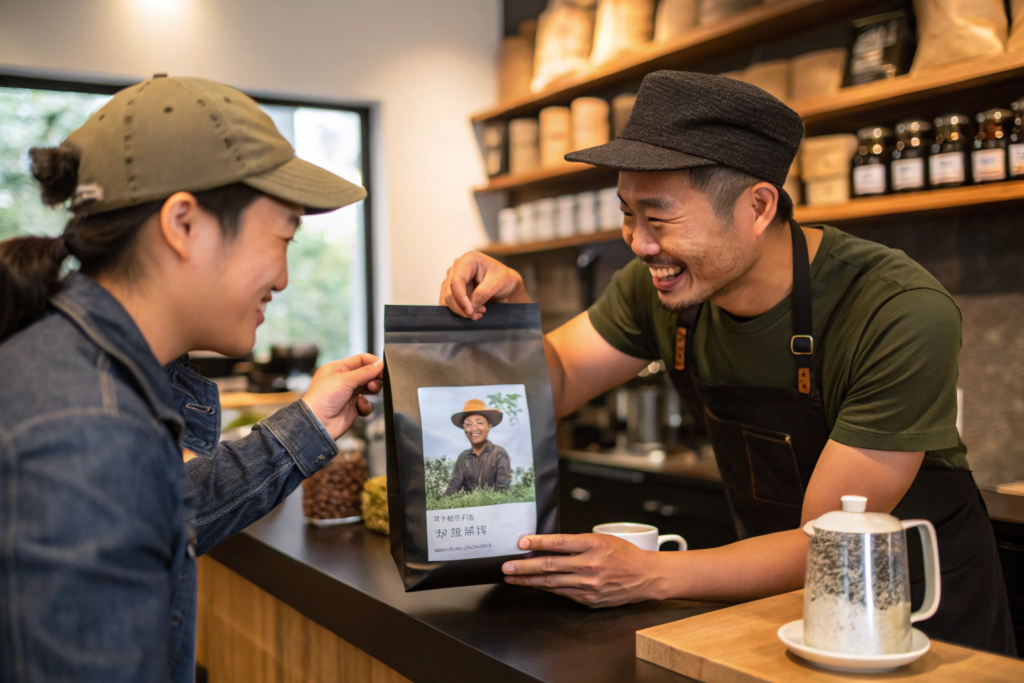
Your brand is your most valuable asset. And a brand without an authentic story is just a logo. Local importers give you the same generic origin stories as everyone else. "Colombian Supremo from the Andes." It is true, but it is wallpaper. It does not make you stand out. When you buy from us, you get a story that is truly exclusive. You get the story of our farm, our family, our specific mountainside. You get photos and videos that no other roaster has. You get a connection to the Tea Horse Road and the ancient tea culture. This is not a borrowed story. It is a partnership story.
You can put our farm name on your bag. You can feature our farm manager, Lao Li, on your Instagram. You can tell your customers that you have actually spoken to the people who grew their morning coffee. This level of intimate storytelling builds a cult-like loyalty. Customers do not just buy a bag. They join a narrative. They become supporters of a specific place and a specific family. This is the holy grail of modern branding. A local importer's coffee cannot offer this. There is no person to call. There is no face to put on the bag. There is just a product. A commodity. Our coffee gives you a story that no competitor can copy because they do not have a direct relationship with our farm. It is a permanent competitive moat around your brand. For insights on how origin stories drive consumer preference, research published by the Association for Consumer Research often highlights the power of perceived authenticity in food products.
Why Is a Single, Consistent Farm Source More Reliable Than Blends?
Consistency is the nightmare of a roaster. Your flagship blend is your bread and butter. It must taste the same month after month. Importers solve this by blending coffees from different farms, different regions, even different countries. They aim for a consistent flavor target. But the blend components change constantly based on availability and price. The flavor might be "close enough," but it drifts. You notice. Your customers notice. With a single farm source, the blend is naturally consistent. It is one terroir, one varietal, one processing method, repeated year after year.
The seasonal variations are small and manageable, like a wine vintage. You can actually celebrate them. "This year's Baoshan harvest has a bit more stone fruit because of the extra sunshine in November." That is an interesting story. It proves it is a real agricultural product. But the core identity of the coffee—the heavy body, the chocolate base—remains rock solid because the soil and the altitude don't change. This reliability is priceless for a roaster. You can build a permanent menu item around our coffee without the fear that the importer will discontinue the component or change the blend without telling you. You have control over your supply. That control translates directly into a consistent cup and a loyal customer base.
How Can I Involve My Customers in the Origin Journey?
The direct relationship lets you do something magical. You can bring the journey to life for your customers. You can host a virtual live cupping from our farm. We can set up a video call from our drying patio. Your customers can watch, in real-time, as our team rakes the parchment. They can ask questions. You can run a "Meet the Farmer" event in your cafe. You can sell a limited-edition "Harvest Box" with photos, a sample of the soil, and a handwritten note from the farm team. These experiences turn a $20 bag of coffee into a $40 immersive experience.
Try doing that with a coffee from a local importer. Who are you going to call? The warehouse manager in New Jersey? It's not the same. The direct connection makes these high-value, high-margin experiences possible. They generate massive social media buzz. They build a community around your brand that goes way beyond caffeine dependency. Your customers become advocates. They bring friends to your cafe just to show them "the coffee from my farm in China." The origin journey becomes a shared identity. This is the ultimate level of brand loyalty, and it is only possible when you have a real, living relationship with the source.
Conclusion
The choice between a local importer and a direct farm partner like Shanghai Fumao is a choice between a transactional supply chain and a strategic partnership. With an importer, you get a product. A good product, maybe. But it is a product that your competitors can also buy. The price is padded with invisible markups. The story is a generic template. The flexibility is limited to what is in stock. You are a passenger on their train, paying for their overhead and subject to their schedule.
Choosing a direct partnership flips the entire model. You get a lower landed cost by cutting out the layers of middlemen. You get a stable, fixed-price contract that lets you plan your business with confidence. You get a product that can be customized to your exact specifications. And you get an authentic, exclusive brand story about a specific farm, a specific family, and a specific mountain range that your customers will fall in love with. You become a partner, not just a buyer. You get a voice in the process, a face to call, and a shared investment in quality.
This is not just about buying cheaper coffee. It is about building a more valuable business. A business with better margins, a stronger brand, and a supply chain that you can trust. It is about moving from the back of the line to the front of the field.
If you are ready to experience the difference a direct farm partnership can make, let's start a conversation. I invite you to reach out to our export director. She can set up a sample shipment, provide a transparent all-in quote for your specific needs, and answer any questions you have about the process. Contact Cathy Cai at cathy@beanofcoffee.com. Let's see what we can build together.